
Stage Review - Bakersfield Mist
Presented By: SecondStory Rep - Redmond, WA
Show Run: November 06 - November 22, 2026
Date Reviewed: Thursday, November 12, 2026
Run Time: 80 Minutes (no intermission)
Reviewed by: Greg Heilman
Back in the 1950s, the city of Bakersfield, California, solidified its place on the musical map of the United States by originating a style of music that drew from rock and roll, honky-tonk country music, and the musical traditions brought to this oil and farming town by migrants from the south-central United States, along with the influence of Mexican music. The result of this convergence of musical styles became known, appropriately enough, as the Bakersfield Sound, popularized by artists like Merle Haggard and Buck Owens and, more recently, Dwight Yoakam, and seen as an alternative to the more polished, heavily produced sound coming out of Nashville at the time.
Stephen Sachs’ Bakersfield Mist, on stage at SecondStory Repertory in Redmond through November 22 under the direction of Eric Lewis, isn’t about music, though it is about art. I bring up the musical genre for a couple of reasons, first to provide some context for the setting of the play, a trailer park that’s home to recently unemployed bartender Maude Gutman (Ingrid Sanai Buron), but more than that, to talk about what I consider to be the genre’s anthem, Streets of Bakersfield. Written by Homer Joy and recorded by Buck Owens, and later by Owens and Dwight Yoakam together, the song’s chorus speaks to the central theme of Sachs’ play:
Hey, you don’t know me, but you don’t like me Say you care less how I feel But how many of you that sit and judged me Ever walked the streets of Bakersfield?
Those words perhaps provide some insight into Maude’s defensiveness when art scholar Lionel Percy (JAG) arrives at her trailer to determine whether her three-dollar thrift store find is actually a lost Jackson Pollock painting. As someone who spends a considerable amount of time evaluating art, I’m particularly intrigued by the questions at the heart of Bakersfield Mist. What is art, what makes it good, and perhaps more importantly, who gets to decide? There are certain technical aspects of any art form that can be evaluated objectively, but once the discussion moves into the territory of artistic merit, it becomes a decidedly more subjective exercise. And as Sachs suggests, there may be as much to be learned about the person evaluating the art as there is about the art itself. In the case of Maude and Lionel, the question is as much about whether Lionel can separate his judgment of the painting from his judgment of the woman who owns it as it is about the authenticity of the painting itself.
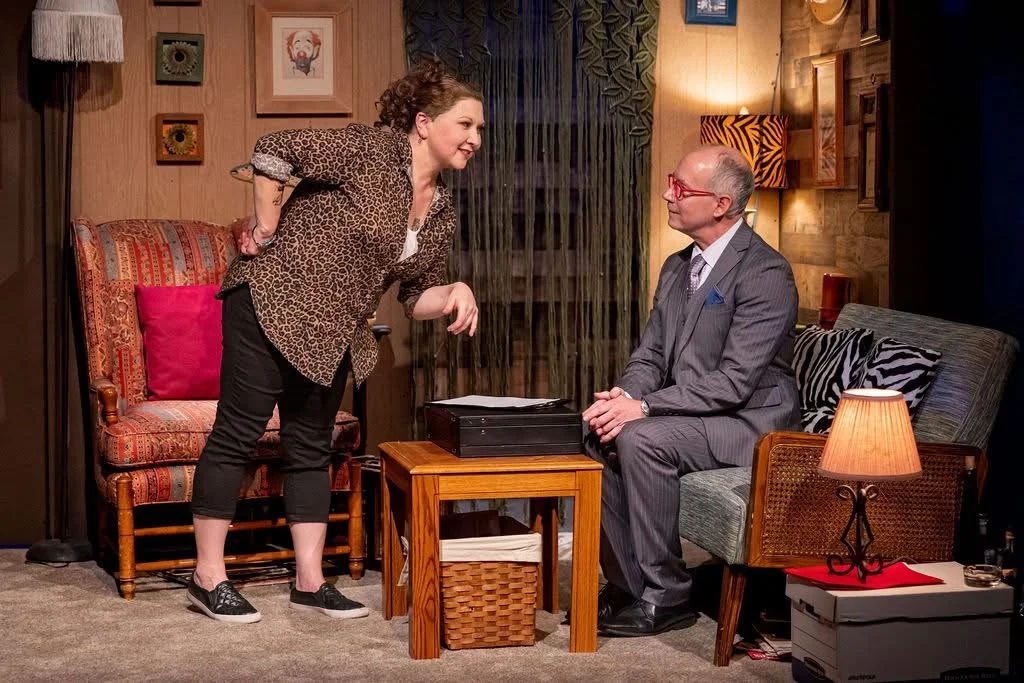
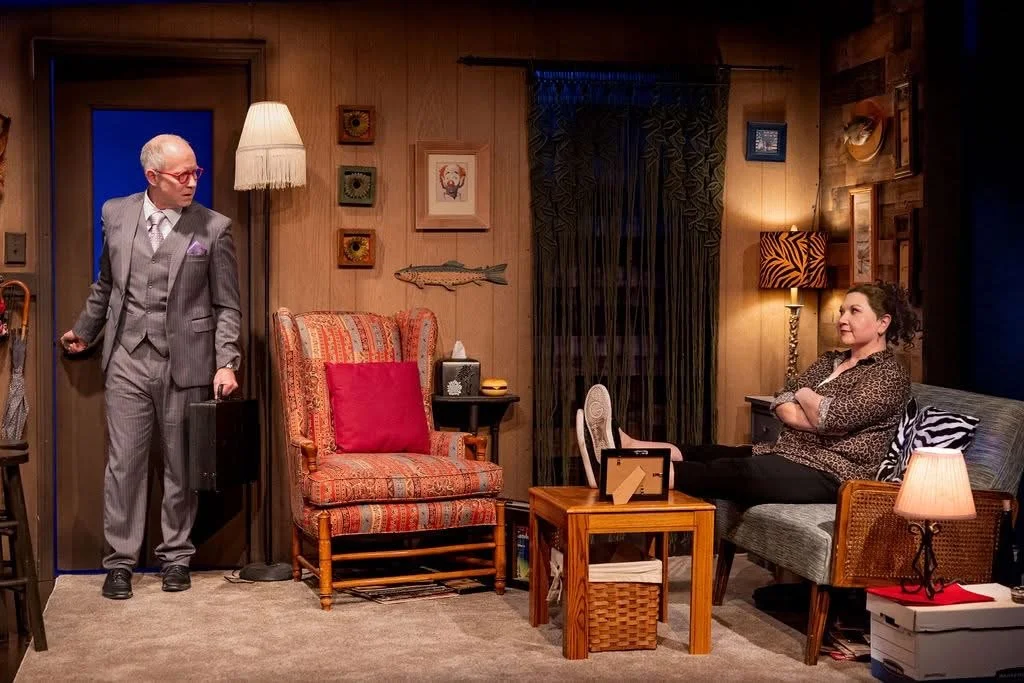
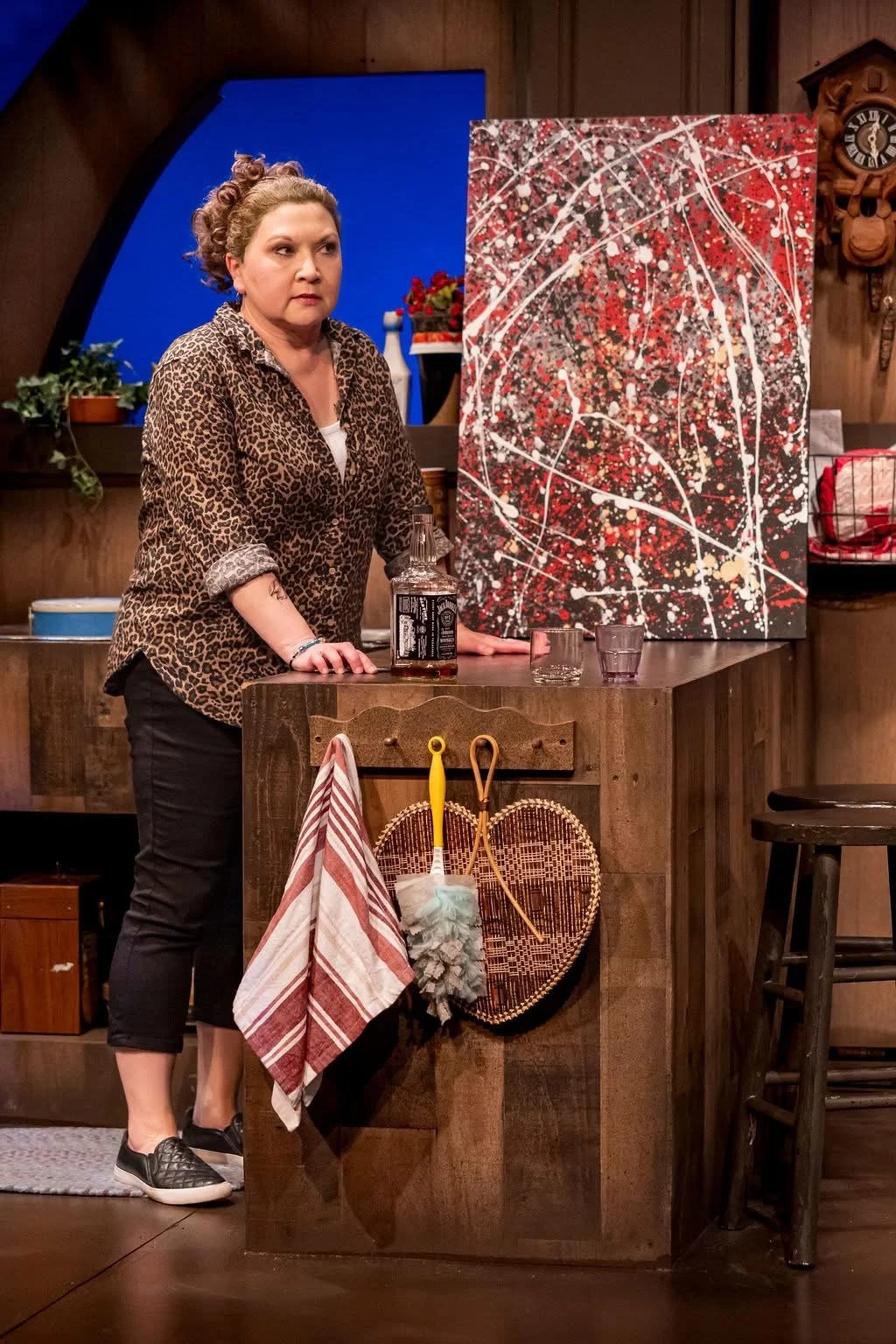
The scenic design is indicative of the level of detail I’ve come to expect from Mark Chenovick. In reality, a considerably more minimal set would suffice in providing the context for the exchange between Maude and Lionel, but what Mark has created here is a home, and one that tells a good deal of Maude’s story before she even opens her mouth. It’s a wonderfully designed collection of haphazardly coordinated furniture, knickknacks, and what one can only assume are years of thrift store finds, from the hamburger telephone to the singing fish on the wall. And perhaps my favorite detail is what’s underneath the trailer itself, the accumulation of stuff that suggests this particular mobile home hasn’t been mobile for quite some time. Mark strikes the perfect balance here, providing considerably more detail than is necessary without making the space feel crowded. Even the sound of crickets outside adds to the sense of place. Pardon the cliché, but the trailer feels lived in, and more importantly, it feels exactly like the home in which Maude Gutman would live. There’s also something wonderfully appropriate about a discussion concerning the value of a piece of art taking place in a room filled with things that others have presumably deemed to be of little or no value.
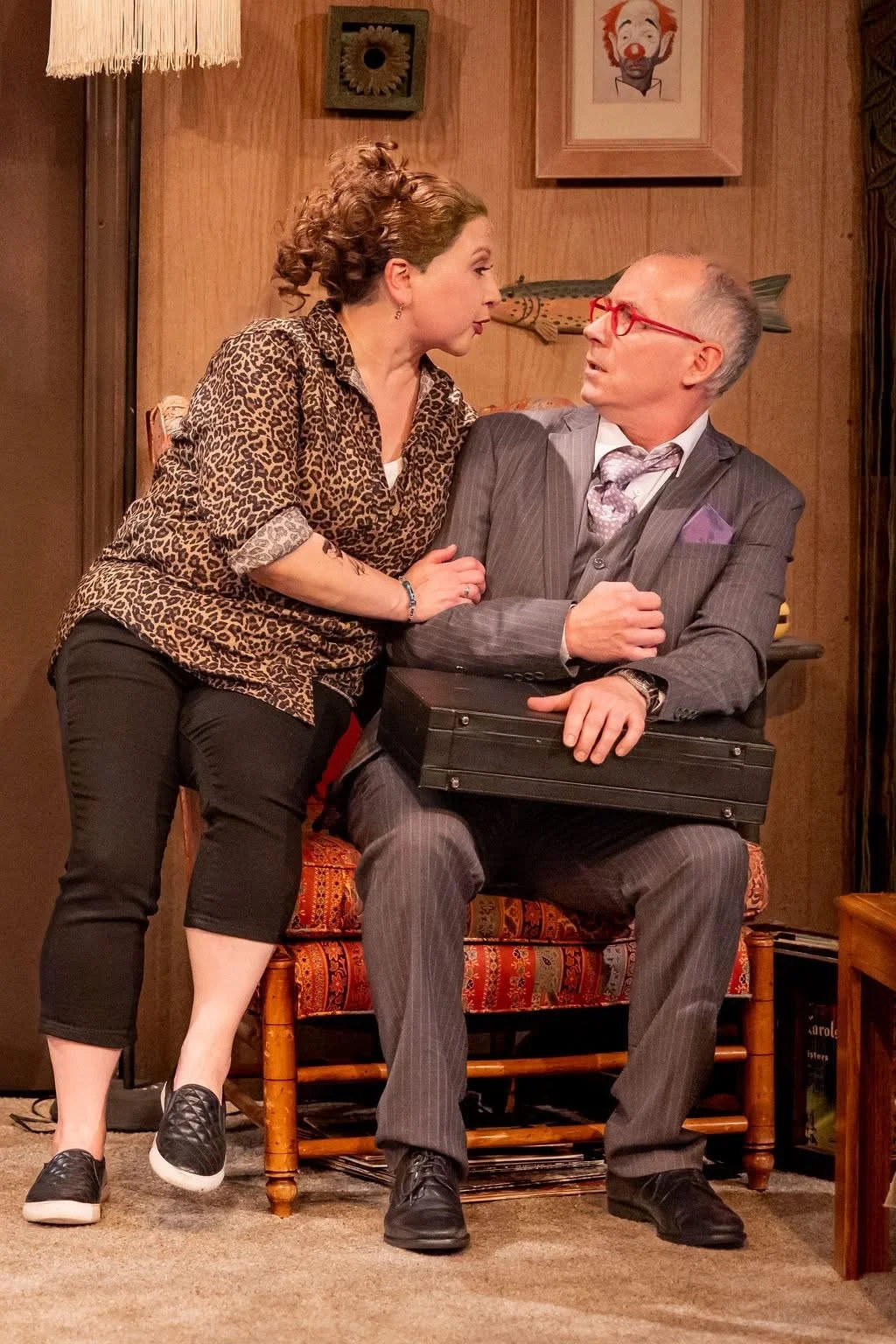
The visual contrast between the two characters, Lionel in his pinstripe suit and Maude in her leopard-print blouse, is the first indication of just how far apart these two are in terms of their respective backgrounds, and the initial exchanges between Ingrid and JAG only serve to reinforce that impression. There’s an elitism to JAG’s portrayal of Lionel that comes through not only in his choice of words, courtesy of Sachs, but in his delivery of them, and there’s a wonderful bit of humor in watching his reactions as Maude describes what the painting has been subjected to since coming into her possession. One can almost feel the years coming off Lionel’s life with each successive revelation.
In a sense, JAG plays two characters here, the art scholar and the art lover, and what’s particularly interesting about his performance is the distinction he makes between the two. There’s a passion in his delivery when Lionel talks about Jackson Pollock and his work that stands in stark contrast to the more measured manner in which he discusses Maude’s painting, not to mention the surroundings in which he finds it. It’s in those moments when Lionel allows his passion to supersede his intellect that JAG provides some insight into the man underneath the pinstripe suit, someone whose love of art presumably predates his position as an authority on it. The irony, of course, is that the qualities that make Lionel such an authority on art may also be the things that prevent him from experiencing it in the same way that someone like Maude does.
As for Ingrid, this is the first time I’ve seen her in a role that isn’t strictly comedic. That’s not to say there isn’t a good deal of humor in her portrayal of the foul-mouthed, alcohol-fueled Maude, and Ingrid’s comic instincts serve her particularly well here, especially in her exchanges with JAG. But it’s when Maude’s story turns darker that Ingrid is at her best, particularly when she talks about her son. There’s a distinction between someone who is inherently funny and someone who uses humor to cover their pain, and Ingrid is able to convey both aspects of Maude’s personality, often within the same exchange. As the story progresses, there’s an increasing understanding of the woman behind the bravado, of why this painting means so much to her, and why Lionel’s judgment of it feels so personal. This is the most range I’ve seen from Ingrid, and to borrow from the musical context with which I began, she’s excellent in every octave of her emotional range here.
What’s most effective about Eric’s direction and the work of these two actors is the gradual revelation that Maude and Lionel have considerably more in common than their initial encounter would suggest. The two spend much of the play defending their respective positions, but as the details of their lives come to light, it becomes increasingly apparent that what they’re defending extends well beyond their opinions of a painting. There’s a vulnerability to both of these characters, and while they go about protecting themselves in decidedly different ways, neither is particularly comfortable allowing the other to see it. The progression of their relationship is as compelling as the mystery surrounding the painting, and it’s a credit to Ingrid and JAG that the audience’s interest in the former eventually supersedes its interest in the latter.
As a collection of artists coming together to tell a story, theatre itself provides an interesting context for the questions Sachs poses in Bakersfield Mist. Each member of that collection brings something of themselves to the work, just as each member of the audience brings something of themselves to their interpretation of it. It’s what makes art such a personal experience, and what makes the notion of any one person being the definitive authority on its merit somewhat problematic. The Bakersfield Sound, after all, was born in part out of a rejection of what the country music establishment had determined country music should sound like. That it has become one of the most influential styles in the history of the genre speaks to the value of looking beyond the boundaries established by those in a position to define it.
With Bakersfield Mist, Eric Lewis, Ingrid Sanai Buron, JAG, and the SecondStory Repertory creative team have put together an excellent production of a play that begins with an examination of the authenticity of a painting and becomes an examination of the authenticity of the people standing in front of it. It’s funny, emotionally engaging, and thought-provoking in its exploration of the relationship between art, the people who experience it, and the people who presume to define its value. And perhaps the most important question Sachs poses isn’t whether Lionel has the expertise to determine the authenticity of Maude’s painting, but whether he’s willing to walk the streets of Bakersfield before passing judgment on the woman who owns it.
Bakersfield Mist runs on stage at SecondStory Rep in Redmond through November 22. For more information, including ticket availability and sales, visit https://www.secondstoryrep.org/.
Photo credit: Colin Madison Photography