
Stage Review – Bootlegger’s Ball
Presented By: Opal Peachey and Mark Siano – Seattle, WA
Show Run: October 16 – October 31, 2026
Date Reviewed: October 17, 2026
Run Time: 2 hours and 10 minutes (inclusive of 2 10-minute intermissions)
Reviewed by: Anna Tatelman
Some live shows prove difficult to classify as a particular genre, and when it comes to Opal Peachey and Mark Siano, they’ve made defying traditional classifications into a highly successful art form. Their current production is an excellent example of the genre-bending work that has made these two creators quite popular in the greater Seattle area when it comes to limited-run events. Bootlegger’s Ball fuses elements of immersive theatre, cabaret, sketch writing, living history, and a dance party for the whole audience into one evening of nonstop entertainment.
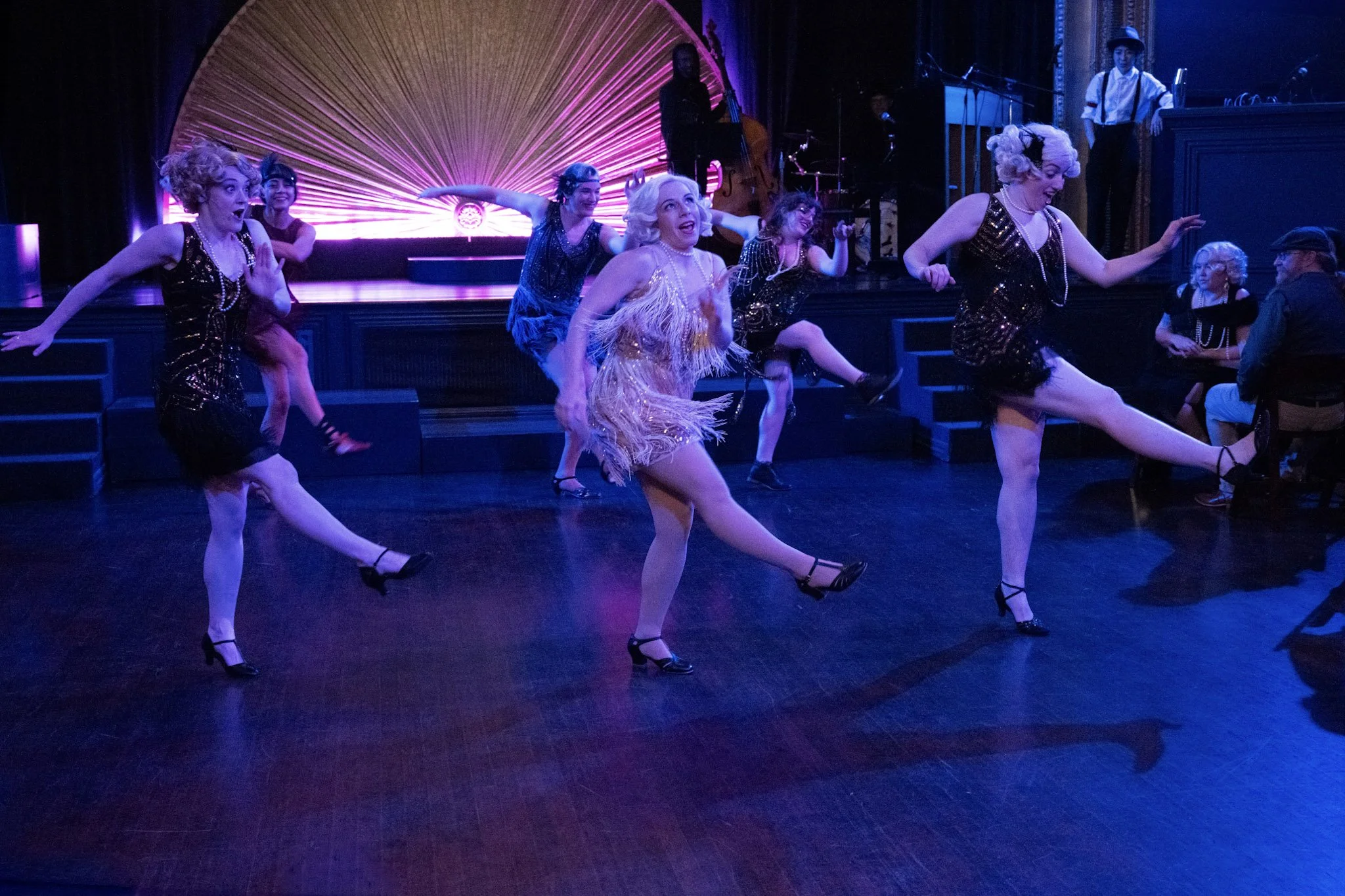
As the title suggests, the premise of Bootlegger’s Ball is that we have been invited to a giant party at the Oddfellows Ballroom (now called Reverie Ballroom) thrown by Prohibition-era bootleggers who smuggle alcohol across country lines. Playwright Opal Peachey’s script takes us through entertaining, reimagined historical moments between some of the biggest names in this chapter of Seattle history. The historical figures we follow most closely are Roy Olmstead, who raked in hundreds of thousands each month from his high-caliber imports, and his new business partner Al Hubbard, who learns about Roy’s lucrative trade alongside the audience. Woven in-between these historical-fiction vignettes are an array of attention-grabbing cabaret performances that help us sink luxuriously into all the fun of the 1920s: the jazzy tunes, the upbeat dances like the Charleston, the loosening of sexuality through risqué dances and revealing outfits.
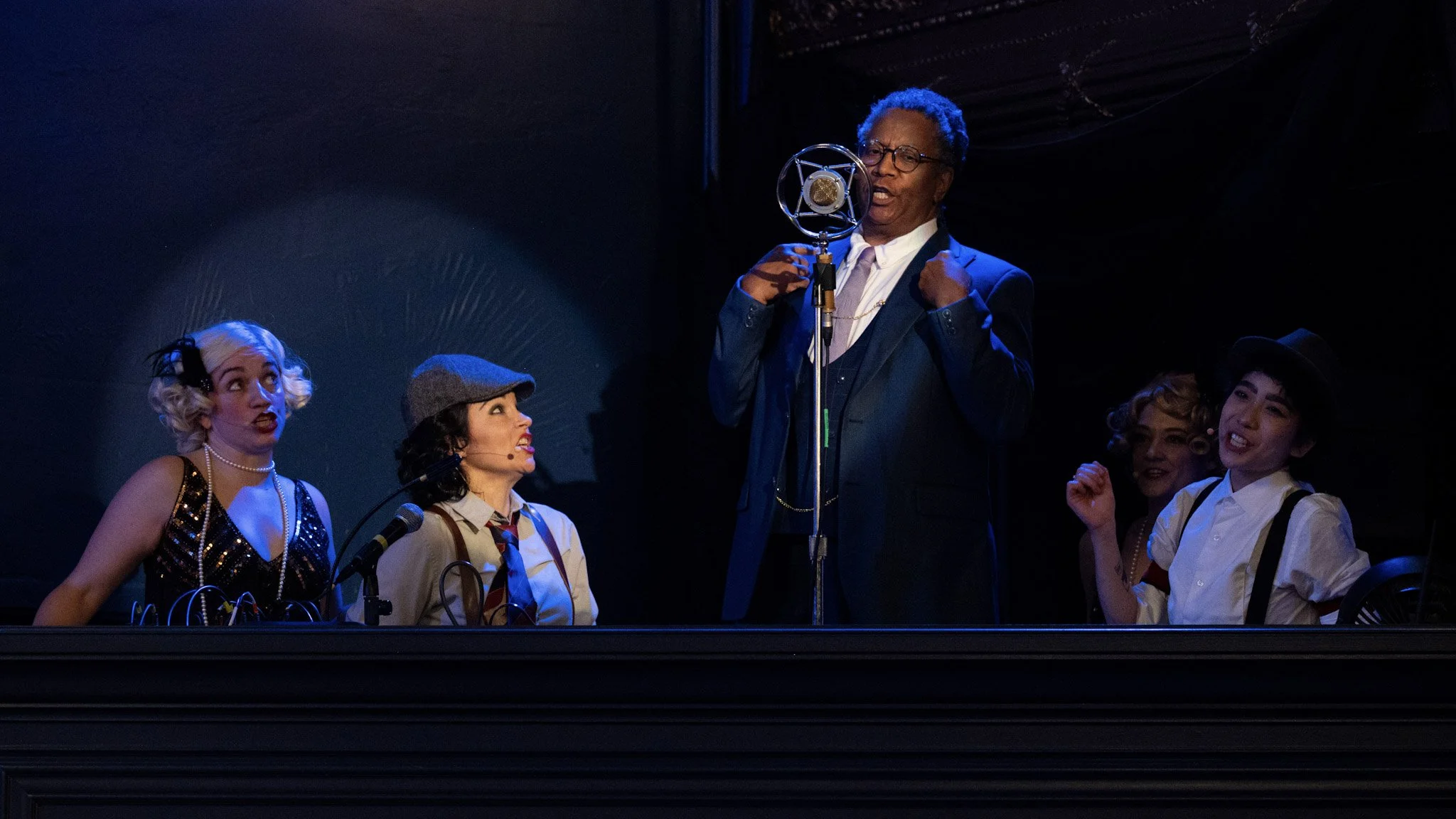
Playwright Opal Peachey deserves credit for doing something that I frankly don’t think other local creators are: taking elements of living history and placing them inside a show rather than a museum. Bootlegger’s Ball isn’t just rich with sexy dances and songs (although it does have lots of those); it also contains vignettes that make this chapter of Seattle’s history relevant and active. We get to see Al Hubbard, for instance, fussing with early radio technology so the bootleggers can speak to one another in code from afar, and we see Doc Hamilton, Seattle’s most successful speakeasy owner, navigating his business alongside the bigotry he faced as a successful Black man. A couple of these vignettes are accompanied by original songs that give the evening a mild musical theatre vibe as, for instance, Roy sing-explains his boat smuggling voyages to Al as they sail under cover of night to Canada (original music by Opal Peachey and Mark Siano). In other words, we’re learning throughout the whole show, and since we’re enjoying catchy tunes and (likely) tasty cocktails too, the learning becomes as fun and entertaining as the Charleston.
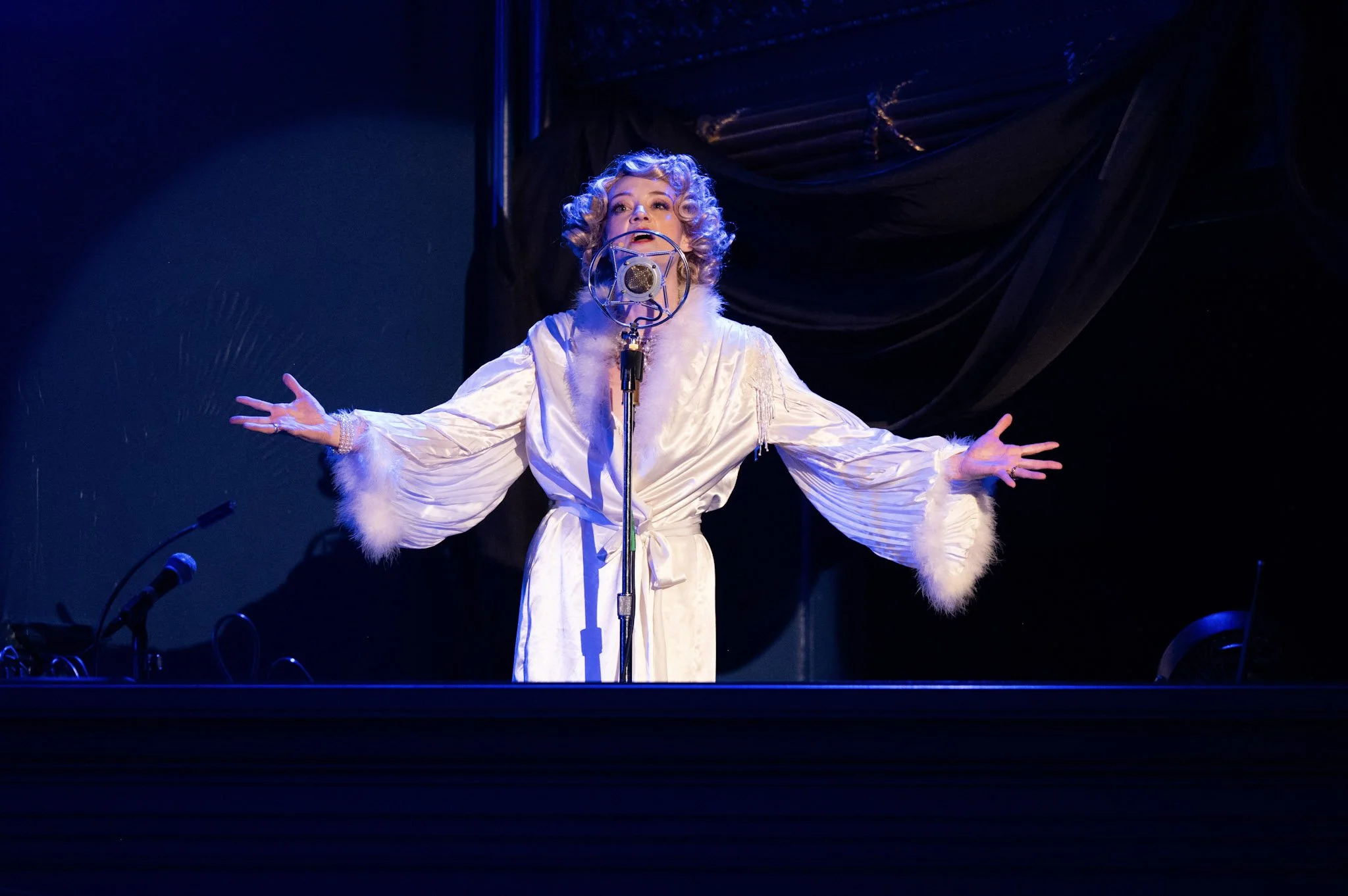
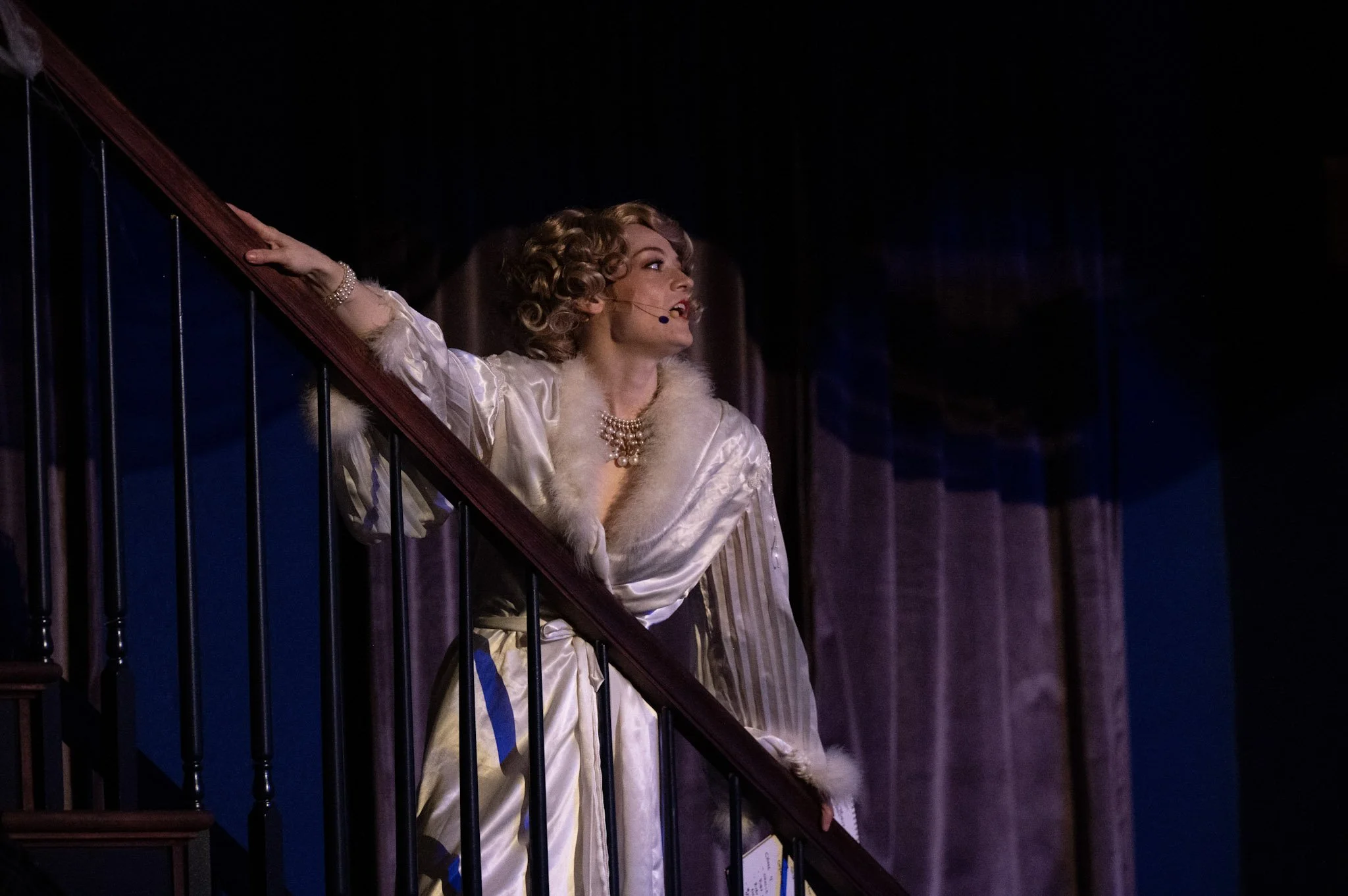
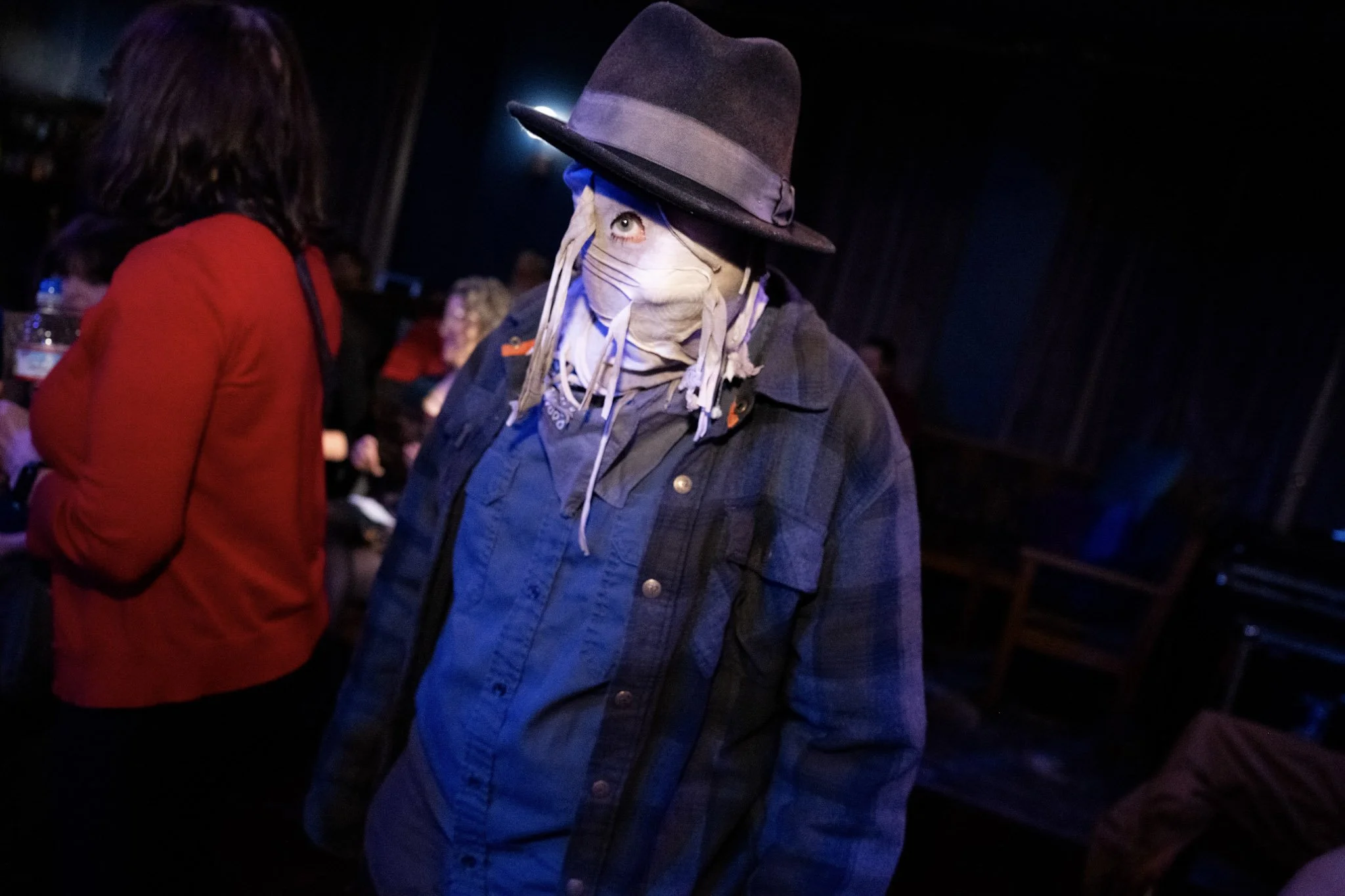
From a narrative perspective, the show didn’t always have a clear plot or through-line. At the start of the show, for instance, the jazzy opening number gets interrupted by all the lights and sound being cut out by a ghastly scream. The ghost of Margaret, who used to own the Oddfellows Ballroom, drifts onstage and speaks cryptically about how the bootleggers unleashed an evil upon her dance floor that cursed her performers for eternity. The bootleggers manage soon after to take control again of the lights and sound, apologizing profusely for Margaret’s creepiness. This opening sequence delighted me because it set up a dynamic inherently rich in conflict between two different groups vying to control how history is presented and remembered. But this thread, as with a few others, was not ever followed up on, making the narrative seem fragmented.
Ultimately, though, Bootlegger’s Ball doesn’t necessarily want to provide a traditional narrative theatrical show. It strives to operate more like an amusement park ride, taking the audience along on all sorts of twists and turns composed of storytelling, sketch comedy, living history, dance, immersive components, and song. My narrative concerns aside, this is a show that prioritizes the journey – and it’s without question a trip brimming with nonstop fun.
One of the most unique parts of Bootlegger’s Ball is the immersive elements that truly help you feel like you’re at a giant Prohibition-era party. Immersive theatre can sometimes get awkward; too much freedom to interact with the audience can derail the show while making patrons feel uncomfortable, and too little leaves you questioning who exactly the audience is within the show’s context. Director Mark Siano avoids these traps by having clear parameters for the audience interactions and making it easy for patrons to decide whether to partake.When you arrive, people in period costumes welcome you inside and, with a knowing wink, invite you to enjoy their selection of “tea and pop.” This includes an array of themed cocktails like The Smuggler’s Cove and The Elliot Bay Bohemian (of which I may have had two).
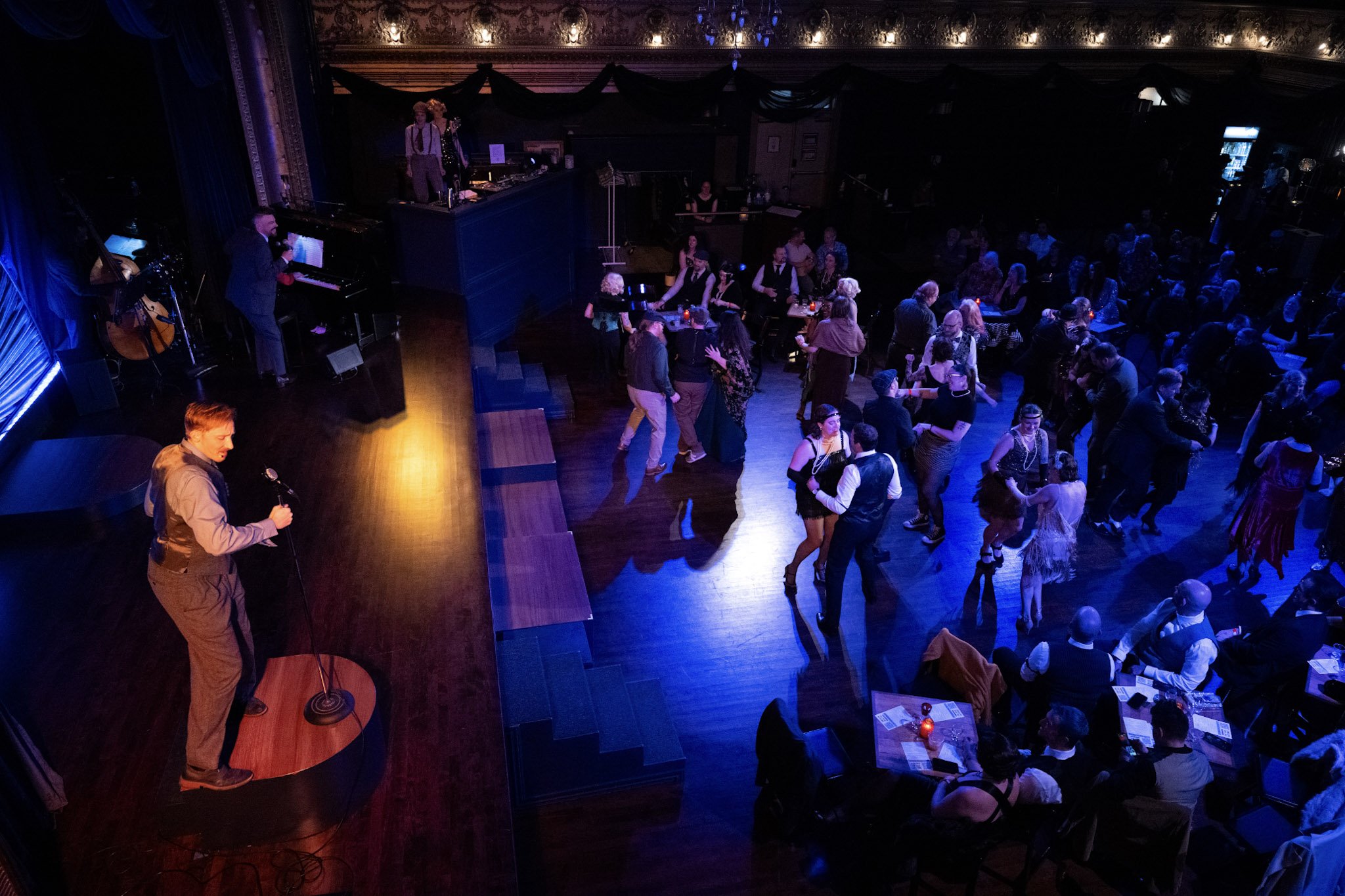
Before the show and during intermissions, most of the performers mill about the ballroom, happy to chat with guests; at one point I had an entertaining conversation with a bootlegger about our shared love of “lemonade,” and another funny exchange in which a less-sociable bootlegger stole a crystal centerpiece from my table. The performers are all lightly in character during this time; while happy to get you a program or take your picture without making a giant fuss about modern tech, they also are willing to chat about Prohibition or introduce you to other characters. At numerous points during the cabaret numbers, we are specifically invited to jump up on the dance floor and boogie along to various jazzy renditions of modern songs, such as Beastie Boys’ “Fight For Your Right” (musical arrangements by Kerry O’Connor). Bootlegger’s Ball gives the audience tons of ways to enjoy the party alongside its performers while allowing audiences the flexibility to choose their own adventure.
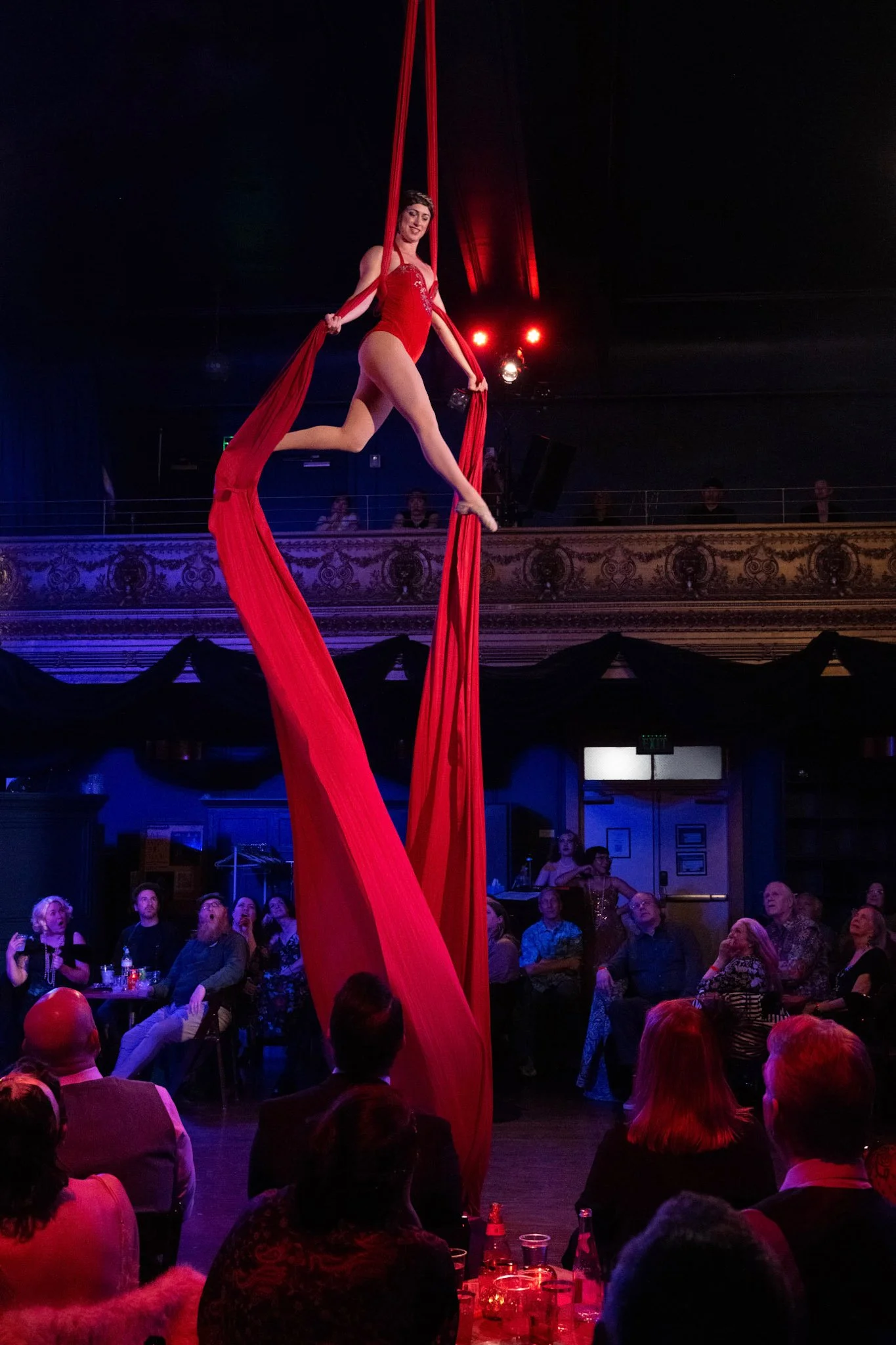
Another aspect of immersive theatre that this show excels at is the use of the entire performance space. The main floor of the Reverie Ballroom contains an elevated stage, a wide dance floor, and room around the peripheries for chairs and couches. The upper floor is a balcony that curves around three walls of the ballroom’s high ceiling and features an assortment of bistro tables. Bootlegger’s Ball takes advantage of this unique space and all its dynamic sight lines, setting scenes and cabaret numbers on both the stage and the wide dance floor. There are also a few moments when performers walk along the upper balcony, and even a time when all eyes are fixed upon the high ceiling as we watch an aerial performer.
The talented ensemble helps keep the energy levels high throughout the evening by committing fully to every moment, be it a side conversation with an audience member or a razzle-dazzle dance. Bo Mellinger as Roy Olmstead strikes a great balance between displaying his conman ways and revealing his driving passion to help others live freely. He is a master showman, excelling at persuading both businessmen to join his cause and oily politicians to turn a blind eye. Milo Rei masterfully juggles two very different roles: Al Hubbard andSecretary of the Bucket of Blood, a woman who runs a sophisticated nightclub in the International District. As Al, Milo is curious and devoted; as Secretary, they ooze sensuality and confidence, and sing one of the most beautiful songs of the evening with a surprisingly strong voice. Bob Williams as Doc Hamilton provides a great contrast to the showiness and glamour of the other characters. He is far more matter of fact about how Seattle is divided not just between the “drys” and “wets,” but along lines of prejudice, too, and isn’t afraid to call out the bootleggers or the audience on how our glitz conceals our racism.
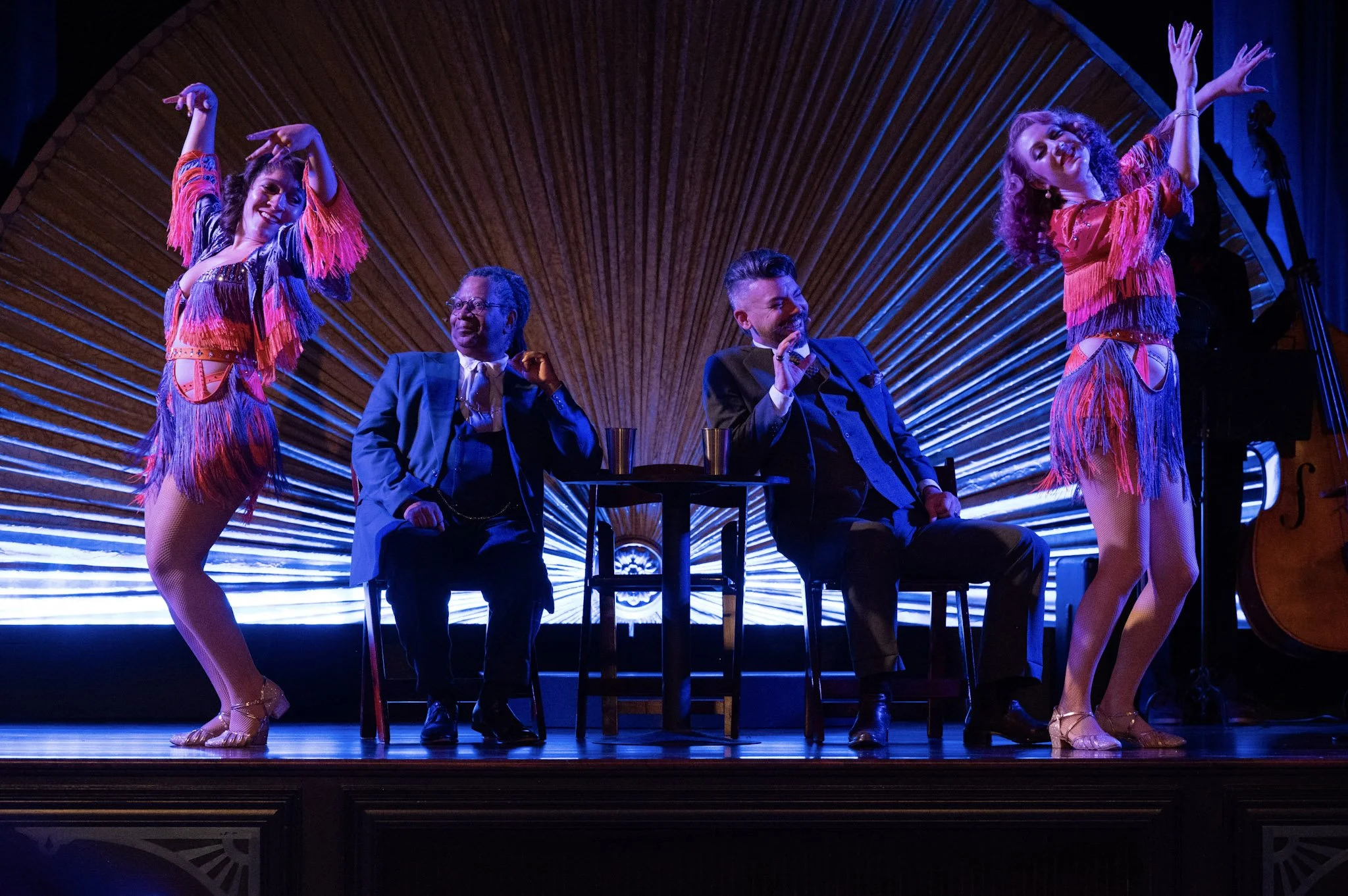
Most of the cabaret performances uniquely meld elements of 1920s dances with more modern influences, such as a Lindy Hop that incorporates some stylings of musical theatre choreography (Lindy Hop choreography by Ben White). One of my favorites is a number by Gin (Ana Lisa Sutherland) and Tonic (Taylor Stender) that fluctuated between a Charleston and a striptease (Shake choreography by Sutherland). The aerial performance, designed and performed by Katie Herndon, is another highlight of the evening. Herndon moves seemingly effortlessly along the red curtains that unfurl from the high ceiling, making even the moments building up to each trick captivating.
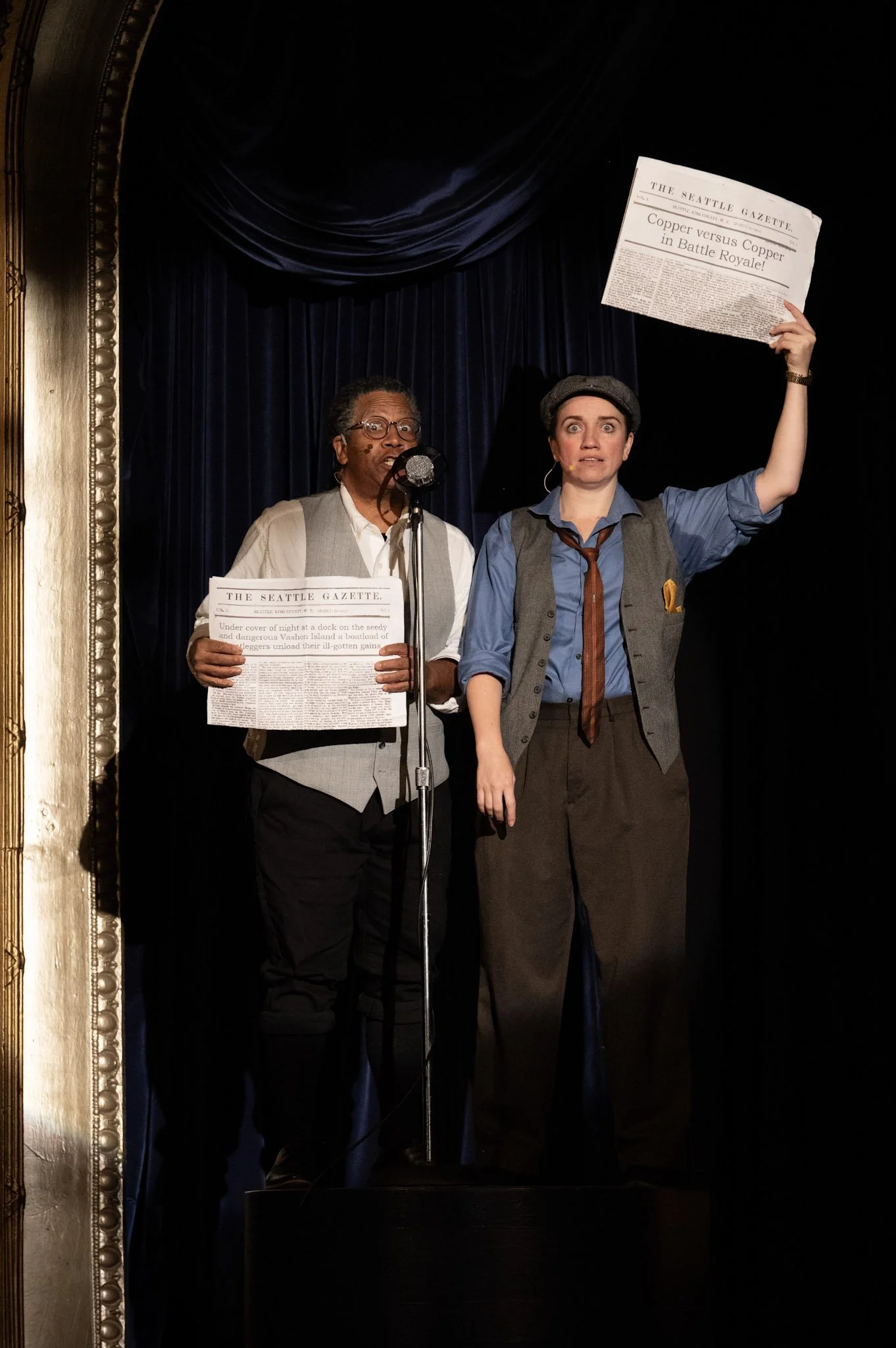
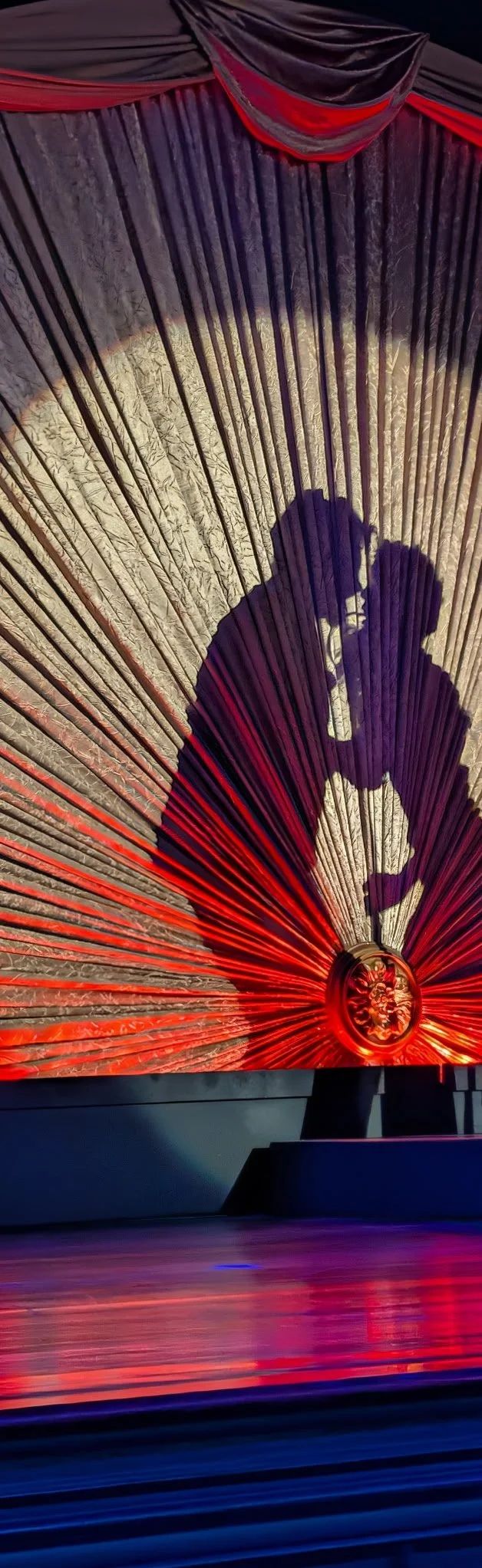
The design elements of Bootlegger’s Ball simultaneously depictthe party glamour of the whole show while reveling in its elements of kitschy fun. The stage is sparsely set with just a few old-fashioned standing microphones and a fan backdrop, but there are an array of set and prop pieces that appear at various points, the funniest being when Al and Roy climb into a “boat” (cart on wheels) that gets pushed through “coral reefs” (foam noodles) being waved around by the other performers (set design by Ron Darling and Mark Siano; properties design by Robin Macartney). The lights are varied and nicely complement the performances, be they casting an eerie glow on the ghostly scenes or casting striking silhouettes on the giant fan during burlesque numbers (lighting design by Emily Leong). Kit Goldsworthy’s costumes ground us in the period and help reveal the characters’ various social standings, from the simple newsie costumes to the elaborately beaded flapper dresses.
Bootlegger’s Ball feels like stepping into an after-hours party at a living history museum. Fascinating vignettes from Seattle’s Prohibition era come to life around you and meld together with jazzy songs, cabaret performances, opportunities to get up and boogie, and as much (wink) “tea and pop” as you desire. It is, in other words, a dream come true for a history nerd who also enjoys a night on the town.
Bootlegger’s Ball, presented by Opal Peachey and Mark Siano, runs on stage at Reverie Ballroom through October 31. For more information, including ticket availability and sales, visit https://www.opalpeachey.com/bootleggers-ball.
Photo credit: Bruce Clayton Tom