
Stage Review - Emojiland: The Musical (SecondStory Repertory)
Stage Review - Emojiland: The Musical
Presented By: SecondStory Repertory - Redmond, WA
Show Run: June 26 - July 19, 2026
Date Reviewed: Thursday, June 25, 2026 (Preview)
Run Time: 2 Hours, 15 Minutes (including at 15-minute intermission)
Reviewed by: Greg Heilman
When I'm seeing a play or musical for the first time, I sometimes like to ask a simple question before it even starts: Why does this show exist? Some productions are simply fun exercises in storytelling, an excuse to string together memorable songs around an entertaining plot. Others have something more substantial on their minds. So it was with Emojiland. I admit, I approached a musical populated entirely by actors portraying emojis with more than a little skepticism. Was this a show designed primarily for Millennials and Generation Z? Was it another example of our increasingly abbreviated forms of communication finding their way onto the stage? Surely those of us in Generation X—and older—might be looking for something with a bit more weight.
Even after giving it some thought, I'm still not convinced the emoji concept itself is entirely necessary. There are plenty of plays and musicals that explore similar themes without borrowing from our smartphone keyboards. But I do understand why Emojiland exists. It recognizes that emojis have become a language unto themselves, modern hieroglyphs that allow us to communicate feelings with a tap instead of a sentence. More importantly, it understands the danger in that shorthand. Social media and emojis allow us to present carefully curated versions of ourselves that often bear little resemblance to what we're actually experiencing. At its heart, Emojiland becomes both a "don't judge a book by its cover" story and a reminder that everyone is carrying something beneath the surface that others may never see. Those lessons are universal, regardless of generation. And perhaps the smartest thing the musical does is package those ideas in a way that is consistently funny, energetic, and surprisingly touching. Add to that the study of the balance between security and freedom, and the musical becomes even more layered.
Running through July 19 at SecondStory Rep in Redmond, Emojiland features a book by Keith Harrison and Laura Schein, with music by Keith Harrison and lyrics by Harrison and Schein. Directed by Scot Charles Anderson, with music direction by Gabe Mangiante and choreography by Hillary Gault, the musical imagines the bustling digital world inside a smartphone, where every emoji has a defined role and purpose. When Nerd Face develops an upgrade that could allow emojis to evolve beyond their assigned functions, the discovery threatens the carefully maintained order of Emojiland, forcing its citizens to confront questions of freedom, individuality, and whether change is worth the risk. Those questions ultimately justify the musical's unusual premise. Beneath the colorful characters and playful digital setting is a story that asks whether the version of ourselves we present to the world is ever the whole story.
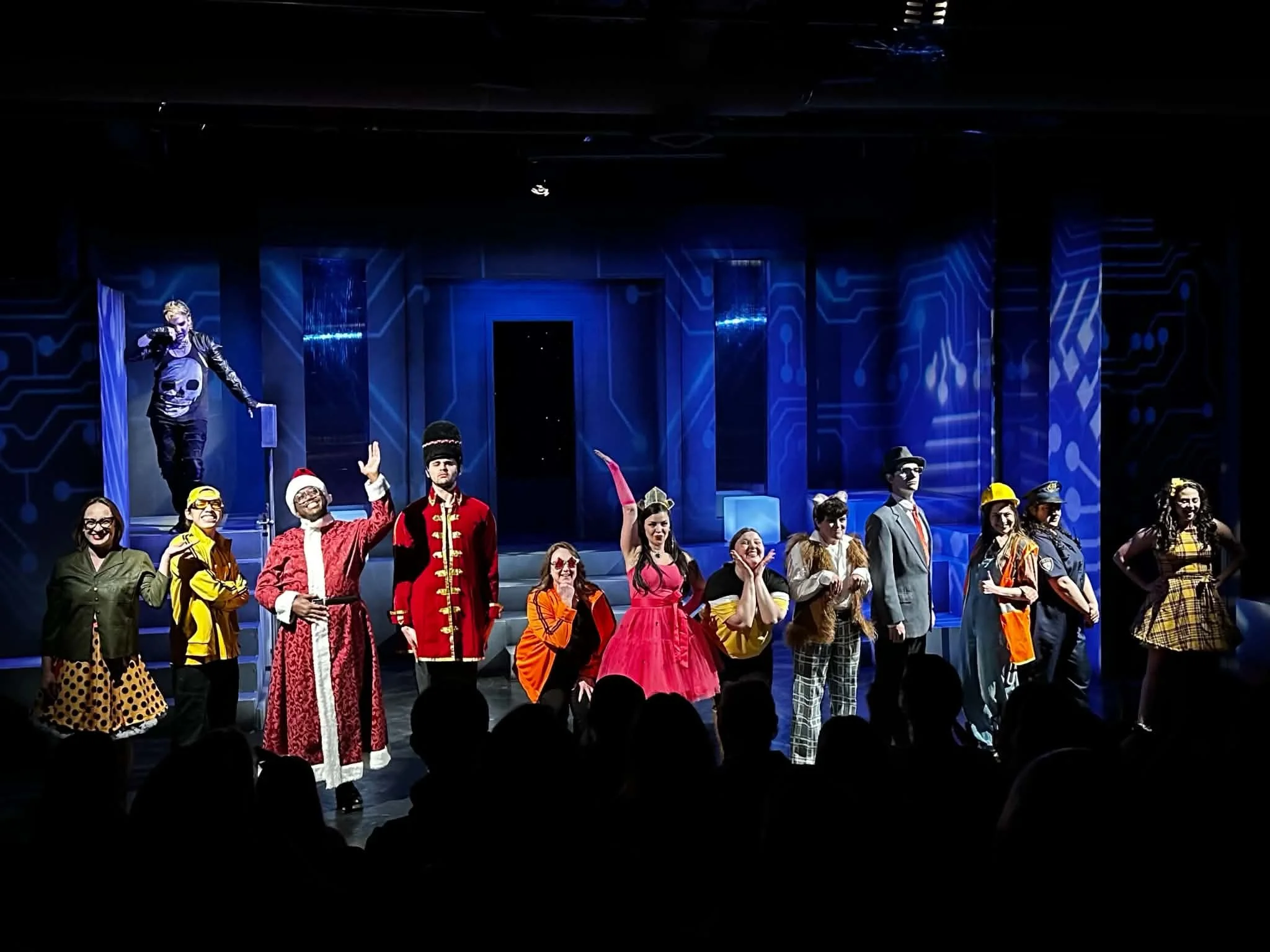
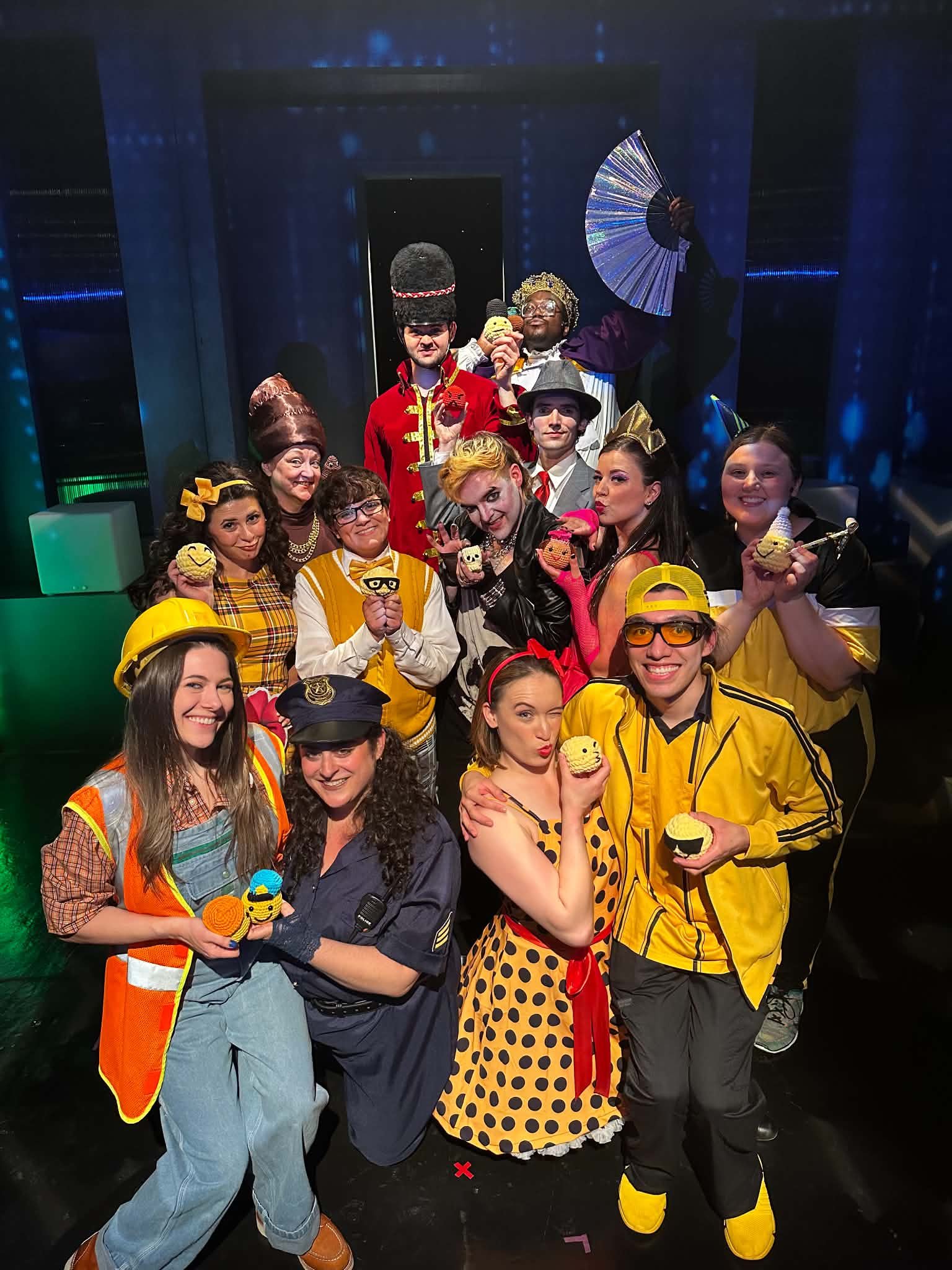
One of the production's greatest strengths is its ensemble. Even with a large cast portraying dozens of recognizable icons, each performer develops a distinct personality that extends beyond the emoji they're representing. Emily Courcy, David Breyman, Kristin Hoekema, Stefanie MeiFang Van Rafelghem, and Rayan Atallah each contribute memorable moments while continually supporting the principal storylines, creating a world that feels populated rather than simply occupied. That individuality becomes especially apparent during the show's emotional final moments, culminating in the ensemble's touching reprise of "It's Just So Great to Be Alive," a finale that leaves the audience with a genuine sense of optimism after the musical's philosophical journey.
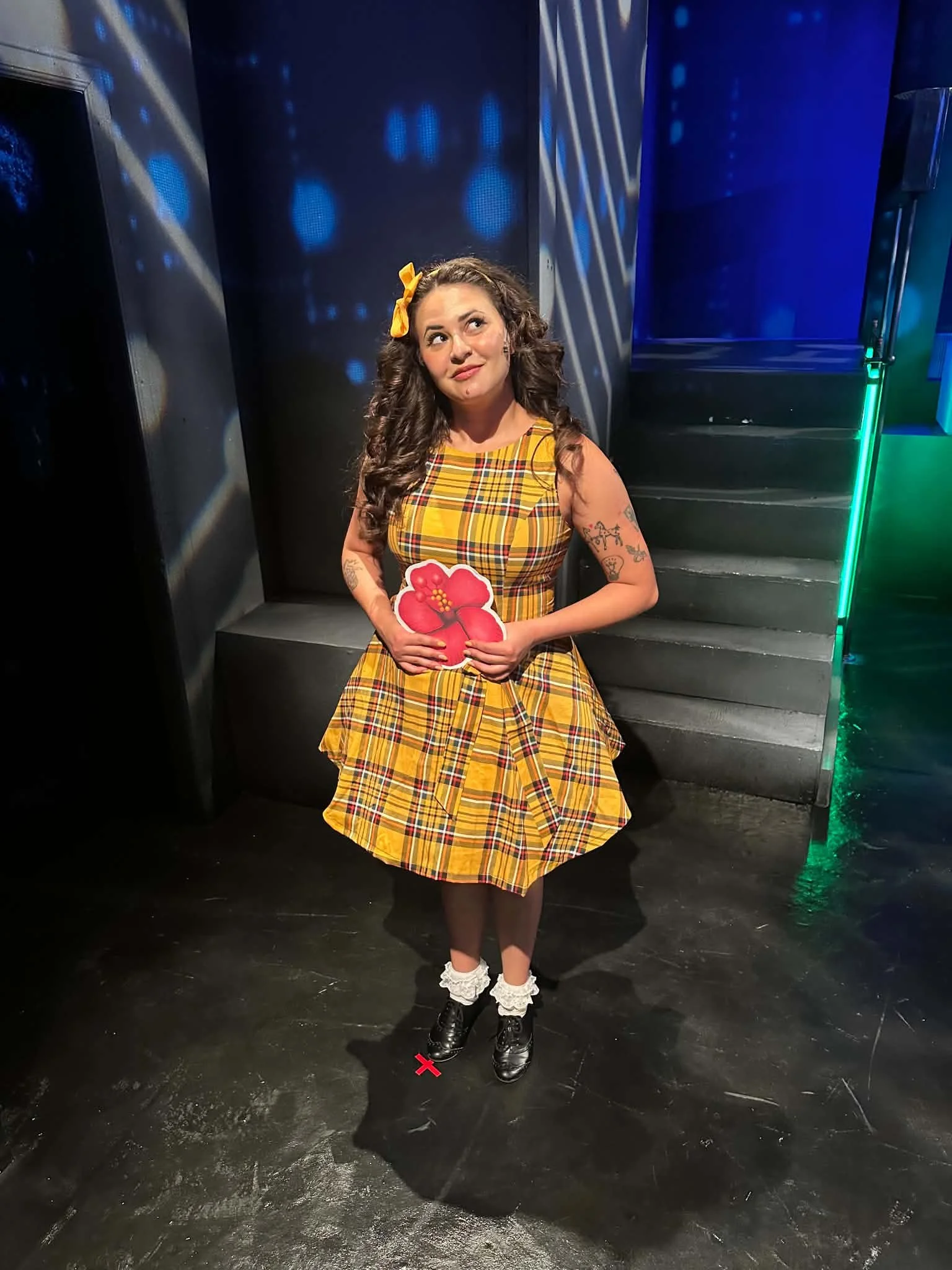
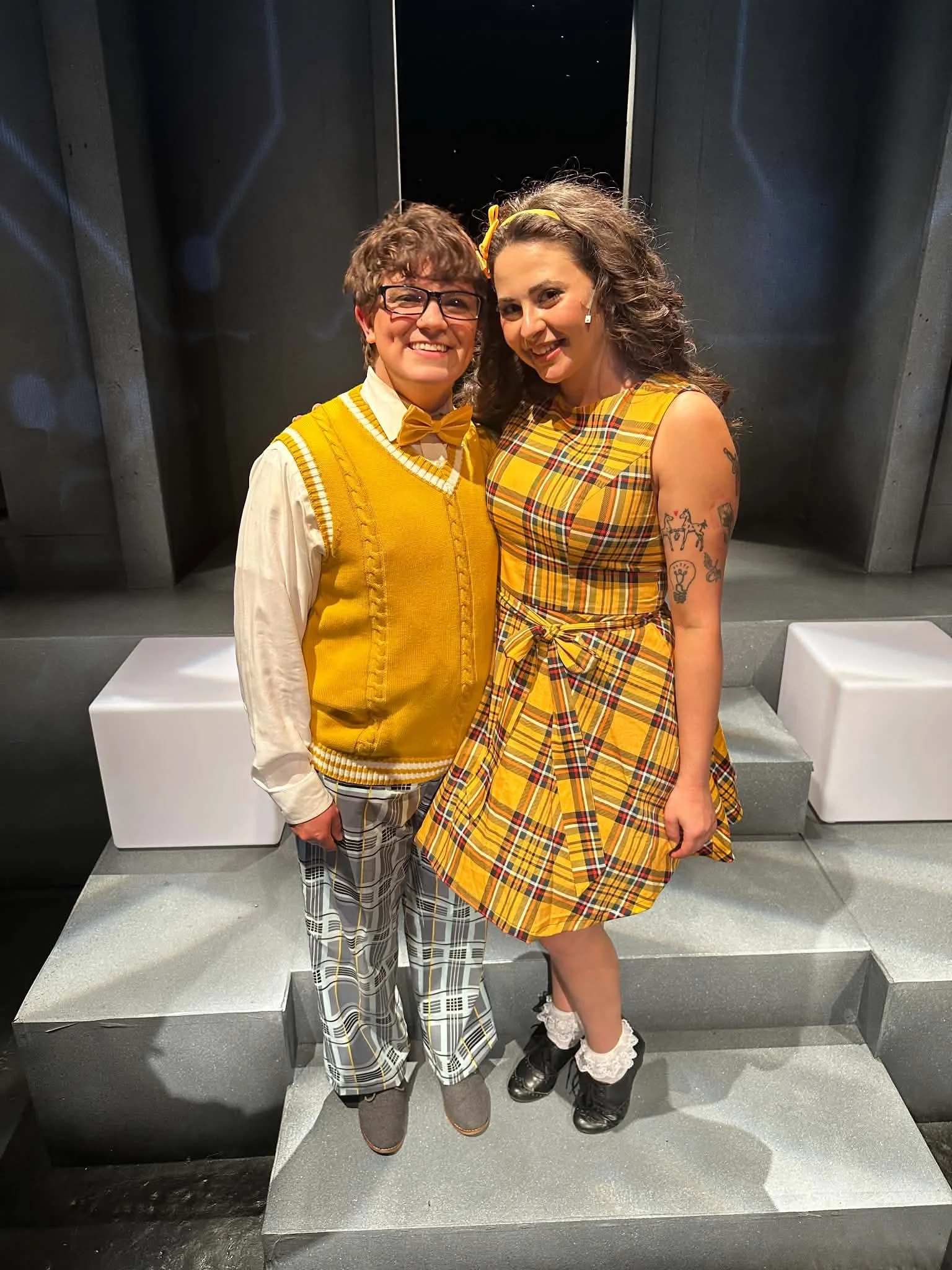
At the emotional center of the production is Smize, whose carefully maintained confidence masks a much deeper vulnerability. Mae Lederman captures that duality beautifully, nowhere more effectively than during "Sad on the Inside," where the cracks in her character's carefully constructed exterior become impossible to ignore. Mae's vocal performance is among the evening's strongest, demonstrating both an impressive range and an emotional honesty that continually draws the audience closer to the character. That work culminates in the touching duet "Anyway" with Elliott Lovett’s Nerd Face, sung with warmth, sincerity, and genuine optimism that makes it one of the musical's standout moments.
That emotional core is balanced by the boundless optimism of Sunny. Evan Ponyah attacks every entrance with infectious energy, impeccable comic timing, and a rapid-fire delivery that perfectly suits the character's relentless positivity. Sunny rarely slows down, yet Evan maintains remarkable clarity while never sacrificing the character's enthusiasm, creating one of the production's most consistently entertaining performances.
Serving as the production's intellectual anchor is the aforementioned Nerd Face, a character introduced to Emojiland after the system’s latest update. Elliott navigates the show's barrage of technological jargon with such confidence that even the most technical dialogue sounds perfectly natural. That precision makes the relationship between Nerd Face and Smize especially engaging, particularly during "Zeroes and Ones," where Nerd Face's analytical precision and Smize's emotional openness complement one another beautifully, reinforcing one of the musical's central ideas that logic and feeling need not exist in opposition.
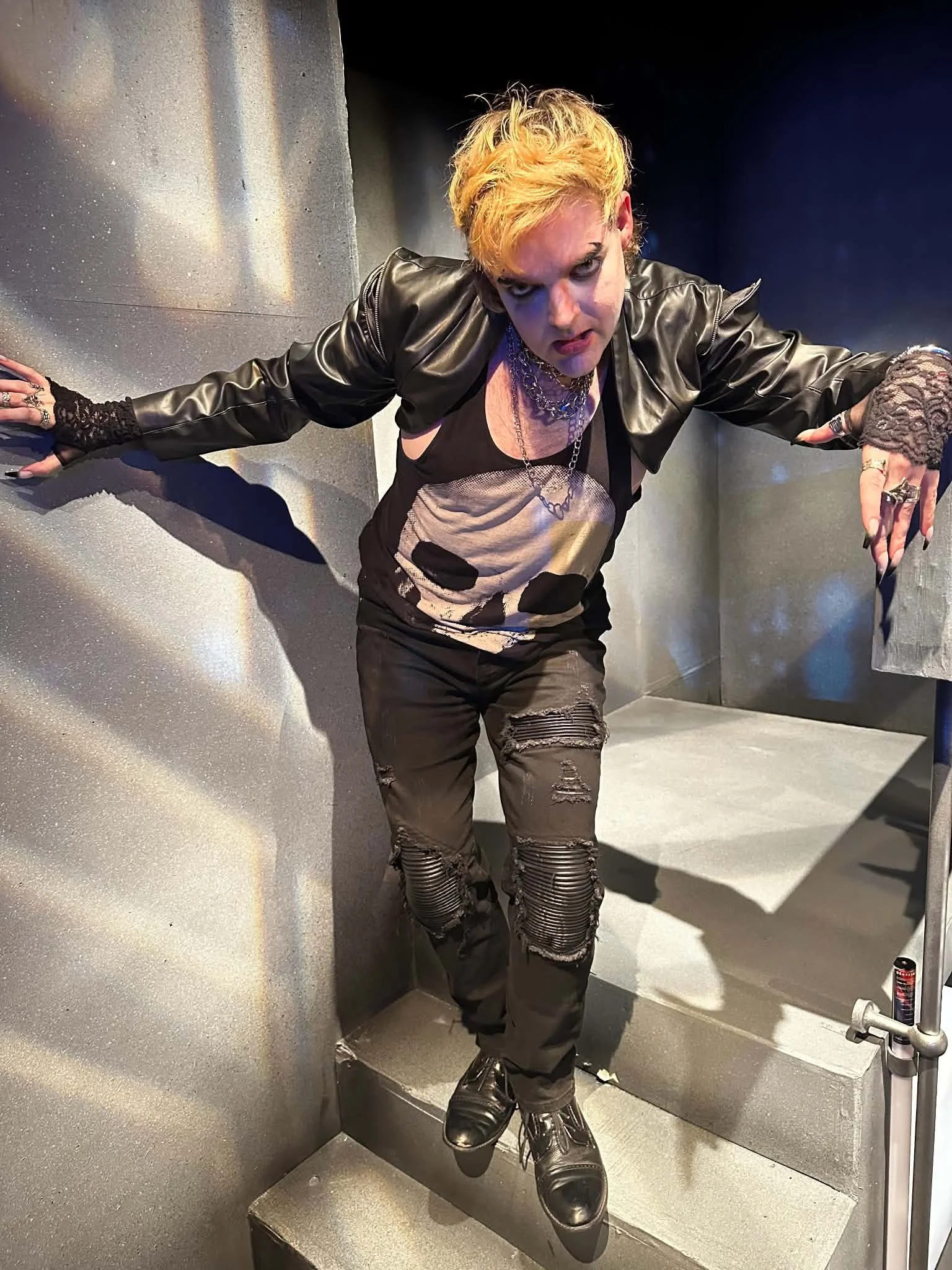
The musical also finds surprising depth in Skull, a character who could easily become little more than a running joke. Instead, Teddy Meyer gives Skull genuine humanity, transforming the character's desire for deletion into an exploration of purpose and belonging. The biohazard conversation with Nerd Face, in which Skull attempts to convince Nerd Face to create a virus capable of deleting him, becomes one of the production's more thought-provoking sequences. Teddy also shines during the ensemble number "Virus," where his commanding stage presence naturally draws the eye. Vocally, he delivers a strong performance throughout, though there are a handful of moments near the very top of his range where the power of the voice softens slightly. It is a minor callout in an otherwise solid performance.
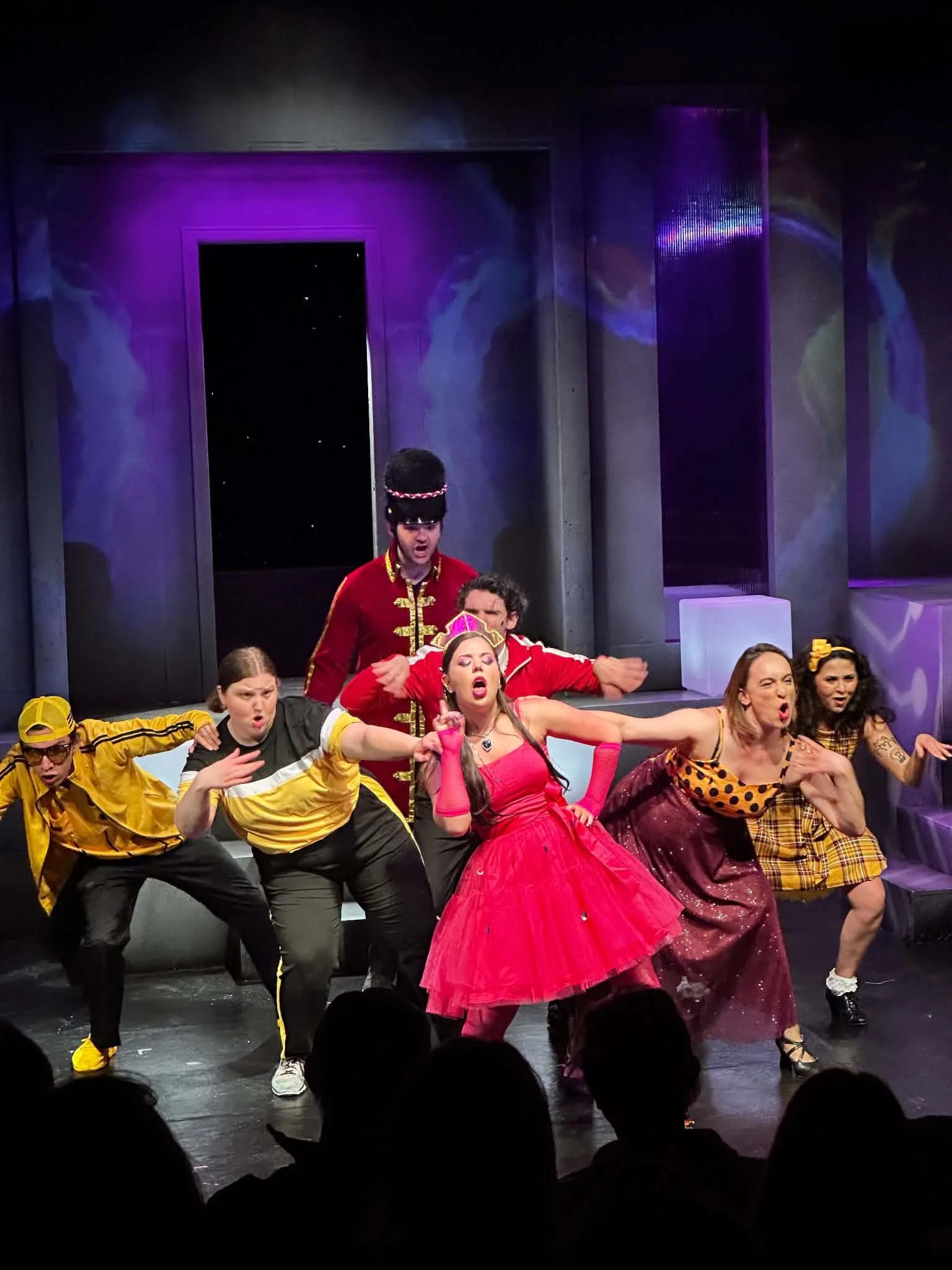
The themes of power and socioeconomic disparity, meanwhile, are embodied by Princess and Prince. Victoria Cooper and Jeronimo Thomas portray the royal pair with an appropriately entitled confidence and a lack of humility, illustrating how authority often seeks to preserve itself by limiting opportunities for others, a timely lesson in our current political and social climate.
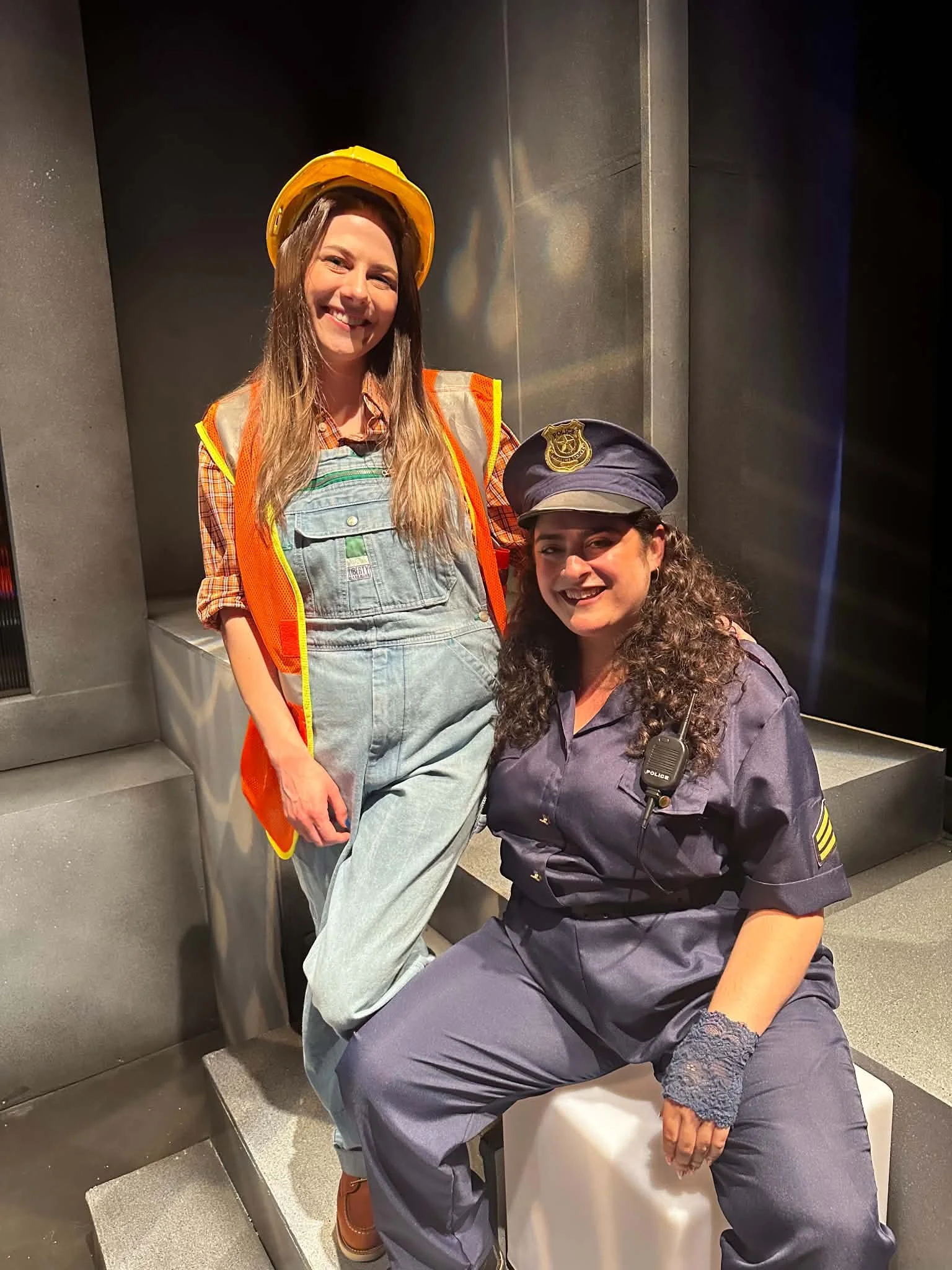
Even the featured roles leave lasting impressions. Stacie Hart's Pile of Poo earns some of the evening's biggest laughs with a delightfully absurd musical number called, coincidentally (or not) “Pile of Poo”, while Rebekah Nachman's Police Officer and Emily Courcy’s Construction Worker bring a fun, but thought provoking, relationship to bear when they are forced to weigh their relationship against their duty. Together with the rest of the company, these performances reinforce the idea that there are no throwaway characters in Emojiland; every emoji contributes to the larger digital ecosystem.
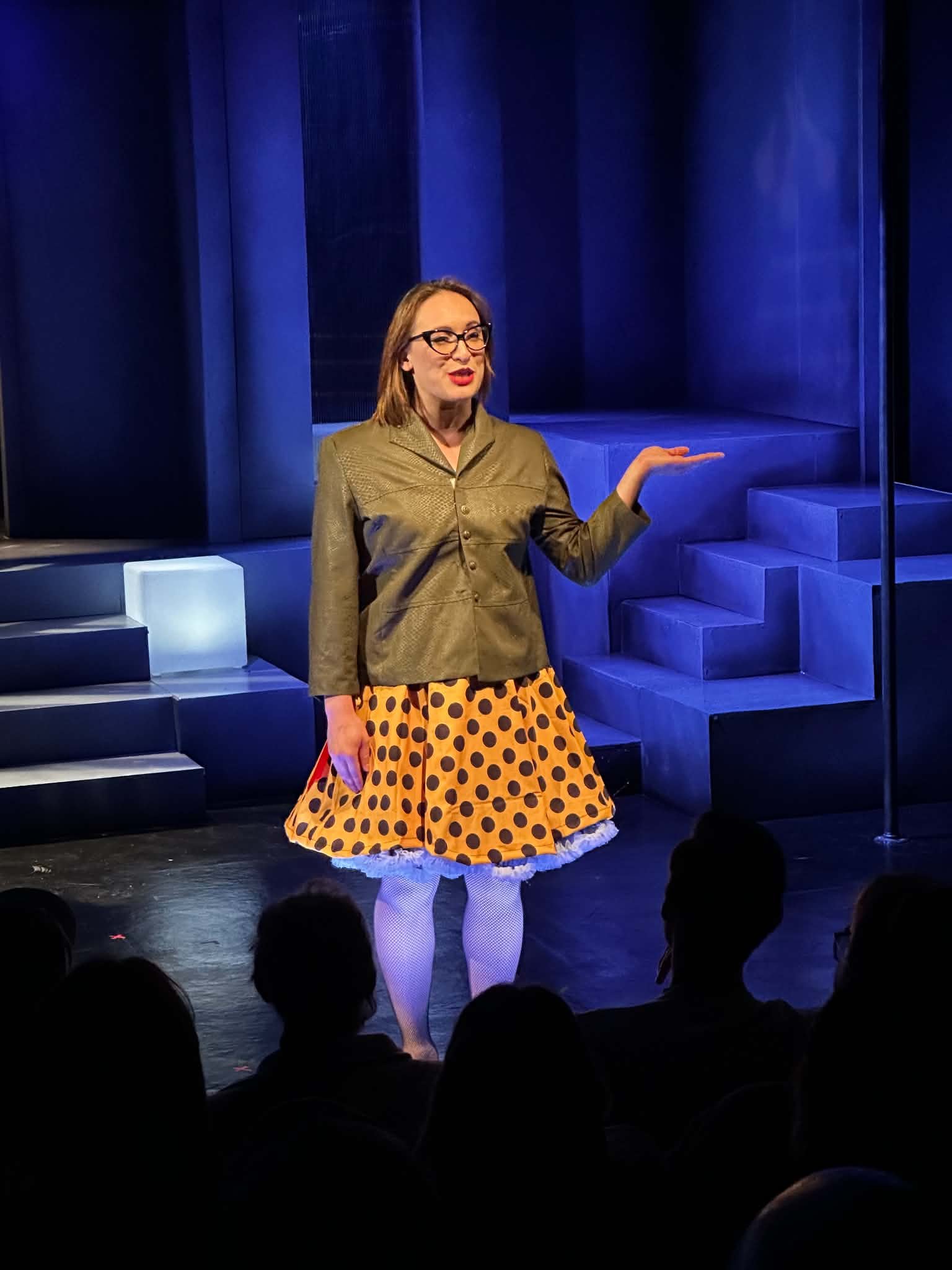
Visually, this production is every bit as clever as its premise. Amy Hockman's costume design immediately communicates each emoji's personality, with color palettes that reinforce not only the emotions they represent, but often their occupations and status within the digital world. Hillary Gault keeps the stage in near-constant motion, yet the choreography never feels crowded despite the sizable ensemble. Instead, it creates an organized sense of controlled chaos that mirrors the constant activity happening inside a smartphone.
Mark Chenovick's technical design ties everything together beautifully. His lighting relies heavily on color to communicate theme rather than simply mood. Red accompanies moments involving deletion, while green transforms the stage into a visually toxic environment during the biohazard sequences between Skull and Nerd Face. Throughout the production, color becomes another storytelling device, expressing ideas before a word is spoken. His projections, featuring animated circuitry and digital imagery reminiscent of the inside of a smartphone, continually reinforce the setting and add another layer to the illusion that the audience is witnessing the inner workings of a digital device. Combined with the geometric scenic design, dominated by strong right angles, and cleverly stylized props that embrace the playful nature of the world, the visual elements create a cohesive digital landscape that remains engaging throughout.
I may still question whether emojis are the best way to tell this story. But by the end of the musical, that question no longer feels particularly important. Emojiland works because it uses a language familiar to one generation to teach lessons that resonate with all of them. Under Scot Charles Anderson's direction, SecondStory Rep has found the humanity hidden behind those tiny digital icons, reminding us that behind every face we present to the world is a person carrying far more than anyone else can see. And if a musical about emojis can accomplish that, perhaps that's reason enough for it to exist.
The SecondStory Rep production of Emojiland: The Musical runs on stage at Redmond Town Center through July 19. For more information, including ticket availability and sales, visit https://www.secondstoryrep.org/.
Photo credit: Scot Charles Anderson