
Stage Review - I Love You. I Miss You. I’m Glad You’re Gone
Presented By: Key City Public Theatre - Port Townsend, WA
Show Run: March 05 - March 15, 2026
Date Reviewed: Friday, March 06, 2026 (Opening Night)
Run Time: 70 Minutes (no intermission)
Reviewed by: Greg Heilman
One of the things that makes theatre such a powerful storytelling medium is its ability to take deeply personal experiences and transform them into something communal. A story that may begin as one person’s lived experience becomes something an audience can laugh with, reflect on, and even find pieces of themselves within. That idea sits at the heart of I Love You, I Miss You, I’m Glad You’re Gone, the solo performance written and performed by Maritess Zurbano, directed by Claudine Mboligikpelani Nako and currently on stage at Key City Public Theatre in Port Townsend through March 15.
The piece is autobiographical in nature, drawing from Maritess’s own experiences navigating illness, identity, and family while weaving in elements of Filipino folklore, memory, and imagination. Originally developed with support from the Seattle Office of Arts & Culture, the play blends storytelling, humor, and theatrical illusion into a meditation on survival and transformation.
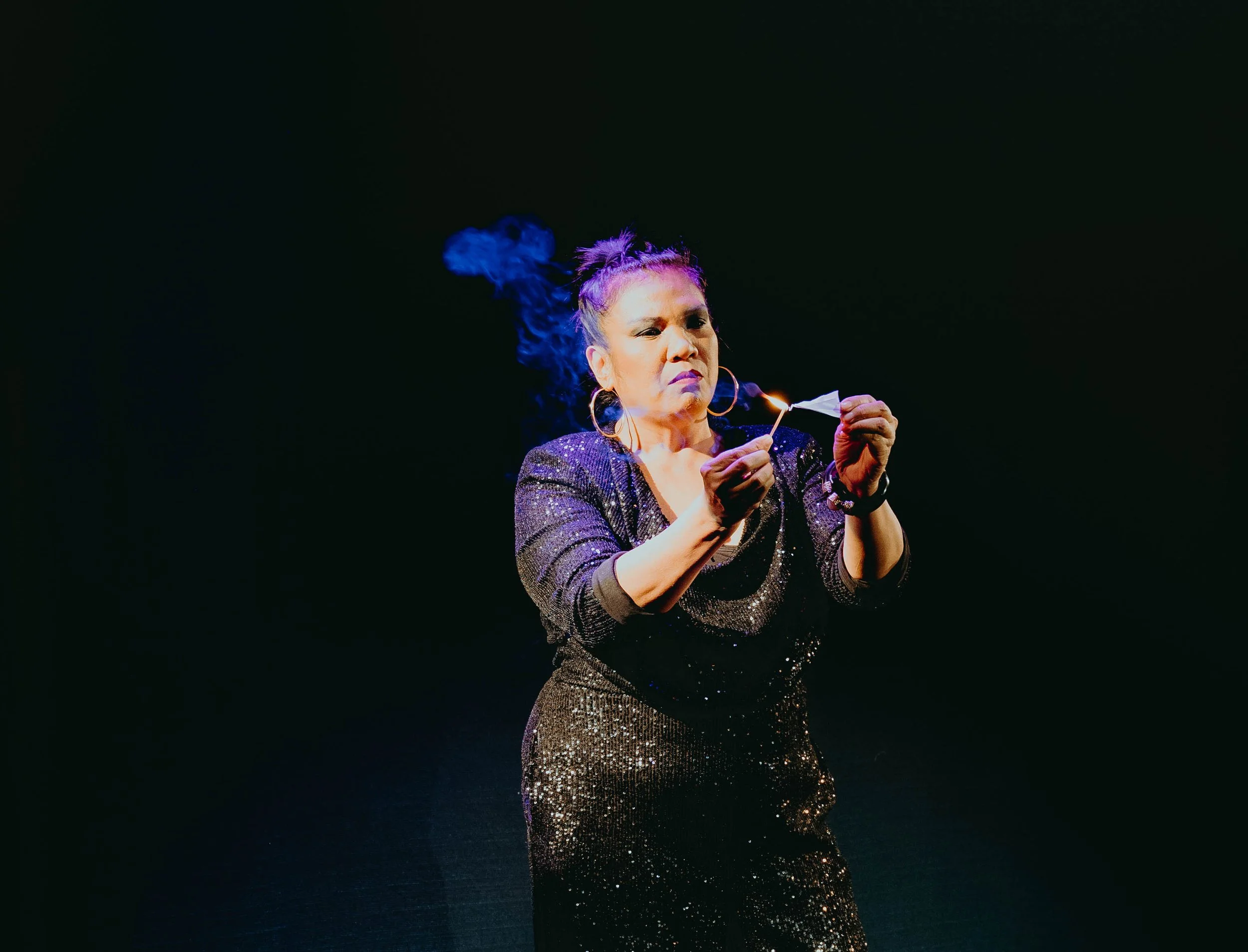
The evening begins with Maritess tapping into her experience as a practicing magician in Las Vegas. She opens the show with spectacle and a few card tricks, immediately establishing the theatrical framework that carries through the evening. The magic is not simply a flourish to entertain the audience, but rather the storytelling device that allows her to guide us through the narrative. Like any good magician, she uses illusion, misdirection, and presentation to move the audience from one moment to the next.
That story takes us back several years to a moment that changed her life: a cancer diagnosis. What follows is a nonlinear journey through memory and imagination as Maritess uses the conventions of a magician’s performance to explore the physical and emotional realities of illness. The tricks and illusions become metaphors, culminating in what she refers to as the “vanishing cancer trick,” a continuum that blends humor, theatricality, and vulnerability, as well as a callback to the overarching presence that magic is (and has been) in her life.
Along the way, the piece expands beyond autobiography into something mythic. Maritess folds Filipino history and folklore into the narrative, introducing spirits, ancestors, and supernatural figures that inhabit her memories and imagination. In one moment she describes being haunted by an ancestral spirit connected to a tree, an image that evokes both cultural memory and the idea of roots extending across generations. In another story, she encounters a vampire-like figure who transforms her into a spirit herself, blurring the line between the real and the symbolic.
These elements allow the play to explore complicated emotions surrounding the body, identity, and survival. References to her mastectomy are woven into the storytelling with honesty and at times surprising humor. A recurring thread through the piece involves attempts to call her mother, an emotional anchor that grounds the more fantastical elements of the narrative in a deeply human longing for connection.
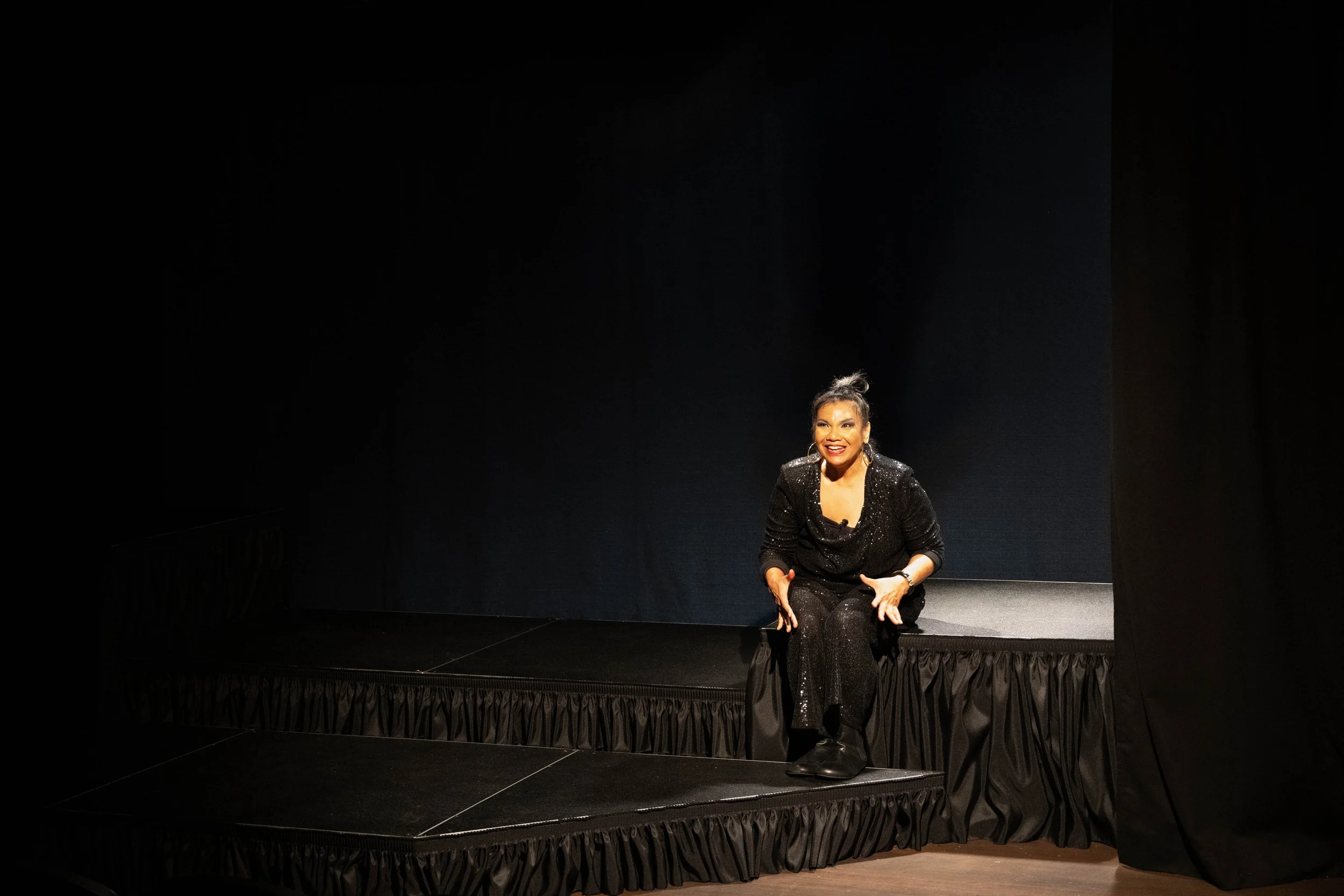
As a solo performer, Maritess demonstrates not only her storytelling ability but her full range as an entertainer. Throughout the performance she draws the audience fully into her story, guiding them through moments of humor, reflection, and vulnerability in a way that allows the emotional weight of the piece to ripple through the room. Her versatility with accents is on full display as she shifts between the various characters that populate the story. One particular voice—that of her son—feels slightly younger than what might be expected for the character’s age, but it does little to diminish the overall effectiveness of her ability to embody the people who inhabit her memories.
Director Claudine Mboligikpelani Nako helps shape the performance into something that feels both intimate and theatrical. The design elements play an important role in supporting the storytelling. Michelle Cesmat’s simple but smart scenic design provides a flexible space that allows the piece to move fluidly between grounded moments and those that feel more fantastical. Lighting by Karen Anderson and Brendan Chambers, along with Dalin Costello’s sound design, help build the atmosphere of the piece, reinforcing both the theatrical magic of the opening and the shifting emotional landscapes that follow. Costume designer Corinne Adams adds visual texture to Maritess’s transformations throughout the performance as well, consistently working with Maritess’ storytelling to bring both the humor and the heart to the fore.
Part memoir, part cultural exploration, and part theatrical magic act, I Love You, I Miss You, I’m Glad You’re Gone explores how we process some of life’s most difficult experiences. Rather than offering a simple resolution, Maritess invites the audience to consider how memory, culture, imagination, and humor can coexist when confronting illness and survival. It’s a play reminds us that storytelling itself can be its own form of magic, transforming personal experience into something shared, and allowing an audience to witness the resilience required to turn life’s most difficult chapters into art.
“I Love You. I Miss You. I’m Glad You’re Gone” runs on stage at Key City Public Theatre in Port Townsend through March 15. For more information, including ticket availability and sales, visit https://keycitypublictheatre.org/.
Photo credit: Mel Carter