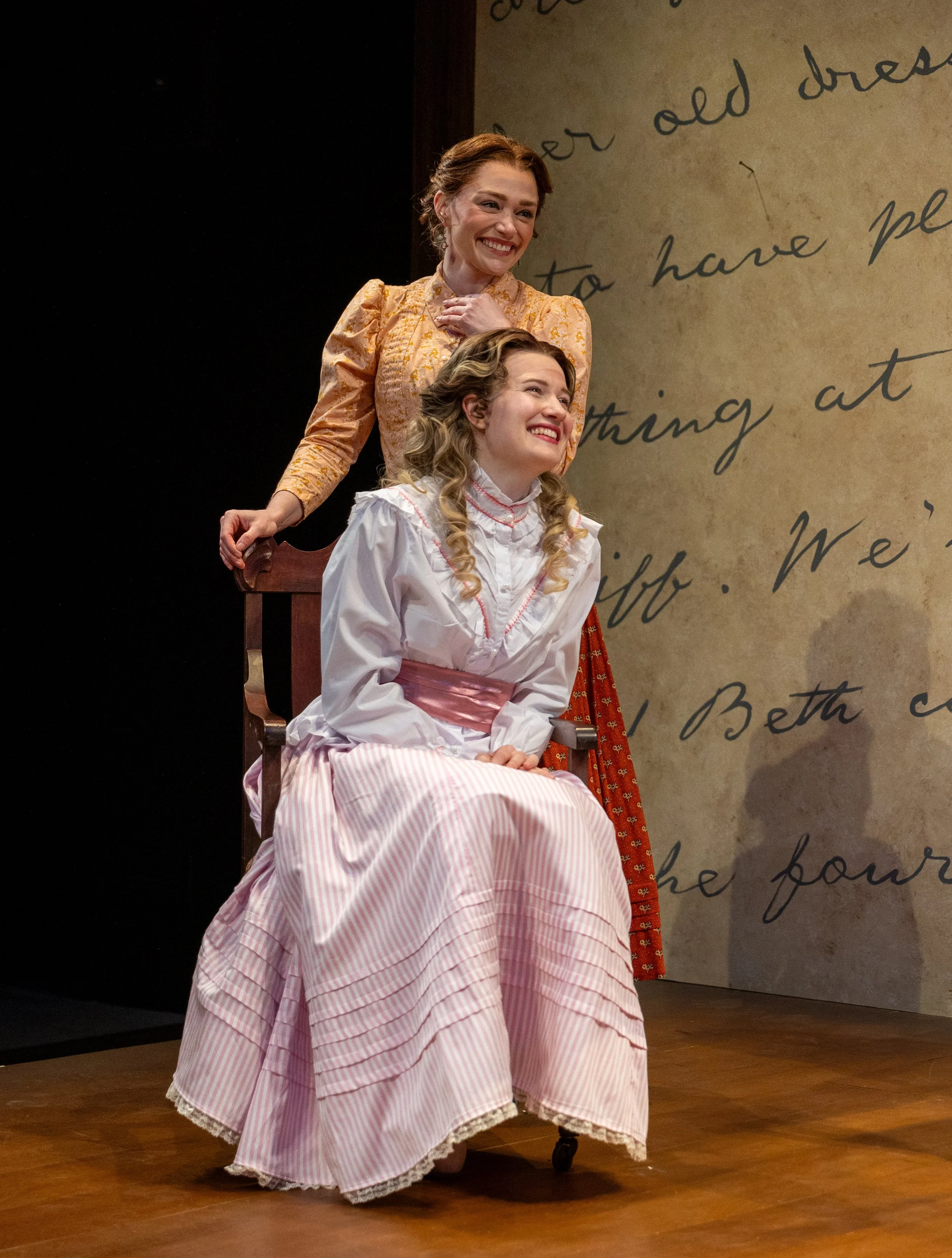

Stage Review - Little Women
Presented By: Taproot Theatre - Seattle, WA
Show Run: November 18 - December 26, 2026
Date Reviewed: Saturday, November 21, 2026 (Opening Weekend)
Run Time: 2 Hours, 15 Minutes (including at 15-minute intermission)
Reviewed by: Greg Heilman
Louisa May Alcott is best known for her stories of the March sisters, whose stories she drew in part from her own life and relationships with her siblings, and together becaome the timeless classic Little Women. And while the novel (or pair of novels to be more precise) was, and is, a triumph, it’s easy to overlook the impact Alcott made on American literature in the process of creating it. She brought together elements of the domestic novel and the coming-of-age story, helping lay the groundwork for what we now think of as young adult fiction. She took girls’ ambitions seriously, including what it might cost them to insist on their independence. I hear echoes of her work in writers as different as Barbara Kingsolver and Miriam Toews, both favorites of mine and both authors I highly recommend. Her influence reaches into my own family, too. My grandmother and her sisters all cited Little Women as an inspiration in their pursuit of higher education, a path far less common for young women when they were growing up in the early 1900s.
There’s also something to be said for how often people have found a new way to tell the March sisters’ story, whether on television, in film, or on stage. I’ve seen three adaptations myself over the past few seasons, including a surprisingly good musical, and for my money, Lauren Gunderson’s version may be the most enjoyable of the bunch. Directed by Karen Lund, it’s on stage at Taproot Theatre’s Jewell Mainstage Theatre in Seattle through December 26.
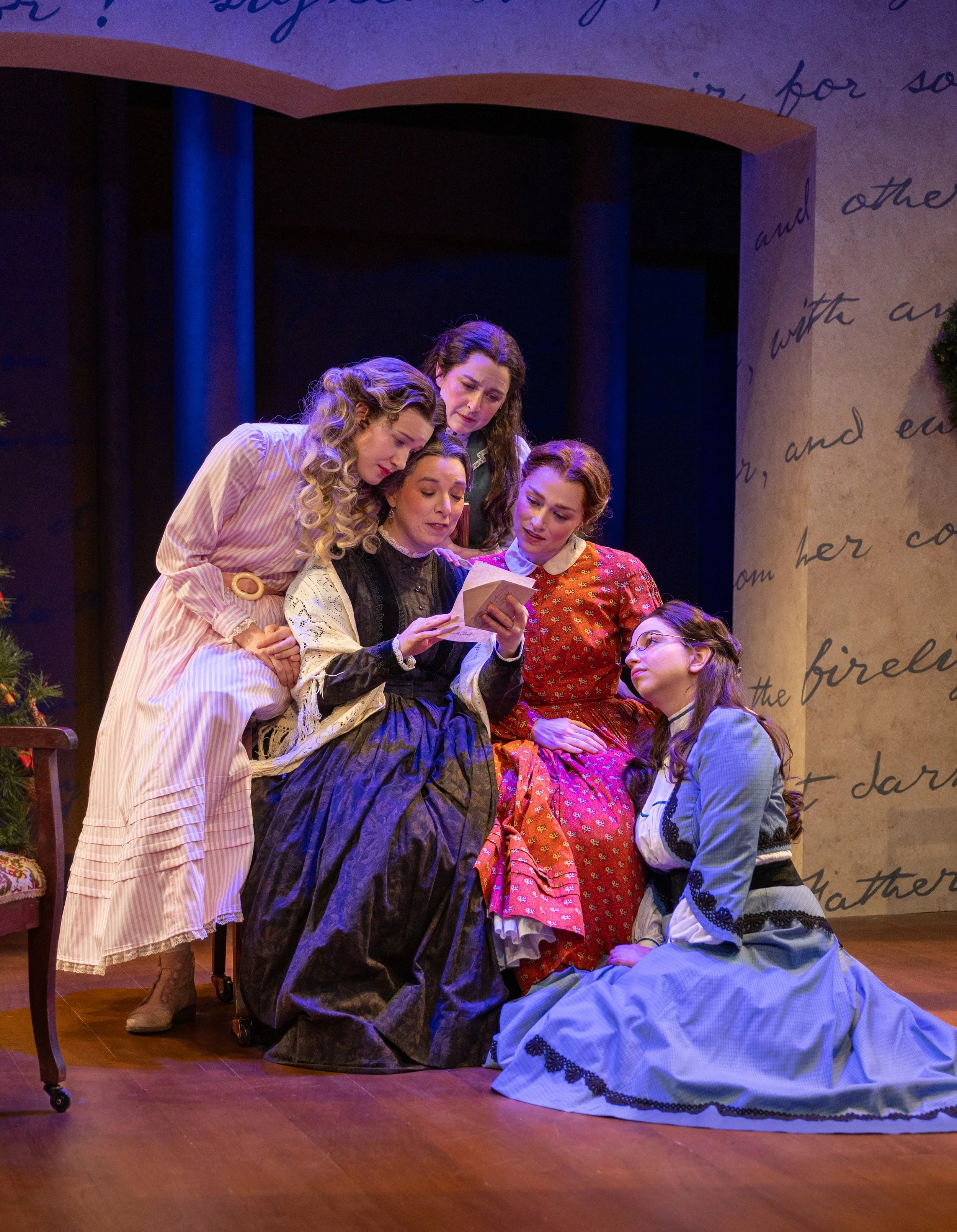
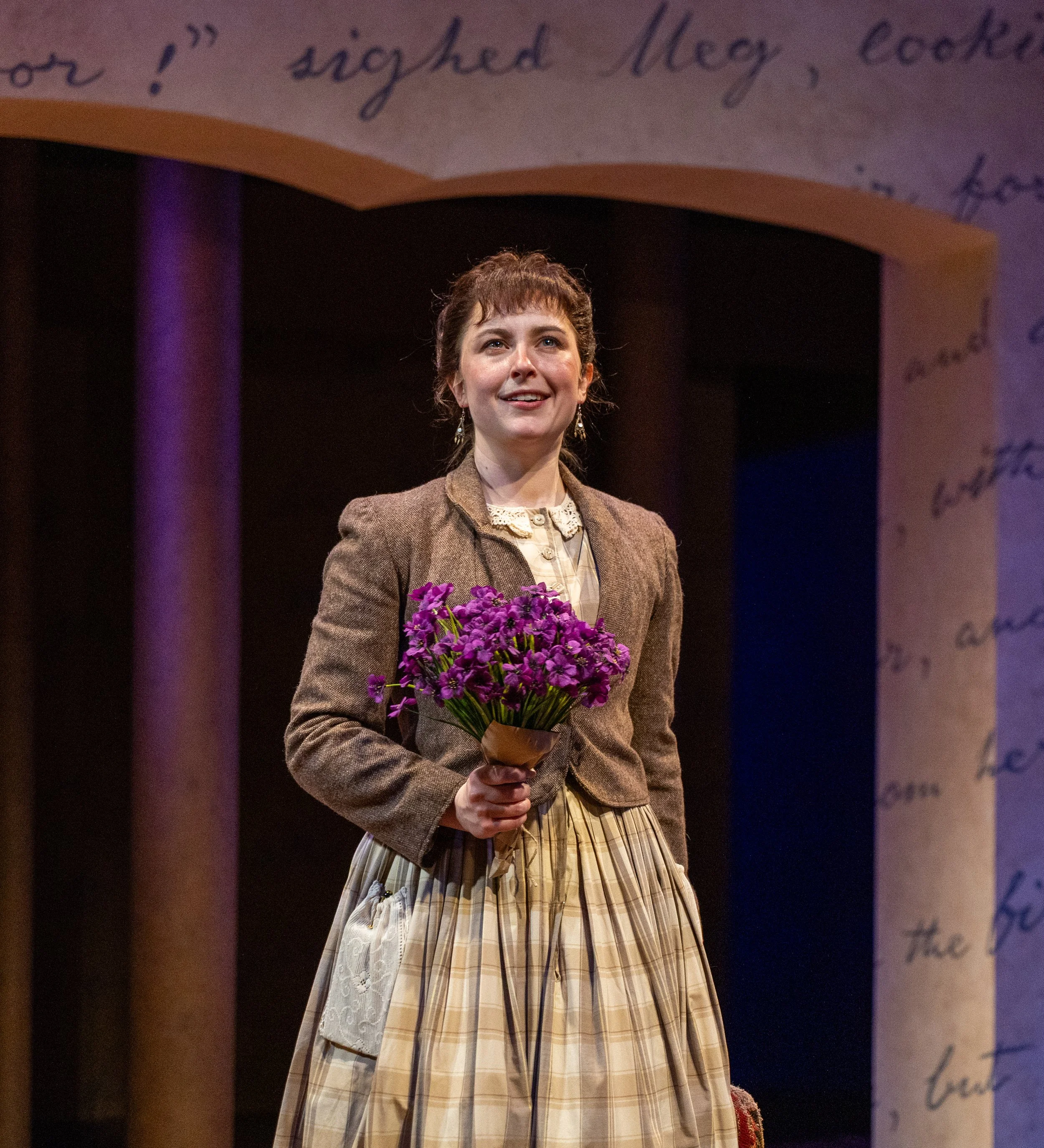
What I especially like about Lauren’s version is the way she makes the writing of Little Women part of the play. Karin Terry opens as Louisa, introducing her sisters and explaining who each becomes in the novel before stepping into the story herself as Jo. One moment Louisa is telling the audience about her family, and the next there are four sisters in a room together, each with a personality distinct enough to see how much the writer had to draw on. As the sisters grow up, each begins to imagine a different future, and Jo, who wants to be a writer herself, is particularly protective of the freedom to decide what hers will look like.
Under Karen’s direction in this production, the timing of the dialogue is crisp, especially in the exchanges among the sisters, where a quick reply can tell the audience as much about their history as anything Louisa has to say about them. That precision carries over into the shifts between narration and dialogue, and between scenes as well, the latter underscored by Vivaldi. The transitions are seamless, and even with three years separating the two acts, there’s a sense of continuity in how the story moves. Karen keeps the show moving at a solid pace and knows when to slow it down. When she gives a scene more time, as she does when Beth and Jo are alone together deep into Act 2, there’s still something in the exchange that holds the audience’s attention.
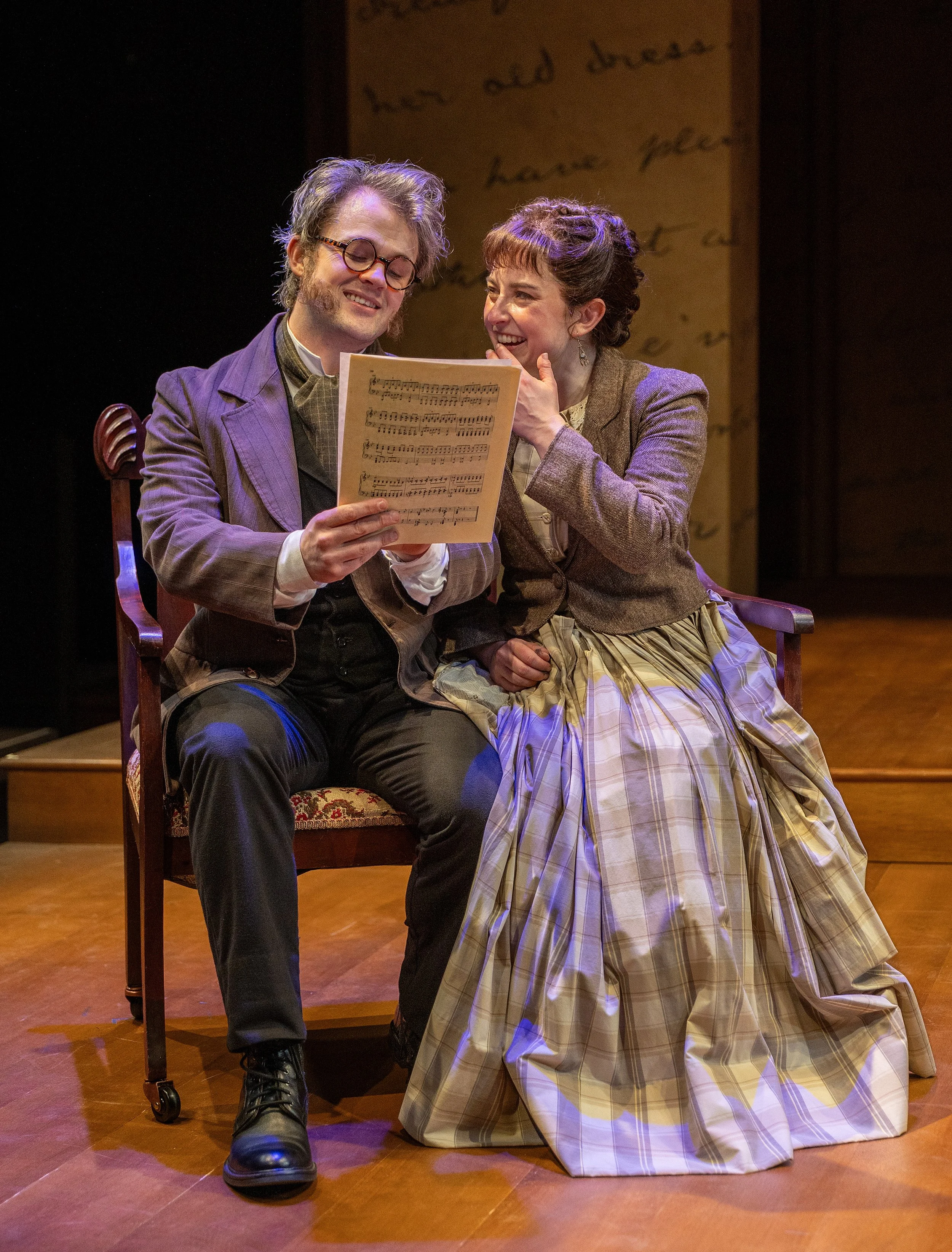
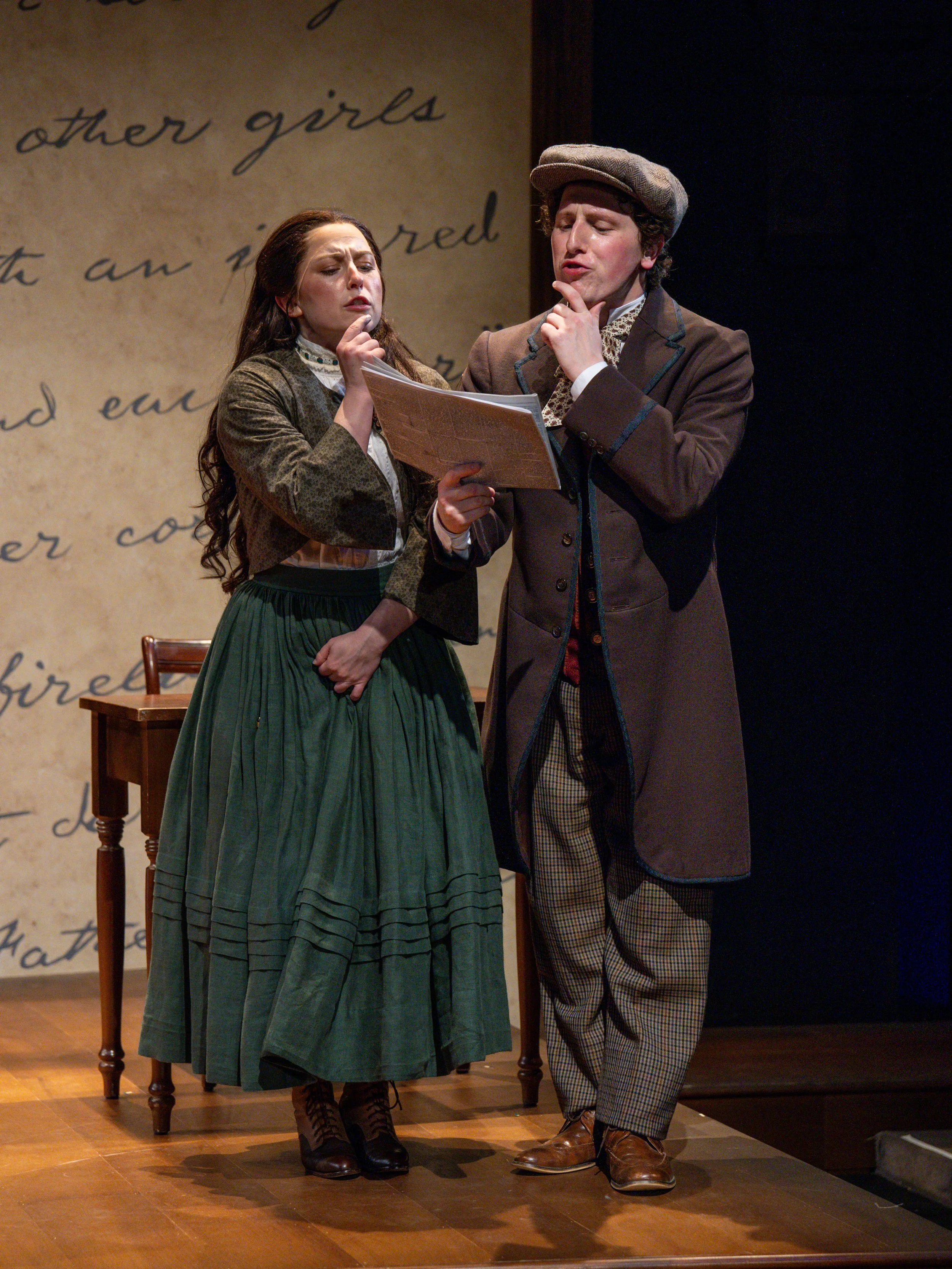
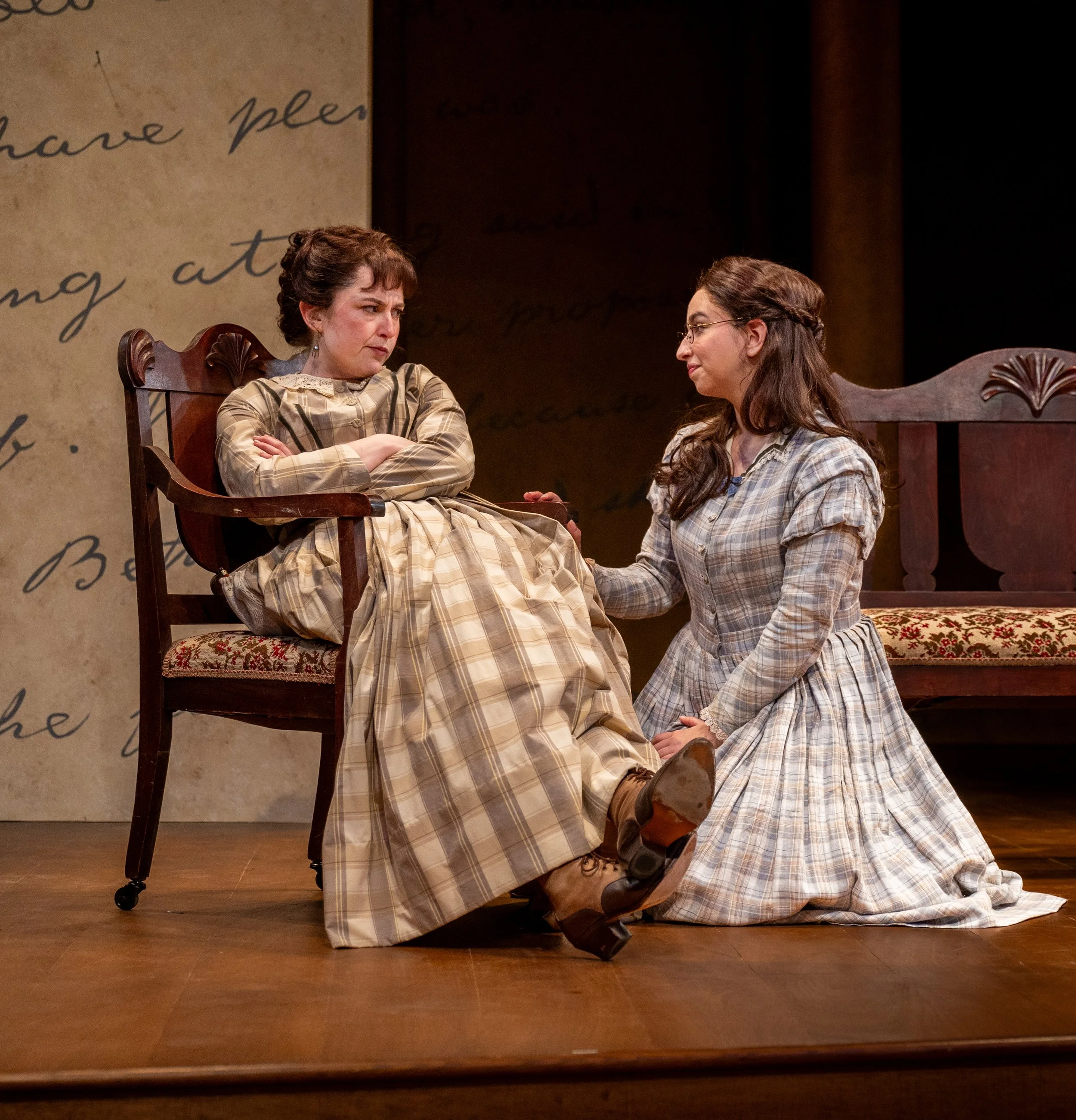
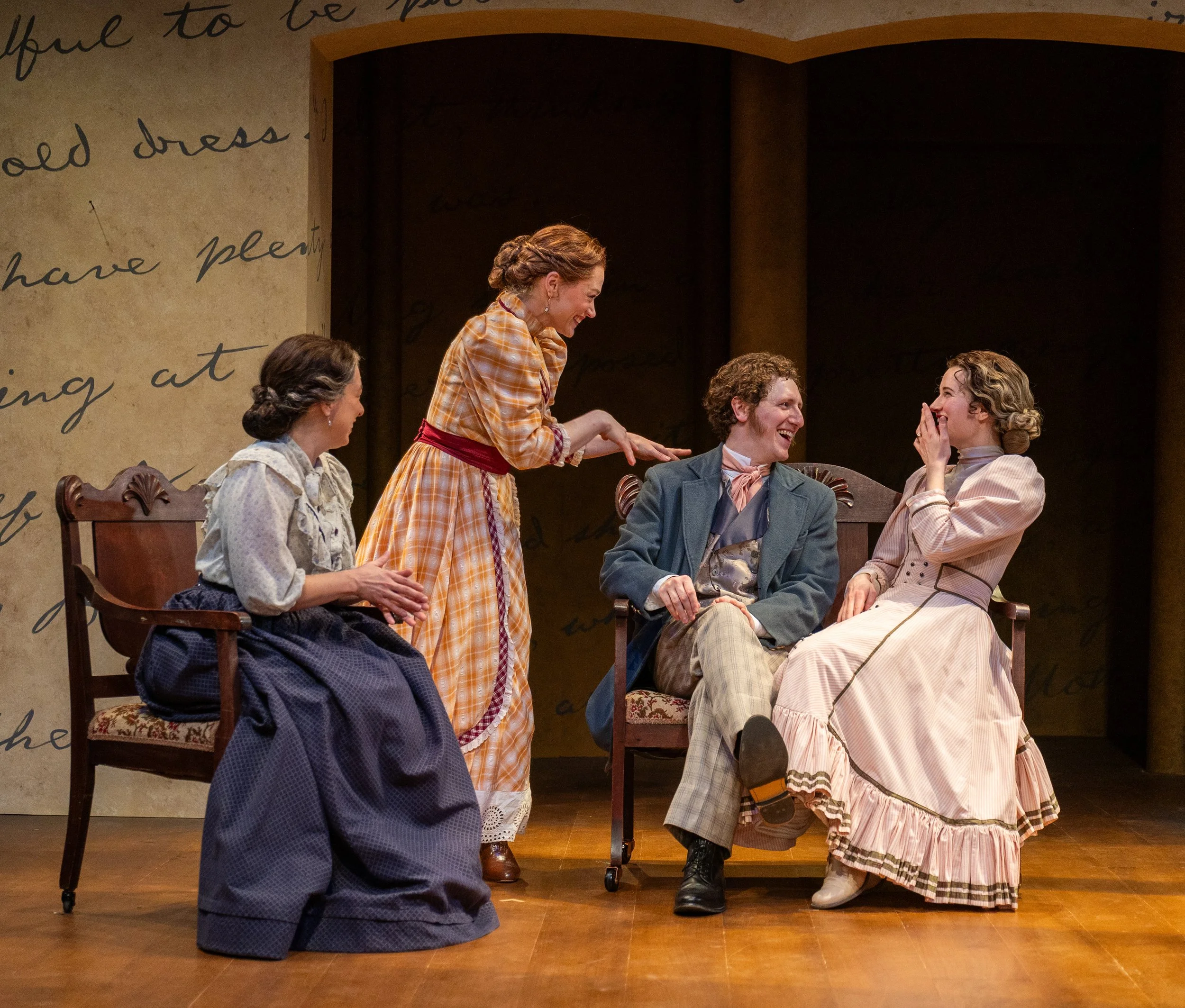
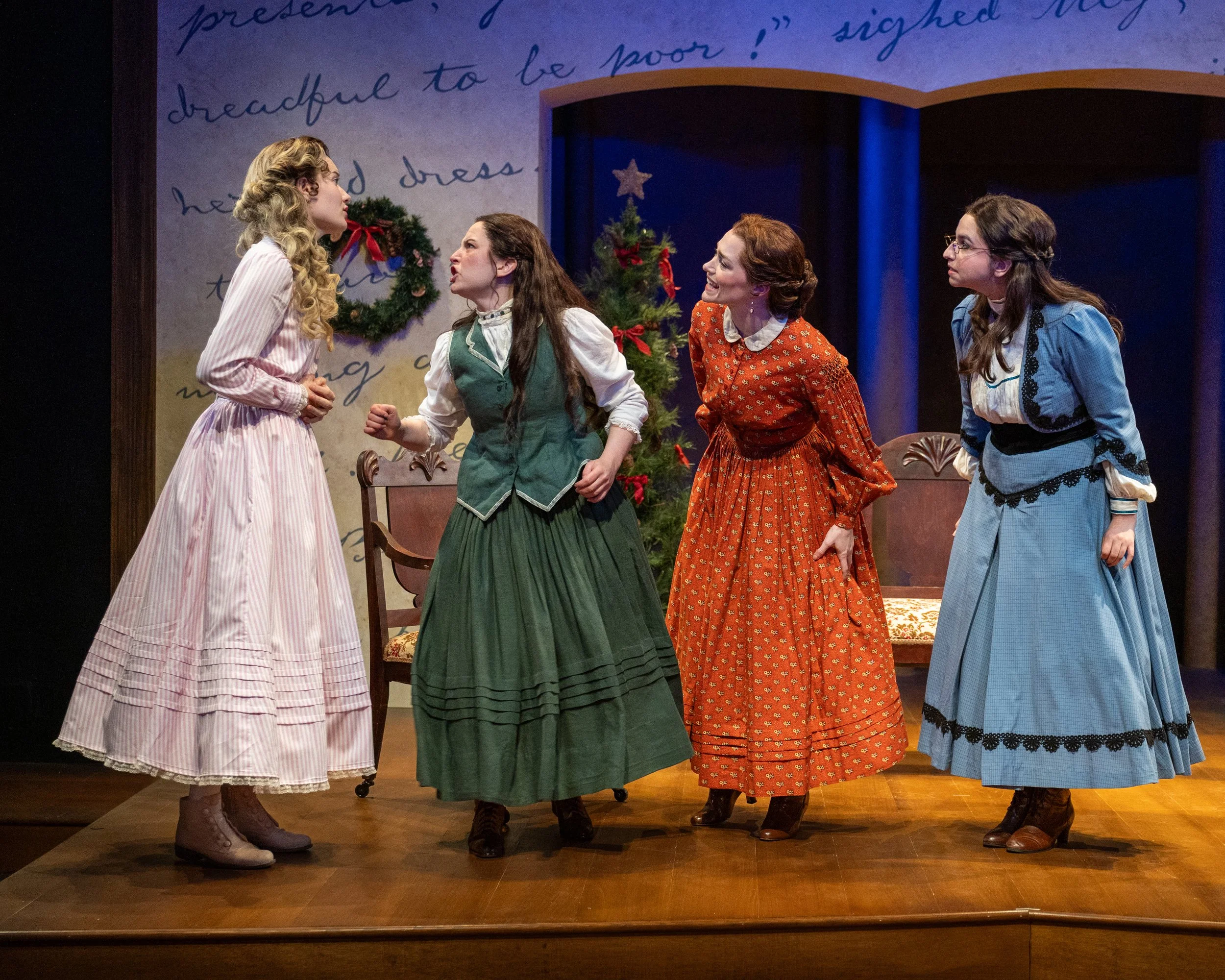
Mark Lund’s set extends the invitation into the story. A multilevel platform sits in front of a proscenium that suggests the outline of a house, with a book-shaped opening and text from the novel across the wall. It feels as though the audience enters the March home through the pages Louisa is writing, and the set pieces follow that same logic. A table can become a piano simply through the way the actors use it. Pete Rush’s costumes are beautiful, and Jenn Hill’s wig design is especially good. Jo has three distinct hairstyles over the course of the show, and the changes feel as natural as the shifts in what she wears. They complement the way Karin changes as Jo, carrying the recognizable energy of the girl the audience first meets into the young woman she becomes.
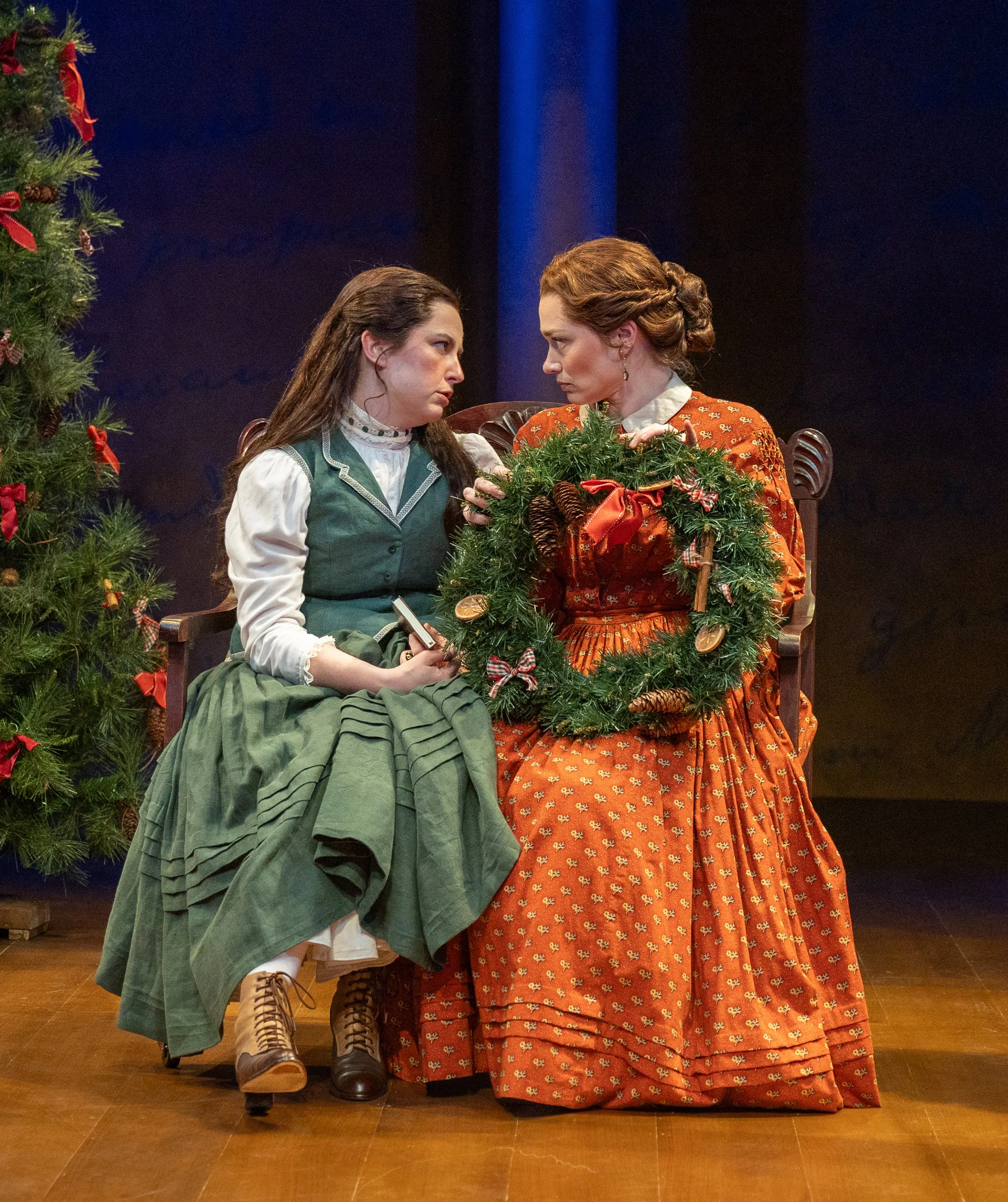
Another strength in the combination of Karen’s direction and her casting comes through as all four actors playing the March sisters carry a good sense of who their characters are, much of that on display in how they move and speak around one another. Karin is fantastic as the tomboy Jo, confident, fearless, and energetic enough that even when she has something to say, her body often gets there first. There’s something almost addictive about independence for this Jo, and Karin gives that quality enough force that you can see both what it makes possible for her and how it complicates her relationships.
Alongside Jo, Claire Marx gives Meg the composure of an older sister and lets a little romantic idealism peek through it. Early on, Meg has a clear picture of what she wants married life to look like, and Claire plays that certainty with the same sincerity she brings to Meg’s more practical outlook as she grows older. There’s still something of the romantic in her as she comes to appreciate the everyday work of building a life with someone. Through all of it, Claire keeps Meg’s affection for her sisters close to the surface. As Meg starts a family of her own, it’s easy to see how much of what she wants for that family comes from the one she grew up in. Priya Hendry’s Beth is softer in both personality and movement, while Juliette Jones brings a youthful exuberance to Amy that suits the romantic in her. The sisters feel like people who know one another well enough to get on each other’s nerves and still want to be in the same room.
Will Rader as Laurie is a good match for Karin, and the scene in which Jo rebuffs Laurie shows how well they play off one another. There’s a change in the cadence of their dialogue as the ease they usually have together starts to disappear, and both actors know just how long to let a line sit before the other responds. Jesica Avellone is solid as Marmee and wonderfully funny as the stodgy Aunt March, a woman whose certainty about how other people should conduct their lives makes her a pleasure to watch. And among the three roles Quinn Armstrong plays, I particularly enjoy his Professor Friedrich. He has a good singing voice, a convincing accent, and a funny way of inhabiting the professor that makes his scenes with Jo a delight.
In the most poignant part of the show, Karen lets the tension build as Beth takes a turn for the worse, then gives Beth and Jo one of the quietest scenes in the production. Beth asks Jo to take over her role in the family, a request that carries particular weight for someone who guards her independence as fiercely as Jo does. Tucker Goodman’s lighting has been subtle throughout, and here it looks like sunlight coming through a window. There’s the sound of birds outside. Karin and Priya have room to let the sadness of what Beth is asking settle between them, and the ordinary sounds and light around them make it feel like a moment these sisters might really have shared. The beauty in how this piece is constructed is in its subtlety, how faint sounds, small changes in lighting, and non-specific set pieces are used in concert with a wonderful cast and the audience’s imagination to bring a family’s struggles, joys, and heartache to life.
I keep coming back to my grandmother and her sisters when I think about this production. The March sisters imagine different lives for themselves, and that seems to me to be part of what gave the book such a hold on the women in my family. Each could read it and take something of her own from it. Lauren Gunderson and Karen Lund give the audience much the same opportunity at Taproot Theatre, opening the book, letting the sisters speak for themselves, and leaving room for someone looking in to imagine a life a little different from the one they’d expected.
Little Women runs on stage at Taproot Theatre, on their Jewell Mainstage, through December 26. For more information, including ticket availability and sales, visit https://taproottheatre.org/.
Photo credit: Bonnie Leung