
Stage Review - Love’s Labour’s Lost (Phoenix Theatre)
Stage Review - Love’s Labour’s Lost
Presented By: Phoenix Theatre - Edmonds, WA
Show Run: January 30 - February 22 2026
Date Reviewed: Friday, January 30, 2026 (Opening Night)
Run Time: 2 Hours (including a 15 minute intermission)
Reviewed by: Patrick Hogan
Until now, never in their eighteen-year history had Phoenix Theatre done a Shakespeare play. They have produced a parade of comic favorites through the years—shows like Inspecting Carol, Moon Over Buffalo, Becky’s New Car, and things in that vein. The only classics were The Miser in 2021 and an updated Tartuffe in modern language in 2024.
The first time is the charm, then, because Shakespeare's comedy turned out to be a natural fit. Phoenix has a rotation of reliably funny actors and directors who know how to make a comedy happen. You can always anticipate a good evening of laughs as you roll down the hill to their little theater in the Firdale neighborhood of Edmonds. That all works here in Love’s Labour’s Lost.
If you don’t know, the play can be synopsized quickly. The King of Navarre and his three lords make a pact to swear off women and devote three years to higher intellectual pursuits. They even begin calling themselves votaries. Their resolve crumbles almost immediately, though, as soon as the Princess of France and her three ladies show up.
The summary is short. And it’s all that’s needed because the show's focus is the gags, bits, and laughs that ride on the tension between what these lords and ladies say/pretend they want and what they really want, and what they will do to get it.
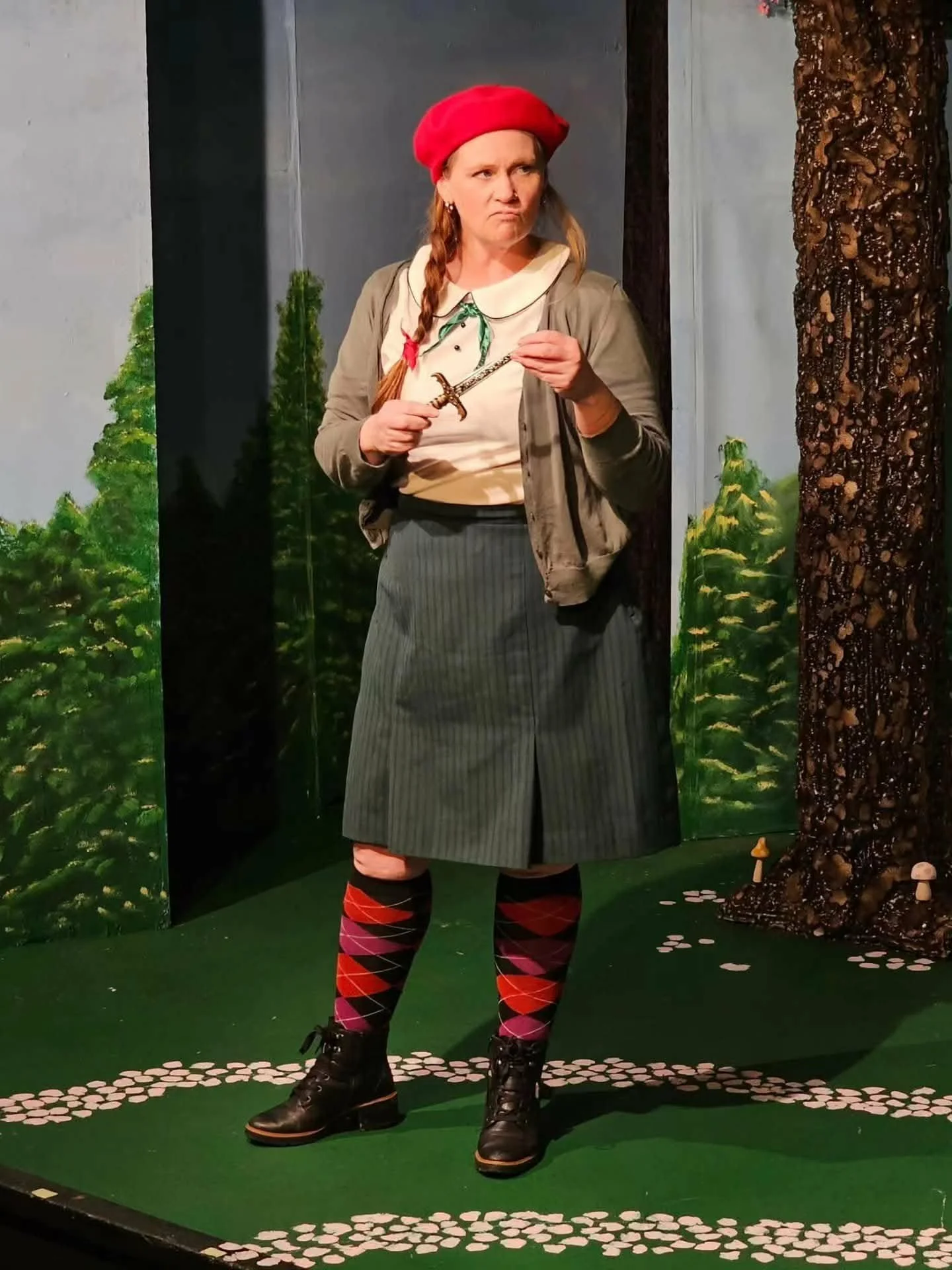
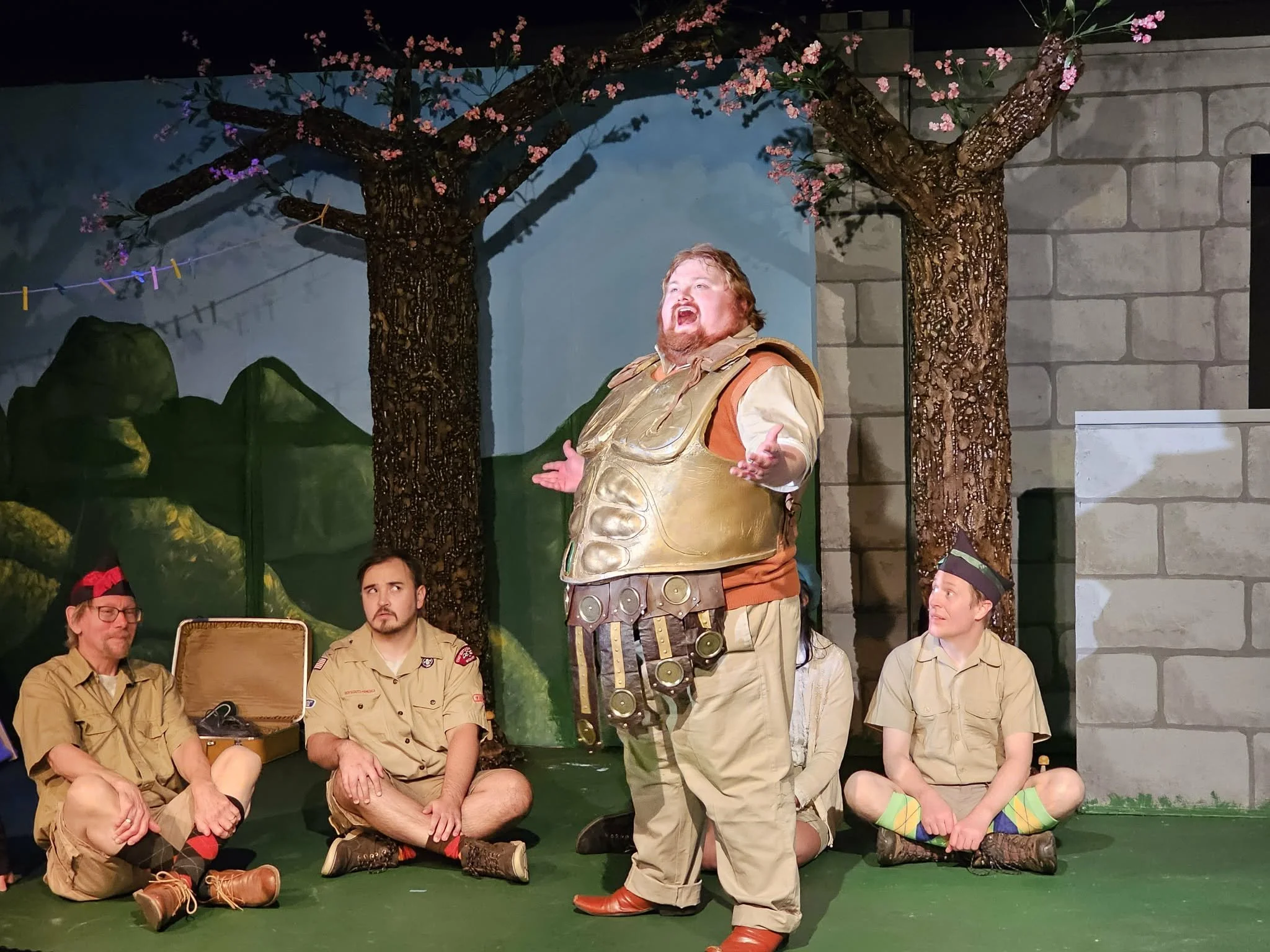
The performances were delightful, especially James Lynch’s Don Armado, with his swagger and his sword and his (outrageous) Spanish accent. Equally amazing was Costard as played by Brittany Lael, a natural clown, with her physicality and phony mustache.
Having only read the play, never seeing it staged, Jay Rairigh’s Lord Berowne fooled me. I expected a Benedick, but what I got was a Hamlet—though whiny in a humorous rather than murderous way. Or maybe Charlie Brown would be a better comparison. Either way, the sad sack bit worked.
The other Lords and the ladies deliver their main characters and get a chance to shine as their minor characters.
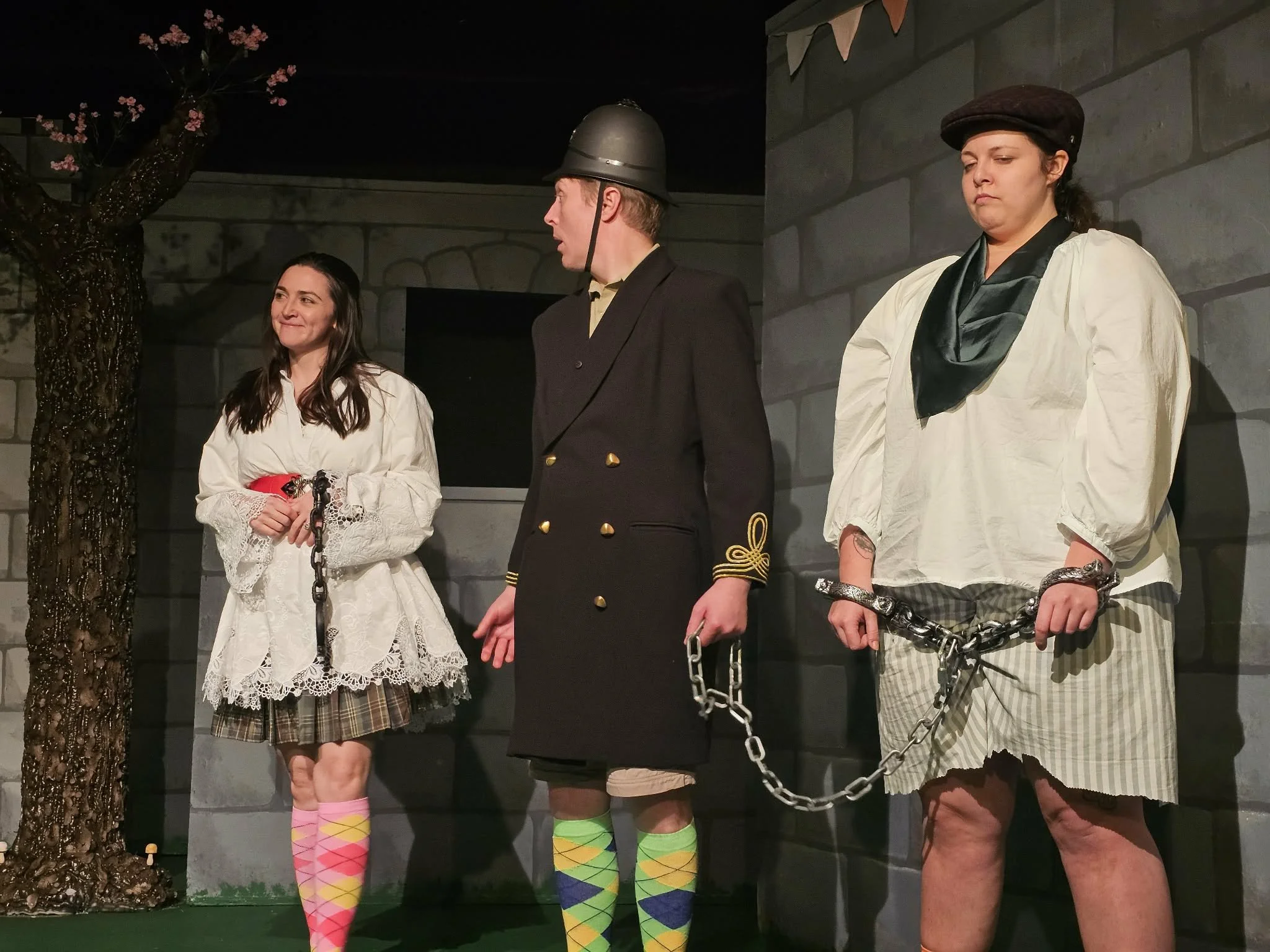
Ian Wright is Lord Longaville and also the boneheaded, what’s-all-this-then police constable Dull. Jayton Newberry is Lord Dumaine and also Holofernes, a bloviating schoolmaster. Angeline Nguyen plays both Lady Maria and the wisecracking, recorder-playing page Moth. Britta Grass gives Lady Rosaline a southern accent and a commanding vibe while joining in a comic duo with Holofernes as Nathaniel the Curate.
Lauren Kottwitz is cast as both Lady Katherine and as country wench Jaquenetta, but was unavailable on opening night. Brittany Lael stepped in as Lady Katherine and MaryKate Kustas performed as Jaquenetta in addition to her role as the Princess. It was seamless, except for all the places that the production wants the seams to show.
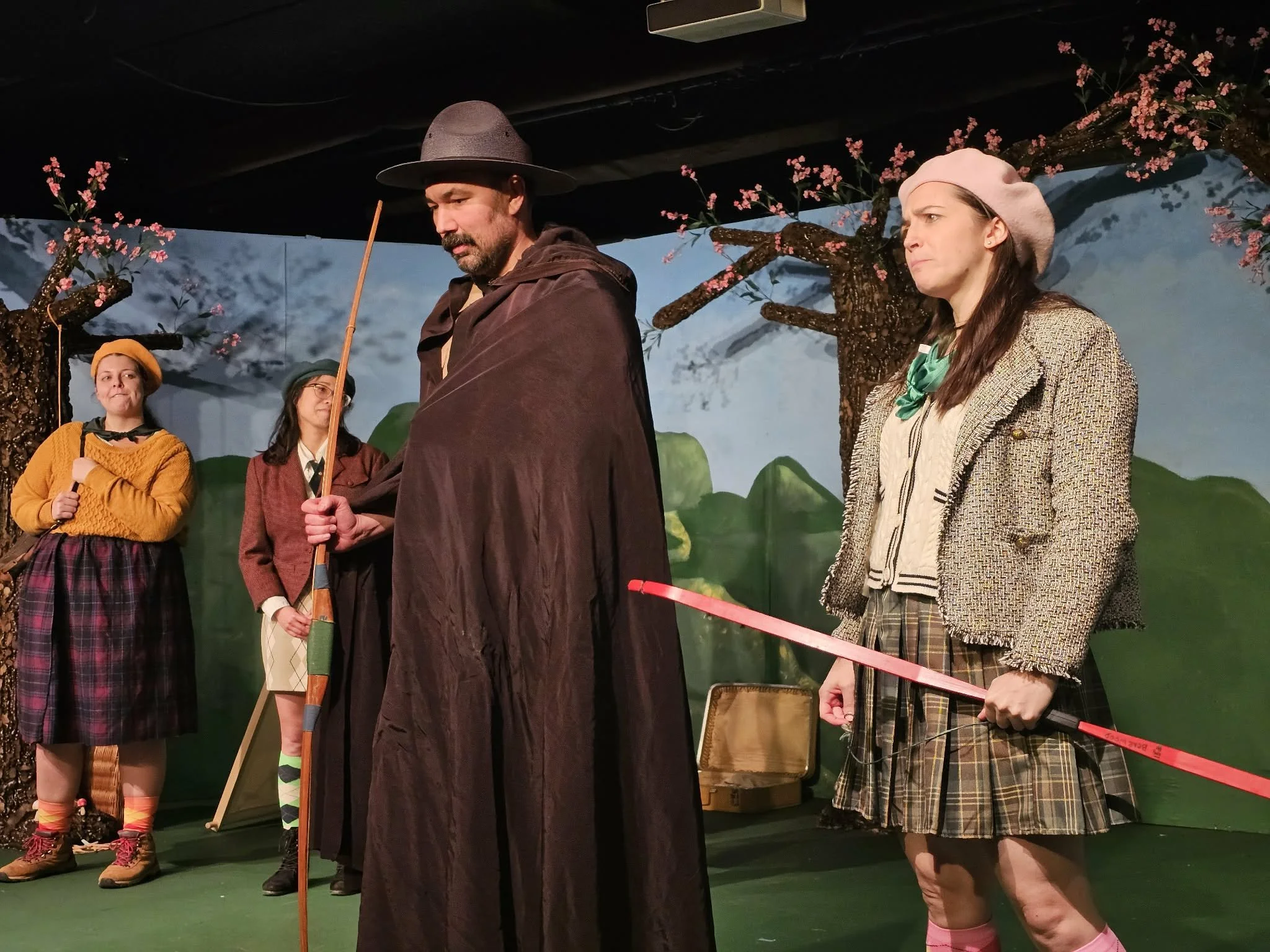
What I mean by that is with all the doubling going on, quick changes were often required. Many of them had literally no time to happen. So director Tracy Cahill made a virtue of this necessity. Sometimes one actor would ostentatiously try to block our view while another would change outfits behind them. It didn’t “work” at all, therefore it worked great. Other times, an actor would simply pick up a small cape from the floor, put it on, play the second character, then drop the cape again.
The apotheosis of this is in the play-within-the-play scene near the end and involves a wig and a beard changing places rapidly, while their wearer does the same. It was marvelous. Cahill, in my conversation with her after the show, said she calls this manufactured chaos “disasterpiece theater.”
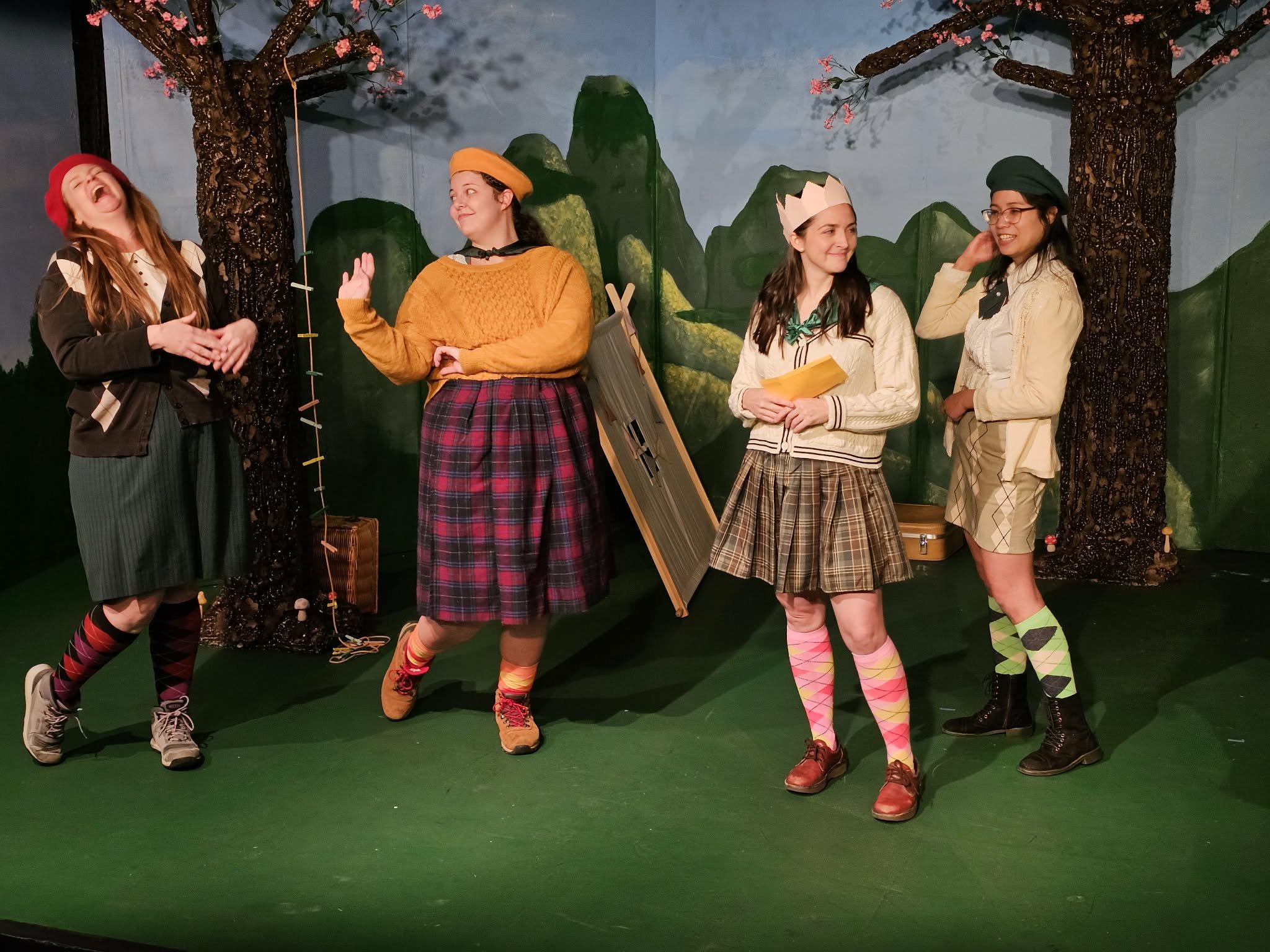
About the royals, MaryKate Kustas as the Princess and Andrew Weiss as the King each prove effective troop leaders. Those two, and the other six major characters are costumed by Elizabeth Shipman as Boy Scouts and Girl Scouts, with berets for the ladies and garrison caps for the lords and argyle socks for both. This points to the immaturity on display and shows that there really is only one camp, not two. It’s unifying. The King and the Princess wear intentionally simple, seemingly cardboard crowns, playing up the notion of them being dressed-up kids.
But what’s it about? I asked Cahill, the director, the stock question, “why this show now.” I got a good answer, and I will let it stand for itself.
“We live in a world of – I’m not going to say, toxic masculinity, but … people who describe love as weakness. We want to be able to find a way to say that, just like back then, today we still have to balance the difference between studying and learning in a classical way, and living and experiencing in a real way. So these are problems that people have faced for all time and will continue to face for all time. So, you know, ‘this show now’ because, what it means to be masculine, what it means to be feminine, what it means to fall in love, is universal.”
With Love’s Labour’s Lost, Shakespeare's comedy proves a natural fit for Phoenix Theatre. The performances are delightful and the direction hits great comic notes.
Love’s Labour’s Lost opened January 30 and runs through February 22 at Phoenix Theatre in Edmonds. For information and tickets, go to: https://www.tptedmonds.org/.
Photo credit: Tracy Cahill