
Stage Review - Man of La Mancha (Reboot Theatre)
Stage Review - Man of La Mancha
Presented By: Reboot Theatre - Seattle, WA
Show Run: April 03 - April 18, 2026
Date Reviewed: Saturday, April 04, 2026 (Opening Weekend)
Run Time: 2 Hours (including a 15-minute intermission)
Reviewed by: Greg Heilman
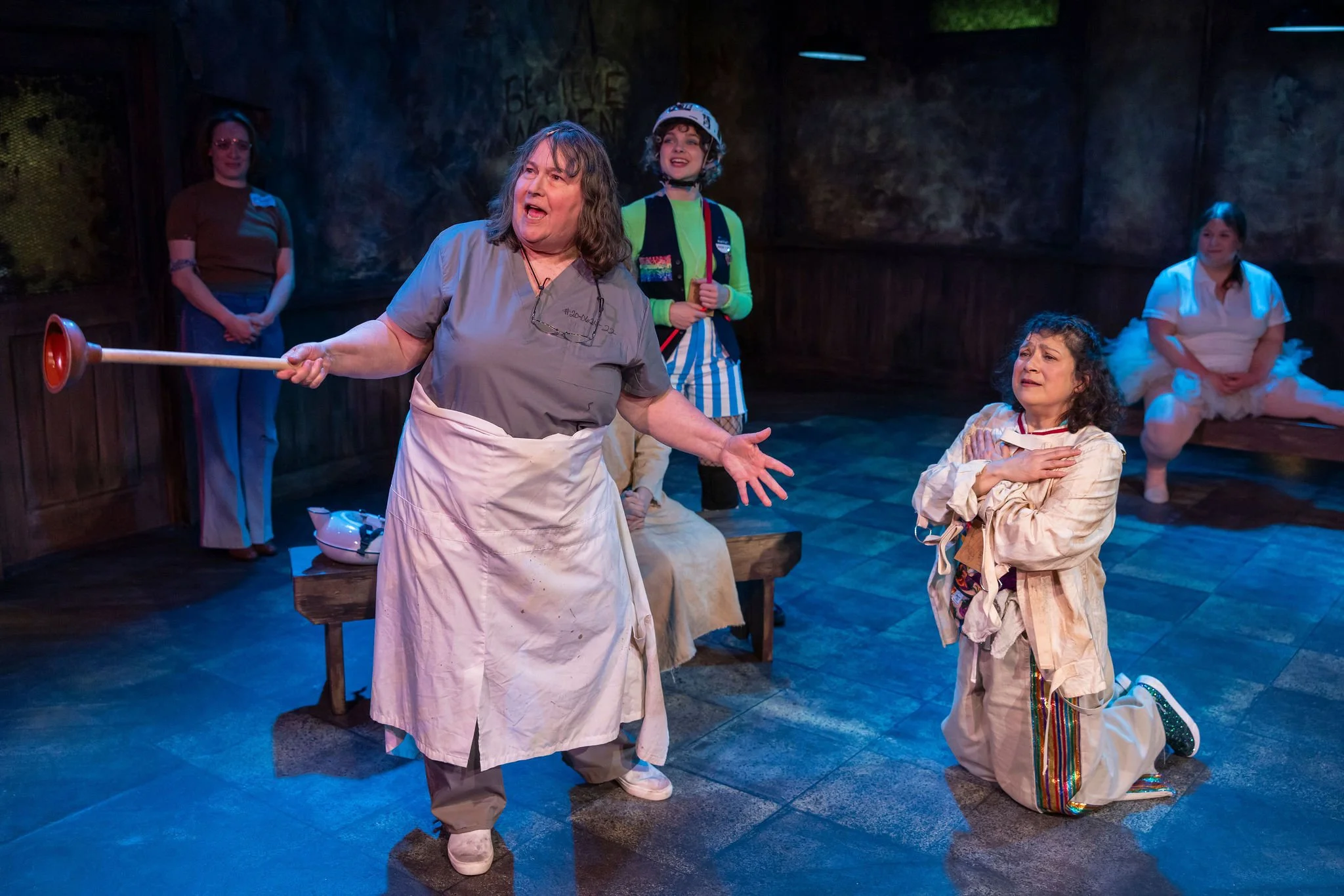
Reboot Theatre has built its mission around reexamining familiar works through a contemporary and often socially conscious lens, and their production of Man of La Mancha, now playing at Theatre Off Jackson through April 18, fits squarely within that vision. Taking the well-known framing of Cervantes imprisoned and awaiting trial by the Spanish Inquisition, this version, directed by Jeannette LeGault, reimagines the world as a post-industrial dystopia, where the actors are presented as detainees held by an ambiguous authority that echoes the Inquisition in both presence and power. From there, those detainees become the storytellers, stepping into the roles within Man of La Mancha as a means of survival and expression. The production leans into its themes with a strong feminist undercurrent and an immersive approach that begins the moment the audience arrives, with each patron handed a detainee identification card upon entering the theatre. That experience extends into the lobby, where audience members—now part of this detained population—can examine files on each of the performers, detailing the supposed crimes that have led to their imprisonment in a space that feels like the aftermath of a global conflict. It’s an approach that doesn’t just frame the story—it fully envelops the audience within it.
That sense of immersion carries seamlessly into the performance space itself, where the line between observer and participant continues to blur. The environment feels cold, utilitarian, and deliberately disorienting, reinforcing the loss of autonomy that defines this world. As the detainees begin to construct Cervantes’ story, the transformation is not marked by a clean separation between reality and performance, but rather by a gradual shift in tone and perspective. The theatricality emerges from within the confines of this space, making each moment of imagination feel earned rather than imposed. In doing so, the production strengthens the central idea that storytelling is not an escape from reality, but a necessary act of resilience within it.
Originally written by Dale Wasserman, with music by Mitch Leigh and lyrics by Joe Darion, Man of La Mancha has long used its framing device to explore the power of imagination in the face of oppression. The story follows Miguel de Cervantes as he awaits judgment, choosing to tell the tale of Don Quixote—an aging man who sees the world not as it is, but as it could be—in order to both defend himself and connect with those around him. In this production, that structure takes on an added immediacy, as the detainees’ investment in the story feels less like performance and more like necessity, reinforcing the idea that within even the harshest environments, the act of storytelling can become a means of survival.
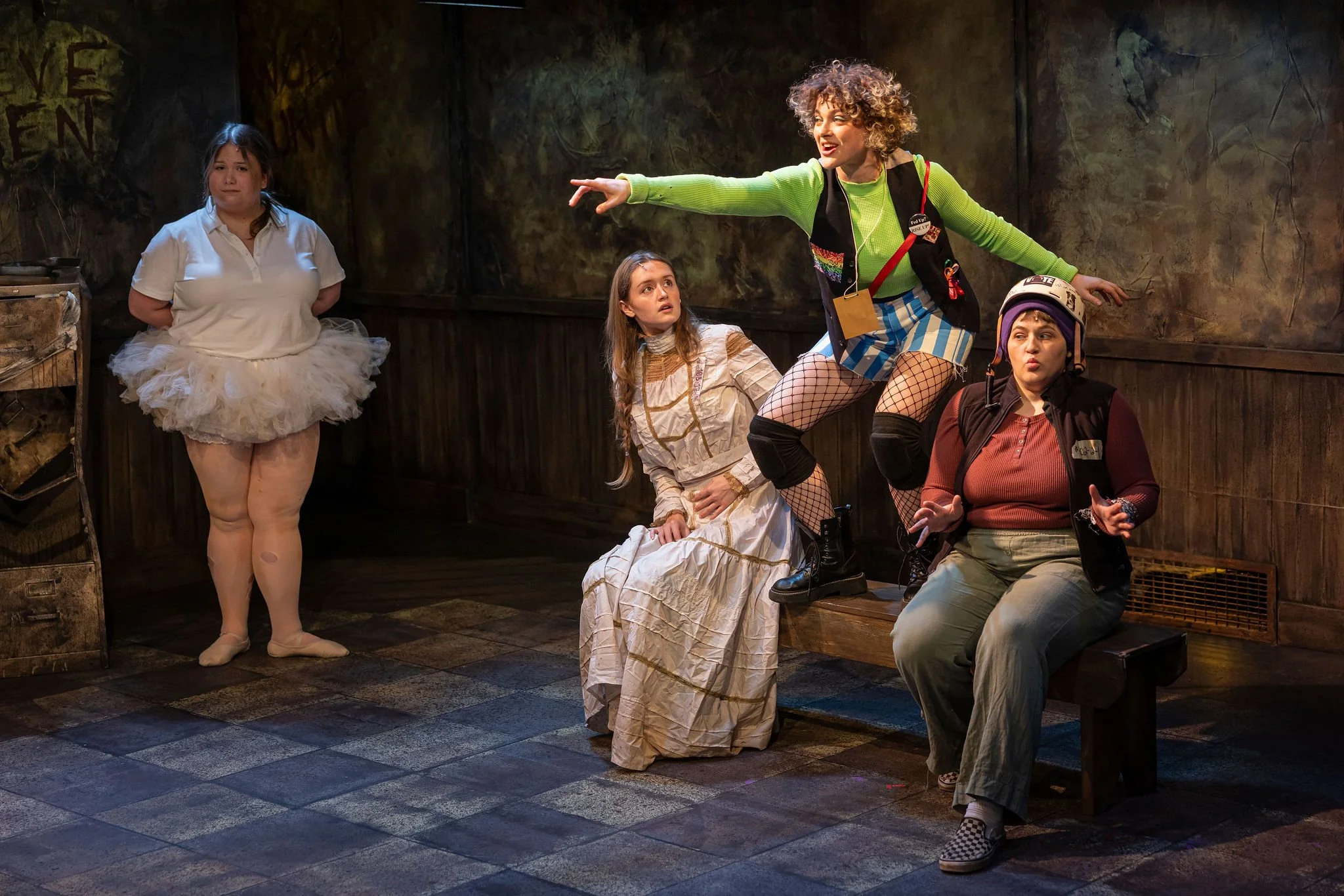
That idea is reinforced at every turn by a creative team that is fully aligned with the production’s vision. Jeff Church’s scenic design establishes the world with striking clarity, presenting a space that feels worn, industrial, and lived through in a way that suggests years of use and neglect. Pipes, vents, and distressed textures define the environment, while subtle elements like the presence of steam help create a sense that this is a space still functioning, even if barely. Within that stark framework, Eldon Tam’s lighting design becomes one of the production’s most powerful storytelling tools. The contrast between the harsh fluorescence of the holding space and the softer, more expressive lighting of the Don Quixote sequences is handled with precision, guiding the audience through shifts in tone without ever breaking the immersive world. Nowhere is this more effective than in “To Each His Dulcinea,” where Britt Hobson’s Padre is held in a clean, focused spotlight while Aldonza and Quixote flank the moment in shadow. It is a beautifully sung number, but it is the staging—driven by lighting—that elevates it, illustrating just how much emotional and narrative weight design can carry. Krista Lofgren’s costumes further define the world of the production, speaking directly to the fractured reality in which these characters exist. There is no sense of coordination or uniformity—each detainee stands entirely on their own, with clothing that reflects an individual history and identity. In that way, every costume becomes part of the storytelling, offering insight into who these people are and how they’ve arrived in this shared but deeply isolating space. Lee Ann Hittenberger’s fight choreography adds a physical tension that underscores the danger ever-present in this environment.
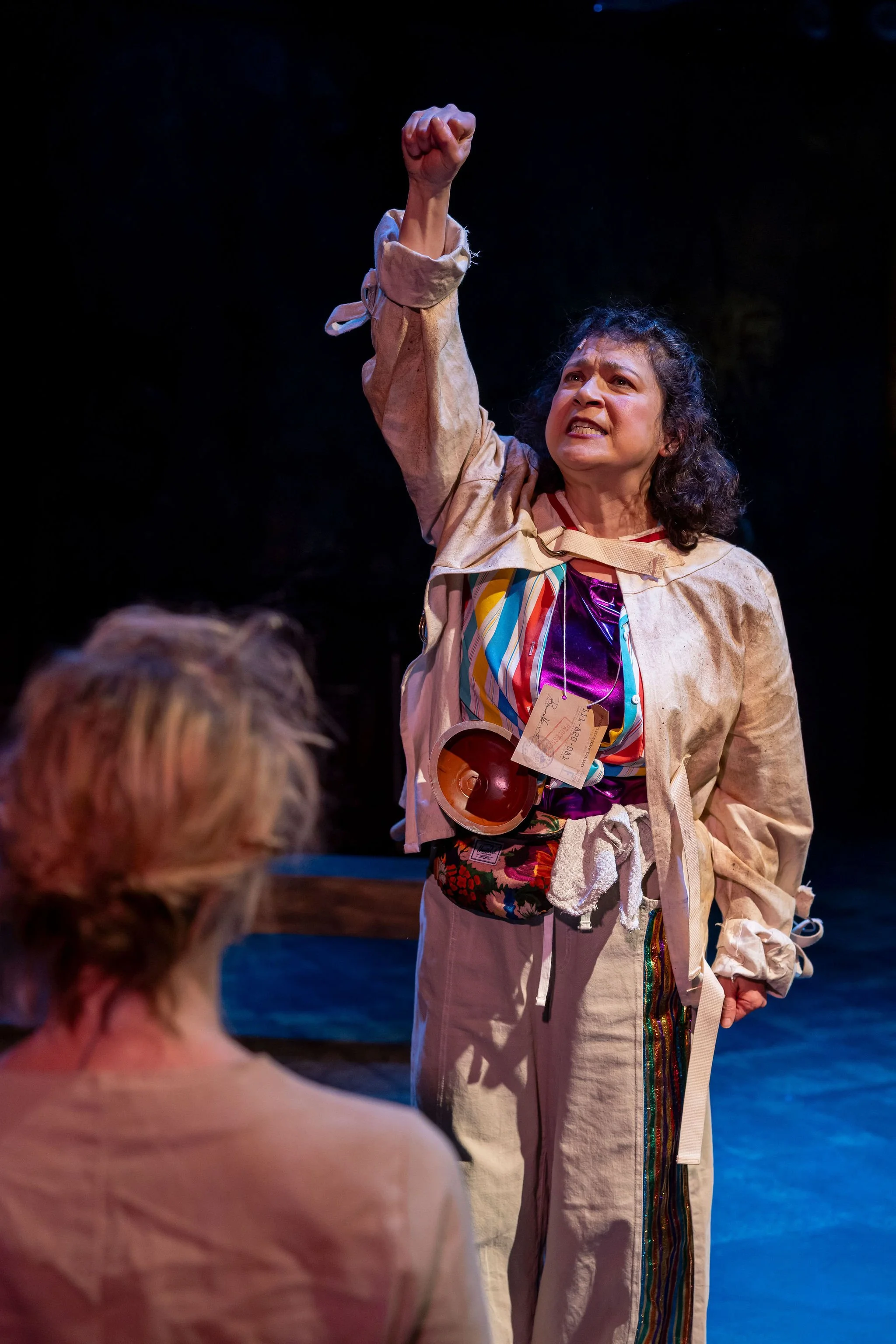
With such a clearly defined world in place, the performances rise to meet it, shifting the production’s focus to character while fully embracing its theatricality. At the center is Cynthia Dario-Good, who delivers an excellent Cervantes and Don Quixote. Cynthia brings a strong, steady presence to the stage, paired with a wonderful voice that meets each number with authority and skill. That strength is especially evident in “The Impossible Dream,” where Cynthia gives the song the weight and conviction it demands, anchoring the production in its central theme.
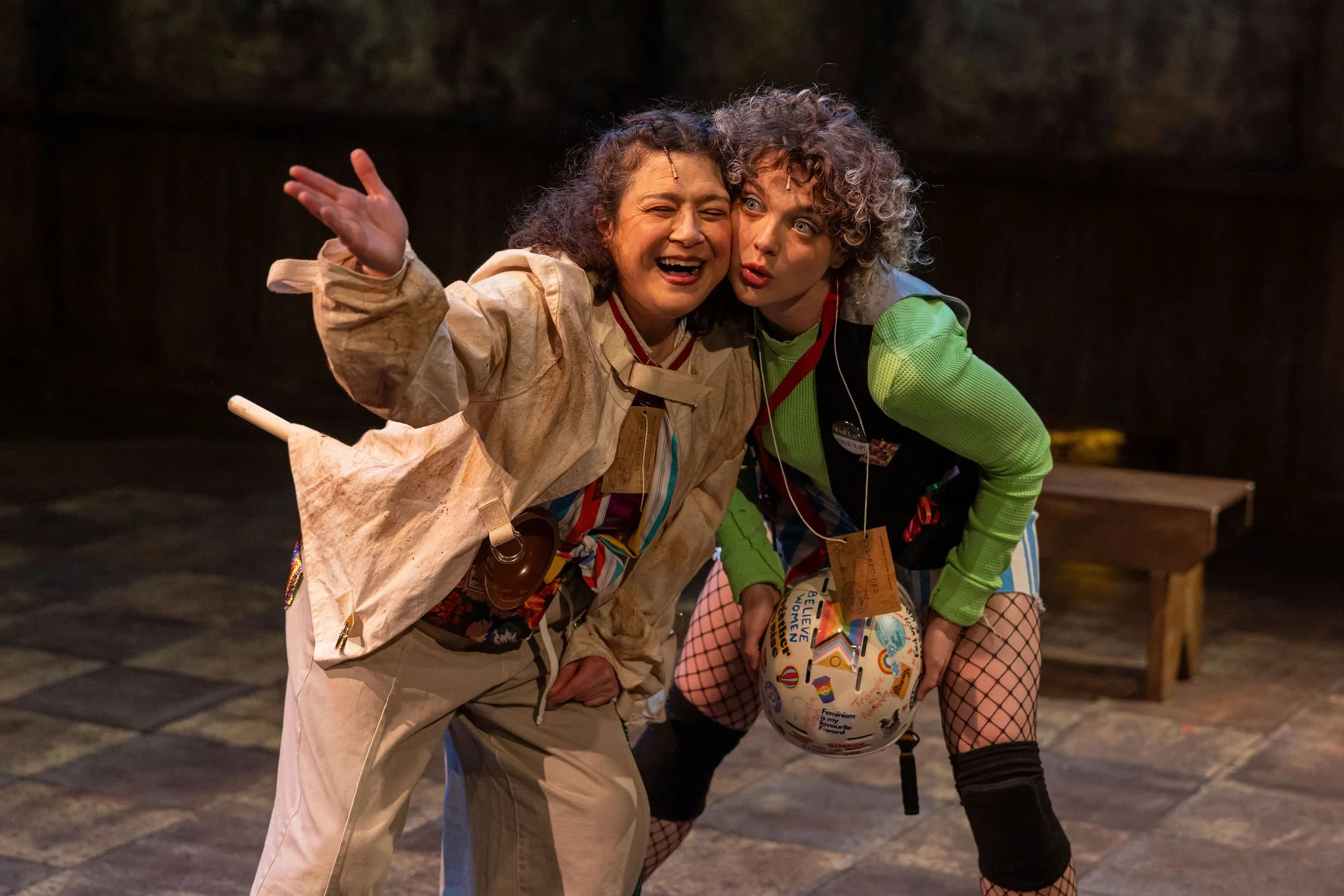
Opposite her, Tessa “Cricket” James brings a spry lightness to Sancho that provides a perfect counterbalance. Cricket is an engaging performer, fully aware of their place within both the story and its immersive framework, even to the extent of offering the occasional “bless you” to a sneezing audience member—or more accurately, a fellow detainee. That awareness, combined with a natural ease on stage, allows Sancho to serve as both guide and companion, and the contrast between Cricket’s buoyancy and Cynthia’s grounded presence makes their partnership all the more effective.
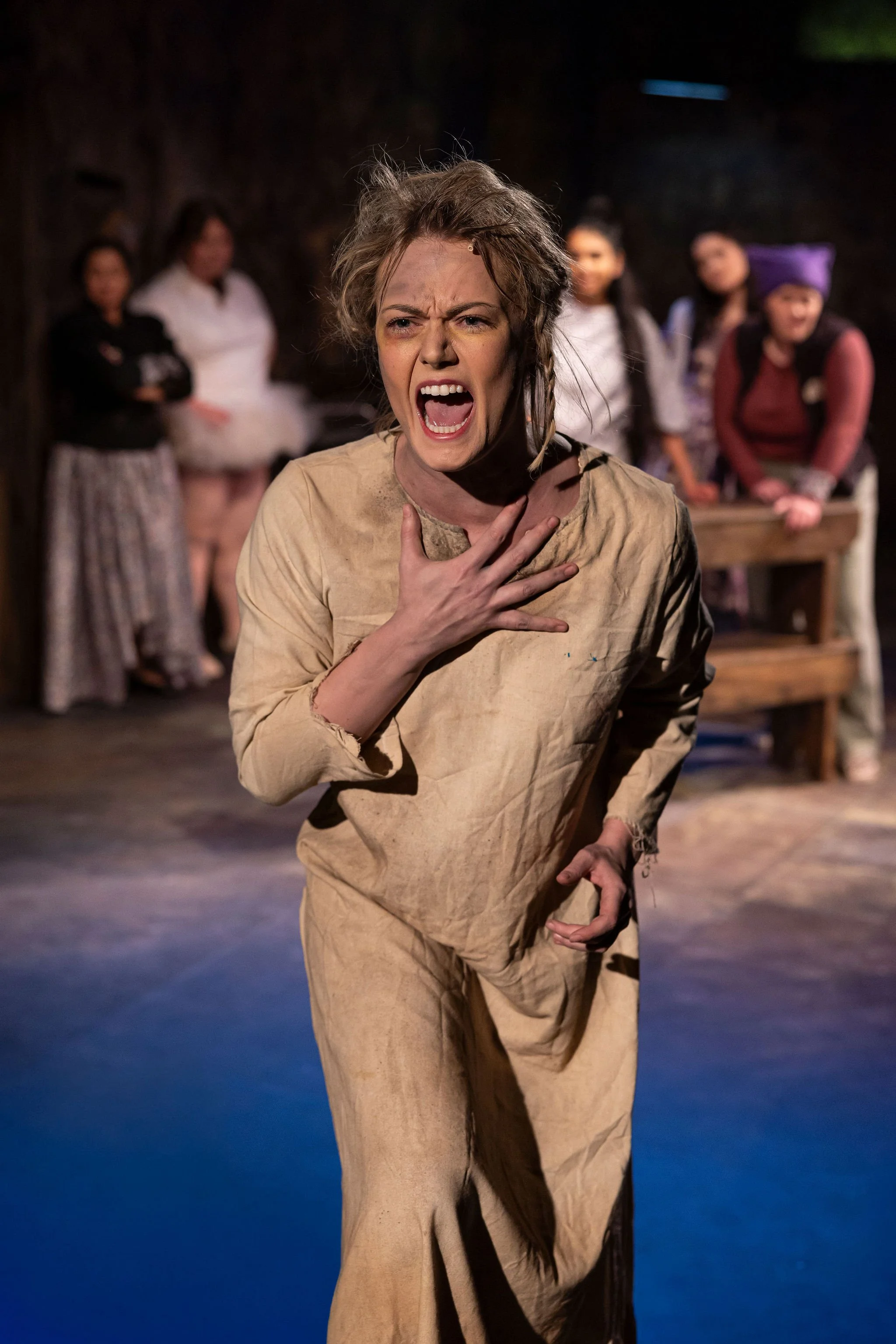
The performative highlight of the evening, however, belongs to Talena Laine, who takes on the roles of detainee Eve—guilty of original sin—and Aldonza, Quixote’s Dulcinea. With this performance, Talena continues to demonstrate why she stands among the strongest actors working in the area today. Vocally, the work is exceptional, with “What Does He Want of Me?”, “Aldonza,” and her reprise of “The Impossible Dream” all delivered with clarity and emotional depth. But it is the emotional accessibility of the performance that truly sets it apart. As Eve, Talena is able to convey a profound sadness with stillness alone, simply occupying space in a way that speaks volumes. As Aldonza, that emotional depth expands fully—there is a complete commitment to the role, with nothing held back. Every moment, every line, every note feels lived and immediate, as Talena reaches into the core of the character and draws the audience into that journey with her. It is a performance that lays itself bare, and in doing so, creates one of the most affecting portrayals you’re likely to see. This is standout work, and one that should be treasured by anyone fortunate enough to experience it.
Supporting all of this is the live band under the direction of Aimee Hong, who also serves as music director and brings a strong sense of cohesion to the production’s musical landscape. The band delivers a solid, confident performance throughout, providing a foundation that allows both the leads and the ensemble to shine. What stands out is how seamlessly the musical elements align with the rest of the production—the instrumentation, the vocals, and the staging all working in concert to create a unified sound. The band is strong, the performers are strong, and together they achieve a level of musicality that matches the high quality established across every other aspect of the show.
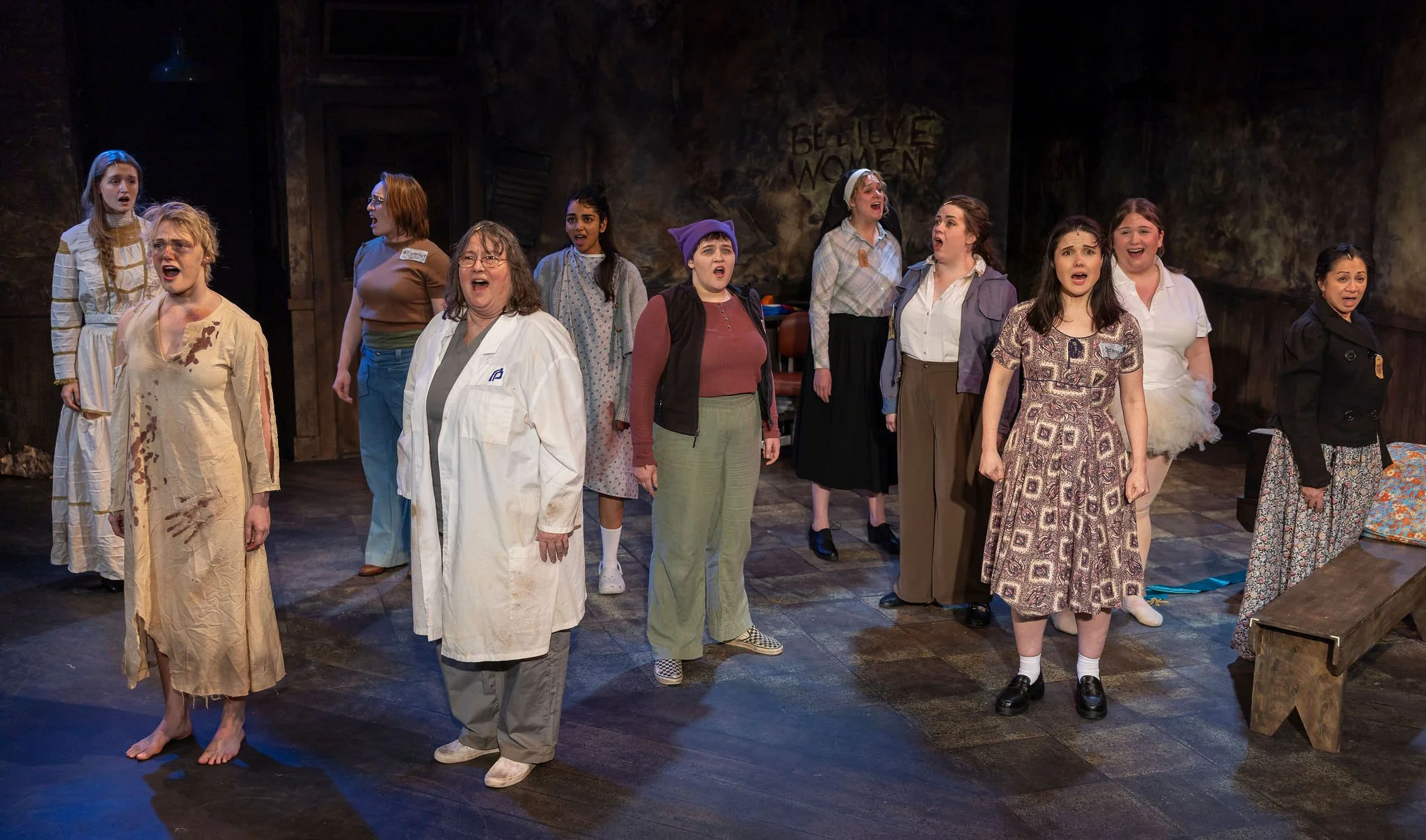
Surrounding these central performances is an ensemble that proves essential to both the storytelling and the overall impact of the production. As a group, they handle the piece’s harmonies with clarity and strength, creating a unified sound that supports the musical’s most important moments, while their movement is executed with a notable level of precision that reinforces the structure of the world they inhabit. What stands out most is that nearly every member of the ensemble is given an opportunity to step forward, whether vocally or through character-driven moments, and each makes the most of that space, contributing to a collective performance that feels both balanced and intentional. It’s a testament to Jeannette’s casting that this group functions so cohesively while still allowing for individual expression. That same level of commitment carries into the physicality of the production, where Lee Ann Hittenberger’s fight choreography, combined with the work of the cast, brings a strong sense of realism to the action. There’s a feeling that the interpersonal conflict is natural, adding another layer of tension to a world already defined by its volatility.
In a world that often feels uncertain, Man of La Mancha has always asked its central question: what does it mean to dream the impossible dream? Reboot Theatre’s answer is not found in grand gestures, but in the quiet, persistent act of choosing to believe in something more. This is a bold and fully realized interpretation that trusts its audience to engage with both its world and its message, remaining immersive without losing focus and thoughtful without losing clarity. By placing this story within a stark and unforgiving environment, the production sharpens that question, reminding us that hope is not a luxury—it is a necessity, and that even in the most difficult of circumstances, the act of dreaming—of imagining something better—is essential.
The Reboot Theatre production of Man of La Mancha runs on stage at the Theatre Off Jackson through April 18. For more information, including ticket availability and sales, visit https://reboottheatre.org/.
Photo credit: Colin Madison Photography