
Stage Review - Murder on West Moon Street (Phoenix Theatre)
Stage Review - Murder on West Moon Street
Presented By: Phoenix Theatre - Edmonds, WA
Show Run: May 29 - June 21, 2026
Date Reviewed: Saturday, June 13, 2026
Run Time: 1 Hour, 45 Minutes (including a 15-minute intermission)
Reviewed by: Greg Heilman
Theaters, like people, have personalities. Some are known for musicals, some for developing new works, and others for putting fresh spins on familiar titles. Phoenix Theatre in Edmonds has cultivated a personality that feels like the friend you'd want to spend an evening with at the pub—warm, welcoming, and always ready with a laugh. Over the years, that personality has become defined by the company's affinity for ensemble-driven comic farces, productions that invite audiences to leave their worries at the door and simply enjoy themselves. It's a quality that always gets me excited to see what's coming next on their stage.
Director Eric Lewis is responsible for many of the most entertaining productions Phoenix has mounted in recent years, and with Rob Urbaniti’s Murder on West Moon Street, he has once again demonstrated his knack for finding comedy in all the right places. In fact, this adaptation of Oscar Wilde's Lord Arthur Savile's Crime may well be the strongest piece of comic theatre Phoenix has produced since its award-winning production of Move Over Mrs. Markham several seasons ago.
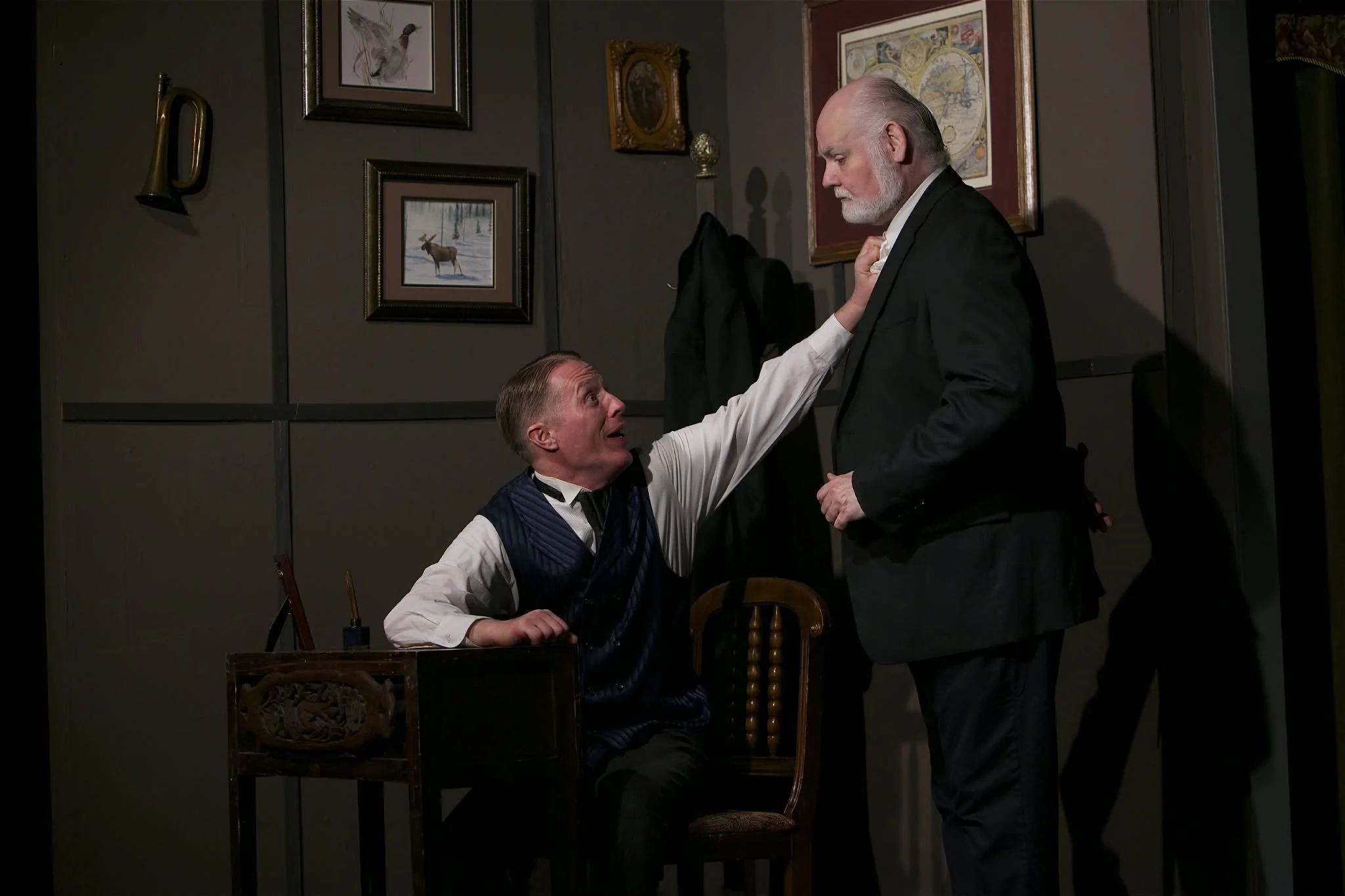
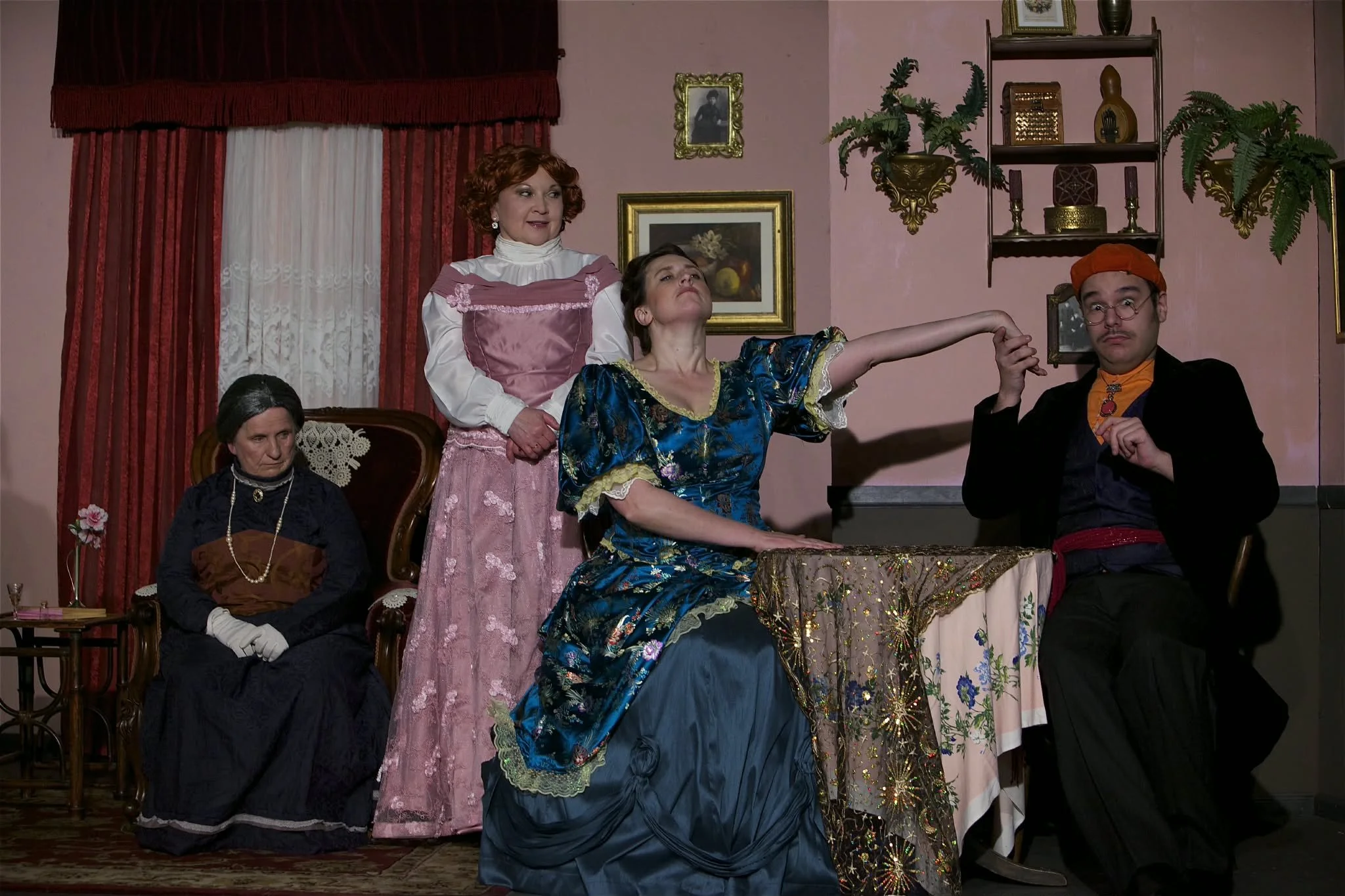
Set in London at the turn of the twentieth century, the play follows Lord Arthur Savile, a young gentleman whose future seems perfectly mapped out. He is engaged to the charming Sybil Merton and looking forward to a comfortable life together when a mysterious chiromantist (palm reader), Mr. Podgers, delivers a startling prediction: Arthur is destined to commit murder. Convinced that no respectable Englishman would enter a marriage with such unfinished business hanging over his head, Arthur decides the only sensible course of action is to get the murder out of the way before the wedding. Unfortunately, neither his education nor his temperament has prepared him for such an undertaking, and a series of increasingly comic misadventures follows.
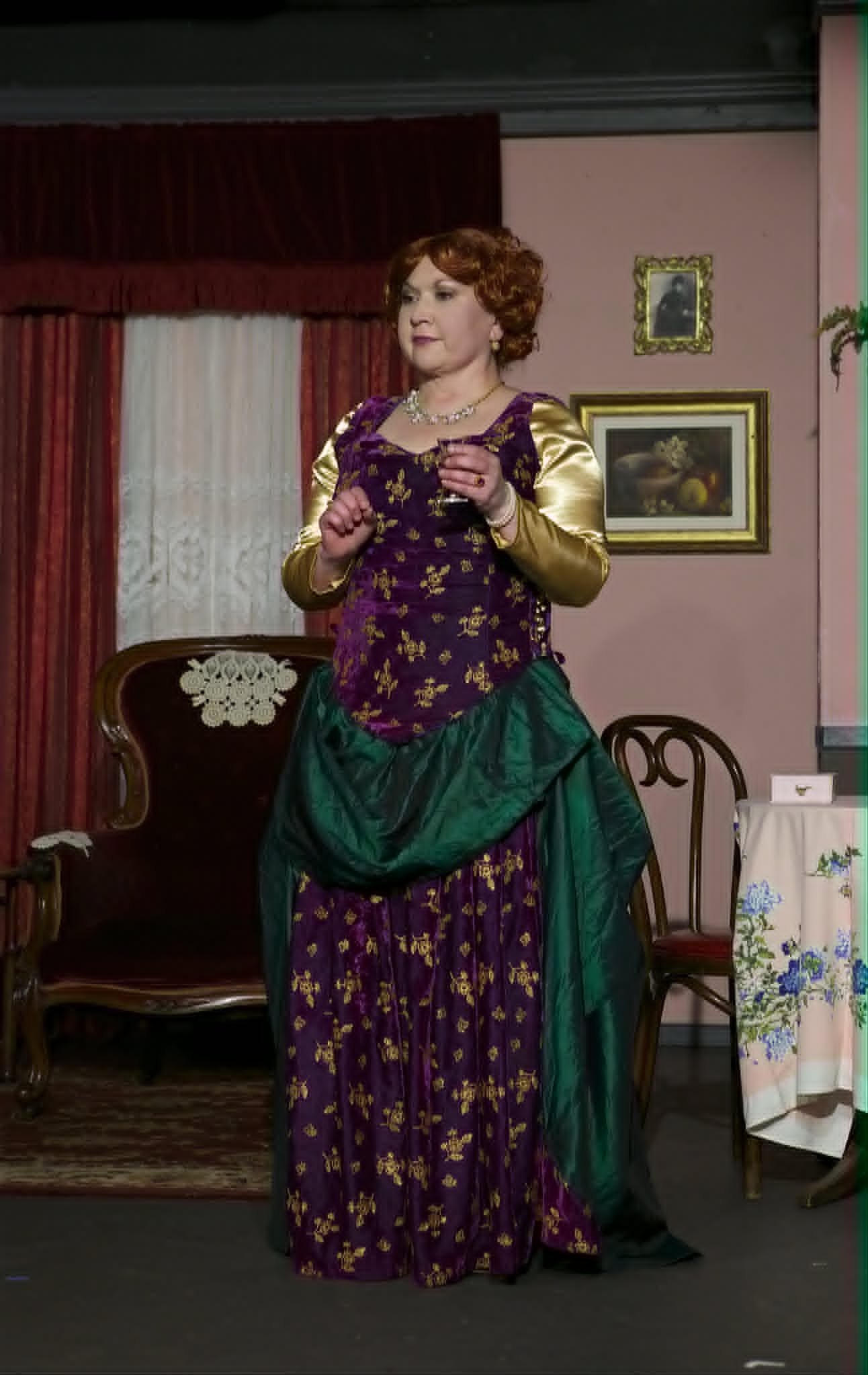
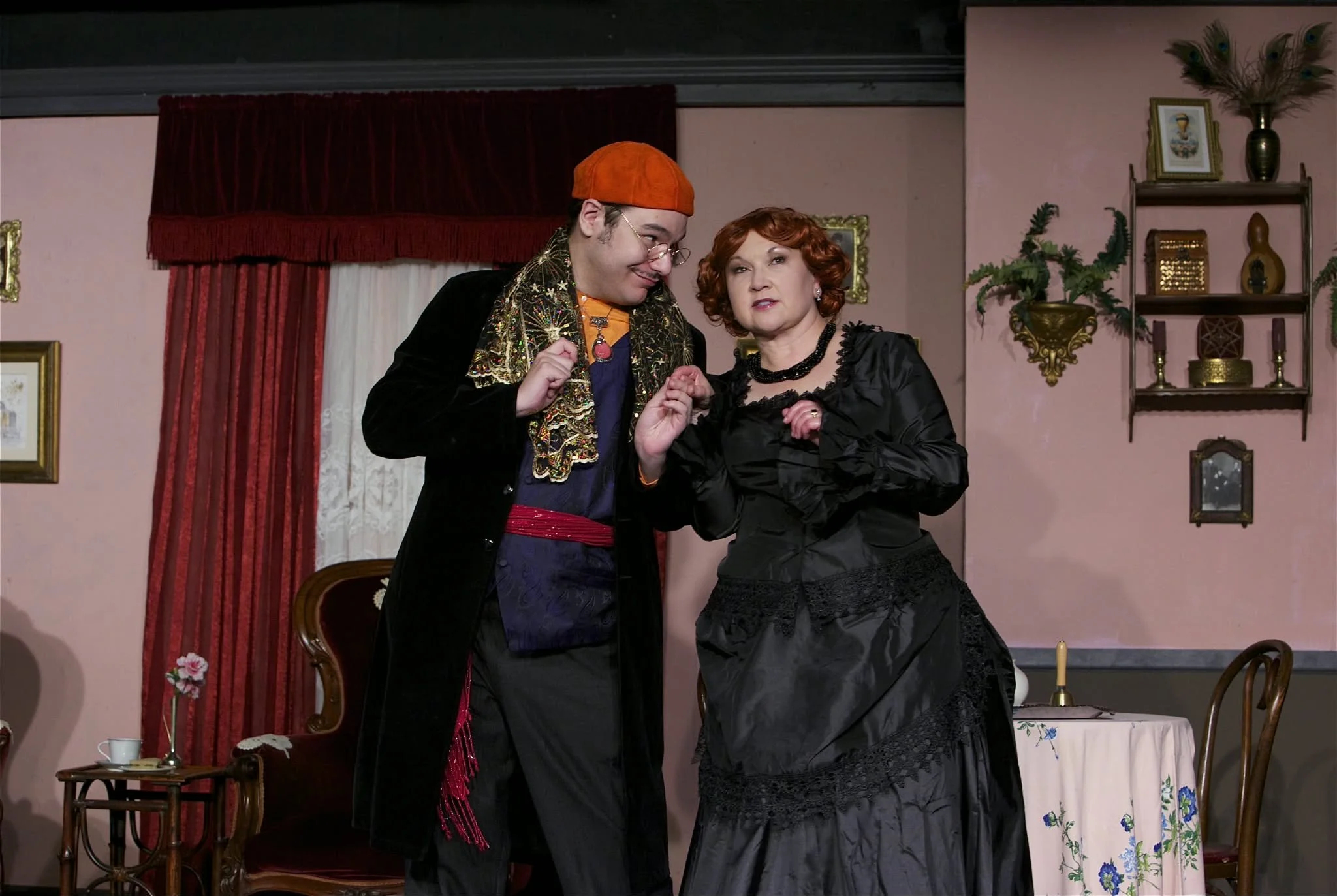
One of the first things audiences are likely to notice is the production's visual presentation. During her curtain speech, Managing Director Tracy Cahill recognized several local theatre companies whose generosity helped provide costumes for the production, a reminder of the collaborative spirit that exists throughout the local theatre community. While those contributions deserve recognition, they should not overshadow the vision that costumer Elizabeth Power brings to the stage. The sheer number of costumes utilized throughout the evening is impressive in itself, but what stands out is how effectively each piece helps define the character wearing it. Victorian fashion becomes a storytelling tool, with elaborate gowns, formal attire, and carefully chosen details informing audiences about status, personality, and temperament. Lady Windermere's striking black mourning attire proves especially memorable, while Jane Percy's increasingly elaborate wardrobe serves as a visual extension of her larger-than-life personality. Beyond their beauty, the costumes also support the production's many entrances, exits, and character transitions, helping maintain the brisk pace that keeps the comedy moving.
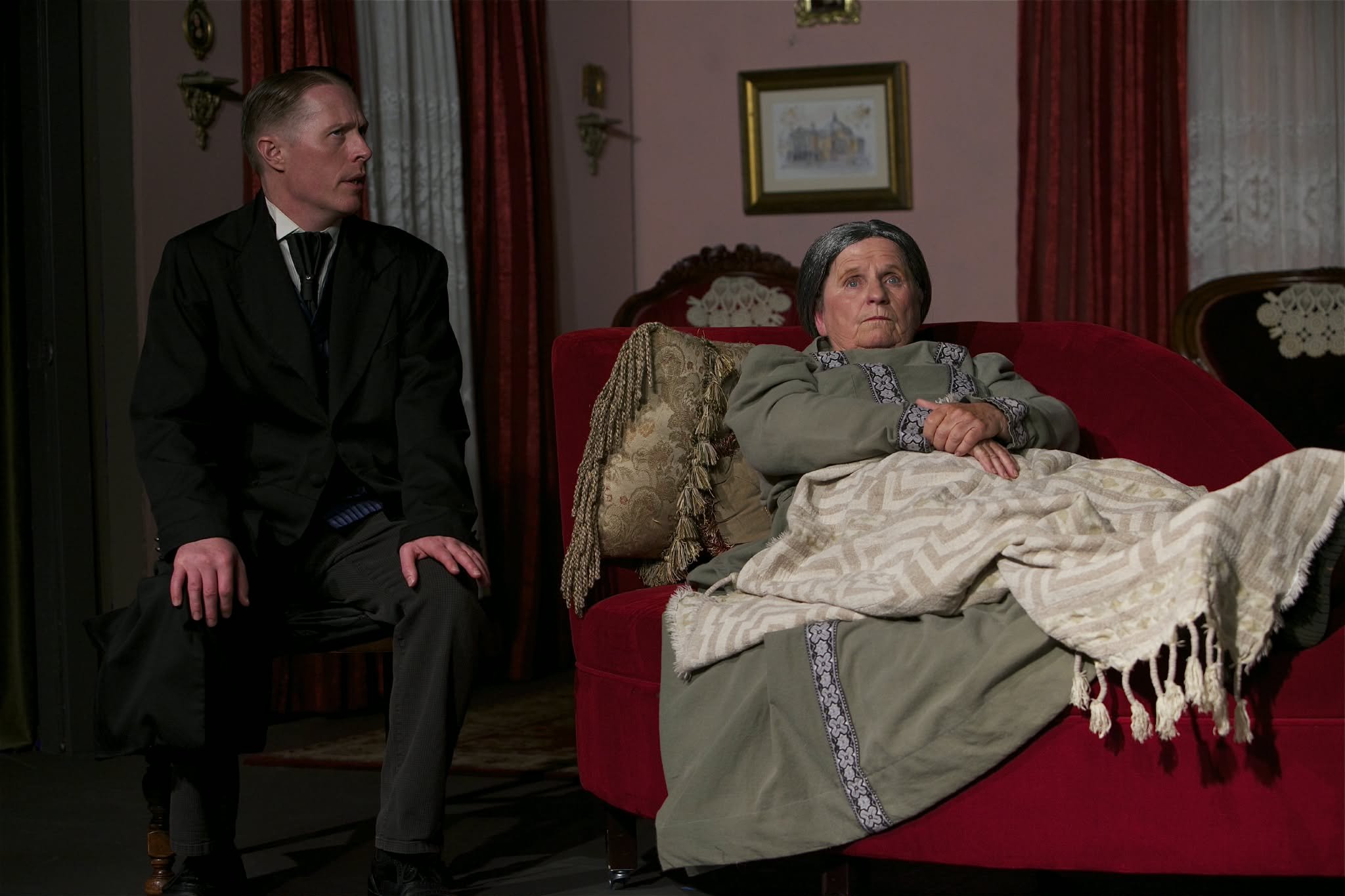
The production is equally successful in its technical execution. Craig Marshall’s technical direction on the set, along with Susan Connors' decoration, creates three distinct playing spaces that allow the action to move smoothly between locations. Whether in the Savile manor, a private den, or a public park, each environment feels appropriately suited to the story. Combined with efficient scene changes and Eric's strong pacing, the production rarely loses momentum, allowing the farcical nature of the story to build naturally from one scene to the next.
The work of dialect coach Chelsea Hoyle deserves special recognition as well. Maintaining consistent period British accents across an entire cast is no small task, particularly in a comedy where clarity and timing are paramount. Yet the accents remain strong and believable throughout the production, never calling attention to themselves while helping establish the world of the play. It's the kind of work that audiences may not consciously notice, but its absence would be immediately felt. The consistency of the dialect work across the ensemble speaks both to Chelsea's coaching and to the commitment of the cast.
At the center of the production is Ian L. Wight as Lord Arthur Savile. Ian captures the character's essential contradiction: a man who outwardly embodies Victorian confidence and decorum while internally spiraling into panic. His Arthur remains committed to maintaining the appearance of a proper gentleman even as he wrestles with increasingly ridiculous circumstances. The performance effectively conveys Arthur's growing uncertainty and nervousness, and Ian's ability to preserve the character's formality while allowing cracks to appear in the façade creates much of the show's humor. The audience can see Arthur wrestling with the question of whether he truly possesses the resolve to satisfy his “mission” and the expert manner in which Ian presents that internal conflict provides the emotional backbone for the comedy that unfolds around him.
As Lady Windermere, Ingrid Sanai Buron commands the stage whenever she appears. Her posture, projection, and confidence immediately establish her as a fixture of upper-class society, someone accustomed to being listened to and obeyed. Ingrid embraces the character's fondness for gossip and social maneuvering while possessing the kind of stage presence that elevates everyone around her. In a production filled with strong performances, Ingrid's ability to focus attention and raise the energy level of a scene makes every interaction sharper and more engaging. The result is a performance that embodies the very world Wilde delights in satirizing while simultaneously enhancing the work of her fellow actors.
Much of the evening's sharpest humor comes courtesy of Melanie Calderwood's Lady Clem. Armed with many of the production's best one-liners, Melanie delivers them with precision and confidence. Her character's conservative worldview and pointed observations often serve as the catalyst for some of the play's funniest moments, and her command of the play's language allows every clever turn of phrase to land effectively.
Another standout performance comes from Jaret Miller as Mr. Podgers, the palm reader whose prophecy sets the entire plot in motion. Jaret finds an excellent balance between mystery and comedy, creating a character who is both amusing and slightly unsettling. His physical comedy is particularly effective, and his scenes provide several of the evening's biggest laughs. Eric Hartley proves equally entertaining as Charles, Arthur's loyal butler. Playing much of the humor completely straight, Eric creates a wonderfully reserved presence whose understated reactions often become funnier than the chaos surrounding him. His steadfast support of Arthur, even as events grow increasingly absurd, provides a strong comedic anchor throughout the production.
Natasha Halfin’s Sybil serves as one of the play's more sincere characters, and Natasha's warmth helps ground the story amid its escalating absurdity while Colleen Davis embraces Jane Percy's flamboyant nature, bringing enthusiasm and personality to every appearance. Rounding out the cast, David Hayes contributes effectively as Herr Wincelkopf. Together, the ensemble demonstrates the chemistry and timing necessary for a farce to succeed, with each performer understanding precisely how their character fits into the larger comedic machine.
Murder on West Moon Street, at its core, works because it isn’t afraid to embrace the ridiculous. Wilde's story asks audiences to accept the notion that a young aristocrat would respond to a murder prophecy not by questioning the prediction, but by attempting to fulfill it. Under Eric's direction, the cast fully commits to that premise, allowing the comedy to emerge naturally from characters who take their circumstances completely seriously.
Murder on West Moon Street is exactly the sort of production that has become synonymous with Phoenix Theatre at its best: smart, energetic, ensemble-driven comedy performed by artists who understand precisely how to deliver a laugh without sacrificing character. For audiences looking for an evening of clever farce, sharp performances, and plenty of Victorian absurdity, this production is easy to recommend. More importantly, it serves as another reminder of why Phoenix's personality has become so endearing. When the company leans into this style of comedy, it consistently produces some of the most entertaining theatre in the region, and Murder on West Moon Street stands comfortably among its best efforts.
The Phoenix Theatre production of Murder on West Moon Street runs on stage in Edmonds through June 21. For more information, including ticket availability and sales, visit https://www.tptedmonds.org/.
Photo credit: Jim Sipes