
Stage Review - The Cake (SecondStory Rep)
Stage Review - The Cake
Presented By: SecondStory Repertory - Redmond, WA
Show Run: April 03 - April 19, 2026
Date Reviewed: Thursday, April 16, 2026
Run Time: 90 Minutes (no intermission)
Reviewed by: Greg Heilman
If there’s one thing that SecondStory Rep’s latest production, Bekah Brunstetter’s The Cake, makes clear from the outset, it’s that for some, life is best understood through a set of instructions. Recipes are followed, traditions are honored, and beliefs are rarely questioned. This engaging and extremely relevant play, now on stage at SecondStory Repertory in Redmond through April 19 under the direction of Lani Brockman and Danny Miller, takes that idea and gently, then firmly, begins to pull at its seams. What starts as a story about a small-town baker asked to make a wedding cake becomes something much more layered, exploring the tension between faith and love, certainty and change, and the challenge of reconciling long-held beliefs with an evolving world.
Set in North Carolina, the play centers on Della, a devout baker whose life is built on routine, tradition, and a deep sense of religious conviction. When Jen, someone from Della’s past, returns home with her fiancée Macy and asks Della to bake their wedding cake, the request sets off a chain of internal and external conflicts. Brunstetter’s script navigates the intersections of personal belief, societal expectation, and evolving identity, asking not just what we believe, but why—and whether those beliefs can stretch to accommodate love.
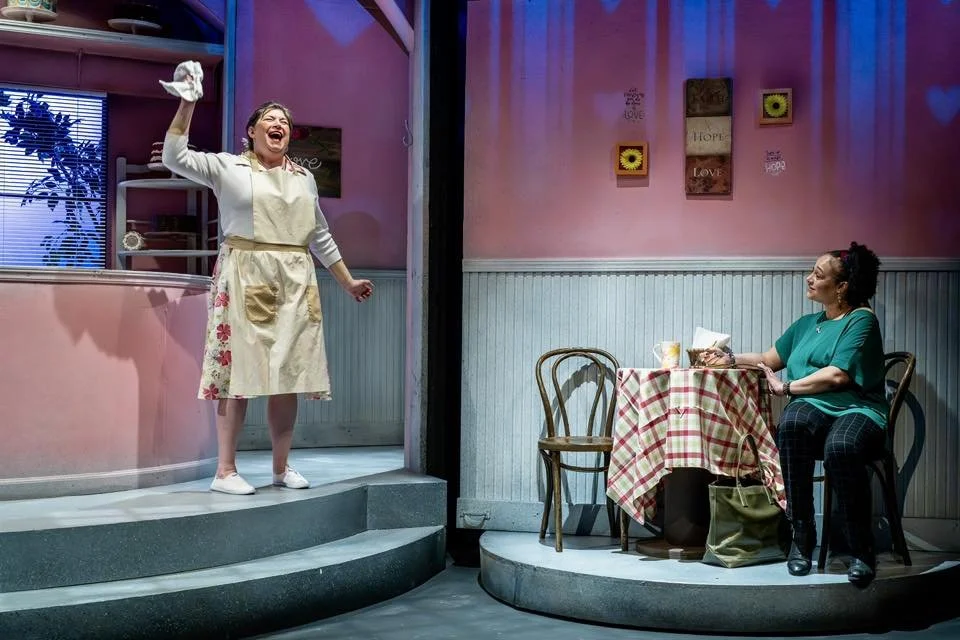
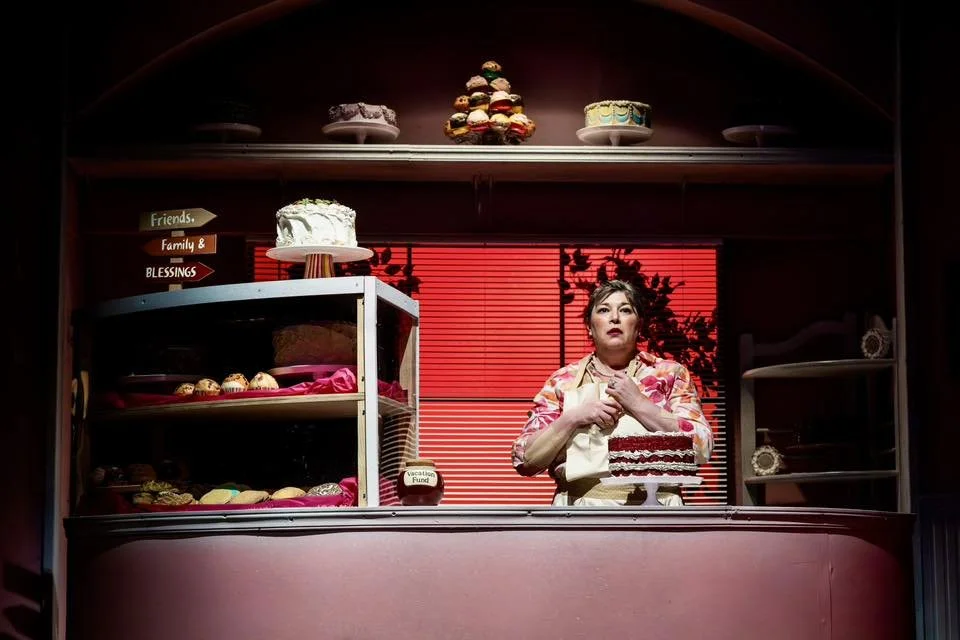
At the heart of it all is Annie St. John’s Della, owner of Della’s Sweets, who comes with a simple worldview, one rooted in a binary sense of right and wrong, with little room for shades of gray. That perspective is established immediately in an opening monologue about baking, where following directions is framed as the only way—the “right” way—to create something successfully. Annie delivers this in Della’s voice with a well-pronounced North Carolina drawl and a fervor that borders on religious, as if she’s delivering a sermon to whomever happens to be in earshot. It’s a foundational moment that defines how Della approaches not just baking, but life itself—following rather than questioning, whether it’s a recipe or scripture. That framework carries directly into her initial interaction with Macy, whom she first assumes to be a customer. When challenged, Della’s demeanor shifts, and it’s here where Annie’s performance becomes particularly compelling. As Della begins to wrestle with the tension between her long-held beliefs and her love for Jen, whom she eventually discovers has brought Macy along to plan their wedding, Annie navigates that internal conflict with clarity and control. There is a later moment where it becomes clear that Della is beginning to experience a form of enlightenment, and Annie captures that shift with a strong sense of emotional honesty.
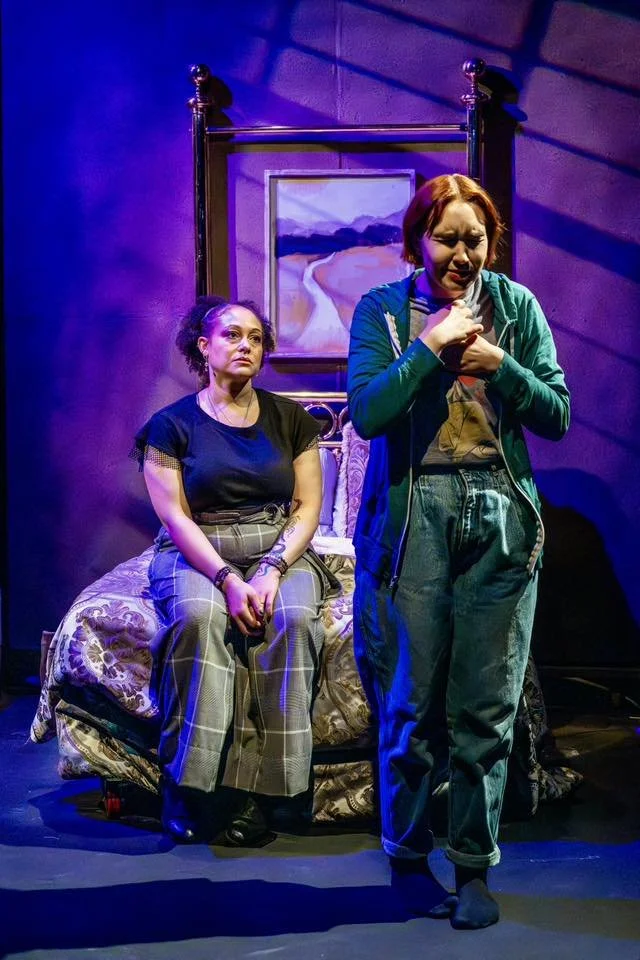
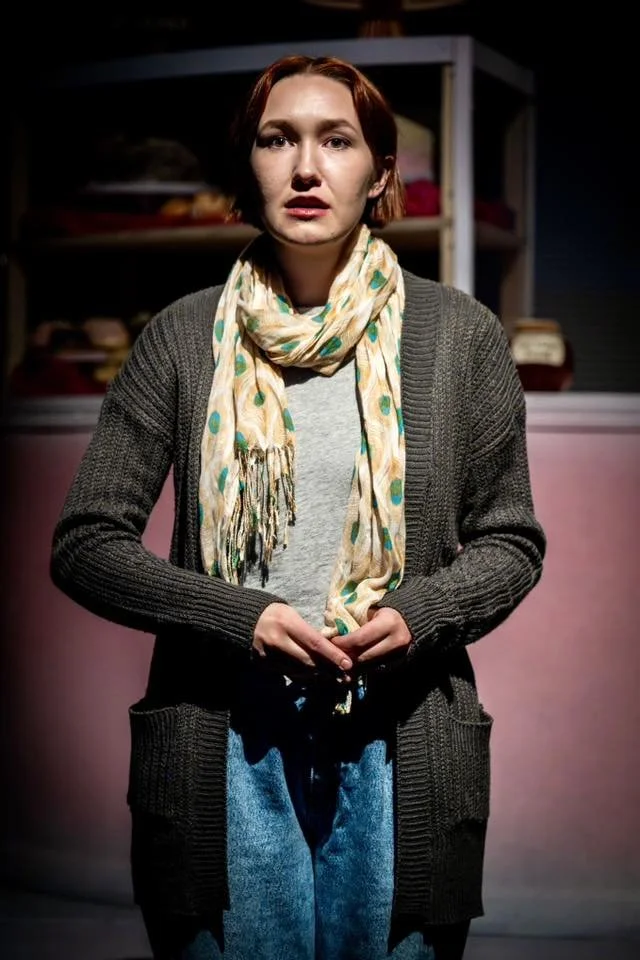
The driver of Della’s contentious internal dialogue is Ariel Rose Horton as Jen, herself grappling with her upbringing, her relationship with Macy, and what both mean for her identity. Ariel’s performance thoughtfully works through these layered questions of religion, nature versus nurture, and personal truth. Jen’s monologue, in which she attempts to reconcile these competing forces, stands as the emotional high point of the production. It’s a well-written moment that asks big questions, and Ariel rises to meet it, delivering what is arguably the standout performance moment in the show.
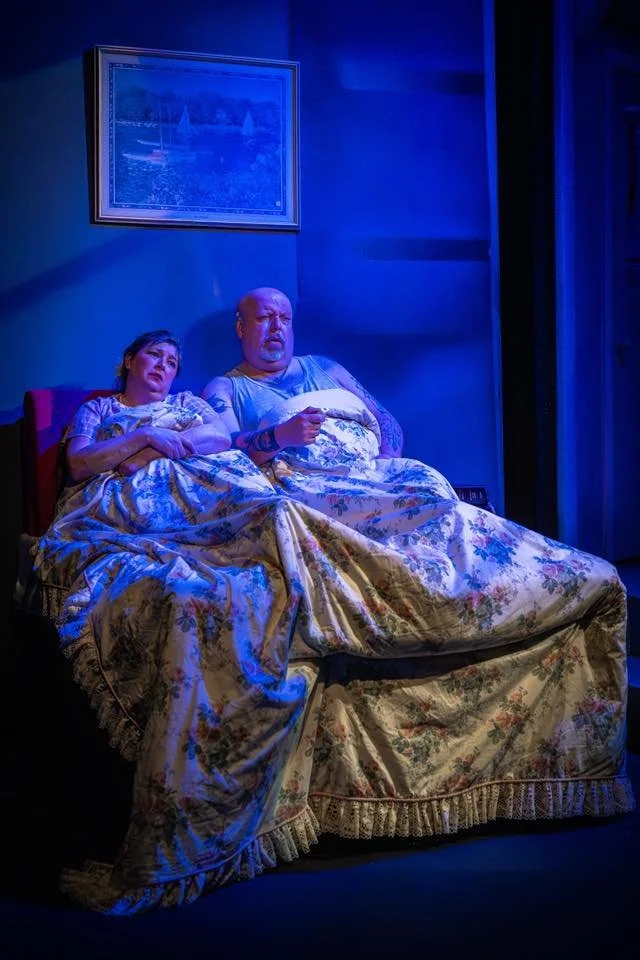
Arika Gloud’s Macy serves as a stabilizing presence within the narrative, often acting as the catalyst for the emotional and philosophical shifts experienced by both Della and Jen. Arika brings a clear sense of purpose to the role, and while there are moments where a more relaxed physicality and a less presentational delivery might have allowed for a more natural flow, the performance succeeds in driving the emotional stakes that fuel the story’s central conflicts. Also in a supporting role is Robert Bogue. Robert plays Tim, who complements the inter-philosophical dynamic as Della’s husband, both reinforcing her belief system and, at times, grounding her within it. Robert provides a steady presence, helping to anchor the world of the play and the relationships within it.
Lani and Danny’s direction approaches the material with care, allowing the thematic elements to unfold without forcing them. The production trusts the text and the performances to carry its weight, and for the most part, that trust is well placed. Visually, the production establishes its world effectively through the ever-consistent work of Mark Chenovick, whose scenic, lighting, and sound designs together create a cohesive environment. The set features pink wallpaper with white heart patterns achieved through projection, paired with gray wainscoting and pastel tones that evoke a space reminiscent of Waitress. The design supports the baking-centric world of the play, while creatively portraying some less than overbearing locales to focus on the core relationships of the piece.
Lighting is used effectively, particularly in transitions such as when Della imagines herself on a televised baking competition, adding a layer of visual storytelling that enhances those moments. Sound design supports the environment with strong ambient elements, though the voiceover for the television host comes across louder than necessary. While the intention to differentiate it from the onstage action is clear, the imbalance slightly pulls focus in those sequences. Rounding out the creative team, Rachel Brinn’s costume design complements the production well, helping to define character without distracting from the narrative.
The play is, indeed, very well written, raising the emotional stakes as the story arcs progress. Where the script feels less certain is in its resolution. After building to a meaningful and complex central conflict, the transition into the final resolution feels somewhat abrupt. Rather than fully dramatizing that shift, the play summarizes it through dialogue, which lessens the impact and makes the ending feel slightly unearned compared to the strength of what precedes it. Even so, The Cake proves its relevance and timeliness throughout, in a way that never crosses the line into preachiness, despite the religious overtones in characters’ portrayals.
The Cake is a thoughtful and engaging piece, one that uses its central metaphor of baking as a kind of religion—where following directions can feel like following a sermon—to explore deeper questions of belief, love, and identity. SecondStory Repertory’s production embraces those ideas with sincerity, supported by strong performances and a clear sense of purpose, offering a story that resonates in both its warmth and its willingness to wrestle with difficult truths.
The SecondStory Rep production of Bekah Brunstetter’s play The Cake runs on stage in at Redmond Town Center through April 19. For more information, including ticket availability and sales, visit https://www.secondstoryrep.org/.
Photo credit: Michael Brunk