
The Best Damn Thing (Dacha Theatre)
Stage Review - The Best Damn Thing
Presented By: Dacha Theatre - Seattle, WA
Show Run: April 02 - April 18, 2026
Date Reviewed: Saturday, April 11, 2026
Run Time: 1 Hour, 20 Minutes (no intermission)
Reviewed by: Greg Heilman
There are shows that come along every so often that completely catch me off guard—productions I walk into with one set of expectations, only to leave wishing I hadn’t made any pre-show assumptions at all. The Best Damn Thing, from Chicago-based playwright Hanna Kime and presented by Dacha Theatre, now running at 12th Avenue Arts in Seattle through April 18, is very much one of those shows. On paper, it reads like something fairly niche: the story of Ellie, a socially awkward 16-year-old who is convinced she has written a groundbreaking musical built around the pre-2007 catalog of Avril Lavigne. Set in 2008, Ellie invites her much cooler friend Rachel over to workshop the idea, hoping Rachel might help get it in front of the head of the theatre department—someone Ellie is certain already favors her.
It’s a premise that, at a glance, doesn’t necessarily signal something particularly profound. I’ll admit, heading into the performance this past Saturday evening, I wasn’t expecting to be as affected as I ultimately was. But over the course of the next hour and a half, the production steadily revealed itself to be something far more layered and resonant than that initial description suggests. What unfolds is a fast-paced and surprisingly nuanced piece that balances humor and heartbreak with a deft hand. Beneath its pop-punk surface, The Best Damn Thing becomes a deeply human story—one that uses its central conceit to explore the awkwardness of youth, the complexities of friendship, and the very real challenges of growing up as someone who feels “different” in middle America.
That sense of duality—comedy sitting right alongside something much more emotionally charged—carries through the entire production. Hanna’s script moves fluidly between narration and fully realized scenes, allowing Ellie and Rachel to both tell and relive their story in a way that feels immediate and personal. The transitions between these modes are handled with precision, and director Kate Drummond’s staging leans into that structure, creating a rhythm that keeps the piece moving while still allowing key moments to land.
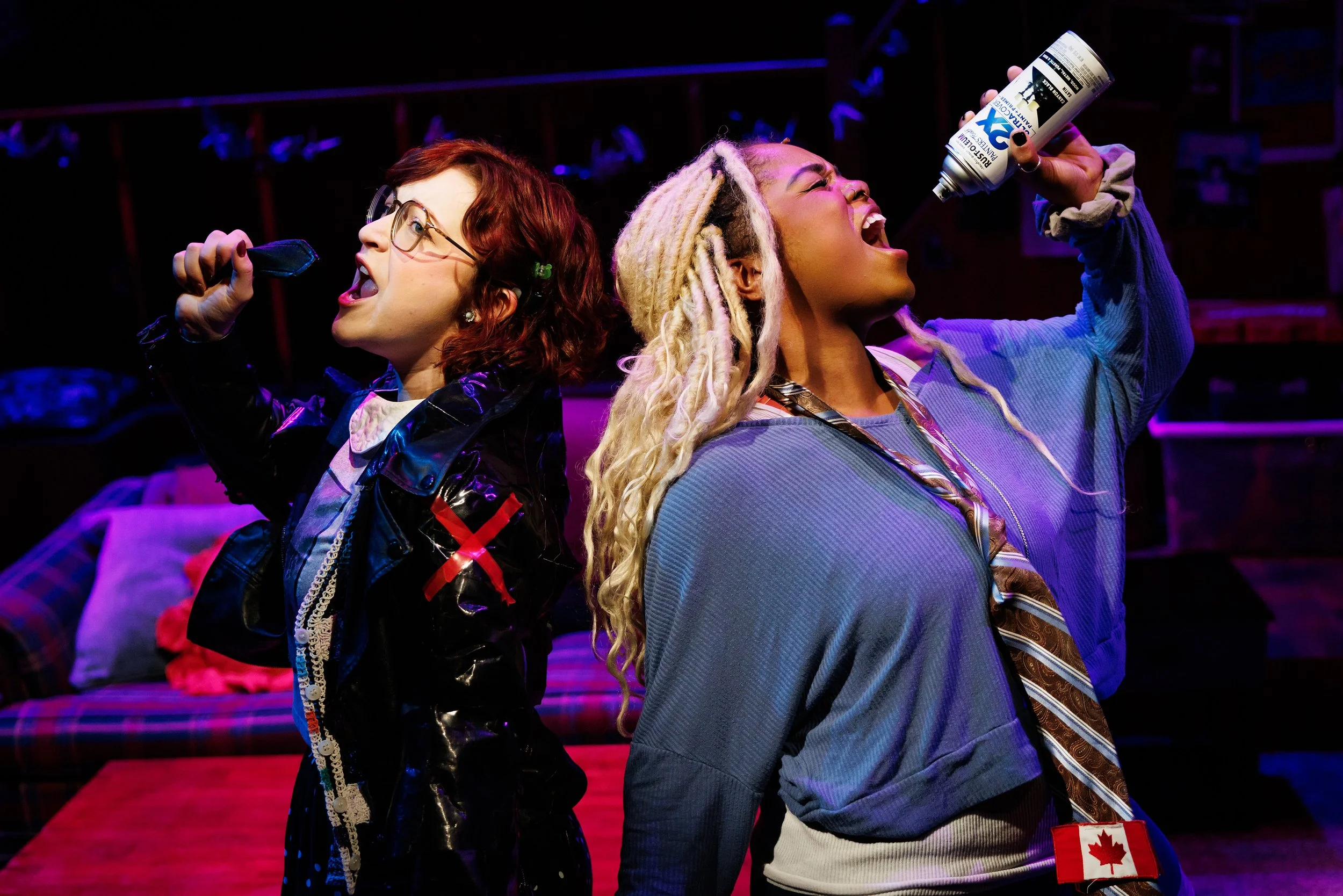
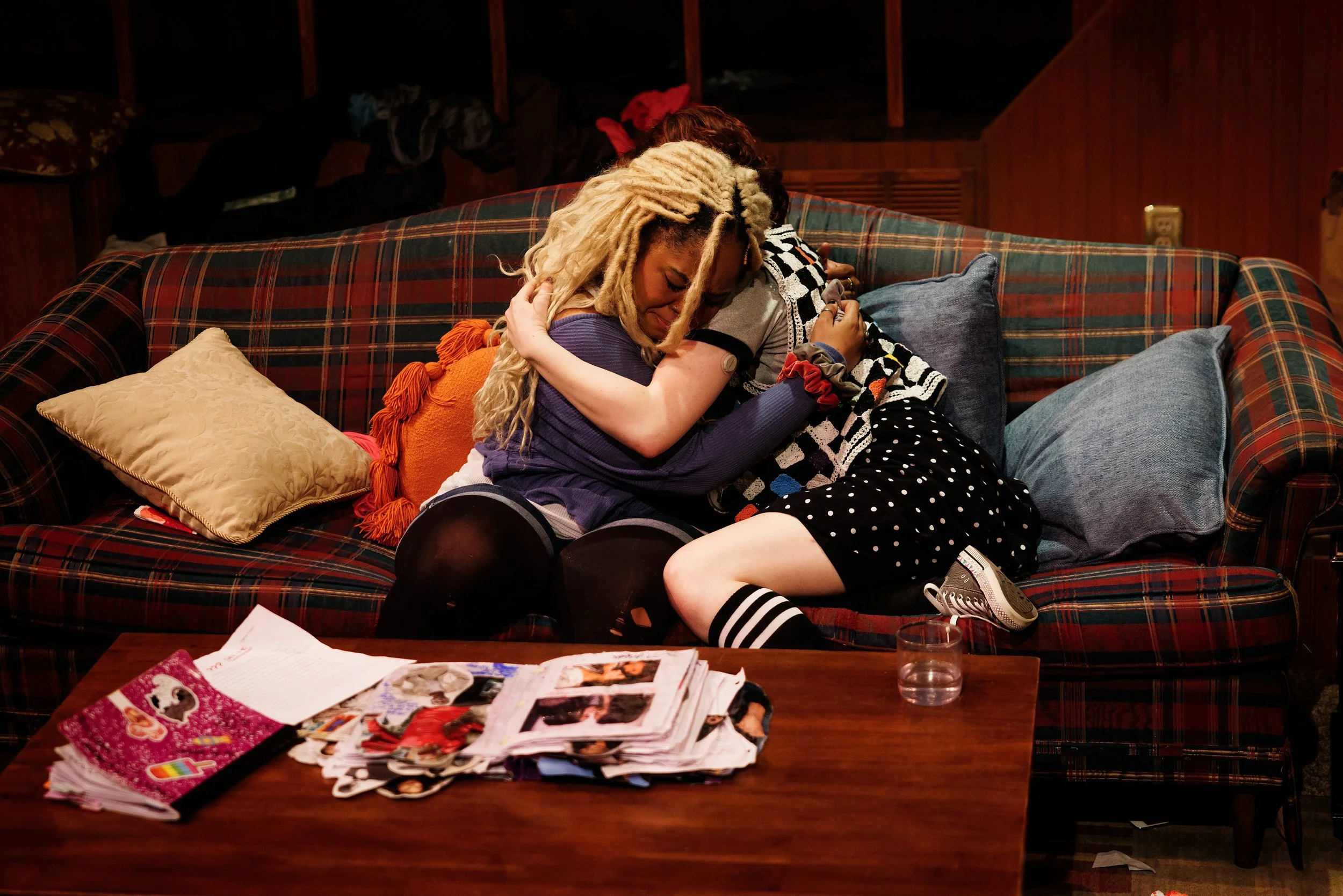
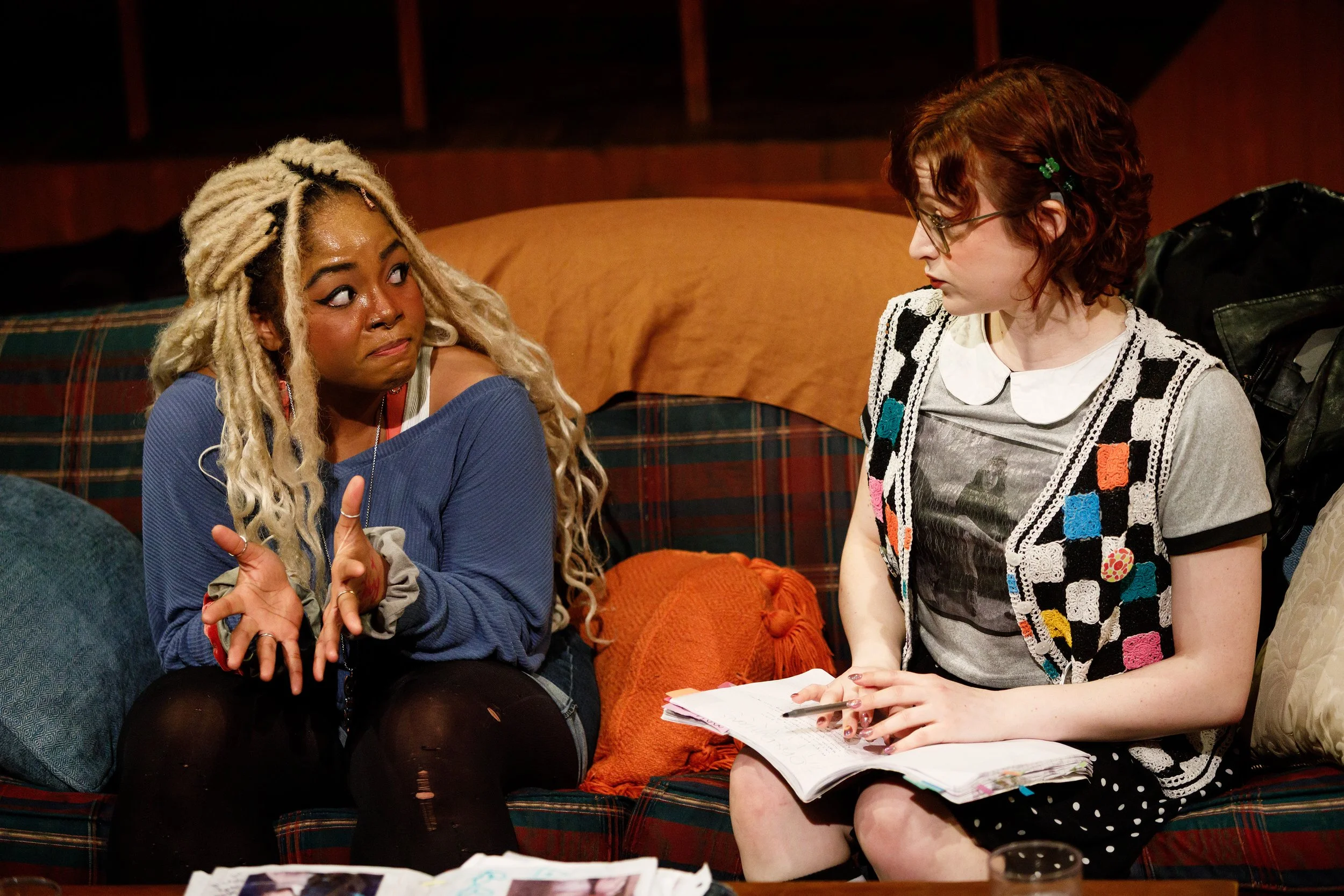
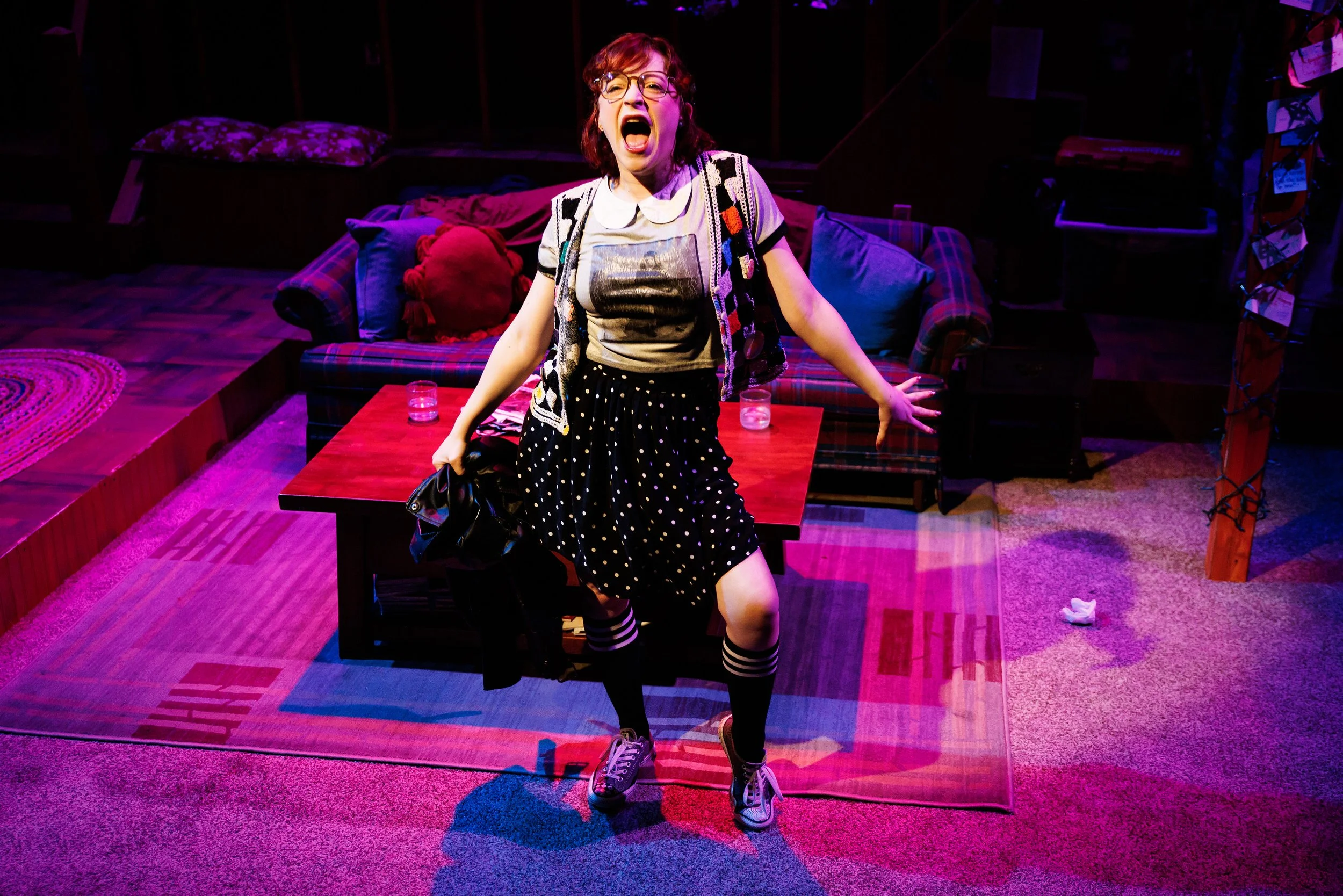
Shannon Johnson’s Ellie is the engine that drives the production, and Shannon delivers a performance that is nothing short of remarkable. Ellie is a character defined by her thoughts—quick, layered, and often tumbling over one another—and Shannon meets that demand head-on with a rapid-fire, athletic delivery that never loses clarity. There is a precision to the performance that feels almost effortless, even as the volume of dialogue and the pace at which it must be delivered would suggest otherwise. It’s through that execution that Ellie’s personality fully comes into focus, awkwardness and all, and Shannon captures that world beautifully. But it’s in the final stretch of the show where the performance elevates even further. The last ten minutes are among the most intense and emotionally charged moments I’ve seen on stage this season, and Shannon meets them with a vulnerability and openness that is striking. It’s that willingness to lay everything bare that ultimately sets this performance apart.
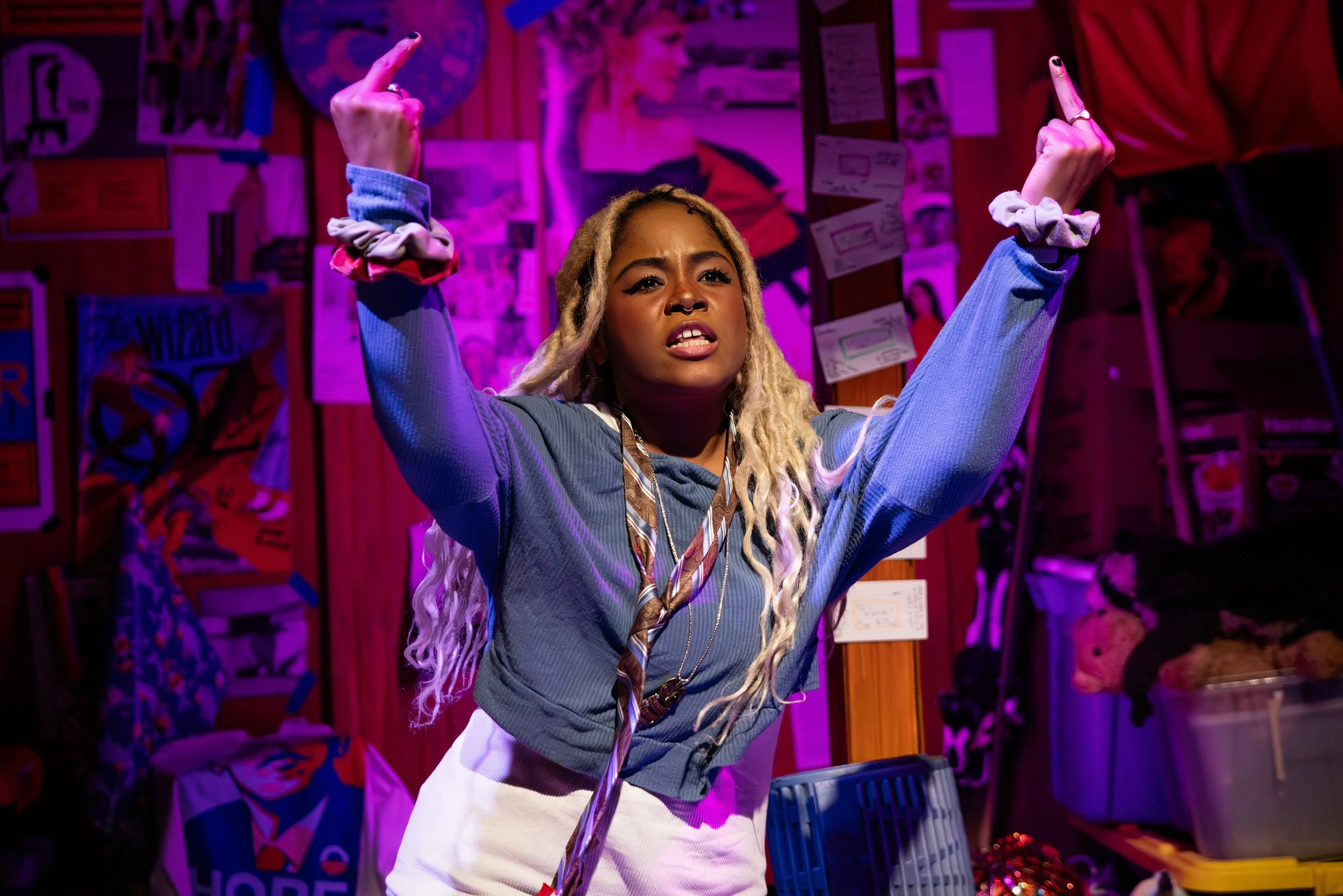
Opposite Shannon, and Ellie, Moxxy Rogers takes on the dual responsibility of not only playing Rachel, but also embodying April—the central figure in Ellie’s imagined Avril Lavigne musical. The role requires Moxxy to shift between the two, sometimes in rapid succession, and it’s a challenge that is handled with impressive control. As Rachel, Moxxy presents a teenage girl whose outward confidence often acts as a shield, masking the same kinds of insecurities that Ellie wears more openly. In contrast, April is all attitude—a punk rock persona who exists to push back against the world, unapologetically and loudly. The physicality, the vocal quality, and the overall energy required to make those distinctions clear are significant, and Moxxy navigates them seamlessly. The transitions are sharp, and never feel confusing. Add to that a strong vocal performance—one that captures both the angst and rebellious spirit of the music—and it becomes clear just how much ground Moxxy covers over the course of the show.
Together, Shannon and Moxxy form a partnership that is as dynamic as it is believable. Both actors have a strong grasp of the humor that fuels much of the first ninety minutes, delivering it with timing and clarity that keeps the audience engaged. But just as importantly, they understand the weight of what lies beneath that humor, what it is to be a confused and awkward teenager in the late 2000s, and how hard it is to maintain a friendship among the social pressures of the time. Like any strong piece that uses comedy as a pathway to something deeper, the shift into more serious territory requires a different kind of precision, and both performers meet that challenge. Their ability to navigate those tonal shifts—sometimes within the same moment—is a testament to their versatility and to the strength of their performances.
On the creative side, there is a clear level of care and intentionality in how Ellie’s world is built. Jeremy Hollis’ scenic design, paired with the detailed work of props master Logan West, fills her apartment with items that are distinctly rooted in the time period. The walls, covered with posters and personal touches, immediately give the audience a sense of who Ellie is before she even says a word. Details like her iCat are not only period-accurate but are used to great comedic effect, adding to the texture of the storytelling. It’s the kind of design that rewards attention—simply taking in the space offers a deeper understanding of Ellie’s personality, her influences, and the lens through which she views the world.
From a technical standpoint, the production is equally well supported. Annie Liu’s lighting design provides a number of well-timed visual cues that help guide the audience through shifts in time and tone, while Max Sarkowsky’s sound design maintains a strong balance between the musical elements and the spoken text. The three-piece band, under the direction of YUELAN as music director and band leader, does an excellent job of creating the musical atmosphere that underpins the story, giving weight to the Avril Lavigne-inspired numbers and helping to drive the energy of the piece without ever overwhelming it.
What makes The Best Damn Thing work is its ability to feel specific while still being widely relatable. The references, the setting, and the musical influences are all rooted in a particular moment, but the emotions underneath them—uncertainty, admiration, jealousy, connection—are universal. The play finds humor in those experiences without ever undercutting their importance, and when it moves into its more serious moments, it does so with a sense of honesty that resonates.
Bringing it all together is the direction from Kate Drummond. Kate and her team have built a world that feels real, that feels human, and have populated it with characters that are not only relatable, but genuinely likable. There is a clear understanding of both the tone and the intent of the piece, allowing the humor to land naturally while giving the more emotional moments the space they need to breathe. By casting Shannon and Moxxy in these roles, Kate has taken a musical that is strong on the page and transformed it into something exceptional in performance. It’s a cohesive, confident vision that ties every element together, resulting in a production that, quite simply, stands out as one of the most memorable experiences currently on stage.
Dacha Theatre’s production of The Best Damn Thing is a real treat, and one of the biggest surprises on stage this season. The surprise comes not through spectacle, but through its willingness to sit in the complexities of its characters and let those moments speak for themselves. Anchored by two outstanding performances and supported by a creative team working at a high level across the board, this is a production of remarkable quality. It may not be what you expect walking in—but it just might be exactly what you didn’t know you needed.
The Dacha Theatre production of The Best Damn Thing runs on stage in Seattle at 12th Avenue Arts through April 18. For more information, including ticket availability and sales, visit https://www.dachatheatre.com/.
Photo credit: Brett Love