
Stage Review - Ain’t Misbehavin’ (Taproot Theatre)
Stage Review - Ain’t Misbehavin’
Presented By: Taproot Theatre - Seattle, WA
Show Run: March 18 - April 25, 2026
Date Reviewed: Friday, March 20, 2026 (Opening Night)
Run Time: 2 Hours (including a 20-minute intermission)
Reviewed by: Greg Heilman
Some people may criticize shows produced solely for the sake of their entertainment value, especially in the social and political climate we currently find ourselves in. I would counter that and say, while there is a lot of value to shows with something to say—and out of the shows I took in this past weekend there are definitely a few of those—there is most definitely something to be said for an escape, a show that provides a fun outlet for audiences to forget about the outside world for a few hours. That’s exactly what Taproot Theatre’s latest production, the Fats Waller musical Ain’t Misbehavin’, is all about. What it isn’t is clear; it’s not something that is going to make you contemplate your place in the world. But what it actually is, is just as clear. The musical, directed by Bretteney Beverly, and running on Taproot’s Jewell Mainstage through April 25, is a rollicking good time, a transformative piece that harkens back to the Harlem Renaissance and the Jazz Age, and a demonstration of some of Seattle’s best and most talented musical theatre performers.
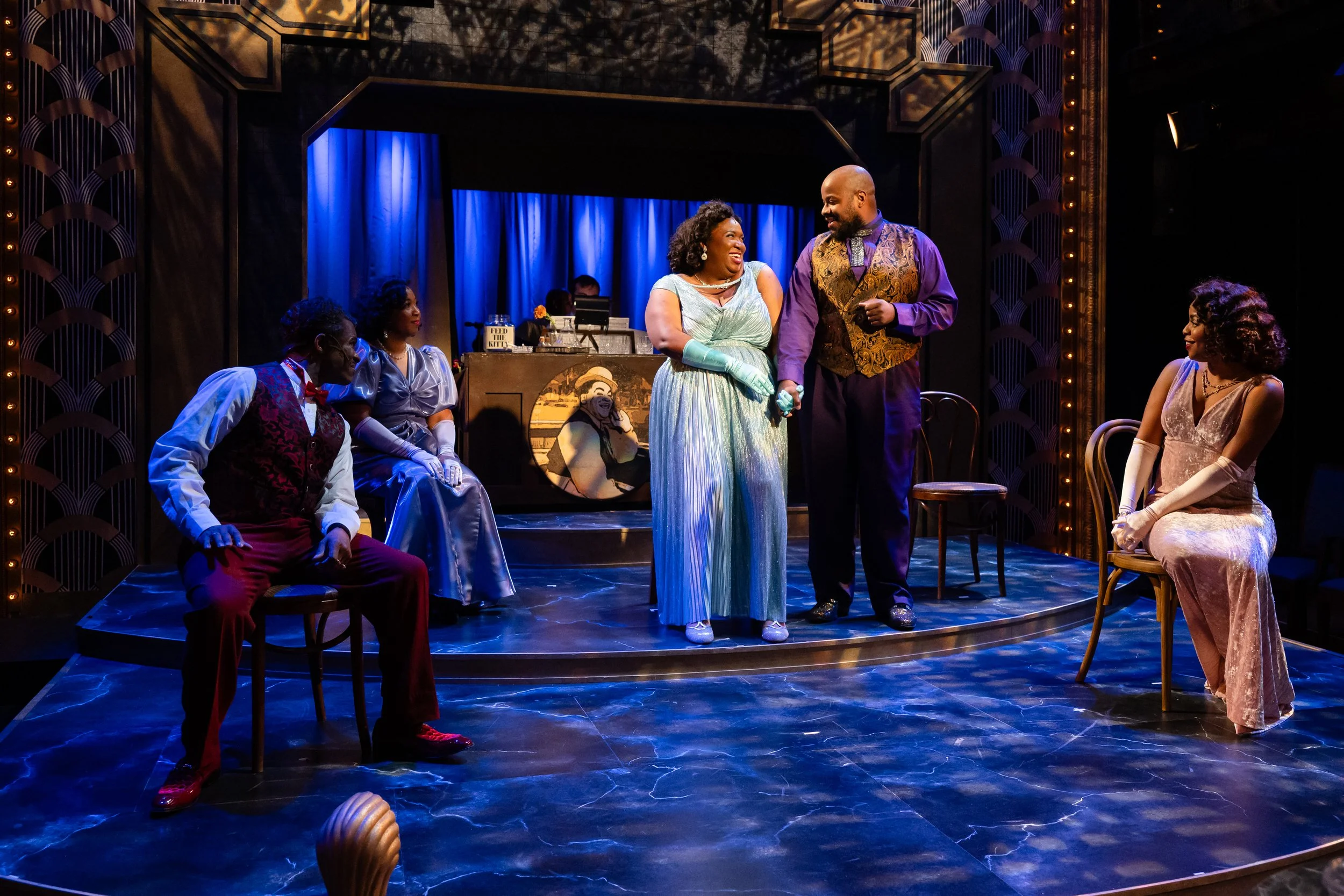
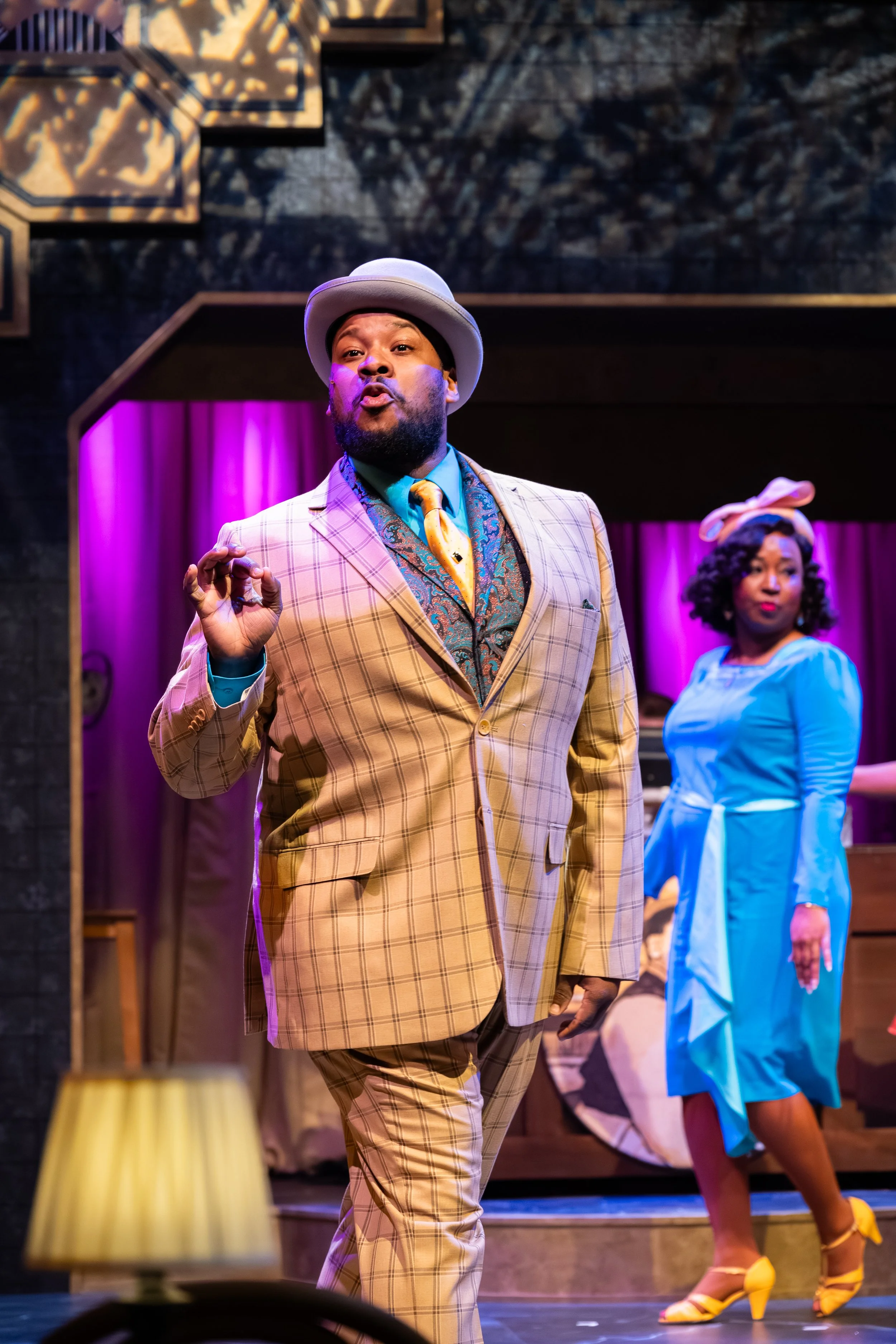
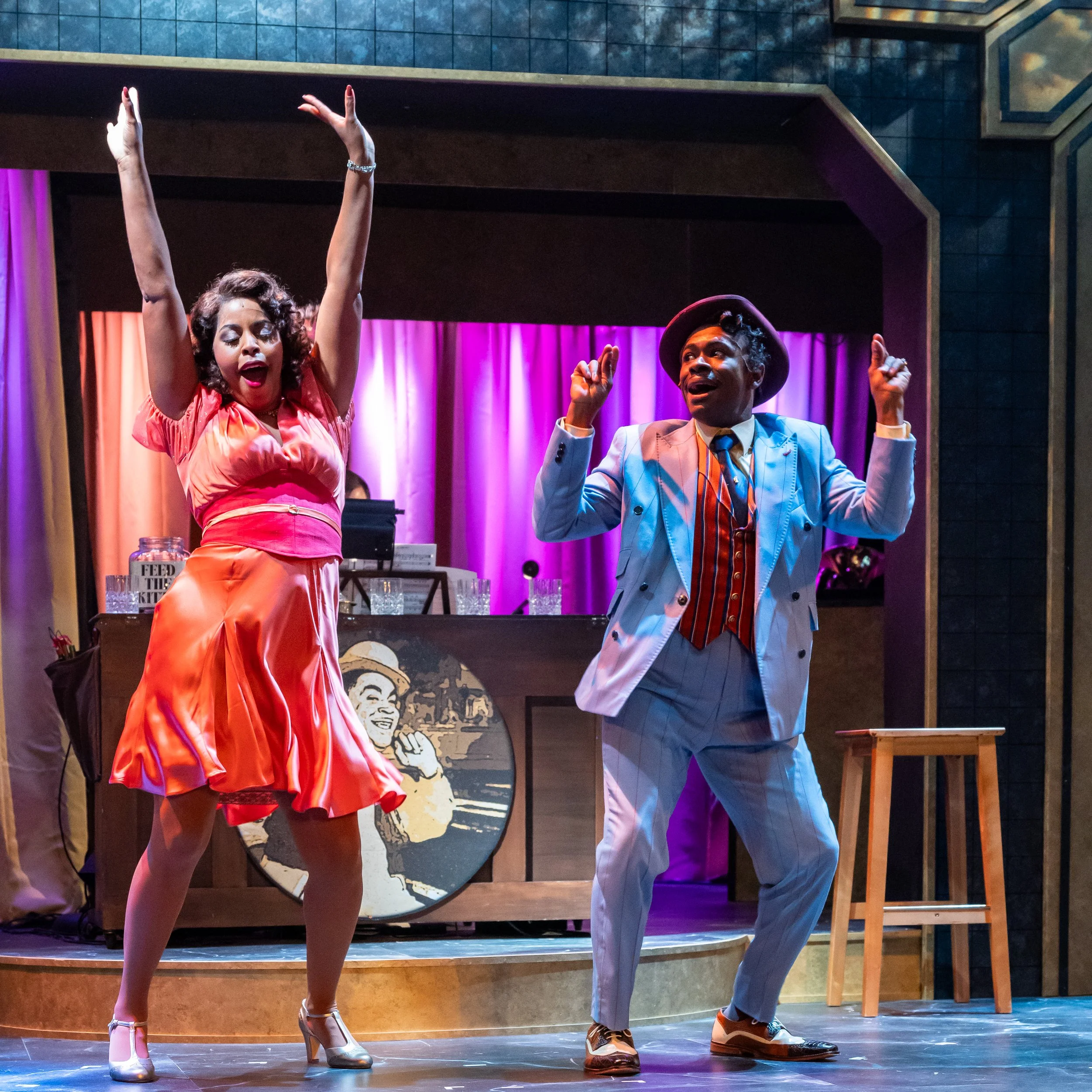
From the moment the house opens, Ain’t Misbehavin’ doesn’t just present itself as a musical—it invites the audience into another space and time. A smoky Harlem nightclub of the 1930s comes to life through thoughtful, immersive design choices that extend beyond the stage and into the audience itself. With cabaret tables set just feet from the action, highball glasses perched nearby, and a piano adorned with the unmistakable presence of Fats Waller, the production establishes its world before a single note is sung. Scenic designer Mark Lund’s work is central to that transformation, creating an environment that feels both stylized and evocative, placing the audience squarely inside the energy and intimacy of a Jazz Age club.
First conceived in 1978, Ain’t Misbehavin’: The Fats Waller Musical Show is less a traditional book musical and more a celebration of the music, humor, and spirit of one of jazz’s most iconic figures. Built around the songs made famous by Thomas “Fats” Waller, the revue format allows for a collection of moments rather than a linear story, offering audiences a window into the Harlem Renaissance and the vibrant nightclub culture that helped define it. It’s a structure that places the emphasis squarely on performance—on voice, personality, and connection.
The scenic and lighting design work together to create the setting for that connection. Art deco influences are woven into the visual language, from the textures of the floor to the glow of purple light washing over the drapery at the back of the stage. Even the smallest details—matching wall sconces, the subtle haze that softens the space—contribute to the illusion of a late-night club where music and storytelling blend seamlessly. It’s a cohesive environment that doesn’t call attention to itself, but instead gently pulls the audience into its rhythm.
Under the direction of Bretteney Beverly, with musical direction by DaNell Daymon and choreography by Jimmy Shields, the production finds its strength not in narrative structure—there is no traditional plot—but in the personalities and connections that emerge through the music. As the evening progresses, the performers begin to feel less like individual acts and more like a company of artists traveling together, sharing stories, feeding off one another, and building a collective identity that the audience comes to understand and embrace.
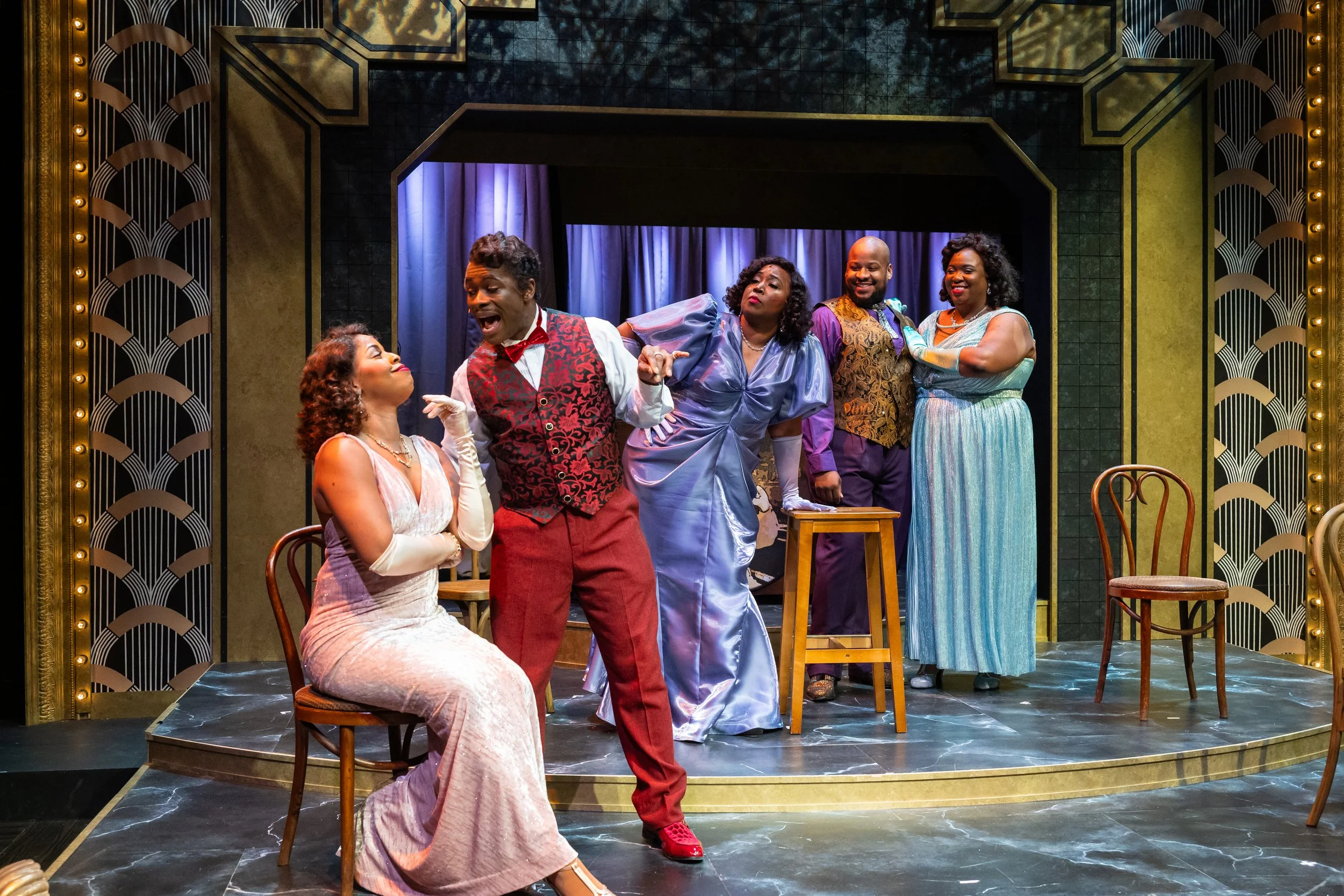
That sense is perhaps most evident in the vocal performances. There is a clear distinction in style among the cast, but those differences become complementary rather than competitive. Chandler T. Thomas brings a jazzy flair to his delivery, matched by a physicality that feels just as musical—his movement is as expressive as his voice, and he makes full use of it. Opposite him, Yusef Seevers offers a more soulful presence, grounding the sound with warmth and depth. When their voices intersect, the contrast creates a dynamic balance that enriches the overall texture of the show.
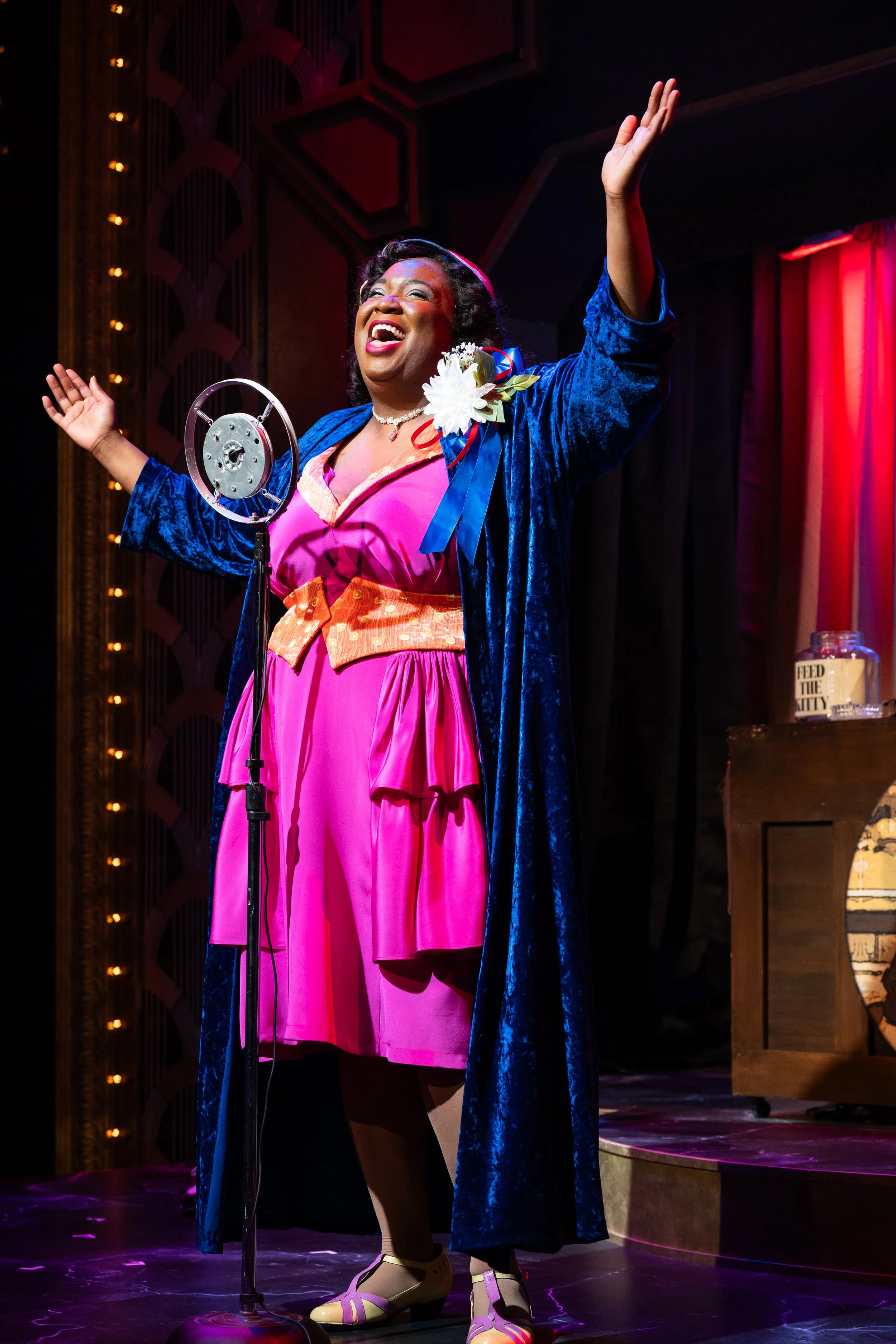
Sarah Russell delivers one of the evening’s standout moments with “Squeeze Me,” showcasing a dynamic range and vocal power that commands attention. There’s a confidence in the delivery, paired with an ease that allows the song to breathe. Erica Walker brings a deeply felt emotional quality to her performances, tapping into a soulful depth that resonates, and her “Mean to Me” is a heartbreaking number that is sure to remain with the audience long after its last note. There is a richness to her delivery that balances strength with vulnerability, allowing those quieter, more introspective moments to land with real impact. Alexandra J. Henderson performs with an unmistakable sense of joy—her presence is vibrant and engaging, and that joy becomes infectious, especially in numbers like “Keepin’ Out of Mischief Now,” where that sense of play and power come together beautifully.
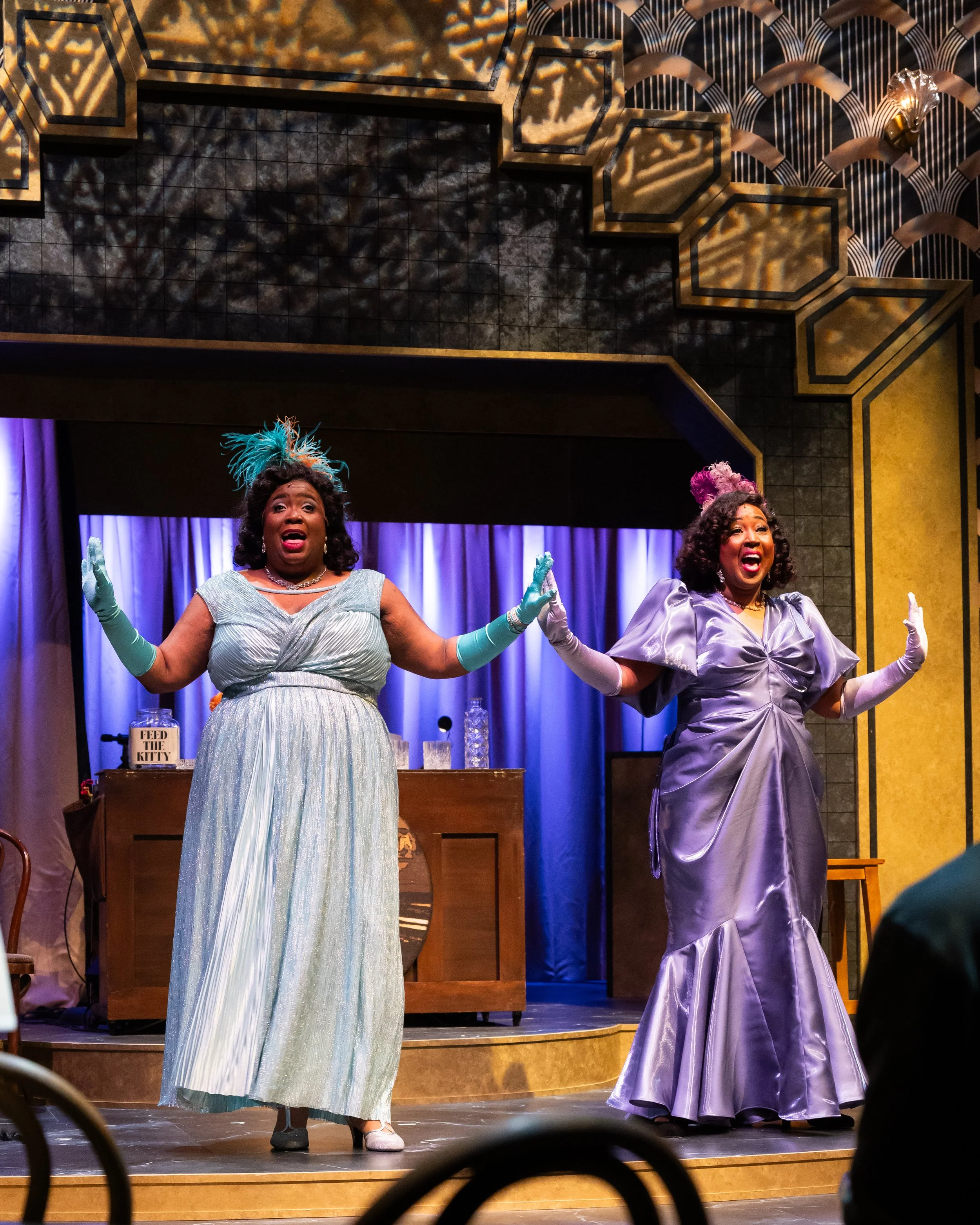
When the ensemble comes together, the production truly finds its groove. Harmonies are tight and intentional, evoking the feel of classic vocal groups of the era, at times recalling the smooth, unified sound of the sister groups of the era. There’s a shared musicality that suggests a group of performers who not only understand one another, but genuinely enjoy working together. That camaraderie translates directly to the audience, creating an energy that feels both spontaneous and carefully crafted.
Among their musical highlights, “The Joint Is Jumpin’” bursts with energy and showcases the full breadth of the ensemble’s talent, while “Your Feet’s Too Big” leans into humor and character with a playful ease, giving Yusef Seevers the opportunity to showcase his comedic instincts without sacrificing the strength and quality of his vocal performance. In contrast, “Black and Blue” stands out as a particularly powerful ensemble piece, its emotional weight carried through beautifully blended harmonies. There is a careful balance throughout the evening between joy and sorrow, between playful wit and heartfelt expression, that gives the production its depth.
Jimmy Shields’ choreography enhances this sense of individuality within unity. Movement is tailored to each performer’s strengths, reflecting their vocal styles while still maintaining a cohesive aesthetic rooted in the period, including, but not limited to, an excellent jitterbug. In larger numbers, the stage comes alive with motion—augmented by lighting that travels across the proscenium—giving those moments a sense of scale and excitement that contrasts nicely with the more intimate solos and duets.
Costume design by Danielle Nieves further supports the storytelling, offering a visual journey that evolves over the course of the evening. Early looks are bright and layered, full of personality, while Act Two introduces a more refined, elegant palette that suggests a shift in tone—richer fabrics, more formal silhouettes, and a sense of maturity that mirrors the emotional progression of the material. Attention to detail is evident from head to toe, with hats, feathers, and accessories completing each look, and the shoes worn by Chandler and Yusef are worthy of their own attention.
Musically, the show is anchored by a strong band led by Max Chastain, with sound design by Mark Lund that achieves an exceptional balance between the band and the vocalists—allowing both to shine without one ever overpowering the other. The integration of the band into the performance space reinforces the club atmosphere, and the interplay between musicians and performers adds another layer of authenticity to the experience.
Ain’t Misbehavin’ may not follow a traditional narrative arc, but that absence becomes part of its charm. Instead, it offers a collection of moments—musical, emotional, and visual—that gradually coalesce into something greater. By the end of the evening, what remains is not a story in the conventional sense, but a feeling—one shaped by Bretteney’s assured direction, the undeniable talent of this cast, and the richness of a production that understands exactly what it set out to be: thoroughly entertaining, deeply engaging, and exceptionally well executed.
Ain’t Misbehavin’, the Fats Waller Musical, runs on the Taproot Theatre Jewell Mainstage through April 25. For more information, including ticket availability and sales, visit https://taproottheatre.org/.
Photo credit: Robert Wade