
Stage Review - Still (Sharp Tack Productions)
Stage Review - Still
Presented By: Sharp Tack Productions - Seattle, WA
Show Run: March 20 - April 05, 2026
Date Reviewed: Saturday, March 21, 2026 (Opening Weekend)
Run Time: 70 Minutes (no intermission)
Reviewed by: Greg Heilman
If there’s one thing (and there are surely more) that relationships and politics have in common, it’s that they are messy. The waters are muddy, the current shifts without warning, and common ground can be difficult to find, especially in challenging times. And yet, finding that common ground is what makes both relationships—and politics—work. It isn’t easy. Like a rubber band stretching and recoiling, people move closer together at times and farther apart at others. The path back is rooted in conversation, in understanding, and in empathy. Reducing someone to a label—Republican, Democrat, or otherwise—is far more dangerous than recognizing them for who they are. There is more that connects us than divides us, and it is through conversation and active listening that we uncover that truth. Still, Lia Romeo’s two-person play, the inaugural production from the newly formed Sharp Tack Productions, directed by Sabrina Fiander and running on the Side Quest Stage at Rolling Bay Hall through April 5, illustrates how two people—Helen and Mark (Ruth Kidder Bookwalter and Jeffrey M. Brown)—come together after years apart, only to find themselves at odds when long-held assumptions begin to unravel. It is a play that both illustrates and challenges the ideological corners we place ourselves in, while offering hope that through care, effort, and compromise, common ground can still be found.
Before the first line is spoken, the tone of the evening is already established. Harlem Nocturne drifts through the space as the audience settles, its smoky, nostalgic sound pairing effortlessly with a romantic table setting—two chairs, a small round table, a bottle of wine, partially filled glasses, and a softly glowing candle. The effect is immediate and intentional, placing us into a moment that feels intimate, familiar, and tinged with the possibility of rekindled connection.
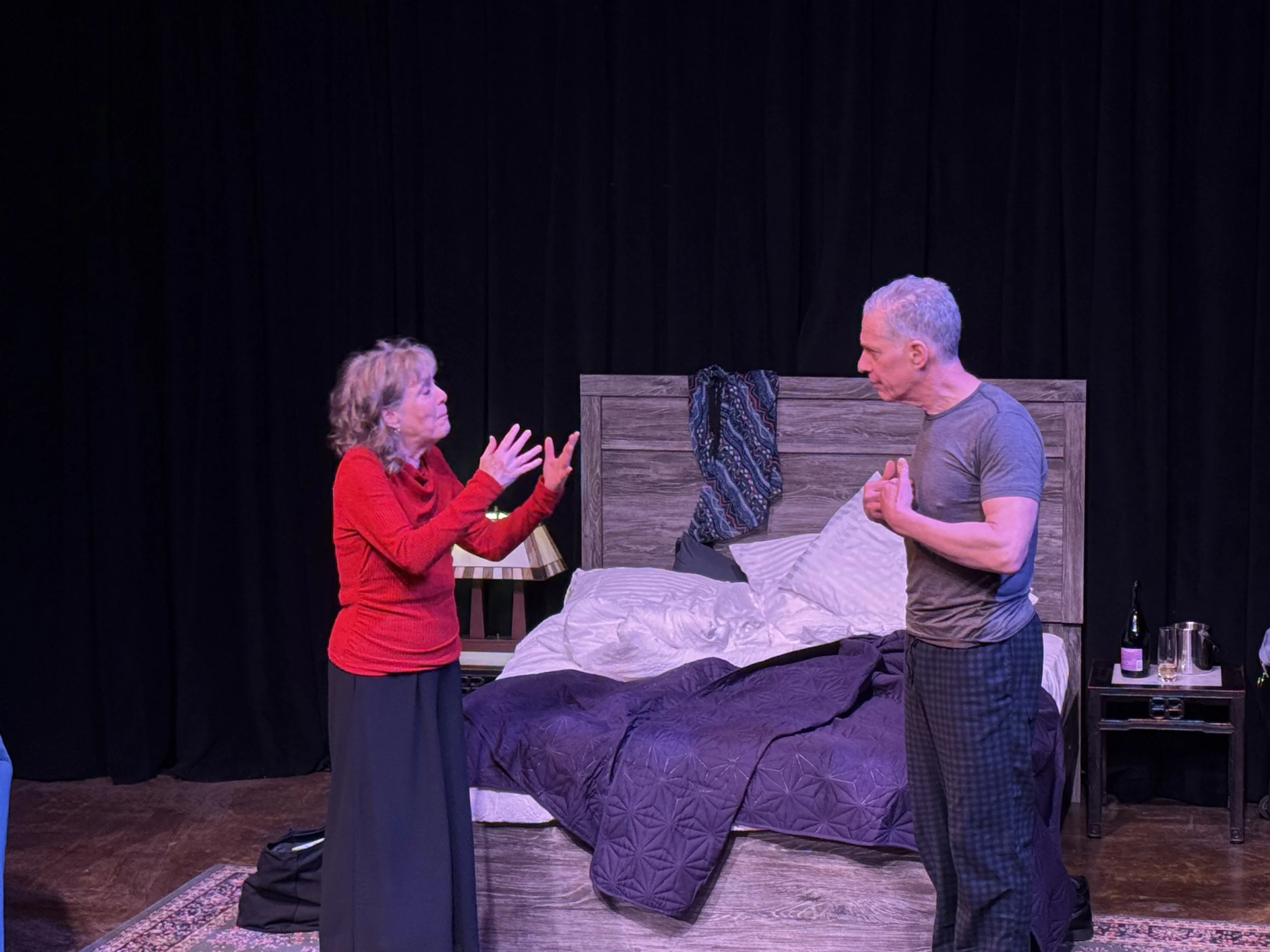
Romeo’s script leans into a natural conversational rhythm, and that authenticity is reflected in the performances. Both actors display a distinct comfort with the material, handling the conversational aspects of the dialogue with ease and precision. They navigate overlapping lines and shifting rhythms expertly, capturing both the moments of intimacy and the rising tension with equal strength. There is a comfort in how Helen and Mark occupy the space together, but that comfort is frequently interrupted by silence—those pauses between thoughts where meaning lingers just beneath the surface.
What emerges is a conversation that feels firmly rooted in the present, touching on generational differences and the evolving language of identity and understanding. These elements are not presented as abstract ideas, but as lived realities—points of friction that surface organically in the course of reconnecting. It’s in these moments that the play feels most recognizable, echoing the kinds of conversations many are navigating in their own lives.
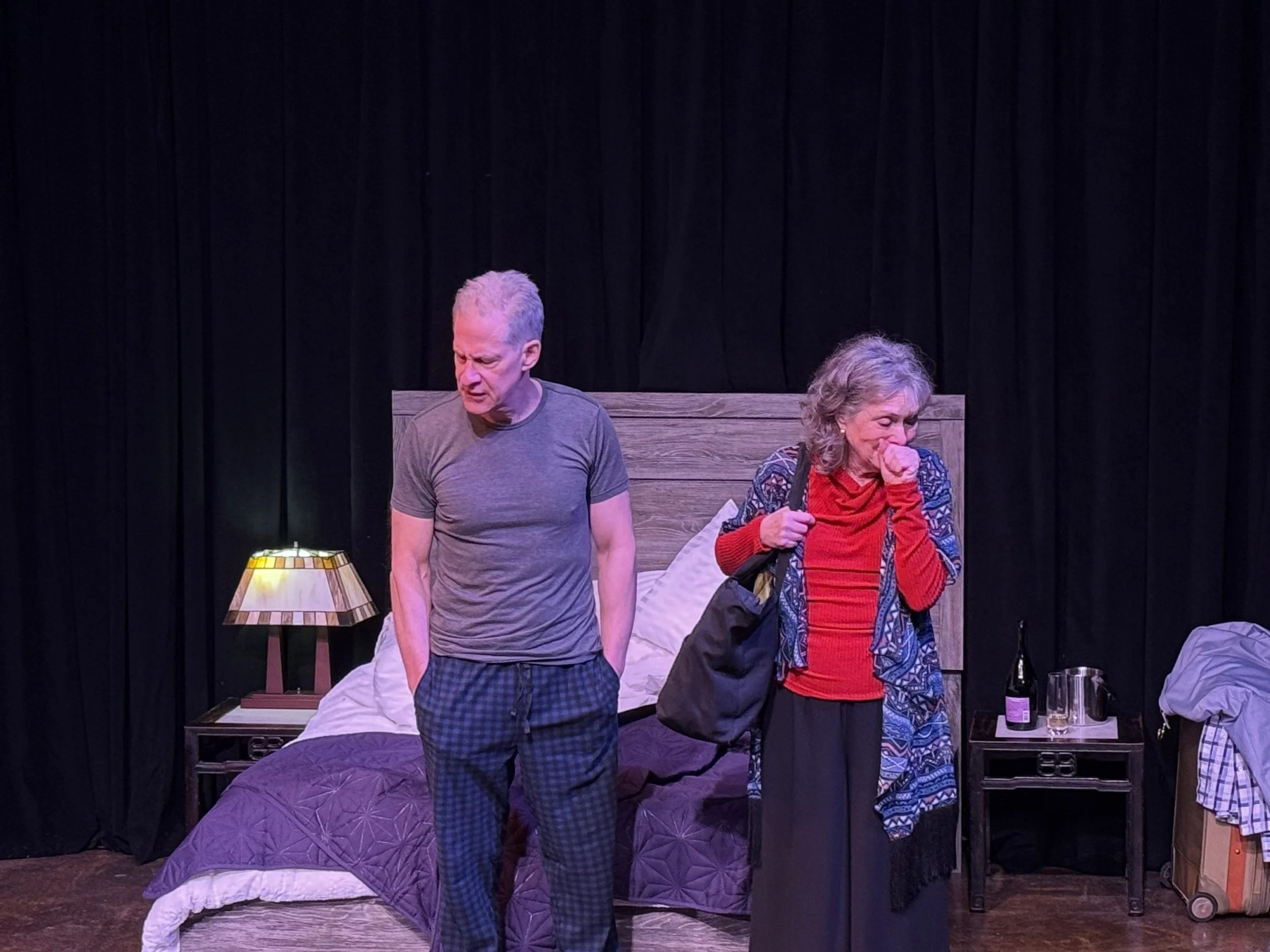
The contrast between Helen and Mark is thoughtfully drawn. Mark carries a quiet reservation, a sense that something unresolved sits just beneath his words. Helen, on the other hand, approaches the conversation with a more outward sense of hope, though it is tempered by a layer of skepticism shaped by time and experience. Their dynamic shifts subtly throughout the evening, as each reveals more of themselves, and of the distance that has grown between them.
As the play unfolds, the tone begins to shift. What starts as a warm, even romantic reunion gradually gives way to more complicated terrain, particularly as the conversation turns toward politics. The change is neither abrupt nor forced—it emerges naturally, the way such topics often do—and with it comes a noticeable shift in energy. Helen’s composure gives way to moments of panic and urgency, while Mark remains measured, creating a tension that feels both authentic and deeply human.
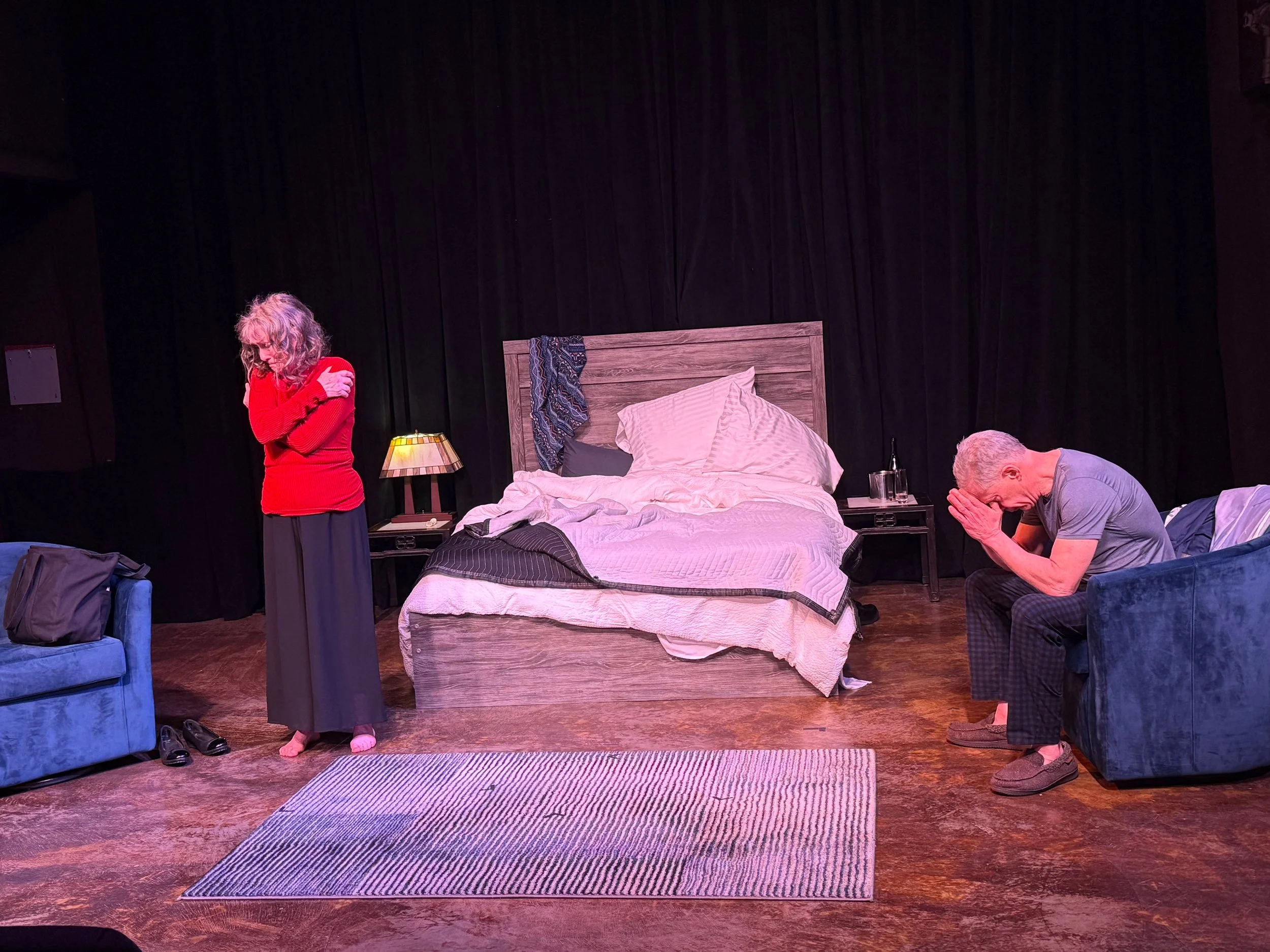
There is also a clear and intentional visual language at work in how the staging evolves alongside the conversation, guided by director Sabrina Fiander. Early in the evening, the two sit together, sharing the small table, the wine, the space between them closing as familiarity returns. But as the discussion becomes more charged, particularly around political differences, that proximity dissolves. They move apart, eventually occupying opposite sides of the room, a simple but effective reflection of the widening emotional and ideological gap between them.
Lighting design by Eli Backer plays a key role in supporting these shifts, particularly in how it interacts with the screen elements of the set. Subtle changes help guide transitions in mood and focus, reinforcing the emotional beats of the play without drawing attention away from the performances themselves.
Still is a play about the complicated intersection of love, identity, and belief. It recognizes that both relationships and politics are rarely clean or easily defined, and that navigating either requires a willingness to listen, to adapt, and to remain open—even when it would be easier not to. In a simple but solid production that wisely keeps the focus on the material, Ruth Kidder Bookwalter and Jeffrey M. Brown rise to that challenge, delivering performances that balance nuance, intimacy, and tension with impressive control. It’s a quiet, thoughtful piece that doesn’t offer easy answers, but instead invites reflection on the ways we connect, disconnect, and, if we’re willing, find our way back to one another.
Still, presented by Sharp Tack Productions, runs on stage at Side Quest Stage at Rolling Bay Hall on Bainbridge Island through April 5. For more information, including ticket availability and sales, visit https://sidequeststage.com/tickets/.
Photo credit: Sabrina Fiander