
Stage Review - All My Sons (Anacortes Community Theatre)
Stage Review - All My Sons
Presented By: Anacortes Community Theatre - Anacortes, WA
Show Run: April 10 - May 02, 2026
Date Reviewed: Sunday, April 19, 2026
Run Time: 2 Hours, 30 Minutes (including a 15-minute intermission)
Reviewed by: Greg Heilman
For those of us on the Kitsap Peninsula, making the trek up to Anacortes for a show often means spending more time on the road than actually sitting in the theatre. The downside, much like heading up to places like Bellingham, is that it’s nearly impossible to catch everything happening on every stage in that part of the region. And I’d be lying if the thought didn’t cross my mind that any show I attend after that kind of drive had better be worth the time—and the stress of navigating Seattle traffic. Thankfully, the productions I’ve seen at Anacortes Community Theatre—last season’s Making God Laugh and now All My Sons, currently running through May 2—along with Biosphere from Bellingham Theatre Works earlier this season, have not only justified the trip, they’ve reinforced the idea that more audiences should have access to work of this quality. There is very good theatre happening north of Seattle, and it is absolutely worth making the effort to experience it.
Arthur Miller’s All My Sons is one of those plays that reveals its weight gradually, layering a seemingly straightforward family drama with deeper questions of morality, accountability, and the long shadow of decisions made in the past. First produced on Broadway in 1947, the play marked Miller’s breakthrough, earning him his first major critical success and establishing the voice that would later define works like Death of a Salesman and The Crucible. Inspired in part by real wartime manufacturing scandals—in which defective airplane parts were knowingly shipped to the military—the story centers on a seemingly typical American family in the years following World War II, living in a quiet neighborhood where the rhythms of daily life mask a far more troubling past. Beneath that surface is a buried truth involving those very kinds of decisions—choices that led to the deaths of American pilots—and as neighbors come and go, what begins as casual conversation gradually gives way to something far more consequential.
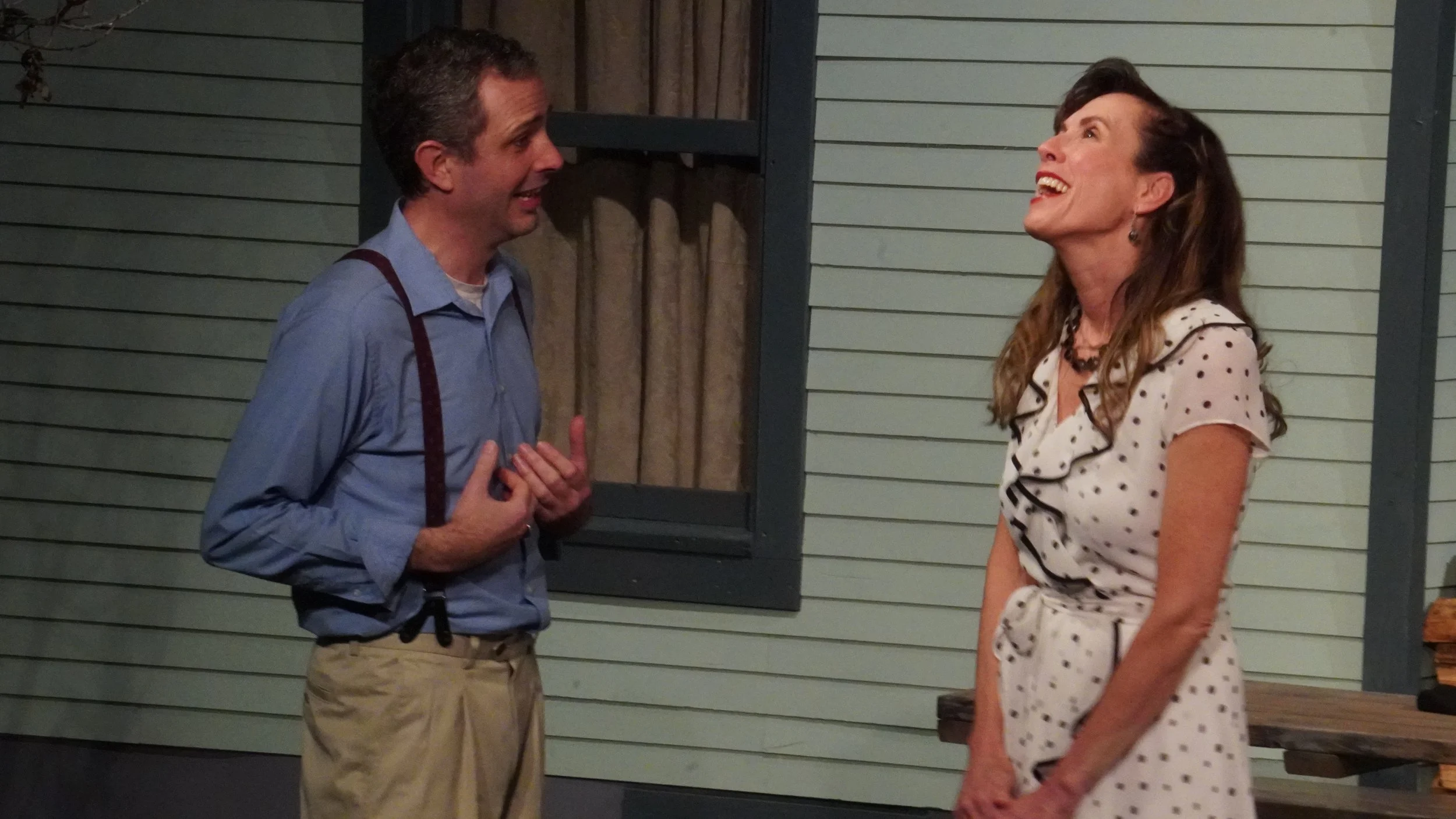
The family dynamic here is what makes this play so engaging. A mother, a father, and a son, all trying in their own way to come to terms with the loss of another son who went missing in the war three years ago. The mother is convinced he is still alive, the brother is trying to carve out his own identity in the wake of a tragedy that continues to dominate the emotional landscape of the family—even to the point of bringing his brother’s former love back into his life with the intention of proposing, all while the father is doing everything he can to avoid conflict, particularly with his wife. A character-driven drama like this asks a great deal of its actors, and the three at the center of this production—Joe, Kate, and Chris—are the engine that drives its success, through to a climax that is unmistakably heart-wrenching.
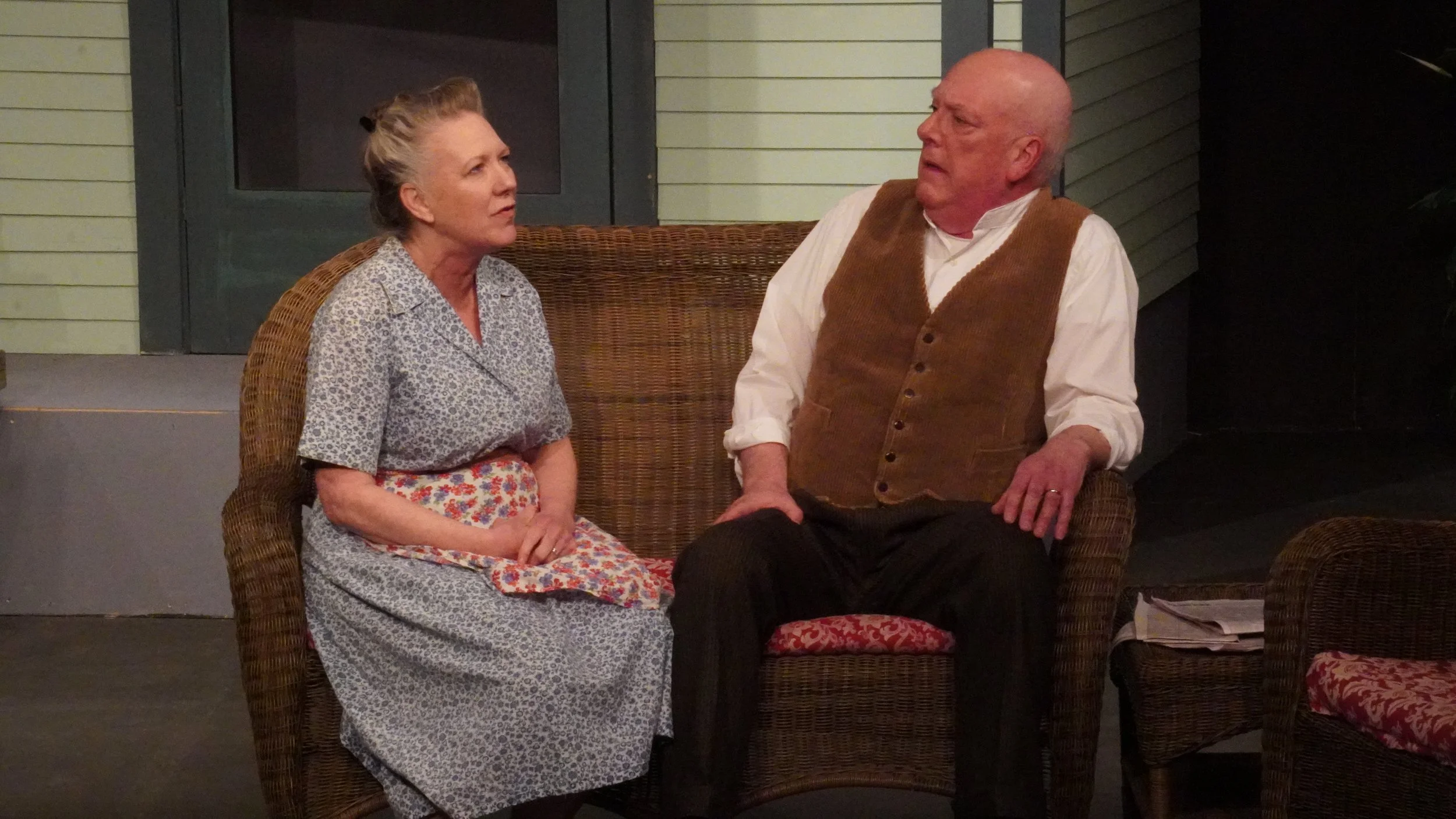
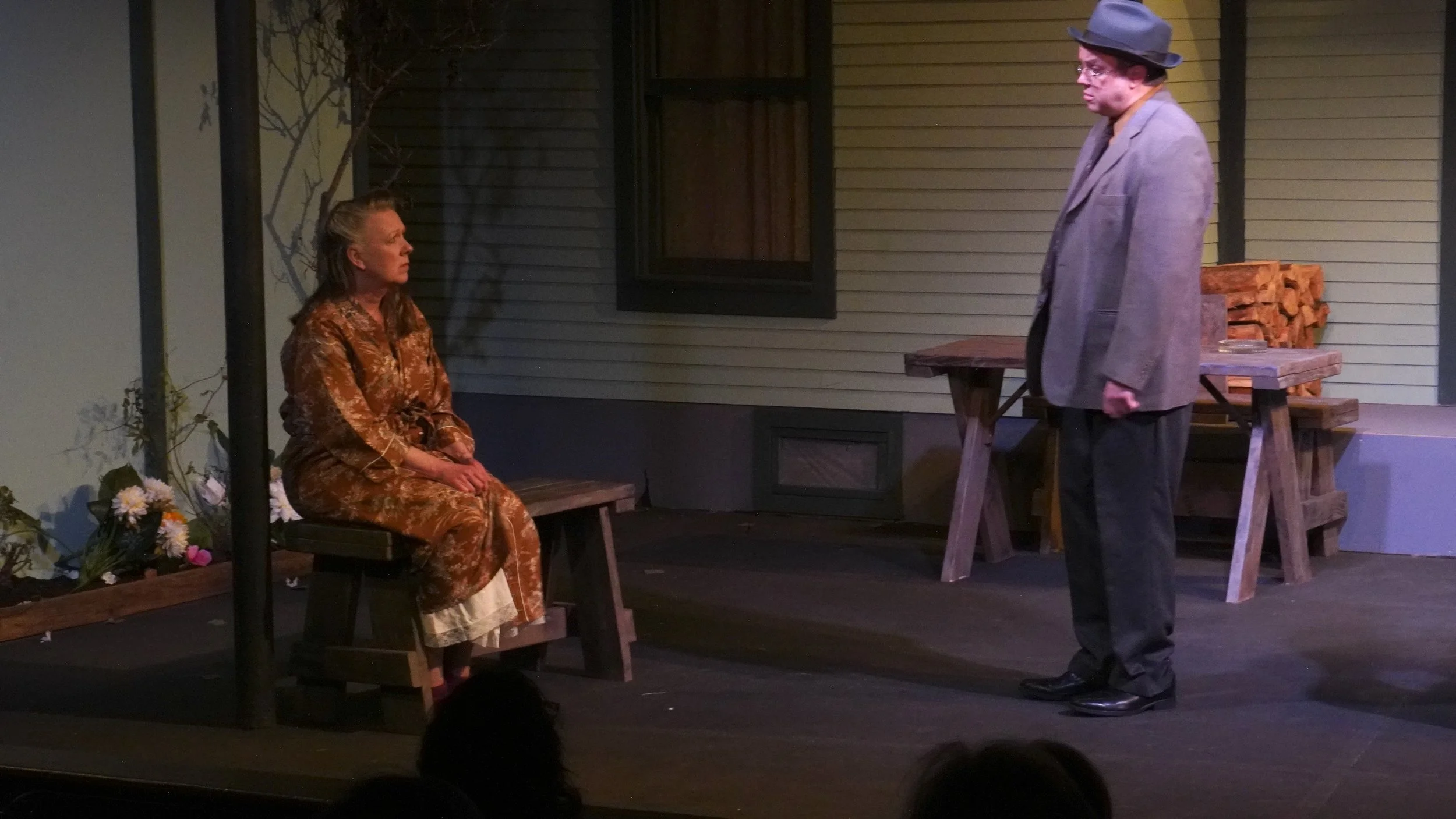
Sydney Brady’s Kate is a mother who refuses to let go. She is determined and unyielding, fully aware of what she wants and unafraid to push back against anything that threatens it. She will not allow anyone to declare her son dead. She will not allow Chris to move forward with Annie (lost son Larry’s “ex”), because doing so would mean accepting a reality she refuses to acknowledge. And she resists any shift in the family dynamic that might force that acceptance. Much of Kate’s energy is spent maintaining control, holding the family in a fixed emotional space of her own design. Sydney’s performance is exceptional in how it presents that control. There is a matter-of-fact authority in her delivery that rarely feels overtly confrontational, even as it quietly asserts dominance. The words may be measured, but the undercurrent is unmistakable. When the moment calls for it—particularly with Ann’s brother George’s arrival and the tension that follows—Sydney raises the intensity of her performance with a great deal of skill, meeting the moment without ever losing control of the character.
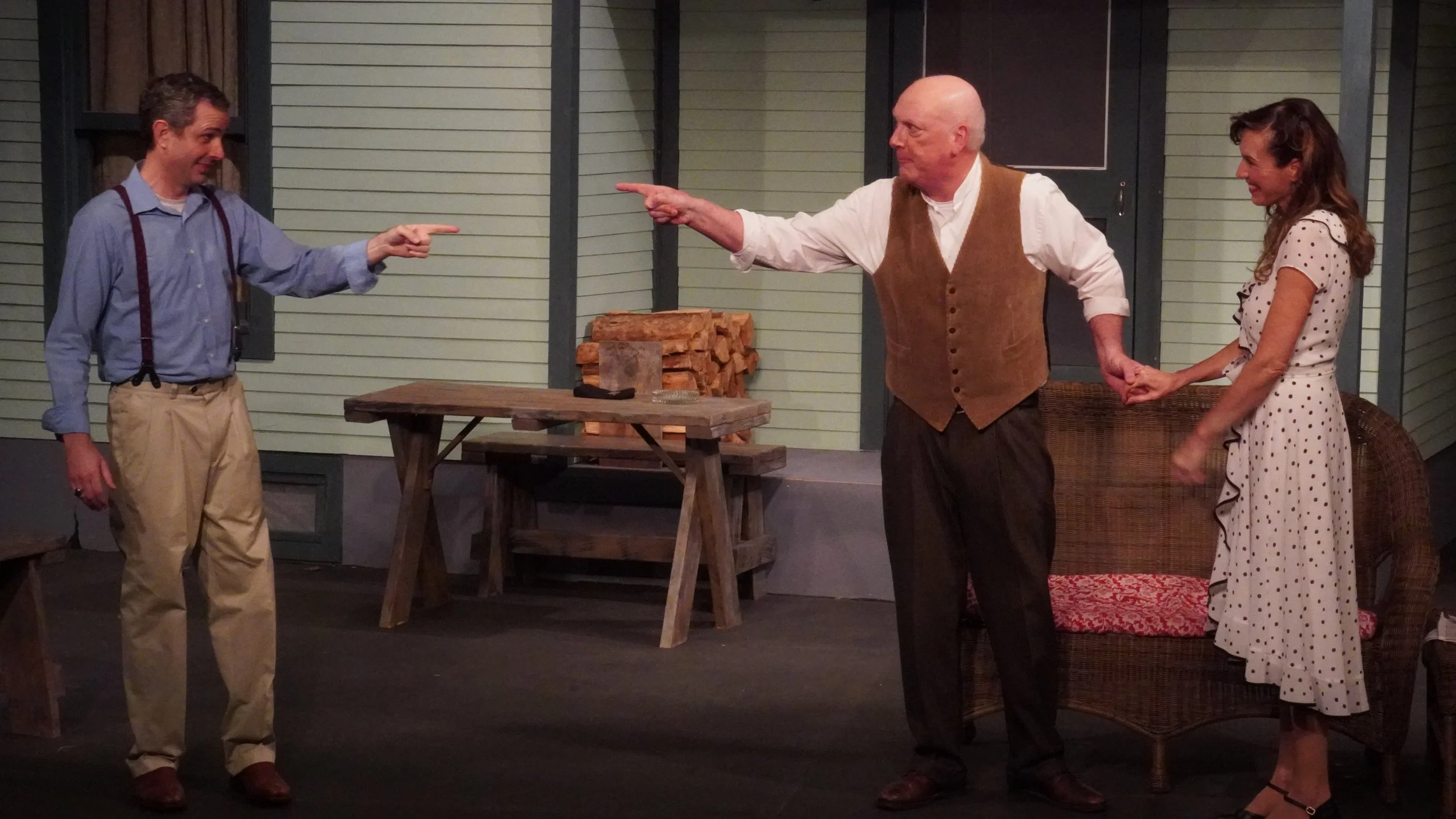
Alongside Kate is Don Brady’s Joe, with a turn that is equally compelling, portraying a man who has built a life through perseverance and is determined to protect it at all costs. A factory owner who has survived the war and whatever challenges came with it, Joe operates with a deeply ingrained sense of responsibility as the provider. There is pressure there—likely shaped by having lived through the Great Depression—and Don allows that pressure to exist just beneath the surface. What makes the performance particularly effective is how Joe masks that weight with humor and affability. It’s a carefully constructed exterior, one that allows him to deflect and avoid rather than confront. But like Kate, there comes a point where that control fractures. When it does, it is not a slow unraveling—it is immediate and forceful, a dam breaking under the weight of everything held back. The shift is striking, and Don handles it with a clarity that makes the moment, and those that follow, land with real impact.
As strong as Don and Sydney are, Brett P. Hall’s Chris is the driving force behind what makes this production so impactful. This is a role that demands emotional depth, physical presence, and complete confidence in the material, and Brett delivers on all fronts. His performance carries a palpable sense of internal conflict—Chris is ready to move forward, to build a future with Annie, but he is also carrying the weight of what he experienced during the war. Having watched others die while he survived, there is a clear thread of survivor’s guilt that informs his choices and his relationships. Brett taps into that with remarkable clarity, bringing a rawness and urgency to the role that never lets up. It is an emotionally demanding performance, the kind that seems as though it would take something out of an actor each time it’s played. It’s the kind of work you wish you could bottle up and put in front of anyone who loves theatre, just to show what can happen when everything—text, actor, and moment—comes together at this level. The result is a portrayal that is both powerful and deeply affecting, and one that stands as a defining element of this production.
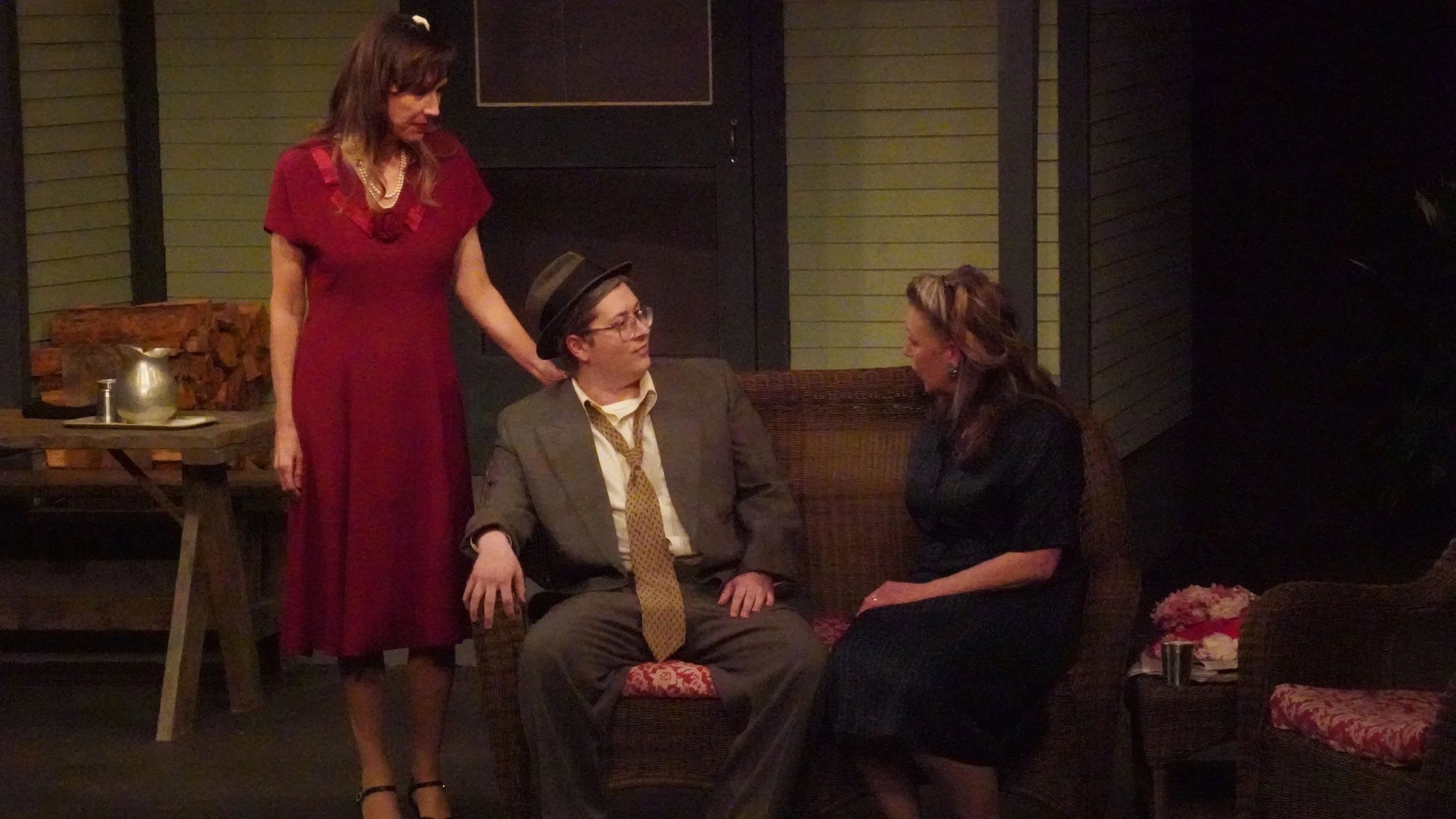
Supporting this strong trio of lead actors is Gina DeLeo-Stamey’s Ann Deever, who serves as both catalyst and conscience within the story, bringing a grounded presence that helps drive the narrative forward. Eric Millegan and Glynna Goff as Dr. Jim and Sue Bayliss offer a neighboring perspective that helps frame the broader community response to the underlying secrecy that the Kellers do their best to keep in the shadows, while Adam Edwards-Bond and Diane Marr Longmire as Frank and Lydia Lubey contribute to the sense of normalcy that surrounds—and ultimately contrasts with—the central conflict. Ben Clay’s George Deever provides a sharp tonal shift upon his arrival, his presence carrying the weight of the past directly into the present and forcing long-avoided truths to the surface, while young Toben Schneider as Bert brings an active energy to the piece.
The supporting cast does strong work across the board, helping to build the world around the central family and giving shape to the broader community that both supports and pressures them. Each character contributes to the slow unraveling of the truth, and the ensemble dynamic reinforces the sense that this is not just a private family matter, but one with far-reaching implications.
There are also moments of humor woven throughout the production, often emerging through the neighborhood interactions. These moments provide a welcome contrast to the heavier themes, grounding the characters in a sense of normalcy even as the narrative edges toward something more serious. As the play moves into its second act, the emotional weight intensifies, and the underlying conflict comes fully into focus. The revelations surrounding Joe’s business decisions shift the story into a moral reckoning, one that extends beyond the immediate family and into a broader question of responsibility. A confrontation between Joe and Chris is particularly effective, capturing the emotional and ethical divide between father and son, and serving as one of the production’s strongest moments.
Under Billy’s direction, there is a clear understanding of the play’s structure and its emotional arc. The pacing allows the tension to build naturally, and the focus remains squarely on the relationships and the stakes at hand. Nothing feels rushed, and the production gives the key moments the space they need to land.
On the creative side, from the moment the curtain lifts, Billy Hendrix’s scenic design establishes a world that feels authentic to the time and place of the story. The backyard setting is rendered with a naturalism that places the audience firmly in a modest, mid-century neighborhood, the kind of space where conversations happen over iced tea or lemonade (or grape juice) and small talk masks deeper tensions. It’s a strong foundation for the play, one that allows the emotional stakes to grow organically. That sense of time and place is further supported by Tracy Jonasen’s costumes, which appropriately reflect the late 1940s without ever feeling overstated, and Susan Buszta’s lighting design, which subtly shifts the tone as the narrative progresses, and Andi McCarl’s work operating lighting and sound deserves credit for keeping the technical elements running smoothly, allowing the storytelling to remain uninterrupted.
The play’s central idea—that actions, even those made with justification in the moment, have consequences that extend far beyond the individual, and the realization that responsibility does not end at one’s immediate circle, but reaches outward to affect others in profound ways, are what give All My Sons its enduring power.
All My Sons at Anacortes Community Theatre is a thoughtfully executed production, supported by strong performances, cohesive design, and a clear directorial vision. More than that, it’s another reminder that some of the most compelling theatre in the region is happening just beyond the immediate Seattle area—and that it is absolutely worth the drive to experience it.
The Anacortes Community Theatre production of Arthur Miller‘s All My Sons runs on stage in Anacortes through May 2. For more information, including ticket availability and sales, visit https://acttheatre.com/.
Photo credit: Wesley Moran