
Stage Review - Appropriate (Seattle Rep)
Stage Review - Appropriate
Presented By: Seattle Rep - Seattle, WA
Show Run: April 09 - May 10, 2026
Date Reviewed: Saturday, April 18, 2026
Run Time: 2 Hours, 50 minutes (including a 15-minute intermission)
Reviewed by: Greg Heilman
If there is a single word that sits at the center of Branden Jacobs-Jenkins’ Appropriate, it’s right there in the title—but as Seattle Rep’s current production makes abundantly clear, it’s a word that carries weight far beyond its surface meaning. Directed by Timothy McCuen Piggee and running through May 10 at the Bagley Wright Theater, this production investigates both definitions of the word—what is proper, and what is taken—and explores the space between them with a sharpness that feels both immediate and unsettlingly familiar.
Set in a decaying Arkansas plantation home, the play follows the Lafayette family as they gather to settle the estate of their recently deceased patriarch. What begins as a seemingly straightforward exercise in sorting through belongings quickly unravels into something far more volatile, as long-buried secrets, unresolved resentments, and deeply ingrained perspectives on race and legacy rise to the surface. For those of us who have borne witness to a kind of racism that exists far beyond the sanitized versions found in history books—one that reveals itself in places as visible as a front yard along a North Carolina highway or as hidden as a dirt road outside a fading Pennsylvania coal town—this play lands with a particular sharpness. It presses on a nerve that is perpetually raw. Jacobs-Jenkins builds a story that moves from the procedural into the deeply personal, interrogating the ways families protect themselves from truth—through blind devotion, redirected resentment, or the quiet choice not to look too closely. It is not a story that offers easy comfort, but one that exposes the softer, more guarded parts of ourselves, the ones that must be confronted if there is to be any honest reconciliation with the past and the present it continues to shape.
It’s no secret around Seattle—and beyond, if we’re being honest—about the quality of work that Timothy McCuen Piggee has been producing. In just the past four years, audiences have seen a range of productions that speak to both his versatility and consistency, from Hello, Dolly! at Village Theatre to Fat Ham at Seattle Rep, The Color Purple at Village, and now Appropriate, returning to the Rep. What continues to set Timothy’s work apart is not simply his ability to build strong ensembles, though that is certainly a hallmark. It’s the way he ensures that each individual within that ensemble is fully realized, from the leads to the supporting players to those with only a handful of lines, allowing every character to present with specificity and purpose. Those individual performances then coalesce into something greater, forming a cohesive whole that feels both deliberate and organic. He surrounds himself with designers who are clearly in step with his vision—scenic, lighting, sound, and costume all working in concert to transform the space into a fully realized world—but it is what Timothy does within that space that elevates the work further. His staging makes use of every corner of the set, his movement feels fluid and intentional, and his sense of timing—particularly in the pauses—allows moments to linger just long enough for their full emotional weight to settle. It’s a level of control and confidence that pushes this production beyond even his already high standard, and when paired with a script as layered and demanding as Appropriate, the result is a production that doesn’t just succeed—it soars.
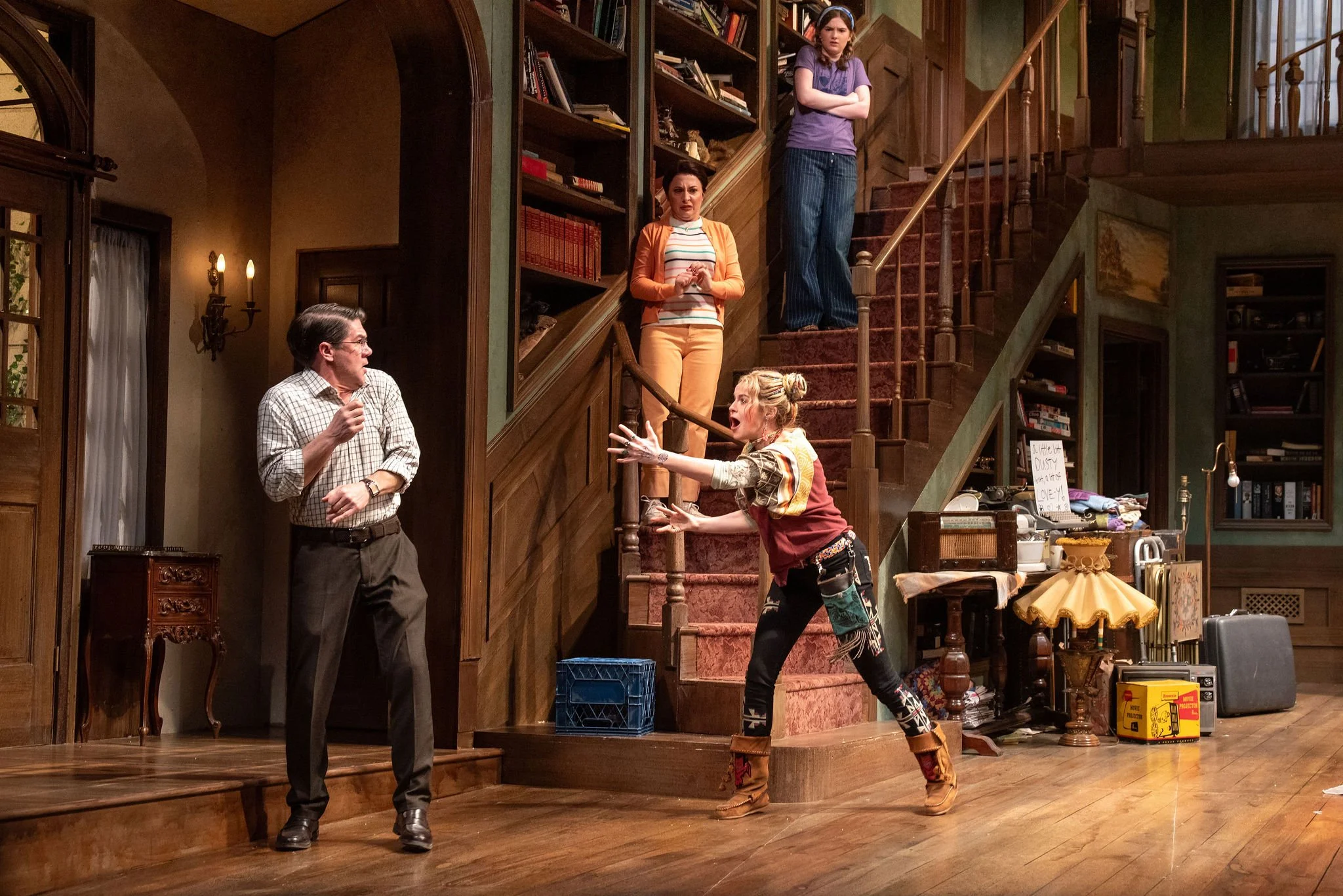
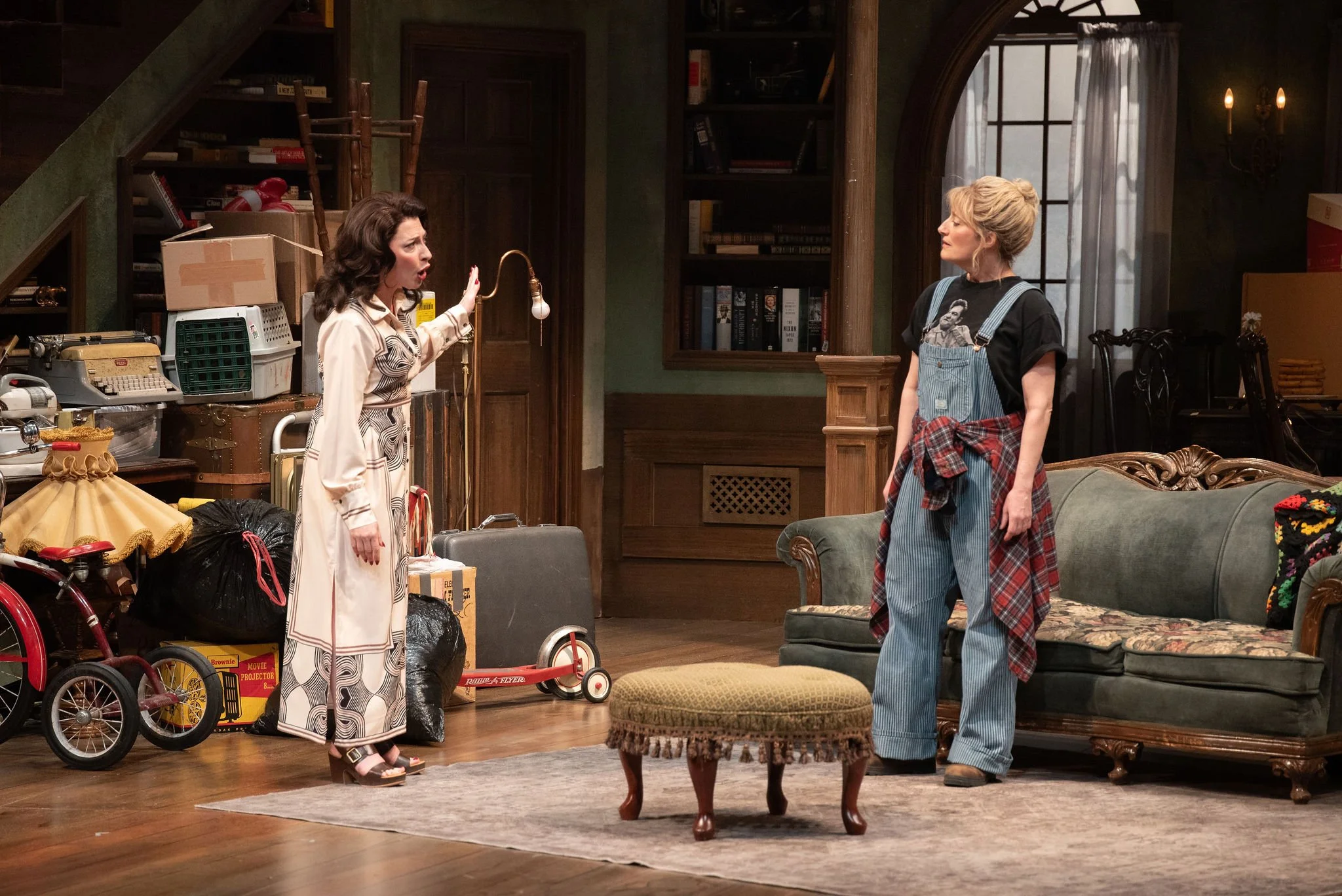
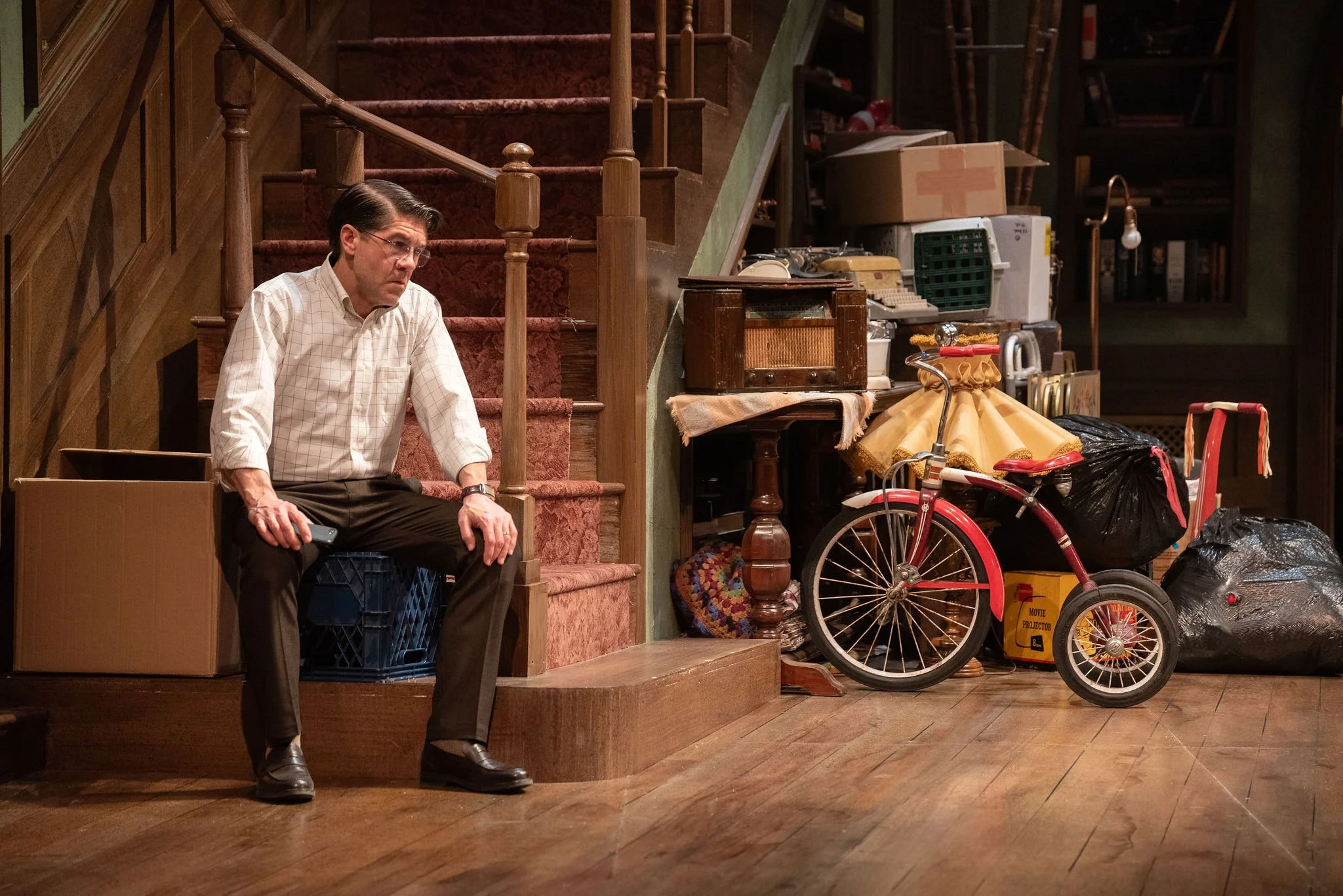
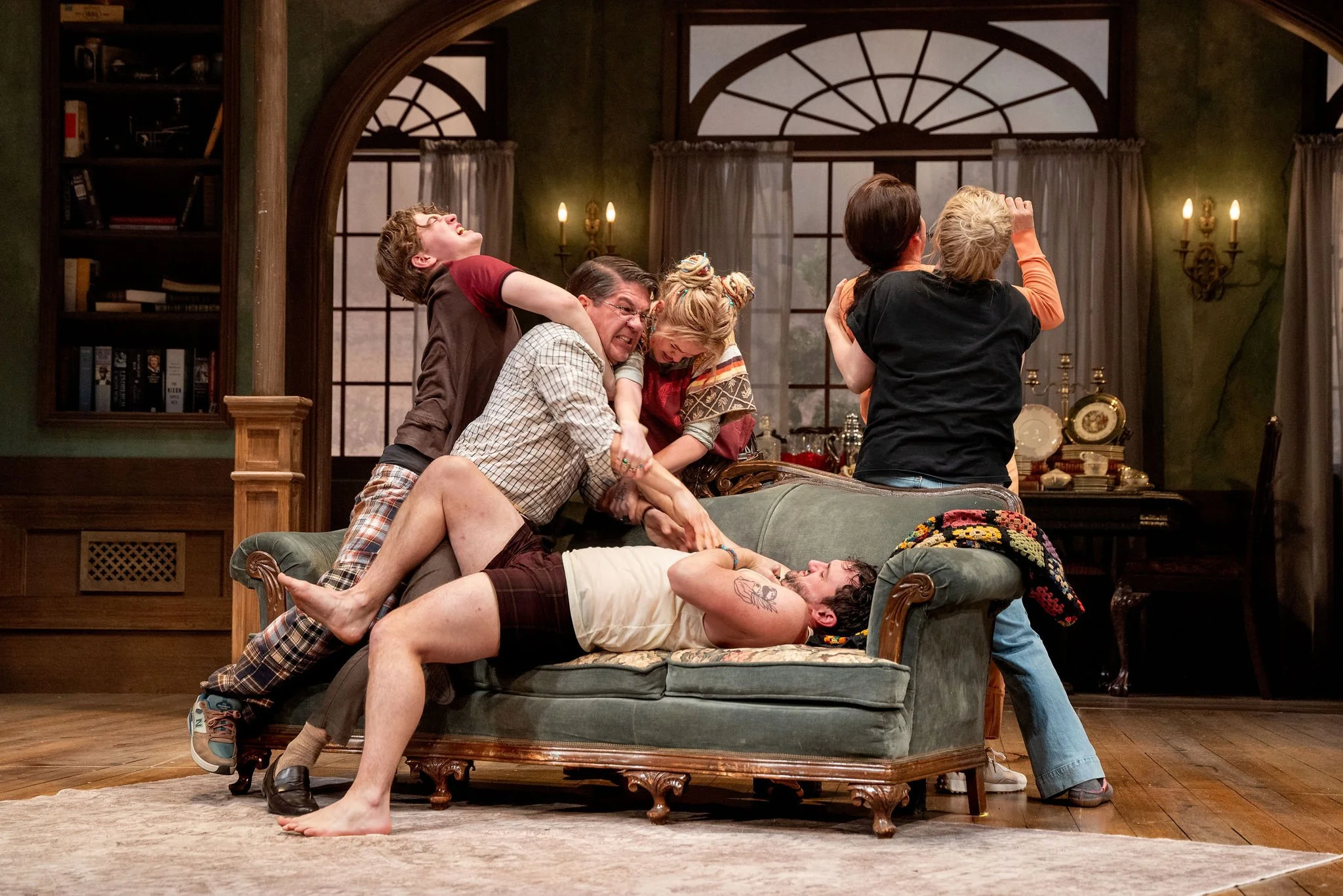
From the earliest moments in the story, the world of the play immediately takes shape. Carey Wong’s scenic design presents a plantation home that is not only grand in scale, but expansive in implication, suggesting a space far larger than what physically sits on the stage. The interior rises with striking height and depth, anchored by a sweeping staircase that carries the eye past a built-in bookcase—home to the single item, among what feels like thousands of meticulously curated pieces, that ultimately sets the story into motion—and up to a landing lined with bedroom doors. There, a grandfather clock stands watch, alongside the suggestion of another staircase leading to a mosquito-filled attic just out of sight. It is one of the grandest sets in both scope and detail, and every inch of it serves a purpose; there is not a single element that feels incidental or unused. Before that full scope is even revealed, the audience is given a carefully measured introduction—two figures climbing through a window under cover of moonlight, using only a flashlight to orient themselves. It’s a subtle and effective way to hint at the world to come without immediately unveiling it.
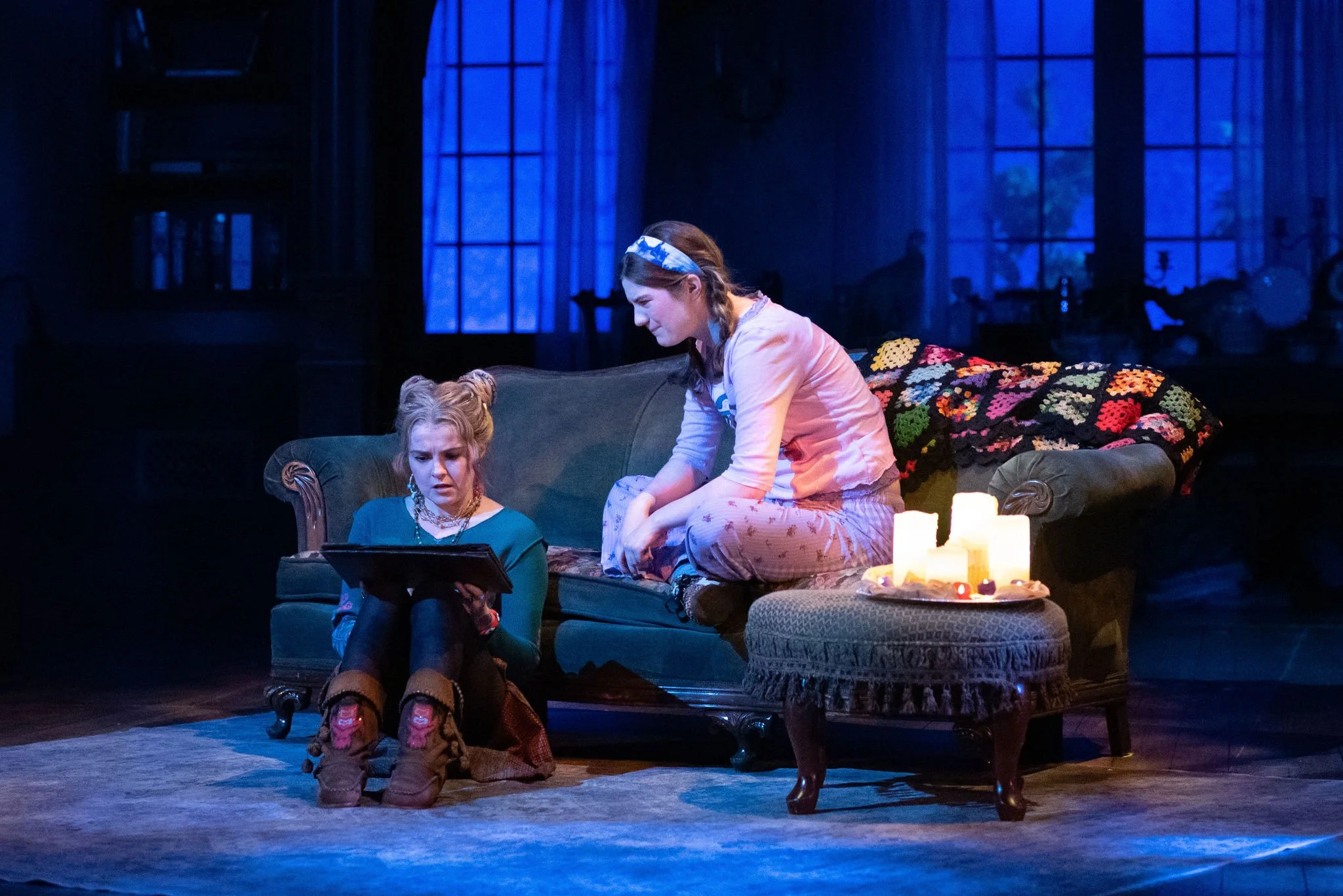
That sense of atmosphere is further shaped by Robert J. Aguilar’s lighting design, which does some of its most compelling work in absence rather than abundance. When the plantation house’s electric lights fall away, scenes lit only by candlelight or the soft intrusion of moonlight through the windows take on a haunting quality, with shadows stretching across the set in ways that heighten both tension and intimacy. These quieter moments allow the emotional weight of the play to settle more deeply, creating images that linger long after they pass.
Sound design plays an equally vital role in establishing the environment. Even before the action begins, the persistent hum of cicadas fills the theatre, immediately transporting the audience to the Arkansas setting. It’s a subtle but effective immersion, one that continues throughout the production as sound and music are used with precision. Transitions between scenes are underscored with musical choices that build a quiet but palpable tension, raising the emotional stakes in ways that feel almost subconscious. Like the set and lighting, nothing in the sound design is wasted; every cue, every ambient detail contributes to a fully realized world that surrounds the audience as much as it does the characters on stage.
What makes this production especially compelling is how confidently the ensemble handles Jacobs-Jenkins’ language. This is a script that demands precision—every line, every interruption, every overlapping conversation matters—and this cast meets that demand head-on. Every line, every jab and insult lands with a marksman-like accuracy, delivered with immense clarity. Conversations unfold at a deliberate pace, even in moments where multiple exchanges are happening at once, yet the momentum remains strong throughout. The result feels authentic, as if we are watching a family dynamic play out in real time, complete with the messiness and unpredictability that entails. It’s not just technical precision at work here, but a deep comfort with both the material and the characters, allowing the dialogue to strike exactly where it needs to.
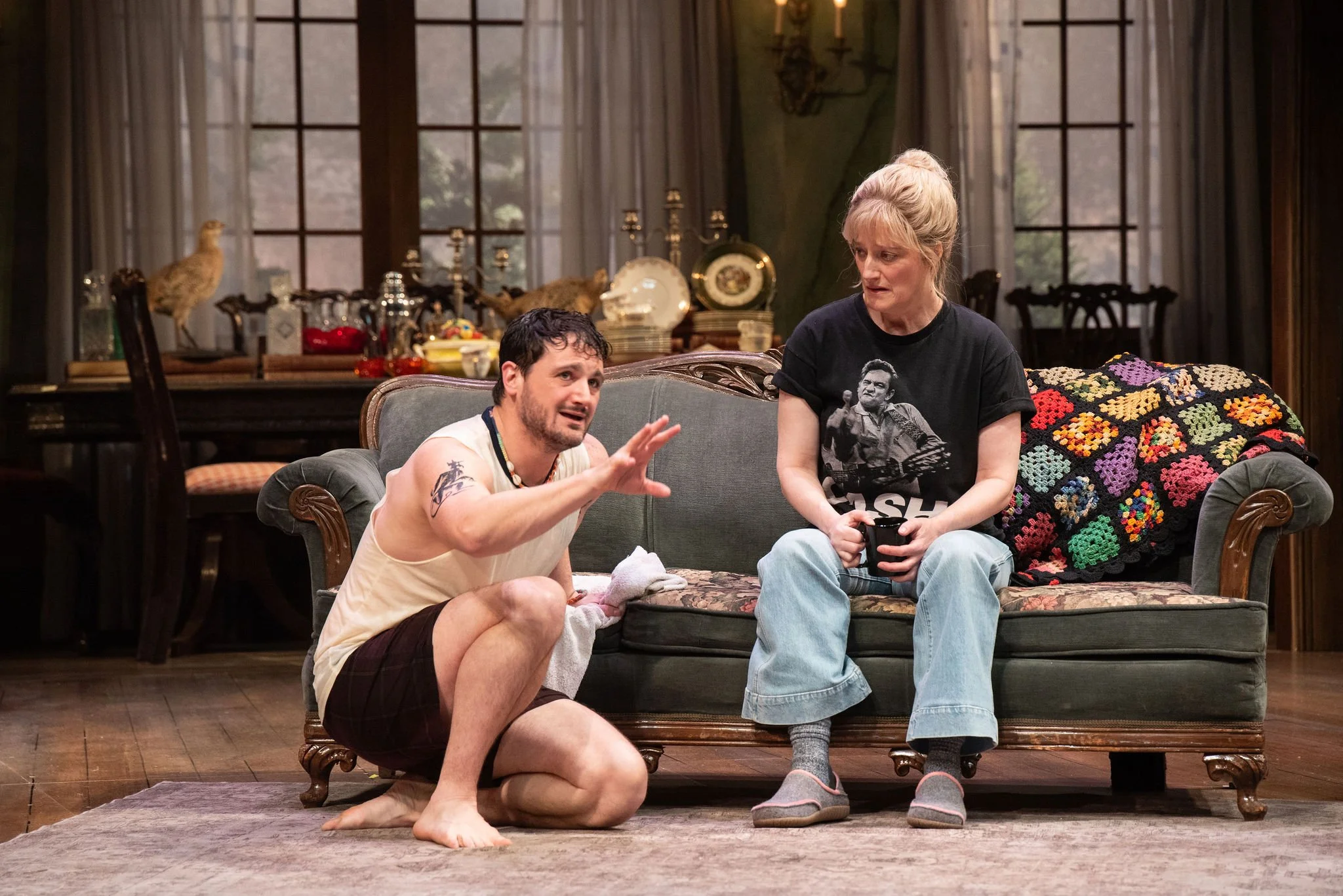
At the center of that dynamic is a series of generational and ideological clashes, most clearly embodied in the relationships between the Lafayette siblings—older sister Toni and her brothers Bo and Franz. Jacobs-Jenkins nails the rhythms and tensions of sibling dynamics with striking clarity: the eldest who assumes responsibility, whether willingly or not; the middle child, so wrapped up in his own world that disengagement becomes a form of coping; and the youngest, often perceived as skating through life, yet ultimately left to carry a disproportionate share of the family’s unresolved weight. That dynamic plays out here in layered and often volatile ways, shaping how they interact with one another, how they reflect on their late father, and how they confront—or avoid—the secrets that loom over the proceedings.
Jen Taylor is exceptional as Toni, embodying that eldest-sibling role with a force that is equal parts commanding and unraveling. She is direct, unfiltered, and unwavering, regardless of who may be on the receiving end. Early on, Toni fixates on the belief that Franz’s fiancée’s name, River, cannot possibly be real, and when the truth is revealed, she pointedly refuses to use the name River has chosen, instead reverting to the one she has left behind. It’s a telling moment, one that underscores Toni’s inability—or refusal—to yield any emotional ground. Her aggression rarely softens into passivity, and the turmoil she carries manifests in sharp, often cutting interactions with those around her. While there are moments where this is played with humor, the cumulative effect is far more sobering, revealing a woman struggling to reconcile her circumstances and the weight of her past. Jen navigates that balance with impressive control, allowing both the bite and the underlying sadness of Toni to land with equal impact.
Billy Finn’s Franz, as the youngest of the siblings, carries the complicated burden that often comes with that role—perceived by others as having had an easier path, while in reality absorbing much of the family’s unresolved tension. His attempts to rebuild himself are evident, though they are constantly undercut by the weight of his past and the expectations placed upon him. His tendency toward detachment reads less as indifference and more as a survival mechanism, and when he is forced to engage—particularly in a pivotal monologue—he grounds the production with a raw emotional honesty that brings everything back to the house itself. It’s a monologue that, following an intensely enlightening experience for his character, sets Billy apart in a cast of otherwise excellent performances. In contrast, Tim Gouran’s Bo occupies the middle ground, both in birth order and in temperament. He presents a more polished exterior, speaking with the confidence and cadence of a businessman while often positioning himself just outside the center of conflict. Yet even in that space, it becomes clear that avoidance carries its own cost. Together, their interactions form the emotional backbone of the production, a constantly shifting balance of avoidance, confrontation, and reluctant recognition.
Sophie Kelly-Hedrick’s River serves as the emotional anchor that Franz so clearly depends on, providing the stability and confidence he needs to face not only his siblings, but also his past and the weight of his own discretions. Without her, it’s easy to imagine the youngest of the Lafayettes remaining adrift, unable to confront what lies before him. River attempts to extend that same steadiness to the family as a whole—often to little effect, as those efforts are met with resistance—but it is in that persistence that her presence becomes most impactful. Sophie plays River with a quiet, almost mystical quality, a grounding force that stands in stark contrast to the volatility that defines the rest of the family dynamic.
Each character brings a fascination in its own unique design and portrayal, not the least of which is Angela DiMarco’s Rachael Kramer-Lafayette, who embodies the role of the ultimate “mama bear,” placing the well-being of her children above all else. Angela delivers a standout performances in an already strong ensemble, crafting a character who initially holds herself at a distance from the surrounding conflict. That restraint, however, reveals itself to be both intentional and temporary. As it becomes clear that disengagement is not only ineffective but detrimental to her family, Rachael steps fully into the fray. When she does, she meets aggression with equal force, carrying herself with a physical and emotional readiness that suggests she not only anticipates what’s coming, but is prepared to absorb it and respond with even greater intensity. It’s a performance from Angela that shifts the emotional temperature of the production, raising the stakes in a way that feels both earned and necessary.
Rounding out the cast are the grandchildren of the deceased: Rhys, Toni’s son, played by Jonas Winburn, and Cassie and Ainsley, Bo and Rachael’s children, played by Ellie Getman and August Mattfield, with Nolan Keany stepping in as Ainsley on alternate performances. These young actors are given meaningful opportunities to contribute to the narrative, supported by a script that allows for substantial exposition and a director who places trust in every member of his cast. Their presence is not incidental; rather, they serve as both observers and participants in the unfolding drama, reinforcing the generational impact of the story being told.
That sense of cohesion is a testament to Timothy’s direction, which is evident in the fluidity of movement throughout the space and the careful orchestration of the play’s many tonal shifts. Scene transitions are handled smoothly, often guided by lighting and staging rather than hard breaks, though there are terse changes when necessary for impact, allowing the narrative to maintain its momentum. The pacing of dialogue, particularly in ensemble moments, reflects a clear understanding of how to balance clarity with realism, ensuring that the audience remains engaged even as conversations overlap and collide.
Costume designer Trevor Bowen further reinforces character distinctions through thoughtful choices that align with each individual’s perspective and place within the family. From Bo’s more formal, composed look to Rachael’s practical, grounded style, these details help to visually support the dynamics at play without ever feeling overstated.
What emerges from Seattle Rep’s Appropriate is a portrait of a family—and by extension, a culture—grappling with the stories it tells itself and the truths it avoids. The play’s exploration of race is ever-present, not as a singular focal point but as an undercurrent that informs every interaction, every argument, and every revelation. It’s a tension that builds steadily, revealing itself in both overt confrontations and quieter moments of discomfort.
Appropriate is a play that is not always easy to watch, nor is it meant to be. It is sharp, at times confrontational, and unflinching in its examination of legacy and ownership—of land, of history, and of narrative. But in the hands of this cast and creative team, it is also deeply compelling, anchored by strong performances, a cohesive directorial vision, and design elements that work in concert to create a world that feels both specific and resonant. It understands the power of the word at its center—and all that comes with it—and ensures that by the time the final moments unfold, that word carries a weight that lingers well beyond the stage.
Appropriate runs on stage at Seattle Rep’s Bagley Wright Theater through May 10. For more information, including ticket availability and sales, visit https://www.seattlerep.org/.
Photo credit: Bronwen Houck