
Stage Review - Black Coffee
Presented By: Bremerton Community Theatre - Bremerton, WA
Show Run: August 28 - September 20, 2026
Date Reviewed: Saturday, September 05, 2026
Run Time: 2 Hours (including a 15-minute intermission)
Reviewed by: Greg Heilman
Agatha Christie does what Agatha Christie does best in Black Coffee, putting a collection of people with secrets into a room, giving nearly all of them a reason to be suspicious, and then turning Hercule Poirot loose to sort through the lies and deception. And directing Agatha Christie whodunits just happens to be what Jeffrey Bassett does best, and the two together makes Bremerton Community Theatre’s production of Christie’s first original stage play a particularly good match between material and director, with Jeffrey once again demonstrating an understanding of the pacing, character work and carefully controlled revelation that makes a Christie mystery work onstage.
Playing in BCT’s Robert Montgomery Auditorium through September 20, Black Coffee also offers something particularly interesting within Christie’s world. The story demonstrates how thoroughly she could incorporate her knowledge of chemistry and pharmaceuticals into her mysteries, something she had a penchant for doing throughout her life. The chemicals and compounds here aren’t convenient afterthoughts introduced when the plot needs them, rather the science is integral to the mystery itself.
The story centers on physicist Sir Claud Amory, played by Jeff Stein, who has developed the formula for an extraordinarily powerful new explosive. When the formula disappears, Sir Claud gathers the members of his household together and offers the thief an opportunity to return it under cover of darkness. The lights go out, but when they come back on, the formula is still missing…and Sir Claud is dead. Fortunately, Hercule Poirot is already on his way.
From there, Christie supplies the expected assortment of family secrets, questionable motives and red herrings as Poirot attempts to determine not only who killed Sir Claud, but what became of the formula. And the science behind the crime is given unusual weight. Christie had worked in a hospital dispensary during World War I, experience that informed the detailed use of poisons and pharmaceuticals throughout her writing. Black Coffee puts that knowledge front and center, allowing chemistry to become a primary component of the puzzle rather than merely a means to an end.
Perhaps Jeffrey’s biggest success as director of this play comes in the casting of his investigative team, beginning with Adrian DeGroot as Hercule Poirot. Adrian reprises the Belgian detective after previously playing him for BCT in Murder on the Orient Express, and there is an assurance to his portrayal that makes the return welcome. Poirot’s precision, confidence and distinctive mannerisms are all present, but the characterization never becomes simply an impersonation of what audiences expect Poirot to be. Adrian owns the role, and his command of Poirot’s Belgian accent is particularly impressive.
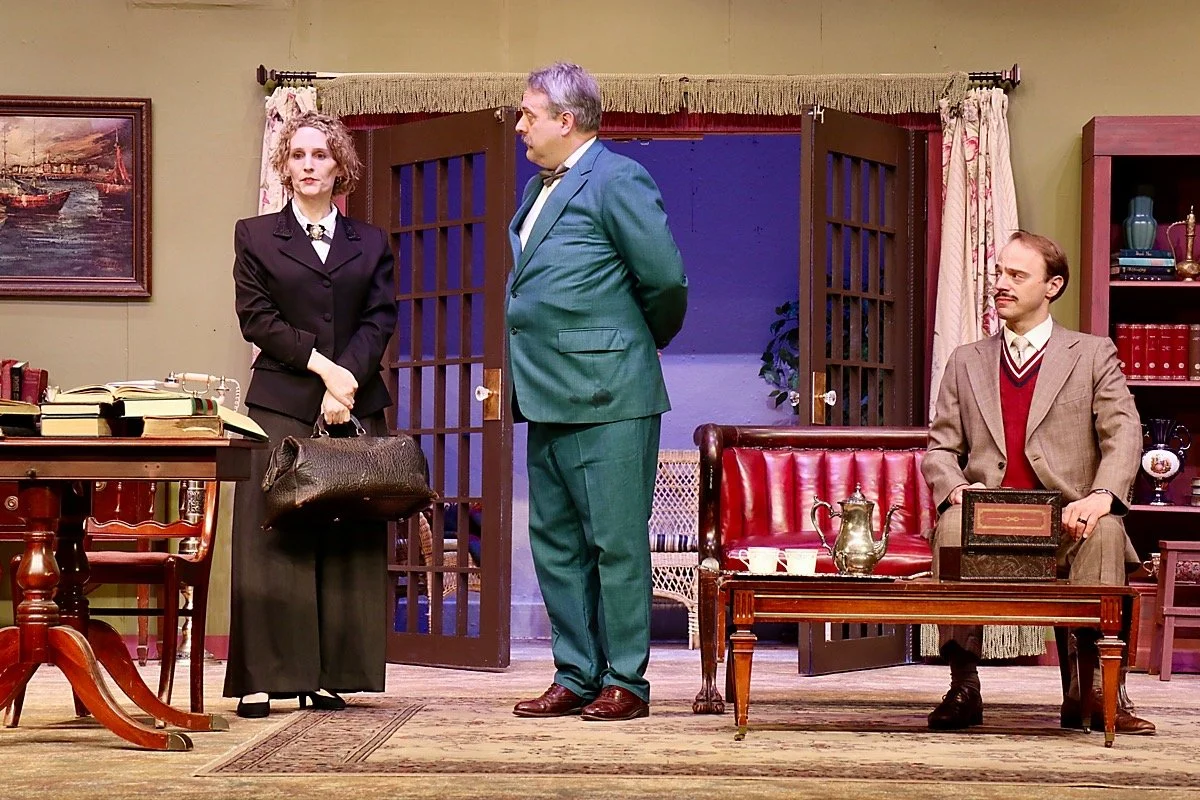
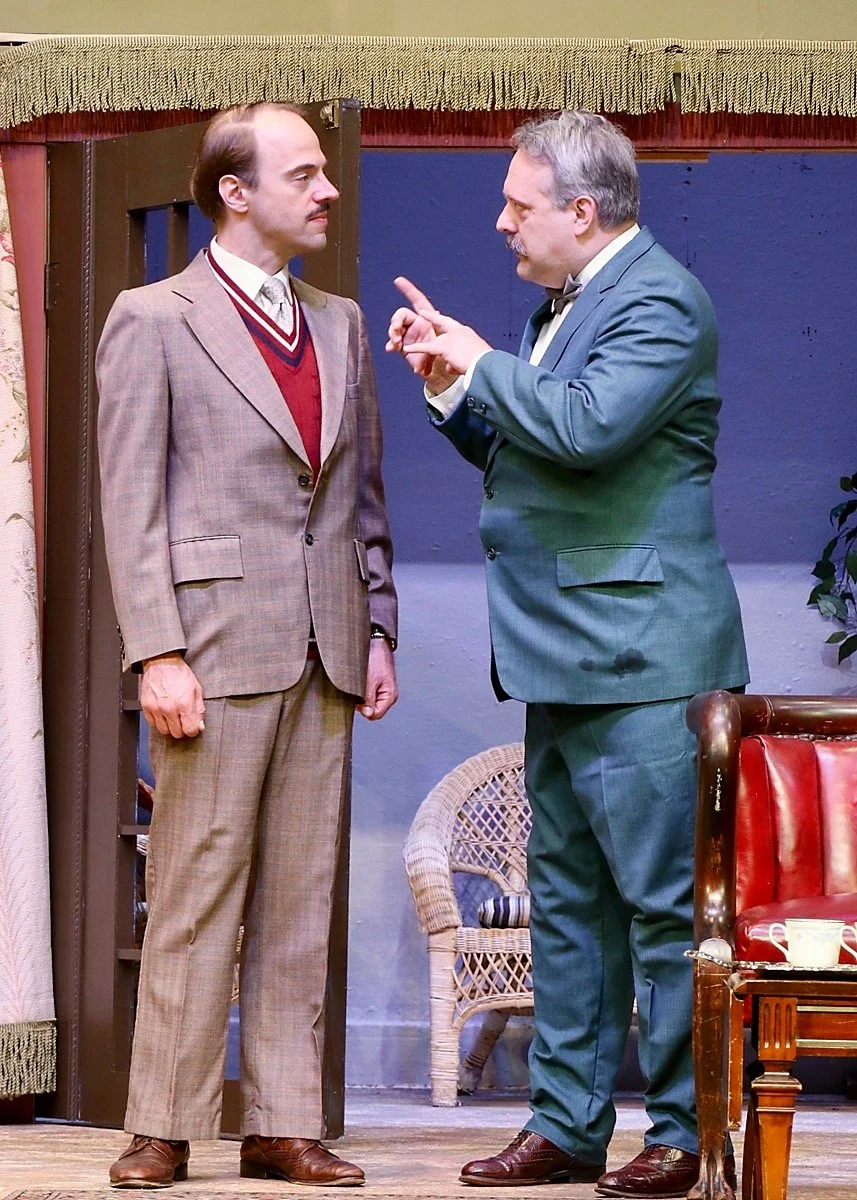
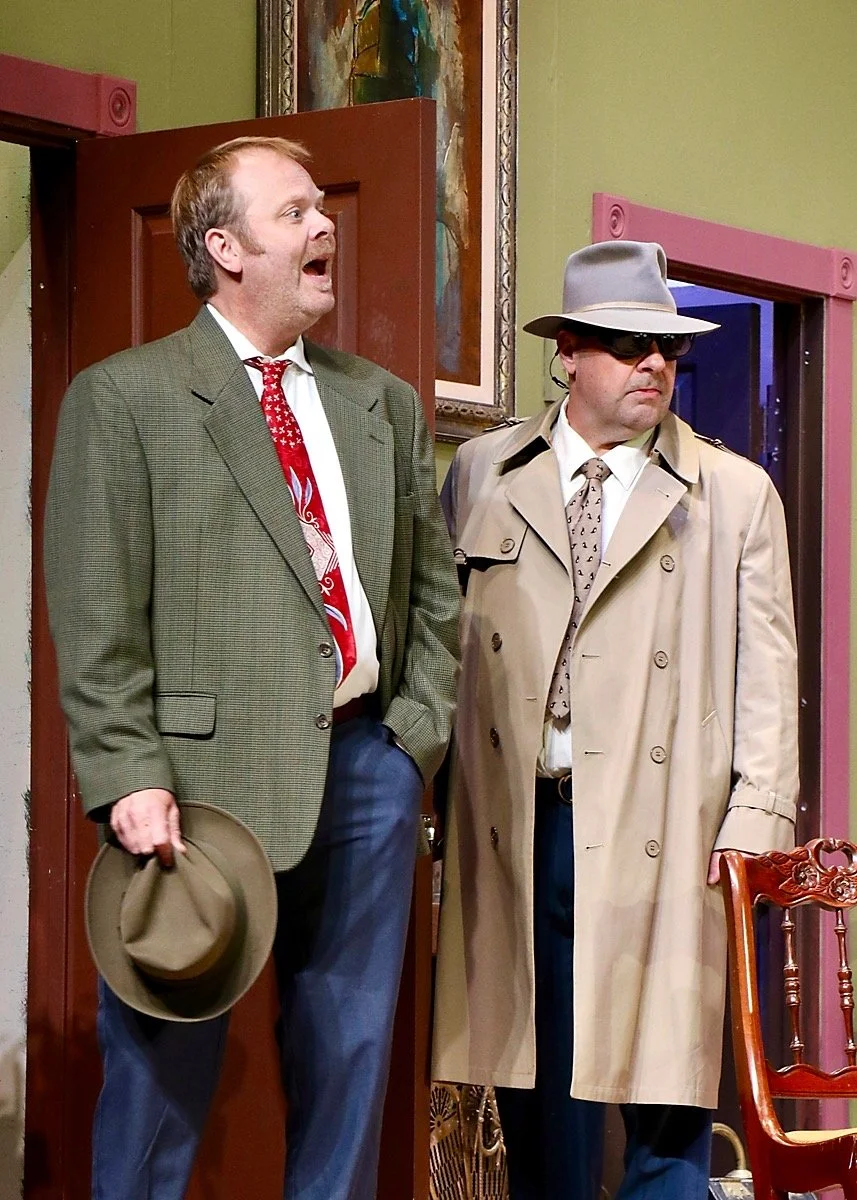
Beside him is Raymond Deuel as Captain Hastings, and although Raymond has considerably less stage time than much of the cast, he needs very little of it to make an impression. Raymond has an excellent stage presence in roles like this, and Hastings becomes an ideal comic foil for Poirot. His reactions and timing provide humor without turning Hastings into a caricature, and his accent work is equally strong. T. Ivan Winkler rounds out the investigative trio as Scotland Yard’s Inspector Japp. T. Ivan brings another impressive performance to the production and handles his accent well, giving Poirot another personality to play against as the investigation tightens around the Amory household. With no dedicated dialect coach credited to the production, much of that responsibility rests with the actors under Jeffrey’s guidance, making the consistency among these central performances particularly noteworthy.
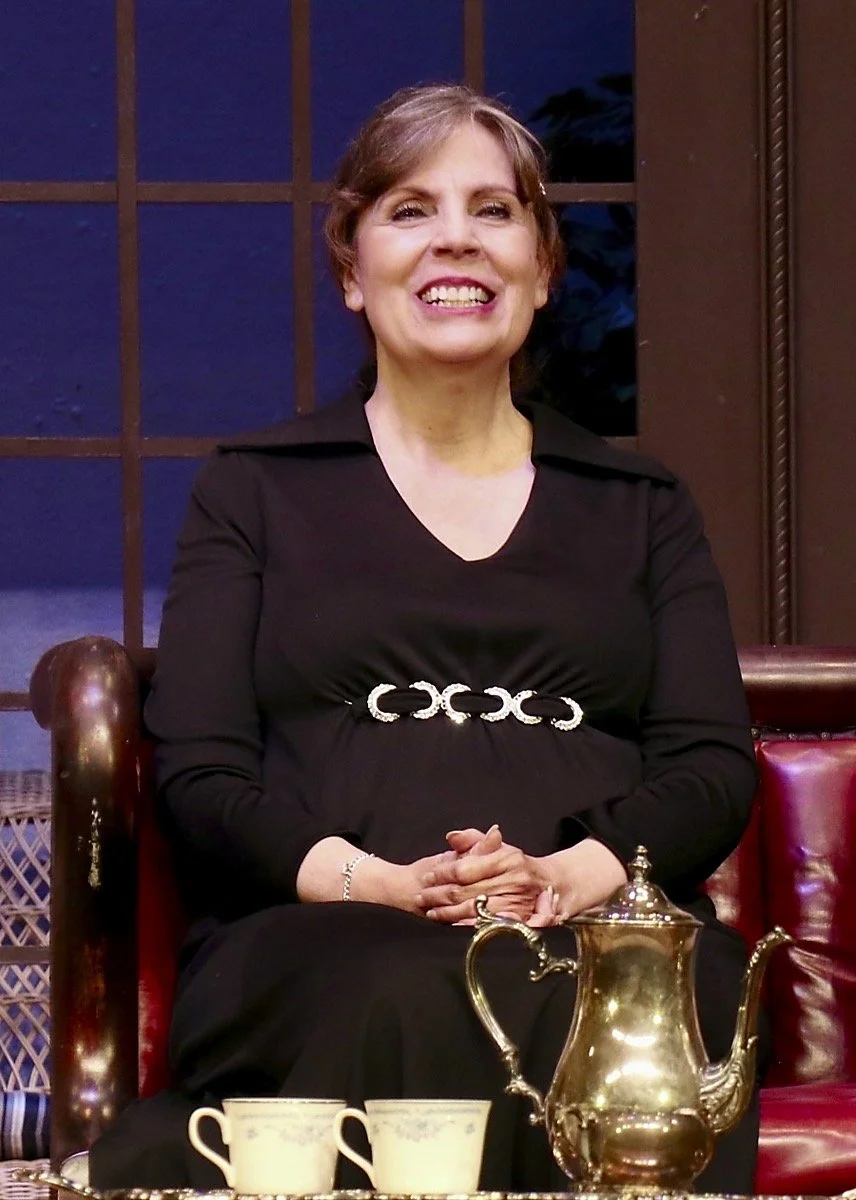
The Amory family provides a collection of very different personalities for the investigators to untangle. Jeff’s Sir Claud is the patriarch whose missing formula sets everything into motion. There is something quintessentially Christie about the way he gathers everyone together and announces that someone in the room has betrayed him, immediately turning a family gathering into an exercise in suspicion. Diane Daniels finds much of the humor in Caroline Amory, particularly in Caroline’s fascination with Italy and her remarkable ability to begin a conversation on one subject and steer it somewhere entirely different. Diane understands the comic possibilities of those diversions and makes them feel like an organic part of Caroline rather than interruptions to the mystery. Peter Stone’s Richard Amory is somewhat more restrained. There are moments when that restraint works for the character, but there are others when the performance feels a little stiff. Allowing Richard to become more emotionally untethered as the pressure surrounding the family increases would give Peter more room to explore the character and raise the emotional stakes of his scenes.
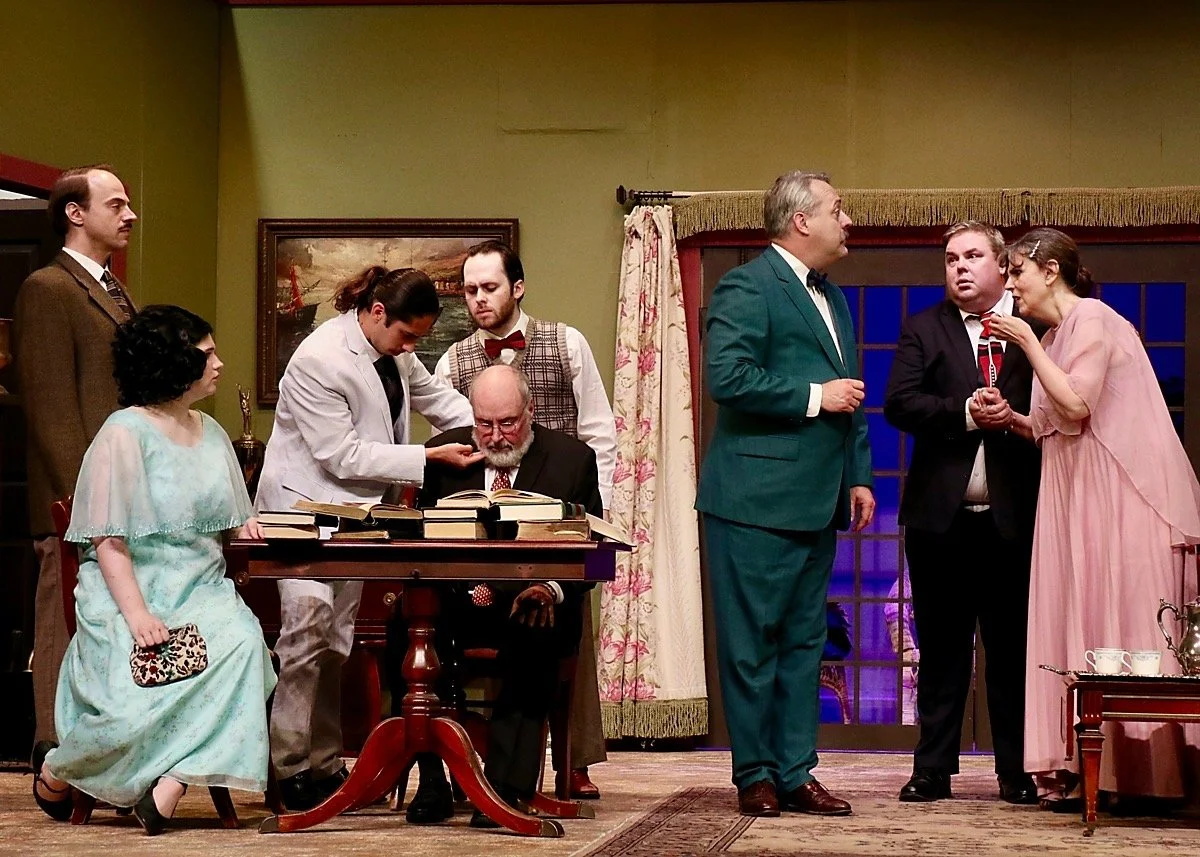
Lindsay VanderDoes as Lucia Amory, Ruthann Saunders as Barbara Amory, Giuseppe Campagnoli as Dr. Carelli, Christie Lang as Treadwell, Daniel Lunsford Melin as Edward Raynor, Cassidy Danvers as Dr. Graham and Wild Bill Smith as PC Johnson complete the collection of family members, visitors, servants and investigators populating Christie’s mystery. The ensemble does a nice job maintaining the assortment of personalities and potential suspects necessary to keep the audience guessing without telegraphing too much about where Christie ultimately intends to take them.
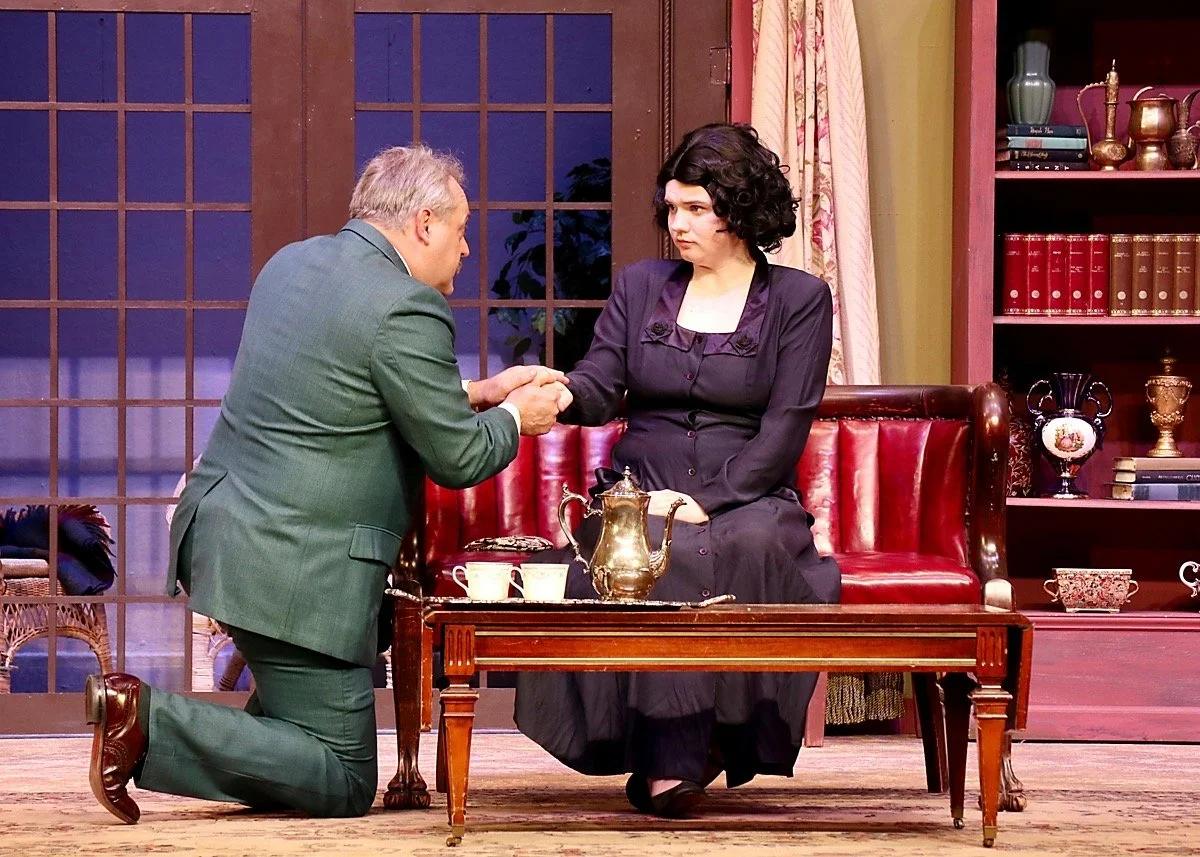
Visually, the production immediately establishes the social world in which the Amory family resides. The library is filled with dark wood furniture, a large desk, red leather seating, bookcases, artwork, traditional curtains and substantial area rugs. French doors at the center of the stage provide additional depth, while the exterior visible beyond them helps establish the separation between the comfortable Amory home and the night outside.
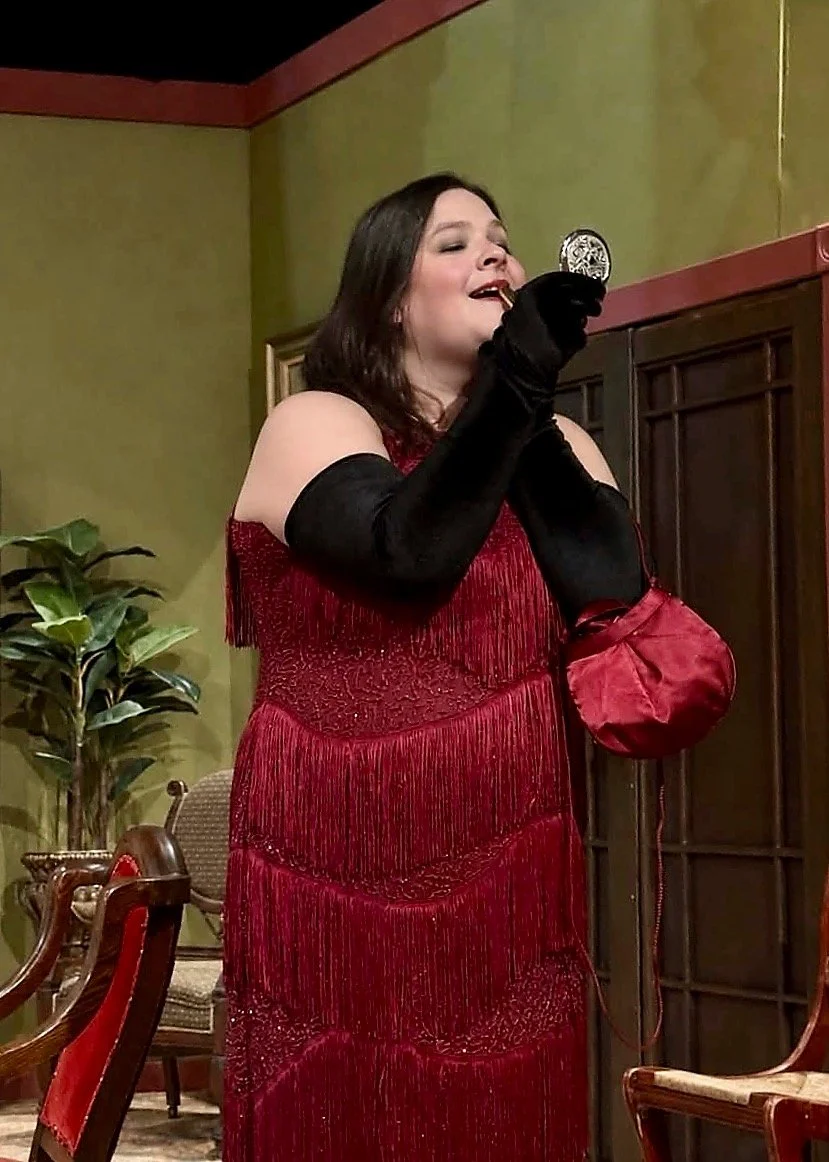
The abundance of props is particularly important to that effect. Books, coffee and tea services, telephones, desk pieces and decorative objects fill the space, and together with the scenic design they paint a convincing picture of the family’s social stature. Nothing about the Amory home feels sparse. It is a room accumulated by people with money, history and possessions, and in a Christie mystery all those objects also give the audience plenty to look at suspiciously. The costumes accomplish something similar with the characters. Three-piece suits, waistcoats, sweater vests, bow ties, dresses, handbags, hats and other period details establish both the era and distinctions among the people inhabiting it. Poirot’s tailored appearance and meticulously maintained mustache are especially effective extensions of his fastidious personality, while the variety in color, formality and silhouette prevents the large cast from visually blending together.
Lighting and sound are considerably less conspicuous, which works to the production’s benefit. The lighting serves the action without calling attention away from it, and the actors can be heard clearly out into the audience. The relatively few sound effects are employed in service of the story rather than inserted simply to make their presence known. In a production built around dialogue, observation and the audience’s ability to catch clues, clarity matters more than technical spectacle.
In Black Coffee, Agatha Christie gives the audience a room full of suspects and then invites them to pay attention, to the science, to what people say, to what they avoid saying and to the objects that move through their hands. Jeffrey Bassett’s production understands that the pleasure comes from watching those pieces accumulate while Poirot remains several steps ahead of nearly everyone in the room. And with Adrian DeGroot once again slipping comfortably into Poirot’s immaculate shoes, BCT has a detective well equipped to lead the audience through the puzzle. It’s another winner from this superior combination of playwright and director.
Agatha Christie’s Black Coffee runs on stage at Bremerton Community Theatre through September 20. For more information, including ticket availability and sales, visit https://www.bctshows.com/.
Photo credit: Kathy Berg