
Stage Review - Wilde!
Presented By: ReAct Theatre - Seattle, WA
Show Run: August 27 - September 27, 2026
Date Reviewed: Monday, August 31, 2026
Run Time: 2 Hours (including a 15-minute intermission)
Reviewed by: Greg Heilman
Oscar Wilde’s work has survived for more than a century in part because its wit, social commentary and observations about human vanity are remarkably adaptable. Change the place, shorten the stories, even shift the cultural framework, and the ideas underneath can remain surprisingly intact. ReAct Theatre puts that durability to the test with WILDE!, an evening pairing one-act adaptations of The Importance of Being Earnest and The Picture of Dorian Gray, moving both stories to late 19th century colonial India. On stage at ReAct Studios through September 27, the world-premiere production, directed by David Hsieh, finds that Wilde not only travels well, but can gain something from the journey.
The two works make interesting companions. The Importance of Being Earnest, adapted here by David, is Wilde’s comedy of mistaken identities, invented personas, romance and social convention. John Worthing has created a fictional brother named Earnest as an excuse to escape his responsibilities, while his friend Algernon Moncrieff employs a similar deception of his own. Their schemes become increasingly complicated as Gwendolen Fairfax and Cecily Cardew enter the picture, both developing an inconvenient attachment to the name Earnest. The Picture of Dorian Gray, adapted by Aaron Kaufhold and Daniel Jerz, heads somewhere considerably darker. Dorian, enthralled by youth and beauty and influenced by the worldly Lord Henry Wotton, wishes that a portrait of himself might age and bear the consequences of his choices while he remains young. It does, and the painting gradually becomes a physical manifestation of the life Dorian has chosen to live.
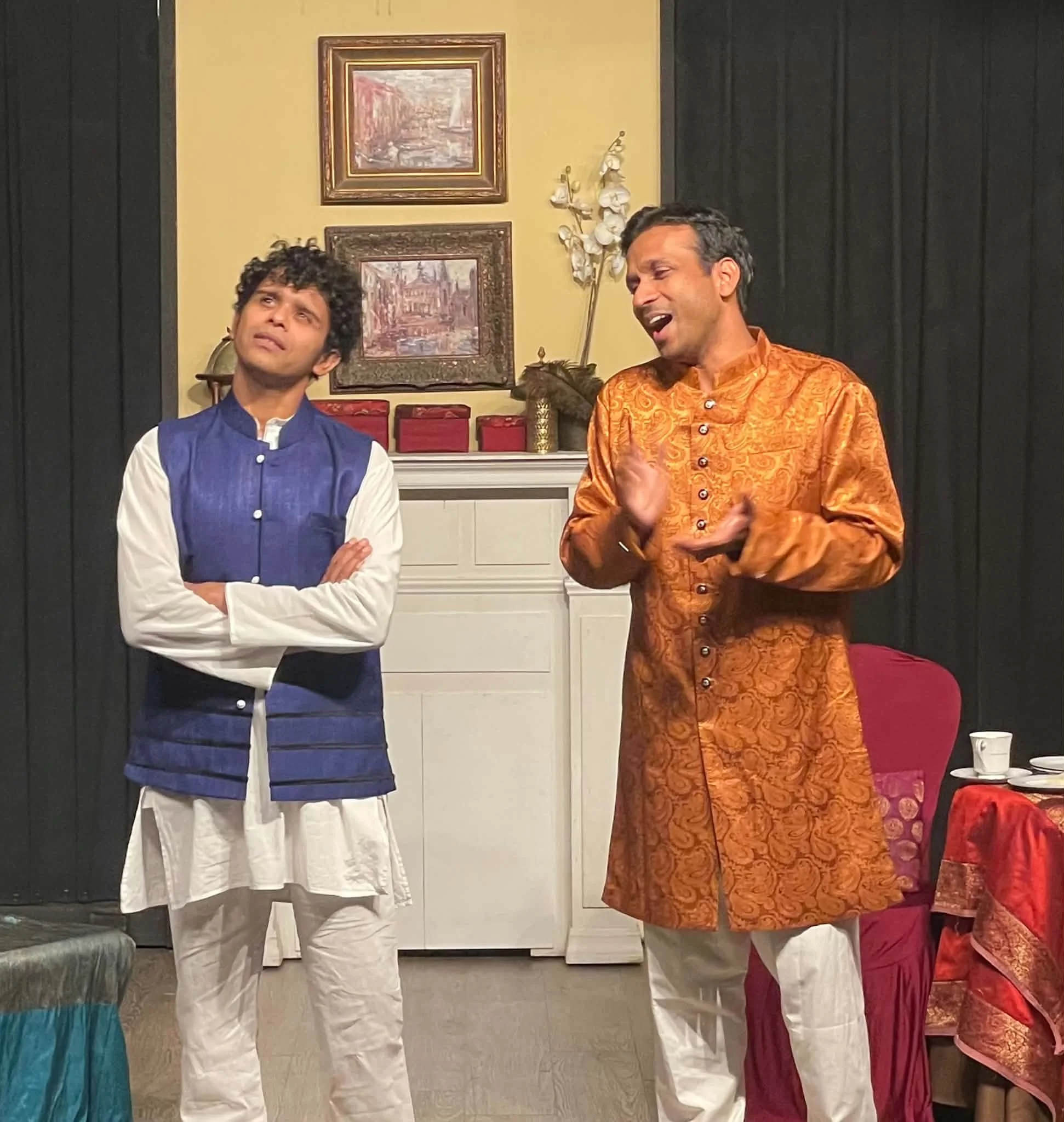
Setting both stories in India doesn’t detract from Wilde’s work. In fact, it strengthens the aesthetic of the combined menu of stories. The social structures, expectations of class and status already inherent in Wilde’s writing transition naturally into the production’s new setting, while allowing the creative team to give these familiar characters a visual identity rich in culture. David, as production designer, keeps the scenic elements relatively simple, allowing the company to move efficiently between locations and eventually between stories, while pre-show and intermission music performed by Vinayak Dubey, Tanvee Kale and Kaushik Mitra further connects the audience to the cultural setting.
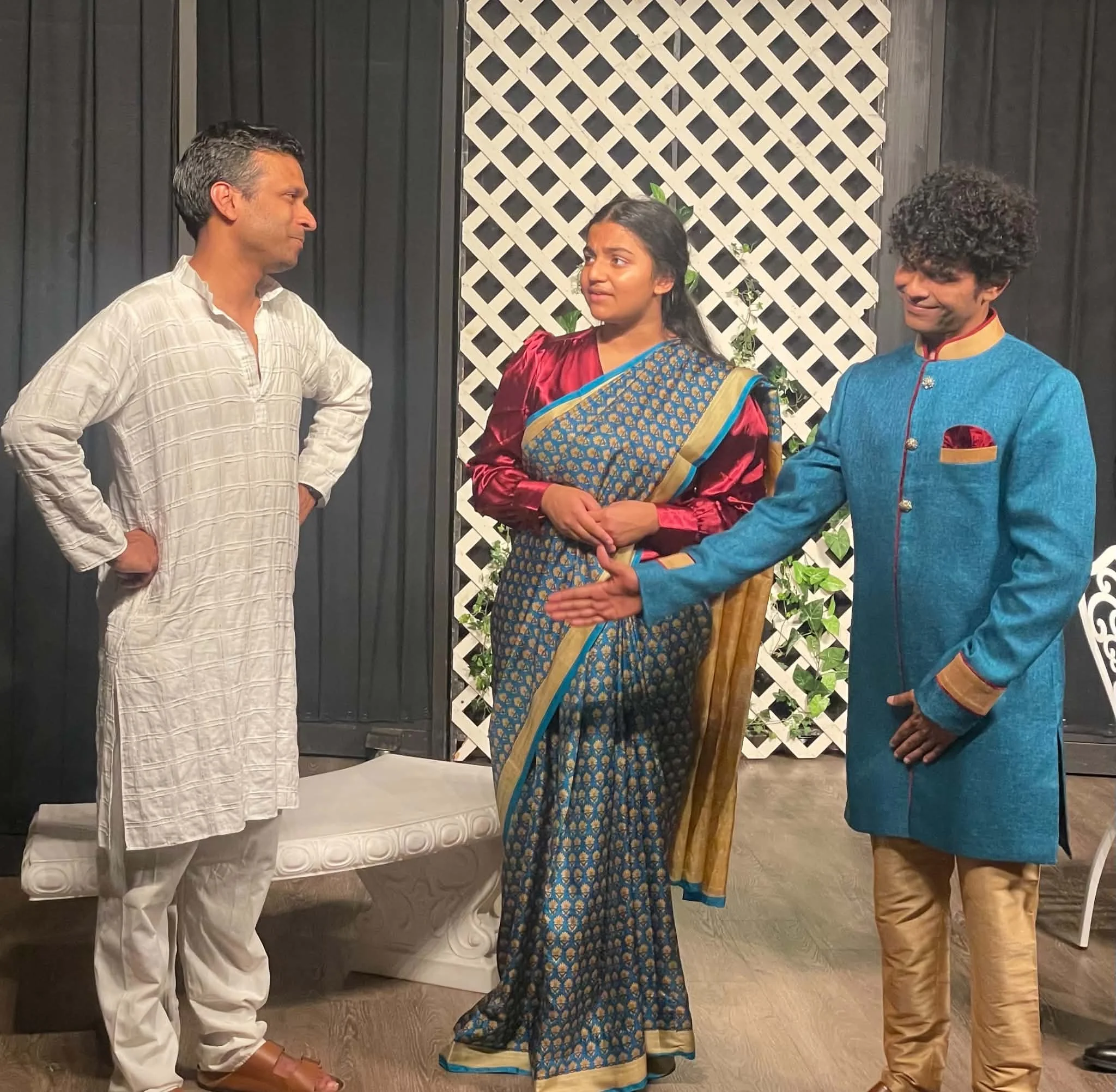
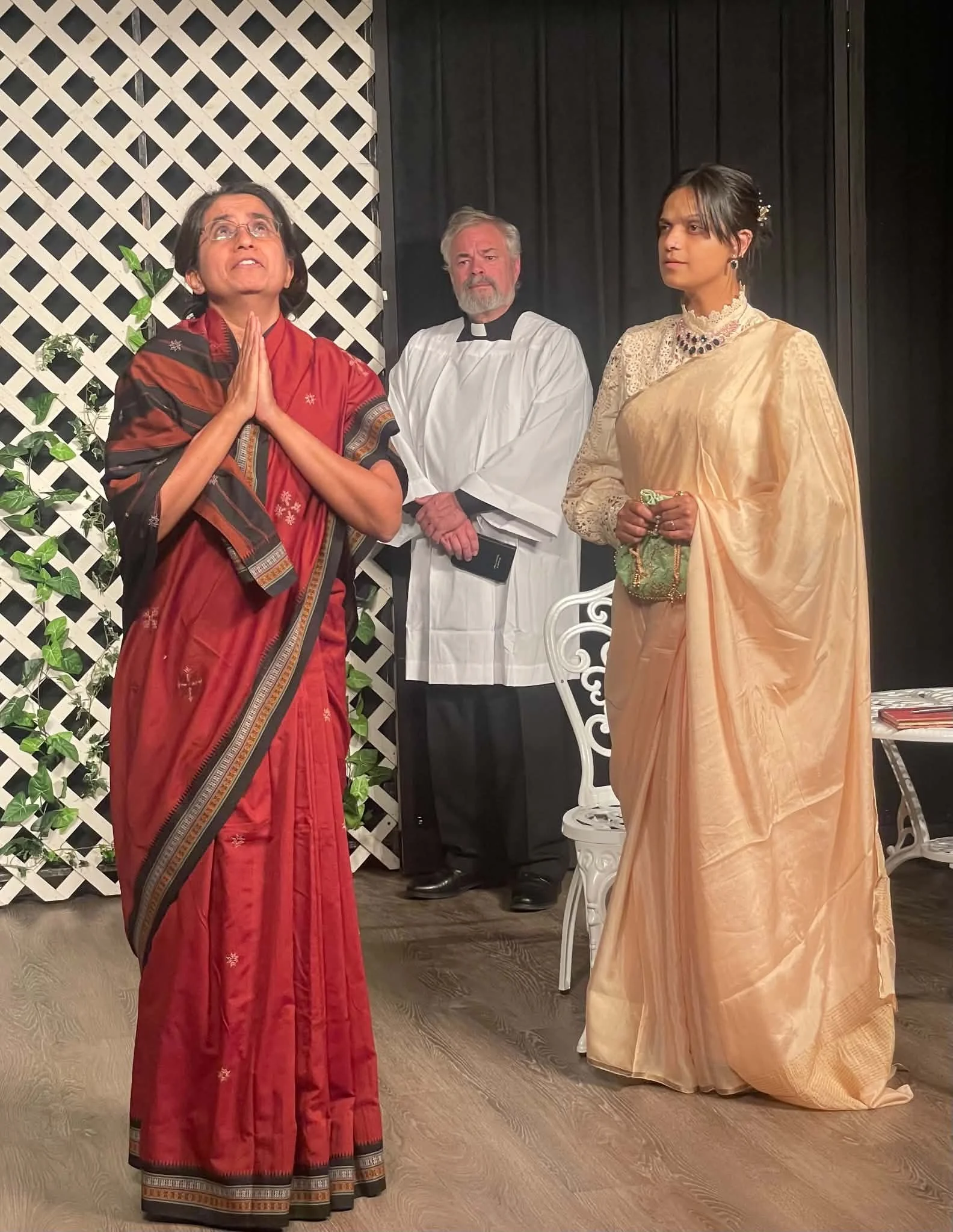
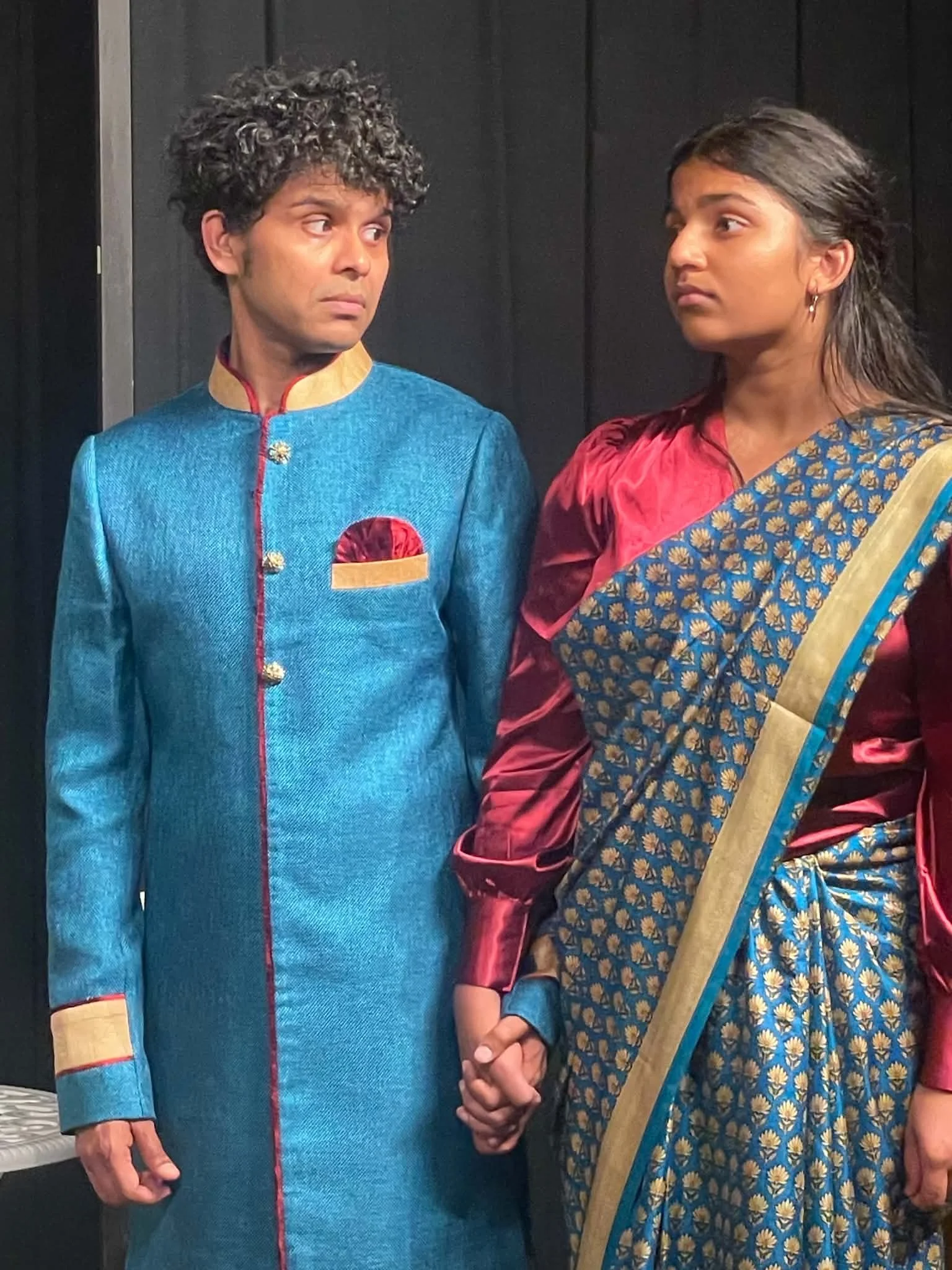
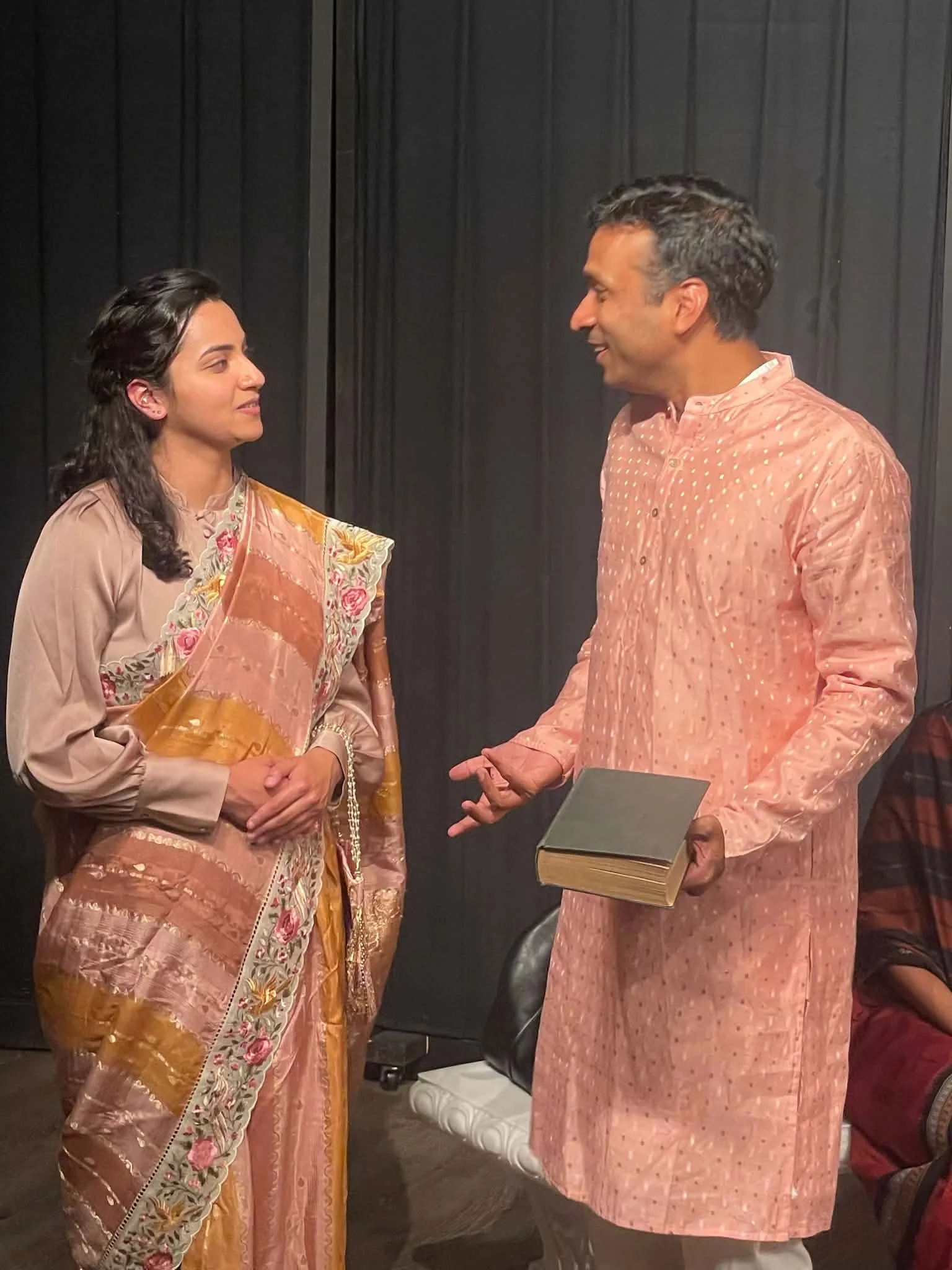
The most immediately striking contribution comes from costume coordinator Meenakshi Rishi. Her work is beautiful throughout, using clothing and accessories to reinforce not only the Indian setting but the personalities and status of the people wearing them. Tanvee Kale’s Lady Bracknell is particularly memorable in her second-scene dress, complemented by a beautiful necklace and other carefully selected accessories. The clothing doesn’t merely decorate the concept, it helps make the relocation of Wilde’s stories feel complete.
Condensing a full-length work into a one-act version is always a difficult proposition, and The Importance of Being Earnest demonstrates both the strengths and unavoidable risks of doing so. For the most part, David does a nice job identifying and preserving the important plot points in his The Importance of Being Earnest. Audiences familiar with Wilde’s play will recognize its essential architecture, and newcomers can follow the increasingly ridiculous complications created by Jack and Algernon.
There are, however, moments when preserving the plot isn’t quite the same as preserving its full impact. Near the conclusion, the revelation surrounding Jack and Earnest arrives so quickly that the audience loses a bit of the shock that ordinarily accompanies it. A similar issue occurs with Rev. Canon Chasuble and Miss Prism. John Dugaw and Sumedha Kshirsagar establish the characters, but there isn’t much time devoted to the details of their backstory and relationship before everything resolves. For audiences who know the play, the destination is familiar enough to fill in some of those blanks. Those encountering the story for the first time may wonder how everyone arrived there quite so quickly. It’s less an issue of which plot points David has chosen to retain than how much room some of those moments need to resonate.
The performances help keep the comedy moving. Tanvee gives Lady Bracknell the requisite sternness, particularly in her dealings with Gwendolen, while Kaushik Mitra finds just the right amount of sliminess in Algernon. Indira Rampersad gives Gwendolen a sweetness balanced by an underlying seriousness, and the contrast between Vinayak Dubey’s two servants is an amusing detail, his Lane is more casual, while Merriman takes on a decidedly stuffier air. Finally, Sumedha Kshirsagar’s Miss Prism adds another layer to the collection of personalities inhabiting this tightly compressed version of Wilde’s comedy.
After intermission, The Picture of Dorian Gray demonstrates how effectively this kind of condensation can work. This adaptation manages to hit the important points of Wilde’s story without creating the feeling that something essential has been sacrificed. More importantly, the efficiency of the storytelling doesn’t come at the expense of emotion. There is enough room for the actors to explore what these events mean to their characters rather than simply racing from one plot development to another.
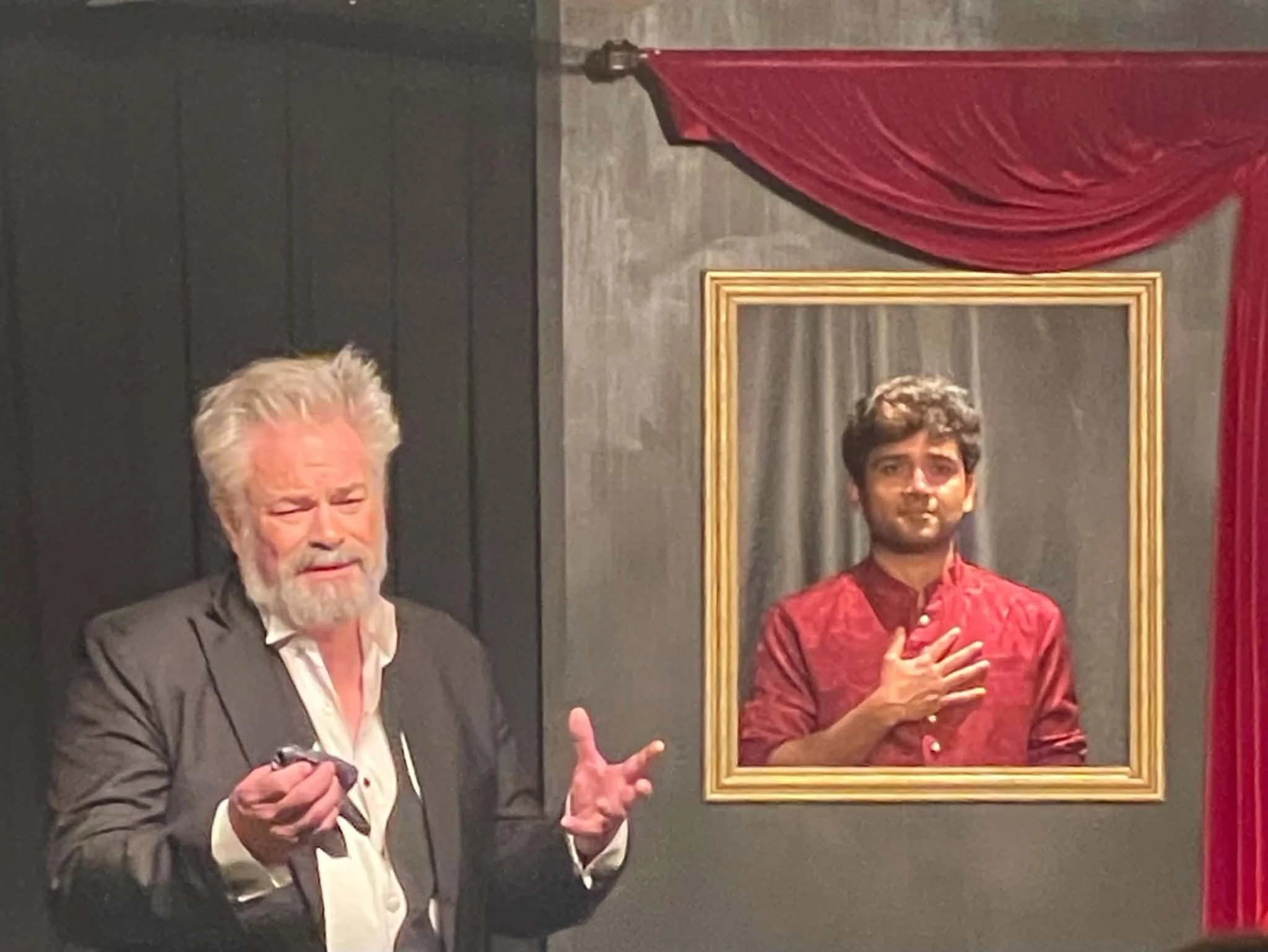
John Dugaw brings an Orson Welles-like sensibility to his Lord Henry Wotton, giving him an aloof, sophisticated quality and the manner of a man entirely comfortable occupying the upper reaches of society. There’s an ease to John’s performance that makes Lord Henry’s influence believable. Ankur Gupta’s Basil Hallward provides a strong counterpoint, and the contrast among John’s Lord Henry, Ankur’s Basil and Vinayak Dubey’s Dorian becomes one of the strengths of the piece.
Vinayak initially presents Dorian as the vain and shallow young man the story demands, but the performance becomes much more interesting as consequences begin catching up with him. There is genuine emotion when Dorian learns of Sybil’s death, but an even stronger moment arrives when he is confronted by what has happened to his portrait. Looking upon the changed image (cleverly acted as in the practical sense Vinayak is looking at an empty frame), Dorian must finally face the product of the bargain he made and the realization that the portrait has become an embodiment of the way he has lived his life. Vinayak gives the scene a considerable amount of emotion, allowing the horror to come not simply from what Dorian sees but from his recognition of himself within it. It’s one of the evening’s strongest scenes.
Indira Rampersad’s Sybil Vane provides another of the adaptation’s comic pleasures with Sybil’s hilariously terrible acting, but Indira’s work also points toward one of WILDE!’s greatest strengths. Only a short time earlier she was Gwendolen Fairfax, yet the two performances don’t feel interchangeable. Indira creates two individual women, shifting characterization along with the radically different tone of the material.
That ability extends throughout the company and makes the repertory nature of WILDE! particularly enjoyable. Tanvee moves from Lady Bracknell to Mrs. Vane, Kaushik from Algernon to James Vane, Ankur from John Worthing to Basil, John from Chasuble to Lord Henry and Vinayak from Lane and Merriman to Dorian Gray, while Aicha Sinha-Khan, Sumedha and Rahul Upadhyaya round out the company across the two works. Each has the challenge of leaving one character behind and creating another, sometimes in a completely different dramatic register. Collectively, they make the transition from the social absurdity of Earnest to the darkness of Dorian Gray feel like more than a change of title.
That tonal contrast ultimately gives WILDE! its identity. The production allows audiences to experience two very different sides of Oscar Wilde, first the playwright delighting in society’s ridiculous rules, deceptions and pretensions, and then the storyteller examining vanity, temptation, influence and moral consequence. One adaptation occasionally shows the strain of fitting a complicated story into a smaller container, the other demonstrates just how potent a familiar story can become when distilled without losing its emotional core.
More importantly, ReAct isn’t content simply to abbreviate two classics. By relocating them to India, surrounding the stories with culturally resplendent design choices and asking the same repertory company to inhabit both worlds, WILDE! finds another way into material audiences may think they already know. Wilde’s words and ideas remain at the center, but the frame around them has changed, and in that new frame, there is still plenty worth looking at.
Wilde!, a pair of 1-act adaptations of two Oscar Wilde classics, runs on stage at ReAct Theatre in Seattle through September 27. For more information, including ticket availability and sales, visit https://www.reacttheatre.org/.
Photo credit: David Hsieh