
Stage Review - Cabaret (Ballyhoo Theatre)
Stage Review - Cabaret
Presented By: Ballyhoo Theatre - Edmonds, WA
Show Run: September 11 - September 27, 2026
Date Reviewed: Friday, September 25, 2026 (Closing Weekend)
Run Time: 3 Hours (including a 15-minute intermission)
Reviewed by: Greg Heilman
Over the past few seasons, I’ve become awfully familiar with Cabaret. It isn’t difficult to understand why theatres keep returning to it. The Kander and Ebb musical is timely in its own right, and the story of a society distracting itself with entertainment while fascism steadily gains a foothold has no shortage of parallels to our modern political climate. But there is also a risk that comes with that relevance. Produce it too often, particularly when every production is making essentially the same contemporary point, and Cabaret can begin to feel less urgent rather than more so. There are only so many times an audience can be told that this nearly century-old story speaks to our present moment before “another Cabaret” starts to lose some of its impact.
Ballyhoo Theatre, whose production runs at the Black Box Theatre at Edmonds College through September 27, has elected to take its own spin on the material. Under the direction of Shileah Corey, there is no elaborate recreation of the Kit Kat Club or attempt to transform the stage into 1930s Berlin. Instead, Ballyhoo places Cabaret in a black box, strips away much of the physical scenery and asks the audience to use its collective imagination to conjure the nightclub, boarding house and other Berlin settings of Joe Masteroff’s classic musical.
It is an interesting approach, and one that immediately ensures this won’t feel like just another Cabaret. It also creates one of the production’s greatest challenges.
Cabaret depends on more than simply knowing that the Kit Kat Club is a place of chaos, sexuality, frivolity and escape. The audience needs to feel it and to understand its energy and freedom because, as fascism begins creeping into the world outside, there needs to be a recognition of what is slowly being taken away. In the confines of the Black Box, Ballyhoo can suggest that world through Sade Aset’s choreography, the performers and some excellent work from the orchestra, but it is more difficult to completely immerse the audience in it. Without that initial sensory excess, the gradual dwindling of the club’s energy doesn’t register as strongly as it might otherwise.
The result is an intriguing contradiction at the center of the production. The decision that makes Ballyhoo’s Cabaret distinctive is also the one that occasionally works against the storytelling. Individual performances and musical numbers are excellent, but the connective tissue between them is sometimes harder to find, making portions of the musical feel more like a series of performances than a storyline steadily moving toward something increasingly ominous.
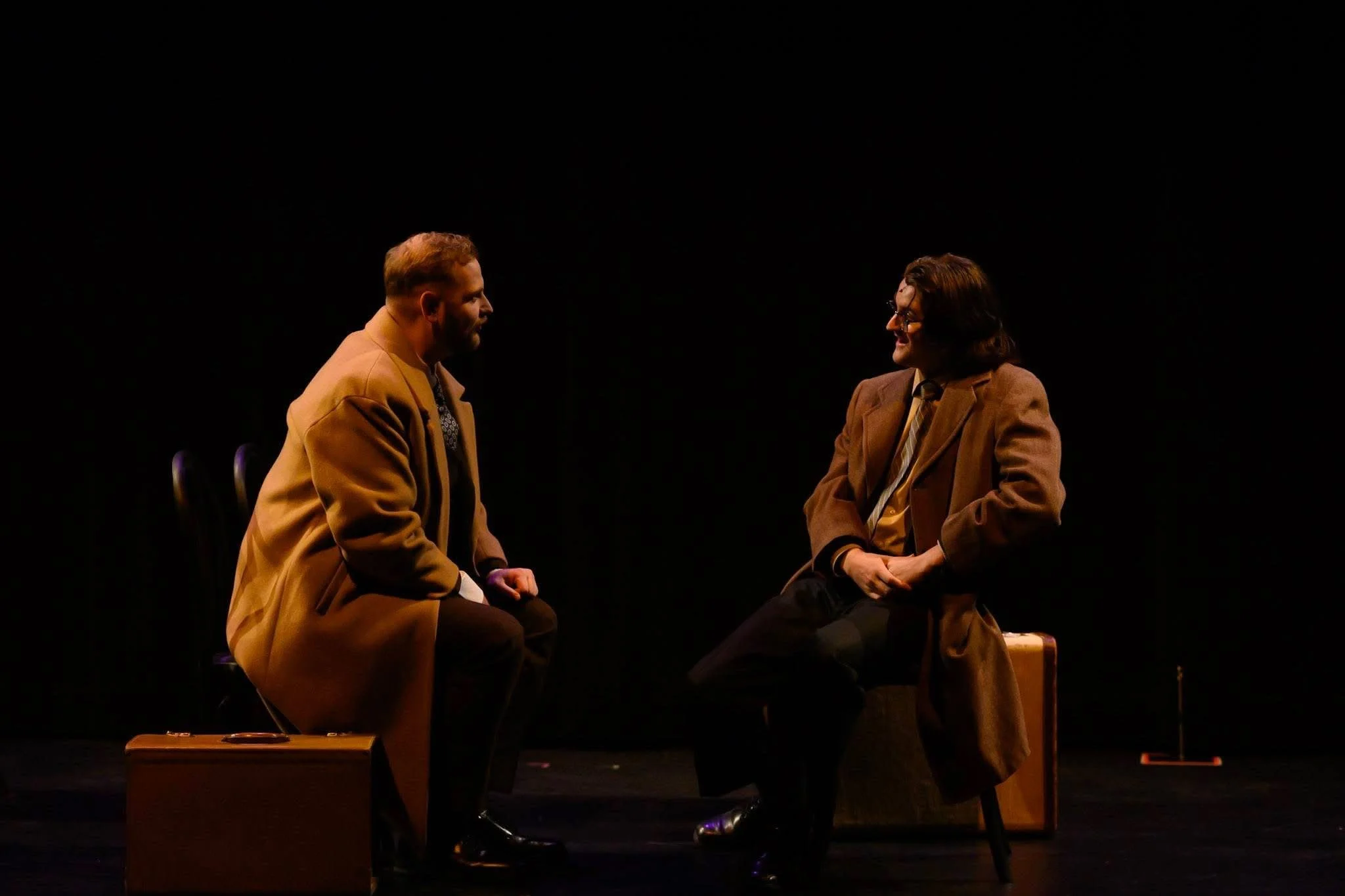
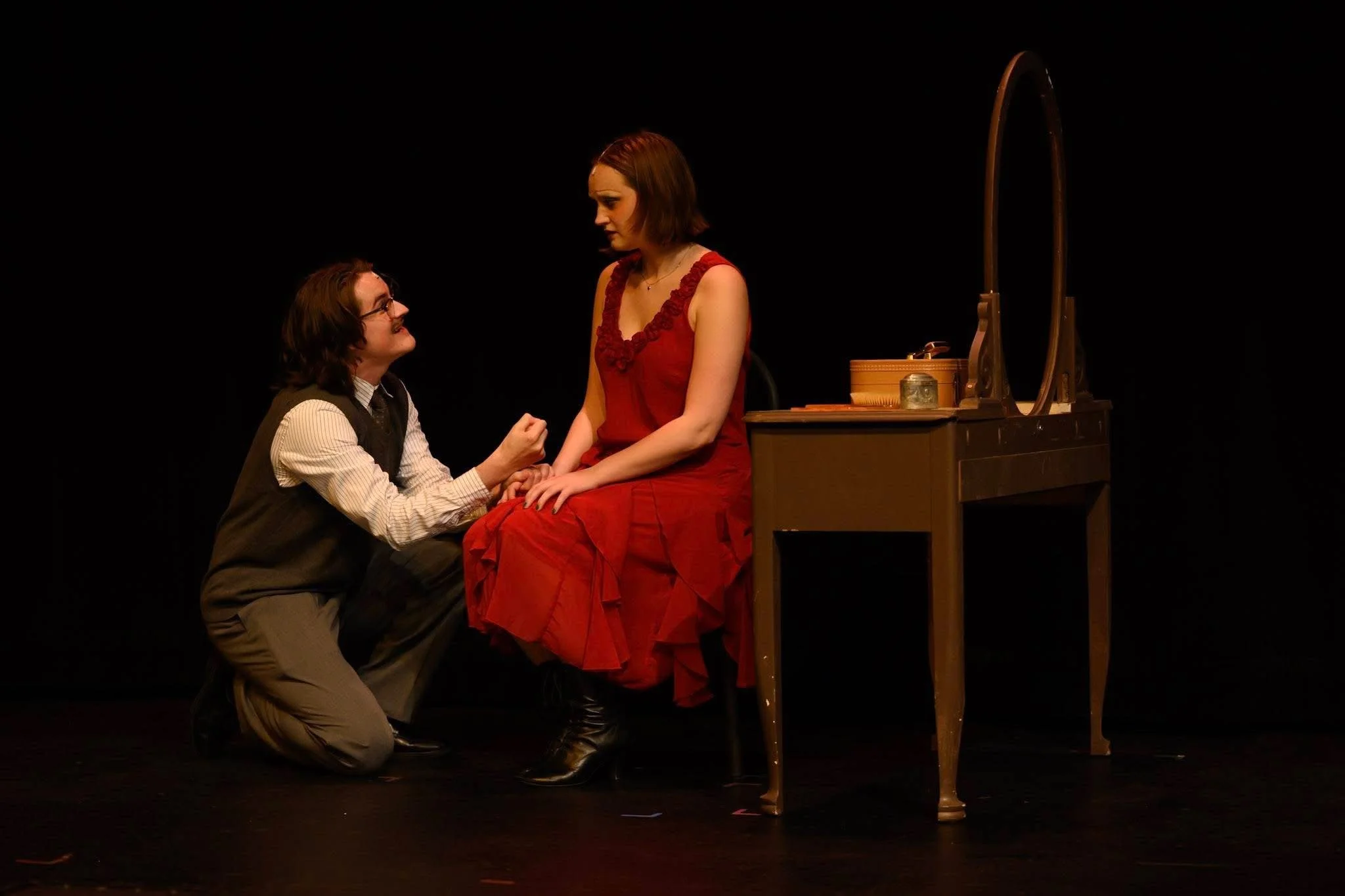
With a book by Joe Masteroff, music by John Kander and lyrics by Fred Ebb, Cabaret takes audiences to Berlin at the end of the Weimar Republic, where American writer Clifford Bradshaw (Valley Crum) arrives looking for inspiration and instead finds himself drawn into the orbit of English nightclub performer Sally Bowles (Emma Drazkowski). Around them, the Kit Kat Club offers a nightly refuge from reality under the watchful eye of the Emcee (Jordan McKinney), even as the rise of Nazism begins changing the world outside its doors. Meanwhile, boardinghouse owner Fräulein Schneider (Diana Trotter) unexpectedly finds companionship with Jewish fruit seller Herr Schultz (Daniel Markham), whose gentle romance becomes increasingly dangerous as Germany changes around them.
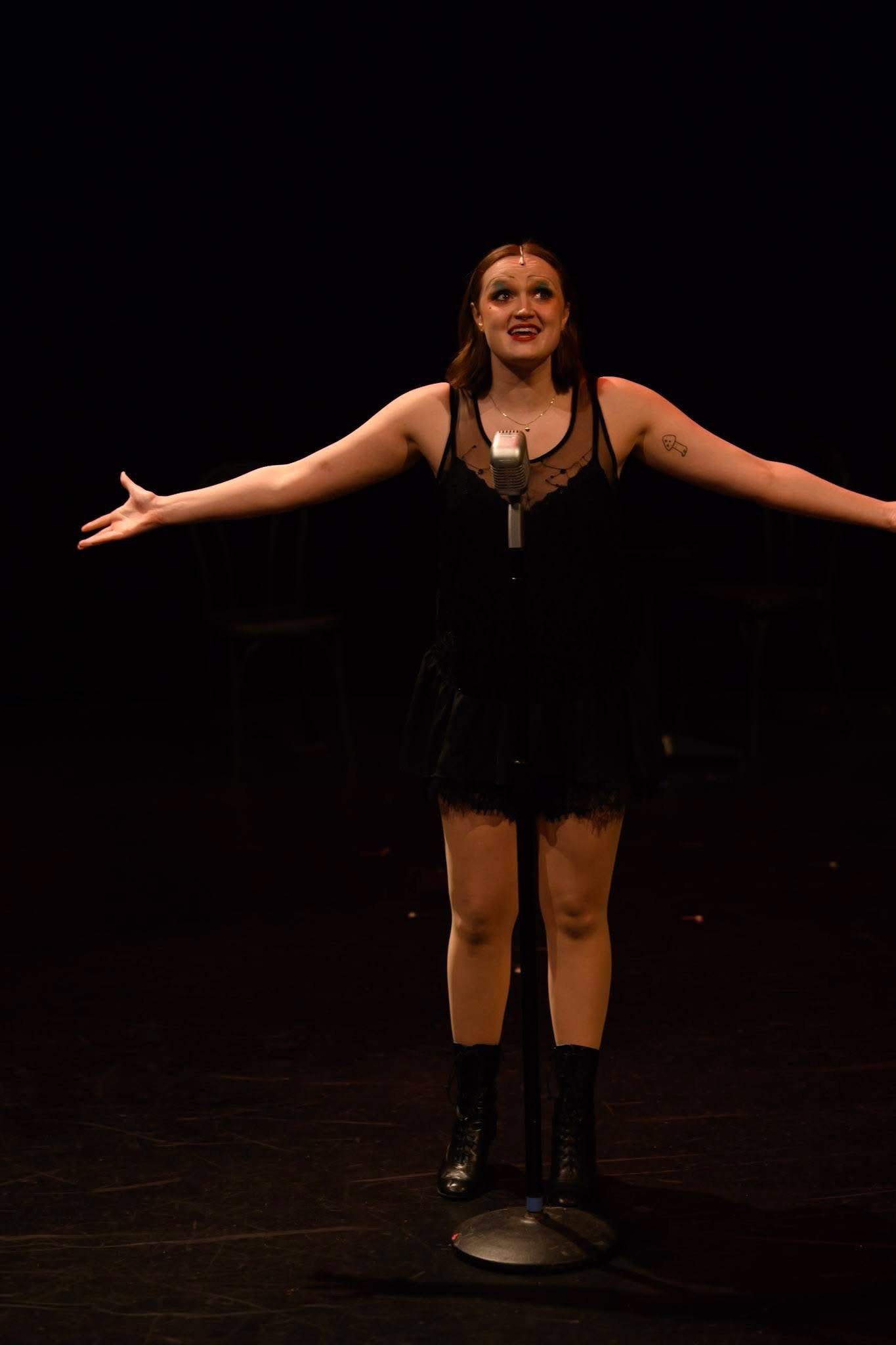
Emma plays a Sally with both vocal power and expressiveness. Her accent is strong without overwhelming the performance, and she has the sustained vocal ability necessary to handle a score that asks quite a lot of Sally. “Don’t Tell Mama” establishes that early, while her rendition of “Cabaret” late in the second act is one of the production’s musical high points. It is a number that needs to carry considerably more than its surface-level bravado, and Emma finds the emotion underneath it.
The relationship between Sally and Cliff, however, never quite develops the emotional attachment necessary to make their story the heart of this production. That might be a greater problem were it not for the fact that Ballyhoo finds another, and ultimately more compelling, emotional center in Schneider and Schultz.
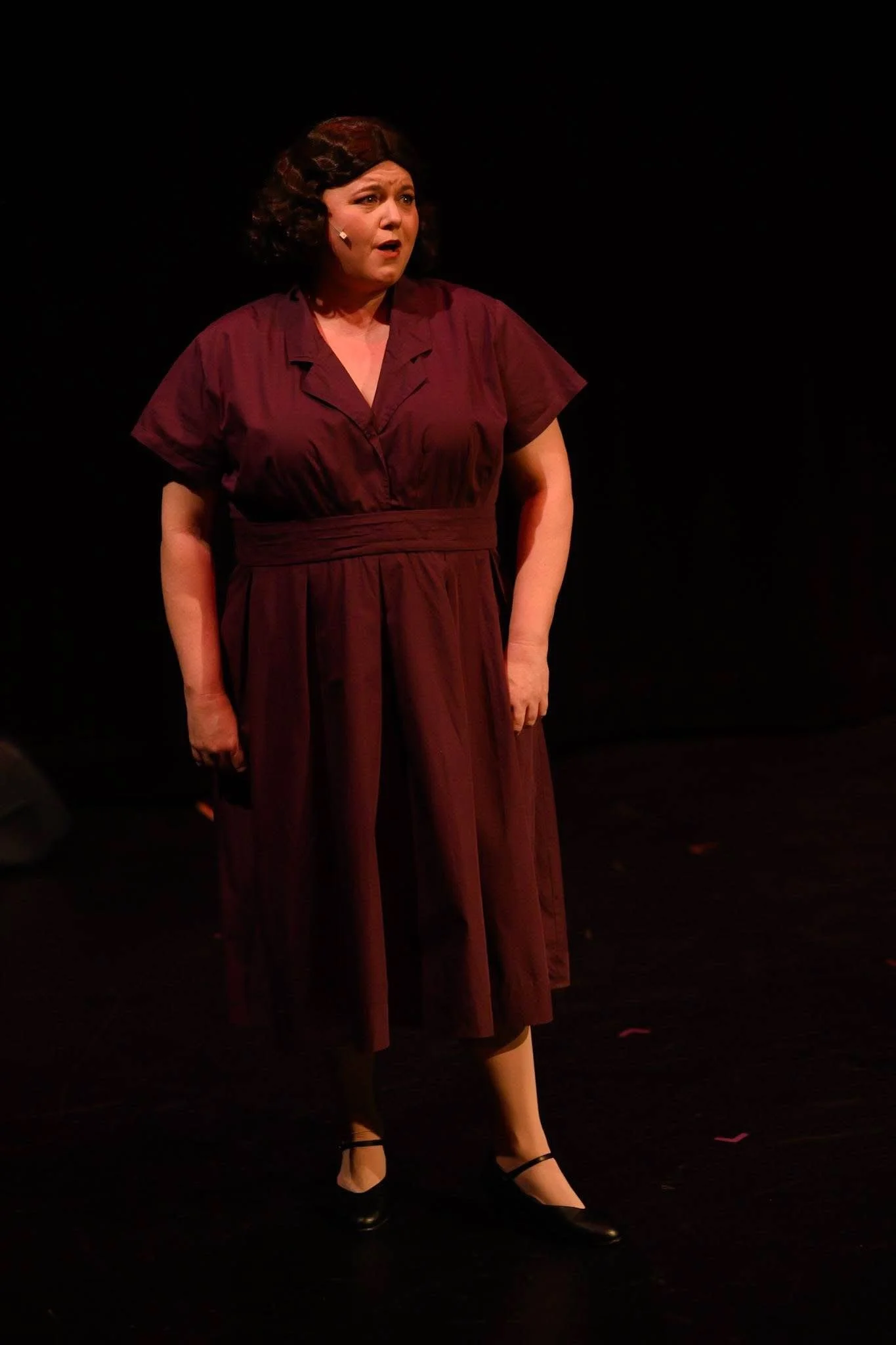
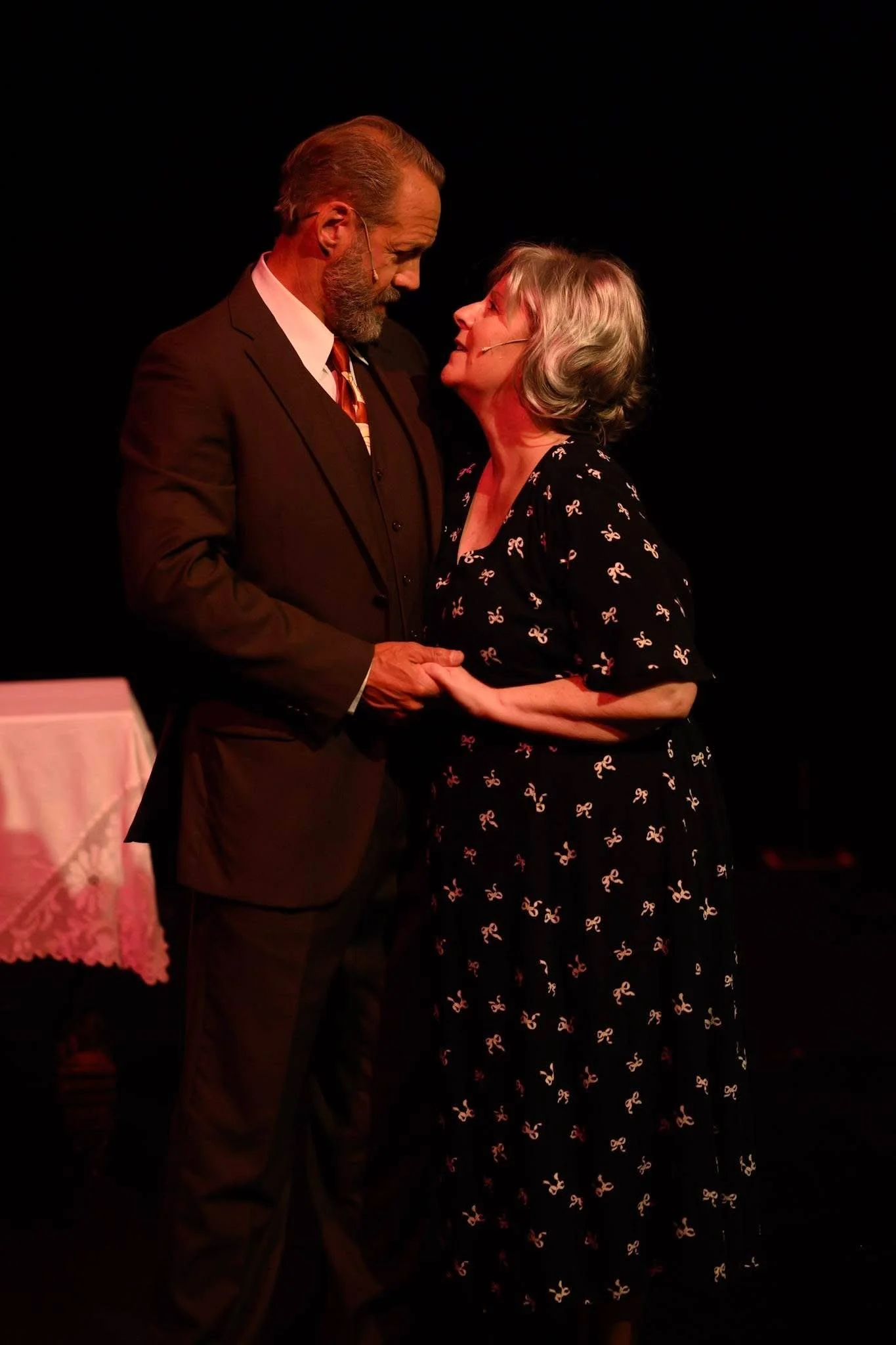
Diana brings a wonderful amount of quality to her Schneider, along with an excellent voice that serves songs such as “So What?” and, later, the beautifully rendered “What Would You Do?” Particularly in the latter, she captures the terrible practicality of a woman being forced to choose between love and survival. Daniel gives Schultz a warmth that pairs nicely with her, and the two share some lovely musical moments, although there are times when Daniel’s vocals overwhelm Diana’s.
Together, though, they create the relationship that most clearly demonstrates what the rise of fascism actually means on a human level. What begins as a sweet, late-in-life romance becomes something much more consequential as the world around them decides that their happiness is no longer permissible. While many productions of Cabaret lean heavily on Sally’s story to provide their emotional stakes, here it is Schneider and Schultz who carry that responsibility.
Aimee Naughton also makes an impression as Fräulein Kost, particularly during “Married.” Her German portion of the song is delivered with a surprising sweetness. German isn’t necessarily a language that lends itself easily to sounding sweet, but Aimee manages exactly that, giving the number a tenderness that complements Schneider and Schultz’s relationship.
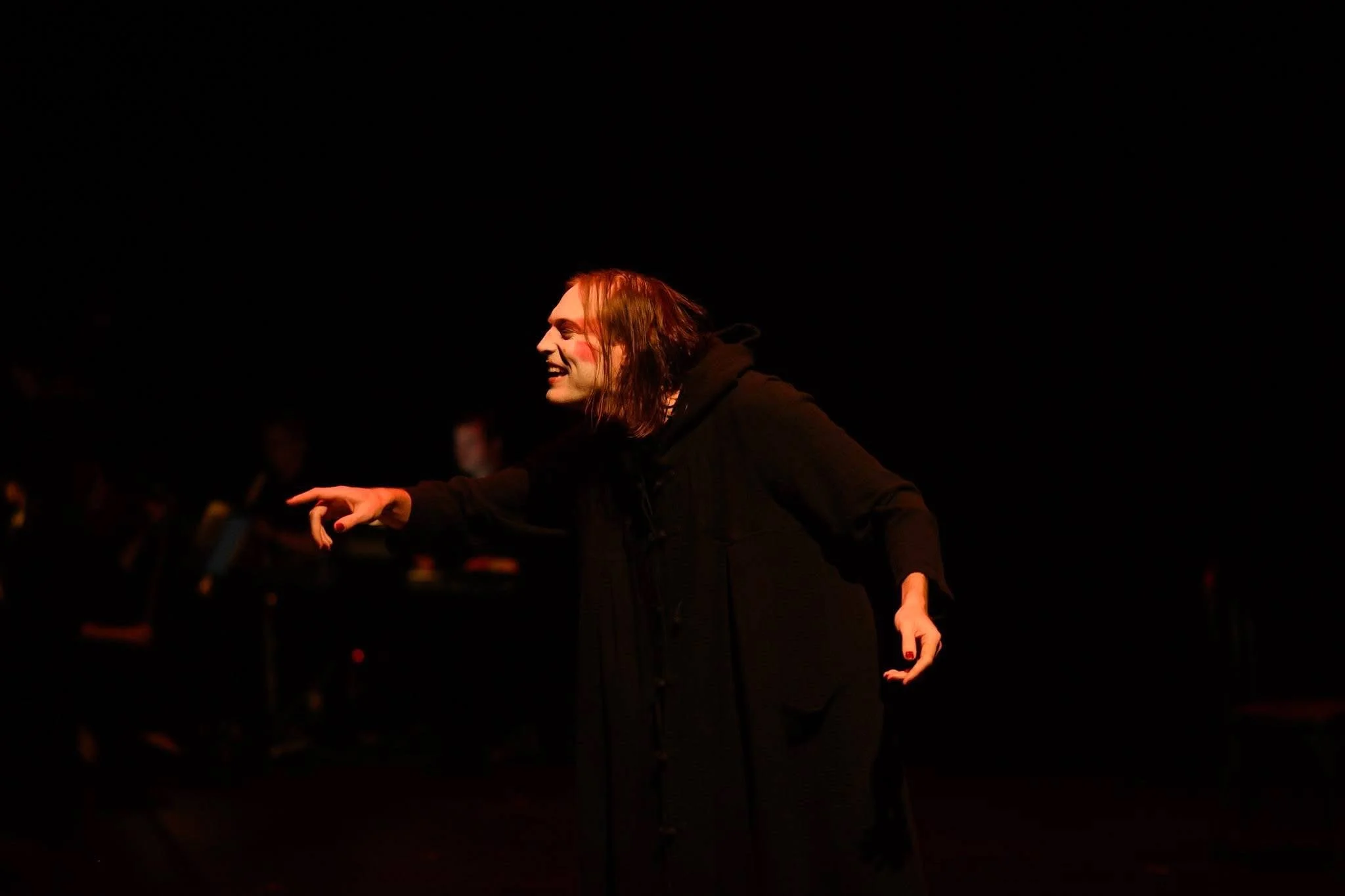
Jordan’s Emcee takes a little time to settle into. Early on, the characterization can feel a bit more severe than other versions of the character, but it becomes increasingly effective as the evening progresses. There is something almost Rocky Horror-esque about his interpretation, a combination of showmanship and menace that becomes more appropriate as the world of the Kit Kat Club darkens. The Emcee is both participant and observer, entertaining the audience while increasingly reflecting what is happening outside the club, and Jordan grows into that duality over the course of the evening.
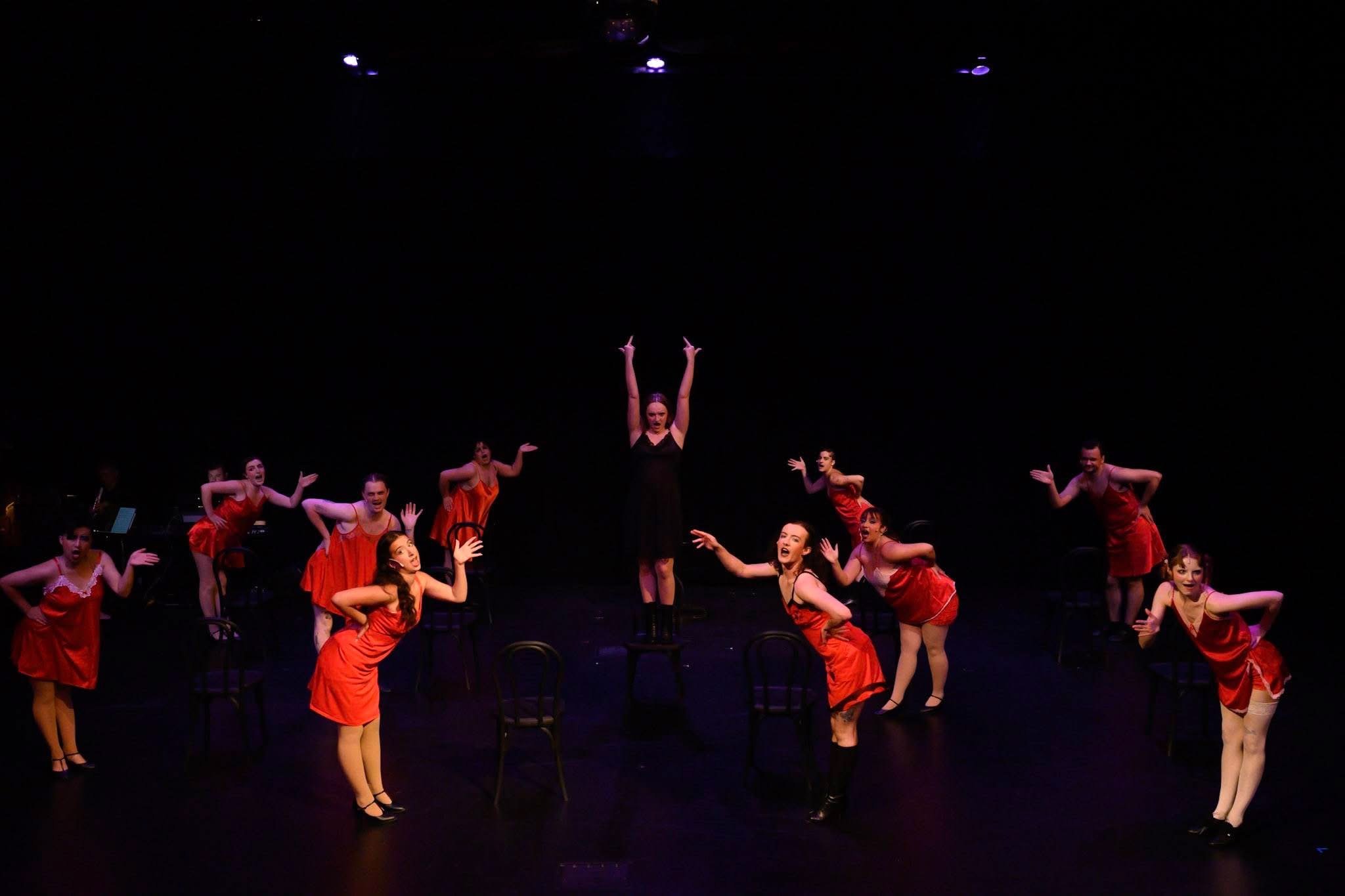
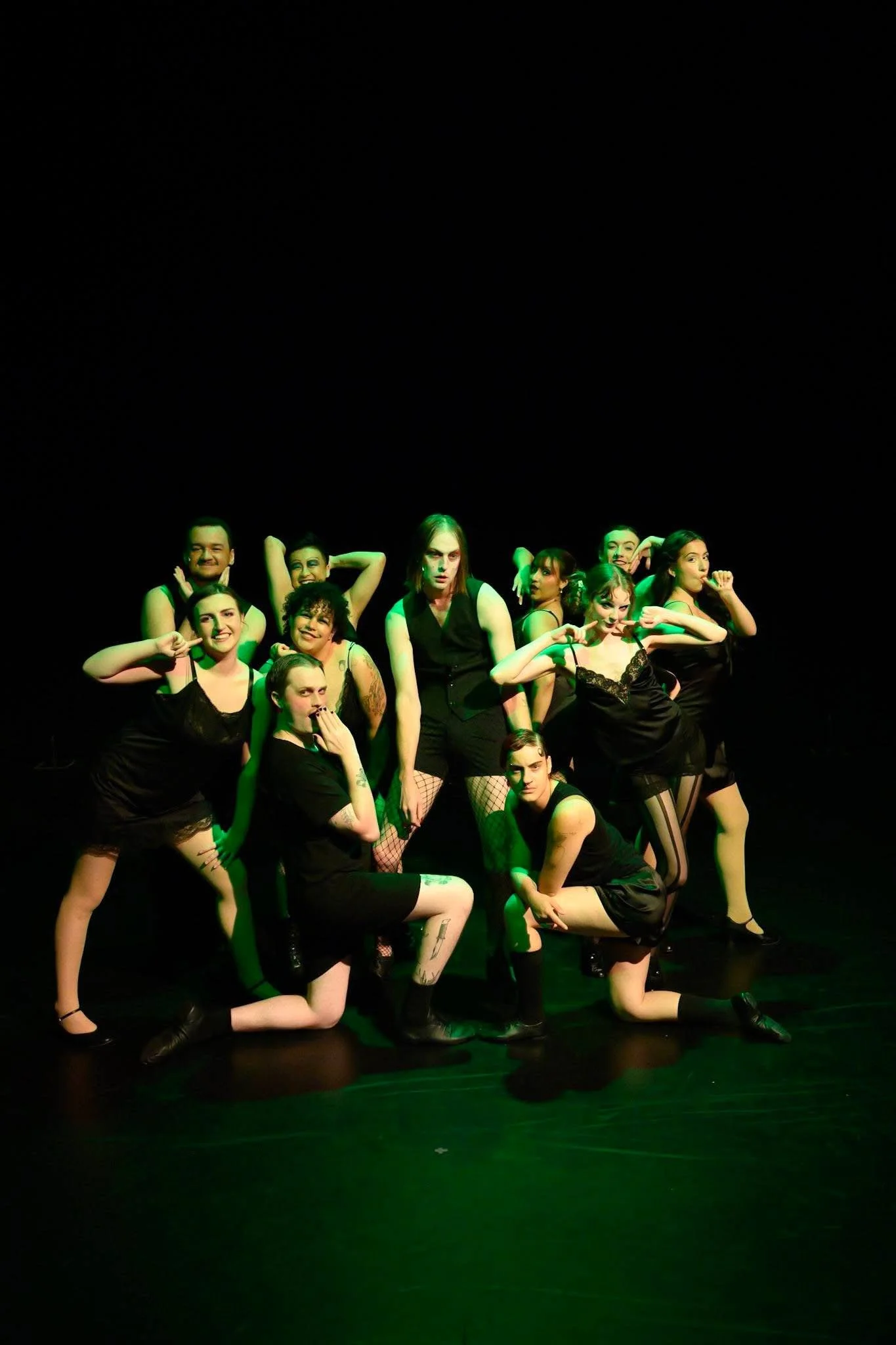
One of the production’s most consistent strengths is Sade’s choreography. It is inventive, energetic and frequently finds creative ways to use the confined playing space. “Mein Herr” is particularly well staged, including some effective work with chairs, while the choreography throughout gives the Kit Kat performers an identity that the minimal physical environment cannot always provide. The kick line is another strong visual, taking something associated with nightclub frivolity and allowing it to become unsettling.
Craig Marshall and Alia Thomaier’s lighting design also does considerable work in defining the production’s world. The lighting is especially effective during the musical numbers, creating shifts in mood and providing visual variety within the spare environment. Benet Blake’s sound design supports the performers well, while Corey, who also designed the costumes, establishes the period and provides another layer of personality to the Kit Kat Club.
And then there is the orchestra, which is easily one of the best parts of the production. Under musical director and conductor Max Chastain on piano, Jaden Zilka on percussion, Hans Faul on trumpet, Brendan Carlquist on woodwinds, John Bato-Gorja on bass and Noelle Oquist on violin give Kander’s score the jazzy, slightly decadent personality it deserves. The balance between the musicians and singers is strong, allowing the band to be present without overwhelming the performers.
One of the evening’s unexpected musical highlights is the Entr’acte. It gives the musicians a chance to cut loose, with its jazzy arrangement allowing each of them an opportunity to solo. With a band this good, it is a welcome chance to hear what each musician brings individually rather than simply experiencing them as accompaniment. In a musical where the orchestra is so much a part of the atmosphere, giving them their own moment proves to be one of the production’s smartest choices.
Shileah surrounds the principal characters with a busy Kit Kat Club ensemble that includes Madelyn Bjorn, Sebastian Borges, Terry Boyd, Shannon Green, Lillybeth Held, Anahí Jimenez, Anthony Johnson Dixon, Tatiana Lindberg, Shane Ryan, Caleb Ryden, Saige Soriano, Natasha Thompson, Jing Jing Wang and Gina Wilhelm. Their work, particularly when paired with Sade’s choreography, supplies much of the movement, sexuality and energy necessary to populate this version of Berlin.
Yet the limitations of the Black Box continue to hover over the production. Cabaret works so effectively because its political transformation is initially almost imperceptible. The party continues, the jokes continue and the music continues, even as the world outside becomes increasingly dangerous. Eventually the audience realizes that the place it entered at the beginning of the evening no longer exists. Ballyhoo has all of those individual beats, but without a fully realized Kit Kat Club to transform before us, that deterioration can be harder to experience emotionally. We see what is happening, but we don’t always feel the loss of what was there before.
If the production occasionally struggles to chart that gradual descent, however, it leaves absolutely no ambiguity about where the descent ends.
The final sequence is the moment when everything Corey has been building toward comes together most powerfully. The frivolity is gone. The entertainment is gone. The performers are gathered together in a confined square, accompanied by a pile of shoes and imagery that makes the destination of the preceding political rhetoric horrifyingly clear.
It is appropriately devastating.
More than any other moment in the production, the ending delivers the emotional punch Cabaret requires. It also demonstrates what Ballyhoo’s stripped-down approach can accomplish at its best. There is no need for elaborate scenery or spectacle because the simplicity of the image is precisely what makes it so effective.
Ballyhoo Theatre set out to avoid giving audiences just another Cabaret, and it has certainly accomplished that. Its Black Box approach is both the production’s defining idea and its most significant obstacle, sometimes sacrificing the immersive world necessary to feel fascism gradually tightening its grip. But there is also a great deal here that works, the individual musical performances, inventive choreography, strong design work and an exceptional orchestra. And when the production reaches its final moments, imagination is no longer required. The message, and the terrible human cost behind it, could not be clearer.
The Ballyhoo Theater production of Cabaret runs through September 27 at Edmonds College’s Black Box Theatre. For more information, including ticket availability and sales, visit https://ballyhootheatre.org/.
Photo credit: Gabriel Corey