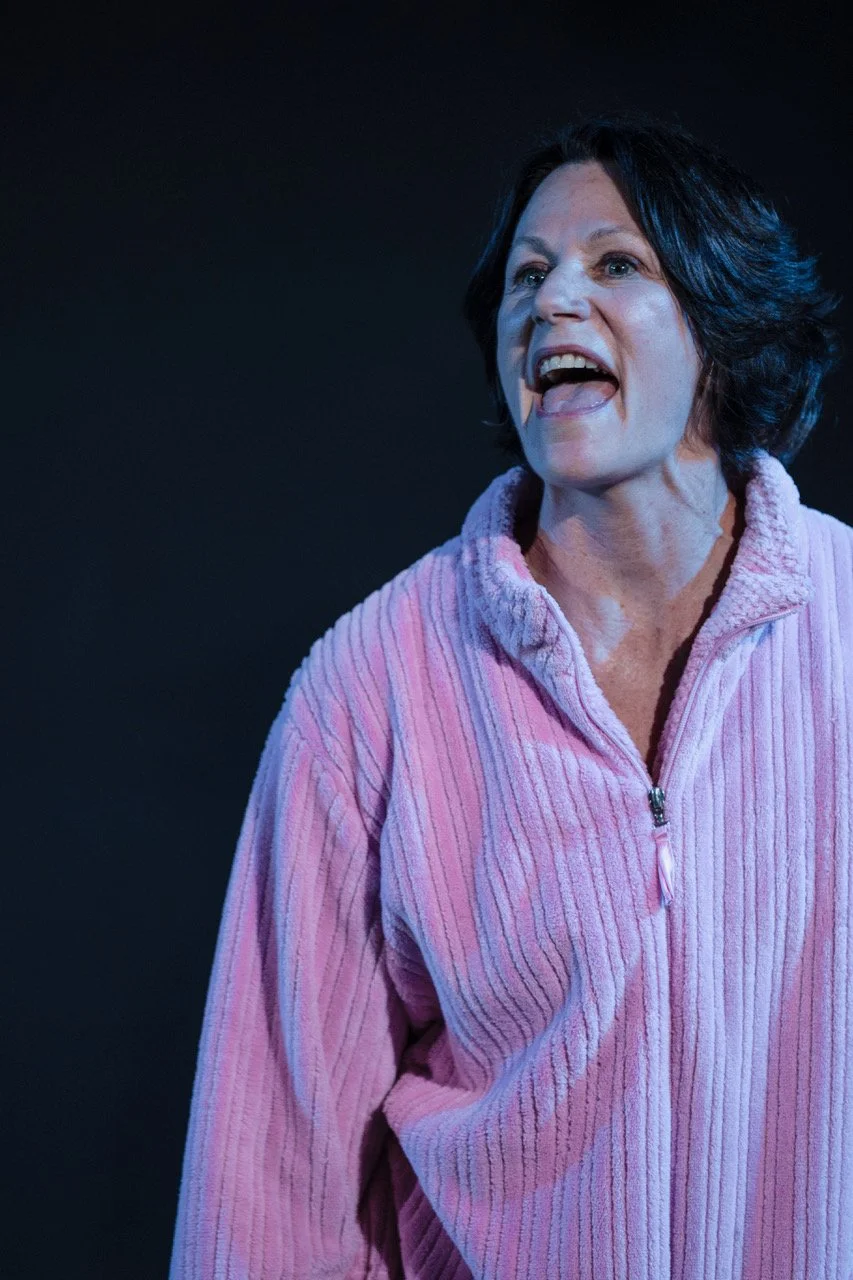

Stage Review - Detroit
Presented By: Actorcraft Page, Stage, and Screen - Gig Harbor, WA
Show Run: June 04 - June 06, 2026
Date Reviewed: Saturday, June 6, 2026 (Closing)
Run Time: 2 Hours (including a 15-minute intermission)
Reviewed by: Greg Heilman
For an organization like Actorcraft P2S, where the focus is on education, the quality of the final product often serves as the clearest measure of the work happening behind the scenes. Detroit marks the third fully produced play from the Gig Harbor-based company, and while one successful production can be dismissed as a fluke and two might be written off as coincidence, three begins to look like a trend. If that's the case, then what Actorcraft has accomplished over the past few years through its film and theatre education programs is nothing short of remarkable.
Their productions are not flashy. They are not trying to overwhelm audiences with elaborate scenery, intricate technical effects, or lavish production budgets. Instead, Actorcraft focuses on the fundamentals: strong performances, thoughtful direction, and design elements that support rather than overshadow the story being told. The result is theatre driven by ensemble work, energy, pacing, and a level of commitment from the performers that consistently exceeds expectations. It serves as a reminder that exceptional theatre is not reserved exclusively for professional companies or large venues. Sometimes it happens in a small community center, a grange hall, or on a high school stage.
Detroit represents an important step in Actorcraft's evolution. It is the company's first fully produced play not anchored by founders Jeremy Kent Jackson or Adrianne Alvarez-Jackson in acting roles, instead featuring an ensemble comprised entirely of students who have come through Actorcraft's educational programs. That confidence in the next generation of performers is rewarded here. For anyone looking to develop their skills, or simply searching for a place to begin their theatrical journey regardless of age or experience level, Actorcraft is quickly becoming one of the premier destinations on the Kitsap Peninsula for theatre and film education.
That commitment is on full display in Detroit, Lisa D'Amour's darkly comic examination of the American Dream and the uneasy relationship between those who have achieved a measure of middle-class stability and those still struggling to attain it. A finalist for the Pulitzer Prize for Drama in 2011, the play emerged from the economic uncertainty of the Great Recession and remains remarkably relevant today. Set in a suburban Detroit neighborhood hollowed out by foreclosures and economic decline, the story follows Ben and Mary, a middle-class couple who discover they are among the last residents remaining on their street. Hoping to recapture a sense of community, they strike up a friendship with their new neighbors, Sharon and Kenny. What begins as backyard barbecues, drinks on the porch, and seemingly harmless attempts at connection gradually spirals into something far more chaotic as the differences between the couples become impossible to ignore.
What makes Actorcraft’s production and Adrianne Alvarez-Jackson's direction so effective is the way both the comedy and the discomfort embedded in D'Amour's script are embraced. The conversations feel alive from the opening moments. Characters listen to one another rather than simply waiting for their next line, reactions appear natural and spontaneous, and the ensemble creates the sense that these relationships exist beyond the confines of the play. Even as the situations become increasingly absurd, the performances remain rooted in recognizable human behavior. The result is a production that moves with an impressive pace while never losing sight of the people at its center.
That ensemble quality is the production's greatest strength. As Mary, Heidi Michelle delivers a performance that captures both the character's yearning for connection and the ways she attempts to mask her dissatisfaction. Some of the play's funniest moments belong to her, particularly as Mary's inhibitions disappear throughout the evening, yet there is always an undercurrent of sadness beneath the humor. Opposite her, Peter Hiebert gives Ben a mixture of frustration, optimism, and quiet desperation. Ben desperately wants life to return to a version of normal that may no longer exist, and Peter does an excellent job revealing both the character's hopes and his growing inability to control the world around him.
On the other side of the yard, Maile Olsen brings a wonderfully unpredictable quality to Sharon. The character frequently seems to be operating according to her own set of rules, and Maile captures that energy while still allowing audiences to understand the vulnerabilities underneath. Alongside Kenny, Sharon introduces a youthful, carefree spirit into the neighborhood, a sharp contrast to the more settled and cautious lives that Ben and Mary have built for themselves. It is a dynamic that helps fuel much of the play's conflict while also making the initial friendship between the couples understandable.
Kenny could easily become a caricature in less capable hands, but Dante True finds the humanity beneath the bravado. His contemplation about a prospective boys' night out earns some of the show's biggest laughs, yet there is also an earnestness to the character that keeps him from becoming merely comic relief. Dante and Maile work exceptionally well together, bringing an infectious energy to their scenes and creating characters who seem to approach life with fewer concerns about consequences than their older neighbors. Of course, one of the play's great ironies is that as the alcohol begins to flow, the gap between the two couples narrows considerably. The distinctions that initially seem so obvious begin to disappear, revealing that the differences between them may not be as great as anyone first believed.
Though he has the least amount of stage time, Tim Sobie's Uncle Frank may be the most important character in the play. Tim delivers a thoughtful and understated performance that serves as an anchor for the production's larger themes. Frank functions as the bridge between the various storylines, bringing together the play's observations about community, economic disparity, and the widening divide between those who have and those who do not. More importantly, he gives voice to the questions that sit at the heart of D'Amour's script: what happens to neighborhoods, relationships, and social structures when hard times arrive? Through Frank, the audience is reminded that Detroit is about far more than the chaos unfolding on stage. It is about the people left behind when systems fail and the necessity of community in helping individuals survive those failures.
The production's design elements work because they reinforce the storytelling rather than compete with it. Andy Sharp's scenic and lighting design immediately communicates the differences between the neighboring households. Ben and Mary's porch furniture feels more mature and carefully curated, while the mismatched furnishings next door speak volumes about Sharon and Kenny before either character says a word. Costumes and props continue that visual storytelling, extending even to details such as the food choices made by each couple. It is subtle work, but it helps establish the social and economic distinctions that fuel much of the play's conflict.
Several practical effects also land particularly well, a credit to props designer Dana Maxwell, whose work helps bring some of the production's more memorable moments to life. An early collapsing umbrella and a later gag involving a foot crashing through the deck both generate strong reactions, and aren’t telegraphed at all, while a lighting effect accompanying the burning porch furniture provides one of the evening's most striking visual images. Jeremy Kent Jackson's sound design contributes significantly to the atmosphere, with cues that consistently support the action without drawing undue attention to themselves.
Equally important is the pace at which the production moves. Stage manager Aubrey MacGregor and assistant stage manager Abby Schuette keep the show running smoothly, while the stage crew of Dana Maxwell, Abby Schuette, and Panda Mays execute scene changes with speed and precision. The quick transitions help maintain the production's momentum and have become something of a hallmark of Actorcraft's work. It is a quality that has been evident across each of the company's productions, allowing audiences to remain engaged in the story rather than waiting for the mechanics of the production to catch up.
Detroit is a story about neighbors, sure, but it is also a story about what happens when the systems that shape our lives begin to fail. The formula that has long defined suburban success—the house, the job, the community, and the promise that hard work will be rewarded—begins to crack under economic pressure, revealing the anxieties and insecurities beneath the surface. In that sense, the play remains every bit as relevant today as it was when it premiered more than a decade ago.
Actorcraft's production of Detroit does not offer easy answers, nor should it. Instead, it presents those questions through a committed ensemble, confident direction, and a clear understanding of the story's humanity. More importantly, it demonstrates once again the quality of work being cultivated through the company's educational programs. If Detroit is any indication, the future of Actorcraft P2S looks exceptionally bright.
The Actorcraft P2S production of Detroit ran this past weekend at the Ollala Community Hall in Port Orchard. Though the show has closed, if you’d like more information about the organization, the programs they offer, or upcoming shows in their Brave Stage program, visit https://actorcraftp2s.com/.
Photo credit: Angie Mitchell Photography