
Stage Review - Sotto Voce
Presented By: Tacoma Little Theatre - Tacoma, WA
Show Run: June 05 - June 21, 2026
Date Reviewed: Friday, June 5, 2026 (Opening Night)
Run Time: 1 Hour, 45 Minutes (including a 15-minute intermission)
Reviewed by: Greg Heilman
Nilo Cruz's Sotto Voce, now on stage at Tacoma Little Theatre through June 21 under the direction of María Valenzuela, is a play that asks its audience for patience. The Pulitzer Prize-winning playwright tends to favor poetic language and emotional exploration over plot-driven storytelling. His plays often unfold like memories rather than narratives, revealing themselves gradually through conversation, reflection, and imagery. That approach is very much on display in Sotto Voce, a story that examines loss, connection, faith, and the ways in which lives can become intertwined across vast distances and years of separation. It is also difficult to ignore the timeliness of Tacoma Little Theatre's decision to produce a play centered on refugees seeking safe harbor only to find doors closed against them. While the events depicted in the play occurred decades ago, the questions they raise about displacement, responsibility, and humanity remain deeply relevant within today's political landscape.
The play centers on Bemadette Kahn, an elderly German woman whose life remains shaped by the sinking of the MS St. Louis, the infamous ocean liner that carried hundreds of Jewish refugees away from Nazi Germany in 1939 only to find safe harbor denied to them. When a young Cuban writer named Saquiel Rafaeli seeks her out in hopes of learning more about a mysterious relationship connected to the ship's passengers, the two begin a series of conversations that gradually reveal the emotional scars, unanswered questions, and enduring bonds left behind by history. Along the way, Lucila Pulpo, Bemadette's energetic maid and companion, becomes the catalyst that allows these seemingly disparate lives to intersect. What emerges is a story about a relationship forged through letters and memories, a connection that endured despite the two people at its center never having the opportunity to meet. It’s a piece that doesn’t necessarily reach a destination, but rather focuses on the journey.
Cruz's writing is undeniably literary, often prioritizing mood and reflection over forward momentum. For some audience members, that style may prove to be an acquired taste. Act I in particular takes its time establishing its characters and relationships, relying on conversations and revelations that can feel drawn out before the play's larger themes come fully into focus. Yet even when the script threatens to linger, Tacoma Little Theatre's production remains compelling thanks to the strength of its performances and thoughtful design work.
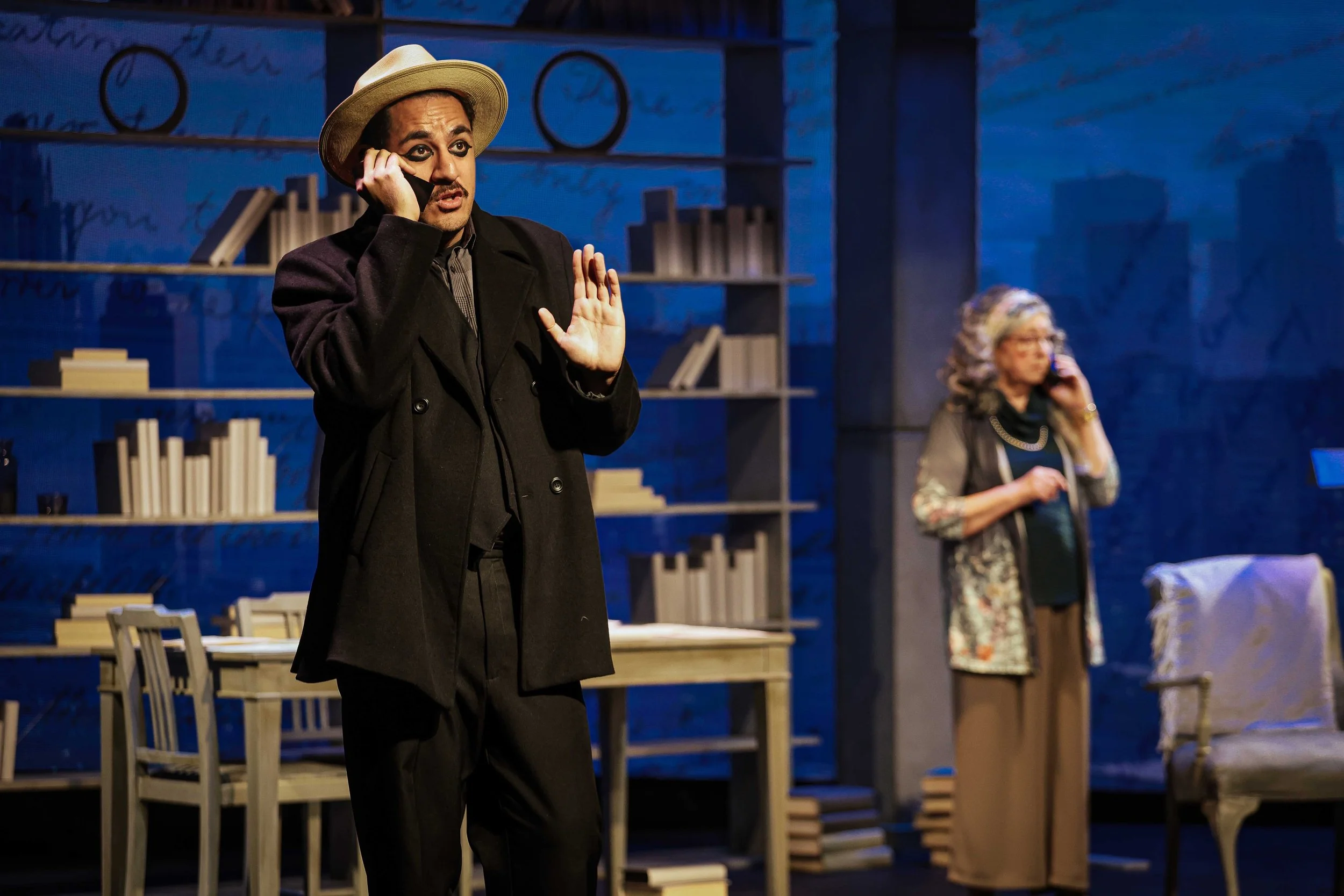
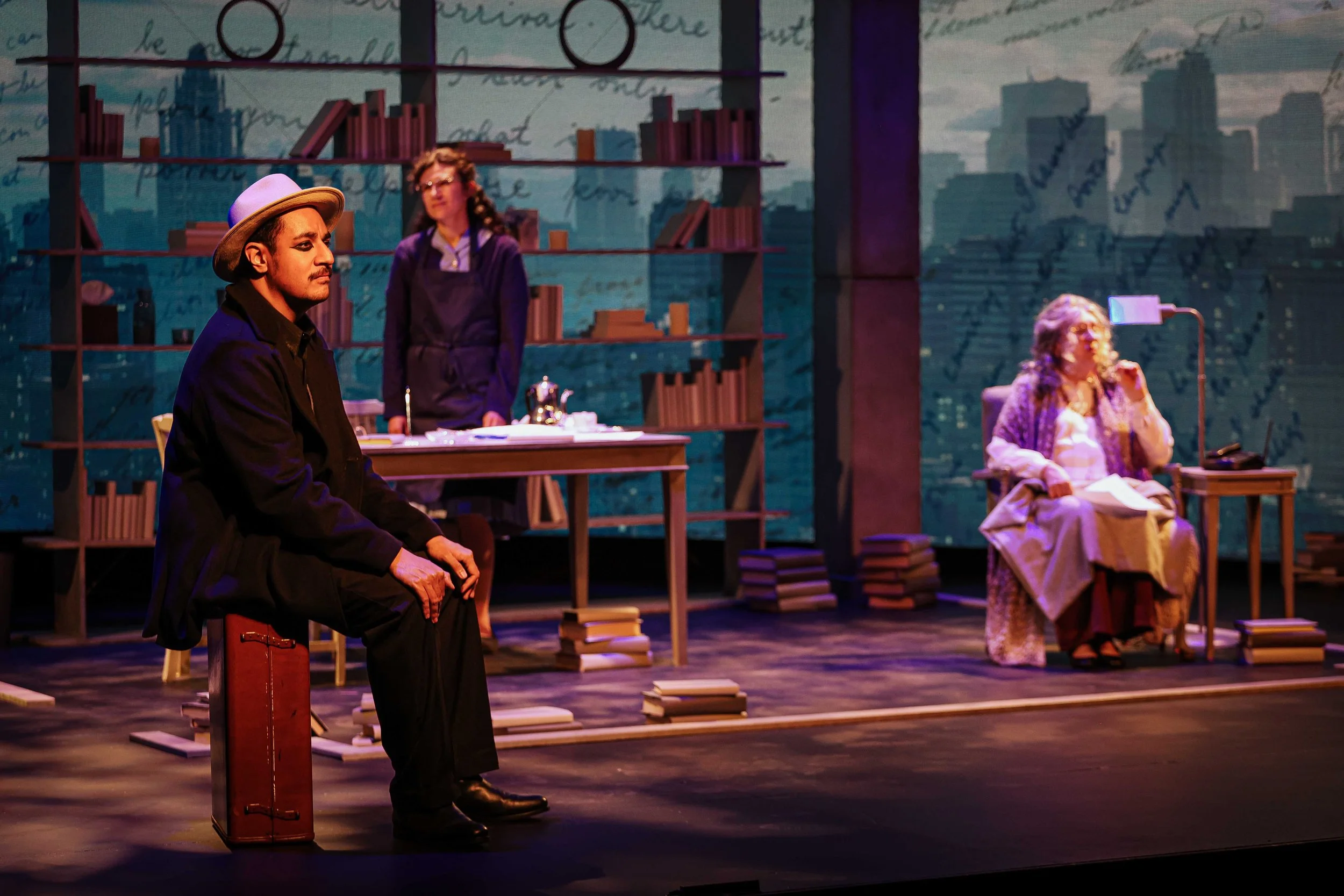
The first thing audiences will notice is Blake R. York's scenic and visual design. The apartment setting immediately establishes a sense of place, overlooking the city through large windows. While the opening sunset projection provides a striking first impression, the projections throughout the evening serve a far greater purpose than simply creating atmosphere. Blake uses them to provide context, location, and emotional texture, helping guide audiences through the play's shifting memories and recollections. Most effective are the words that appear scrawled across the screen behind the stage, transforming language itself into part of the visual storytelling.
The literary nature of Sotto Voce is reflected throughout the scenic design. Books are everywhere. Shelves are lined with stark white volumes bearing no titles on their spines, a simple but evocative choice that allows them to represent not specific works, but the larger concepts of memory, history, and storytelling. Elsewhere, books become furniture, stacked into chairs and incorporated into the physical environment. It is a clever visual metaphor for a play whose characters exist as much within stories, letters, and recollections as they do within the physical world. Combined with Alonna Hall's lighting design and Chandler Garry's sound design, the result is an environment that feels suspended somewhere between reality and memory.
Particularly effective is the understated use of piano underscoring during moments when Bernadette and Saquiel recall the letters that form the emotional backbone of the story. The music never overwhelms the dialogue but instead gently supports the sense that these characters are revisiting moments that have never fully left them. Meanwhile, the production's quick scene transitions help maintain momentum through a script that can occasionally drift into extended reflection.
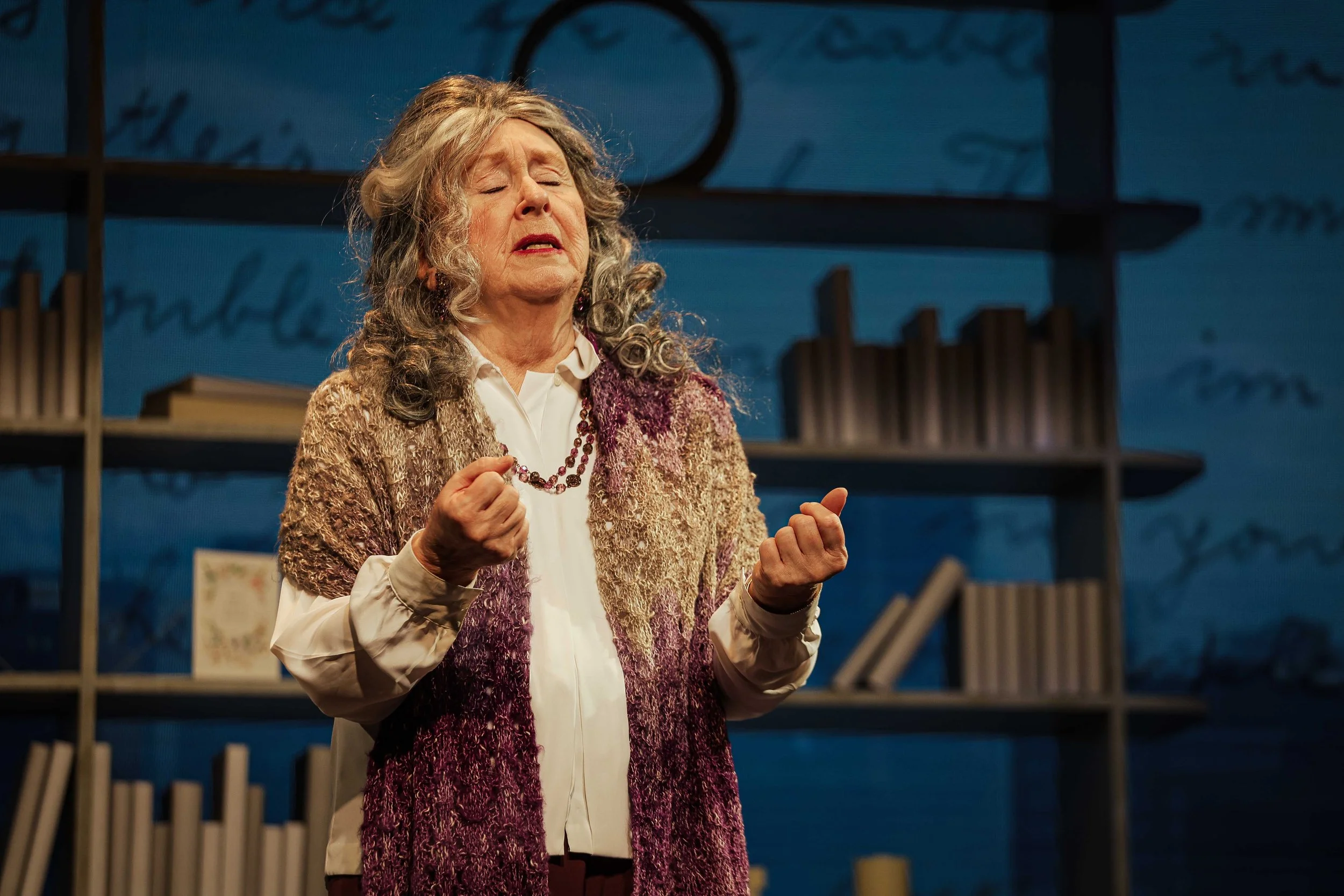
At the center of the production is Bemadette Kahn, brought vividly to life by Sharry O'Hare. Carrying the weight of decades of grief, reflection, and unanswered questions, Bernadette remains haunted by the events that shaped her life. Sharry creates a woman whose memories are never far from the surface, balancing resilience with vulnerability as she gradually reveals the burdens she carries. Her finest moment arrives with one of the play's most powerful lines: "I saw what God could have prevented, but he did not intervene." Delivered with remarkable restraint, the line lands with devastating force, encapsulating the complicated relationship between faith, loss, and acceptance that lies at the heart of the play, and driving home Sharry’s uncanny ability to present an evocative performance regardless of the style of writing she is working from.
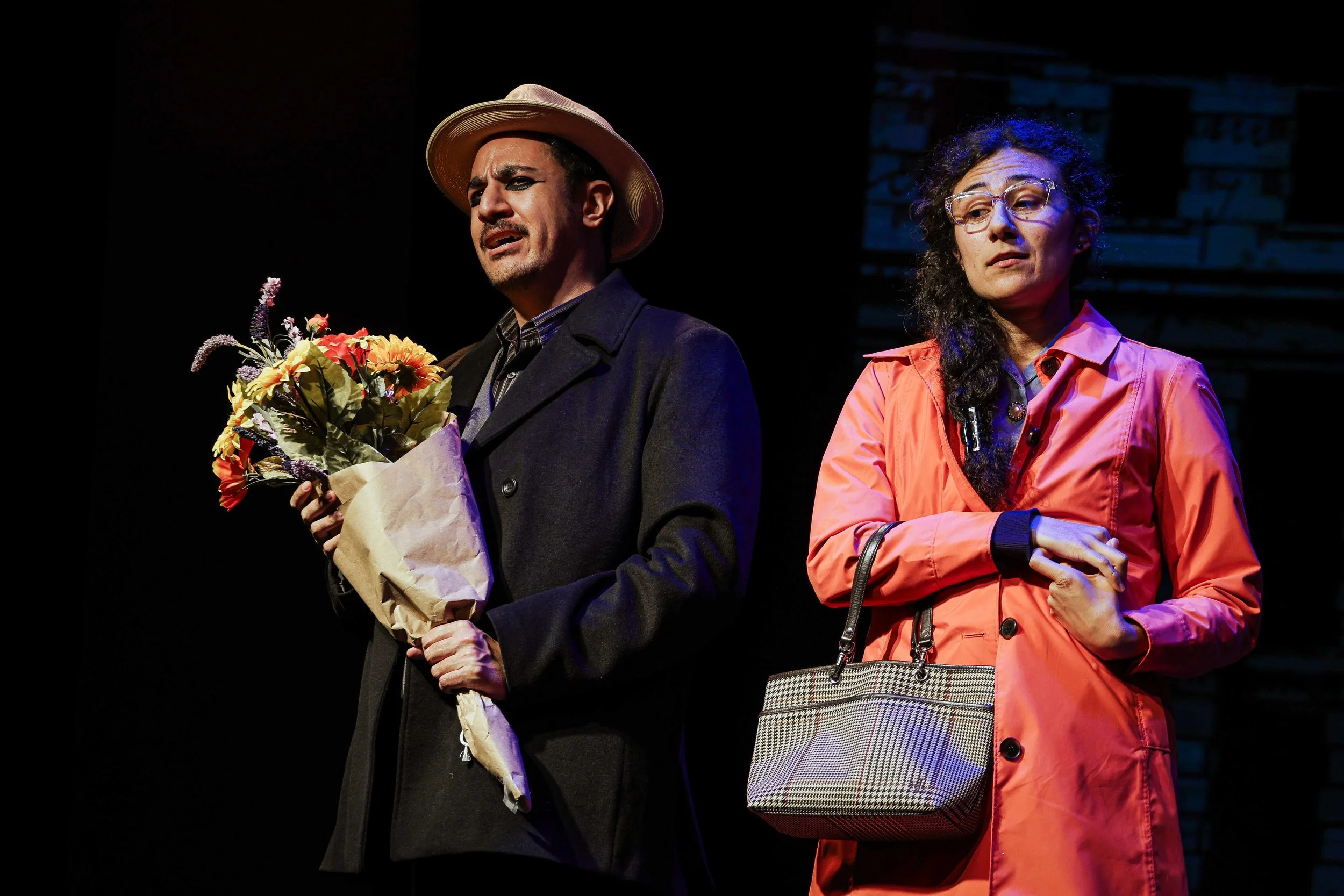
Serving as both audience surrogate and investigator, Saquiel Rafaeli is portrayed with warmth and determination by John Pedro. John's appearance, mannerisms, and presentation reflect the character's Cuban heritage, grounding him firmly within the play's cultural framework. Saquiel's search for answers becomes the audience's own, and John skillfully conveys both the persistence and vulnerability that drive the young writer forward. What could easily have become a simple investigative role instead develops into something far more personal and emotionally resonant as the story unfolds. I find the character to be a bit pushy at times, making certain moments between Saquiel and Bemadette off putting, but in reality if he’s not written this way, it’s not realistic that he should be able to break down the wall that Sharry’s Bernadette has constructed around herself.
Providing much of the play's warmth is Valeria Sanchez-Jimenez as Lucila Pulpo. Full of energy and personality, Valeria creates a character who serves as both comic relief and emotional bridge. Lucila's presence injects life into the apartment and helps facilitate the relationship that develops between Bemadette and Saquiel. In many ways, she becomes the catalyst for a connection built not through direct experience but through stories, memories, and shared humanity.
This particular production works because of the commitment of everyone involved to Cruz's distinctive style. The performers never attempt to force urgency into the material, instead trusting the audience to settle into its rhythm. The result is a Sotto Voce that may not satisfy those looking for fast-paced drama but offers considerable rewards for viewers willing to meet it on its own terms.
At a moment when discussions surrounding refugees, immigration, and the obligations nations have to those seeking safety continue to dominate headlines, Sotto Voce serves as a reminder that these conversations are not new. The circumstances may change, but the human stories behind them remain remarkably familiar. And when final bows conclude, stay in your seat just a little longer. One final projection provides a beautiful reminder that the events of Sotto Voce may be rooted in history, but their impact continues to resonate in the present day.
Whether Cruz's poetic style resonates will likely depend on individual taste. Some audience members may find themselves wishing the first act arrived at its destination more quickly, while others will appreciate the opportunity to settle into the play's reflective rhythm. What is undeniable, however, is the quality of Tacoma Little Theatre's production. María Valenzuela and her cast embrace the material fully, supported by a creative team whose design work consistently reinforces the play's themes. The result is an evening that rewards patience with thoughtful performances, evocative imagery, and a moving exploration of memory, history, and human connection.
The Tacoma Little Theatre production of Sotto Voce runs on stage through June 21. For more information, including ticket availability and sales, visit https://www.tacomalittletheatre.com/.
Photo credit: Dennis K. Photography