
Stage Review - Dream, Carl, Dream (Dacha Theatre)
Stage Review - Dream, Carl, Dream
Presented By: Dacha Theatre - Seattle, WA
Show Run: June 05 - June 27, 2026
Date Reviewed: Saturday, June 20, 2026
Run Time: 2 Hours, 30 Minutes (no intermission)
Reviewed by: Greg Heilman
Traditional theatre asks audiences to sit quietly in the dark and observe. Dacha Theatre has built much of its reputation by asking a different question: what happens when the audience becomes part of the creative process? Dream, Carl, Dream, created by Nathan Whitehouse and directed by Gavin Reub, now playing at 12th Ave Arts through June 27, provides a wonderfully imaginative answer. Part immersive theatre experience, part improv comedy, part community-building exercise, the production feels like Mad Libs meets Pixar's Dream Productions, creating a theatrical event that is different every night and belongs as much to its audience as it does to its performers.
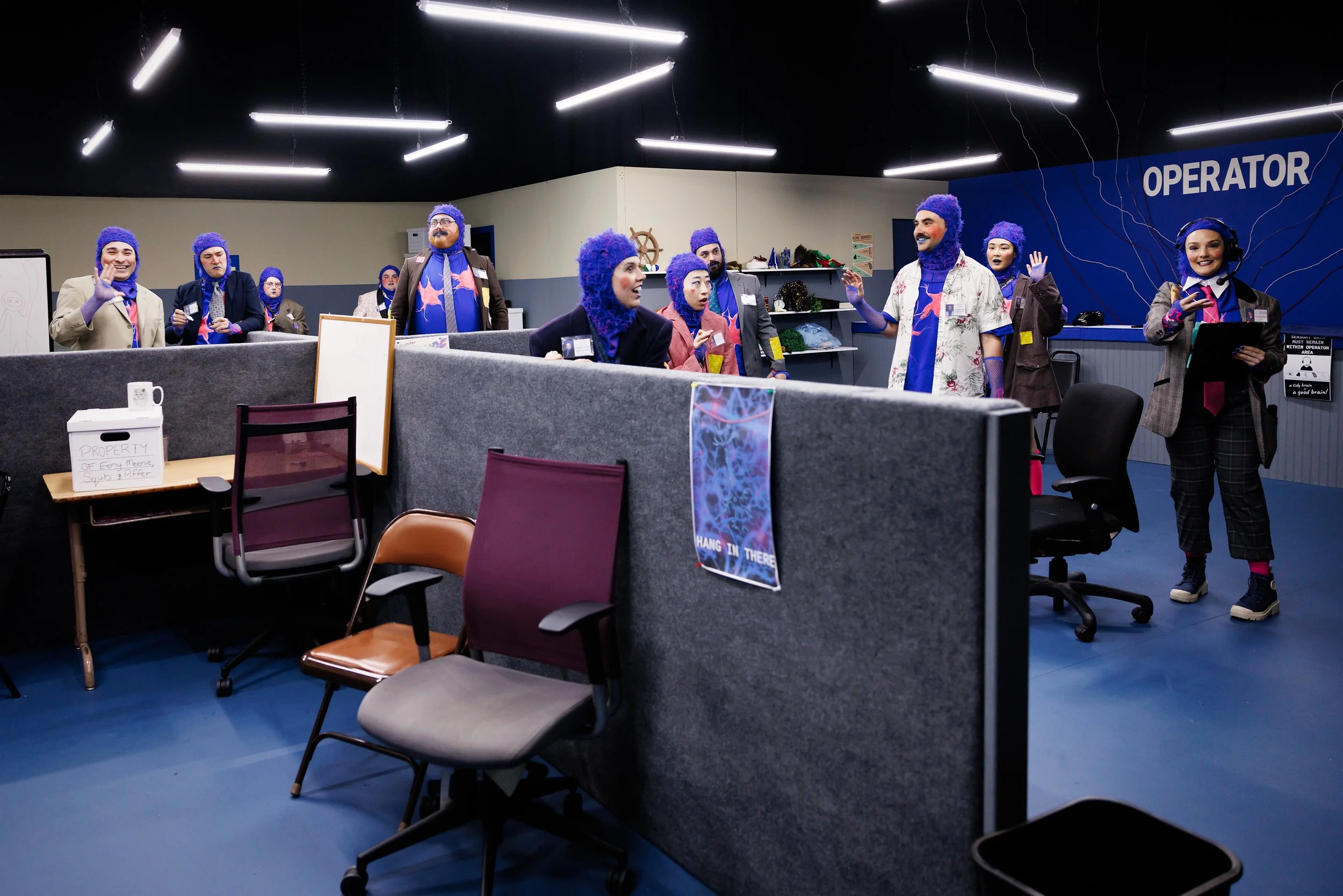
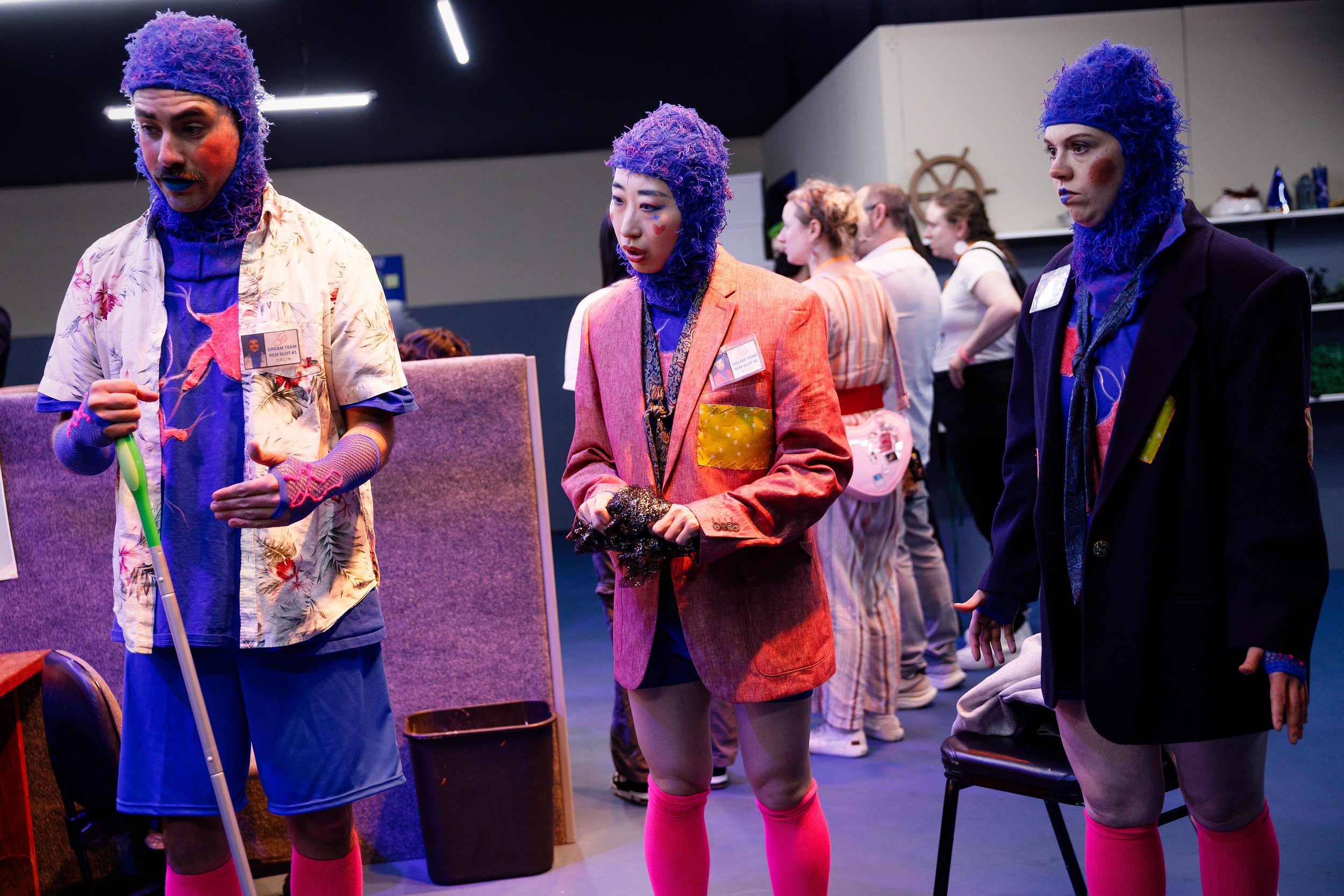
Dacha has long been known for blurring the line between performer and spectator, and Dream, Carl, Dream continues that tradition. Audience members are divided into teams before entering the performance space, guided through a lighted tunnel and welcomed by "helper cells" who ease them into the show's unusual world. The setup immediately establishes that this is not a conventional theatrical experience. Instead of following a scripted narrative, the evening unfolds as a collaborative exploration of dreams, creativity, and the subconscious.
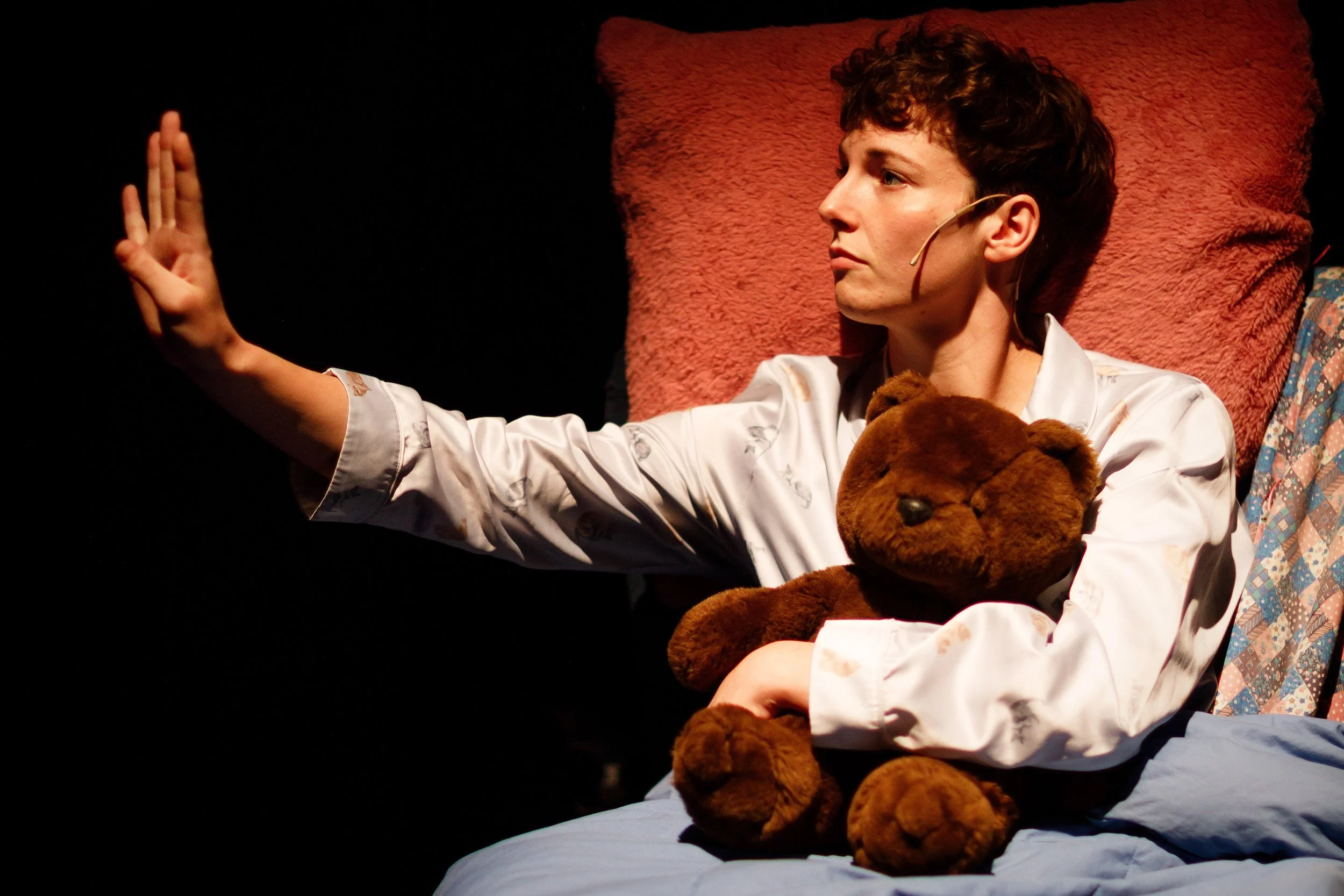
The premise centers on Carl, portrayed in the performance attended for this review by Cody Smith. Carl is a maintenance worker in an apartment building, though exactly what role he serves is never explicitly defined. That ambiguity is intentional, allowing audience members the freedom to shape dream sequences without being constrained by a rigid backstory. The action takes place inside Carl's mind, where a dream-development department, overseen by the voiced but never seen Frontal Cortex, is responsible for constructing and presenting dreams to him. Throughout the evening, audience members provide dream concepts, details, and suggestions that become the raw material for a series of scenes created on the spot by the ensemble. Carl then experiences, evaluates, and scores those dreams, each ranking contributing to his overall sleep quality, creating a framework that allows the evening to move organically from one wildly different scenario to the next.
The genius of the concept lies not in the dreams themselves, but in what happens between them. While the production is consistently funny, the comedy is almost secondary to the sense of ownership it creates. Every audience suggestion, whether elaborate or simple, receives the same level of enthusiasm and commitment from the performers. The ensemble never treats a contribution as a joke at someone's expense. Instead, they embrace every idea as a building block for collective storytelling. As a result, audience members become invested not only in seeing their own dreams realized on stage, but in discovering what the other groups have created as well.
That investment grows steadily throughout the evening. What begins as a room full of strangers cautiously offering suggestions gradually transforms into a community of collaborators. As the night progresses, audience members become more comfortable with one another, more willing to share ideas, and more eager to participate. Watching that transformation is one of the production's greatest pleasures. By the end of the evening, the excitement in the room extends beyond the performers and into the audience itself, creating a shared experience that feels increasingly rare in an era dominated by individualized entertainment.
The cast's greatest accomplishment is not their improvisational skill, impressive though it is. Rather, it is their generosity. Improvisation requires performers to think quickly, but Dream, Carl, Dream demands something more. The actors must simultaneously create characters, build scenes, listen carefully to audience suggestions, adapt to unexpected developments, and make every participant feel valued. That combination of skills is far more difficult than it appears.
Quinn Armstrong serves as the evening's emcee, guiding the proceedings with warmth, humor, and an infectious enthusiasm that keeps the audience engaged throughout the show's lengthy runtime. Quinn's ability to maintain energy while also fostering a welcoming atmosphere proves essential to the evening's success.
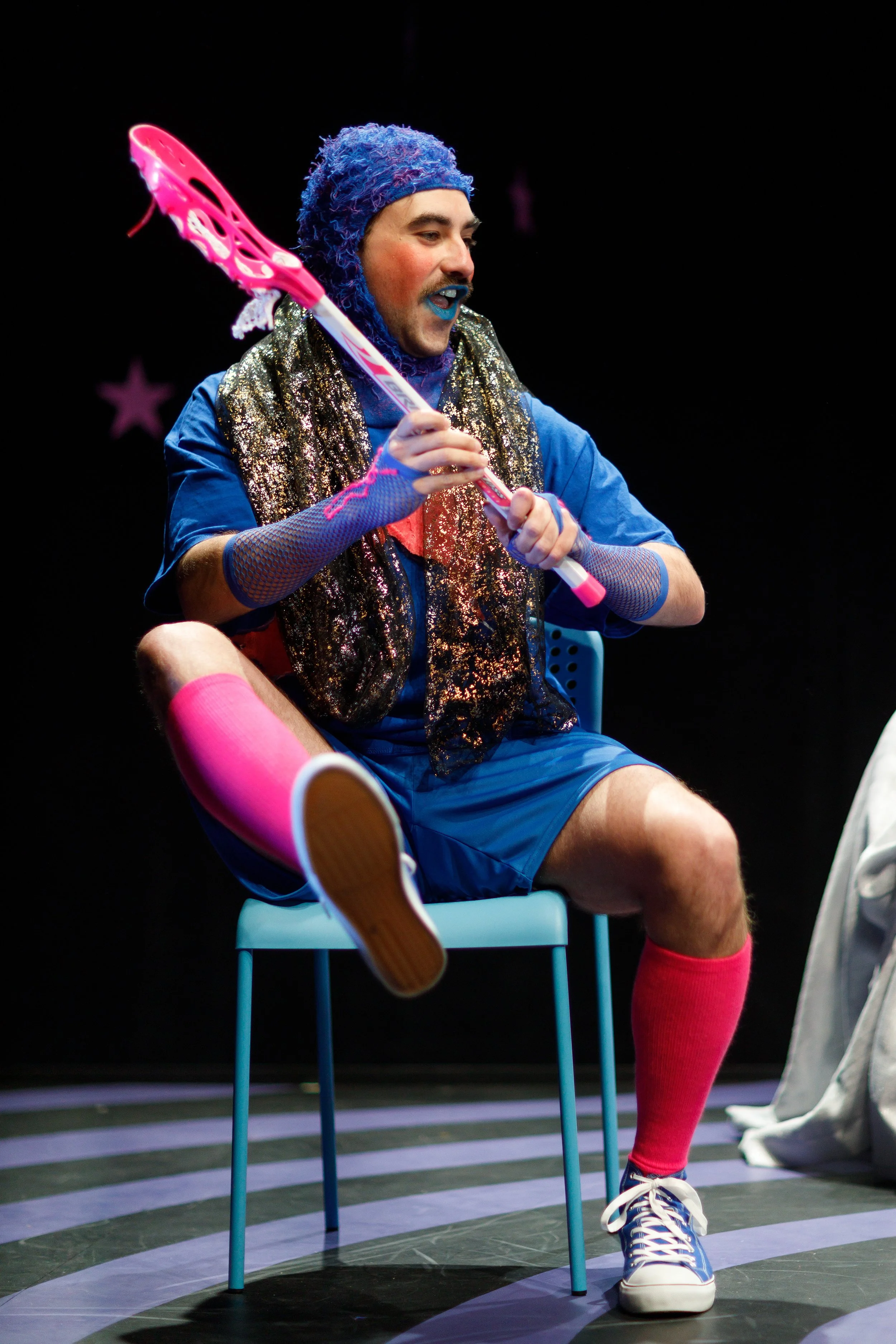
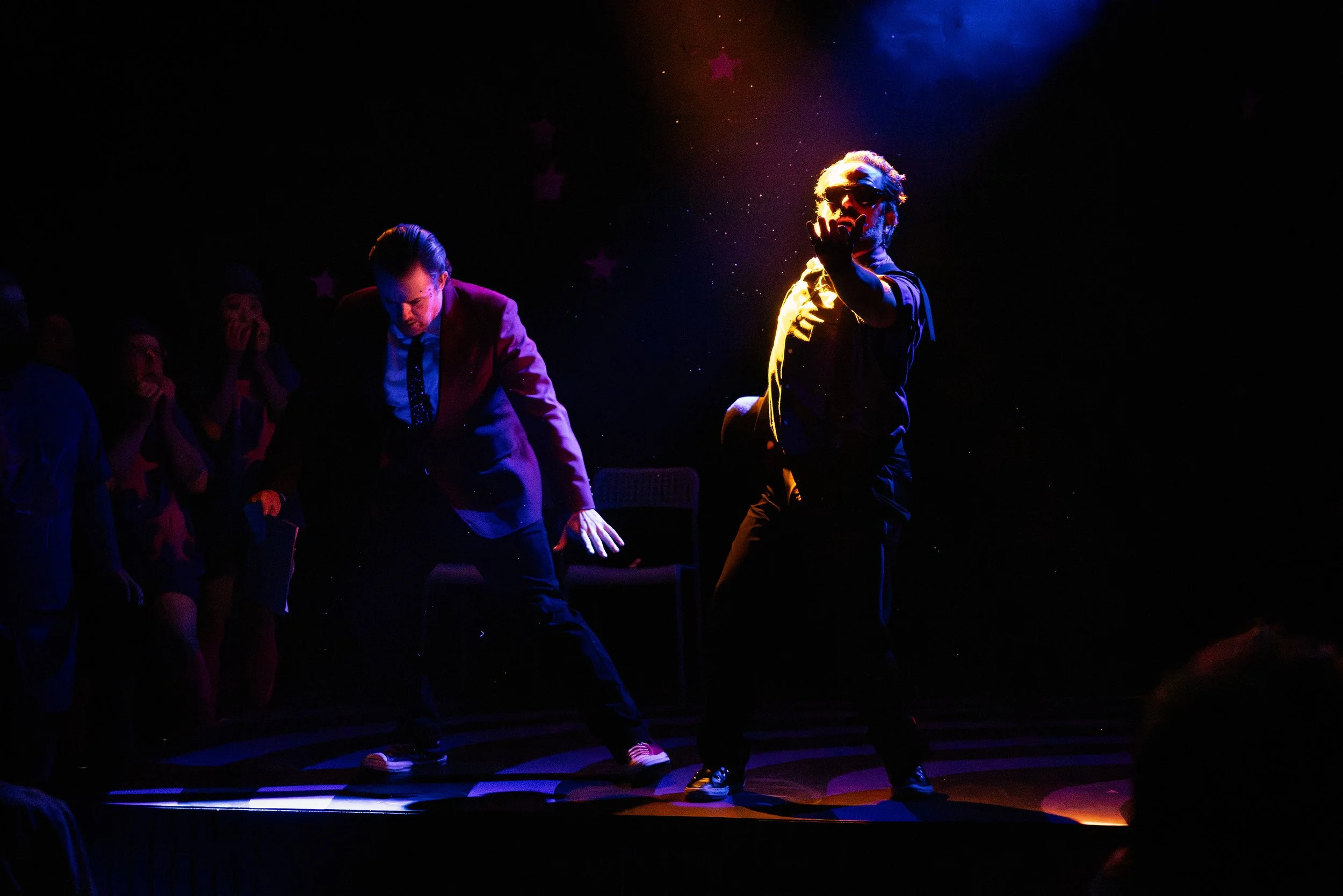
Cole Wimpee delivers one of the evening's most intriguing performances as the Subconscious. After an abrupt entrance, a figure appearing ostensibly out of nowhere to interrupt the dream presentation, it soon becomes clear that the Subconscious is also the primary disruptor of the evening's events. If Dream, Carl, Dream has an antagonist, it is this mysterious figure who seems intent on steering Carl toward increasingly challenging, revealing, and occasionally uncomfortable experiences. Cole plays the role with an assured confidence and an air of mystery that keeps both Carl and the audience slightly off balance. Even as the character introduces complications and pushes the evening in unexpected directions, Cole maintains an engaging presence that makes it difficult to determine exactly what the Subconscious's ultimate motivations might be. The ambiguity works beautifully within a show built around uncertainty, imagination, and discovery.
As Carl, Cody serves as the evening's anchor amid the controlled chaos unfolding around him. During the early portions of the production, Carl is little more than a groggy participant, awakened to observe the dreams being presented to him and tasked with helping score them, each ranking contributing to his overall sleep quality. At first glance, it appears to be a relatively straightforward assignment, largely requiring reactions to the increasingly absurd scenarios generated by the dream team. As the evening progresses, however, the audience begins to learn more about Carl, and the dreams themselves become increasingly tailored to the details that emerge about his life. What begins as simple reactions gradually develops into something more substantial, as Carl finds himself confronted by dreams that touch on his insecurities, aspirations, frustrations, and relationships. The result is a performance that requires considerably more range than one might initially expect. Cody successfully navigates that evolution, allowing Carl to grow from a passive observer into a more emotionally invested participant whose reactions become an increasingly important component of the storytelling.
Kayla Walker's Po is another standout presence, contributing significantly to the playful spirit of the production while helping to populate Carl's strange inner world. Like the rest of the ensemble, Kayla demonstrates an impressive ability to shift gears instantly as audience suggestions send scenes in unexpected directions. Po isn’t just the Vanna to Quinn’s Pat Sajak, she’s the main liaison between the audience and the dream builders, guiding the audience through every REM sequence with humor and joy. It’s a very nice performance from Kayla.
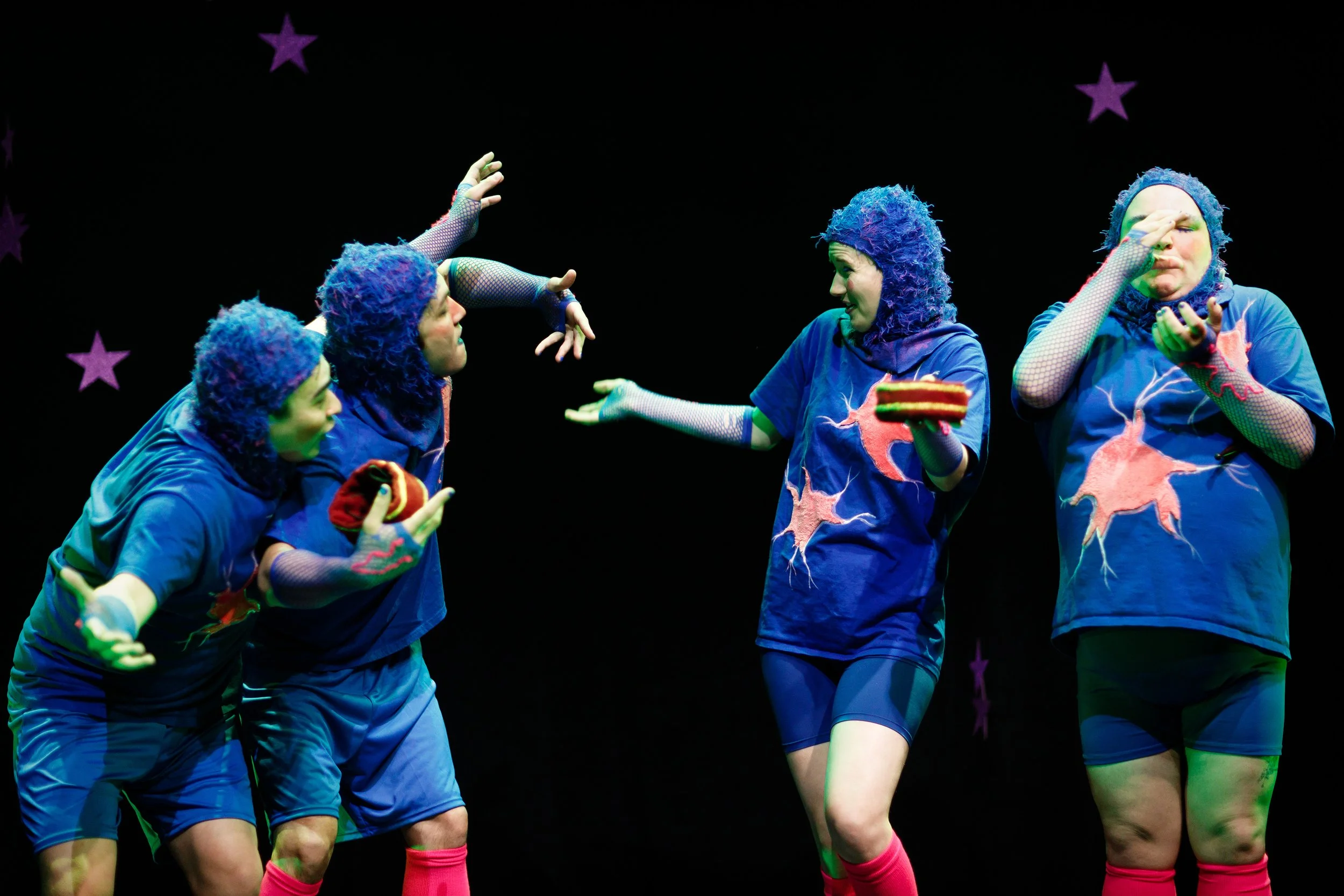
The rest of the ensemble deserves recognition as a collective. Angel Gao, Chelsey Sheppard, Daniel Bracy, Henry Behrens, Juliette Jones, Kevin Tanner, Lizzy Bennett, Sam Claney, Steph Couturier, Teagan Bourgette, and Yeonshin Kim demonstrate remarkable versatility throughout the evening. Whether portraying neurons, office workers, imaginary friends, creatures, or dream figures, they commit fully to every scenario while maintaining an impressive level of engagement even when not at the center of a particular scene. Their enthusiasm proves contagious and becomes a significant factor in encouraging audience participation.
The design team provides an ideal framework for the production's unique concept. Devin Petersen's scenic design creates an office environment that speaks to the bureaucratic inner workings of a mind. The familiar workplace setting provides a useful anchor for the increasingly bizarre dream scenarios that emerge throughout the evening. Junfu "Albert" Chen's lighting design effectively utilizes fluorescent office aesthetics while also helping distinguish the show's many transitions between reality and imagination. Fantasia Rose's costumes contribute significantly to the production's playful visual identity, while Josh Valdez's sound design supports both the comedy and the atmosphere of the piece. On the subject of the design, it isn’t just the performers who add an improvisational twist to the evening, as part of the dream construction, the participants get to choose props (Sam Edgren is responsible for the varied and entertaining props), as well as light and sound, so even these components become a variable in what Carl is presented with.
Dream, Carl, Dream is a special program, at a minimum because it understands that imagination is often most powerful when shared. The production could easily have settled for being an entertaining improv show built around audience suggestions. Instead, it becomes something more meaningful by creating genuine connections between the people in the room. The dreams themselves may be absurd, hilarious, or occasionally touching, but the real achievement is the sense of collective ownership the production fosters.
That said, Dream, Carl, Dream may not be for everyone. Audiences looking for a traditional theatrical experience—one where they can sit back, remain anonymous, and passively absorb a story being told to them—may find the production's participatory nature uncomfortable at first. My recommendation is to give the process a chance. The performers work hard to create an environment that feels welcoming rather than intimidating, and many audience members who begin the evening cautiously ultimately find themselves eagerly contributing ideas before the night is over. In a world where our attention is constantly pulled toward work, news, responsibilities, and the stresses of daily life, there is something refreshing about spending a few hours collectively engaged in an act of creativity. Even those hesitant to participate may discover that the experience provides a welcome escape from the concerns waiting outside the theatre doors.
My only real area of improvement may be around Dream, Carl, Dream’s length. By the time the evening reaches its conclusion, the production does begin to feel somewhat long. At approximately two and a half hours without an intermission, there are moments where the concept feels as though it could benefit from a bit of tightening. I would be interested to see future iterations experiment with trimming perhaps thirty minutes from the run time. Even so, the show's informal structure and conversational atmosphere make the length more palatable than it might otherwise be. Because the audience is actively invested in the proceedings, the evening rarely feels static, and the time passes more quickly than the runtime might suggest.
In a theatrical landscape often focused on polished final products, Dream, Carl, Dream celebrates the creative process itself. It reminds us that ideas are better when shared, that collaboration can produce surprising results, and that strangers can become collaborators when given the opportunity. By the end of the evening, the dreams may belong to Carl, but the experience belongs to everyone.
The immersive, interactive Dream, Carl, Dream, from Dacha Theatre, runs on stage at 12th Avenue Arts in Seattle through June 27. For more information, including ticket availability and sales, visit https://www.dachatheatre.com/.
Photo credit: Brett Love