
Stage Review - Perfect Crime (Bremerton Community Theatre)
Stage Review - Perfect Crime
Presented By: Bremerton Community Theatre - Bremerton, WA
Show Run: June 05 - June 28, 2026
Date Reviewed: Friday, June 19, 2026
Run Time: 2 Hours, 30 Minutes (including a 15-minute intermission)
Reviewed by: Greg Heilman
Warren Manzi’s Perfect Crime has endured for nearly four decades in New York, and after seeing the Bremerton Community Theatre production of it, I can understand why. While many mysteries invite audiences to solve a puzzle, Perfect Crime is more interested in making them question the puzzle itself. What is real? What is imagined? Who can be trusted? Are the characters really who they claim to be? These questions sit at the center of the thriller, and Bremerton Community Theatre’s production, directed by Wallace Ross and running through June 28, embraces that uncertainty from beginning to end.
First produced in 1987, Perfect Crime has earned distinction as New York City’s longest-running play. The psychological thriller follows psychiatrist Margaret Thorne Brent, whose world is thrown into chaos following the murder of her husband. As investigators begin peeling back layers of deception, the story unfolds through a maze of conflicting accounts, hidden agendas, and shifting identities. The deeper the audience ventures into the mystery, the less certain they become about what they are seeing and who they should believe.
The success of a psychological thriller rests almost entirely on its ability to keep the audience uncertain, and Perfect Crime is a play built upon uncertainty. Manzi’s script seems intentionally designed to obscure its true purpose, withholding information and constantly shifting the audience’s perception of events. In Bremerton Community Theatre’s production, that uncertainty becomes one of the show’s greatest strengths. The audience is never entirely sure what is real, what is imagined, who can be trusted, or even whether the characters are who they claim to be. The cast embraces that ambiguity, creating an atmosphere where every conversation feels loaded with hidden meaning and every revelation invites new questions rather than easy answers.
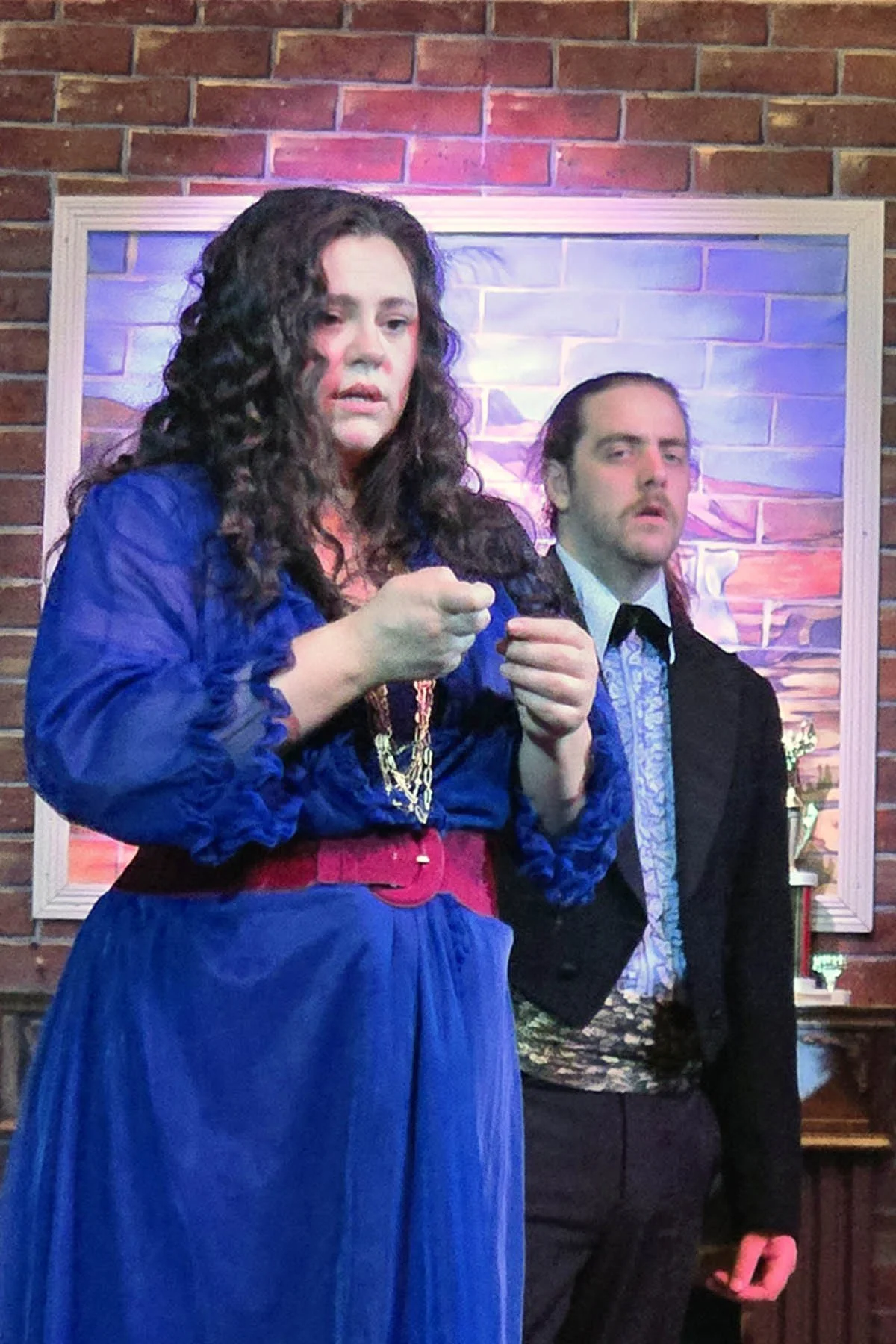
Sarah Denison anchors the production as Margaret Thorne Brent, a character who spends much of the evening surrounded by uncertainty and suspicion. Sarah brings an alluring, occasionally flirtatious quality to the role while never allowing the audience to become fully comfortable with who Margaret really is. Mysterious from her first appearance to her last, she embodies the very structure of the play itself. Just as Perfect Crime continually withholds answers and invites audiences to question what they think they know, Margaret remains an enigma, keeping the other characters and the audience alike in doubt right up until the final moments. In a play built on shifting realities and hidden agendas, Sarah provides just enough information to keep the audience invested while withholding enough to preserve the mystery.
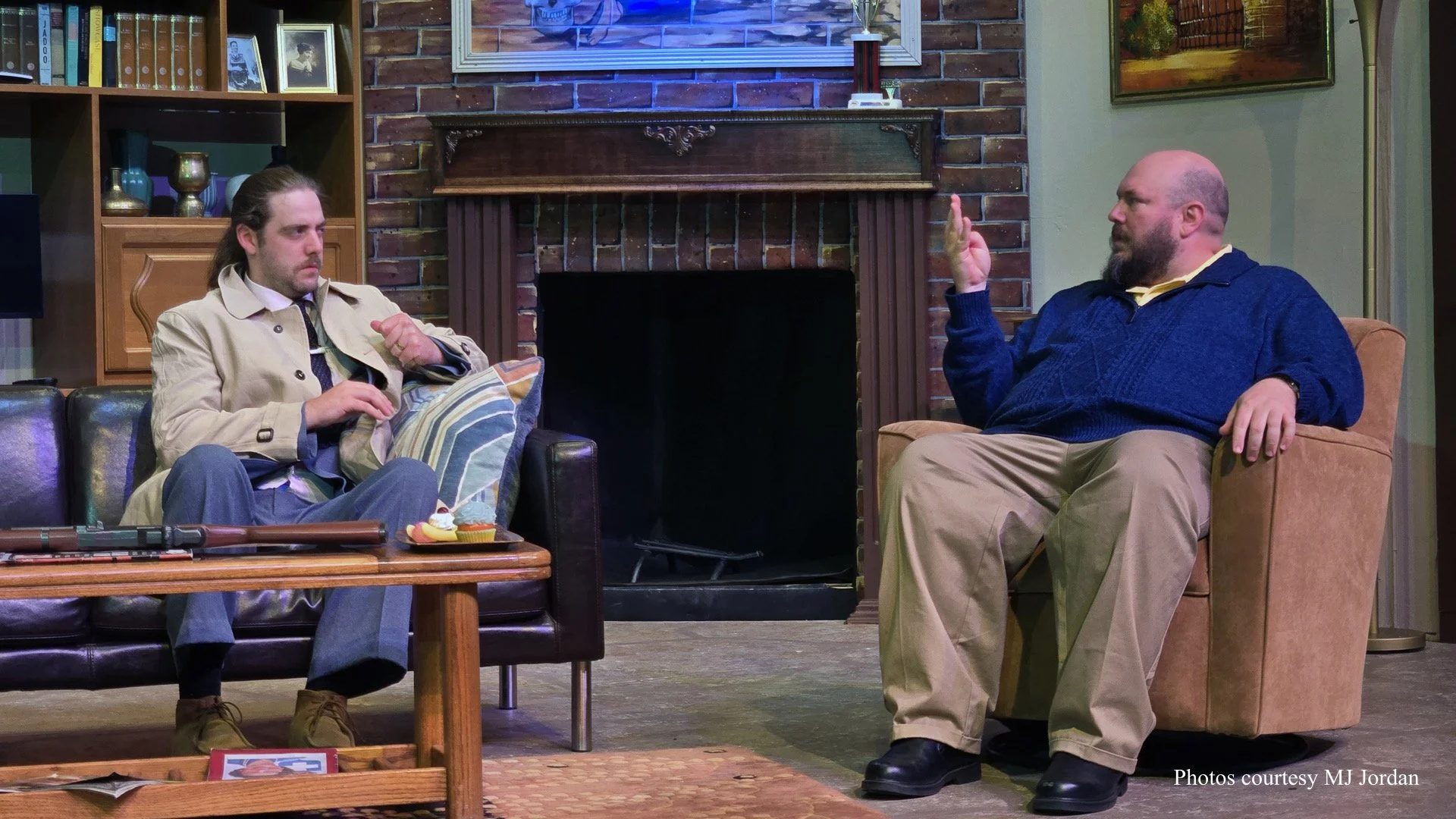
Supporting Sarah’s work as Margaret Thorne Brent is an ensemble that understands the mystery around the mystery. Roderick McMillen stands out as Lionel McAuley. Lionel is the sort of character who immediately puts the audience on edge, and Roderick’s performance leans into that discomfort. His measured delivery and controlled physicality create a character who feels both intelligent and deeply unsettling. There is something of the sociopath about Lionel, but not in an overt or theatrical way. Rather, it emerges through Roderick’s careful choices, the way he carries himself, the precision of his speech, and the sense that he is constantly evaluating everyone around him. Whether Lionel is merely obsessive or something far darker remains part of the play’s mystery, but Roderick ensures that every appearance carries tension. He is the production’s most memorable presence and provides many of its strongest moments.
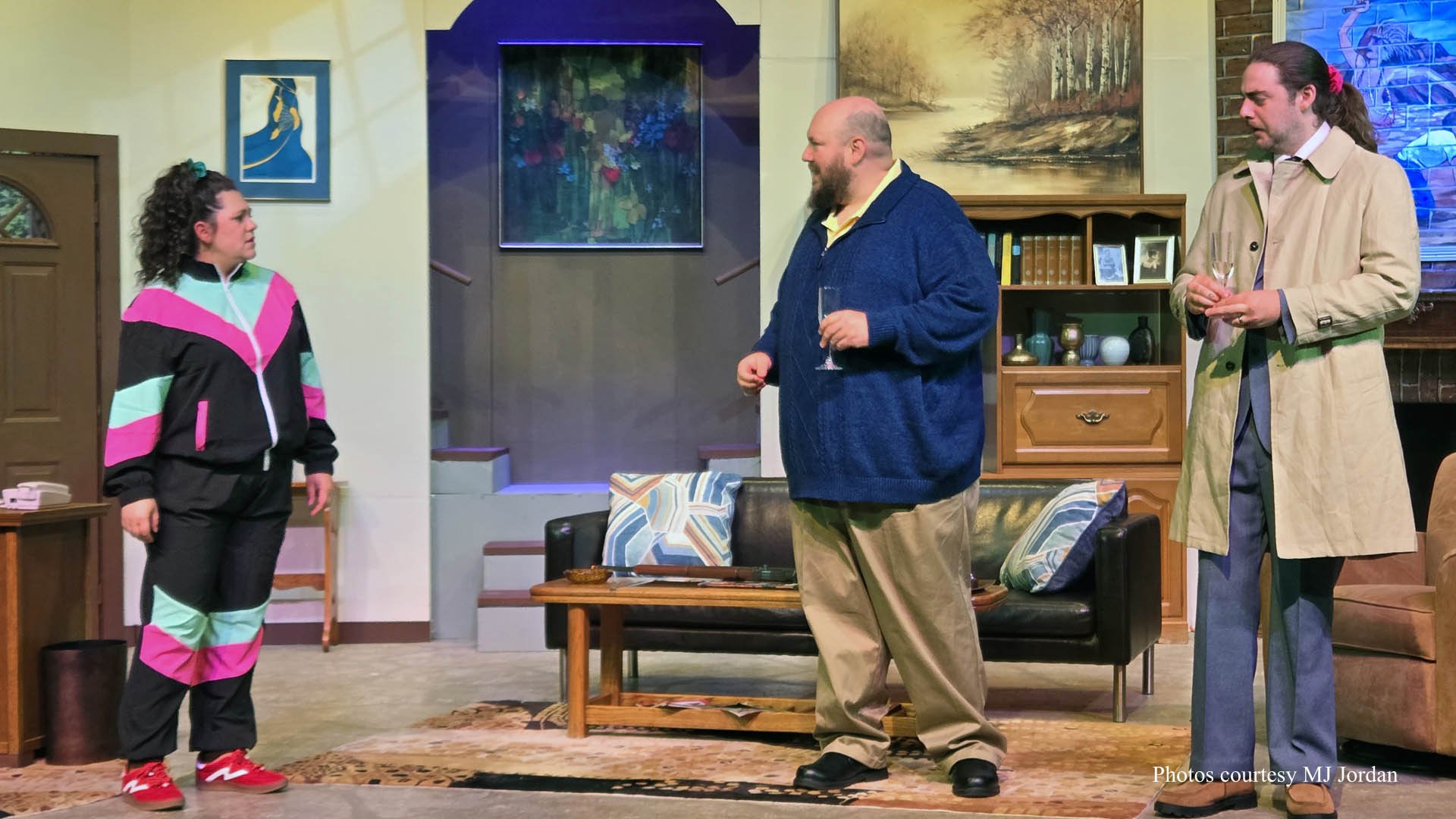
Brandon Miller, meanwhile, brings a nice energy to Harrison Brent, crafting a character who often feels as though he may be concealing more than he reveals, while Peadar Sanchez’s Inspector James Ascher serves as a steady presence attempting to navigate the increasingly tangled web of information before him. Together, the ensemble understands that the mystery works best when answers remain just out of reach, and they maintain that tension throughout the evening.
Visually, the production takes place in an attractive living-room set designed by Gary Fetterplace and Wallace Ross. The details matter here. From the strategically placed doors to the painted brick fireplace and carefully selected furnishings, the environment feels complete. The artwork displayed throughout the room further enriches the space, helping establish both the status and personalities of the people who inhabit it. Rana Teresa Tan’s set decoration work helps transform the stage into a believable home rather than simply a collection of furniture and props.
The technical elements are generally effective, though there were moments involving prerecorded audio that created some uncertainty. Audio from the television and tape recorder was occasionally difficult to discern, but more than that, it was sometimes unclear whether the audience was intended to hear those elements clearly at all. The information conveyed through them is not essential to understanding the plot, but the brief distraction of wondering whether something was being missed momentarily pulled attention away from the action on stage. Fortunately, those moments are infrequent within a production that otherwise does a solid job of supporting the story’s atmosphere.
If Perfect Crime occasionally stumbles, it is less because of the mystery itself than because some character reactions feel amplified beyond what the circumstances seem to warrant. At times, emotional responses appear slightly larger than one might naturally expect, making a few moments feel less fully earned than the carefully constructed uncertainty surrounding them. Those instances are relatively minor, however, within a production that otherwise handles the play’s pacing exceptionally well. Wallace Ross and his cast maintain the constant back-and-forth nature of the script, keeping conversations moving and tensions high while preserving the ambiguity at the heart of the story.
Combined with strong performances, and an attractive, detail-rich production design, Bremerton Community Theatre’s presentation of Perfect Crime delivers the suspense and intrigue that have allowed Warren Manzi’s thriller to captivate audiences for decades. For those who enjoy mysteries that challenge audiences not simply to determine what happened, but to question the very nature of what they’re seeing, Perfect Crime offers an evening of thought-provoking theatrical suspense.
Perfect Crime runs on stage at Bremerton Community Theatre through June 28. For more information, including ticket availability and sales, visit https://www.bctshows.com/.
Photo credit: MJ Jordan