
Stage Review - Wish You Were Here (ArtsWest / Seda Iranian Theatre Ensemble)
Stage Review - Wish You Were Here
Presented By: ArtsWest / Seda Iranian Theatre Ensemble - Seattle, WA
Show Run: June 11 - July 05, 2026
Date Reviewed: Friday, June 12, 2026
Run Time: 1 Hour, 45 Minutes (no intermission)
Reviewed by: Anna Tatelman
When we discuss global conflicts or tragedies and the number of people affected, it’s often difficult for us to comprehend the emotional reality behind those figures. We can wince at the sound of 1,000 displaced or 10,000 deceased, but we can’t empathize with numbers. The numbers can’t let us feel the weight of each person who lost their job, home, sense of security, loved ones, own life – only listening to individual stories can do that.
This is just one of many reasons why ArtsWest’s current co-production with Seda Iranian Theatre Ensemble is so powerful. Their production of Wish You Were Here doesn’t just teach us about the 1979 Iranian Revolution and the aftermath of the next two decades. Far more vitally, it opens up windows of understanding into how the lives and friendships of five Iranian women were forever altered by these socio-political machinations and reverberations.
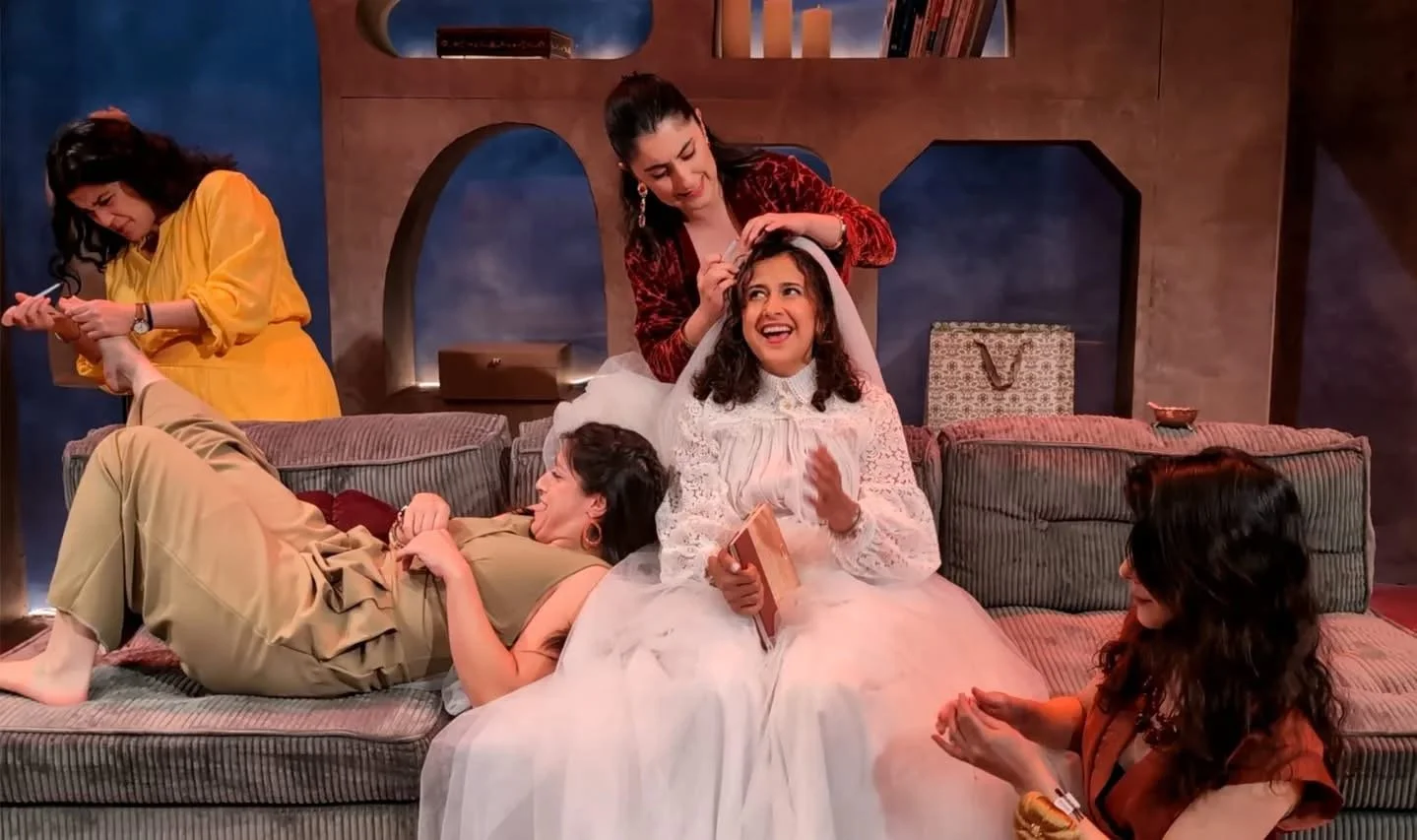
A new play that first debuted in 2022, Wish You Were Here by Sanaz Toossi opens on a lively scene of four women helping a fifth prepare for her wedding. Within the first fifteen minutes, they’ve made multiple crude sex jokes, repeatedly used genitalia slang that I’m frankly not sure I’m allowed to include in my review, and sniffed the bride’s privates to ensure she smells decent for her future husband, laughing and prancing about the room all the while.
Sprinkled throughout this frivolity are moments that reveal the affection between the women and the tender hopefulness of their dreams for their futures: when the friends help the bride (Salme) out of her dress so she can pray, even though they need to leave soon for the wedding venue and none of them are as devout as her; when two of the friends (Rana and Nazanin) fantasize about a shared future in Miami; when one of the women reveals she has a yeast infection and is genuinely worried about how she smells to them. Coupled with the women’s brightly colored and modern clothing (sans the bride, who wears a long white wedding gown and veil), both the script and production do an excellent job immediately showing the audience that this play boldly refuses catering to Western stereotypes about Middle Eastern women being uniformly demure, repressed, and subservient.
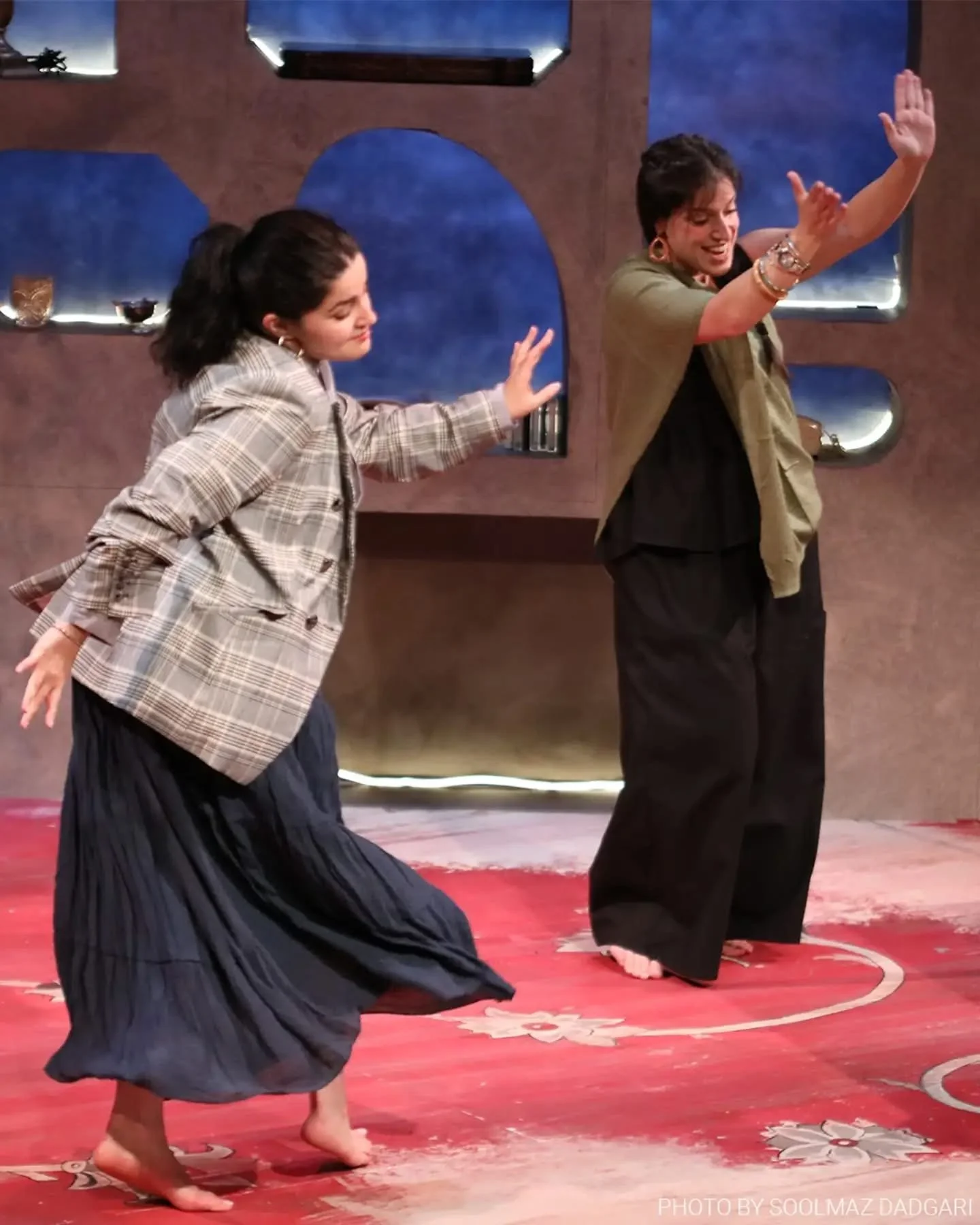
None of the women are ever as happy, joking, or ribbing each other as they are in that first scene. The play spans about fifteen years and doesn’t shy from showing us the cruel realities inflicted upon the women as the Iranian Revolution and fallout occur, from their collective uncertain grief when Rana goes missing to another’s (Zari’s) fear of her husband getting drafted. But the women as individuals – their strengths and flaws, their depth of longing for a better future, their need to still find fleeting moments where they crack vulgar jokes or dance together – stays constant.
Director Naghmeh Samini richly brings all these complexities to life through an excellent sense of pacing and making the transitions into scenes unto themselves. The first transition, for instance, is mostly a joyful dance for all five women beneath strobe-like lighting as they remove the wedding dress from Salme and put it on Zari instead. There’s a pause in the dancing as a radio onstage crackles to life, announcing the departure of the Shah, but as soon as the radio shuts off, the women resume their celebration. Subsequent transitions become increasingly unsettling and dark, such as when siren wails begin and continue even as the lights come up, or when Nazanin isolates herself in the corner of the stage and sobs. Samini’s direction challenges us, like the women, to hold space for both the good and the bad, the women’s bouts of joy flickering through their personal tragedies and national upheavals.
Wish You Were Here features six strong actors who collectively capture both the universalities of female friendships, from the laughing to the emotional intimacy, and the particular challenges they face as Iranian women during a time when their nation increasingly strips away their individual liberties. Although the play starts as seemingly an ensemble piece, over time Nazanin (played by Ainaz Azarhoush) emerges as our main character. Azarhoush beautifully depicts over the course of the show how Nazanin, while always quicker to tease and deflect, more and more carries the world on her shoulders while struggling not to feel anything. Azarhoush’s emotions about Rana’s disappearance are shown especially well through a lingering sense that unvoiced feelings stronger than friendship could have allowed Rana and Nazanin together to chart a whole new joined future in Miami, had those feelings been said far earlier.
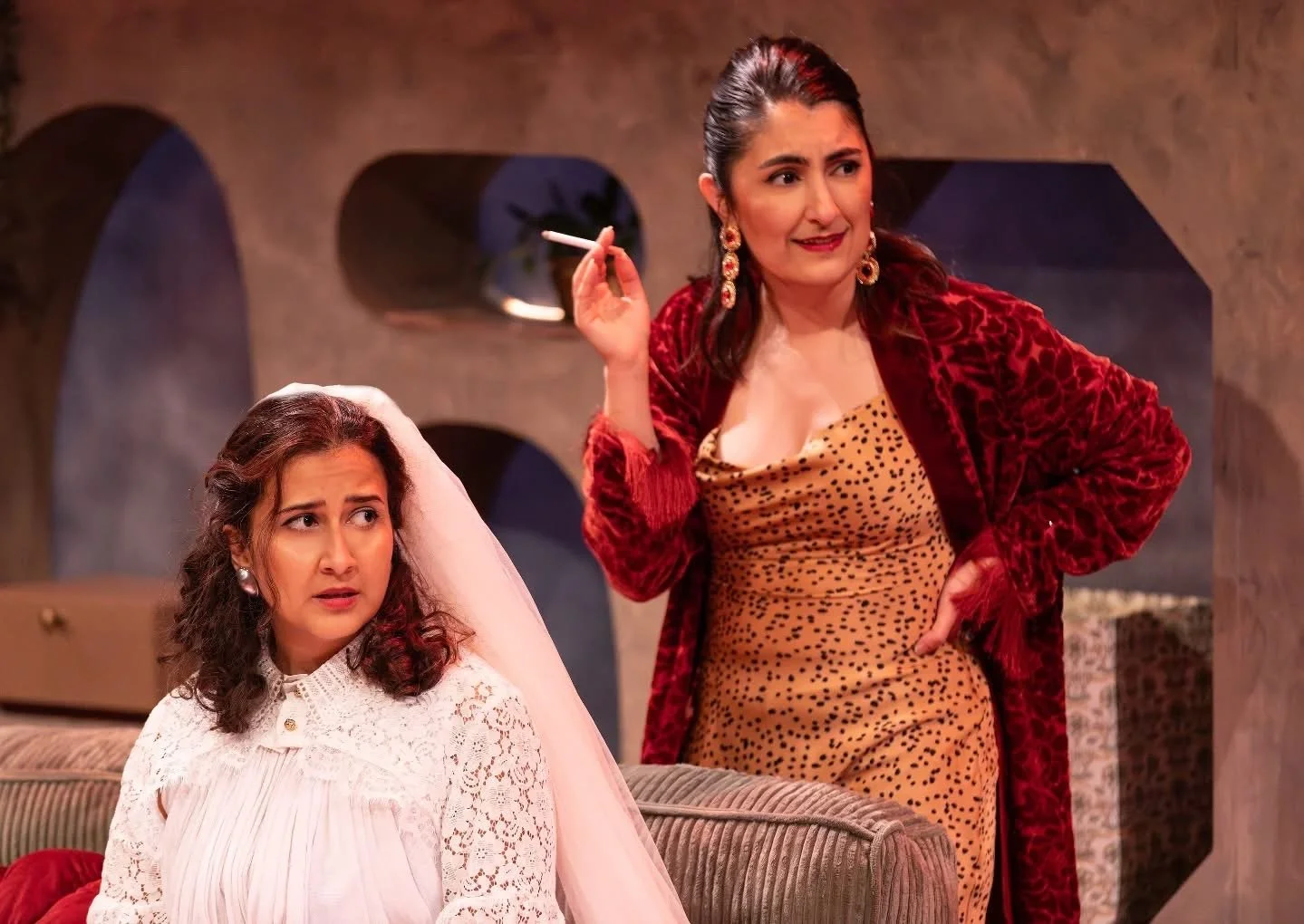
Newsha Farahani as Salme is another standout; Farahani can express multitudes with just a flick of her cigarette or a crease of her brow. Shereen Khatibloo also charts her character Zari’s arc with great nuance, starting as the most flighty of the group but becoming painfully wiser as the revolution and war toss her about. Rounding out the ensemble are Mahshad Zareeizadeh as Shideh, a woman both deeply ambitious about studying medicine in the US but frequently insecure within the group dynamic; Parmida Ziaei as Rana, whose absence of easy joy reverberates throughout the show once her character goes missing; and Azadeh Zanjani as “New Friend,” who makes a stark impression with her single scene by behaving in a way far more reserved and impersonal than Nazanin’s other friends.
Production design elements of Wish You Were Here are of high caliber across the board. The costumes at the top of the show feature bright colors, loose pants, and short skirts. But over time the outfits become less colorful, favoring practical thick coats to preserve heat when the power goes out over short dress hems (costume design by Hannah Larson). Composer and music consultant Babak Khiavchi creates rich musical landscapes during the scene transitions ranging from celebratory bops with hints of contemporary Middle Eastern sounds, to haunting tunes with more stripped down melodies. The intricate set depicts an interior room with many recesses in the walls to hold plants, books, and lamps that can turn off and change colors separate from the other stage lights (set design by Parmida Ziaei; lighting by Ian Evans).
ArtsWest and Seda Iranian Theatre Ensemble’s co-production of Wish You Were Here excels on every level: script, direction, performance, and design. This show depicts what theatre can be at its best: a means of delving into a world we might not otherwise have access to, in real time and space – in this case, the Iranian Revolution and its aftermath, as told through the lives and friendships of five women. Without ever veering toward the bathetic or feeling like a historical lecture, Wish You Were Here grants us the privilege witnessing firsthand our sharp distinctions and surprising similarities to these women who, despite their fictionality, feel startlingly real.
Wish You Were Here, a co-production with ArtsWest and Seda Iranian Theatre Ensemble, runs on stage at ArtsWest through July 5. For more information, including ticket availability and sales, visit www.artswest.org/.
Photo credit: John McLellan