
Stage Review - Fun Home (Bainbridge Performing Arts)
Stage Review - Fun Home
Presented By: Bainbridge Performing Arts - Bainbridge Island, WA
Show Run: October 02 - October 25, 2026
Date Reviewed: Saturday, October 10, 2026
Run Time: 90 Minutes (no intermission)
Reviewed by: Greg Heilman
When Alison Bechdel published her graphic memoir Fun Home: A Family Tragicomic in 2006, she gave readers an intensely personal look at her childhood, the discovery of her own sexuality, and the complicated relationship she shared with her father, a closeted gay man whose inner turmoil ultimately led to tragedy. Adapted for the stage by Lisa Kron and Jeanine Tesori, Fun Home became a groundbreaking and highly successful Broadway musical, winning five Tony Awards in 2015, including Best Musical. What makes Fun Home so extraordinary isn't its subject matter, the music, or the way it tells its story. It's the experience of a daughter looking back on her life, attempting to understand a father she loved but perhaps never truly knew, and discovering that understanding someone doesn't necessarily make their actions any less painful. That contradiction lies at the heart of Bainbridge Performing Arts' production, directed by Troy Wageman and running through October 25, a beautifully performed musical that finds moments of genuine joy and humor within a story of heartbreak, regret, and the consequences of a life spent hiding from oneself.
Based on Bechdel's memoir, Fun Home follows Alison as she looks back on her childhood growing up in a family that operated a funeral home, her college years as she begins to discover her own sexuality, and her adult attempts to make sense of her relationship with her father, Bruce. Rather than following a traditional chronological narrative, the musical moves between three periods of Alison's life, with three actors portraying her at different ages. It's a storytelling device that allows the audience to experience events as they happened while witnessing how those experiences shaped the woman Alison would become.
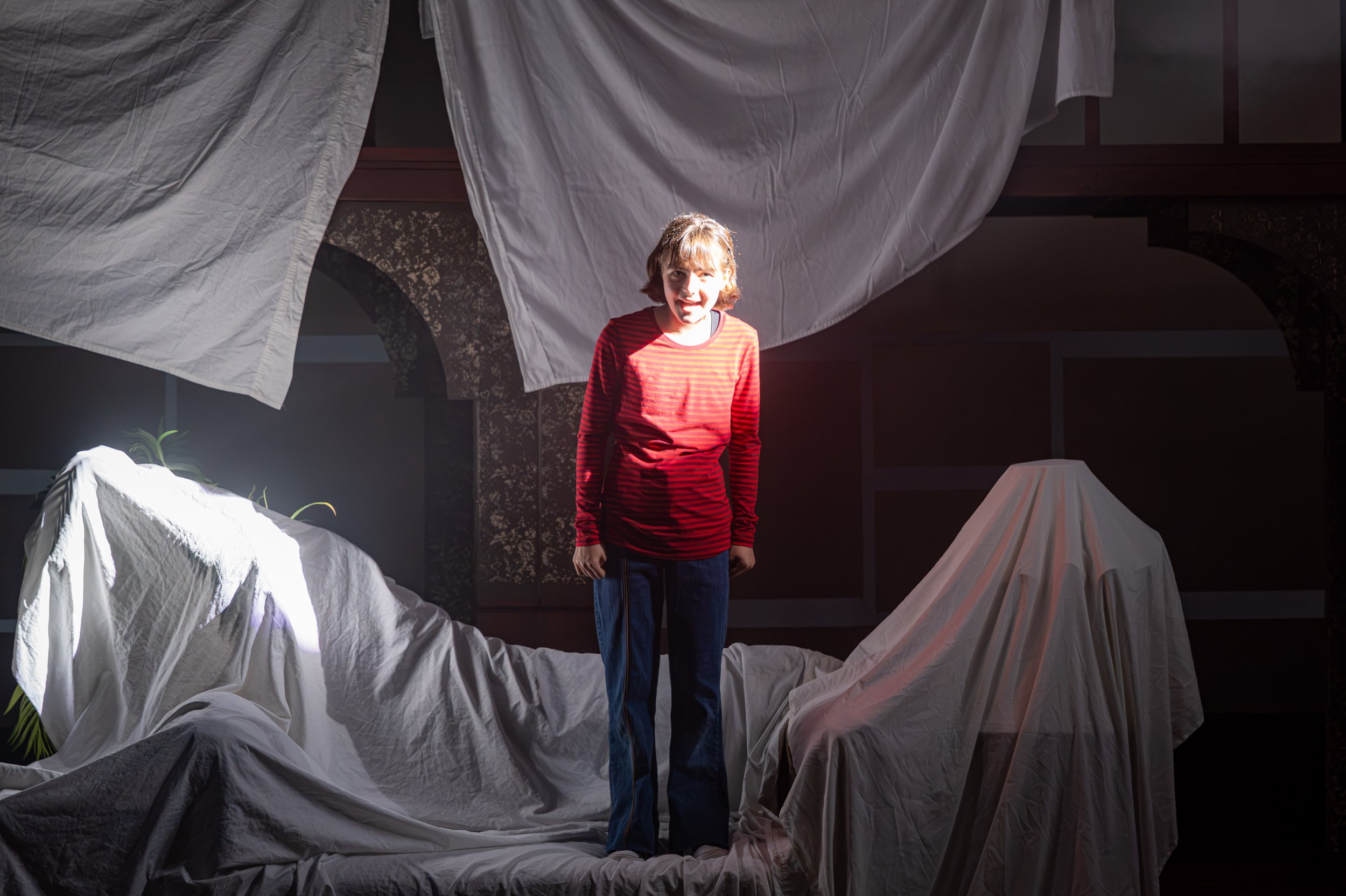
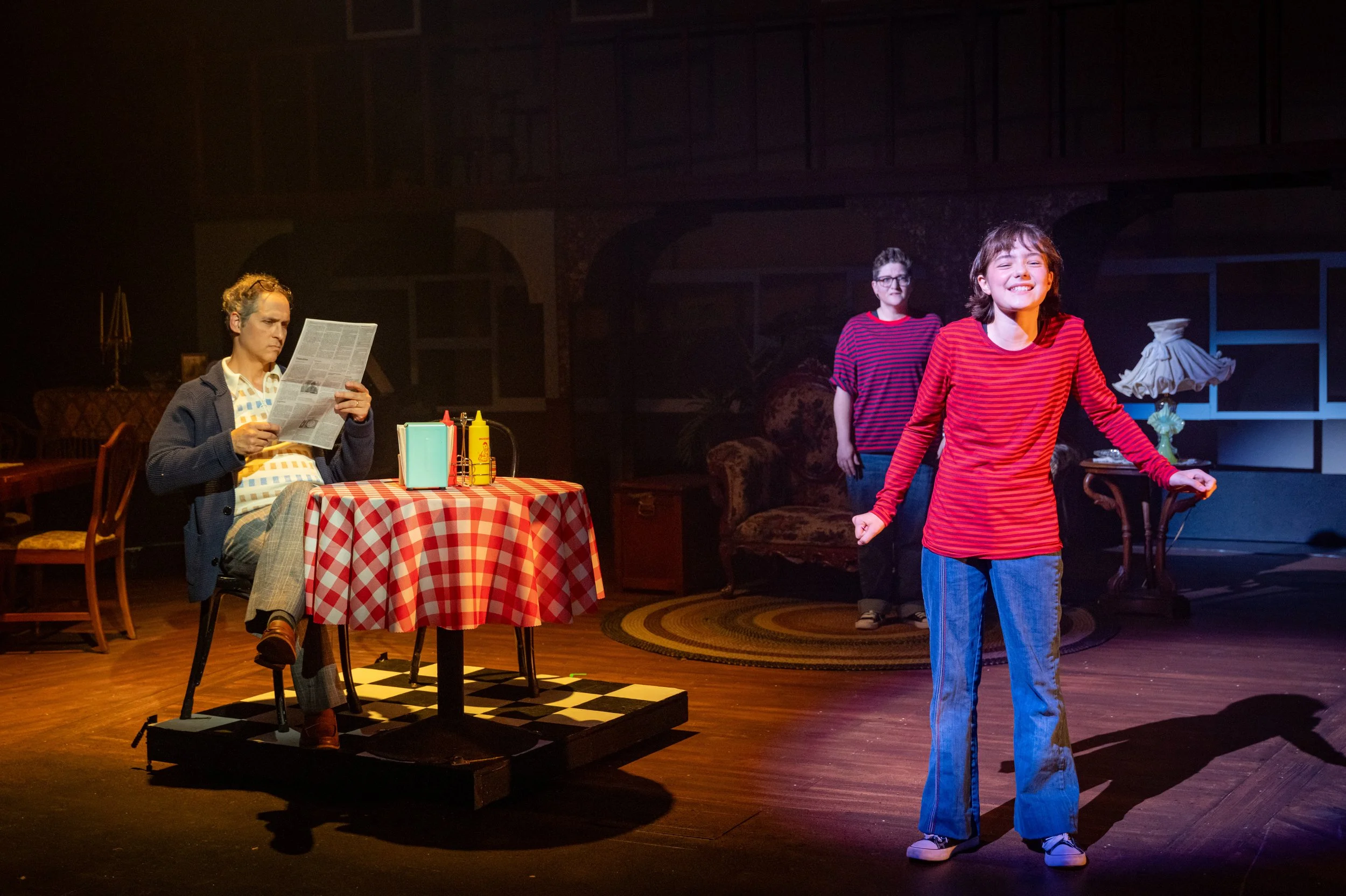
Jasmine Joshua takes on the role of the adult Alison, serving as both narrator and participant as they move through the memories unfolding around the character. Jasmine is wonderfully engaging as Alison, portraying the perspective of someone who has spent years trying to make sense of her childhood. There is a thoughtfulness to their performance, particularly when they watch Alison’s younger selves navigate experiences whose significance they have yet to appreciate. One of the most touching comes during "Ring of Keys," when Small Alison experiences a moment of recognition that will prove pivotal to her understanding of herself. As Nell Edlund performs the number, the look of pride on Jasmine's face is a beautiful reminder that sometimes the most meaningful moments in life are those we don't fully understand until much later.
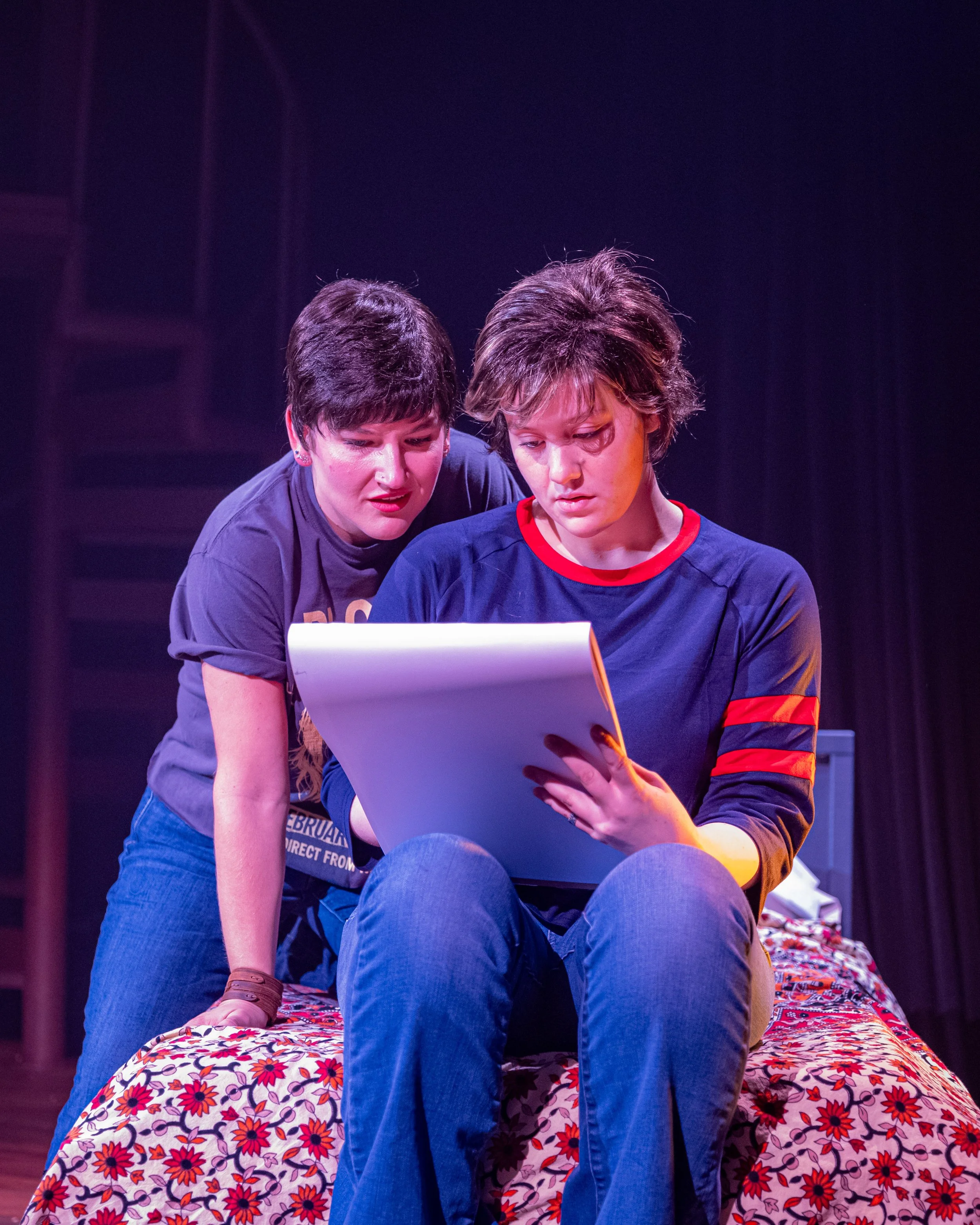
And speaking of Alison, Nell is delightful, bringing an infectious youthful exuberance to the role that makes her childhood discoveries feel genuine. Ava McCallum, meanwhile, portrays Medium Alison during her college years, capturing the nervous energy and uncertainty of a young woman beginning to understand who she is. Ava's performance has an endearing awkwardness, particularly in her interactions with Joan, played by Sarah Conte, whose easy confidence and matter-of-fact personality provide a lovely contrast to Alison's uncertainty. Their relationship leads to one of the production's most entertaining numbers, "Changing My Major," a wonderfully funny and ultimately sweet song that Ava delivers with terrific vocal power and range. Molly Hall's creative choreography adds another layer of humor, making it a delightful celebration of young love and self-discovery.
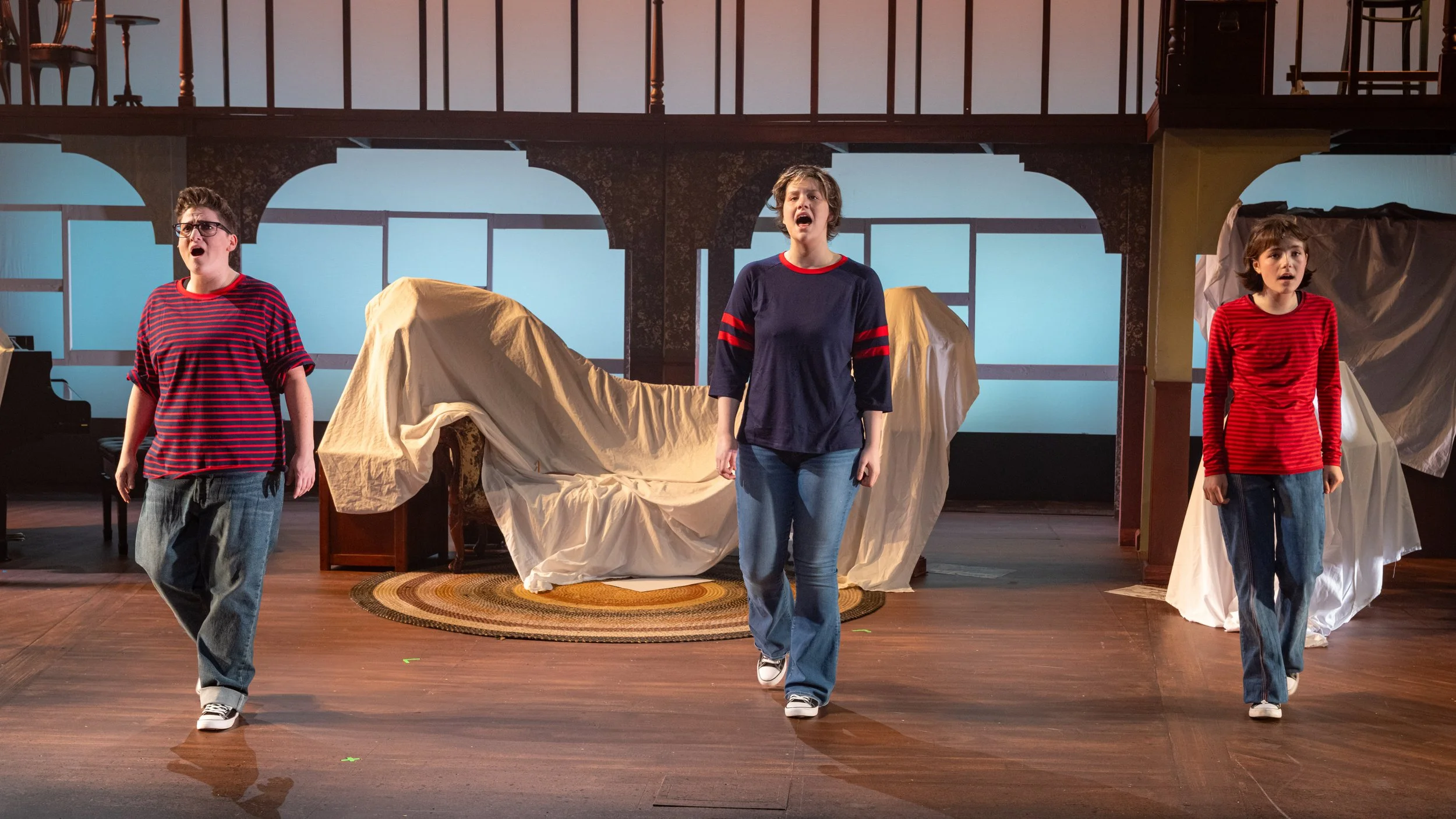
What makes the three portrayals of Alison especially successful is how distinct each feels while remaining unmistakably connected, and considerable credit belongs to Troy for assembling a trio of performers who complement one another so beautifully. Nell’s enthusiasm, Ava’s excitement and anxiety, and Jasmine’s perspective that she carries, of someone who has lived through it all, add up to a lifetime of experiences that feel congruous, rather than individual. Each actor brings something uniquely her own to the character, yet there's never a question that we're watching the same person at different points in her life. Vocally, all three are fantastic singers on their own, but hearing their voices together is something special. Their harmonies are beautiful, and the closing number, "Flying Away," brings their three perspectives together in a gut punch of grief and longing. It's a stunning culmination of Alison's journey, as past and present converge in a moment that is as musically beautiful as it is devastating.
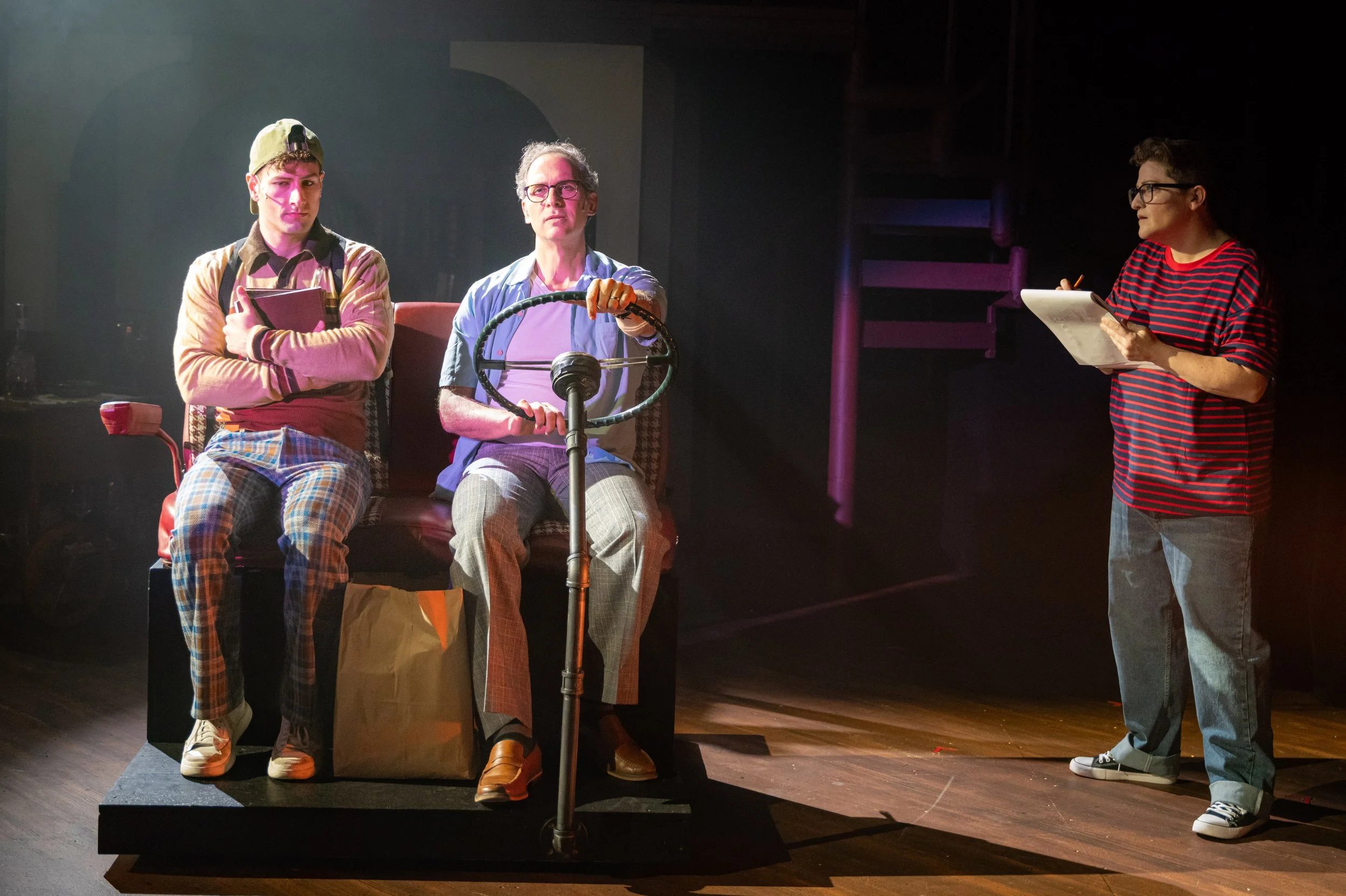
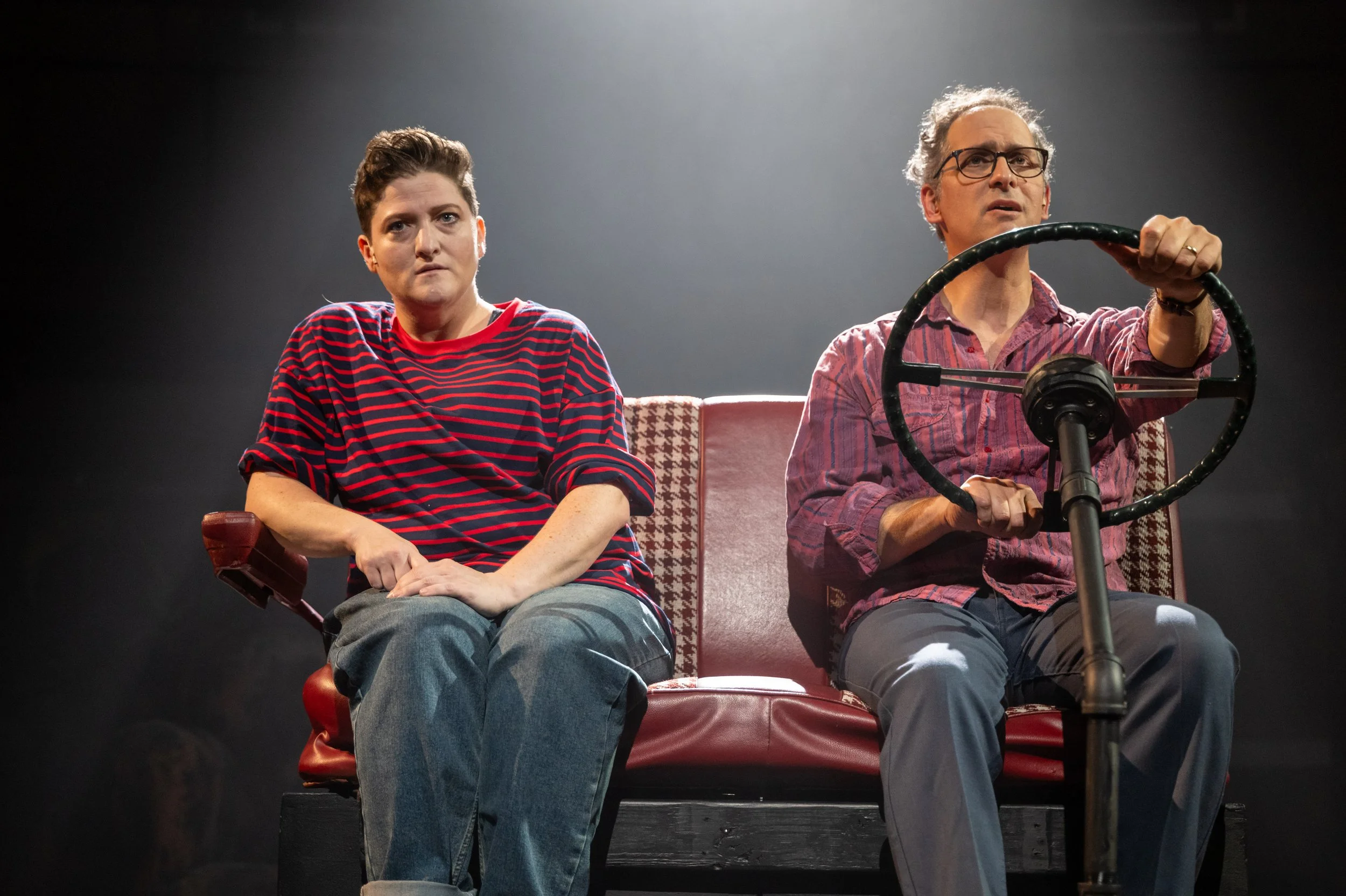
Jasmine also delivers one of the production's most memorable musical moments in "Telephone Wire," sharing the stage with Jason Gingold as Bruce in a scene that captures the aching distance between father and daughter. There is a pleading quality to Jasmine's voice, a growing desperation as Alison attempts to reach her father in a way she never quite managed when she had the chance. Jasmine’s singing is exceptional, but it's the urgency behind every phrase that makes the number so affecting. Jason's restrained responses only heighten the tension, creating a scene in which everything Alison wants to say seems to collide with everything Bruce cannot bring himself to reveal. It's a remarkable piece of storytelling through song, and one of the production's true achievements.
There are relatively few actors from whom I learn something new every time I see them on stage, but then there’s Jason Gingold. Since first seeing him in Hay Fever with inD Theatre more than five years ago, I've watched him reveal new dimensions of his abilities with each successive role. From The Foreigner at As If Theatre to Outside Mullingar at Circle of Fire Theatre, Jason has demonstrated a seemingly limitless capacity for dramatic expression. And just when I thought I'd seen everything he had to offer, along comes Fun Home. For starters, this is the first time I've seen Jason in a singing role, and while I wasn't expecting him to be quite so accomplished vocally, I should have known better. His singing is excellent, with impressive power and range, but it's his portrayal of Bruce's complicated inner life that makes this performance stand out among his other work.
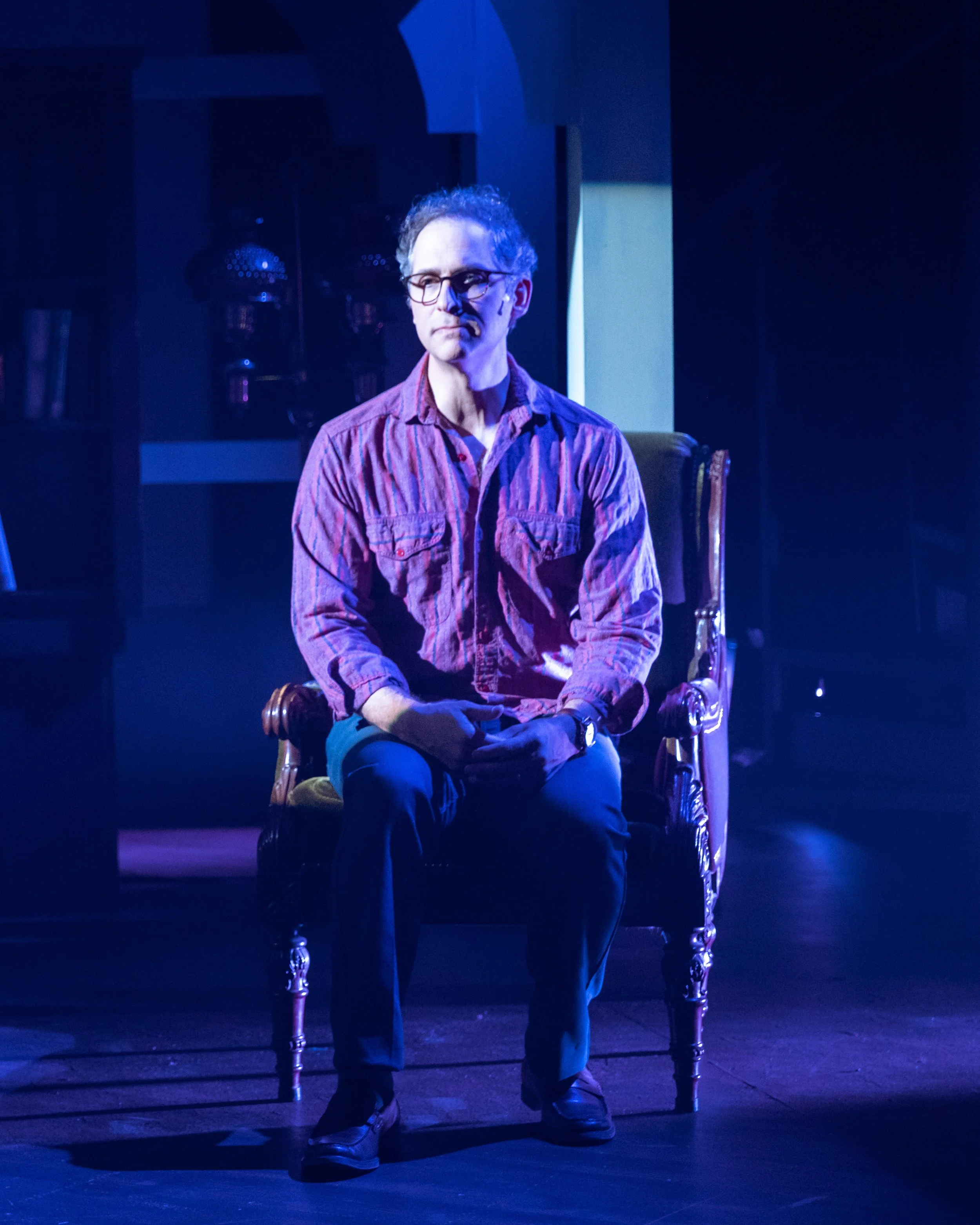
As Bruce, Jason portrays a man whose outward behavior can be as difficult to watch as the suffering he conceals. Stern, demanding, and frequently short with his family, Bruce can be downright unlikable, yet there are moments, particularly in his interactions with Alison during her college years, when a softer, more affectionate side emerges. I didn't think it was possible to feel such profound sympathy for a character while simultaneously coming so close to despising him, but that's precisely the contradiction Jason creates. Bruce is a deeply troubled man, and Jason keeps that turmoil simmering beneath the surface, allowing what might best be described as "the enemy within" to come up for air every so often. He's fighting a battle with himself, one he has spent his entire life trying to conceal from everyone around him, until the burden becomes too much to bear.
The result is a performance that moves from anger to tenderness, embarrassment to detachment, and hurt to sadness, sometimes within a single scene. Even in Bruce's quieter moments, there's an underlying desperation evident in Jason's mannerisms, his reactions, and the things he chooses not to say. As Bruce's carefully constructed defenses begin to fail, Jason allows that internal struggle to become increasingly visible without ever making the transition feel forced. Just when I think I've seen Jason reach every possible emotional mark, he finds another, taking Bruce to places I hadn't imagined. It's a performance that leaves the audience speechless and, for me, sets a new standard for an actor who has been raising his own bar for years.
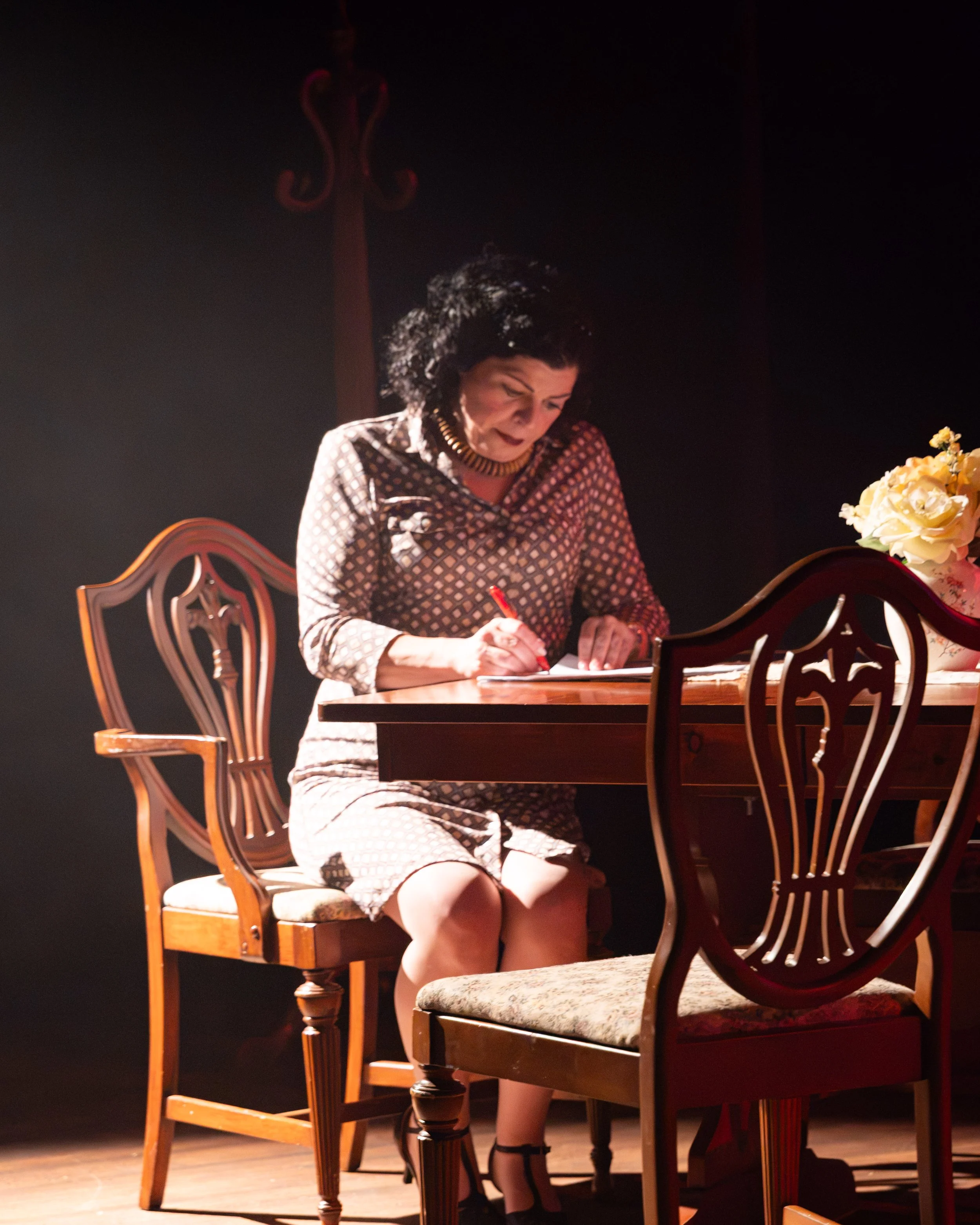
Shawna Avinger is equally compelling as Helen, Bruce's wife and a woman who has learned to live within the complicated boundaries of their marriage. There is a quiet resignation to much of Shawna's performance, a sense of someone who has spent years managing the consequences of choices she did not entirely make. Yet beneath that composure lies tremendous hurt, and Shawna brings it to the surface with extraordinary sensitivity. Her performance of "Days and Days" is particularly moving, her beautiful voice carrying the sadness and exhaustion of a woman looking back on a life shaped by compromise. It's a heartbreaking moment, delivered with a restraint that makes it all the more affecting.
The supporting cast also contributes significantly to the production's high level of qualitydf. David Naber takes on multiple roles, including Roy, Mark, Pete, and Bobby Jeremy, moving between the different characters who populate Alison's memories. Vivien Messenger and Jojo Reinitz bring youthful energy to the roles of John and Christian, Alison's brothers, and the children's musical numbers are among the show's many pleasures. "Come to the Fun Home," in particular, provides a welcome dose of humor and showcases the confidence and talent of the younger performers. The ensemble also shines in "Raincoat of Love," a colorful, exuberant number featuring wonderful harmonies and an infectious energy that provides a striking contrast to the darker currents of the story.
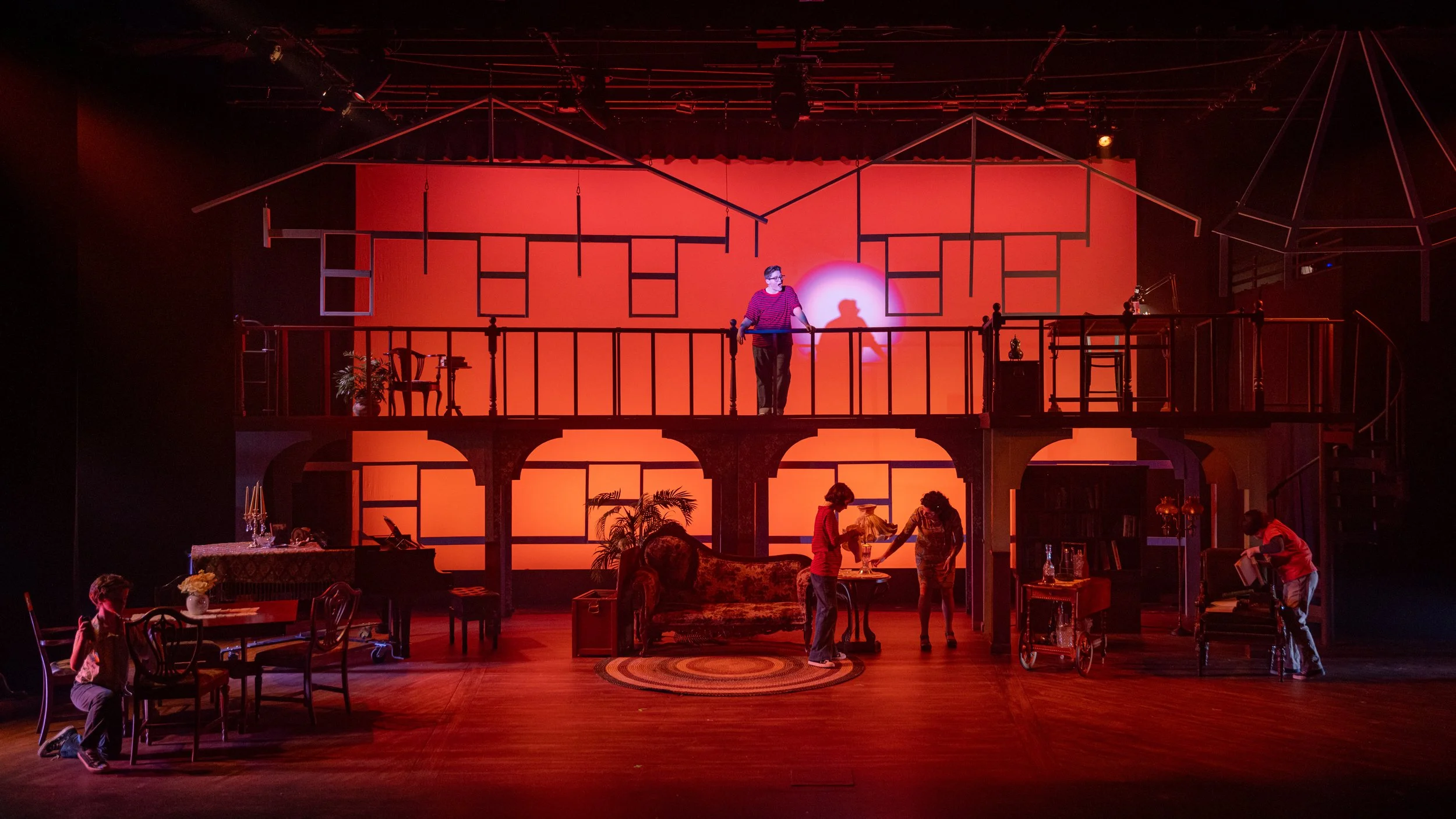
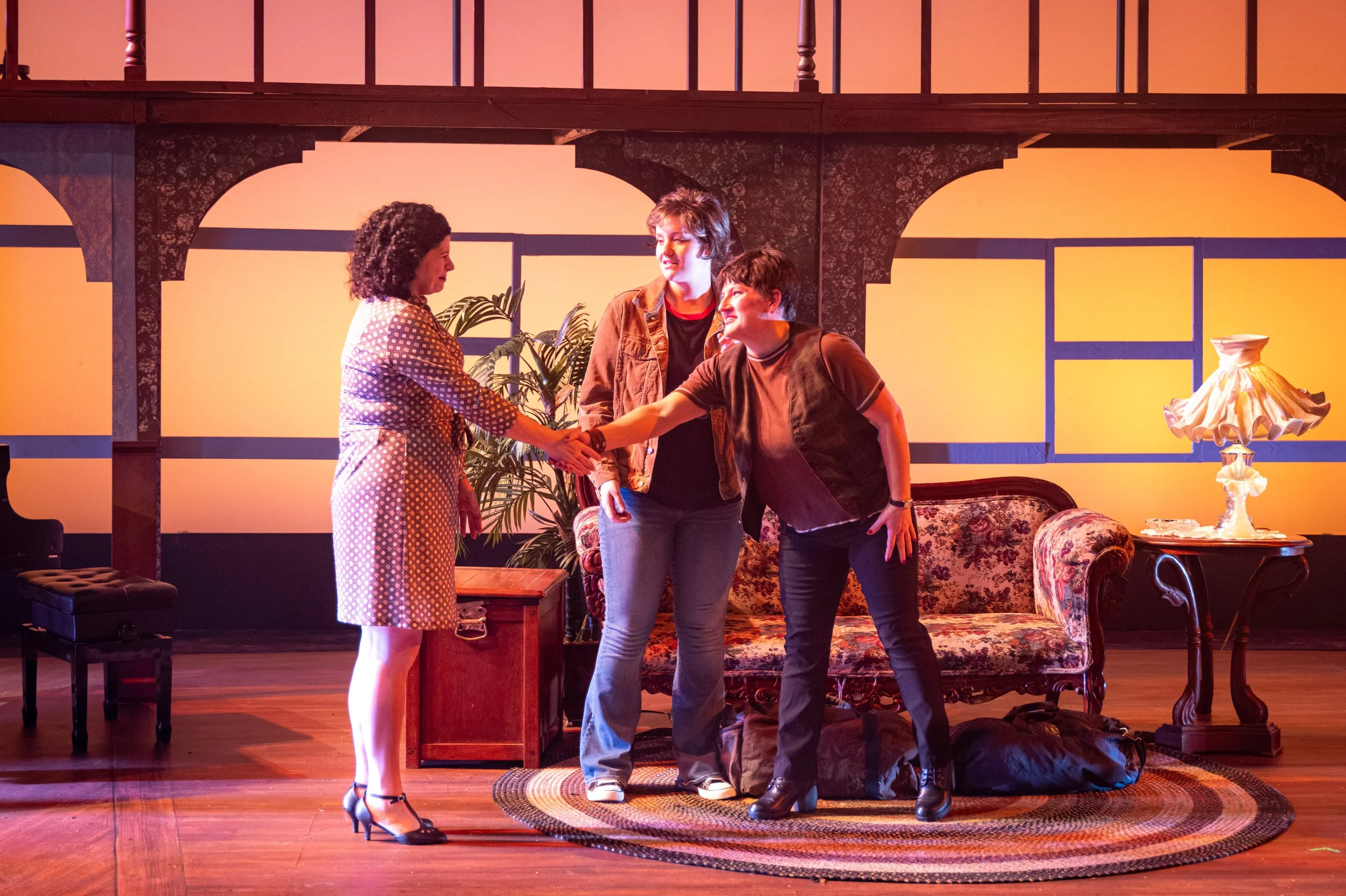
Visually, the production makes excellent use of the Bainbridge Performing Arts stage. Scenic designer Marti Inmon creates a setting that suggests the Bechdel family home without requiring every room or location to be represented literally. Furniture and scenic elements are arranged across the stage, with the outline of the house providing a visual framework for the memories unfolding within it. The design allows the action to move fluidly between different rooms, locations, and periods, reinforcing the idea that these are not simply scenes from the past but pieces of a life being reconstructed through memory.
Eli Backer's lighting design is one of the production's most effective storytelling tools, doing far more than simply illuminating the action. At its most fundamental, carefully focused spotlights isolate individual scenes and define the various spaces within the Bechdel home, allowing multiple locations to coexist on stage without the need for elaborate scenic changes. But it's Eli's use of color, particularly across the rear of the stage, that gives the design much of its impact. Changes in hue and intensity transform the atmosphere from one scene to the next, sometimes subtly reinforcing the mood and at other times signaling a more pronounced shift in the story. One especially effective sequence places Helen in the dining room and Bruce in the library, with the lighting emphasizing the coldness separating the two characters. Another memorable example comes during Bruce's time in New York with the children, where the lighting establishes the setting while contributing significantly to the tone of the scene. The transitions between the illuminated playing areas and the colors and projections along the back of the stage are beautifully handled, creating a visual language that complements the musical's movement through time and memory.
Dawn Janow's costume design offers another thoughtful contribution, particularly in the way the three Alisons are visually connected. Although each represents a different stage of life, their coordinated costumes, right down to their matching sneakers, provide a subtle but effective reminder that these are three versions of the same person. It's a small detail, but one that becomes increasingly meaningful as their stories come together.
Musically, Fun Home is in excellent hands under the direction of Will Sanders, who also performs on keyboards. The live orchestra brings warmth and texture to Jeanine Tesori's score, supporting the actors without overwhelming the intimacy of the story. Shawna's work as vocal director is evident in the quality of the individual performances and, perhaps even more impressively, the ensemble harmonies. From the playful exuberance of the children's numbers to the demanding solos and the beautiful blending of the three Alisons, the quality of the music and consistency of the balance endures from start to finish.
Just as important to the storytelling is Molly's choreography, which serves as an essential device in the establishment of each scene. Her work is never simply about giving the actors something to do during a musical number, but about using movement to help tell the story. In "Come to the Fun Home," the choreography captures the playful enthusiasm of the Bechdel children, turning their macabre family business into an amusing bit of childhood showmanship. "Changing My Major" takes a completely different approach, using movement to express Medium Alison's nervous energy and the wonderful awkwardness of a young woman overwhelmed by her first experience with love. Then there's "Raincoat of Love," where Molly embraces the number's joyful spirit with exuberant movement and an almost infectious optimism, making the transition into the darkness of "Clueless in New York" all the more striking. It's a wonderful example of how choreography can shape the audience's experience, guiding us through the show's shifts in tone without ever feeling intrusive. From the lighthearted to the unsettling, Molly's work is integral to the success of these scenes, demonstrating that movement can be just as important to the telling of a story as the dialogue or music.
There is plenty of humor in Fun Home, and more than a few moments of genuine joy, but it's the honesty with which Bainbridge Performing Arts approaches Alison Bechdel's story that makes this production so memorable. Under Troy Wageman's direction, Jasmine Joshua, Ava McCallum, and Nell Edlund create three beautifully connected versions of Alison, their individual performances coming together in a stunning finale that captures the lasting influence of childhood and the difficulty of understanding those closest to us. Jason Gingold delivers an extraordinary portrayal of Bruce, a father whose struggle with his own identity makes him both heartbreaking and, at times, nearly impossible to like, while Shawna Avinger brings a quiet strength and beautifully expressive voice to the role of Helen.
With a superb cast, an excellent orchestra, and a creative team whose lighting, scenic design, costumes, and choreography elevate every aspect of the storytelling, Bainbridge Performing Arts delivers an exceptional production of Fun Home. It's a musical that reminds us that the people closest to us are often the most difficult to understand, and that the memories we carry from childhood can take on entirely new meaning as we grow older. Beautifully performed, thoughtfully staged, and at times absolutely heartbreaking, this is a production that will stay with you long after the final curtain.
Fun Home runs on stage at Bainbridge Performing Arts through October 25. For more information, including ticket availability and sales, visit https://www.bainbridgeperformingarts.org/.
Photo credit: Adam Othman