
Stage Review - Little Shop of Horrors
Presented By: SRO Theatre - Yelm, WA
Show Run: October 02 - October 25, 2026
Date Reviewed: Saturday, October 24, 2026
Run Time: 2 Hours (including a 15-minute intermissions)
Reviewed by: Greg Heilman
How many musicals can any of us name that combine science fiction, horror, comedy, and a surprisingly touching love story as well as Little Shop of Horrors. With a book and lyrics by Howard Ashman and music by Alan Menken, the musical has entertained audiences for more than four decades, proving that even a story about a man-eating plant from outer space can have plenty of heart. SRO Theatre brought this classic musical to the Yelm High School Performing Arts Center in a production directed by Charles Phillips that closed October 25. With some imaginative staging, enjoyable performances, and a company that clearly understands the peculiar humor of the material, this Little Shop of Horrors offered an entertaining visit to Skid Row.
Based on Roger Corman's 1960 film, the musical follows Seymour Krelborn, a socially awkward employee at Mushnik's struggling flower shop, whose discovery of a mysterious plant offers the promise of fame, fortune, and perhaps even the affection of his coworker Audrey. As we all know, nothing comes cheap! The plant, which Seymour names Audrey II, has an appetite that ordinary plant food cannot satisfy. As its demands become increasingly difficult to accommodate, Seymour finds himself facing a series of moral choices that grow more consequential with every feeding. It's an absurd premise, but beneath the comedy and increasingly outrageous circumstances lies a story about ambition, insecurity, and the lengths people will go to escape their circumstances.
Charles establishes the atmosphere of Skid Row early, creating a sense of a busy urban neighborhood through the movement of the performers and the sounds of traffic and street activity. The opening number introduces the audience to a world populated by people who dream of something better, even as their surroundings seem determined to keep them exactly where they are. I like the energy of these early moments and they do nicely to set the stage for the increasingly bizarre events that follow.
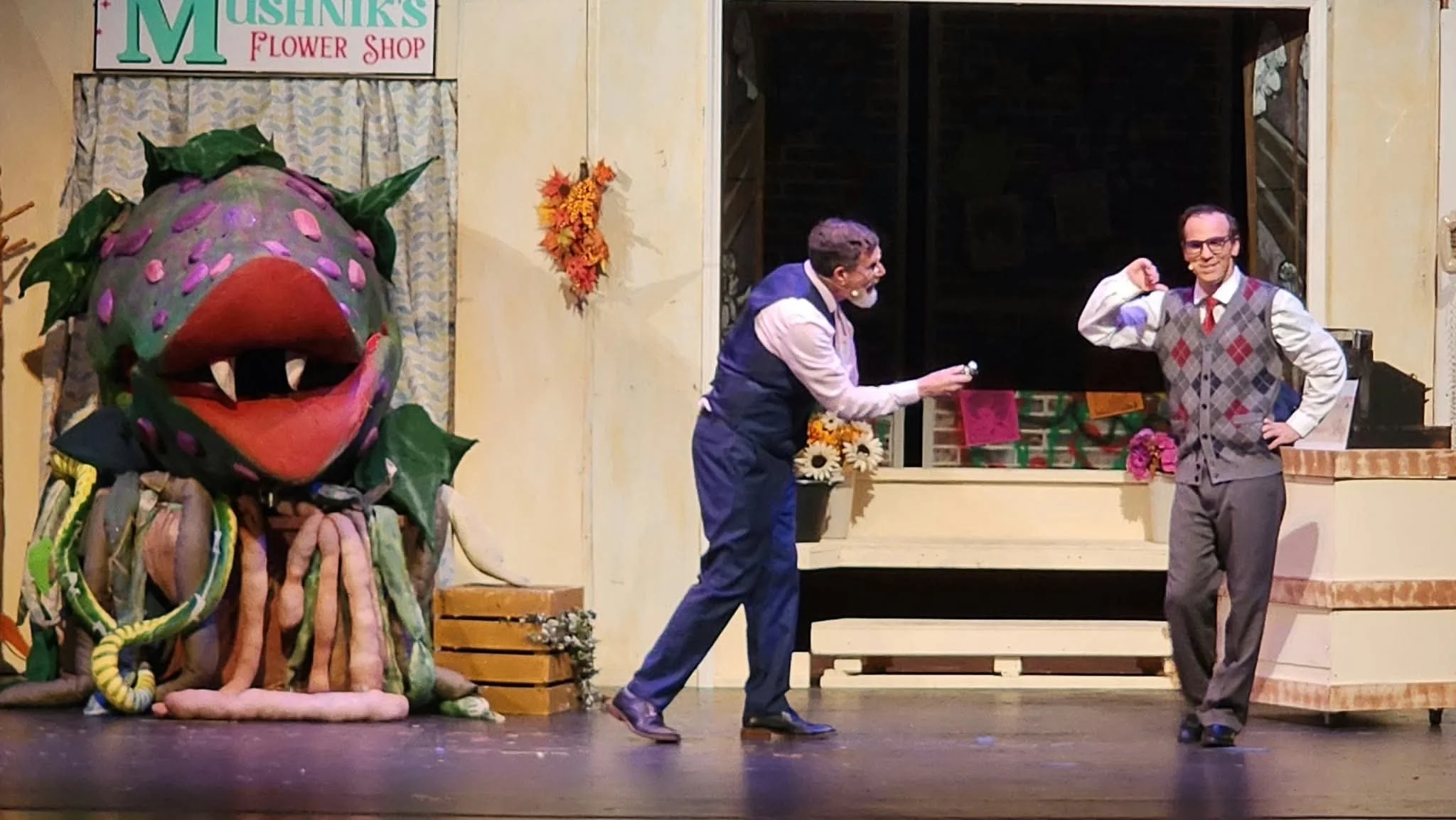
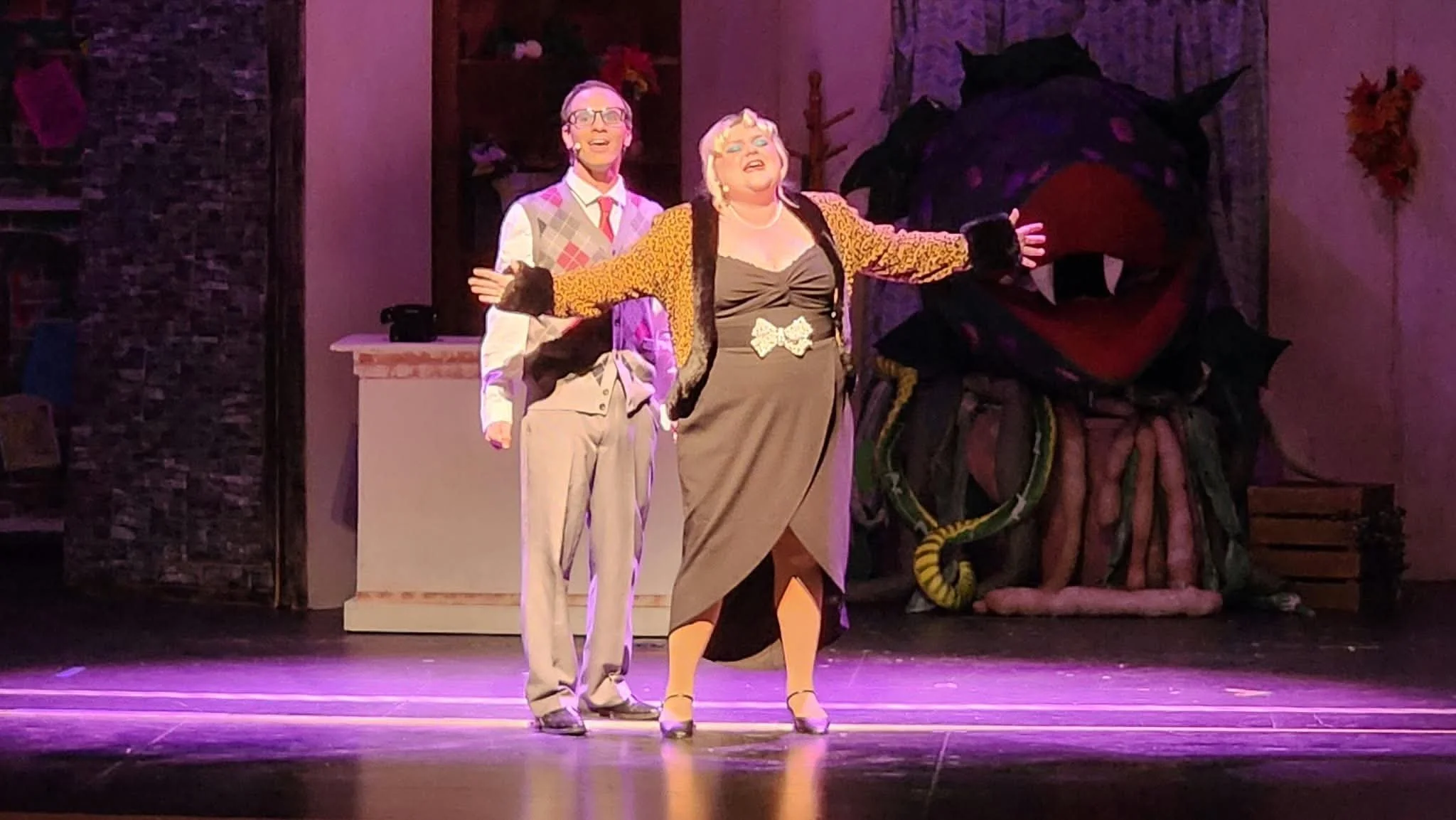
Travis Martinez takes on the role of Seymour, bringing an effective characterization to the awkward and well-meaning young man whose ambitions eventually outgrow his better judgment. Travis captures Seymour's insecurity and social discomfort, creating a character whose questionable decisions are understandable even when they become increasingly difficult to defend. His acting is generally successful, though maintaining that characterization appears to present some challenges during the musical numbers. At the performance I attended, there were occasions when notes were missed or not fully sustained, making me wonder if Travis was working too hard to preserve Seymour's distinctive character while singing. It's an understandable artistic choice, but one that occasionally comes at the expense of the vocal performance.
As Audrey, Haley Paine delivers one of the production's strongest performances. Haley understands the character's combination of vulnerability, optimism, and resignation, creating an Audrey whose dreams of a better life feel sincere despite their wonderfully modest ambitions. Her accent is consistent and convincing, and her vocal performance demonstrates excellent control, phrasing, and an ability to communicate the emotional content of the music without sacrificing the character. She's particularly effective in "Suddenly Seymour," bringing warmth and conviction to a number that represents an important emotional turning point in the story.
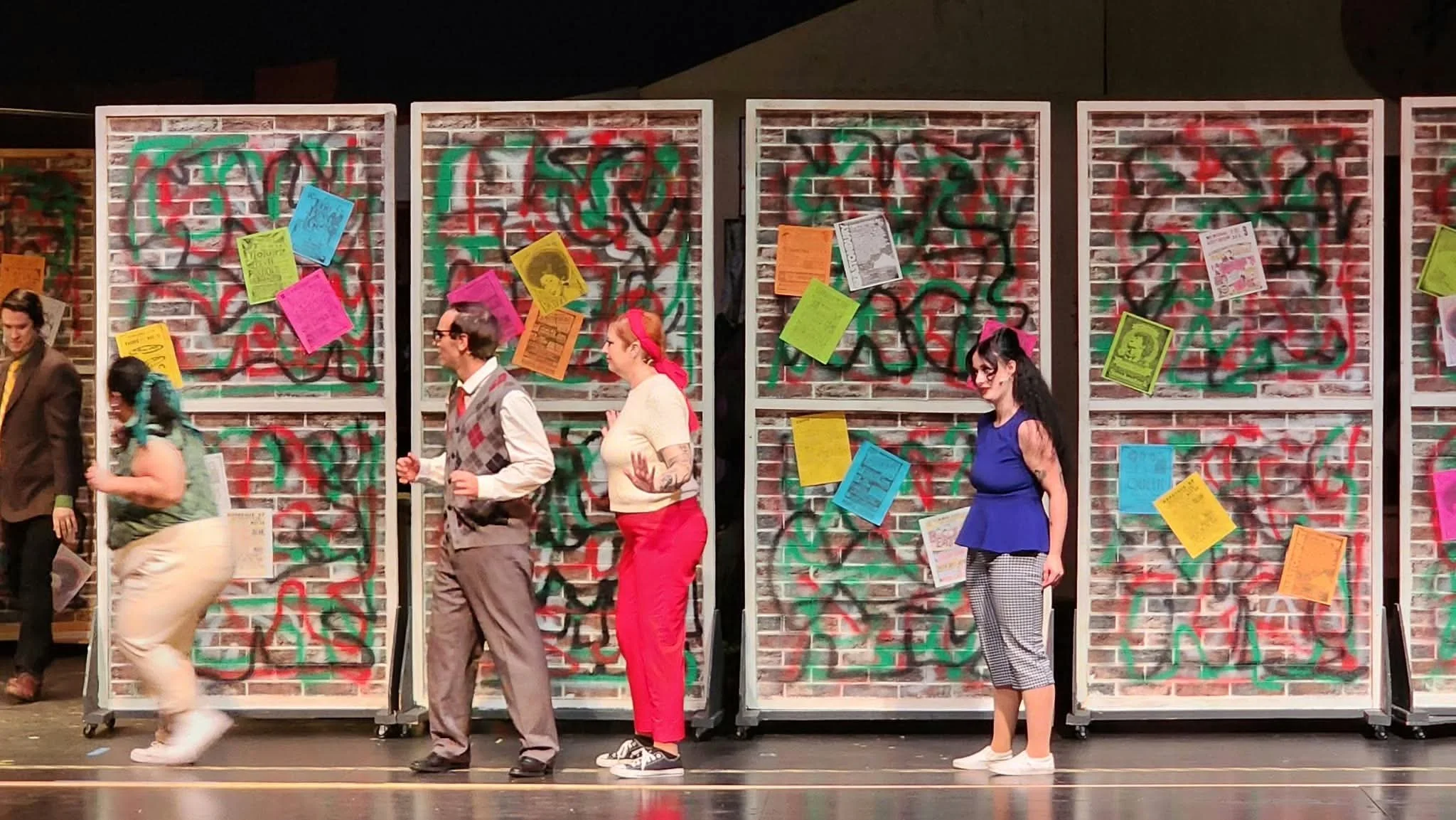
It's her performance of "Somewhere That's Green," however, that provides one of the musical's most memorable sequences. Beautifully sung, the number also benefits from some especially creative staging. Much of Erich Raudebaugh's scenic design relies on rotating panels that transform the playing space from one location to another. On one side, they resemble the brick walls of Skid Row, but as Audrey begins imagining her ideal future, those same panels turn to reveal a suburban home, complete with a yard and white picket fence. In front of this transformation, Seymour and a stand-in for Audrey dance together, their movements creating the impression of a fantasy unfolding within the song. It's a delightful visual interpretation of Audrey's aspirations, and the combination of Haley's singing, Nyah Hart's choreography, and the scenic transformation captures both the humor and genuine sweetness of the moment. It's also an excellent example of the quality and creativity of the production team, whose work throughout the show demonstrates an understanding of how to make the most of the available theatrical resources.
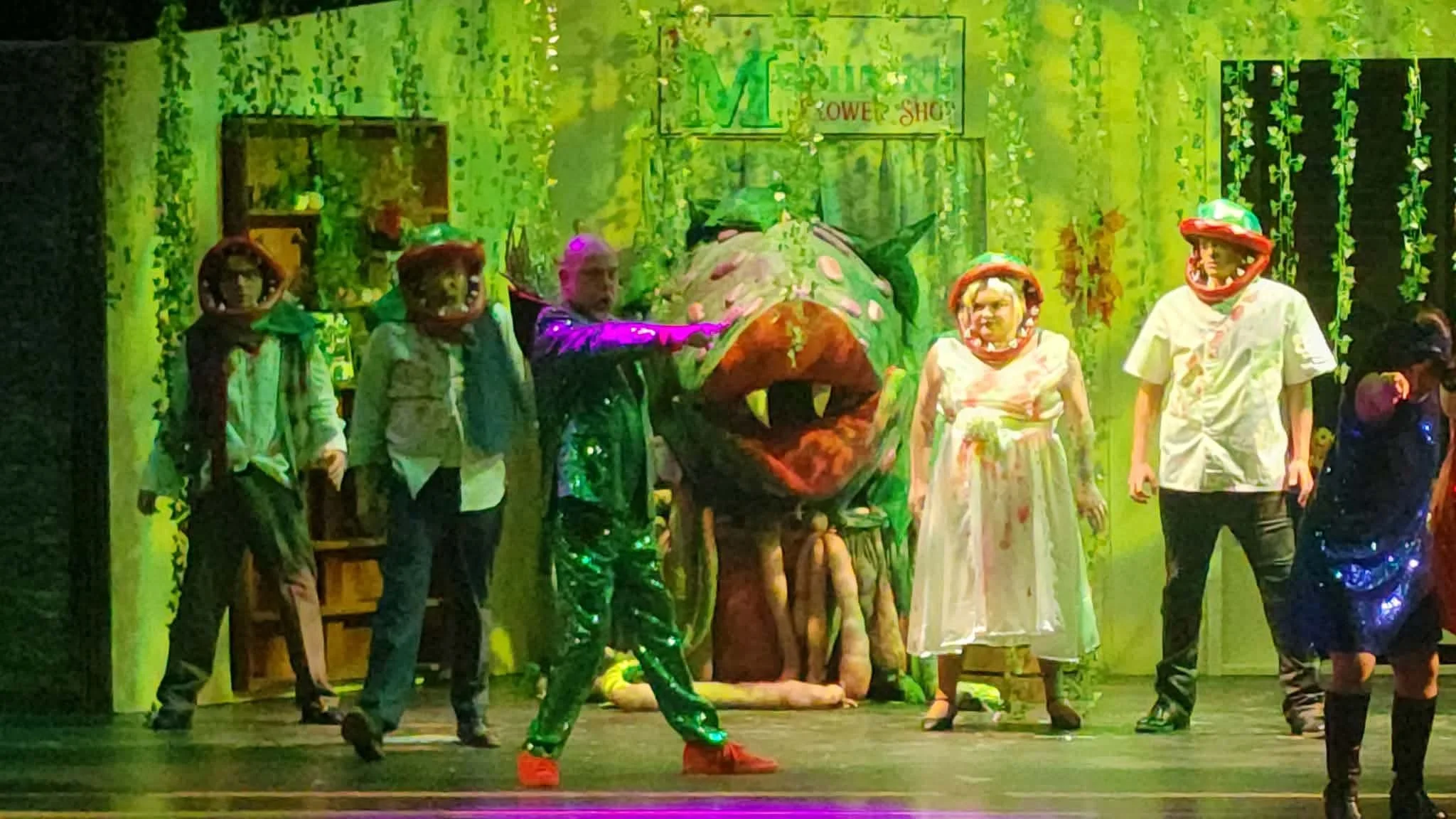
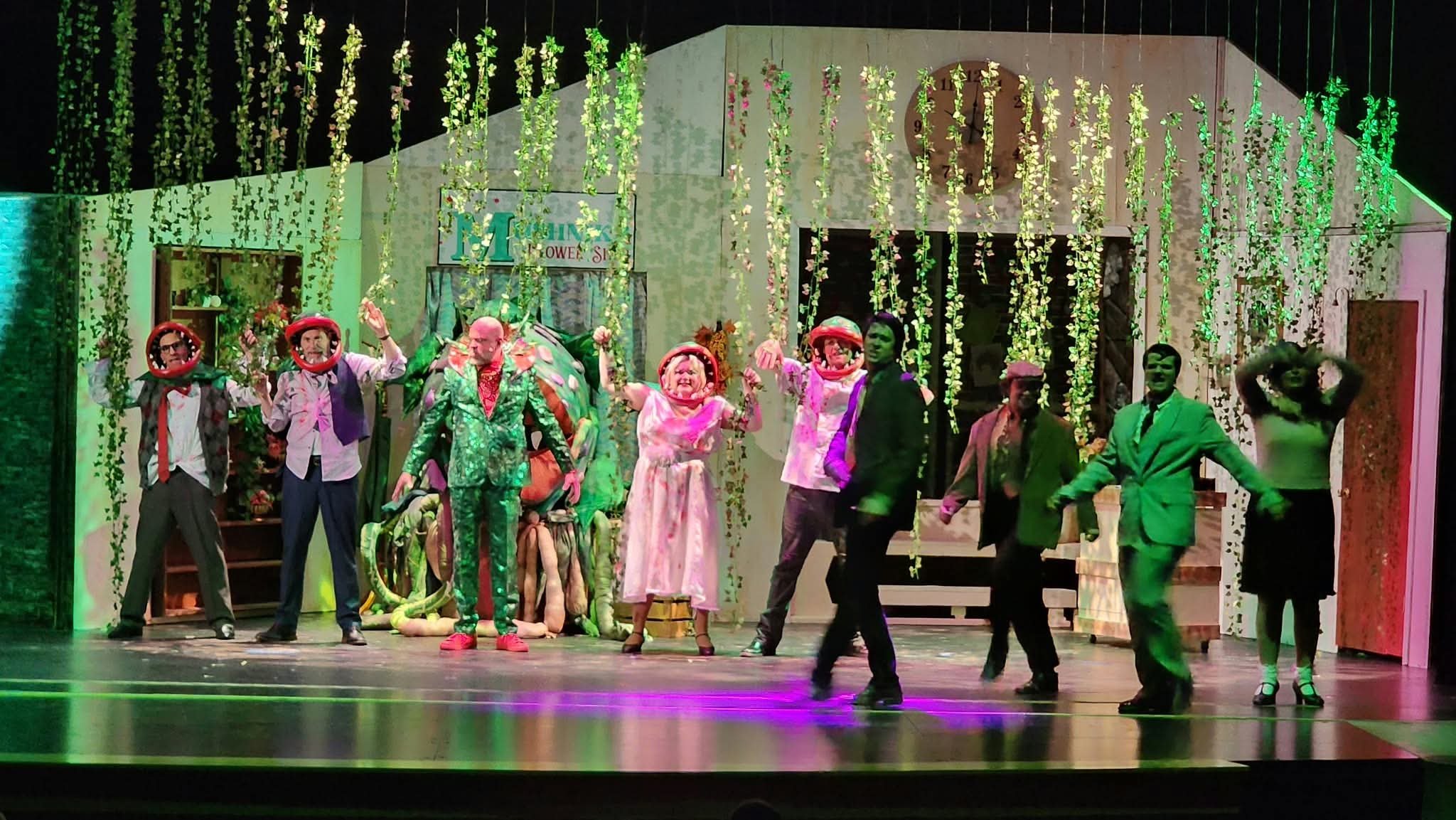
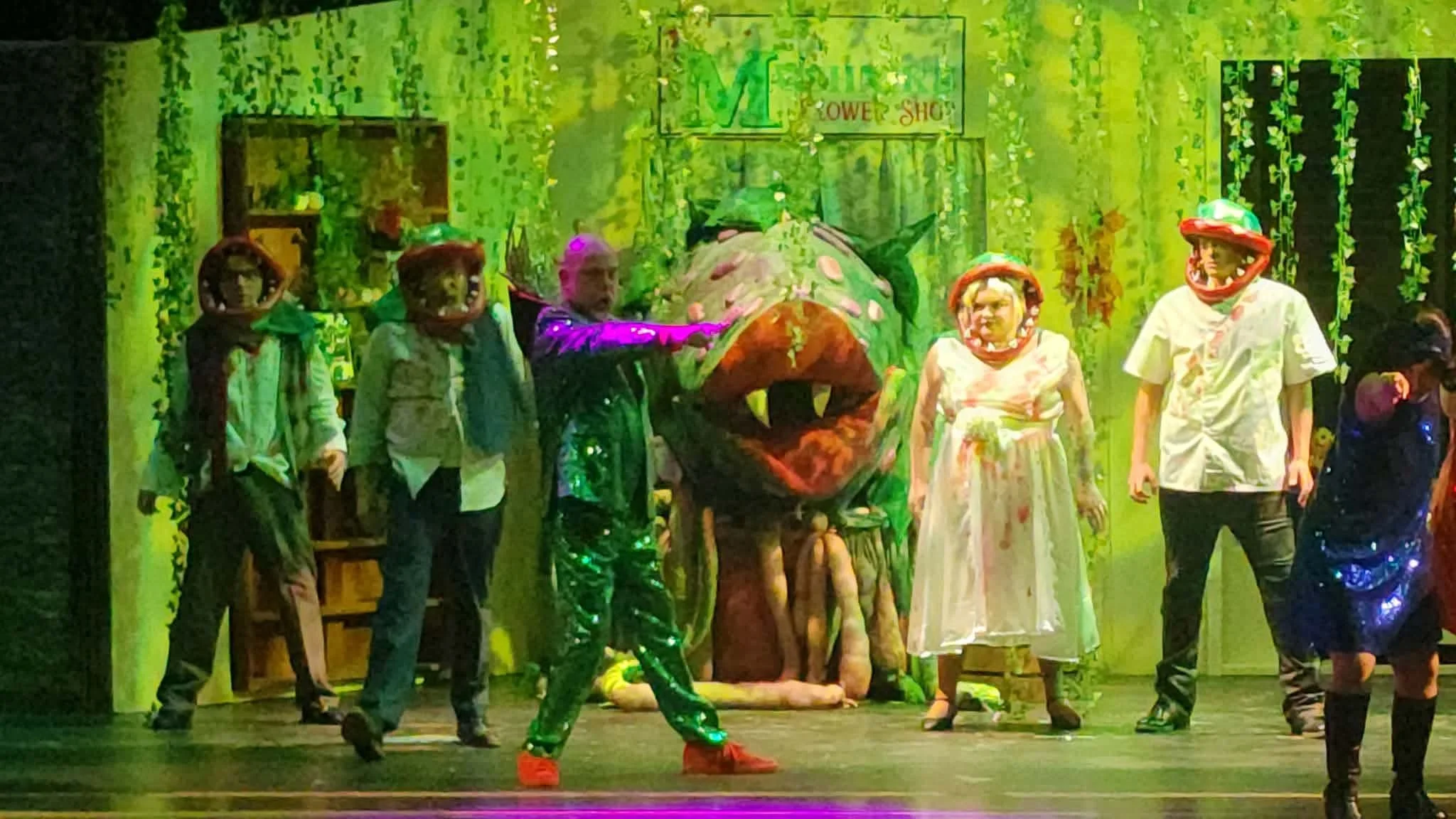
Gregory Conn provides the voice of Audrey II, the increasingly demanding plant whose appetite drives much of the story's action. Gregory gives the character a strong personality, capturing its confidence, manipulation, and growing sense of entitlement as Seymour becomes increasingly dependent upon it. His vocal delivery is very good, bringing considerable character to a role that relies heavily on the relationship between voice and puppetry. There are moments when the voice seems to shift somewhat, occasionally taking on a quality reminiscent of Disney's Goofy, but these variations do little to diminish an otherwise entertaining performance. The puppets themselves have their own interesting history, having circulated among Pacific Northwest theatres for more than 20 years before finding their way here. It’s just another example of the wonderful community that is theatre.
Among the supporting cast, Brian Kahn brings an enjoyable comic presence to Mr. Mushnik, the flower shop proprietor whose fortunes become tied to Seymour's discovery. Brian understands the character's opportunism and the humor that comes from his attempts to maintain control of circumstances that are rapidly getting away from him. His work in "Mushnik & Son" is particularly entertaining, demonstrating a good grasp of the musical's exaggerated style without allowing the characterization to overwhelm the scene. As Orin Scrivello, D.D.S., Ralph Dahlberg IV embraces the outrageous nature of Audrey's sadistic dentist boyfriend. Ralph's performance is appropriately animated, particularly in the character's early appearances, and he brings the kind of exaggerated personality that makes Orin such a memorable part of the musical. His work in "Dentist!" is very good, capturing the number's dark humor and allowing the character's enthusiasm for his profession to become part of the joke.
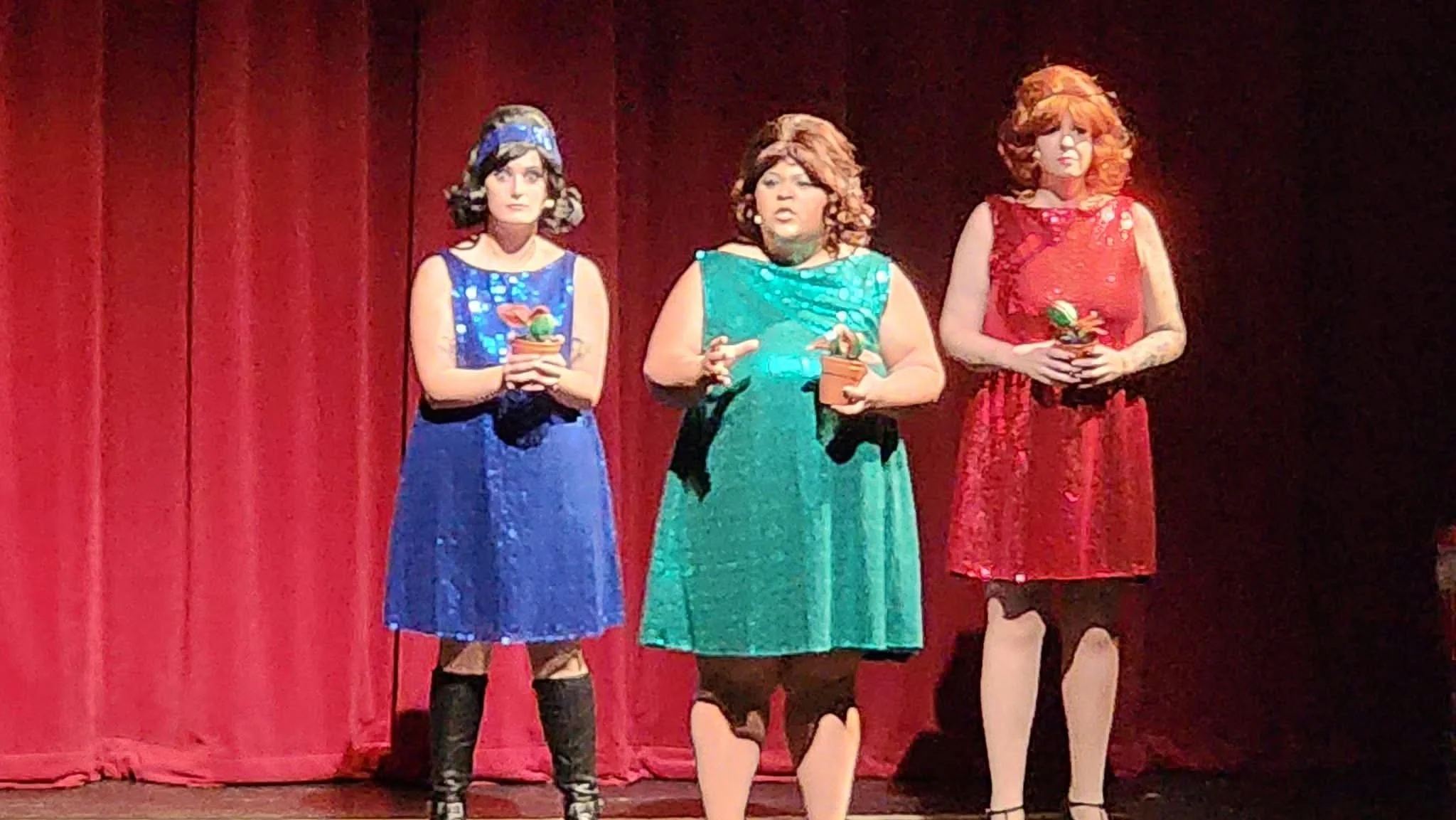
The musical's doo-wop trio is another important part of its success, and Brooke Upton as Crystal, Cass Mahalastas as Ronnette, and Savannah Creamer as Chiffon provide some of the show's most consistently enjoyable musical moments. Their harmonies are particularly good, and together they capture the sound and style that make the score so distinctive. More than simply providing musical accompaniment, the three serve as narrators and commentators, their collective vocal work a credit to music director Heather Matthews, whose contributions are especially apparent in the ensemble numbers.
The remaining company, including Elios Chafetz, Luke Foster Kosbab, Amanda Troyer, and James Dover, helps populate the world of Skid Row and the various characters Seymour encounters as his unusual discovery attracts increasing attention. Their contributions help maintain the production's comic atmosphere, particularly as the story moves from the relative simplicity of the flower shop into increasingly improbable territory.
Beyond the particularly memorable staging of "Somewhere That's Green," the technical elements work together effectively to support the production's storytelling. The scenic design, lighting, costumes, and sound establish the exaggerated world of Skid Row while allowing the performances and humor to remain at the forefront. The rotating panels are especially useful in keeping the action moving, and the overall design provides a nice backdrop to a classic story.
There are certainly moments when the vocal performances are uneven, particularly during some of Seymour's musical numbers, but these inconsistencies at the performance I attended never become significant enough to diminish the enjoyment of the production. The strength of the staging, the quality of several individual performances, and the company's commitment to the material provide more than enough to keep the evening entertaining. Little Shop of Horrors requires its performers to navigate an unusual balance between broad comedy and genuine emotion, and for the most part, this company understands that neither element works quite as well without the other.
SRO Theatre's Little Shop of Horrors captures the humor, horror, and unexpected tenderness that have made the musical such an enduring favorite. Imaginative staging, engaging performances, and a creative production team bring the strange world of Skid Row to life. It's an entertaining production that understands the heart of this wonderfully peculiar story, reminding audiences that even on Skid Row, dreams of something better can take root, though it's probably wise to be careful about what gets fed along the way.
The SRO Theatre production of Little Shop of Horrors closed in Yelm on October 25, but to learn more about the theatre and upcoming events, head to https://www.srotheater.org/shows.
Photo credit: Charles Phillips