
Stage Review - Mary Jane (Seattle Rep)
Stage Review - Mary Jane
Presented By: Seattle Rep - Seattle, WA
Show Run: March 19 - April 19, 2026
Date Reviewed: Wednesday, March 25, 2026 (Opening Night)
Run Time: 100 Minutes (no intermission)
Reviewed by: Greg Heilman
Caregiving is, by its very nature, a series of moments strung together—some tender, some exhausting, many lived in the space between hope and uncertainty. In Mary Jane, now playing at Seattle Rep’s Leo K. Theater through April 19 under the direction of Allison Narver, Amy Herzog captures that experience with a striking level of intimacy. Rather than building toward a singular emotional climax, the play allows those moments to accumulate, inviting the audience to sit inside them and, in doing so, better understand the weight they carry. It is a production bolstered by strong design work and a well-cast ensemble, elements that consistently elevate the material even at times when its emotional reach falls just short.
Originally premiering in 2017 at Yale Repertory Theatre before moving to New York Theatre Workshop, Mary Jane is a deeply personal and observational work that follows a single mother caring for her chronically ill child. Rather than adhering to a traditional narrative arc, the play is structured as a series of encounters—caregivers, medical professionals, and fellow parents—each interaction revealing another layer of Mary Jane’s world. The story unfolds not through plot twists, but through the emotional and psychological terrain of caregiving, where hope, exhaustion, humor, and fear all coexist, often within the same breath.
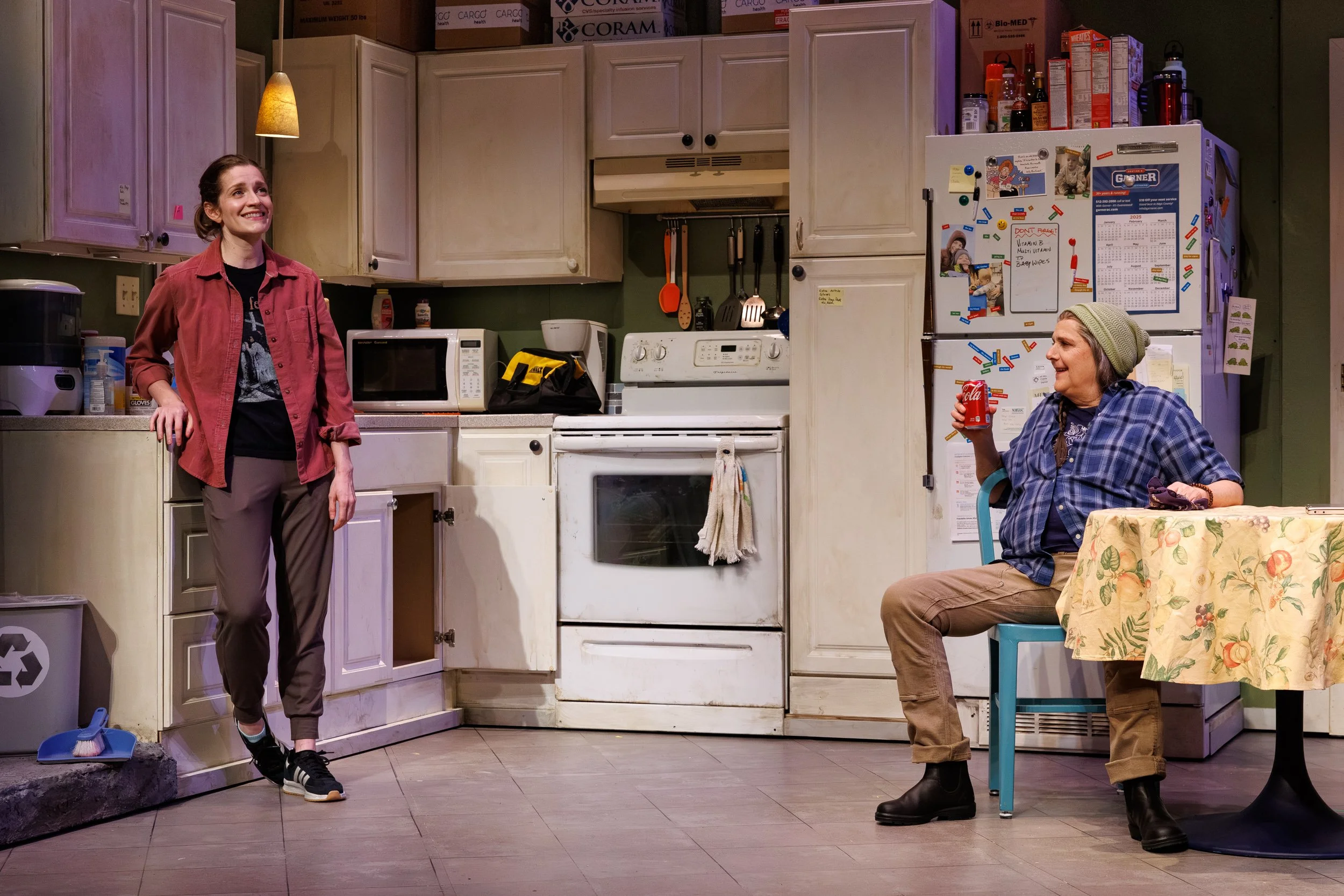
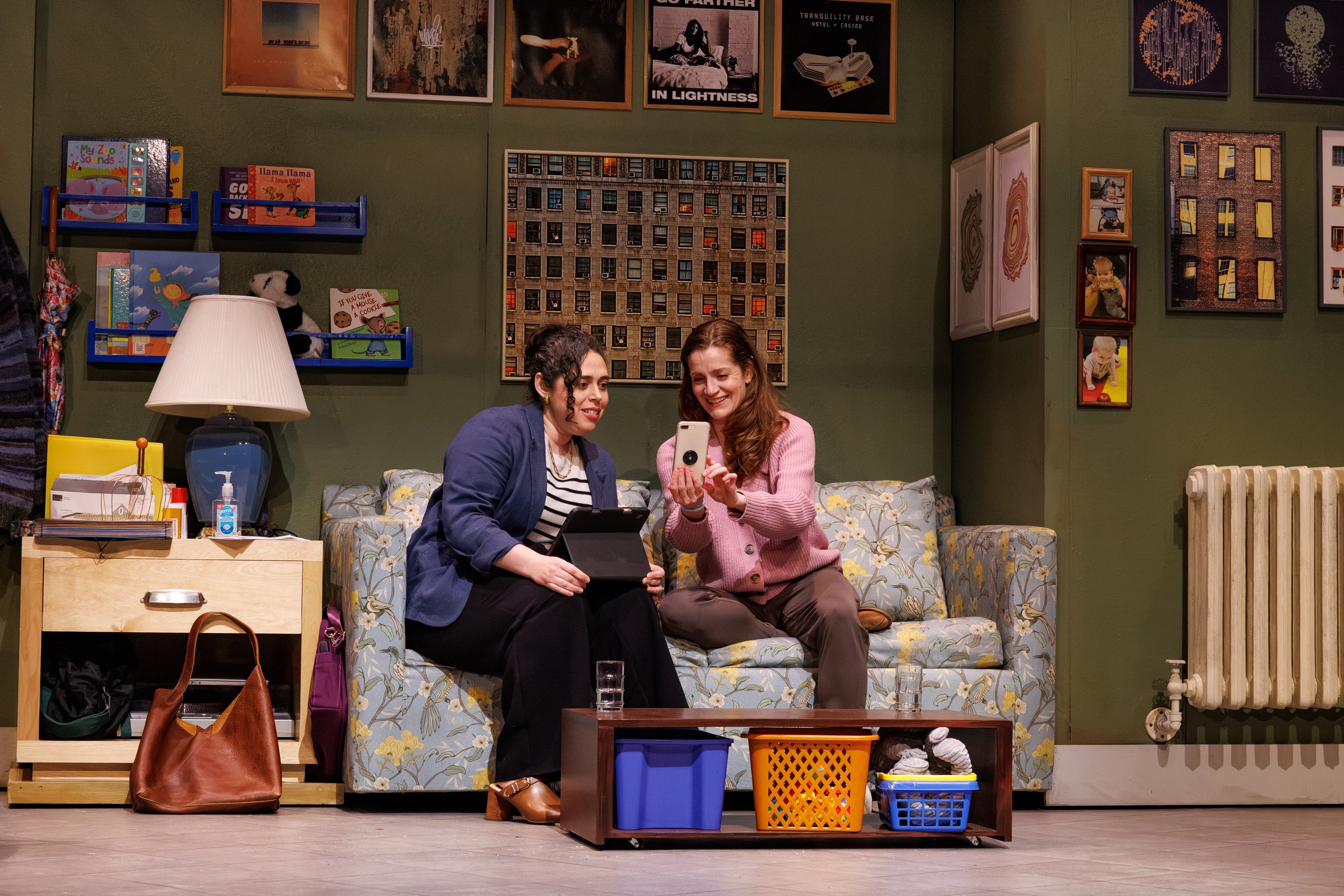
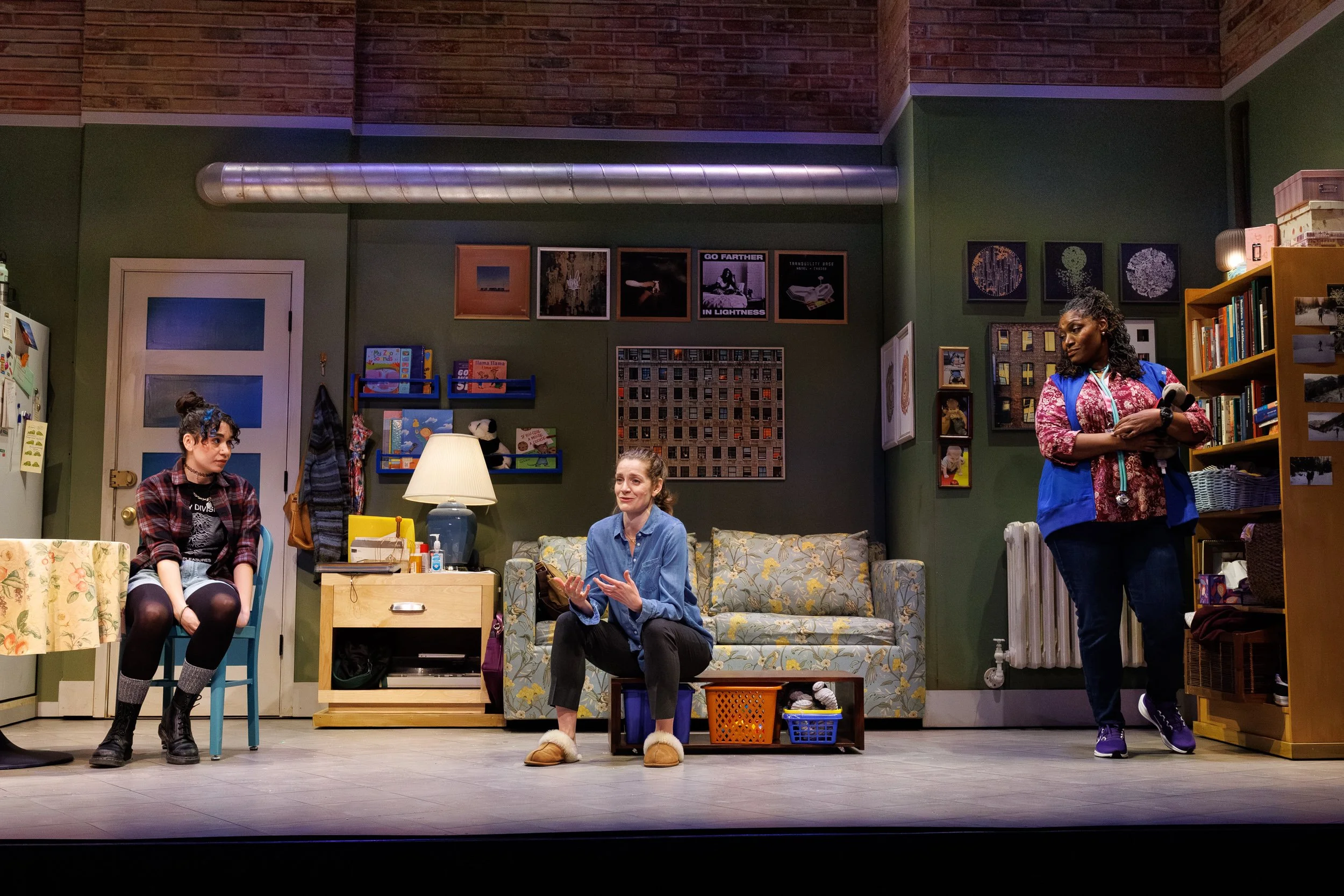
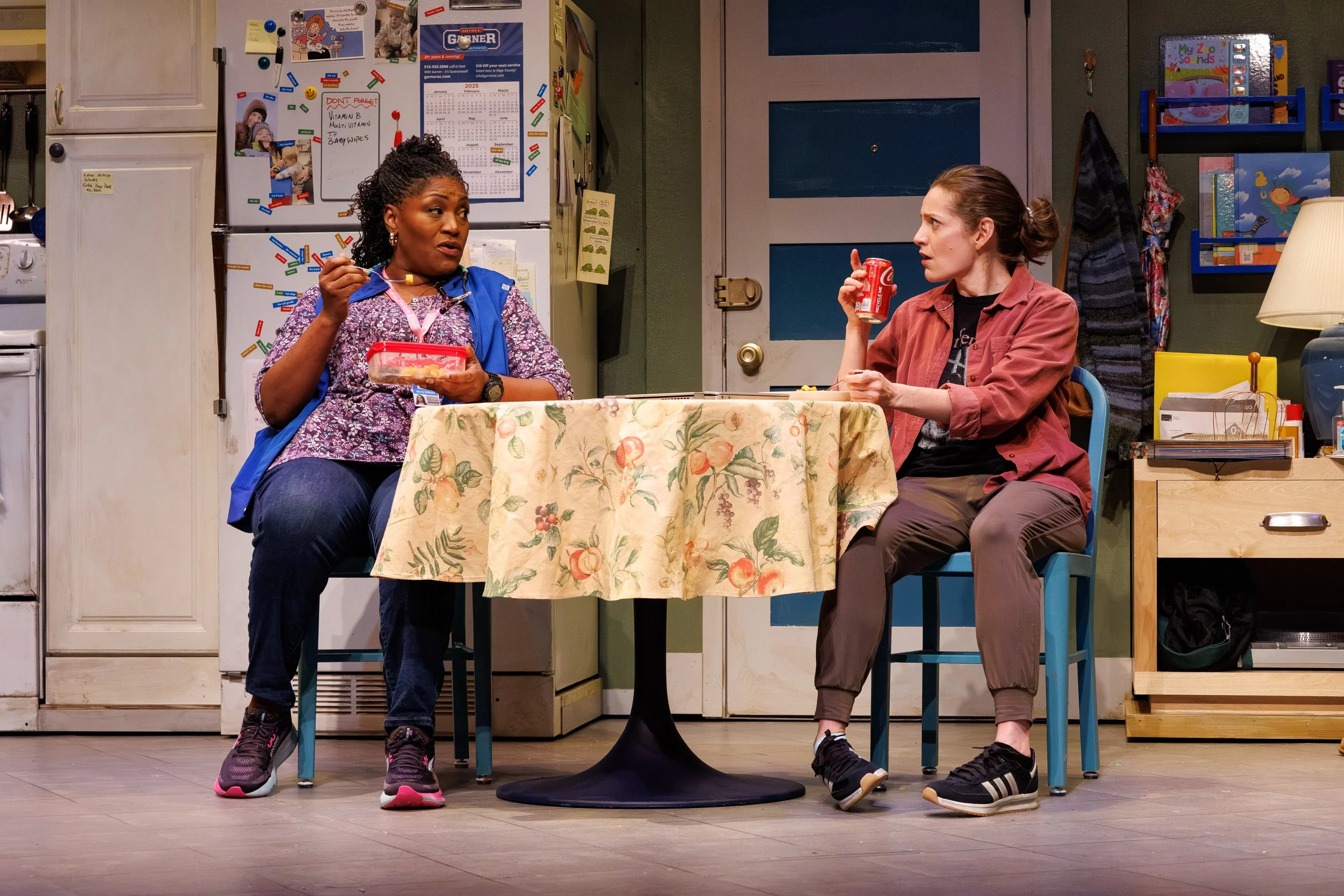
Set largely within the confines of a modest New York apartment, the production establishes its tone immediately through Julia Hayes Welch’s scenic design. The initial space, defined by exposed pipes, radiators, and an abundance of lived-in detail, feels both practical and personal. It’s a space filled with objects—props that aren’t just decoration, but extensions of the life being lived within it, and that level of detail becomes essential in providing the story’s essential realism. But wait, there’s more! Just when the audience settles in to the scene and the setting, and after a critical turning point in the play, the set transforms, from Mary Jane’s Queens apartment to the more sterile confines of a local hospital.
The production elements, in fact, are where this piece most consistently soars. Connie Yun’s lighting design shifts seamlessly between the warmth of Mary Jane’s apartment and the sterile fluorescence of the hospital, while also helping to shape some of the more emotionally resonant moments of the play. Sun Hee Kil’s sound design is equally effective, well balanced and rooted in realism, but also capable of pushing into something more psychological. Heidi Zamora’s costume design works with a similar sense of restraint, never calling attention to itself, but quietly reinforcing the world of the play. It’s work that doesn’t overplay its hand, but instead helps solidify the context of each interaction, allowing the focus to remain where it belongs while still deepening the authenticity of the piece.
In one particularly effective sequence, as Mary Jane attempts to get some sleep, the lights dim and ambient noise begins to swell, capturing the hyper-sensitivity of a mother caring for a child who requires constant attention. Every sound feels heightened, every shift potentially urgent. It’s a moment that places the audience directly into her state of mind.
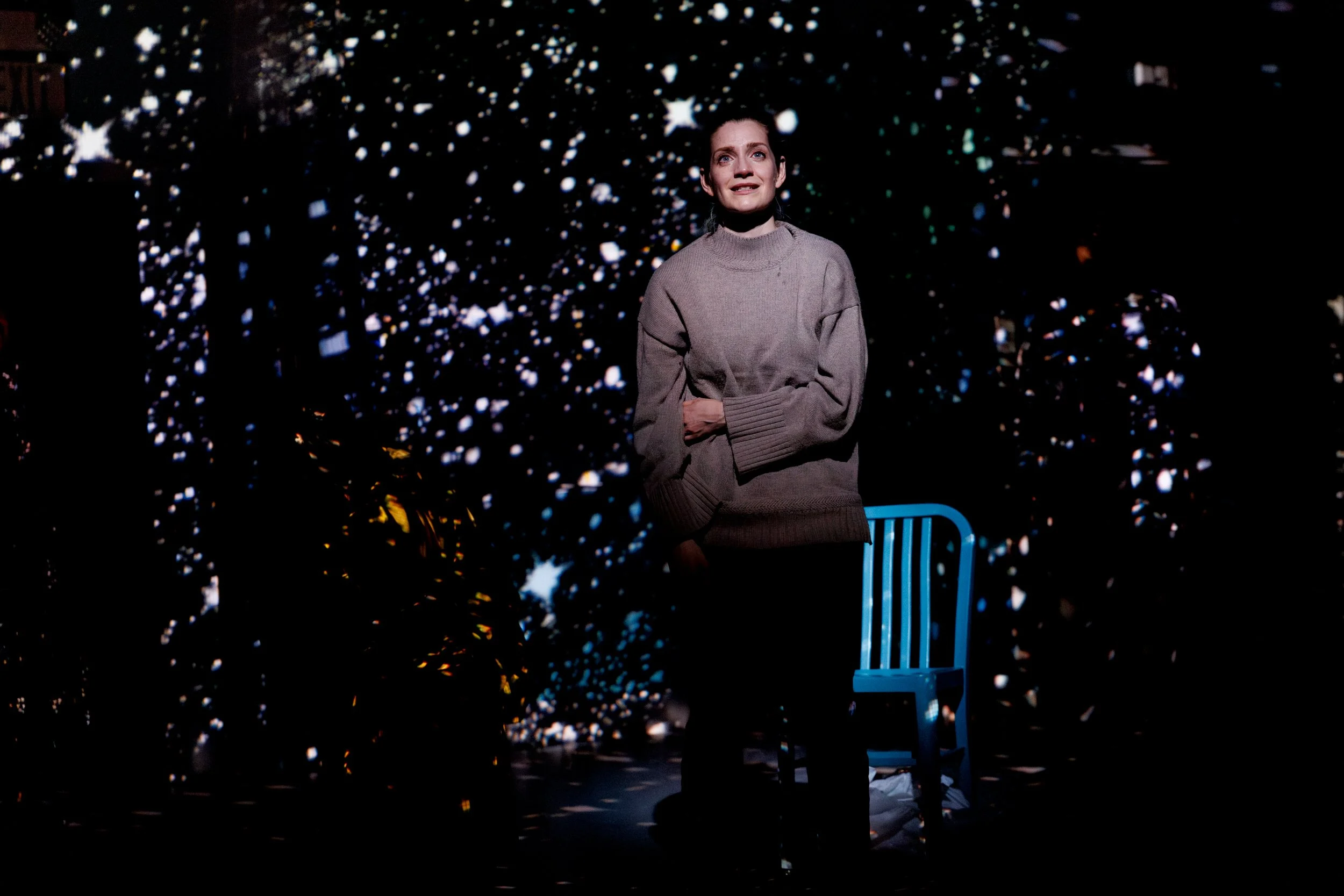
Another especially poignant scene finds Mary Jane dancing around her apartment with Alex’s ladybug toy, its shell casting tiny points of light across the walls like stars. Paired with the gentle use of sound and lighting, it becomes one of those fleeting but essential moments of peace—small, almost fragile instances where she is able to step outside of her reality, if only briefly. It’s in scenes like these that the design work elevates the production, allowing those quiet emotional beats to fully land.
At the center of it all is Brenda Joyner’s Mary Jane. Brenda presents a woman who meets the world with an earnest willingness to engage, particularly in her interactions with others navigating similar circumstances. There is a generosity in the way she listens, absorbs, and offers support, especially in early scenes where she becomes a source of guidance for those around her.
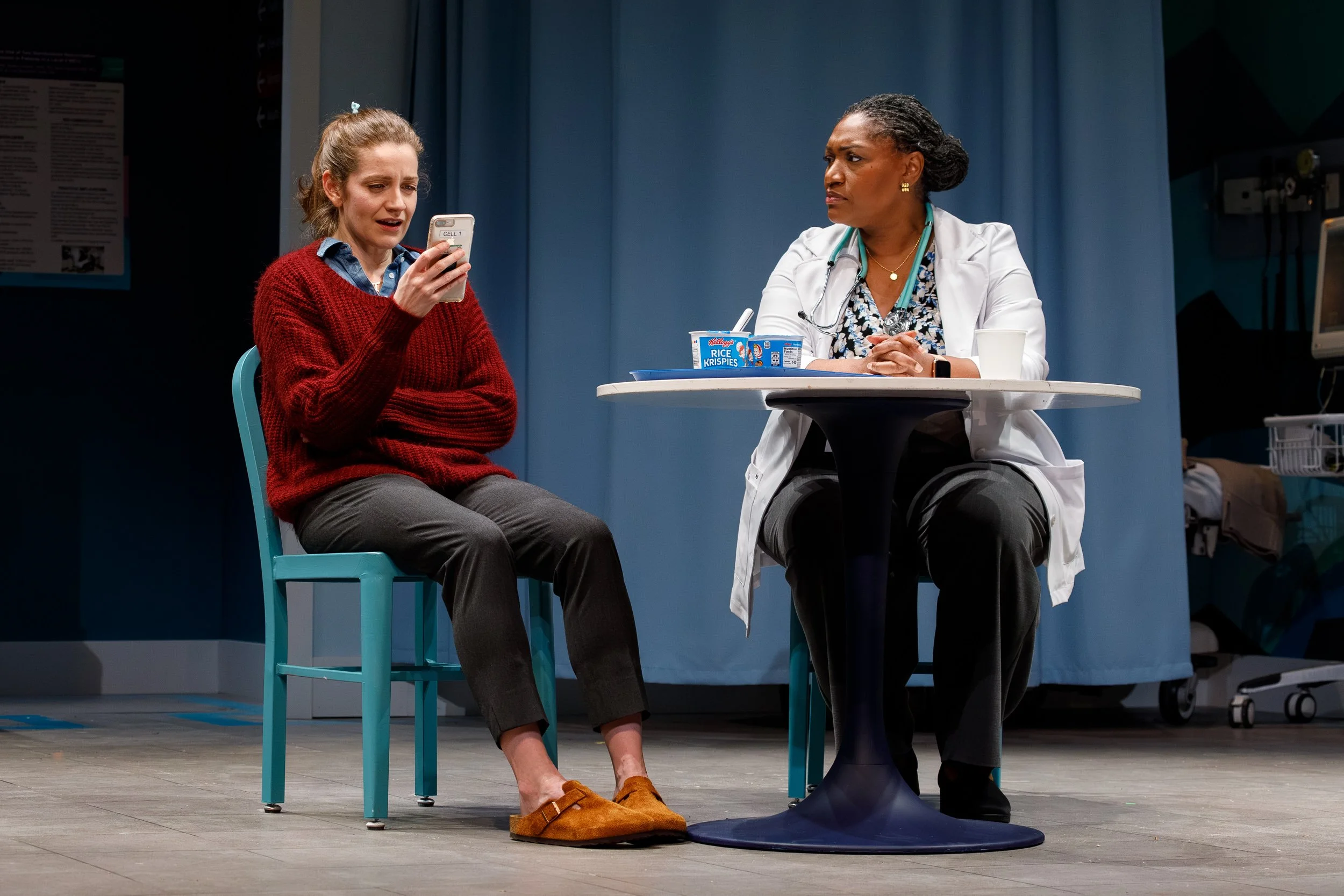
And yet, that portrayal comes with a degree of detachment that is acknowledged within the play itself, most notably in a conversation with Shaunyce Omar’s Dr. Toros, who attempts to offer Mary Jane a moment of clarity—a grounding in the reality of her situation. It’s here where the production, for all of its strengths, doesn’t quite land with the emotional force it seems to be aiming for. Herzog’s intent is clear, and the pathway to that emotional impact is visible, but the slight remove in Mary Jane’s presentation softens what might otherwise be a more devastating moment. The result is that some moments register intellectually more than they do emotionally, where the weight of the situation is understood, but not fully felt.
That said, Brenda’s performance is at its strongest in moments where that carefully maintained composure begins to fracture. In her scenes with Andi Alhadeff’s Brianne, there is a clear sense of Mary Jane constructing a version of herself—one built on humor, optimism, and control. But it doesn’t take much for that façade to begin to crack, particularly when confronted with the realities of her own circumstances. Those shifts are handled with precision, often through subtle changes in expression or tone, especially in moments when she is on the phone, trying to maintain stability in an increasingly unstable situation.
Allison’s casting proves to be a significant strength across the board, with a supporting ensemble that not only complements Brenda’s work, but in many cases elevates the production’s emotional impact. Shaunyce Omar stands out in dual roles as Sherry and Dr. Toros. As Sherry, there is an ease and warmth that at times feels almost more maternal toward Alex than Mary Jane herself, particularly in the play’s most intense medical moments. In one such scene, where Alex experiences a seizure, the emotional responses between Mary Jane and Sherry feel almost inverted, but in doing so, the writing allows Shaunyce to bring a strong and warm presence to the moment. As Dr. Toros, that warmth gives way to a direct, no-nonsense approach, cutting cleanly through the emotional haze with clarity and purpose. They’re two distinctly different personalities, and it shows Shaunyce’s ability that each is played so well.
Meanwhile, Anteia DeLaney demonstrates impressive versatility in her dual roles. As Amelia, she brings a quiet sweetness, a reserved presence that makes her later actions all the more impactful. When called upon to dial 9-1-1 during a crisis, Anteia captures the chaos and urgency of the moment with remarkable clarity, delivering one of the most compelling single scenes in the production. She later returns as Kat, the music therapist, providing a sense of hope and emotional balance in one of the play’s most affecting sequences.
Amy Thone also navigates dual roles with confidence and nuance, moving from the gruff, no-nonsense “Super” Ruthie to the more introspective Buddhist Tenkei. In both cases, there is a guarded exterior that belies something softer underneath, and Amy finds the humor and humanity in both characters with ease.
Rounding out the ensemble is Andi Alhadeff, whose performances as Brianne and Chaya offer two equally compelling perspectives. As Brianne, she is eager, searching, absorbing everything she can as she seeks guidance in caring for her own child. The scene not only highlights Andi’s layered performance, but also showcases some of Brenda’s best work, as Mary Jane’s carefully constructed composure begins to falter. As Chaya, Andi shifts into a more direct, culturally specific voice, bringing both humor and sharp insight to the role, often delivering some of the play’s most pointed observations.
Allison’s direction ensures that these performances are given the space they need to resonate. There is no sense of rushing through moments or forcing emotional beats. Instead, the production allows each interaction to unfold naturally, trusting both the material and the performers to carry the story forward.
Mary Jane is less about delivering a singular emotional release and more about honoring the accumulation of moments that define a life lived in care of another. While not every beat lands with the full weight it suggests, the production’s attention to detail, its thoughtful design, and the strength of its ensemble ensure that the story resonates in quieter, more lasting ways. It is a piece that doesn’t demand to be felt so much as it asks to be witnessed—and in that act of witnessing, it finds its meaning.
The Seattle Rep production of Mary Jane runs in their Leo K. Theater through April 19. For more information, including ticket availability and sales, visit https://www.seattlerep.org/.
Photo credit: Sayed Alamy