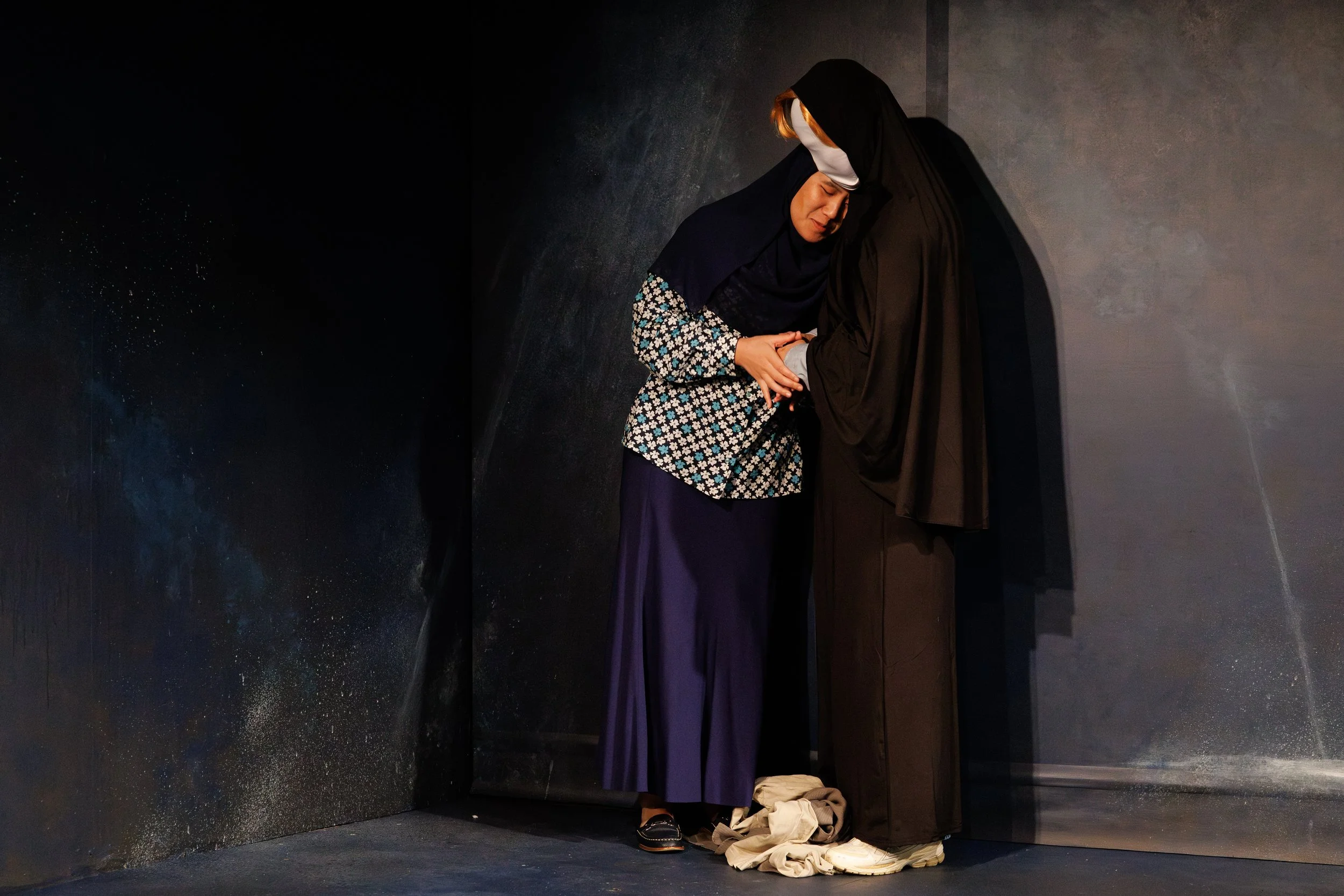

Stage Review - Wife of Headless Man Investigates Her Own Disappearance (Annex Theatre)
Stage Review - Wife of Headless Man Investigates Her Own Disappearance
Presented By: Annex Theatre - Seattle, WA
Show Run: March 27 - April 11, 2026
Date Reviewed: Friday, March 27, 2026 (Opening Night)
Run Time: 90 Minutes (no intermission)
Reviewed by: Greg Heilman
If there’s one thread that connects all of Yussef El Guindi’s plays, it has to be their thought-provoking nature. It’s not just that his works invite audiences to contemplate the experiences he portrays, and it’s not just that they’re constructed in a way that leaves those same audiences questioning what, exactly, is happening on stage, but rather how the latter sets up the former. That idea is very much at the heart of his latest piece, Wife of Headless Man Investigates Her Own Disappearance, now having its world premiere at Annex Theatre in Seattle under the direction of Annex Artistic Director Lucien Oberleitner, and running through April 11. As the audience works to assemble the narrative puzzle unfolding in front of them, they are simultaneously being placed in the right frame of mind to receive the play’s deeper messaging. It’s as if the message is a language, and the structure of the play becomes its Rosetta Stone.
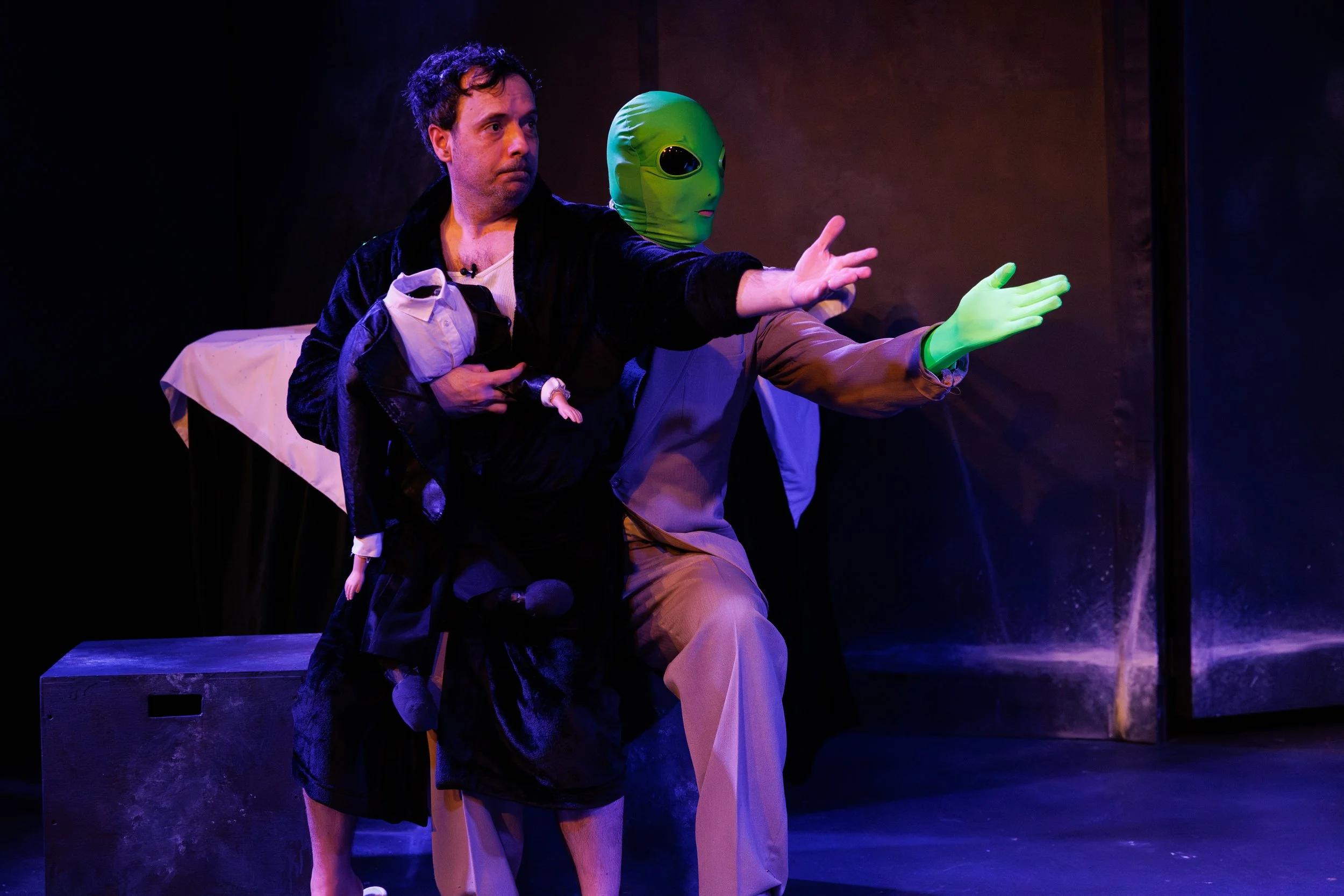
Using this play to illustrate that point, just take the title. That alone is puzzling enough, then, as the play begins to unfold, the audience is presented with any number of additional absurdities to ponder. Yussef’s script resists straightforward storytelling, leaning instead into fragmentation and ambiguity. The premise itself—a woman grappling with the odd transformation of her husband, a man who is, quite literally, headless—requires a level of suspension of disbelief that becomes part of the experience. Questions emerge almost immediately: how does a headless man see, speak, or exist within this world—especially when he appears to be headless one moment and not the next? Layered into that are an alien figure, dressed in various styles of human clothing, stretches of missing time that refuse to account for themselves, and a mysterious foray into a hotel room that only deepens the sense of dislocation. Rather than offering answers, the play continually raises the question of what, if any of this, is real, using that uncertainty to destabilize the audience’s expectations and create a space where interpretation becomes personal.
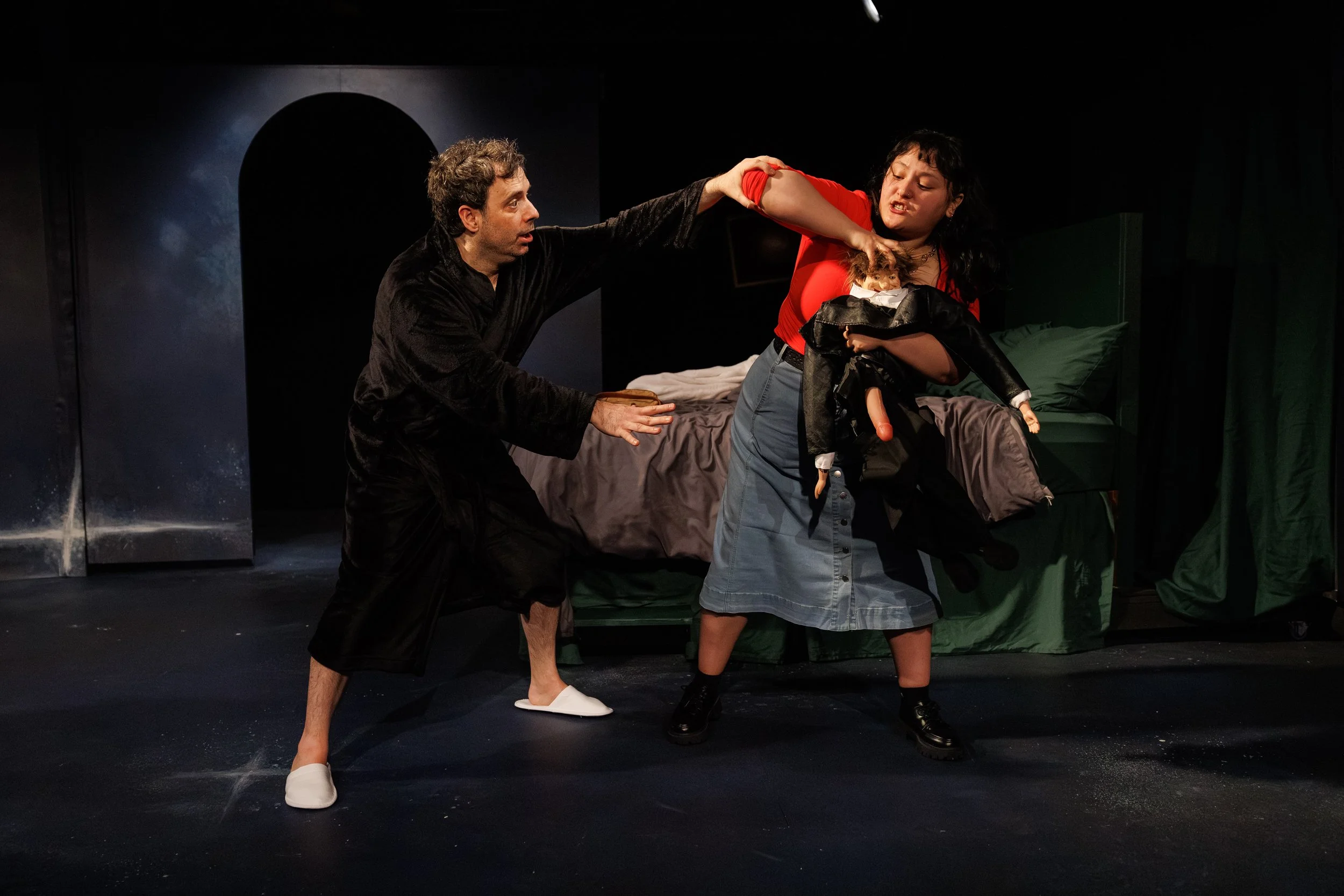
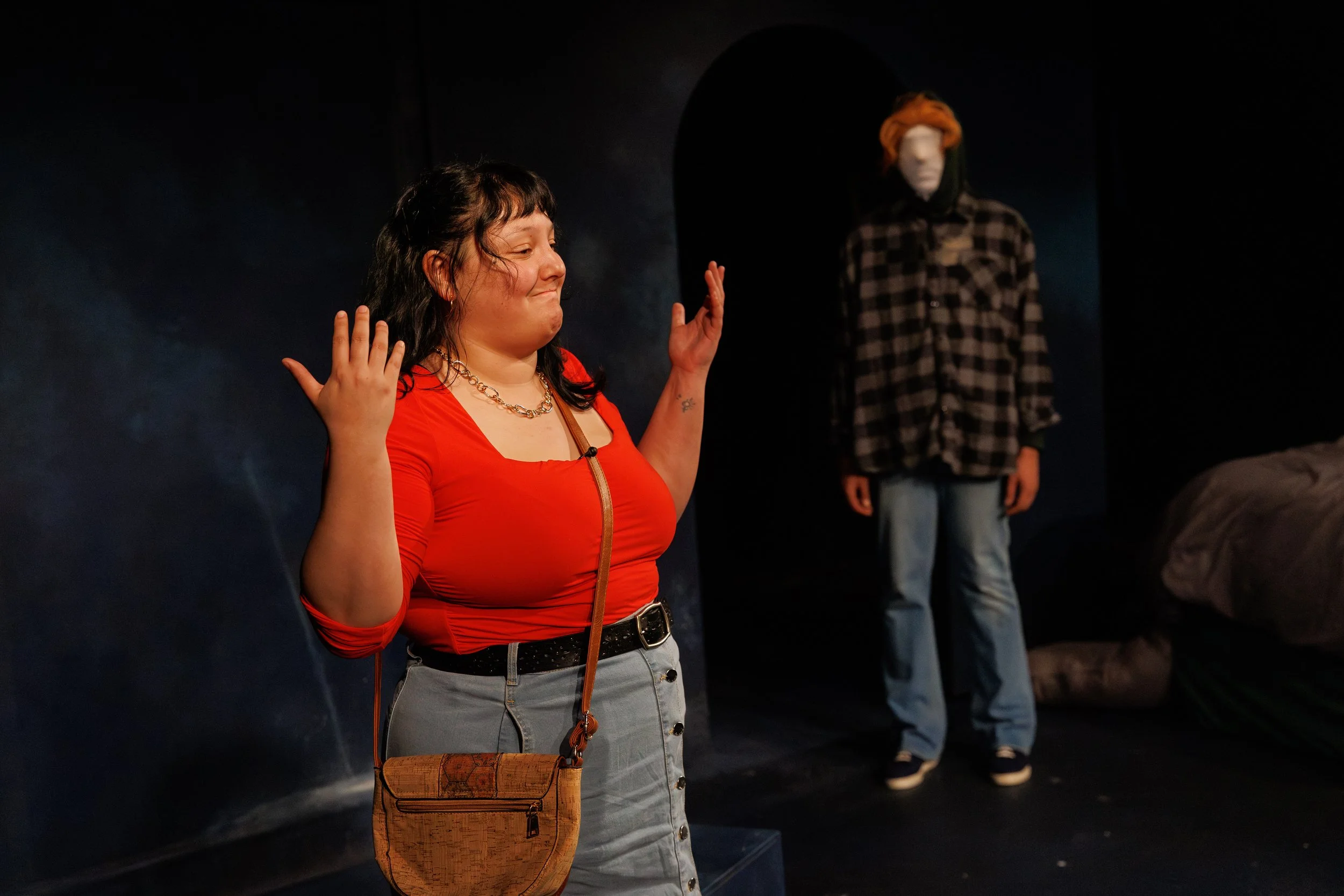
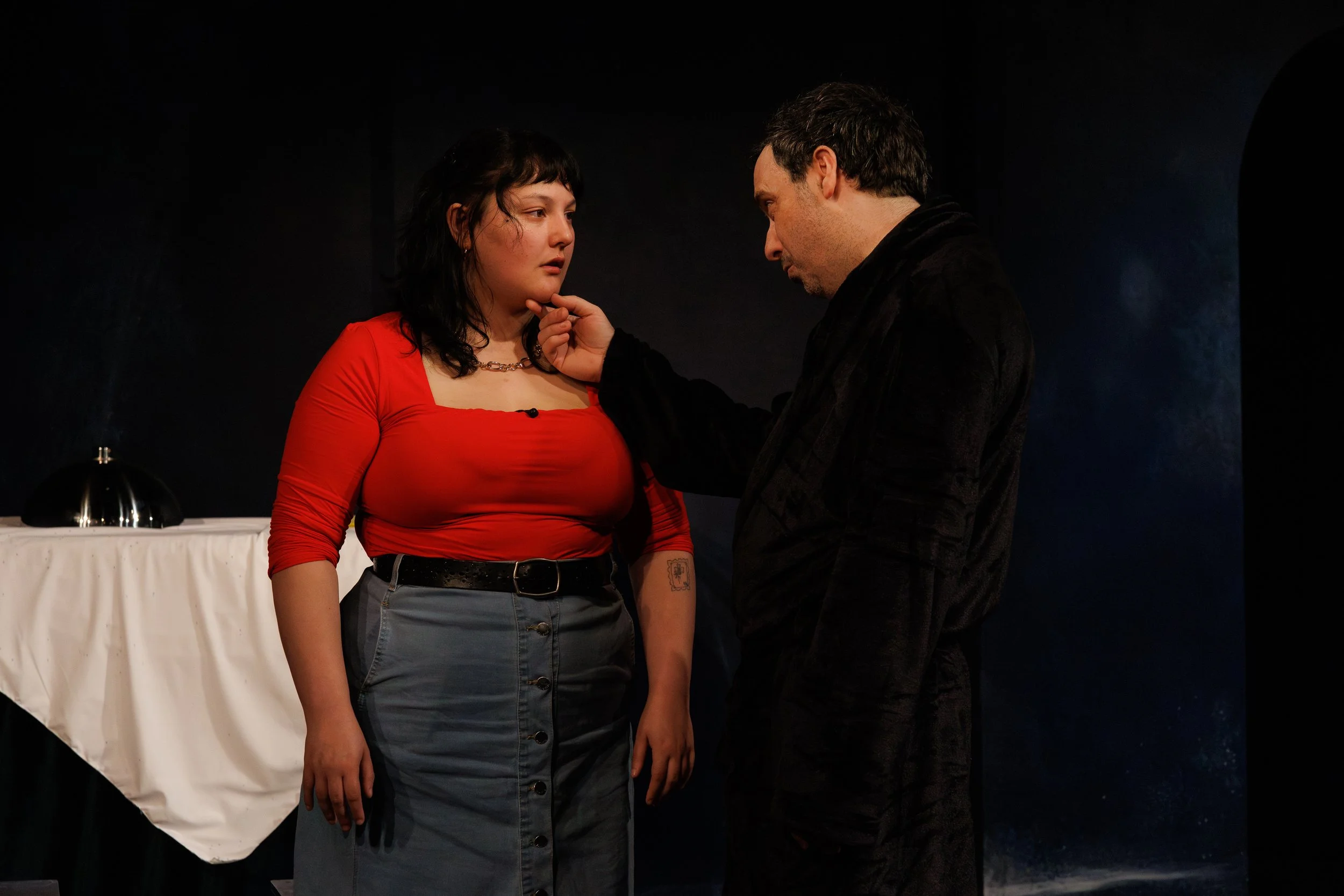
Coco Justino’s Salwa sits at the center of that instability. There is a palpable sense that she is searching for footing in a world that refuses to offer it, and that lack of grounding becomes a defining characteristic of the performance. As the play progresses and the narrative threads multiply, Salwa’s growing frustration mirrors the audience’s own attempt to find cohesion in what can feel like competing realities. As the narrative revolves around her character, Coco manages this all extremely well, guiding the pace of the show, the clarity—or intentional lack thereof—of time and reality, and the relationship-driven nature of the play with a steady and assured hand. Hannah Wang’s Aisha provides a measured counterbalance, while Brandon Tourino Collinsworth navigates multiple roles, including Owen Allen and a hotel waiter, with a versatility that helps guide the audience through the play’s shifting tones. Yousif Abouzgaya’s Bassem and Justin Tran’s Firdous contribute to the layered world of the piece, and Dylan Smith’s Alien brings moments of unexpected humor, delivered with a style that feels both playful and slightly off-kilter.
One of the more inventive staging choices comes in the representation of Owen, portrayed through a puppet manipulated by an actor whose costuming mirrors that of the puppet itself, rather than concealing him. It’s a choice that immediately raises questions. At first, the audience isn’t quite sure what to make of it—is this simply a device that allows Lucien, as director, to cross certain lines of comfort and consent without placing actors in potentially awkward positions, or is there something more at play? The answer isn’t immediately clear, and like much of the production, it asks the audience to sit with that uncertainty. I won’t give anything away here, but it is worth noting that, much like the overall narrative—which feels less like a traditional arc and more vermiculate in nature—that particular piece of the puzzle ultimately comes into focus in a way that is both impactful and deeply connected to the play’s central ideas.
The design work plays a critical role in shaping that experience. Joseph Swartz’s sound design is particularly effective, beginning with subtle, almost imperceptible elements before building into a layered soundscape of voices and textures that grow increasingly chaotic, evoking the sensation of thoughts crowding the mind. Flashbacks are not just seen but heard, with voices bleeding into the present in ways that blur temporal boundaries. Jacob Viramontes’ lighting design complements this approach, especially in moments that shift into memory or heightened emotional states, helping to guide focus while maintaining the production’s sense of disorientation.
Bella Rivera’s scenic design and Nour Afifi’s costume design provide a foundation that balances the abstract elements of the play. The world feels recognizable enough to anchor the audience, even as it allows for moments of surrealism to take hold. The interplay between the familiar and the strange mirrors the play’s central tension between perception and truth.
Thematically, the play casts a wide net, touching on issues of surveillance, data tracking, borders, and the expectations placed on immigrant narratives of success. The piece also interrogates the dynamics of relationships, how expectations drive their longevity and how the shifting tide of values based on experience informs them. It raises questions about how much of what we see can be trusted, suggesting that perception itself may be shaped—and manipulated—by forces both visible and unseen. At times, the breadth of these ideas can feel overwhelming, as though the play is moving in multiple directions at once, leaving both its central character and its audience searching for a unifying thread.
And yet, within that complexity are moments of striking emotional clarity. A scene centered on Owen’s childhood, underscored by sound and shaped by focused lighting, stands as the emotional high point of the piece. It is in this moment that the quality of the performance is most clearly defined, driven by Brandon’s ability to fully embody the weight and lasting impact of his character’s experiences. The specificity and emotional precision he brings to the scene cut through the play’s abstraction, giving it a clarity and resonance that lingers. In doing so, he anchors the moment in something deeply human, allowing the audience to connect in a way that transcends the play’s more elusive elements.
Wife of Headless Man Investigates Her Own Disappearance is less a neatly packaged narrative and more an experience—one that asks its audience to engage actively, to sit with uncertainty, and to question the reliability of what they perceive. Under Lucien Oberleitner’s direction, Annex Theatre leans fully into that ambiguity, creating a production that is as intellectually engaging as it is emotionally resonant. This is not a passive evening of theatre. It is one that challenges, provokes, and lingers, inviting audiences to grapple not only with what they’ve seen, but with how they’ve seen it.
The world premiere production of Yussef El Guindi’s Wife of Headless Man Investigates Her Own Disappearance is presented by and runs on stage at Annex Theatre in Seattle through April 11. For more information, including ticket availability and sales, visit https://www.annextheatre.org/.
Photo credit: Sayed Alamy