
Stage Review - Much Ado About Nothing (Saltfire Theatre)
Stage Review - Much Ado About Nothing
Presented By: Saltfire Theatre - Port Townsend, WA
Show Run: March 27 - April 12, 2026
Date Reviewed: Sunday, March 29, 2026 (Opening Weekend)
Run Time: 2 Hours, 40 Minutes (including a 10-minute intermission)
Reviewed by: Greg Heilman
What I’ve always appreciated about Much Ado About Nothing is just how immediately it invites an audience in. With much of Shakespeare’s work, there’s often a brief adjustment period—a moment or two to settle into the rhythm of the language and the cadence of the dialogue before everything fully clicks into place. Many productions account for that, easing audiences in with a musical introduction or some added framing device to bridge that gap.
Saltfire Theatre’s production, running through April 12 at the JFK Building at Fort Worden State Park, follows a similar path, opening with a musical prelude that brings the full cast onstage masked before they disperse and the story begins. It’s an engaging image, and one that sets the tone effectively, but what becomes immediately clear is that this particular play doesn’t require much help finding its footing. As soon as the opening conversation unfolds—Leonata speaking with her daughter Hero and niece Beatrice, interrupted by the arrival of a messenger bearing news of Claudio, Benedick, and Don Pedro’s return from battle—the language lands with clarity. There’s an ease to it, a natural flow that allows the audience to step directly into the world of the play, and more importantly, into its humor, which arrives early and often.
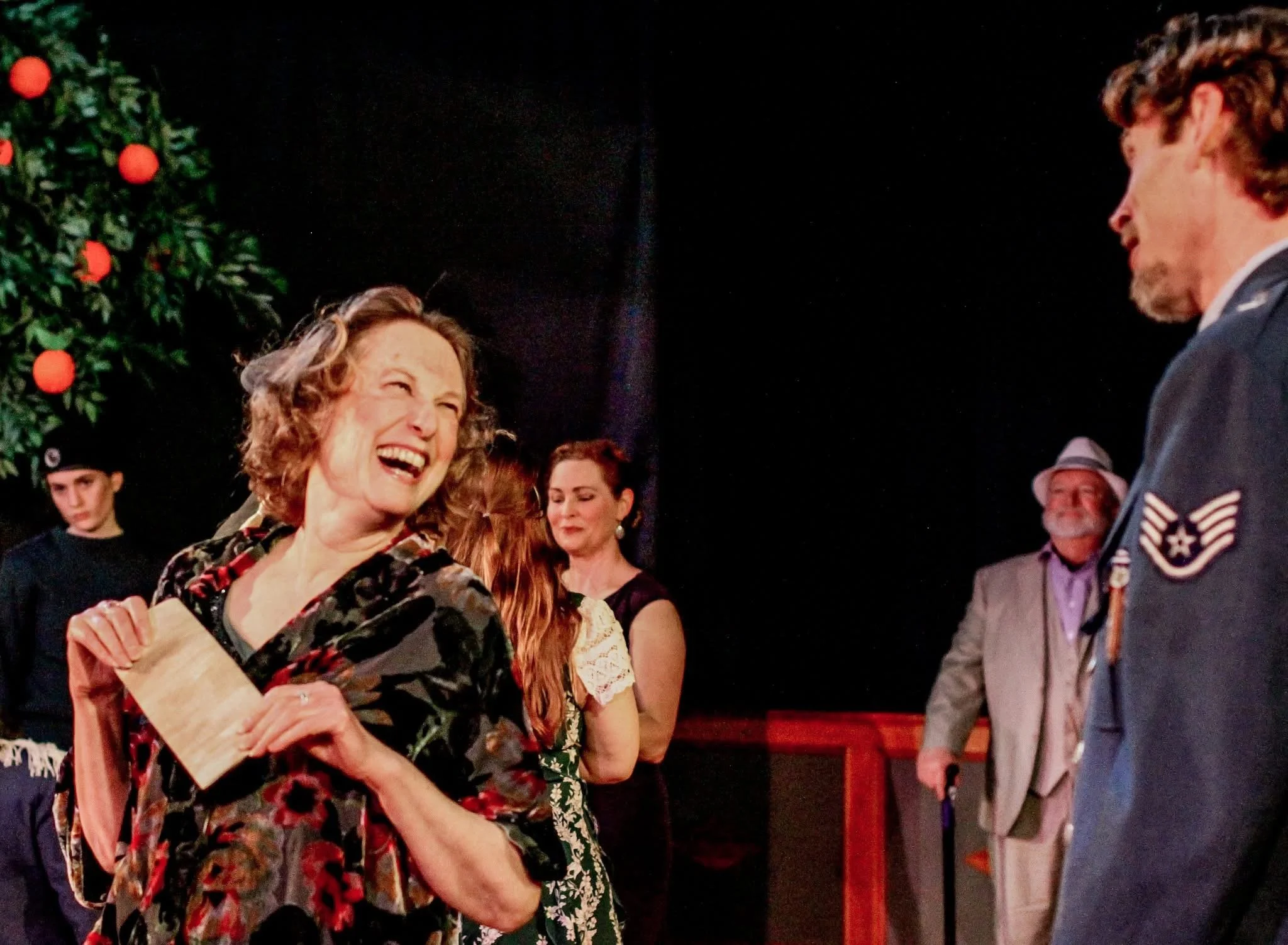
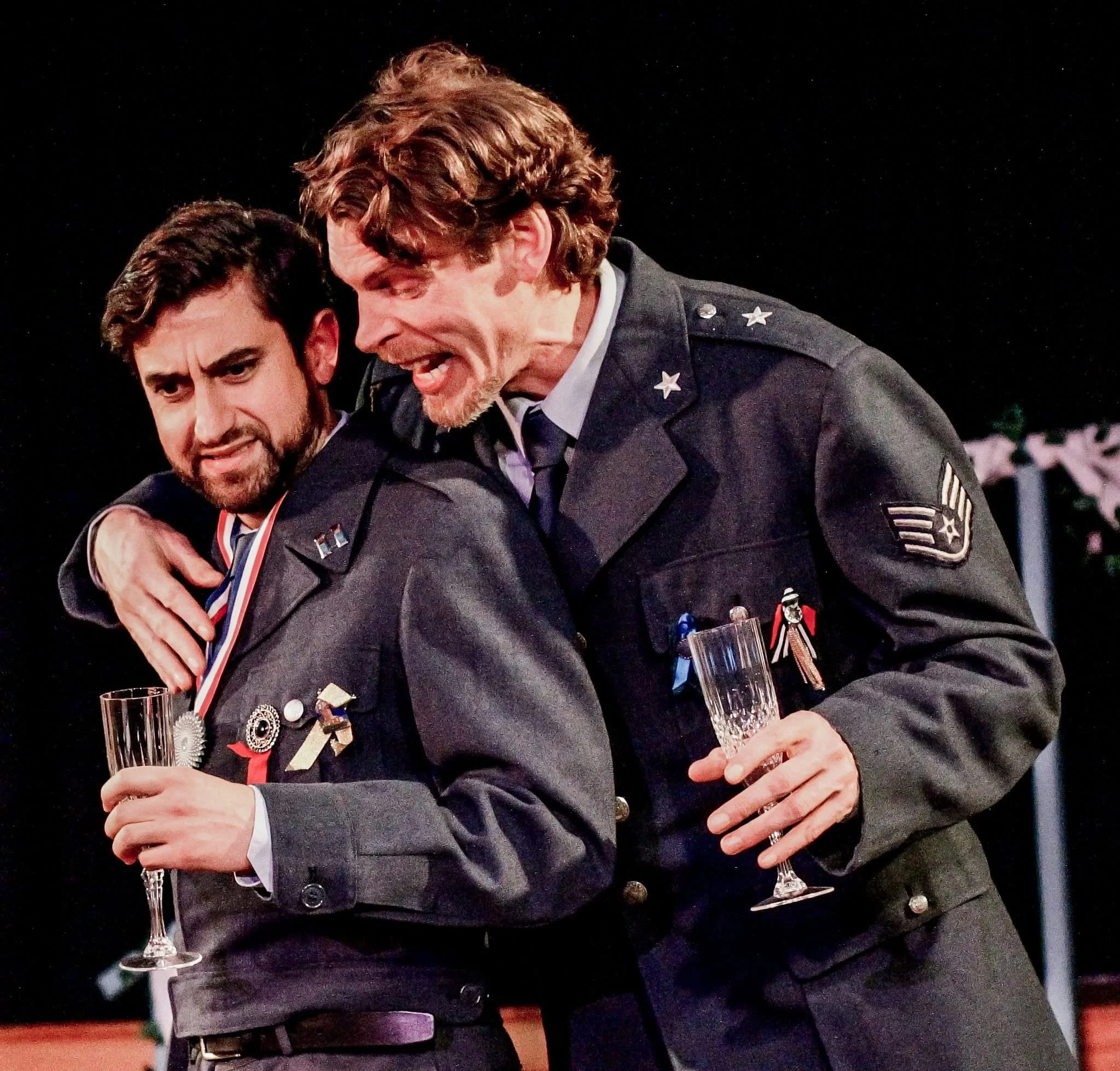
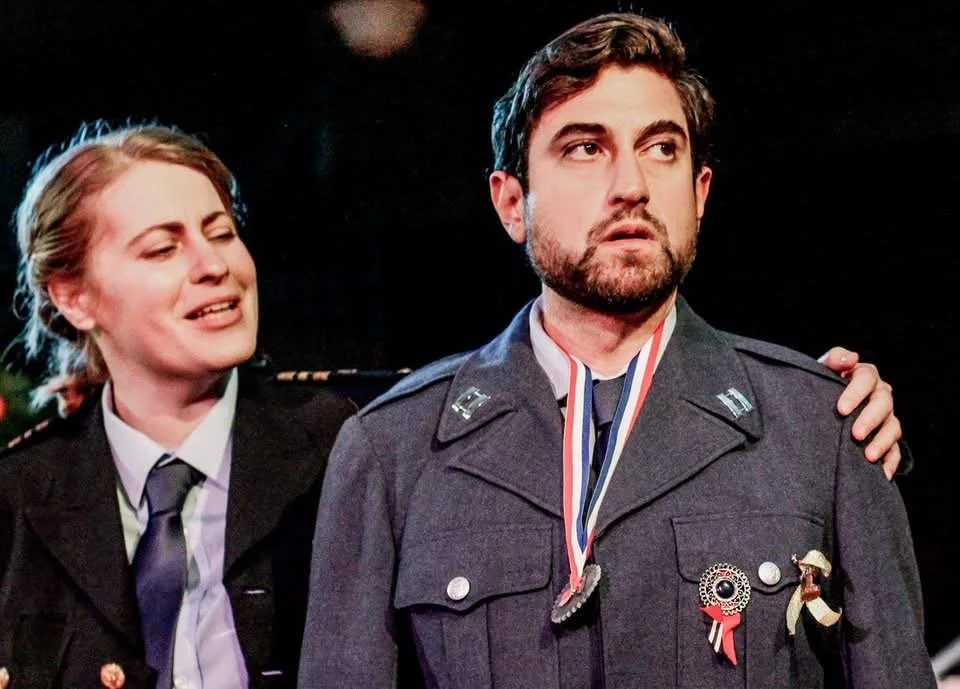
Many companies turn to Shakespeare as a way to say something beyond the immediate plot, using the flexibility of his work to explore broader ideas—whether that’s placing a production in a setting that highlights social injustice or choosing a time period that allows the design team to fully flex its creative muscles. Here, Genevieve Barlow’s vision is more subtle in its approach. The production is set in the aftermath of a successful World War II campaign, or at least that’s the implication suggested through Libby Wennstrom’s costume design. It’s a choice that doesn’t overwhelm the text, but rather sits alongside it, offering context without insisting upon it, and allowing the relationships between the characters to remain the primary focus.
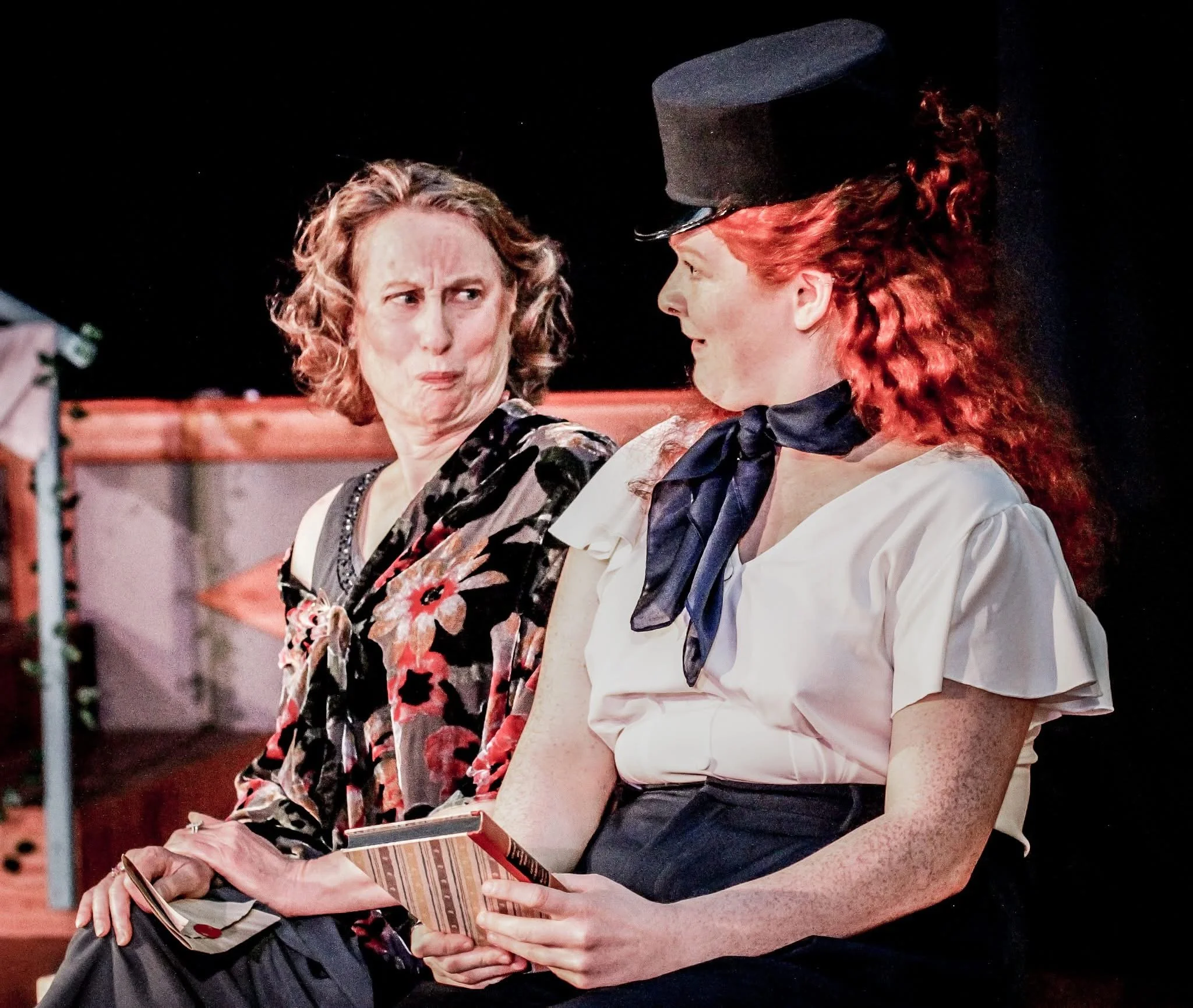
It’s within these relationships, and in particular the central relationship between Beatrice and Benedick, where this production truly distinguishes itself. Ciel Pope’s Beatrice and Scott Bahlmann’s Benedick are not just well-cast, they are exceptional. The confidence each brings to the text, paired with a clear understanding of its context, allows them to move through Shakespeare’s language with a fluidity that is as impressive as it is engaging. There’s no sense of effort in the delivery, no searching for meaning in the moment—it’s already there, fully realized, and it gives both performances a sense of command that elevates everything around them.
Their comfort within the sparring that defines the pair’s relationship is unmistakable. Every exchange lands with precision, each verbal strike meeting its mark and drawing out the humor that is so deeply embedded in the play. It’s not simply that the lines are delivered well, but that they understand exactly how and why they work, allowing the comedy to feel both sharp and organic. The physicality that accompanies these exchanges only strengthens that dynamic, reinforcing the rhythm of a relationship built on wit, challenge, and an undeniable connection.
A true highlight comes in one of the play’s few moments of unguarded seriousness. In the scene where Beatrice demands proof of Benedick’s love, Ciel delivers a passionately charged quid pro quo that shifts the stakes entirely. What had been playful becomes urgent, and what had been banter becomes something far more consequential. For those familiar with the play, the moment is expected, but here it carries a weight that feels newly discovered. In Ciel’s hands, it becomes something genuinely epic, a turning point that resonates well beyond the scene itself.
Scott meets that moment with equal strength, allowing Benedick’s transformation to feel both believable and earned. The shift from witty observer to active participant in the play’s central conflict is handled with care, and the emotional grounding he brings ensures that the moment lands with the impact it deserves.
Together, this pair delivers two of the strongest Shakespearean performances you’re likely to see on any stage. They set a remarkably high bar, one that the rest of the cast rises to meet. The ensemble, to a person, is a joy to watch, operating with a cohesion and sense of play that keeps the production lively and engaging from start to finish.
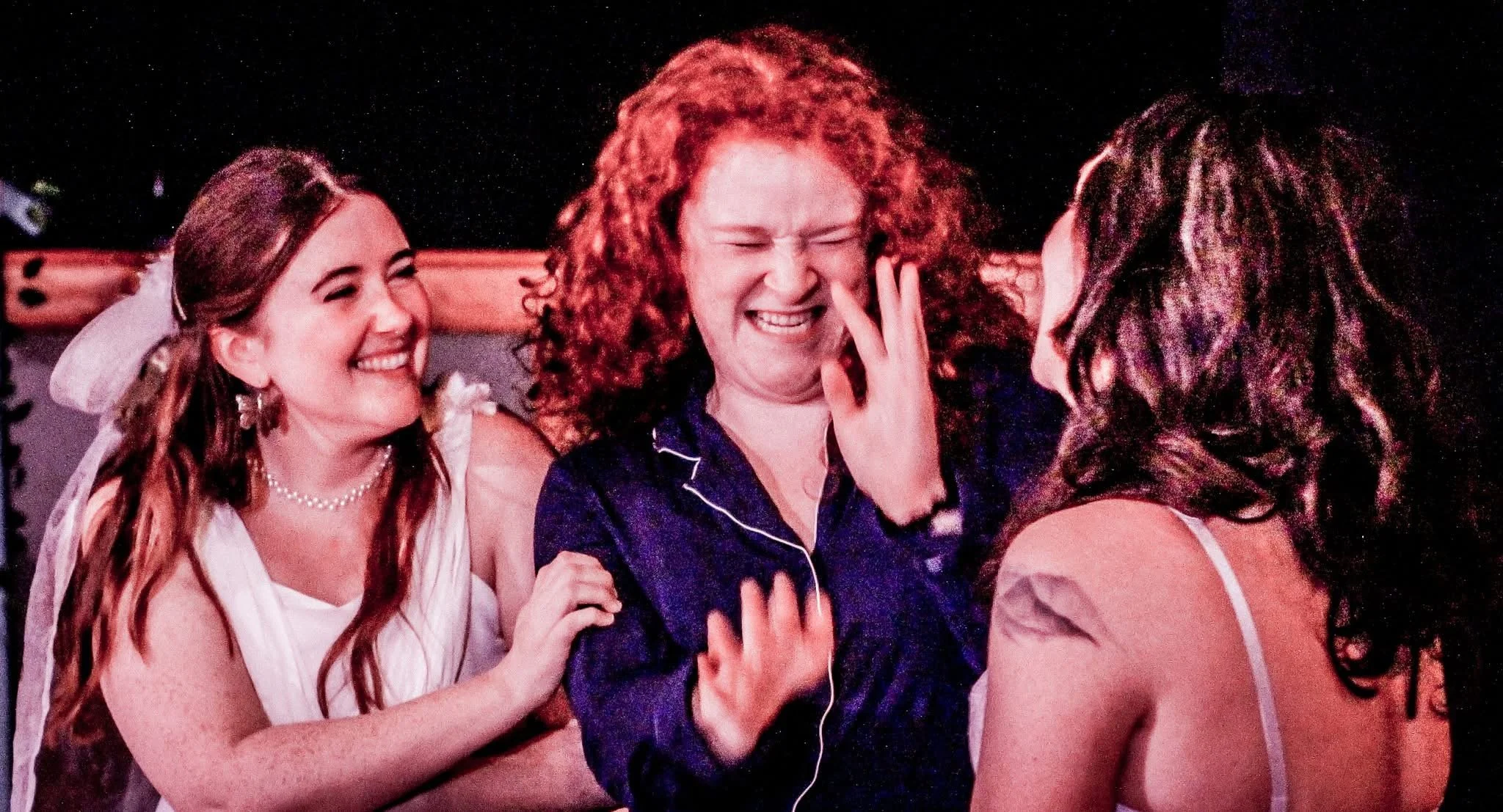
Around Beatrice and Benedick, Naomi Ryan’s Hero provides an emotional center to the production, particularly in the wedding scene, which carries a strong emotional charge and marks a clear tonal shift. Naomi is phenomenal in this scene, in which her character pours out her heart and soul on to the stage. Nick Magles leans into Claudio’s more dramatic tendencies, allowing the character’s heightened emotions to come through, while Michelle Hensel’s Leonata brings authority and presence, particularly in moments where she must confront Claudio’s actions.
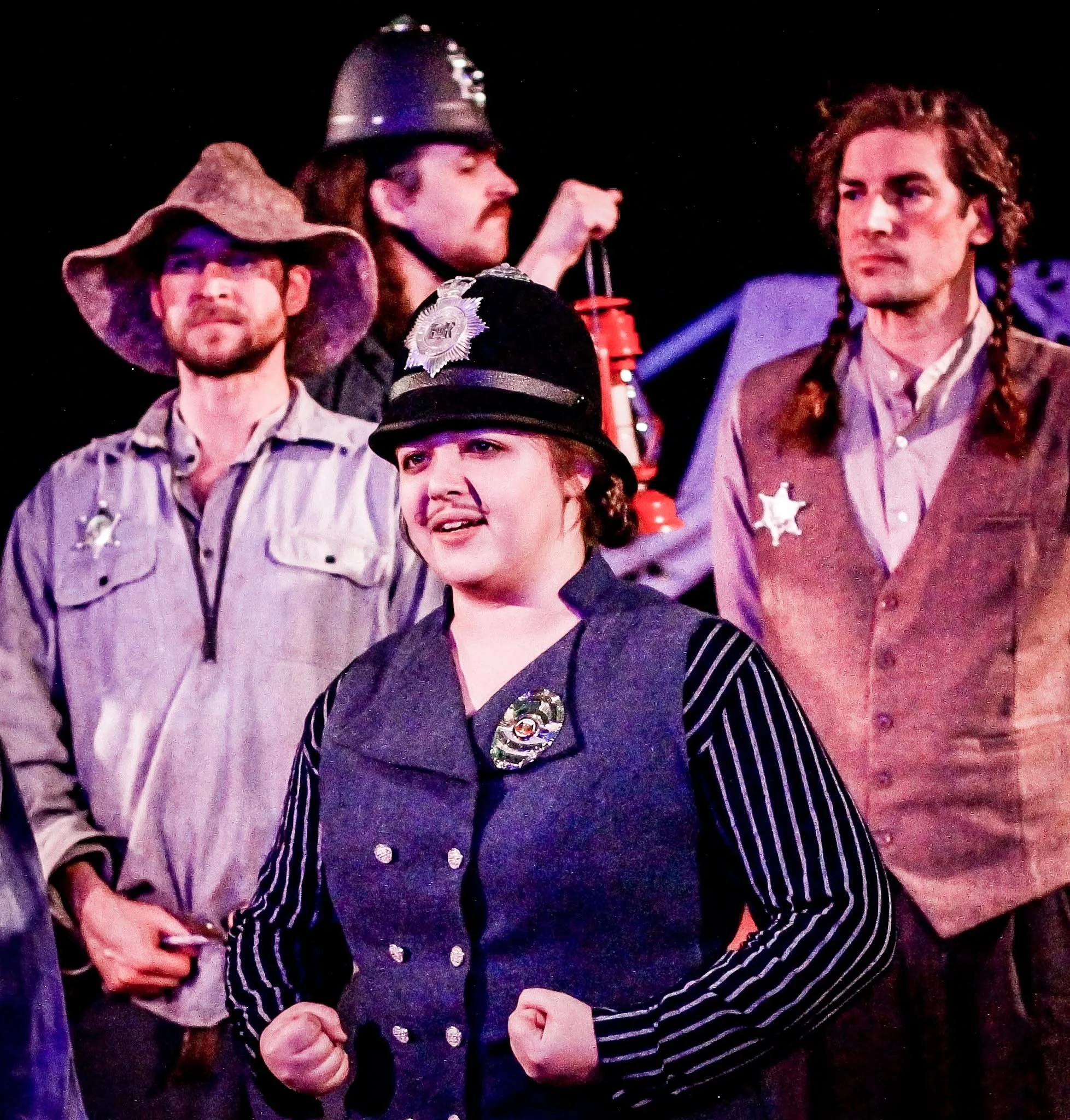
But if there is a heartbeat to this production, it lies within the ensemble, whose collective performance ultimately becomes the true differentiator here—even beyond the excellent work of the play’s two lead couples, Ciel and Scott as Beatrice and Benedick, and Naomi and Nick as Hero and Claudio. They move as a unified whole, supporting the rhythm of the play while still carving out distinct and memorable moments. If there is one standout among them, it is Miranda McClave as Dogberry. Miranda’s performance is sharp, confident, and wonderfully precise in its handling of Dogberry’s famously mangled vocabulary, turning each misuse of language into a comedic opportunity that lands cleanly and consistently. It’s a performance that draws focus whenever she is on stage, and for good reason.
Elsewhere, Rose Hatmaker delivers a steady and grounded Don Pedro, providing a strong anchor within the story’s shifting dynamics. Kerry Christiansen’s Vicar serves as a welcome voice of reason when the narrative most needs it, offering balance amid the chaos. Lillianna Barlow leans fully into Don Jon’s role as a diabolical instigator, embracing the character’s mischief with clarity of intent, while Ben Shafer’s Balthasar once again highlights the musical strength of the production, showcasing both vocal ability and instrumental skill. His delivery of the play’s musical accompaniments are delivered with a simplicity that fits comfortably within the world of the production, and the ensemble’s singing throughout is equally strong, adding texture without pulling focus.
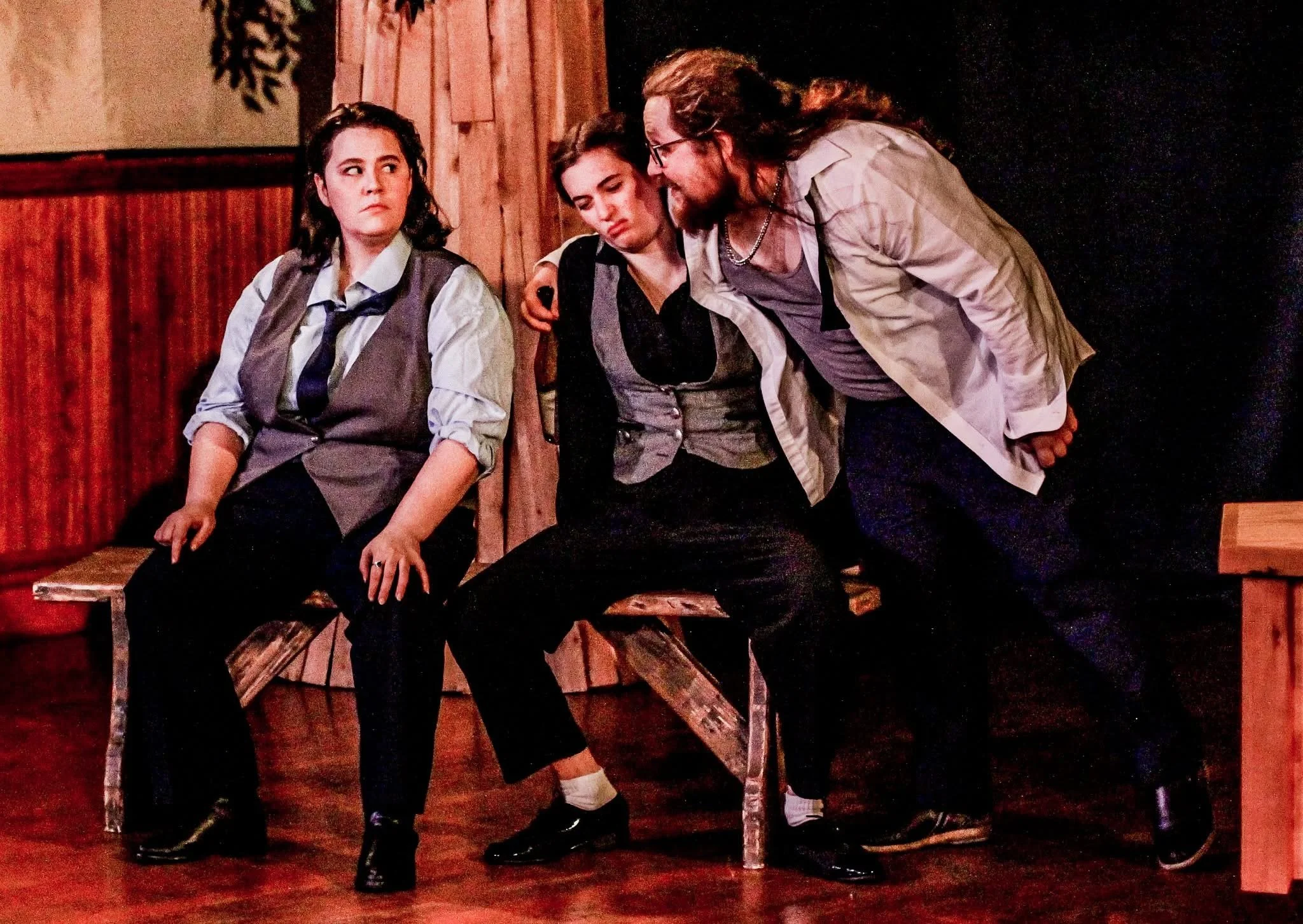
The production finds much of its humor in well-executed staging choices, particularly in the series of scenes where characters attempt—and fail—to remain unseen. These moments are played with a clear understanding of their farcical nature, with physical comedy enhancing the text and reinforcing the play’s comedic backbone.
Visually, the piece embraces a simplicity that works in its favor. The set, composed primarily of benches and accented by orange trees and baskets, allows for fluid movement within a thrust-style playing space. Lighting, designed by Austin Krieg, with its warm orange tones, complements this aesthetic and reinforces the environment. Libby Wennstrom’s costume design is particularly effective, not only in its coordinated color palettes that subtly connect characters and relationships, but in the use of animal masks during the masquerade. Each mask is uniquely crafted to reflect the individual character, adding a layer of visual storytelling that enhances both the intrigue of the scene and the broader sense of character identity throughout the production.
Genevieve Barlow’s direction is the thread that ties all of this together, and the cohesiveness she brings to the production is unmistakable. There is a clear understanding not only of Shakespeare’s text, but of its intent. The production is funny when it needs to be, and just as importantly, it is strong and grounded when the moment calls for it. Her cast is fully bought into the design and vision of the piece, and that unity is evident in every scene. It also fits remarkably well within the Fort Worden venue, a space one might not immediately associate with Shakespeare, yet here feels entirely at home. All in all, this is a top-flight production that deserves to be seen—not just by fans of the Bard, but by anyone who loves theatre.
Saltfire Theatre’s Much Ado About Nothing reminds us why this play has endured for centuries—it thrives in the hands of artists who trust both the language and each other. With standout work from its lead couples, a vibrant and committed ensemble, and a clear, unified vision guiding it forward, this production delivers both the joy and the substance that make Shakespeare so rewarding. It’s the kind of performance that invites you to settle in, laugh freely, and, by the end, feel just a little more connected—to the story, to the characters, and to the shared experience of live theatre.
The Saltfire Theatre production of Much Ado About Nothing runs on stage at the JFK Building at Fort Worden Stage Park in Port Townsend through April 12. For more information, including ticket availability and sales, visit https://saltfiretheatre.org/index.html.
Photo credit: Richard Alan Sloane