
Stage Review - A Midsummer Night’s Dream
Presented By: Oregon Shakespeare Festival - Ashland, OR
Show Run: March 13 - October 25, 2026
Date Reviewed: Thursday, June 4, 2026
Run Time: 2 Hours, 30 Minutes (no intermission)
Reviewed by: Greg Heilman
One thing that is almost a given when attending a Shakespeare production at the Oregon Shakespeare Festival is that the fundamentals are already in place. The actors know the text inside and out. They understand not only what the words mean, but the intent behind them, and they possess the skill to shape those words to fit a director's vision without losing Shakespeare's voice in the process. Perhaps it is because those basics are so thoroughly mastered that OSF productions are able to reach a level of artistry and innovation that few other companies can consistently achieve.
Such is the case with A Midsummer Night's Dream, running through October 25 in the Angus Bowmer Theatre. Shakespeare's beloved comedy of mismatched lovers, meddling fairies, and earnest amateur actors is a play with which I am intimately familiar. I've performed in it myself and, on average, have seen at least one production every season for the last five years. Yet despite that familiarity, director Marcela Lorca's interpretation is among the most inventive and visually striking versions of the play that I have encountered.
Set within a whimsical steampunk-inspired world and featuring original music by Justin Huertas, this production embraces imagination at every turn. It never loses sight of the heart of Shakespeare's story, but it approaches the material with a sense of playfulness and theatricality that makes the familiar feel fresh once again.
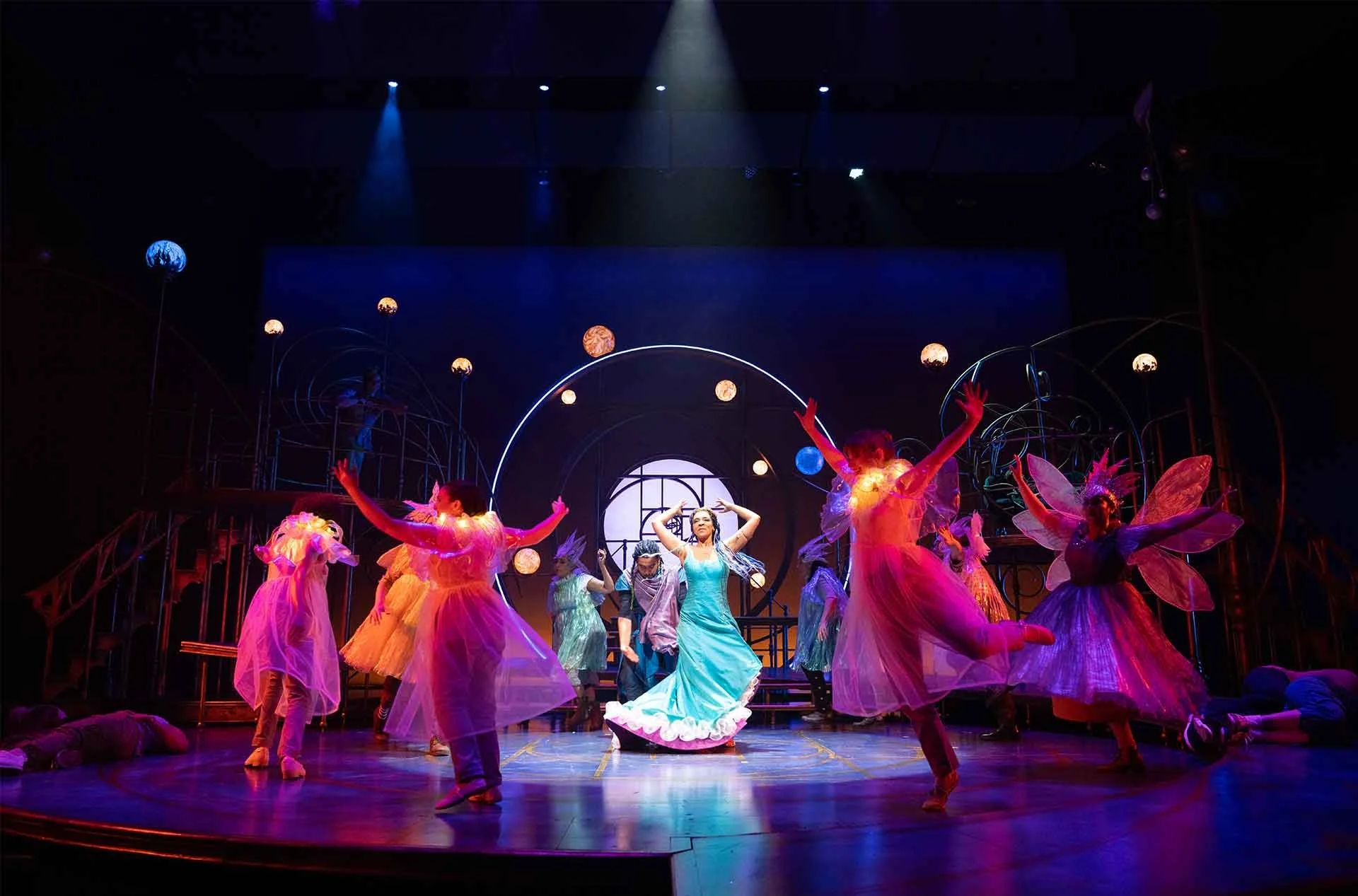
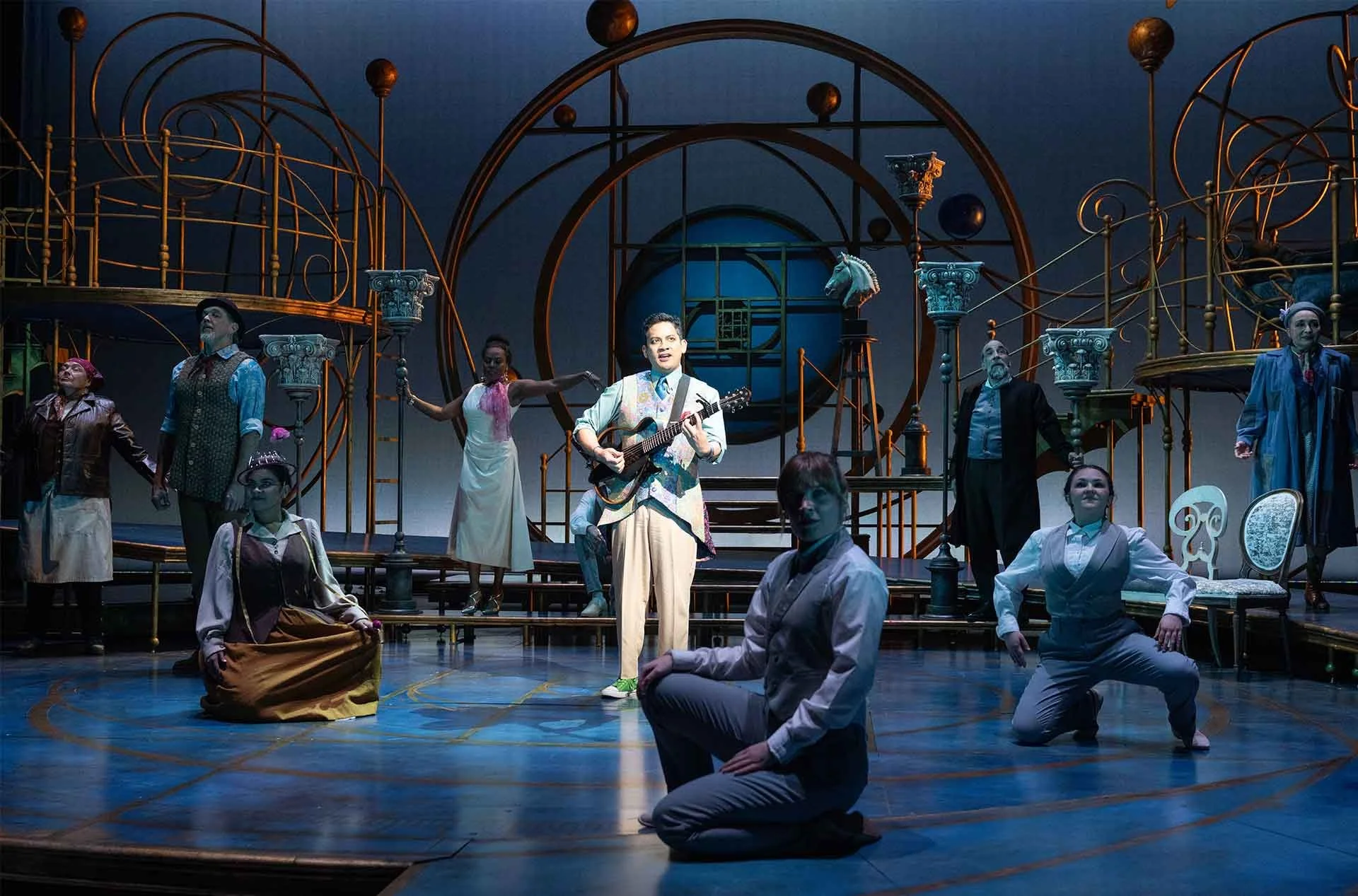
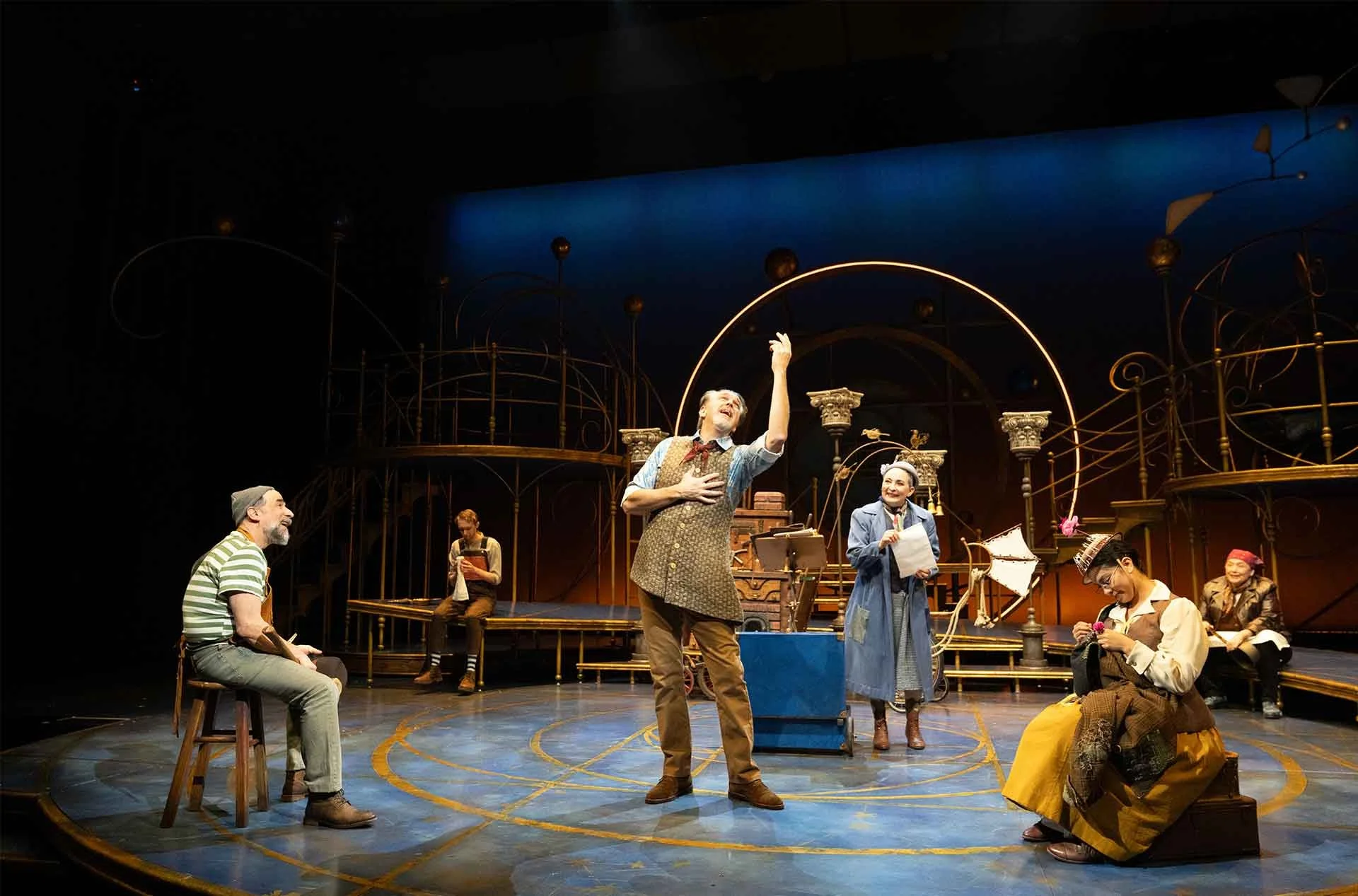
The first thing audiences are likely to notice is Luciana Stecconi's scenic design. Filled with weathered bronze tones, industrial pipes, stairways, platforms, and glowing orbs, the set evokes the speculative worlds of H.G. Wells while still maintaining the magical qualities essential to Shakespeare's enchanted forest. It is a world that feels simultaneously mechanical and dreamlike, a place where invention and magic comfortably coexist. Sonya Berlovitz's costumes extend that aesthetic beautifully, creating a visual language that fully commits to the production's ruggedly stunning concept. Together, the design team crafts an environment that is unlike any Midsummer I have previously encountered, while still honoring the imagery and wonder audiences expect from the play.
What makes Marcela's production particularly successful is its understanding that Shakespeare's language and humor are not mutually exclusive. The text remains intact, but the delivery frequently shifts toward comedy. Lines that might be played with gravity in another production are approached with wit, timing, and physicality here. The result is a show that feels remarkably accessible, and ultimately fun. Whether audience members are lifelong Shakespeare enthusiasts or students experiencing the play for the first time, the production finds ways to communicate through movement, expression, and visual storytelling as effectively as it does through language. On that note about students, I found my experience at OSF this Spring refreshing, as I witnessed full houses, impacted by the influx of school trips into the space. I’m sure that more than a few of these students will be inspired by the striking quality of these productions.
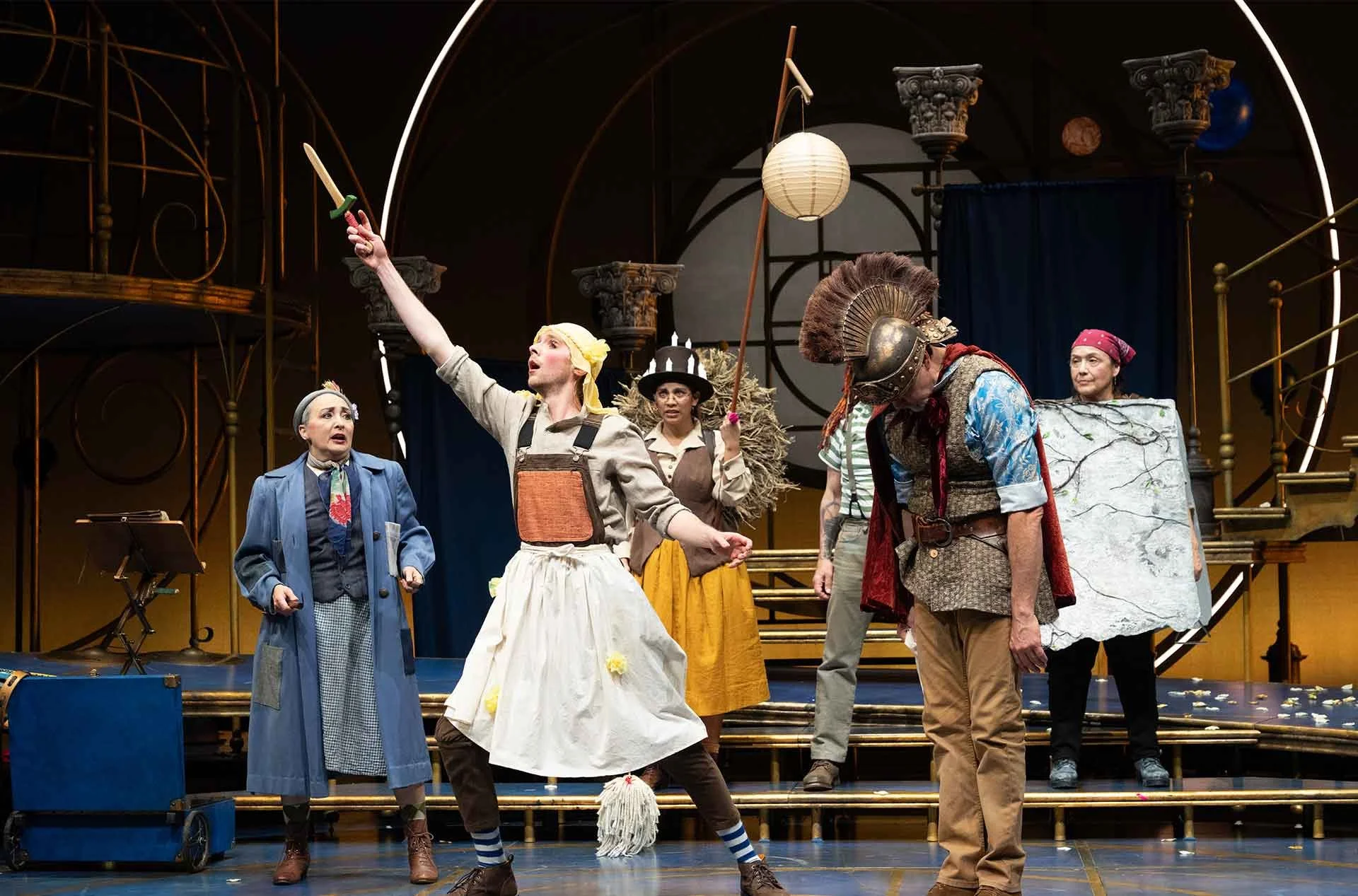
The physical storytelling becomes one of the evening's greatest strengths. The cast attacks the material with the energy and commitment, like the mechanicals that feel like an accomplished comedy troupe. Sight gags, pratfalls, exaggerated reactions, and clever bits of business fill the stage, but never at the expense of character or story. The actors understand that the humor works because it is rooted in truth, and they commit fully to every moment. Even transitions between scenes and worlds become opportunities for storytelling, with the movement between mortals and fairies executed with elegance and precision.
The ensemble as a whole deserves significant praise. While Shakespeare's comedies often contain memorable individual performances, this production succeeds because every actor is working from the same playbook. The chemistry between cast members is evident throughout, creating a sense that everyone is invested not only in their own performance but in supporting the comedy and storytelling happening around them.
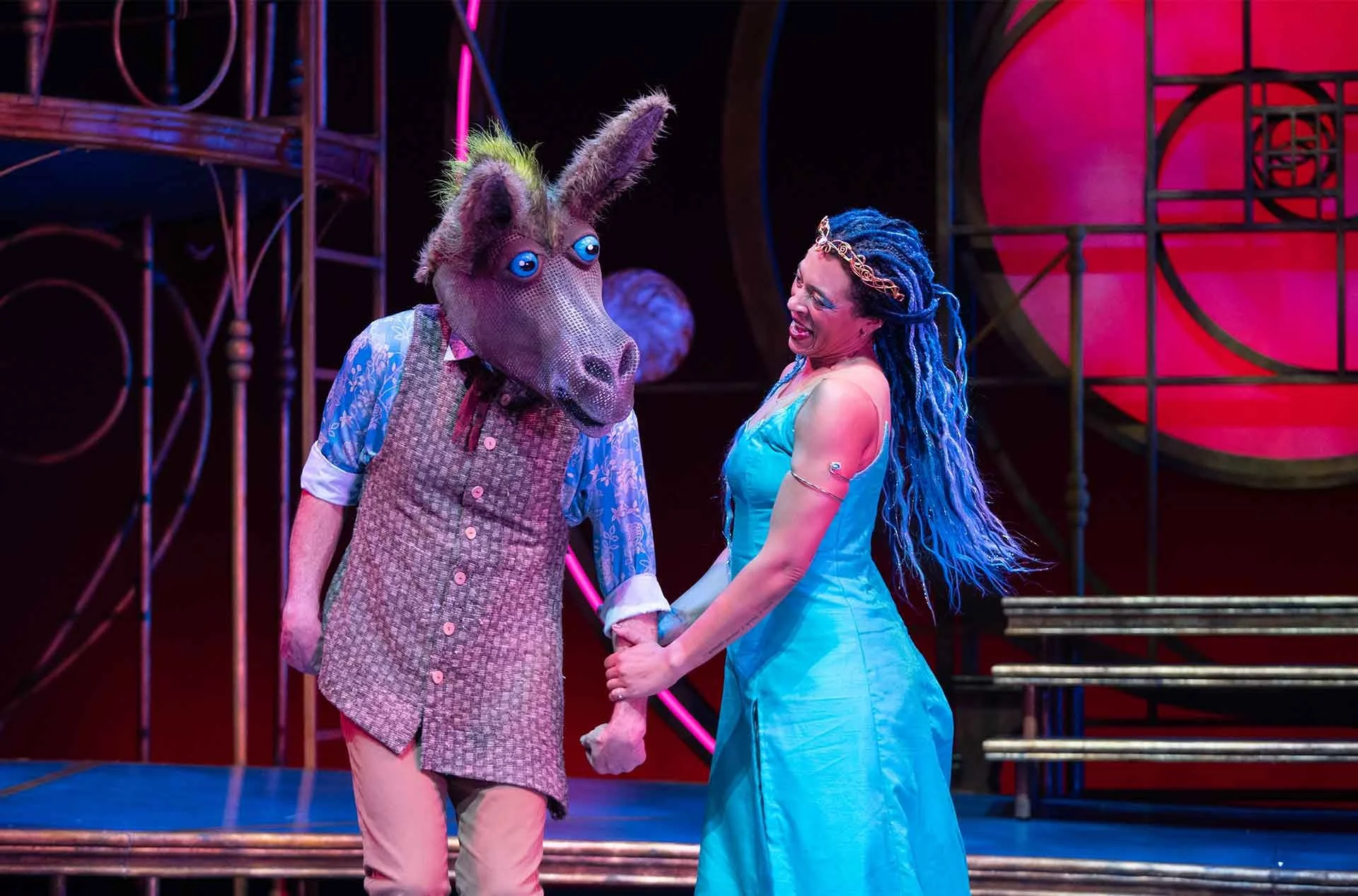
Among the many standout performances, Al Espinosa is unforgettable as Nick Bottom. Bottom is one of Shakespeare's great comic creations, a man whose confidence vastly exceeds his abilities, and Al embraces every opportunity the role provides. His performance is delightfully larger than life without ever becoming cartoonish. What makes the characterization work so well is that Bottom never appears aware of how ridiculous he is. Al plays every moment with complete sincerity, allowing the audience to laugh at the character while still finding him oddly endearing.
As Puck, Justin Huertas serves as the production's mischievous engine. From his first appearance, Justin radiates playful energy, constantly in motion and seemingly capable of appearing anywhere at any moment. His physical performance is among the strongest in the production, combining athleticism with impeccable comic timing. Whether manipulating the lovers, assisting Oberon, or engaging directly with the audience, he captures the chaotic spirit that is so much a part of Puck’s personality. A particularly memorable bit during one of my favorite scenes, the fight among the lovers, is carried out by both Justin and Armando McClain, as Puck and Oberon sit above the quartet munching on invisible popcorn. That’s just one example of the multi-layered comic storytelling in play here. Justin's contributions extend beyond his performance as well. His original songs, written specifically for this production, feel seamlessly integrated into the storytelling, adding another layer of charm and personality to an already distinctive interpretation.
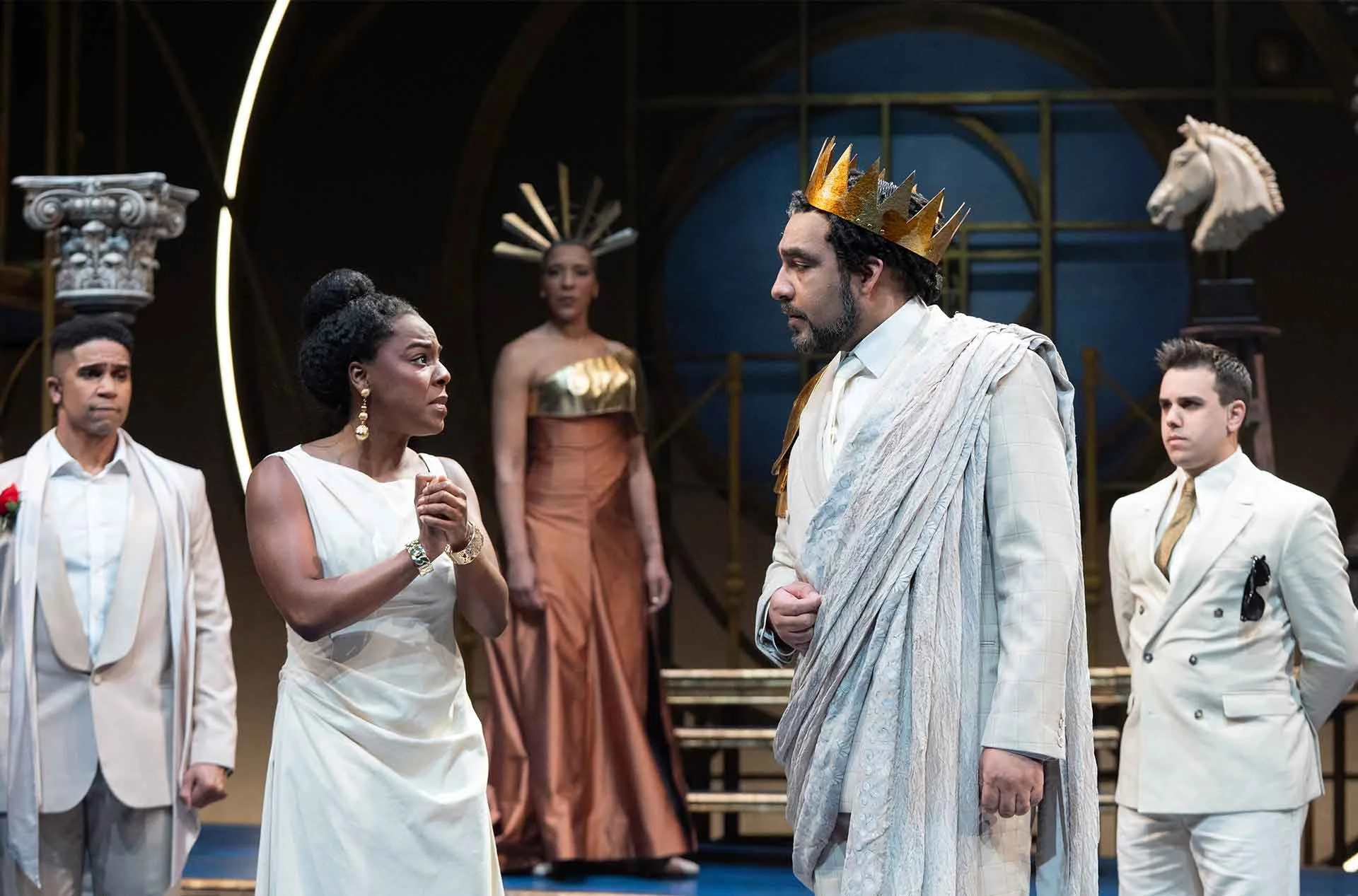
The dual casting of Armando McClain as Theseus and Oberon and Jessika D. Williams as Hippolyta and Titania highlights the versatility of both performers. Armando creates two distinctly different figures, finding the stern authority of Athens' ruler while also embracing the commanding supernatural presence of the fairy king. Across from him, Jessika delivers equally compelling portrayals. Her Hippolyta projects strength and intelligence, often communicating volumes with a single look, while her Titania possesses an ethereal quality that makes her feel perfectly at home within the magical world of the play. Together they provide a strong anchor for both the mortal and fairy storylines. Most productions employ four actors to cover these roles, but it’s a statement, not just about the ability of the actors, but also the crew led by stage manager Becca Rowlett, to facilitate costume and scene changes so fluidly.
The quartet of lovers supplies many of the evening's biggest laughs. Saran Evelyn Bakari's Hermia, Rhea Bradley's Helena, and Jonathan Luke Stevens' Demetrius all navigate the increasingly absurd romantic chaos with confidence and skill. It is Jaysen Wright's Lysander, however, who emerges as my favorite performance of the evening. Jaysen combines strong athleticism, sharp comic instincts, and a complete willingness to throw himself into all aspects of the role. Once the love potion takes hold, his performance becomes a masterclass in heightened comedy. Lesser actors might be tempted to simply play the broadest possible version of the joke, but Jaysen continually discovers new ways to escalate the absurdity, making every appearance feel fresh. His exaggerated devotion under the spell generated some of the loudest laughter of the evening, and his commitment never wavered.
The Mechanicals are another source of consistent delight. Anthony Kirby, Lisa Tejero, U. Jonathan Toppo, and Sheila Tousey join Al in creating a troupe of earnest performers whose are charged with performing for Theseus and Hyppolita’s upcoming nuptuals. Their scenes capture everything audiences love about Shakespeare's amateur actors, and their interactions feel wonderfully spontaneous despite the obvious precision behind the performances. Every member of the group understands exactly how much comedy to bring to a moment and when to step back and allow someone else to shine. Additionally, the group also provides the foley, or sound effects, for their performances within their performances, adding a nice touch to their scenes.
The movement and combat (U. Jonathan Toppo, Fight Director) work deserve recognition as well. The production is constantly in motion, and the choreography helps maintain its momentum from beginning to end. The fight sequences are clean, entertaining, and fully integrated into the storytelling rather than feeling like isolated set pieces. Like so many aspects of the production, they contribute to a world that feels alive and constantly evolving.
Part of what has allowed A Midsummer Night's Dream to endure for more than four hundred years is its flexibility. Every generation discovers new ways to tell the story, finding fresh perspectives within Shakespeare's timeless exploration of love, desire, jealousy, and imagination. Marcela Lorca's production rises above most others because it understands that innovation does not require abandoning tradition. By building upon a foundation of exceptional textual understanding, imaginative design, memorable performances, and joyful physical comedy, Oregon Shakespeare Festival has created a Midsummer that feels both familiar and entirely new. For audiences encountering the play for the first time and for those, like myself, who have spent years revisiting it, this production offers a reminder that even the stories we think we know best can still surprise us.
The Oregon Shakespeare Festival production of A Midsummer Night’s Dream runs on stage at the Angus Bowmer Theatre through October 24. For more information about the current season and this show, including ticket availability and sales, visit https://www.osfashland.org/.
Photo credit: Jenny Graham