
Stage Review - Pipeline (Lakewood Playhouse)
Stage Review - Pipeline
Presented By: Lakewood Playhouse - Lakewood, WA
Show Run: April 24 - May 10, 2026
Date Reviewed: Sunday, May 03, 2026
Run Time: 90 Minutes (no intermission)
Reviewed by: Greg Heilman
Lakewood Playhouse continues its strong season, themed “Finding Your Voice”, with Dominique Morisseau’s Pipeline, a gripping and deeply human story that examines the intersection of education, race, and the fragile, often painful bond between parent and child. Directed by Michelle N. Matlock, and running through May 10, this production shows an appreciation for the intimacy of Morisseau’s writing, allowing the language and the relationships within the text to do the heavy lifting while trusting the actors to navigate its emotional terrain.
Set against the backdrop of a public school system that feels as much like an obstacle as it does an institution, Pipeline follows Nya, a dedicated inner-city teacher, as she grapples with the fallout of an incident involving her son Omari at his private boarding school. The play moves fluidly between spaces—classroom, home, institutional offices—creating a layered portrait of a mother trying to reconcile her professional ideals with the very real, very personal stakes of her son’s future.
One of the most striking aspects of this production is how naturally the dialogue unfolds. Morisseau’s script is rich with nuance, and here, those conversations feel immediate and authentic. Scenes often build to a peak only to pivot on a final line, a choice or revelation that reframes everything that came before it. That rhythm is handled with care, allowing the pacing to breathe while still maintaining a steady sense of forward motion.
Before getting into the performances themselves, it’s worth taking a moment to recognize the work of director Michelle N. Matlock. In many ways, the mark of strong direction is found in what isn’t immediately noticed. Like a referee in a well-run game, the best directors don’t call attention to themselves; instead, they create the conditions for everything around them to function at a high level. When a production moves with clarity, when the pacing feels right, when performances land with impact, the credit often goes to the actors or designers, with the director acknowledged more in passing. Here, though, what becomes clear is the environment Michelle has built for her cast. Pipeline is a play that demands emotional honesty—passion, tension, and vulnerability—and this ensemble meets those demands head-on. That kind of work doesn’t happen by accident. Michelle gives her actors the freedom to be expansive when the moment calls for it and restrained when silence carries more weight, understanding that a pause can be just as powerful as a line. The result is a space where the performers can push into material that is at times painful and emotionally exhausting, yet still deeply human. That level of trust between director and cast is palpable throughout, and it’s a defining strength of this production.
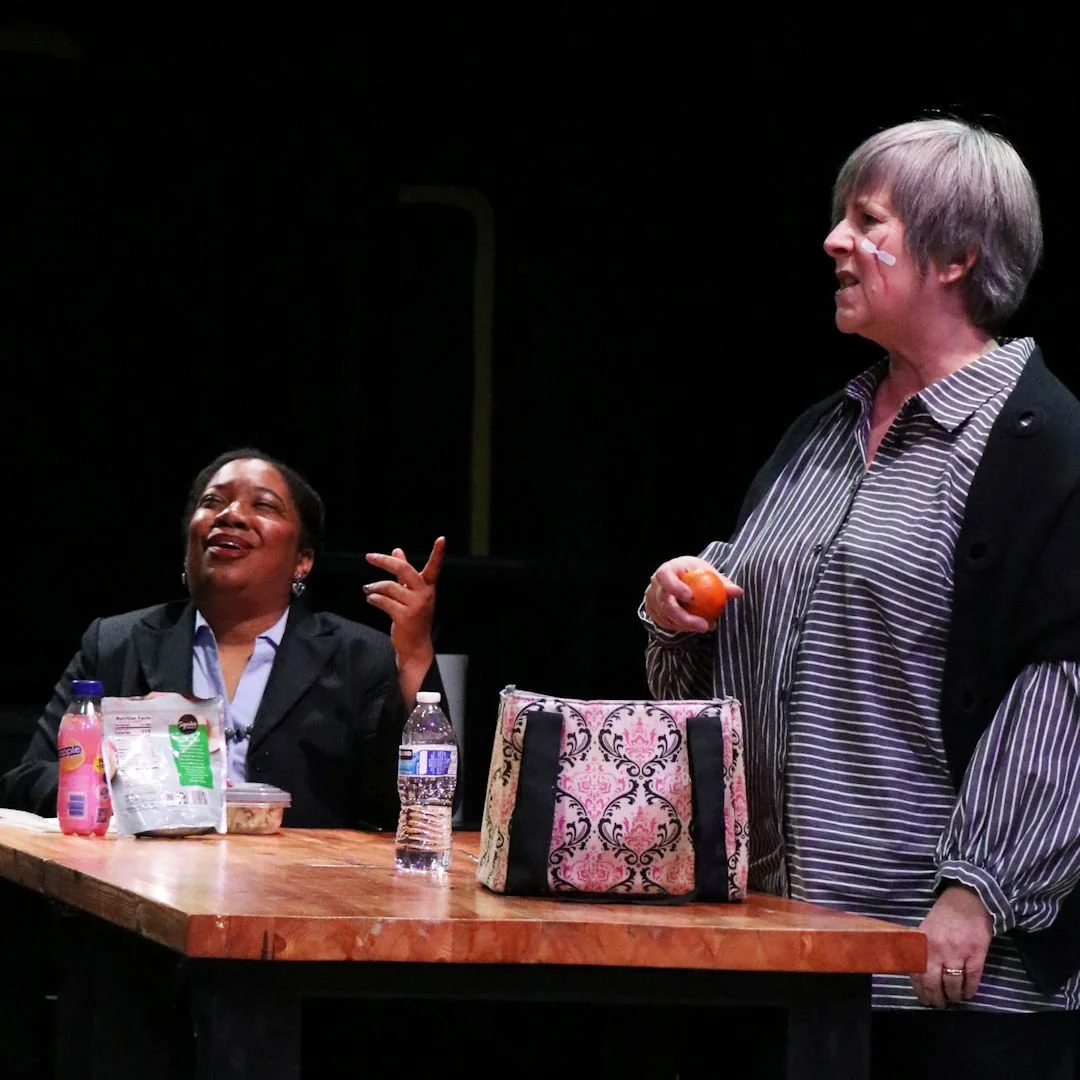
That foundation is evident in each of the performances, beginning with Whitney Crawford’s Nya, who centers the production with a portrayal that captures both strength and vulnerability. She is at her best in the moments where those qualities collide—when Nya is forced to confront the limits of her control as a mother. There’s a rawness to Whitney’s work, particularly in the play’s most emotionally charged exchanges, whether with son Omari or his friend Jasmine, where she fully leans into the question that defines the character: what do you do when love alone isn’t enough to protect your child? Her performance never loses sight of Nya’s intelligence or conviction, even as the world around her begins to close in.
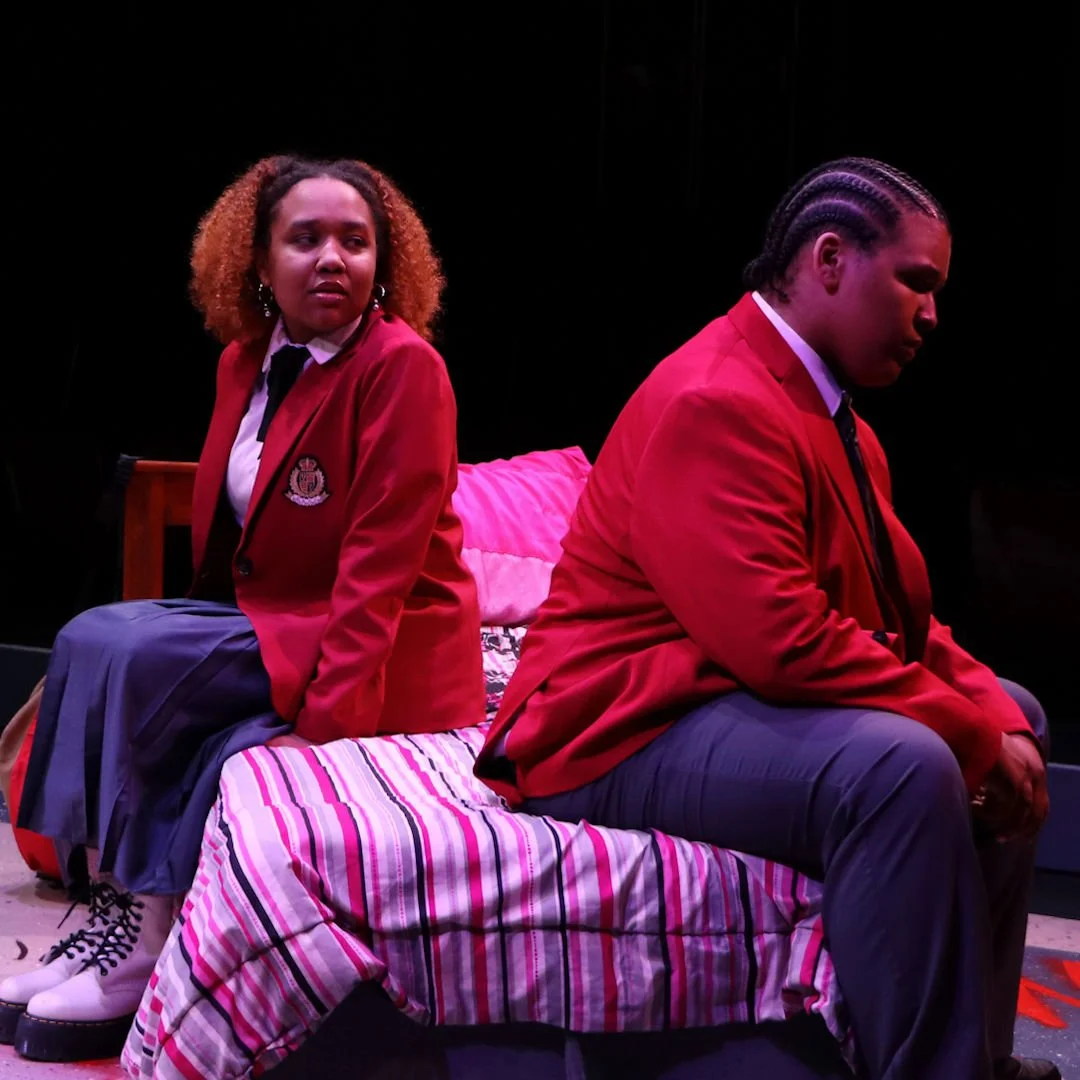
Ultimately, this is a piece that relies on the ensemble to shine together, but alongside the group at large, special attention should be given to Isaiah Myers for his work as Nya’s son Omari. This is an emotionally demanding role, and Isaiah holds nothing back, carrying the weight of the character’s turmoil with a performance that is, quite frankly, breathtaking. He creates a young man caught between worlds, searching for footing in places that never seem fully his. What makes the portrayal so compelling is the clarity with which he separates action from identity—Omari may make poor decisions, but Isaiah ensures the audience never loses sight of the good heart behind them. His work serves as both a powerful complement and contrast to Whitney’s Nya, and the chemistry between the two is exceptional, anchoring the play’s central relationship in something deeply authentic. That same strength carries into his scenes with Darryin B. Cunningham, where the dynamic between Omari and his father Xavier adds another layer to the character’s struggle, further shaping the emotional landscape of the story.
Another exceptional performance comes from Diana Trotter as Laurie, offering a sharply defined contrast to Whitney’s Nya, placing two educators from different generations and philosophies directly opposite one another. Where Nya approaches her students with empathy and a desire to support, Laurie is rooted in a more traditional mindset, one that prioritizes accountability over accommodation. Diana, in her characterization, is rigid, presenting a character whose views feel shaped by an earlier era of education, but she doesn’t stop at the surface. Beneath Laurie’s firm stance is a mix of frustration and fear—fear of a system she no longer fully recognizes, and frustration at her perceived inability to reach the students in front of her. Diana captures those layers effectively, allowing Laurie to exist as more than just an ideological counterpoint, but as a fully realized individual navigating her own sense of displacement within a changing landscape.
Straddling the two generations of teachers is Don Anderson II’s Dun, the school’s security guard, who provides a sense of stability and perspective, a character who understands both Nya and Laurie in ways that allow him to bridge the gap between them, even if only partially. Don brings a calm, steady presence that helps ground some of the play’s more volatile moments.
Kaelynn Miller’s Jasmine and Darryin B. Cunningham’s Xavier each contribute to the broader world of the play, with Kaelynn’s work standing out for the way she navigates a challenging emotional arc. Her pacing within scenes—particularly when under pressure—feels intentional and measured, adding to the production’s exploration of how individuals respond when pushed. Darryin is extremely strong as Omari’s father, exuding the sense of the distant father, who on the outside is perceived as a villainous figure in his son’s life, but not willing to pursue setting the record straight, the reason why implied, and never explicitly explored.
The visual world of this production makes particularly effective use of Lakewood Playhouse’s intimate, flexible space. Aleeza McCant’s scenic design centers the action within a square playing area surrounded on multiple sides by audience seating, immediately placing the story under a kind of constant observation—an apt reflection of the scrutiny these characters live under. The floor itself becomes a focal point, marked by a bold, almost jagged streak of red that cuts through the space, evoking both emotional fracture and the ever-present consequences that ripple through the narrative. Around it, the environment is intentionally spare: lockers and institutional elements line the walls, while a handful of movable pieces—a desk, chairs, a bed—are brought on and off as needed. Under Michelle’s direction, those transitions are fluid and purposeful, allowing the same space to transform seamlessly from classroom to teacher’s lounge to dorm room without ever breaking the rhythm of the storytelling. The result is a setting that feels both specific and adaptable, reinforcing the idea that these experiences are not confined to a single place, but exist across interconnected systems.
Janna Webber’s lighting design supports those shifts effectively, helping to define space and mood without drawing attention away from the performances, while Stephania Lara’s sound design integrates seamlessly, enhancing the environment while maintaining clarity in a script so dependent on language. Gabrielle Jett’s properties work complements the minimalist approach, ensuring that each piece introduced into the space carries weight and purpose.
Pipeline doesn’t offer easy answers, and Lakewood’s staging doesn’t attempt to impose them. Instead, it creates space for the audience to engage with the questions at its core—about systemic inequities, about communication, about the limits of love and the structures that shape our lives. The result is a production that feels honest, immediate, and deeply relevant, one that offers a powerful and thought-provoking experience that speaks as much to the present moment as it does to the personal stories at its heart.
The Lakewood Playhouse production of Pipeline runs on stage through May 10. For more information, including ticket availability and sales, visit https://www.lakewoodplayhouse.org/.
Photo credit: Ashley Roy Simpson