
Stage Review - Where the Summit Meets the Stars (Harlequin Productions)
Stage Review - Where the Summit Meets the Stars
Presented By: Harlequin Productions - Olympia, WA
Show Run: May 01 - May 17, 2026
Date Reviewed: Saturday, May 02, 2026 (Opening Weekend)
Run Time: 90 Minutes (no intermission)
Reviewed by: Greg Heilman
Most local theaters begin their curtain speeches with a land acknowledgment, a recognition that the storytellers currently occupying the land on which they are presenting their work are not the original occupants of that land, nor the first storytellers to walk upon it. As a community, we are merely stewards of a tradition begun by those original inhabitants, their ancestors, and their descendants generations ago. What resonates even more strongly than those words, though, is when theatre organizations actively invest in elevating Indigenous voices and stories rather than limiting that recognition to a pre-show statement.
Over the past several seasons, regional stages have increasingly embraced works centered on Indigenous experiences, histories, and identities. Harlequin Productions continues that commitment with Frank Henry Kaash Katasse’s Where the Summit Meets the Stars, now on stage at the State Theatre in Olympia through May 17 under the direction of Josephine Keefe. Originally produced by Perseverance Theater in Alaska in 2022, the play blends realism, spirituality, and memory into a story rooted deeply in place, ancestry, and the invisible threads connecting generations.
Set in Alaska and unfolding across both past and present, the play centers on Rose, a young woman navigating grief, family history, and the complicated emotional legacy left behind by her father, John, a fisherman shaped as much by the sea as by the traditions and burdens he carries with him. The story is deeply tied to Tlingit culture and identity, with the play exploring not just individual loss, but the importance of cultural inheritance, storytelling, and ancestral connection within the tribe. Those traditions and beliefs are not presented as background detail, but rather as the emotional and spiritual framework through which the entire story operates. As the narrative unfolds, the audience is pulled into a world where memory and spirituality intertwine, where music and storytelling become conduits to the past, and where the line between the living and ancestral presence feels intentionally blurred. Rather than presenting a straightforward narrative, Katasse’s script unfolds with a poetic structure, asking the audience to experience the emotional truth of the story as much as follow its literal progression.
On the design side, I’ve been consistently impressed throughout Harlequin’s season with the overall production quality. Show after show has featured scenic work that feels inventive without overshadowing the storytelling, lighting and sound that complement both the environment and emotional tone of the productions, and costume design that aligns naturally with the worlds each director is trying to create. Where the Summit Meets the Stars continues that trend with a design package that feels cohesive, thoughtful, and deeply connected to the story being told.
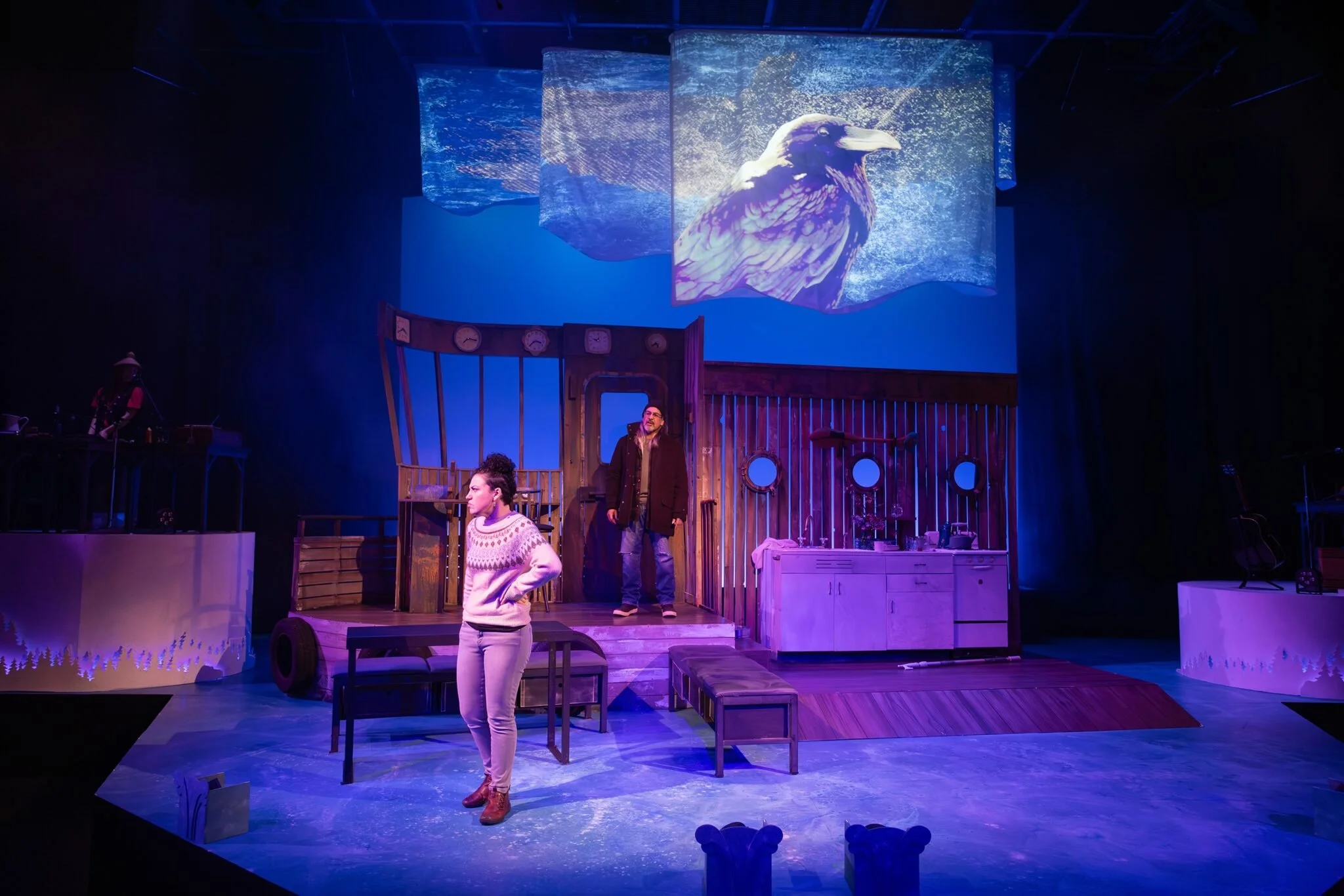
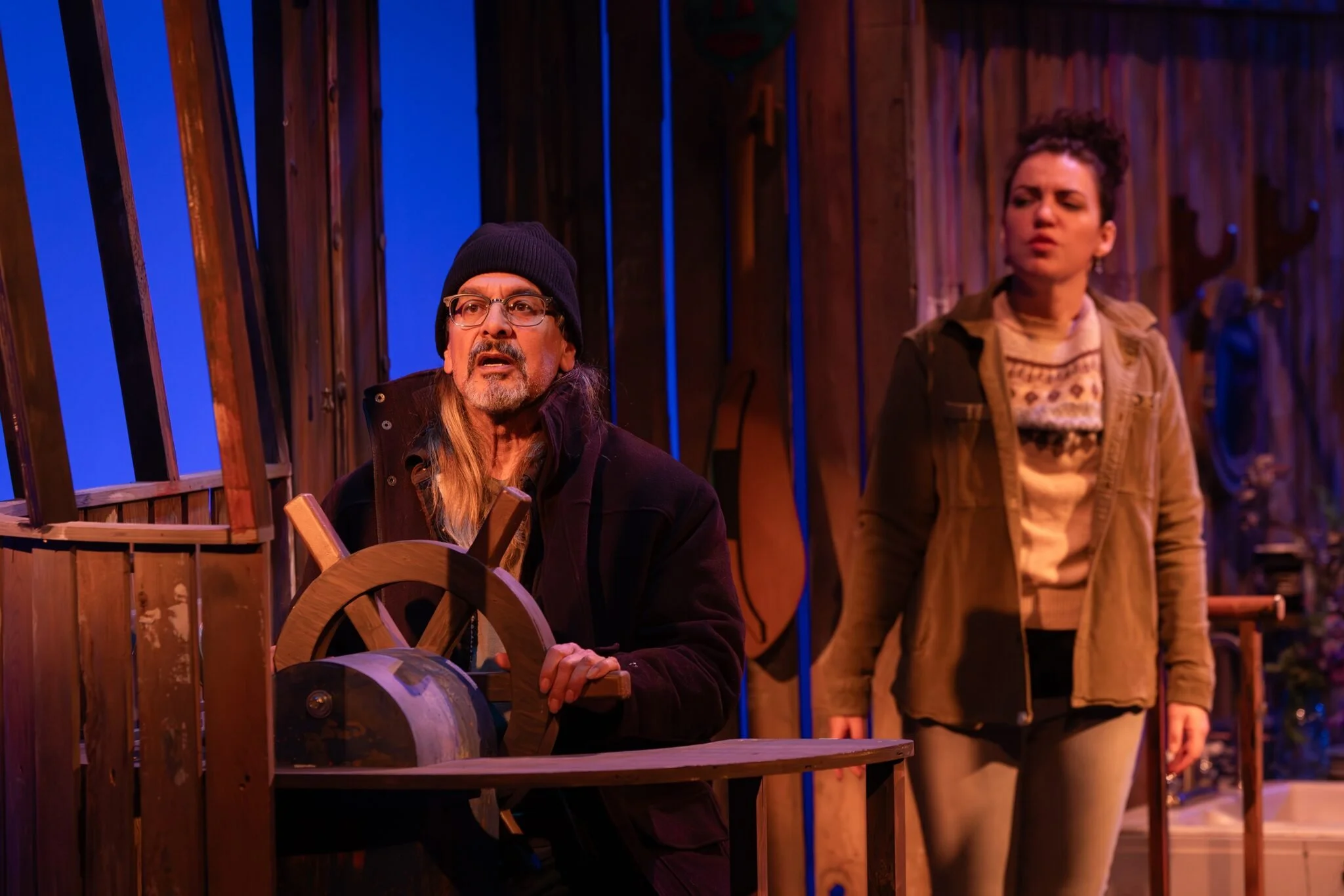
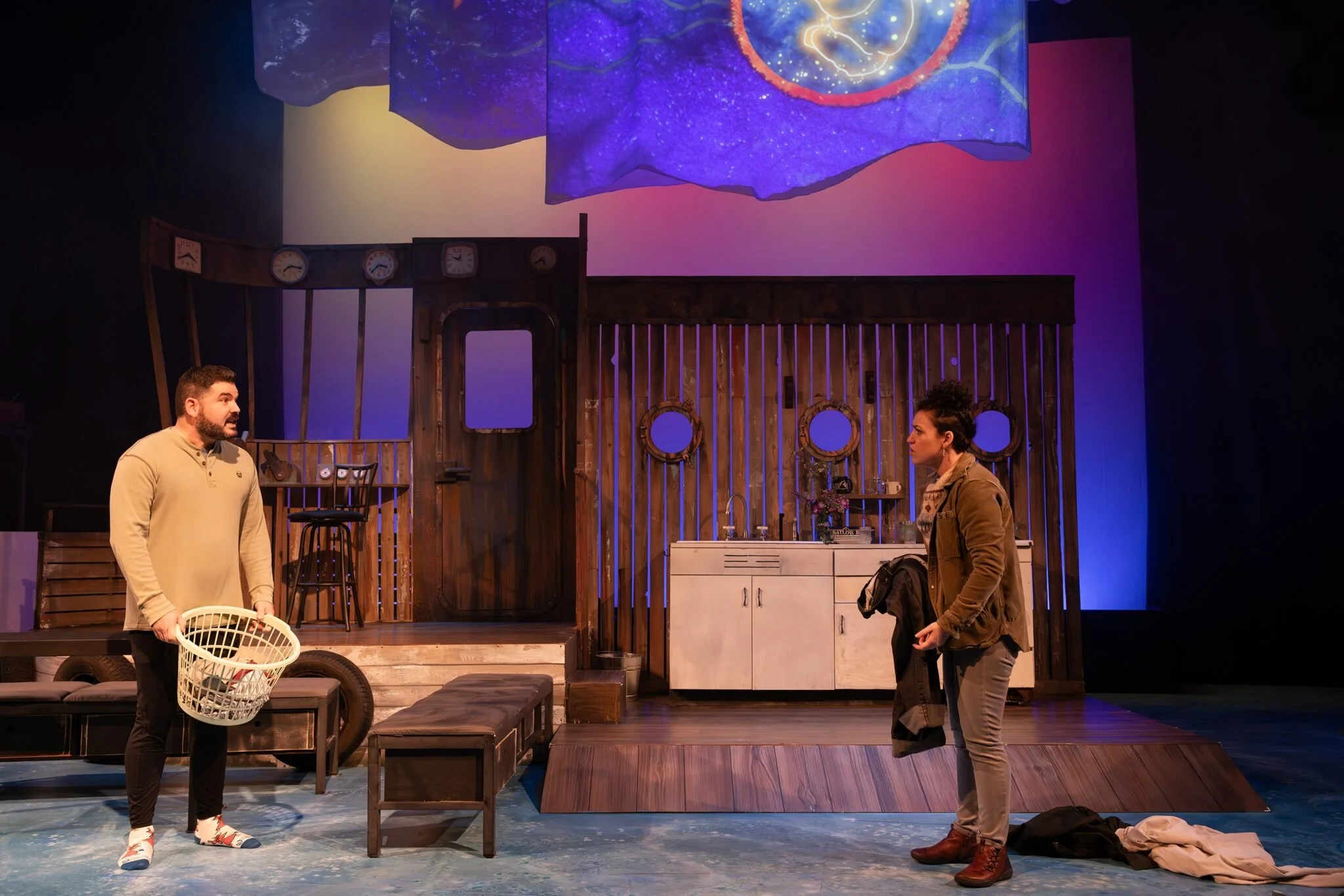
Bruce Haasl’s scenic design immediately establishes a rugged and functional environment shaped by weather, labor, and life on the water. The primary structure resembles a fishing boat opened up to expose its interior workings to the audience, revealing the pilot house, galley, bunk areas, and working spaces within. At the same time, the set transitions seamlessly into the domestic world portrayed in the play’s alternate timeline, functioning equally well as a kitchen and living space. The multi-level construction, sloping surfaces, platforms, and carefully integrated nautical equipment create a world that feels authentic rather than merely representational. It is a set that supports the practical needs of the staging while also reinforcing the emotional duality of the script, existing between memory and present reality.
Combined with Gina Salerno’s sound design and Olivia Burlingame’s lighting, the production creates something quietly immersive from the outset. The lighting, especially during the play’s more mystical sequences, is particularly strong, shaping emotional transitions while also helping the audience navigate the play’s movement between realism and something more ethereal. Isaac Joyce-Shaw’s projection design is used with restraint, enhancing mood and thematic imagery without overwhelming the actors or scenic work, while Araquin Boome’s props and properties help maintain the tactile realism of the environment. Mary Kelsay’s costume design quietly reinforces relationships and character dynamics, coordinating elements between Rose and John in ways that subtly connect the two while still preserving the individuality of each character.
Josephine’s direction explores the poetic nature of the script without allowing it to drift too far from the humanity of the characters. There is a careful balance here between emotional storytelling and movement or imagery that borders on the symbolic. The production incorporates choreography and stylized movement in ways that often feel dreamlike, particularly in sequences involving memory, ancestry, or spiritual connection. At times the play seems less interested in literal explanation than emotional resonance, and Josephine trusts both the audience and the cast enough to let those moments sink in.
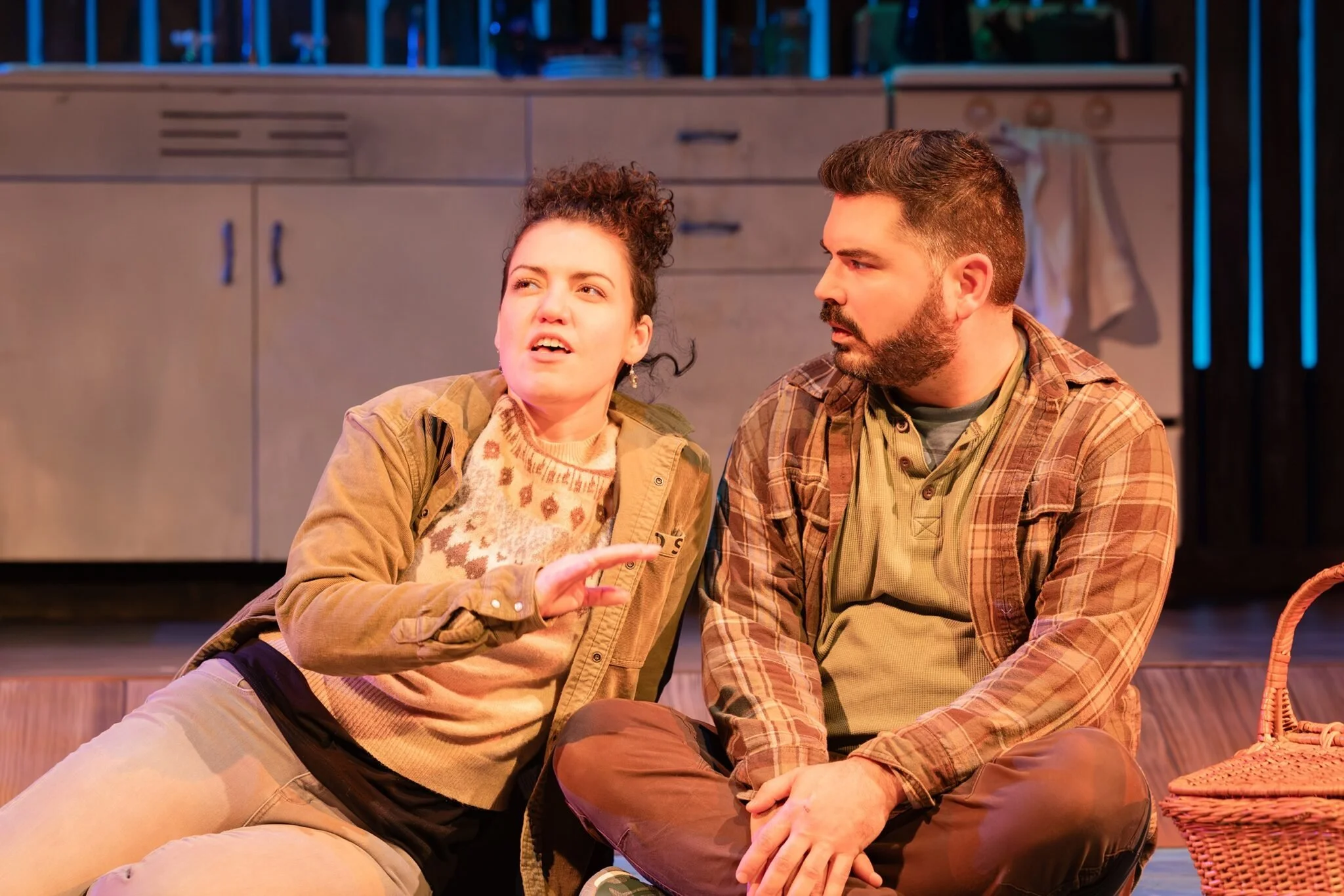
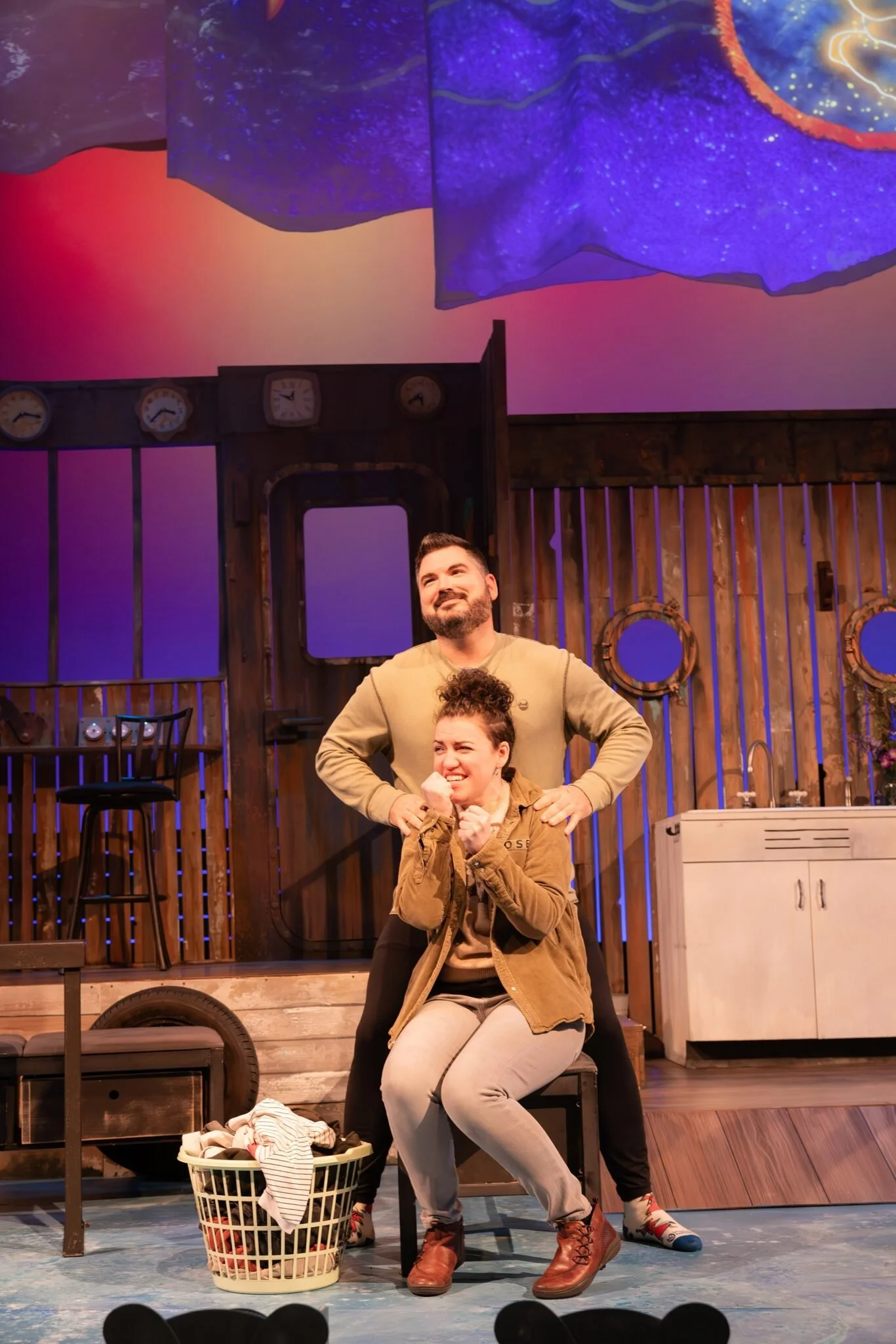
Performance-wise, Ashlie Blaske’s Rose becomes the emotional center of the production, and in many ways, the turn that drives the entirety of the narrative. Every once in a while, I get the opportunity to watch an actor seemingly level up in real time, revealing dimensions to their work that I simply hadn’t seen before. Perhaps I’m late to the game when it comes to Ashlie, and I’m sure there are audience members already familiar with the depth of her abilities, but my prior experience with her performances has largely been rooted in comedic roles. Going into this production, I genuinely did not know what to expect from a character requiring this level of emotional range, complexity, and versatility.
Ashlie doesn’t just meet those demands here, she exceeds them. Her performance is layered, emotionally intelligent, and deeply human, carrying the audience through a story that asks her to navigate multiple converging timelines and emotional realities simultaneously, almost like the central figure in a Christopher Nolan film. There is a remarkable clarity to the way she differentiates emotional states and moments in time without ever making the transitions feel forced or overly technical. Instead, the shifts feel organic, driven by memory, grief, and connection. Ashlie captures both the resilience and vulnerability of Rose while also allowing the audience to sense the spiritual and ancestral weight pressing against the character throughout the play. It’s a performance that not only anchors the emotional core of the production, but one that signals an actor operating at an entirely new level of confidence and depth.
Andrew AJ Roa’s John and Steve Wood’s Anthony function as emotional counterweights within the story, each representing different periods in Rose’s life while existing on opposite sides of the fulcrum created by the choice she is ultimately forced to confront. Andrew brings a rugged weariness to John that feels shaped by years of labor, tradition, and emotional restraint. There is something deeply compelling about how he allows the audience to sense what John is carrying internally even during quieter moments, relying on pauses, physicality, and restraint as much as dialogue. John represents history, obligation, and the inherited weight of family and culture, forces that continuously pull Rose backward toward memory and responsibility. In contrast, Steve’s Anthony carries an almost spiritual energy within the production, existing in a space that feels more connected to possibility, healing, and emotional understanding. Steve handles the ambiguity of the character well, never overplaying the more mystical qualities of the role while still allowing Anthony to feel distinct from the grounded realism surrounding him. Together, the two performances create a tension that becomes central to Rose’s journey, with each man embodying different emotional and philosophical paths pulling at her from either side of the story’s emotional divide.
The musical elements also add texture and atmosphere to the production. Olivia Colegrove-Martinez as the Musician and Jonathan Ferrel as the Musician’s Apprentice contribute to the storytelling in ways that feel integrated rather than ornamental. The music carries emotional weight and often helps bridge the transitions between realism and memory, reinforcing the production’s meditative quality. Beyond the musical accompaniment, the pair also provide live foley work throughout the production, creating environmental sounds and effects in real time that add another layer of texture and immediacy to the storytelling. The effect is impressive enough to leave me wishing more productions would experiment with live foley in this way, as it creates a level of immersiveness that prerecorded effects often struggle to replicate.
Where the Summit Meets the Stars proves how effective it is when a theatre fully commits to the emotional and cultural specificity of the story, as is the case with Harlequin. The production never feels interested in simplifying its themes or overexplaining its symbolism. Instead, it invites the audience into a reflective experience built around memory, heritage, grief, and connection to land and family. The result is a thoughtful and visually compelling piece of theatre, one carried by strong performances, confident direction, and a design team that understands how to support both the realism and the spirituality woven throughout the script.
Where the Summit Meets the Stars, from Harlequin Productions, runs on stage at the State Theatre in Olympia through May 17. For more information, including ticket availability and sales, visit https://www.harlequinproductions.org/.
Photo credit: Shanna Paxton Photography