
Stage Review - Pippin (Reboot Theatre)
Stage Review - Pippin
Presented By: Reboot Theatre - Seattle, WA
Show Run: September 11 - October 03, 2026
Date Reviewed: Friday, September 11, 2026 (Opening Night)
Run Time: 2 Hours, 30 Minutes (including a 15-minute intermission)
Reviewed by: Greg Heilman
A major component of Reboot Theatre Company’s remit has always been in asking “what if?” of familiar material, and the classic musical Pippin gives the company plenty of room to ask that question. Rather than presenting Stephen Schwartz and Roger O. Hirson’s musical through the circus-inspired lens that has become so closely associated with it, director Scot Charles Anderson moves the story into a tent revival, transforming the Leading Player into a preacher and Pippin’s search for an extraordinary life into something resembling a sermon unfolding before a congregation. It is a concept that may seem risky, but in the end it fits the musical remarkably well.
The musical, which runs through October 3 at 12th Avenue Arts (a transitional space until Reboot moves into the Centre Theatre at Seattle Center for their 2027 season) follows Pippin (Chance Kelly), the young son of Charlemagne (Chris Busiel), who is convinced that an ordinary life simply will not be enough. Guided by the mysterious Leading Player (Mandy Rose Nichols) and the troupe surrounding her, Pippin moves from one possible path to another in search of something that will give his life meaning. War, political power, sex, revolution and domestic life all offer possibilities, but none seem capable of providing the extraordinary existence he believes he is destined to find.
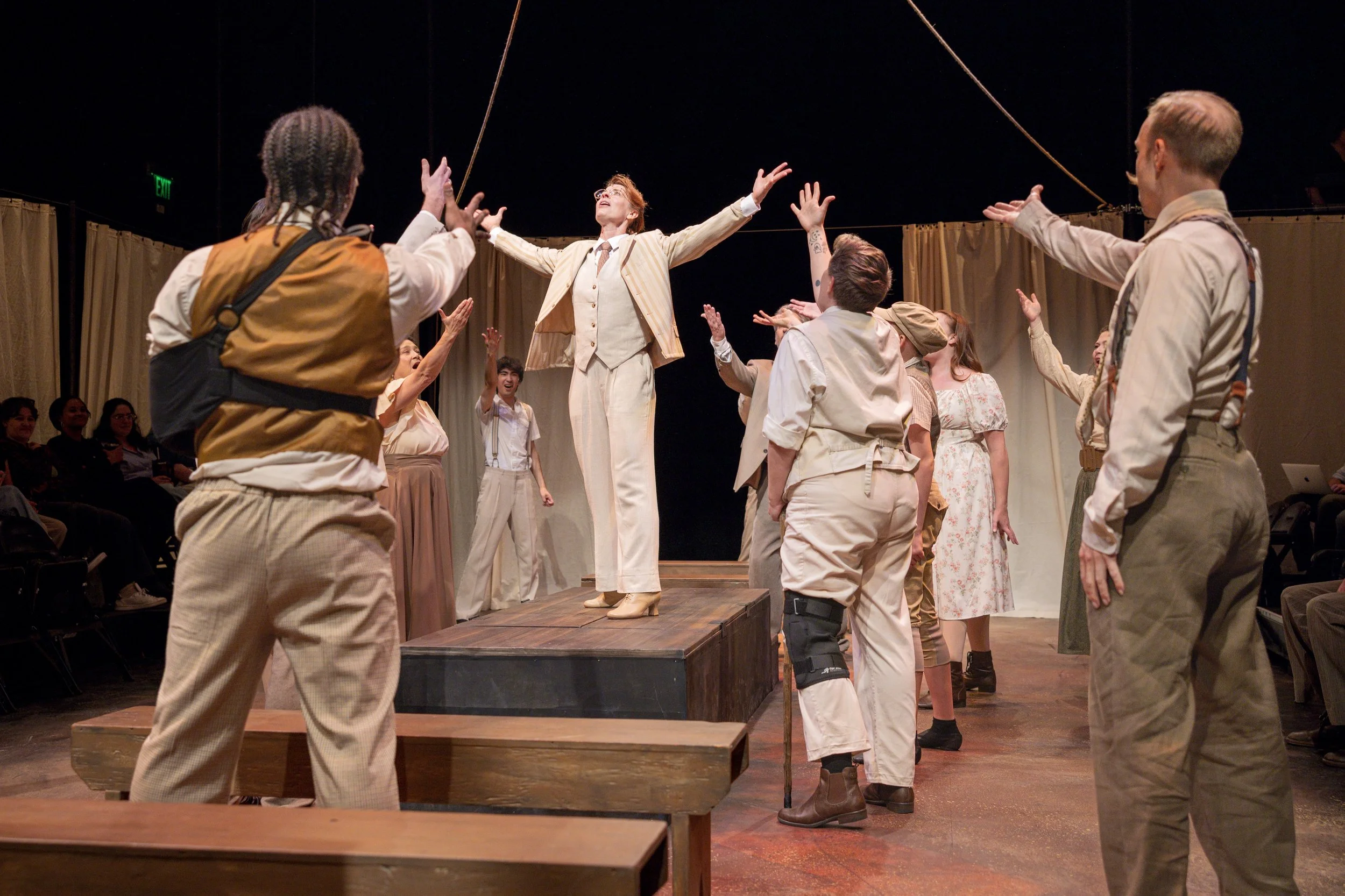
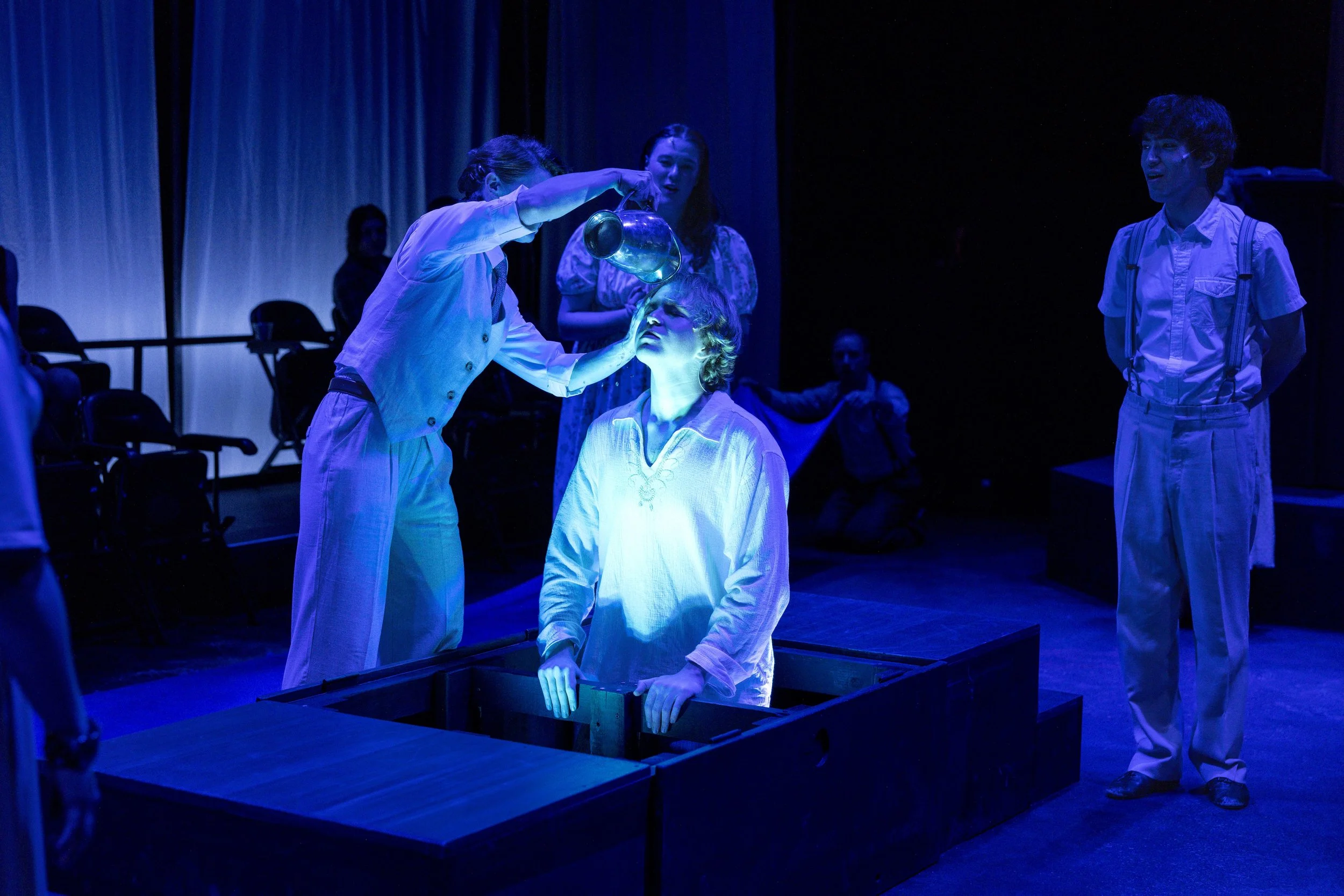
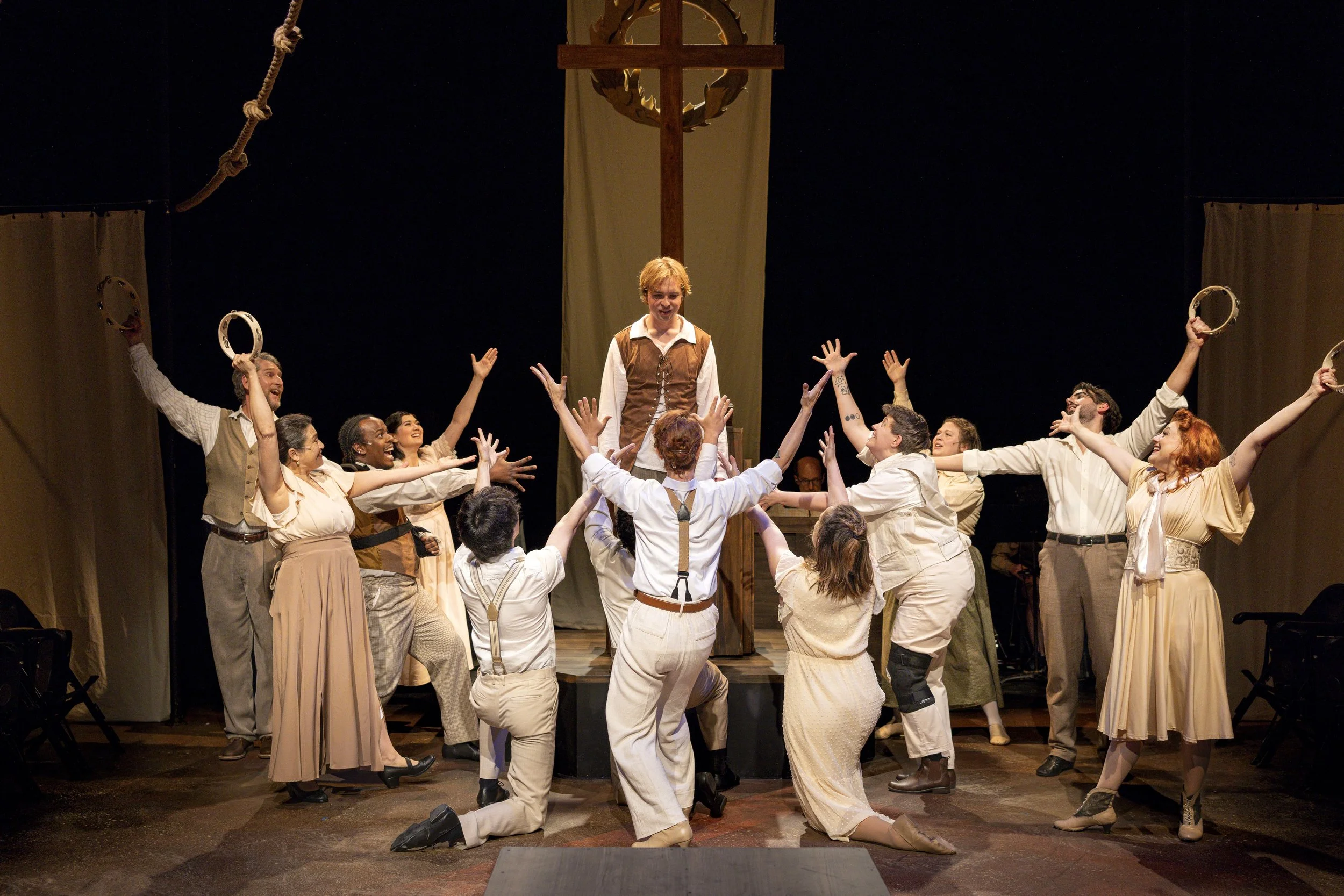
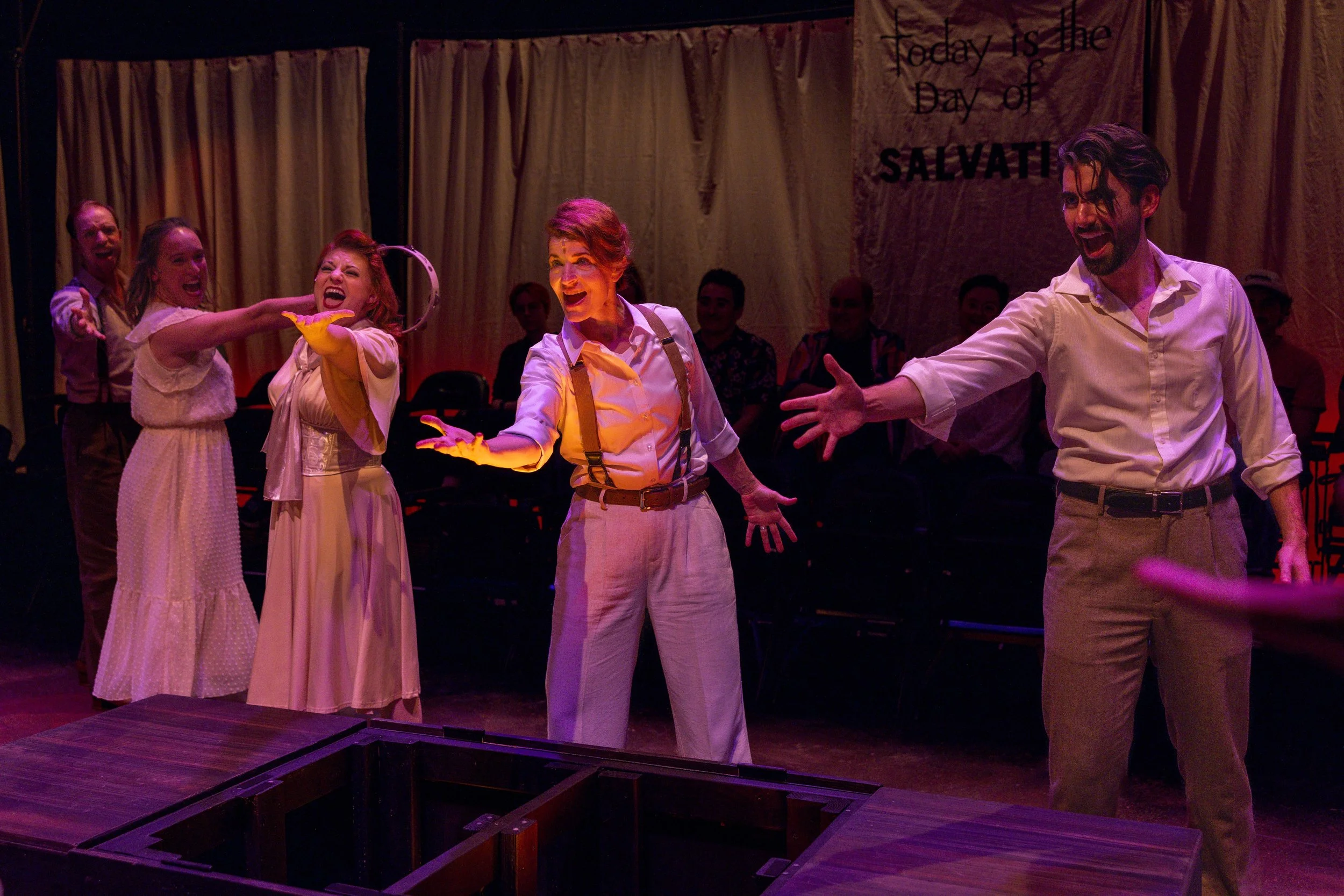
Scot’s revival concept establishes itself immediately. Jeff Church’s scenic design evokes a traveling religious tent, with audience seating extending along either side of the playing space and the band positioned behind a pulpit. A cross hangs from the ceiling above the alter, a set piece that dominates the environment, while elements behind it can be revealed to further suggest the interior of a church. The company enters in a processional, but quickly transitions into a group of churchgoers welcoming new congregants, the audience, into the tent. From the moment the visitors arrive, they are brought directly into this revival and, by extension, into Pippin’s story. It immediately breaks down the separation between congregation and audience, making everyone in the room a participant in the lesson the Leading Player is about to deliver.
That makes Mandy’s Leading Player more than someone inviting Pippin into a performance. As preacher, she is presenting an ideology and steadily encouraging both Pippin and the congregation to believe in it. Mandy has the presence necessary to command that congregation. There is an authority to her Leading Player from the beginning, but one of the more interesting choices comes later, as her tone changes in the second act. As Pippin begins resisting the story that has seemingly been prepared for him, the warmth and invitation underlying the Leading Player’s guidance increasingly gives way to something more forceful. That shift helps expose what has always been lurking beneath the character’s charisma.
Chance has an equally important progression to make as Pippin. Early in “Corner of the Sky,” there is a nervousness and need behind his search, but that gradually develops into determination. His vocal performance helps communicate that evolution. It is important that Pippin’s desire for something more never feel simply petulant, and Chance gives the character an earnestness that makes the audience understand why he keeps pursuing the next possibility, even when it becomes increasingly clear that he may not know what he is actually looking for. There’s so much to like about Chance’s performance, from his clear vocal prowess to the execution of the physicality required by the role. His Pippin is engaging and becomes someone worth the effort expended in rooting for him.
Together, “On the Right Track,” is a musical highlight, with Chance and Mandy finding particularly good synchronization and harmony as Pippin and the Leading Player continue their increasingly complicated relationship.
The ensemble is instrumental in bringing the many chapters of Pippin’s journey to life. Stefanie MeiFang Van Rafelghem, Julia Fung, Mark Manning, Sophie Kashman, Sage Suzerris, Ben Swenson-Klatt, Chloe Payne and Julio Ulloa move fluidly from the churchgoers who first welcome the audience into the revival to the warriors, lovers, political allies and enemies who populate Pippin’s search for an extraordinary life. Because the same performers continually take on new identities around him, there is also a sense that the Leading Player and her congregation are constructing Pippin’s world as he moves through it. The ensemble’s strong vocals and commitment to Jordan King’s choreography help make those transitions work, allowing the production to move quickly from one stage of Pippin’s journey to another while maintaining the tent-revival framework that holds the evening together.
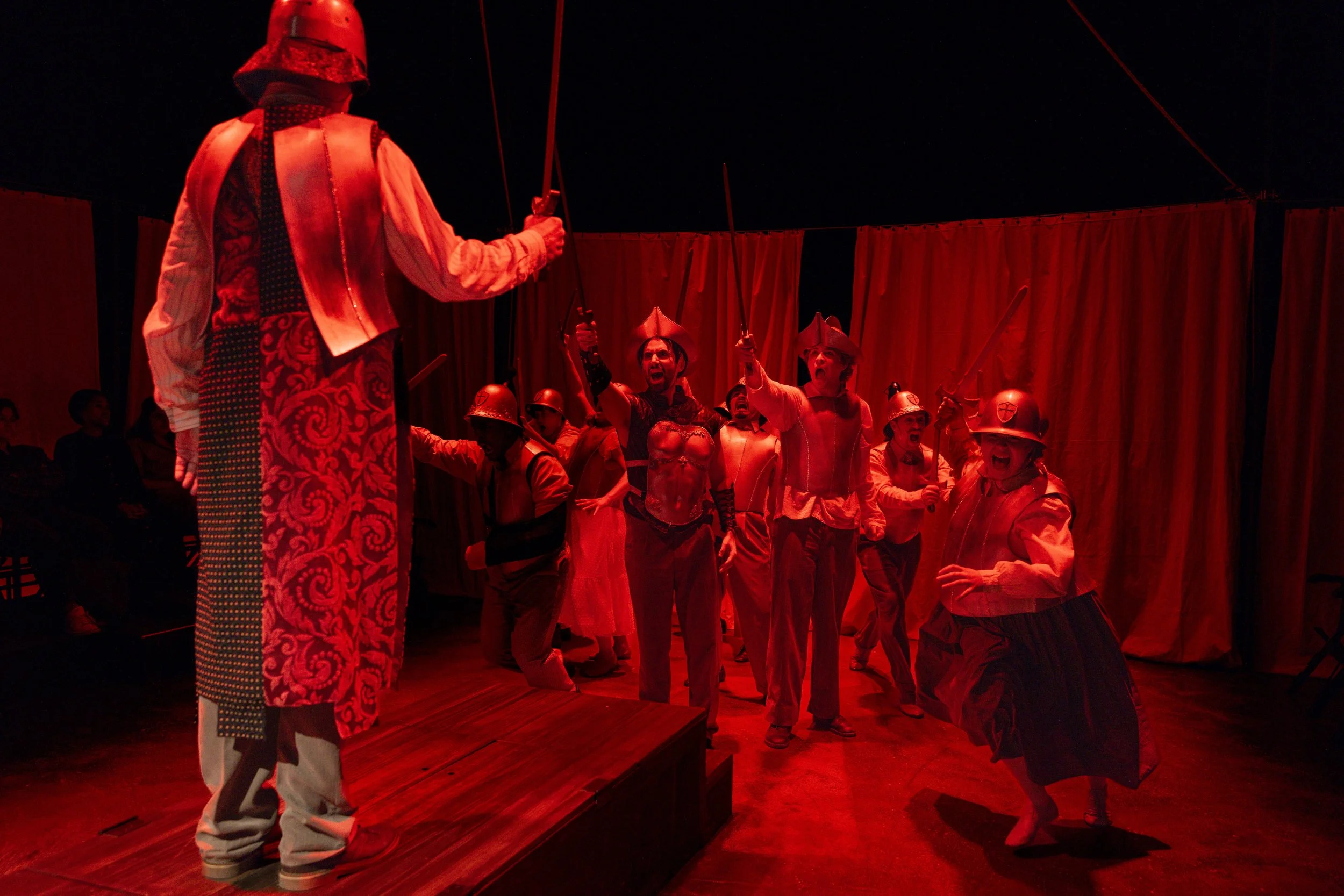
That journey also gives the production opportunities to play with the absurdity of the world surrounding him. Chris is a delightfully outsized Charlemagne, and the battle sequences are particularly fun. Raya Tuffaha’s fight choreography keeps the movement carefully controlled while still allowing the scenes to embrace their comic theatricality, aided considerably by Eldon Tam’s lighting. Kevin Phillips creates a wonderfully clueless Lewis and sings the role well, finding plenty of comedy without needing to push the character beyond what is already on the page.
Cynthia Dario-Good makes a considerable impression with considerably less stage time as Berthe. There is a warmth and confidence to Cynthia’s acting and singing that gives Berthe a genuine presence, and “No Time at All” becomes one of the production’s most heartfelt numbers. The revival framework works especially nicely here, allowing the company to function almost like a choir around Pippin and his grandmother. Even in a relatively small role, Cynthia makes Berthe memorable and she delivers a standout performance here.
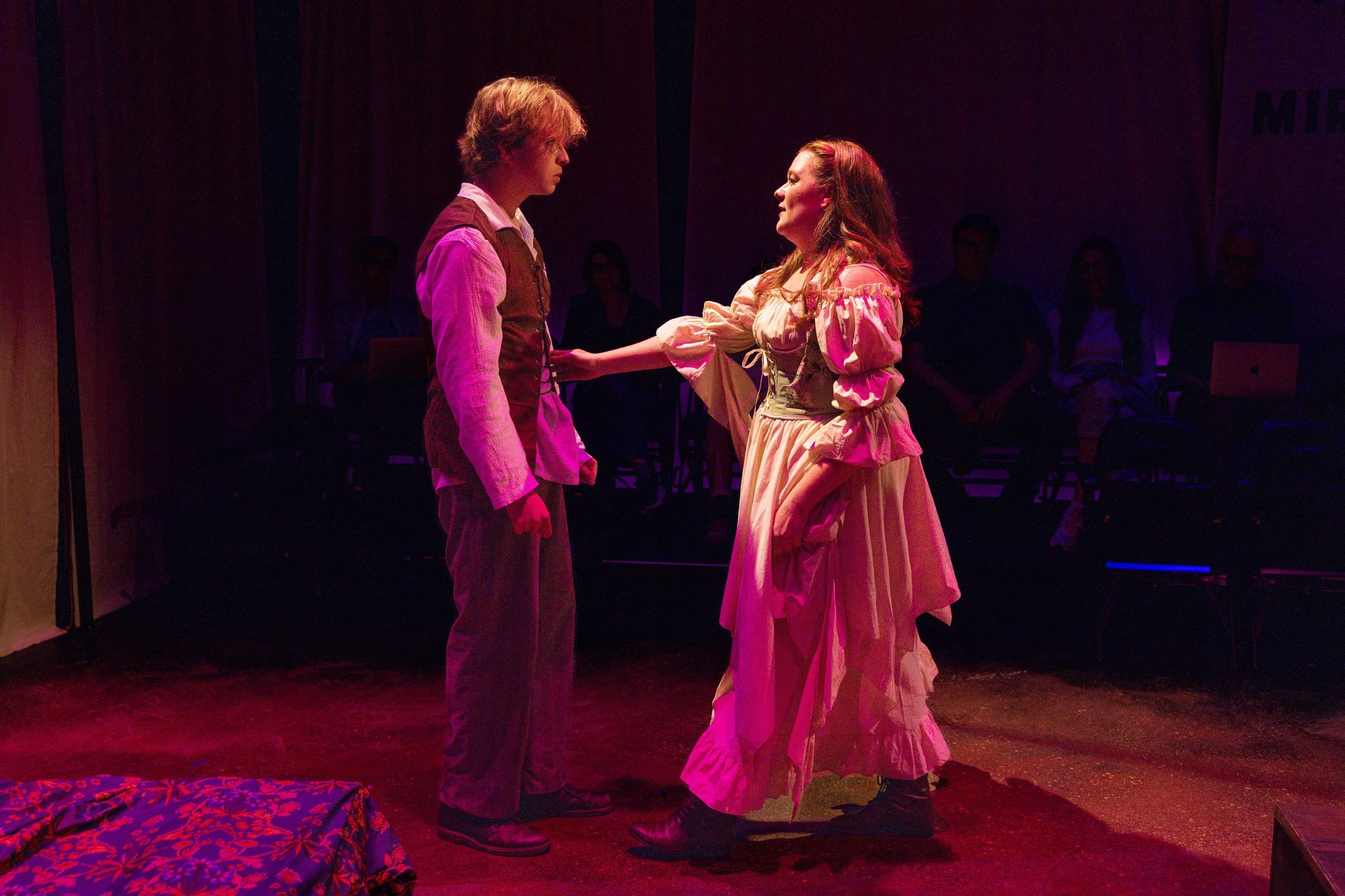
Jacqueline Tardanico’s Fastrada similarly benefits from the production’s willingness to let choreography carry some of the storytelling. “Spread a Little Sunshine” becomes as much about movement as lyrics, with the choreography and Jacqueline’s manner both complementary to Fastrada’s plotting. Jordan King’s choreography repeatedly finds ways to make movement mean something rather than simply fill musical passages. That becomes particularly apparent later with Pippin and Catherine, when movement that is deliberately out of sync reflects the nervous uncertainty between them before becoming more unified as the two characters come together.
On the opposite end of the morality spectrum from Fastrada is Catherine, played by Katie Dreessen, who brings a sweet vocal quality to the role, providing an effective contrast to the heightened world that has surrounded Pippin. Her scenes introduce something intentionally more ordinary into his life, which is precisely why they matter.
The production’s strongest combination of staging, music and design arrives at the end of the first act with “Morning Glow.” Mark Rabe’s musical direction allows the number to expand beautifully through the company’s harmonies, while Eldon’s lighting gives the moment the visual scale it needs. The staging continues building until the song feels enormous within the intimate confines of 12th Avenue Arts. It is exactly what an Act I closing number should be: big, beautiful and capable of sending an audience into intermission wanting more.
The band, led by Mark, occasionally sounds a little rocky, particularly when compared with the strength of the company’s vocals, but there is plenty of excellent musical work throughout the production. The ensemble is especially important here because Scot’s concept asks them to function simultaneously as players in Pippin’s story and members of this peculiar congregation. Their harmonies are strong, and Jordan’s choreography gives them an additional storytelling vocabulary that helps hold the concept together.
The design elements are equally essential. Ella Tennant Swenson’s costumes help place the company within the revival environment, Henry Behrens’ props are precisely designed to work with the tone of the production, and Elisabeth Edmonds and her sound design provides a good balance between all of the auditory elements. Eldon’s lighting is particularly well done throughout, whether giving the battle sequences their theatrical energy or allowing moments such as “Morning Glow” to expand beyond the physical dimensions of the room.
What makes this approach to Pippin work is that the revival setting ultimately speaks to the same question the musical has always asked: who gets to decide what makes a life extraordinary? Pippin spends much of the evening being told that greatness exists somewhere beyond whatever he currently has, while the Leading Player is always ready with another answer. By turning that figure into a preacher and the Players into a congregation, Reboot makes the promise of the extraordinary feel almost like an article of faith.
And that makes Pippin’s eventual realization more meaningful. Perhaps the miracle promised by this revival is not some spectacular act at all. Perhaps it is recognizing the value in the seemingly ordinary life already within reach. Reboot’s Pippin finds a thoughtful new way into a musical that has been interpreted countless times before, using its tent-revival framework not simply as decoration, but as a lens through which Pippin’s search for meaning becomes newly resonant.
The Reboot Theatre production of Pippin runs on stage at 12th Avenue Arts in Seattle through October 3. For more information, including ticket availability and sales, visit https://reboottheatre.org/.
Photo credit: Colin Madison Photography