
Stage Review - Miss Holmes (Kitsap Forest Theater)
Stage Review - Miss Holmes
Presented By: Kitsap Forest Theater - Bremerton, WA
Show Run: September 05 - September 20, 2026
Date Reviewed: Saturday, September 12, 2026
Run Time: 2 Hours, 15 Minutes (including a 15-minute intermission)
Reviewed by: Greg Heilman
Kitsap Forest Theater’s Miss Holmes takes one of literature’s most familiar detectives and asks what Sherlock Holmes might look like if the assumptions surrounding the character were changed while the things that make Holmes compelling remained intact. Christopher M. Walsh’s play reimagines Sherlock and Watson as women navigating Victorian London, where their intelligence and independence can be every bit as disruptive as the crimes they investigate. Directed by Mia McGlinn and running at Kitsap Forest Theater through September 20, the production embraces both the mystery and the relationship at its center, led by an excellent pairing of Skye Campbell as Sherlock Holmes and Ila Sarah Dreessen as Dr. Dorothy Watson.
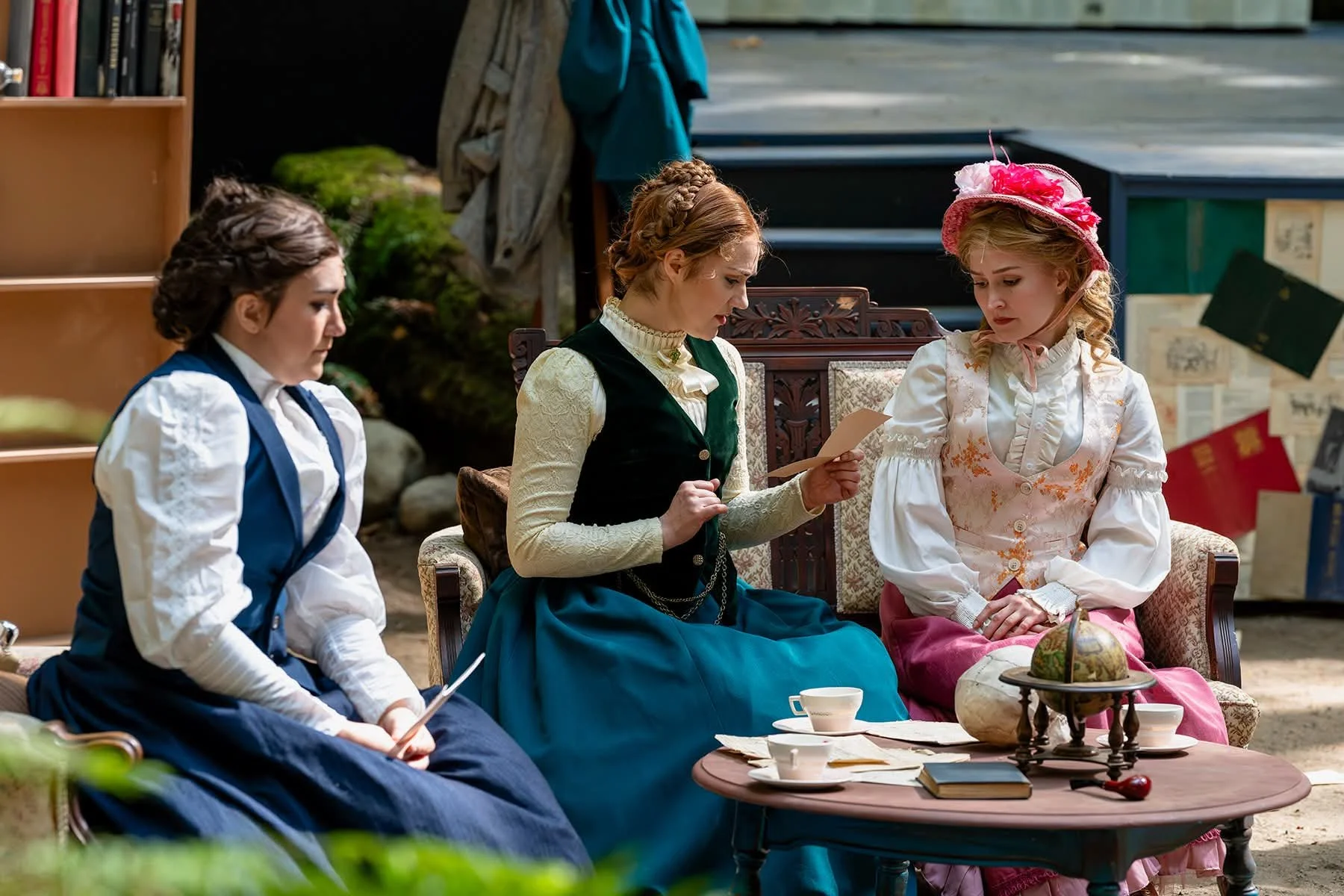
The play introduces Watson as a woman accustomed to helping others but searching for what comes next in her own life. Her path eventually crosses with Holmes, whose considerable intelligence is matched by a willingness to operate outside the expectations society has placed upon her. Their investigation draws them into the circumstances surrounding Elizabeth Chapman (Gracelyn Snedden) and her husband, Thomas (Corey Suraci), as Holmes and Watson begin pulling at the threads of a case that becomes increasingly dangerous. Gracelyn plays Elizabeth very well, presenting someone with a bit of naiveté on the surface that belies an independent streak underneath. That combination becomes particularly important as more of Elizabeth’s circumstances are revealed, allowing Gracelyn to suggest there is more to the character than might initially appear.
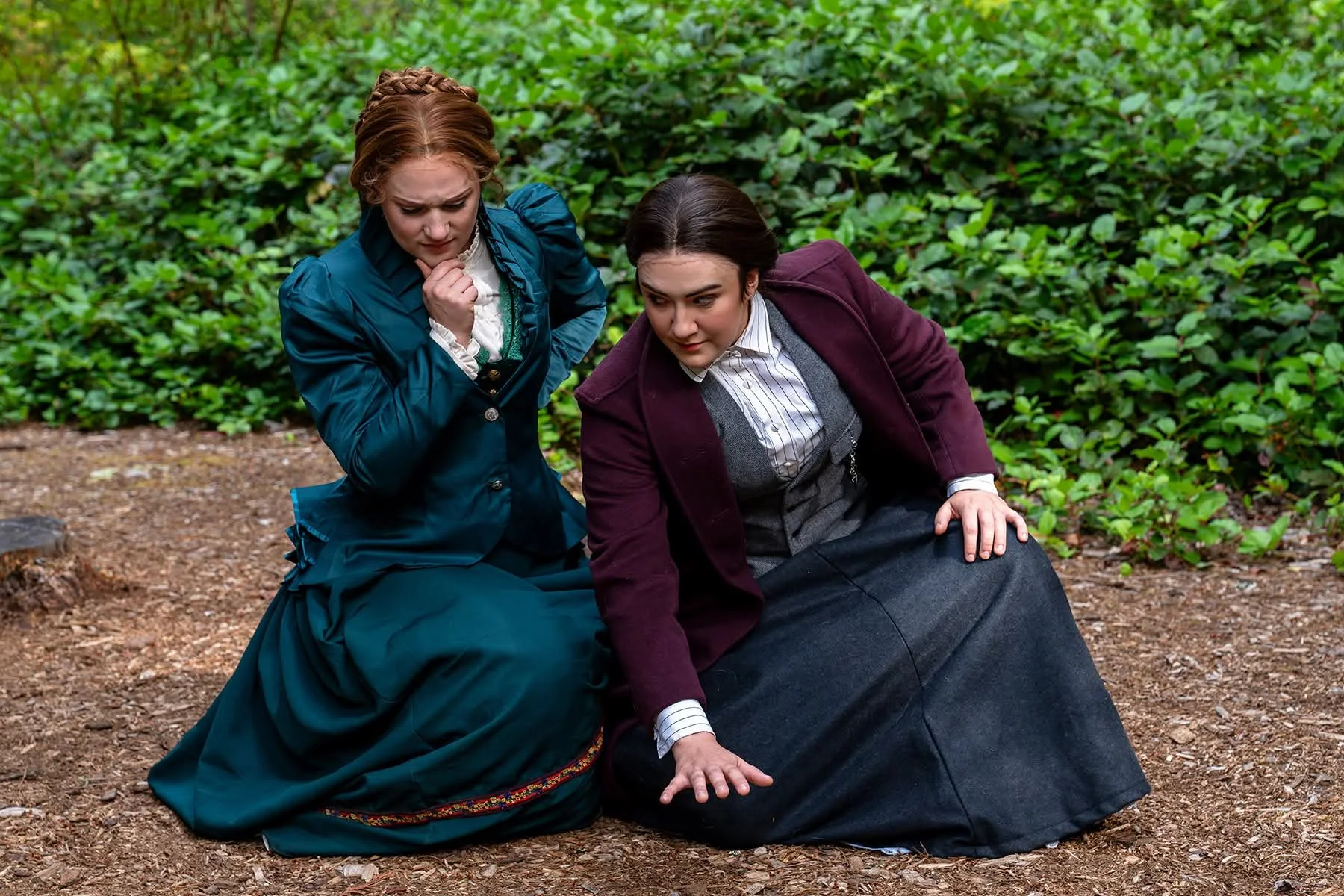
Skye and Ila make the relationship between Holmes and Watson the production’s greatest strength. Skye gives Holmes an authoritative quality, while Ila’s Watson is naturally more inquisitive, and that distinction establishes who these women are almost immediately. Dialect coach Katie Dreessen’s work contributes significantly to that characterization. The accents do more than establish Victorian London, they help communicate status, personality and the different roles these characters occupy within the story. That is particularly evident with Holmes, Watson and Elizabeth, with Skye’s more authoritative Holmes contrasting nicely with Ila’s inquisitive Watson.
More importantly, Skye and Ila understand the rhythm that makes Holmes and Watson so entertaining together. Their conversations are quick, playful and exceptionally well paced, feeling like the product of two performers who know their characters inside and out. Skye can slow Holmes down when emotion begins breaking through her carefully controlled exterior and then immediately accelerate when the detective’s mind catches hold of something. Ila is wonderfully expressive opposite Skye’s Holmes, giving Watson a curiosity that continually challenges Holmes rather than simply following her. One particularly memorable moment has Watson holding a gun while Ila launches into a fantastic stretch of rapid-fire delivery. Individually, the roles demonstrate the versatility of both performers; together, Skye and Ila make a wonderful and entertaining pair.
Skye also gets to have some fun when Holmes falls under the influence, so to speak, creating a very different physical and vocal character without losing the humor of Holmes, or more specifically delivering a different aspect of the humor Skye brings to the character. Miah Campbell, as Mycroft Holmes, brings a stern and mysterious quality to Sherlock’s brother, seemingly slithering across the street like a snake. It is an effective physical portrayal that says almost as much about Mycroft as the dialogue does.
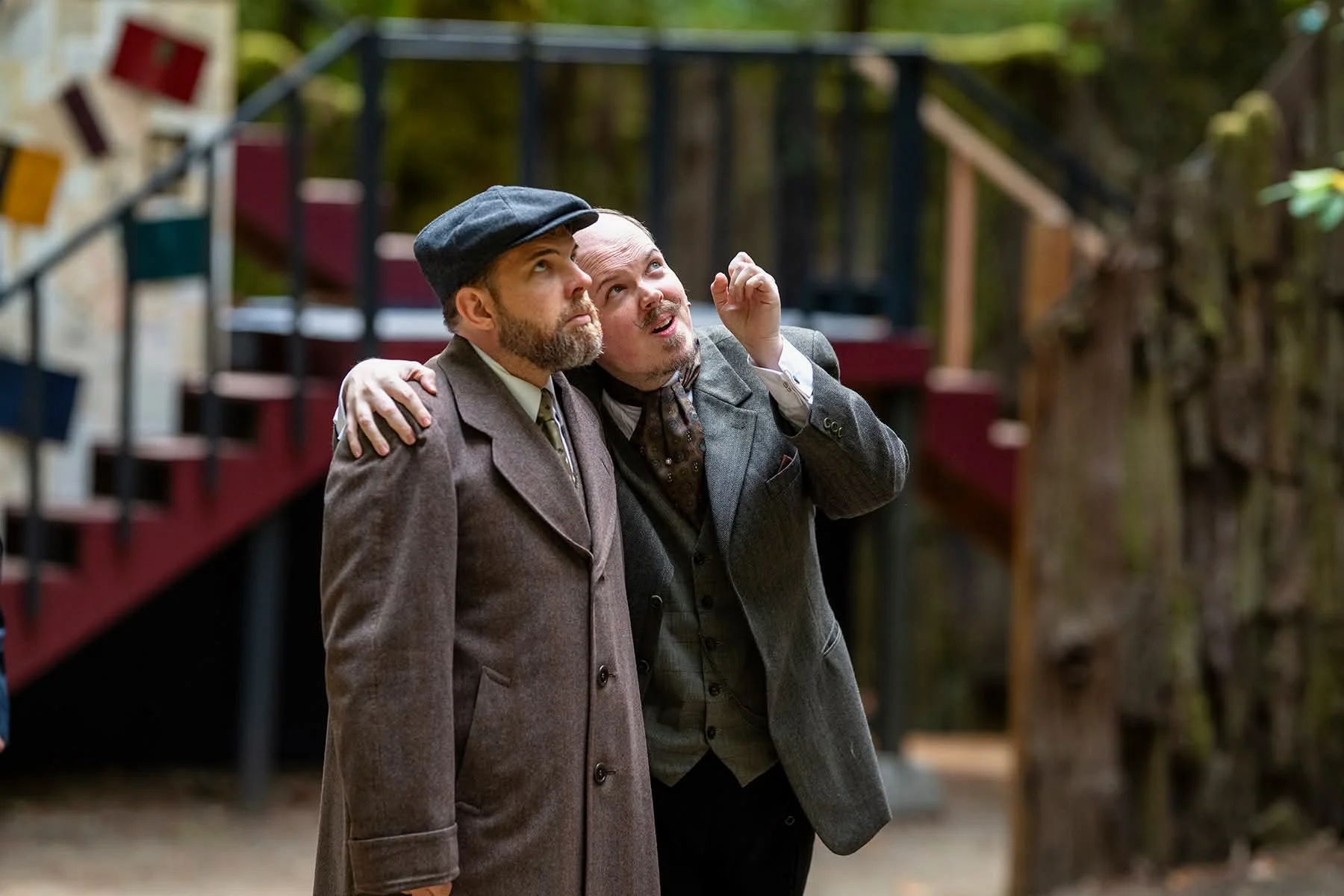
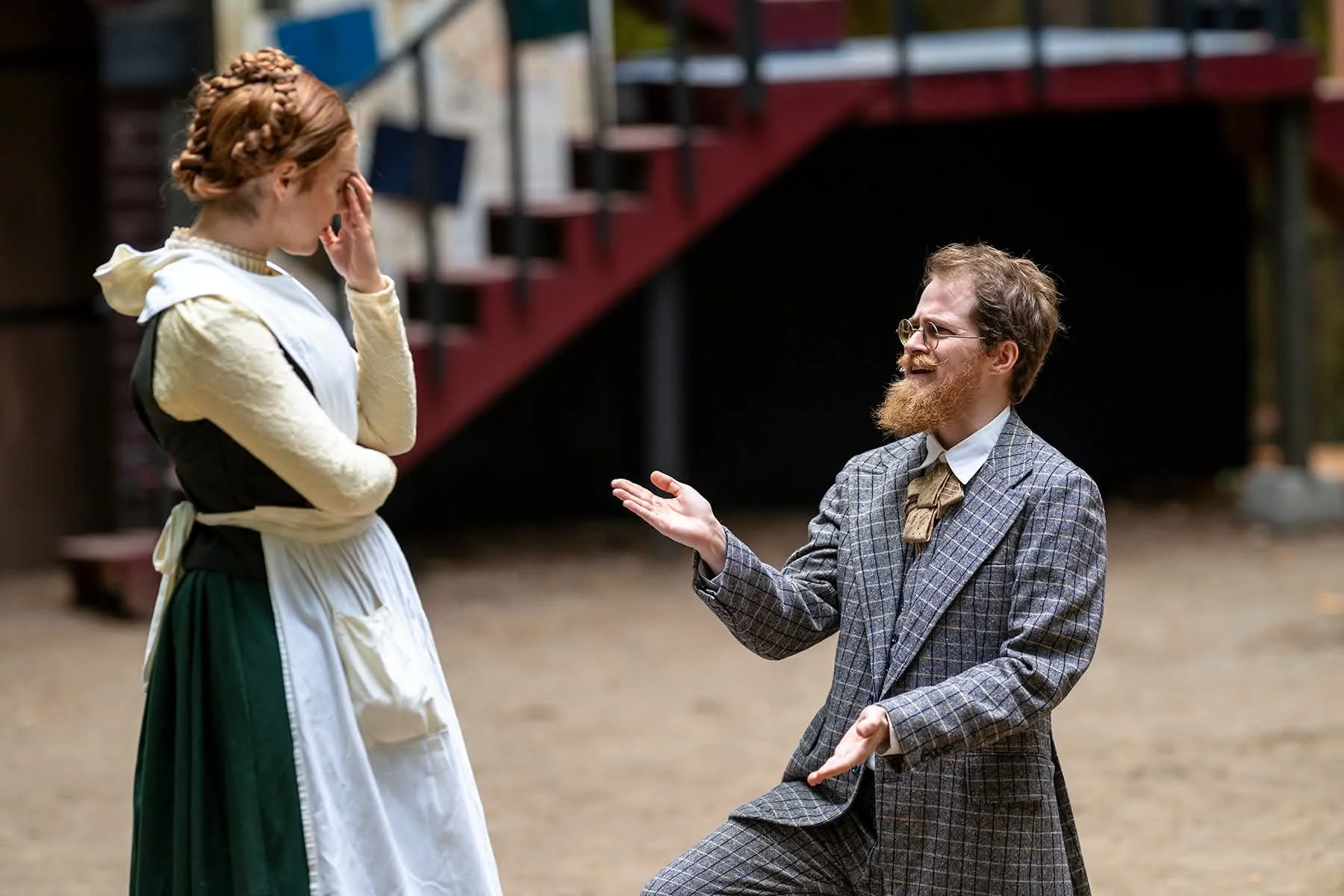
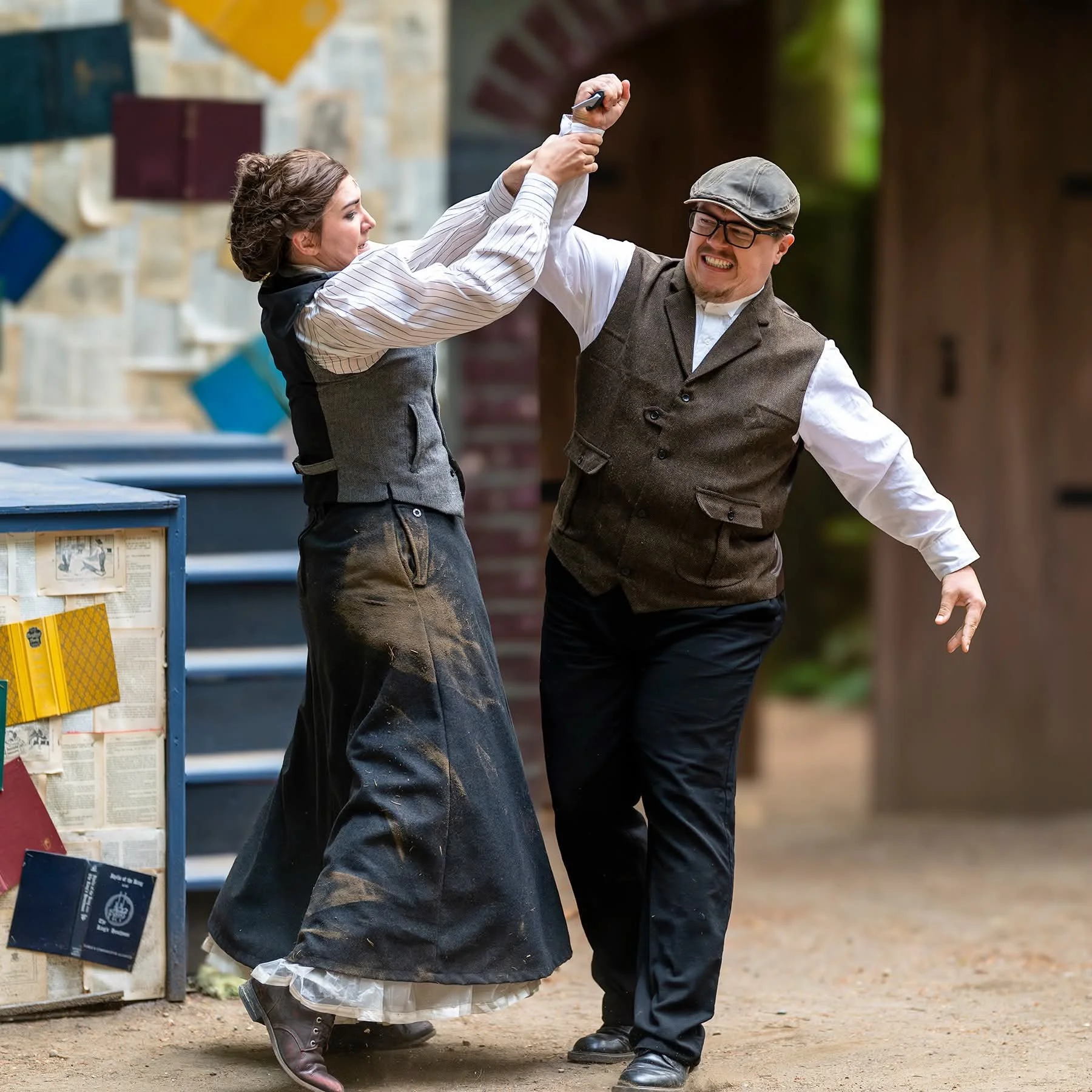
The supporting cast fills Walsh’s London with distinct personalities. Geoffrey Lestrade, played by Stephen Dearborne, makes a good counterbalance to both of his colleagues: a sort of “good cop” to Thomas Chapman’s “bad cop,” while also providing a steadiness against Holmes’ eccentricities. Stephen finds a nice middle ground between those two very different personalities, giving Lestrade a grounded presence within the investigation. Rufus Crane looks every bit the old doctor as Michael Stamford, right down to the beard and glasses, while Natalie Wilson takes Mrs. Hudson gleefully over the top. Bryce McGuire gives Edwin Greener a comparatively small role but handles the character’s emotional change well. Corey is particularly effective as Thomas, finding his villainous qualities not only in the way Thomas speaks but in his physicality. Even the way Corey slumps contributes to the character, making his presence increasingly unsettling as the story develops.
Mia keeps the mystery moving at a brisk pace, something particularly important in a production that requires a considerable number of scenic pieces to move on and off stage. None is excessively complicated on its own, but there is enough movement that the transitions could easily interrupt the momentum. They never do. The crew moves efficiently, and Bryce McGuire’s original music helps bridge those transitions while doing much more throughout the production. Credited as composer, music director and conductor (and of course Edwin Greener), Bryce provides an underscore that strikes a nice balance with the actors and adds to the mood of individual scenes without overwhelming them. A melancholy passage beneath Watson’s backstory is especially effective, supporting the emotional shift rather than dictating it.
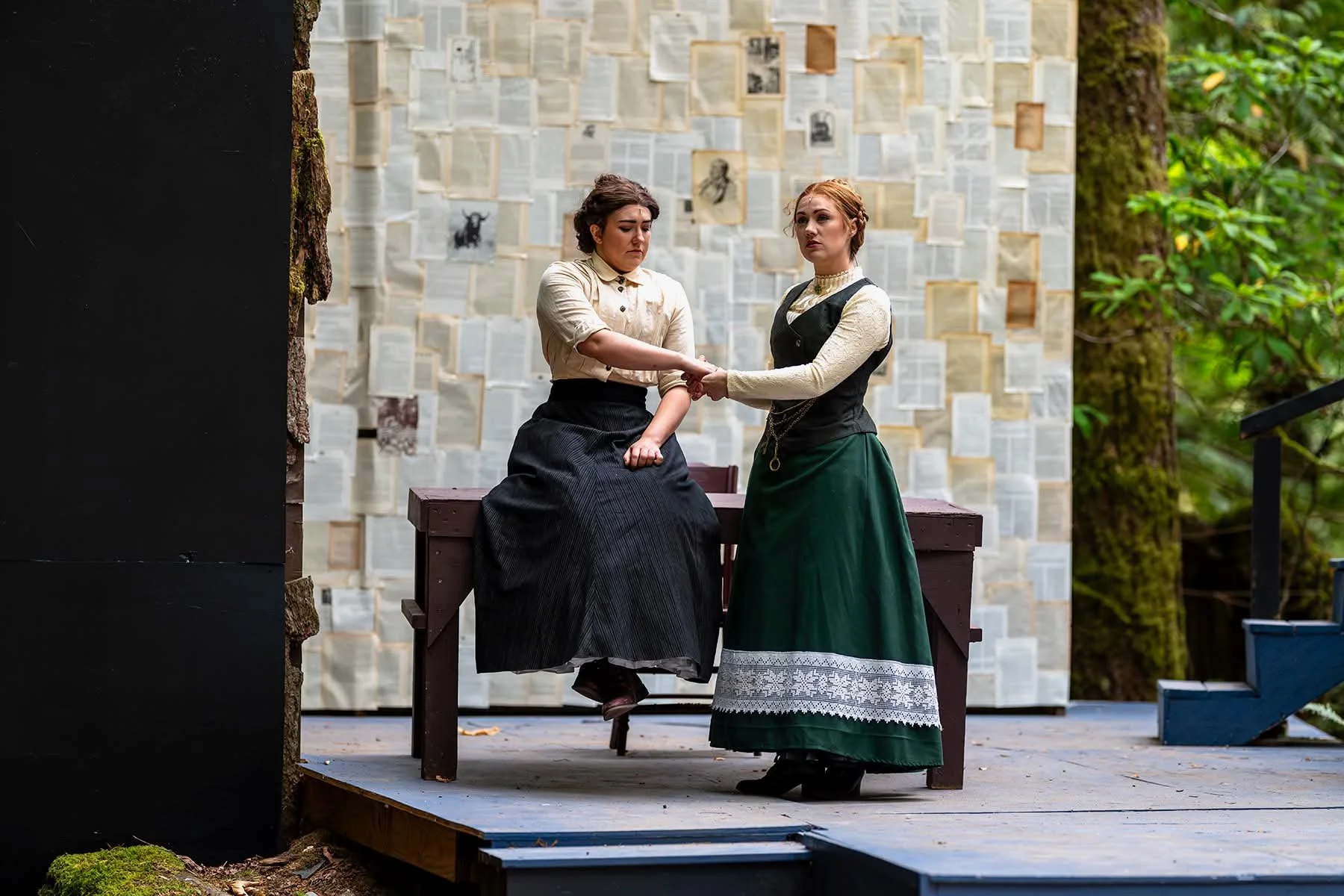
The set itself leans nicely into the literary origins of the story. Kitsap Forest Theater makes use of a basic scenic structure familiar from some of its other productions, but here it is transformed with books and pages that make the world feel as though it has emerged from the literature that inspired it. As set constructors and painters, John McGlinn and Mia McGlinn take KFT’s established structure and give it an identity specific to this story. The production also makes good use of its props, managed by Sara McGuire, highlighted by a well-deployed carriage.
The September 12 performance also demonstrated just how well prepared the company is as an ensemble. With Jesse Ellis unable to perform, Emma Layton stepped in as Reginald while Mia covered Jesse’s fight track as an Orderly. Neither substitution was noticeable. Both blended into the production so seamlessly that an audience member unaware of the changes would have had no reason to suspect anything was different, an accomplishment that speaks not only to Emma and Mia but to the preparation of the company surrounding them.
That company also includes Leslie Allen as Dr. Anderson, Becky Eastgard as Eudora Featherstone, Kenadi Allen as the Superintendent, Vega Tsuchida and CC Brewder as Orderlies, Emily Kasper as Peggy, Liz Lee as Martha, Mitsy Dearborne as Mitsy Featherstone, and Mila Ellis, Juno Ellis, Paisley Dearborne, Emma and Sean Rascon among the Londoners. Their work helps populate a London that needs to feel larger than Holmes and Watson’s immediate investigation, giving the central pair a world of doctors, authorities, suspects and ordinary citizens through which to navigate.
That adaptability suits a production whose greatest pleasure comes from watching its characters refuse to stay within the roles prescribed for them. Miss Holmes retains the fun of deduction, danger and the familiar Holmes mythology, but its most entertaining element is considerably simpler, putting Skye Campbell and Ila Dreessen, a pair of superb actors, together and allowing them to work. Contrasting personalities, rapid exchanges and genuine chemistry give the mystery its engine, and whenever the two are sparring, investigating or simply trying to understand one another, Kitsap Forest Theater’s production is at its best.
Miss Holmes runs on stage at Kitsap Forest Theater through September 20. For more information, including ticket availability and sales, visit https://www.foresttheater.com/.
Photo credit: Dave Layton