
Stage Review - Rat Cage
Presented By: Annex Theatre - Seattle, WA
Show Run: October 08 - October 24, 2026
Date Reviewed: Monday, October 19, 2026 (Industry Night)
Run Time: 75 minutes
Reviewed By: Sameer Arshad
What are you worth? Your talent, your body, your relationship, your heritage, your name? Somebody out there has already done the math. They have priced your creativity, packaged your identity and decided which version of you will sell. And the worst part is that you have probably been watching their show for years, absorbing their valuations, until you started pricing yourself the same way.
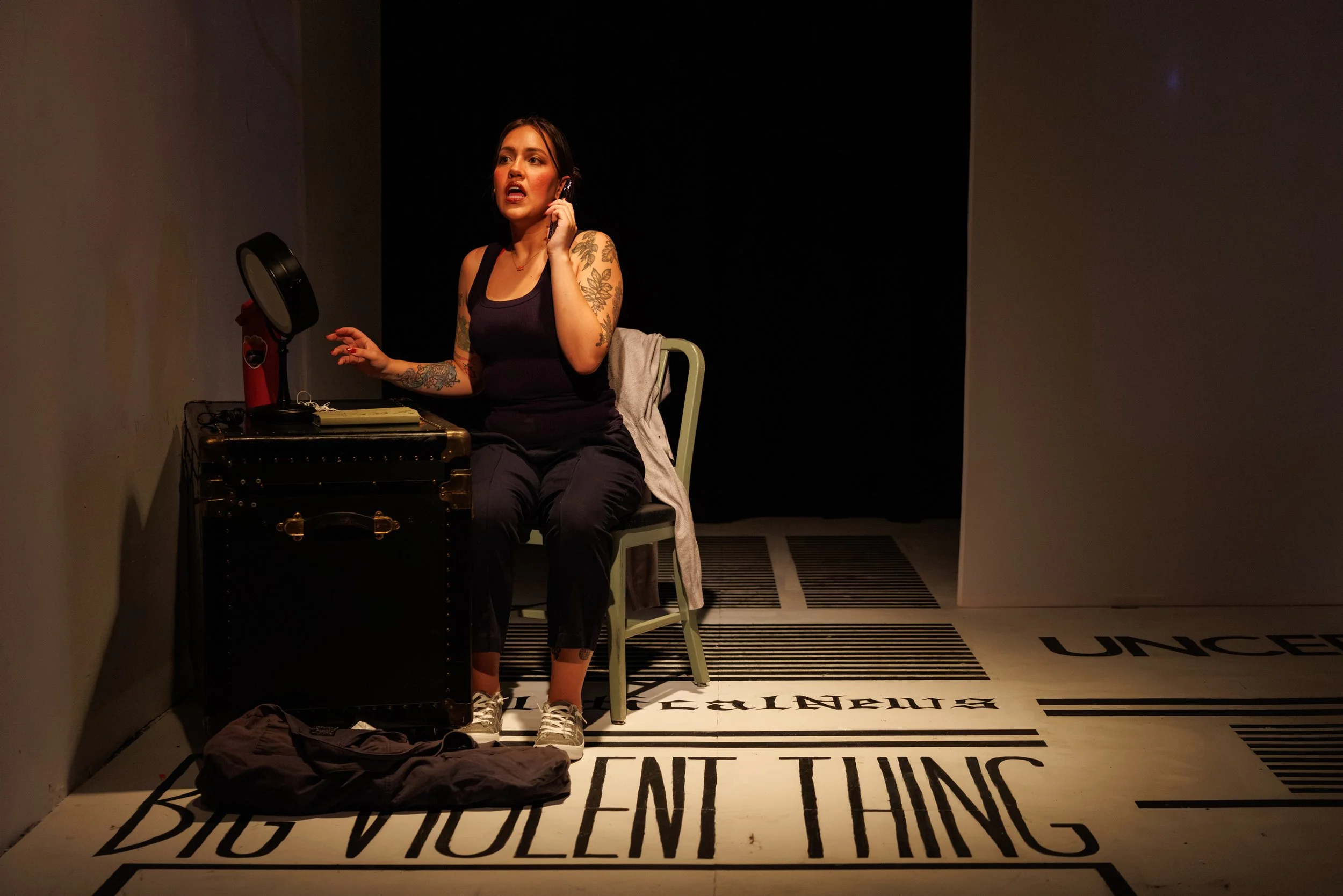
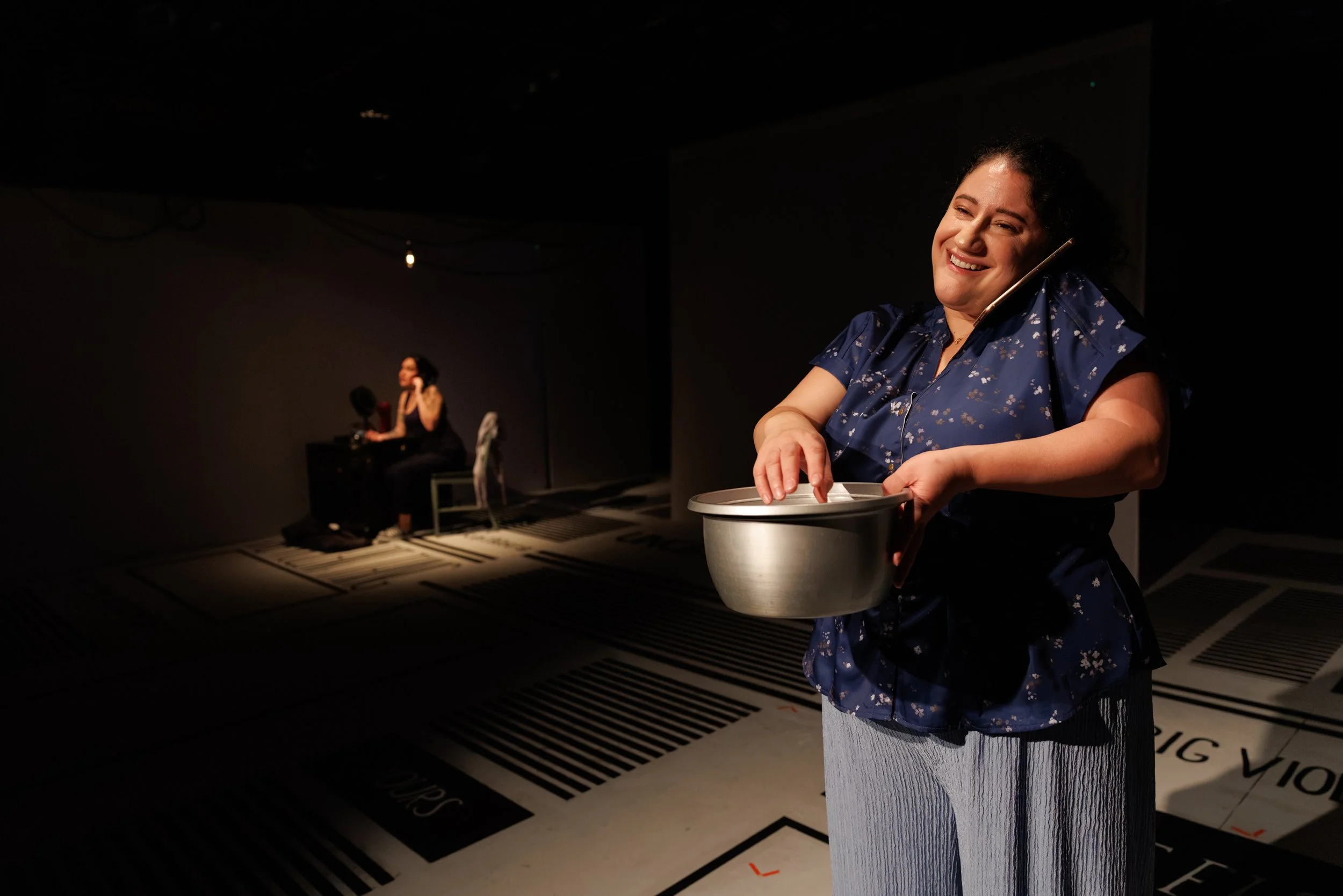
In Rat Cage, the world premiere by playwright Coco Justino at Annex Theatre, directed by Em Majewski, we meet Vendetta, a Filipino American burlesque performer in New Jersey. Going through life only by her stage name, Vendetta is stuck in a six-year holding pattern: she has a real gift for writing, but she spends her nights dancing to pay the bills. When a fan named Jamelle asks her out after a very strange introduction, the two of them stumble through a relationship that breaks down, but they stay friends. The story of this relationship plays out non-linearly in the narrative, which is very cleverly arranged to tell us not just the story of how these two people feel about each other, but how the media environment around them primed them to feel about each other. This storyline braids through the other main threads of Vendetta’s life as she tries to figure out what she’s doing with it: her relationship with her mother, her frustrations with her boss at the strip club, Charlie, and her own confusion about navigating this society as an Asian American woman who happens to be white-passing.
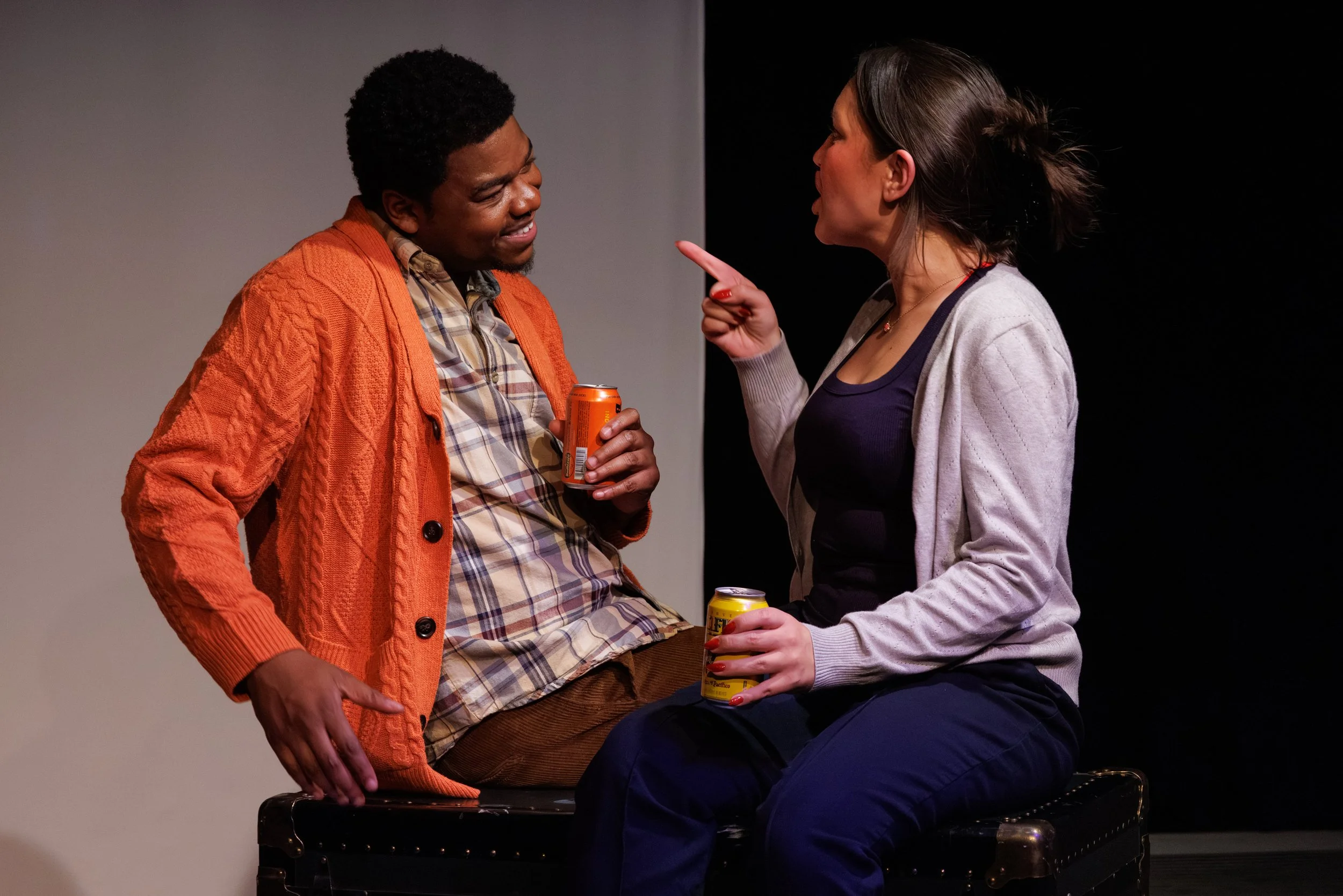
Jamelle is the romantic interest in her life, an African American arts and culture writer for a newspaper who encourages Vendetta to pursue her writing craft. He tells her that when she dances, it’s like she is telling a story. That idea becomes one of the play’s most beautiful motifs. When Vendetta is inspired to write, she dances. When she finally reads her writing to Jamelle near the end of the play, he dances. Dance, poetry and prose keep turning into one another in this play. Perhaps storytelling is a single current that can travel through any body willing to carry it, through each and every medium available. If that is the case, what happens when something sinister wants to hack these beautiful human connective pathways for an exploitative, harmful purpose?
That’s where the rats and their cages come in.
Vendetta and Jamelle are heavy consumers of media. He attends performances and writes about them. She listens to podcasts, watches the news closely and keeps circling back to her frustration with a certain 1980s musical, one of those shows written by a white man about an Asian woman who is subjected to harm in the name of her “hunky American boyfriend” who really doesn’t give two shits about her. If you’ve suffered through Madame Butterfly or Miss Saigon, you know the genre. And it’s more than background noise. Charlie, the owner of the club, wants Vendetta to evoke the musical in her burlesque act, a bit of theatrical class to elevate the club’s artistic credentials. Things get gross really fast, and it’s not just because Charlie is a creep to women, even though he’s gay. To be taken seriously as an artist, Vendetta is expected to embody the trope of the tragic Asian girlfriend who harms herself for a white man. Justino’s play puts itself in direct conversation with that tradition, and pushes back against it hard.
The media diet has consequences. Vendetta and Jamelle microaggress against each other along racial lines, he a Black man, she a Filipino American woman so white-passing that Jamelle initially assumes she’s white. Both of them are culture workers, both of them are writers. They can and should know better, and both of them catch themselves fast.
They arrive charged with everything the media has primed them to perceive in each other. Each one loves on and hurts the other in ways that confuse them both. Even though they have the tools and insight to understand exactly why this keeps happening, they still cannot present to each other as fully authentic people. The rats of the media landscape have programmed us to never just simply be ourselves. We are only allowed to become what the media has trained us to become, which plays out even in our most intimate relationships.
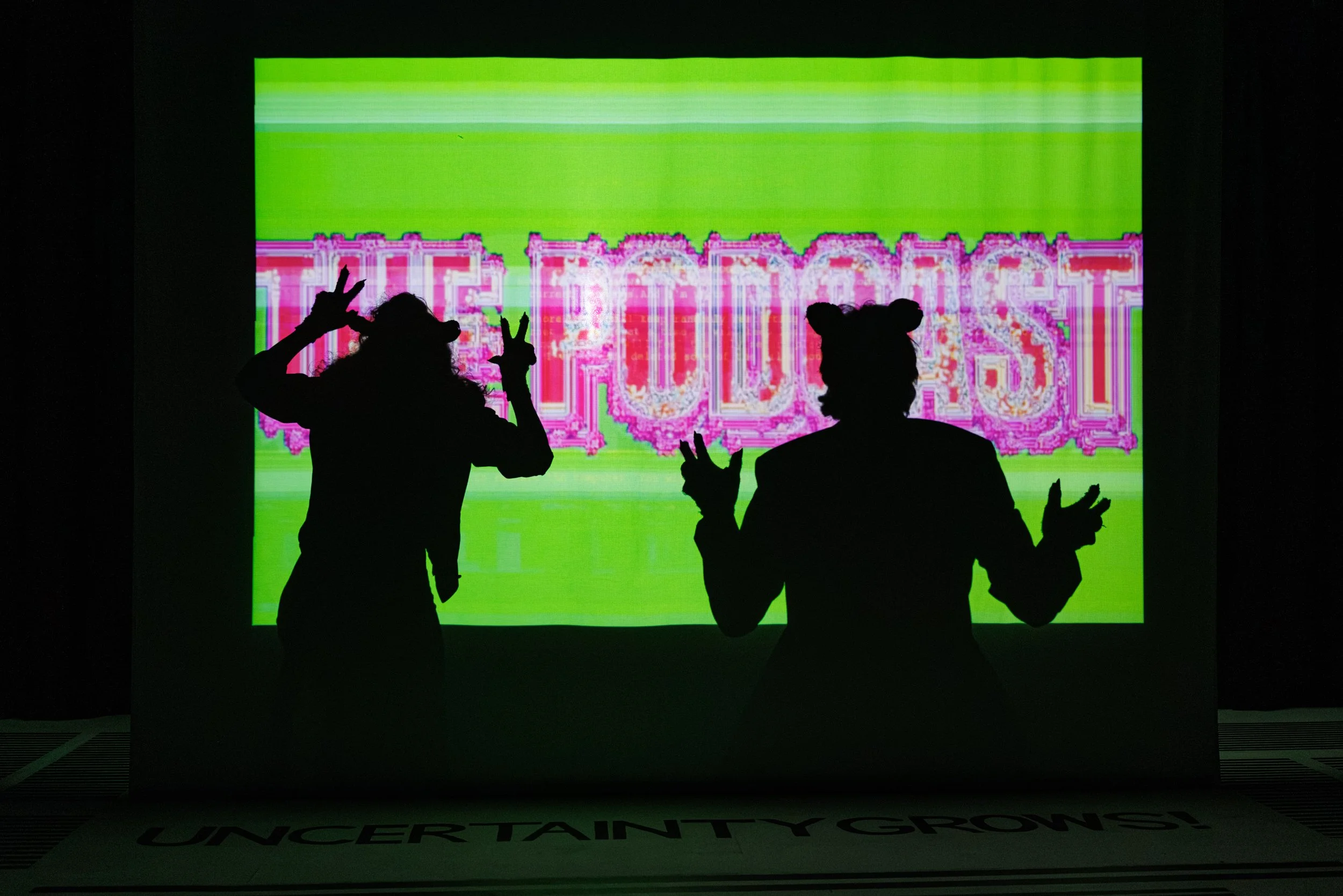
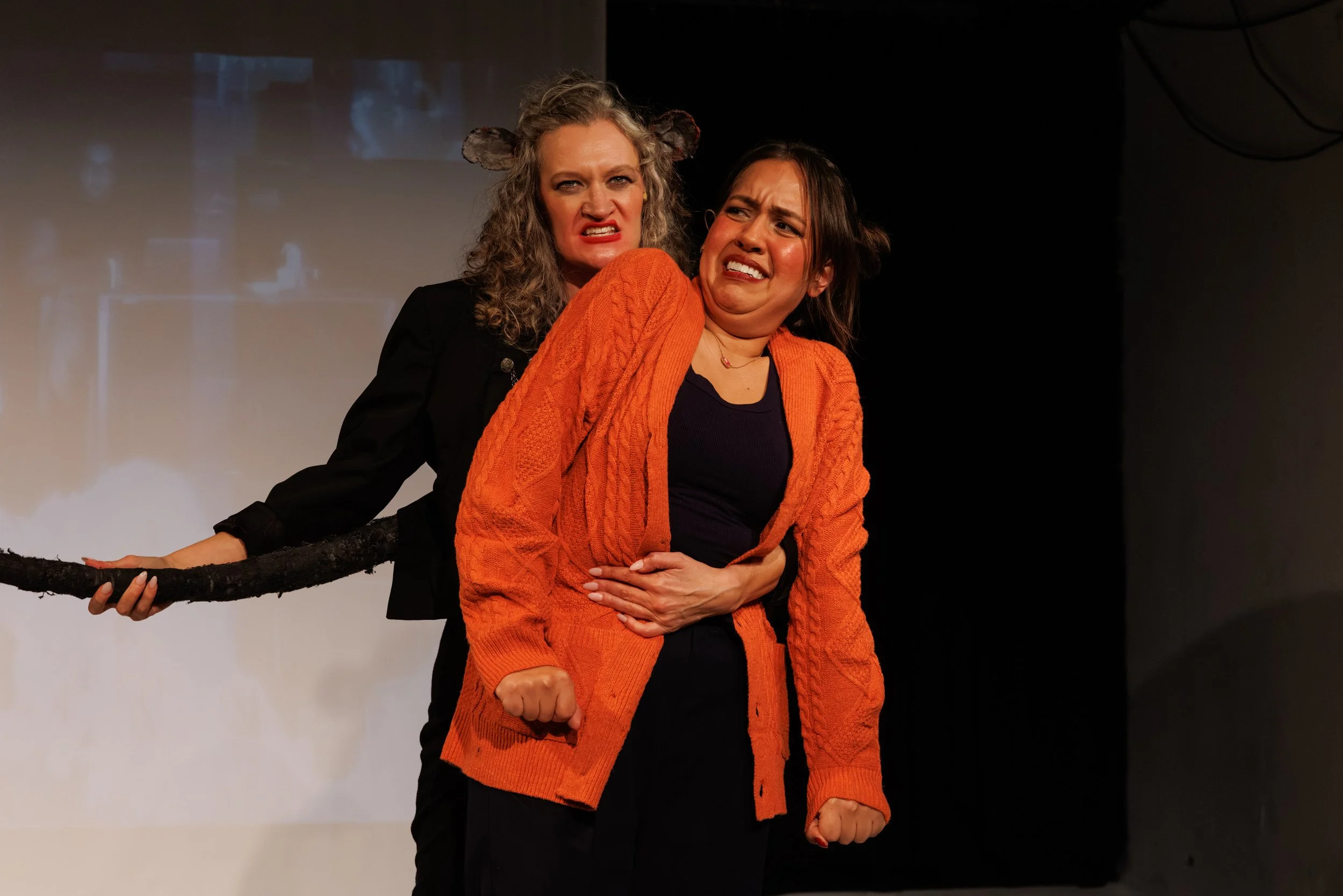
Then there is the show within the show. In their dreams, in some subconscious backroom of the mind, Vendetta and Jamelle each find themselves on an episode of Rat Cage, a Shark Tank inspired pitch-show where the sharks have been swapped for rats. Two actual humanoid rats sit in judgment, assessing the market value of everything in a person’s life. Vendetta’s relationship with Jamelle gets evaluated for how it could be sold. So do her dancing, her writing, her name, her entire identity, all appraised for what the media might want to consume. The audience is made complicit in this assessment. We are hailed as the ones who are entertained by the assessment of other people. We’re watching the rat cage play out because that itself is a product to sell to us. The rats are the gatekeepers of our media landscape, telling us what to appreciate, what to value, what to dismiss and what to promote.
So it lands hard when, late in the play, Vendetta resists the mind-games played by the rats and proclaims her actual Filipino name and explains it to the audience. Vendetta is the name society wants from her. It pays her bills. It’s how she’s perceived, so completely that she doesn’t even tell people who she really is. Reclaiming her name is reclaiming herself.
Throughout the play, phone calls keep arriving from her mother, who loves her deeply and struggles to navigate the modern world as it is now. We get a feeling that Vendetta sees the inter-generational trauma passed down from her mother and her grandmother as a burden that she can let go of. But that’s what the rats want her to do. She gradually realizes how little she has been holding on to her identity, her self and her community in the process. By the end, Vendetta walks away from that life altogether, commits to her writing career wholeheartedly and steps forward under her Filipino name, an ending that feels genuinely earned.
Behind all of it, hate crimes against Asian Americans keep surfacing in the story through media reports that bombard Vendetta wherever she goes. Watching, I was taken straight back to the COVID lockdown years, when racists decided it was acceptable to attack Asian Americans because a virus happened to come from China. The play places Vendetta’s personal struggle against that public violence, and the effect is chilling.
Justino also runs a sharp commentary about colonization and what decolonization actually looks like. The nation-states that emerged from the decolonization movements of the 20th century matter. But the play suggests that the diaspora, and mixed-heritage people from those communities especially, still carry colonized minds. Long after the flags changed, Western thought processes, Western expectations and Western ways of assigning value are still running the show in our heads. And the colonial harms still persist, now in a globalized world of surveillance capitalism and incessantly ubiquitous attention-economy hellscapes.
There is anger in this play, and frustration, held together tightly, which Asian American women know all too well: the racial fetishization of Asian women, paired with the expectation that they will perform their sexuality and every other commodifiable piece of themselves, their writing, their cultural output, their creativity, for the consumption of white men.
Kasi Gaarenstroom plays Vendetta with an earnest, deeply relatable openness, and beneath it, a storm. You can watch the anguish and rage flicker just under the surface as she navigates a world that keeps trying to price her, until it all erupts with the full force of nature against the rats in her dreams. She defeats them. But the rats promise to come back every time she forgets who she is, every time she forgets her background, her community, her identity. They’ll always be waiting, ready to pounce, ready to exploit her and turn her back into a commodity. Gaarenstroom makes that threat feel permanent and that victory feel hard-won.
Tony Simmons does remarkable work as Jamelle, a complex and thoughtful man who believes he has a clear read on where arts, culture and media are headed, and who still makes mistakes when it comes to respectful perceptions of Asian American women, mixed-heritage women especially. Layered on top of that are the expectations he would place on a white woman, projected onto an Asian woman who passes as white, and their relationship is impacted by the slippage between the two. Simmons navigates that slippery territory with precision and real sensitivity.
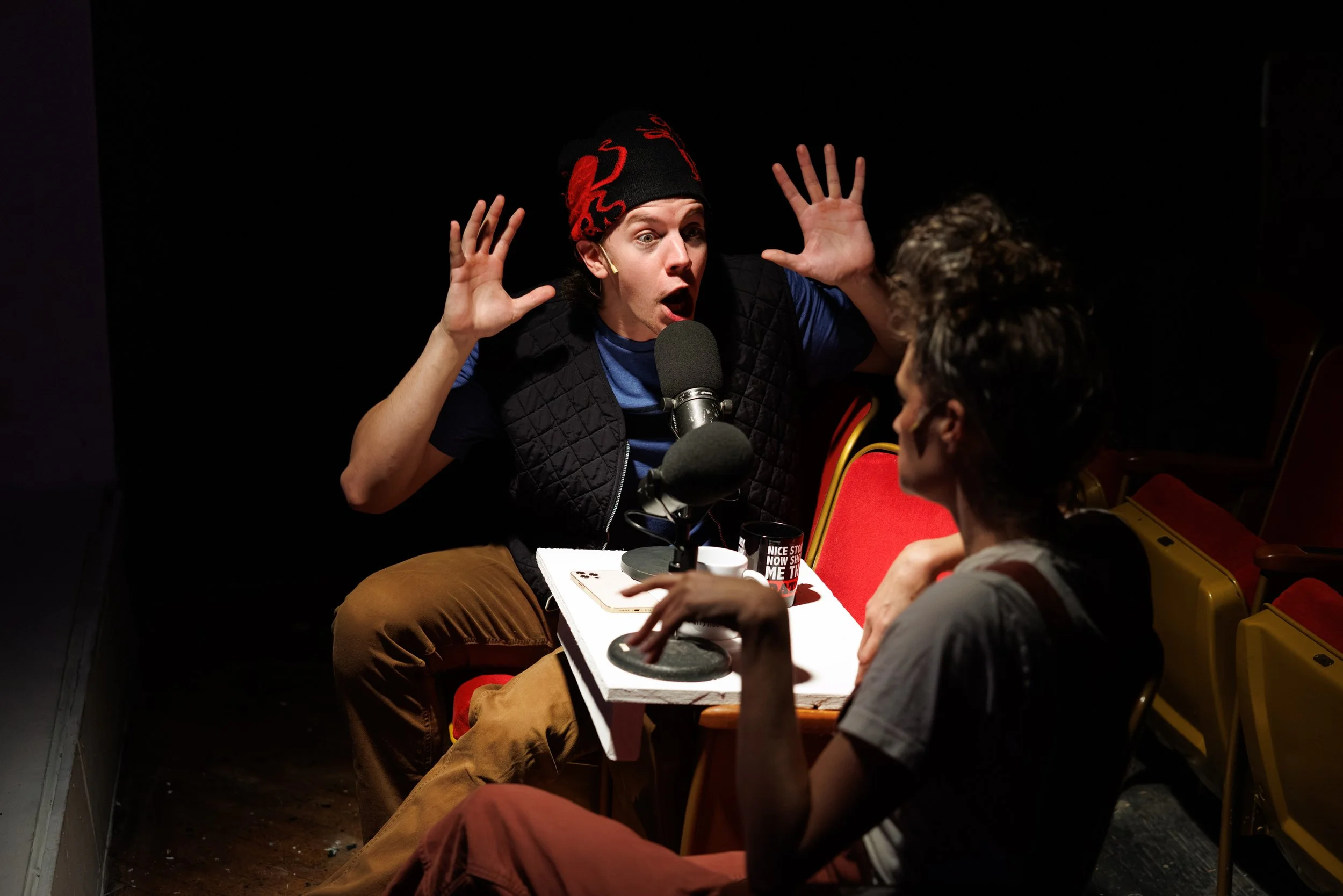
As the two rats, Kaelyn Langer Mendonca and Tagen Mathews deliver incredible performances of physical theatre, in the way they move, the way they speak and every twitch of their mannerisms. The rats start out looking nearly human, and from scene to scene they evolve, until by the end they are enormous, genuinely disgusting rodents. Even as the transformation grows more grotesque, you never stop seeing the gatekeepers of our media industry sitting behind those whiskers. Through them, Justino makes her critique unmistakable: there is only so much we’re allowed to write, and only so much we’re allowed to be appreciated for. We are being captured and made to perform. And it is up to us to break free from these rat cages.
The same two actors also play a pair of white podcasters who track crime statistics across communities and loudly perform their solidarity with victims of racial violence, people they have never actually connected with. It’s concern as content. What these podcasters really crave is trauma porn: the ongoing suffering of racialized communities, because it gives them something to talk about, something to think about, something to monetize. They have no real interest in seeing that suffering end, because the suffering is the actual product. Trauma porn sits at the center of the play’s argument, and Mendonca and Mathews nail something most of us struggle to describe. We’ve all heard media figures talk about these topics and felt that something was off, fake and inauthentic, without being able to say exactly what. These two actors put their finger right on it and hand it to us. Casting the same performers as rats and podcasters makes the connection impossible to miss: different costumes, same appetite for other people’s trauma.
Taylor Melville takes on a fascinating double role. As Vendetta’s mother, she carries coping strategies that her daughter dismisses as useless, a kind of wisdom Vendetta brushes aside, only to realize over time how valuable it really was. Then Melville reappears in Vendetta’s dream as Khanh, the doomed heroine of that awful 1980s musical, bullet wound and all, and somehow still standing. Khanh is trapped in her role, an artifact of the media, condemned to the ending white men wrote for her. Vendetta is a real person, and she has agency. She can break out. By having the same actor play both the mother and the trapped heroine, the production lets that guidance land with double weight: I’m stuck in my role, but you don’t have to be stuck in yours. Justino uses theatre, and commentary on theatre, to talk about the real world, which is something I believe in deeply: all theatre is politics, and all politics is theatre. This is a play that does something very sharp with this connection.
Philip Gregory Smith takes on two gloriously cringe-inducing characters: the TV announcer of Rat Cage, presiding over the nightmares of our two leads, and Charlie, the gay owner of the club who wants that shitty 1980s exploitative musical grafted onto his stage with Vendetta in the lead role. What makes Smith’s work so effective is the reasonableness he brings. We understand Charlie’s goals. He wants people to watch a show, to invest in a piece of media, a performance, a narrative. That’s how he makes his money, and he can’t do it without other people selling themselves. Charlie is the capitalist who intercepts cultural labor and then cheapens it further by appealing to the basest desires of his audience, dragging them further down. We all know what kind of world we live in, and which harmful, painful, disgusting trends are selling right now. Charlie and the TV announcer both give in to that temptation, and in doing so they form the frame that Vendetta, Jamelle, the mother and even Khanh must all resist.
Since dance carries so much of the storytelling, Lucien Oberleitner’s choreography deserves special praise. It’s visceral, built from movements that almost touch surfaces, intimate gestures that never quite make contact. Near-misses, tangents and flowing lines suggest that you don’t need to wrap yourself around something to caress it. You don’t even need to touch it. The connection is energetic, carried through spins, twirls and lines that are compelling to watch.
Em Majewski’s set is wrapped in Amaya Zhané’s projections across three walls, run by projections technician Max Irvine, and they do serious storytelling work, telling us where and when we are as the nonlinear narrative jumps forward and backward in time. They also present the oppressive weight of the media maelstrom we live in. It envelops the stage, the scenes, the characters. It invades our minds and controls our thoughts. It’s several steps ahead of us in the game, and the design shows how messy and viral it has all become.
Logan Thomas’s revelatory lighting and Andi Villegas’s compelling sound move in close coordination with these projections, and Jake Dahms’s music is evocative throughout, supporting the narrative powerfully. Meaghan Darling’s costumes are riveting, especially when they chart the rats’ slow transformation from almost-human to grotesque rodent. And a live camera turns its lens on the audience, implicating us in our own media consumption habits, a choice I loved seeing.
This was an enormously complex production involving heavy lifts from associate director Hannah Wang, dramaturg Elli Teplitzky and stage manager Brandon Eller, along with Meaghan Darling and Lucien Oberleitner, doubling as production manager and scenic painter respectively.
Rat Cage is an interrogation of the media we’ve been consuming and the cages it has built around us, cages patrolled by rats who keep trying to convince us that the only special thing we have to offer is an exotic, fetishized version of ourselves, packaged for consumption by white cishet patriarchal hegemony. So what if we refused? What if we connected with each other and turned the whole thing down? What if we built a new culture from the ground up, one that rejected every incentivized, marketable, sellable theme the rats have taught us to perform, and grew new themes from what we actually value in ourselves? Something with dignity. Something with self-worth. Something with a far brighter vision of the future than anything the rats are selling.
Rat Cage runs through October 24 at Annex Theatre in Seattle, with a live stream option for anyone who can’t make it in person. For more information, visit https://www.annextheatre.org/rat-cage.
Photo credit: Sayed Alamy