
Stage Review - Moby Dick
Presented By: Vashon Repertory Theatre - Vashon Island, WA
Show Run: October 16 - October 18, 2026
Date Reviewed: Saturday, October 17, 2026
Run Time: 3 Hours (including a 15-minute intermission)
Reviewed by: Greg Heilman
How far does conviction have to travel before it becomes obsession? And what happens to everyone else when the person steering the ship can no longer tell the difference? Those questions loomed over Vashon Repertory Theatre’s production of Moby-Dick or The Whale, which closed on October 18 at Vashon Center for the Arts. Adapted from Herman Melville’s novel and directed by David Quicksall, the production brought Captain Ahab’s pursuit of the white whale to the stage through the Book-It style, combining the descriptive power of literature with the immediacy of live performance. The result was an atmospheric telling of a familiar story whose greatest danger came from the man commanding the hunt.
First published in 1851, Moby-Dick has become one of the defining works of American literature, inspiring generations of adaptations and interpretations of its ideas about power, faith, and humanity’s relationship with nature. Its reach extends even to people who have never read it: pursuing a “white whale” has become shorthand for an elusive goal or consuming obsession. That familiarity and cultural reference point give this production a useful starting point, but the story has far more to offer than its famous hunt. Through Ishmael, a sailor who joins the crew of the Pequod, the audience encounters a captain who has turned the loss of his leg into a mission of vengeance, committing everyone aboard to finding and killing the whale responsible. Along the way, Melville’s story explores friendship, belief, and the troubling ease with which one person’s certainty can determine the fate of others.
The Book-It approach is particularly effective here. Characters carry the narrative as well as the dialogue, allowing the language to establish details and perspectives that a conventional dramatization might leave behind. David trusts that language, his actors, and the audience’s imagination to work together. The scenic design provides enough information to establish a place, while the storytelling supplies its scale. What I appreciate about this storytelling style is how satisfying it is to watch a production suggest an entire world and then realizing how much of that world has taken shape in the mind.
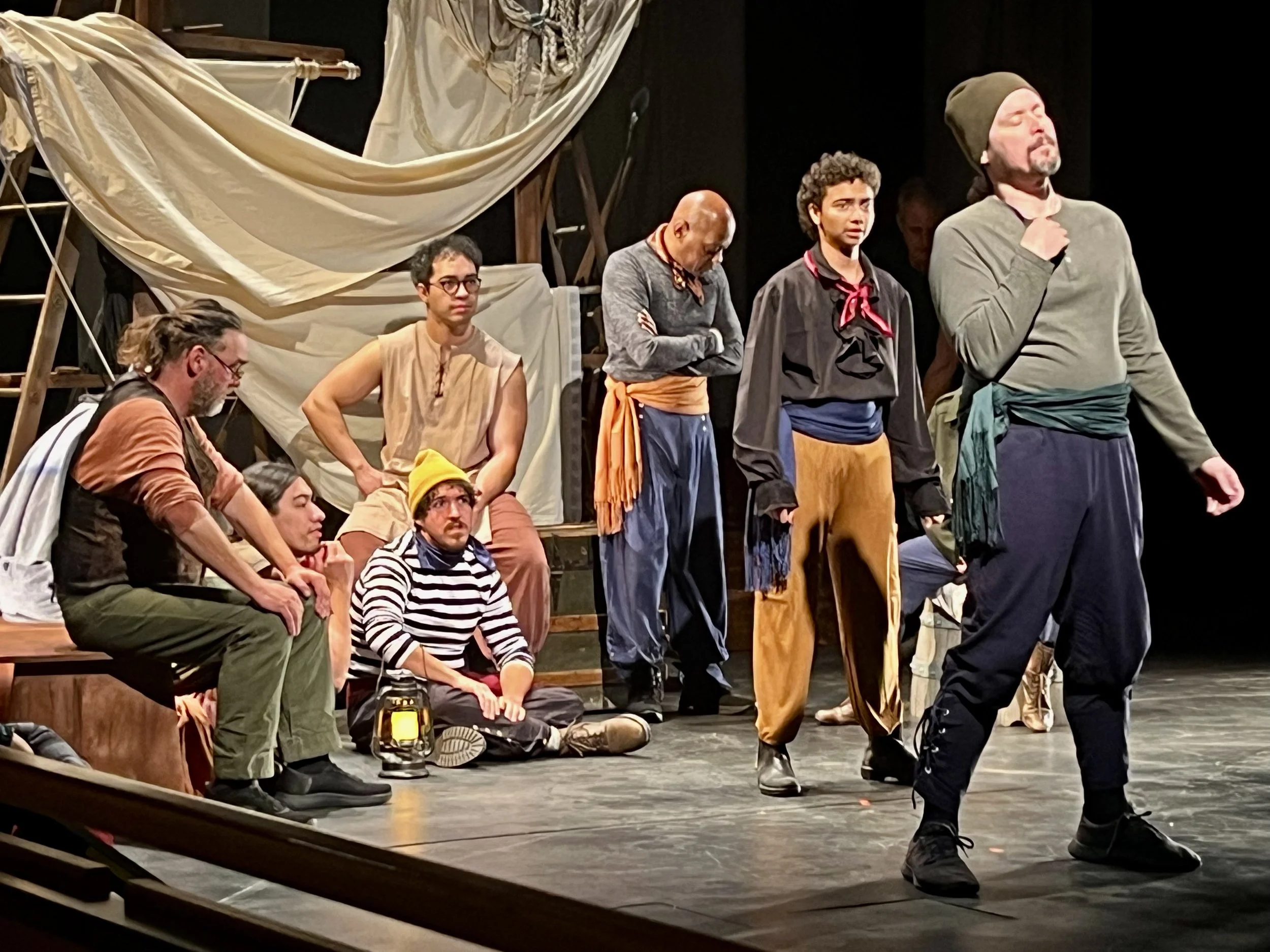
That atmosphere begins before the main action. The pre-show telling of Jonah and the whale, delivered beneath the whale skeleton suspended in the venue’s atrium, provides a fitting introduction. Inside the theatre, the sound of crashing waves, blue light, and drifting mist establish the maritime setting before the voyage gets underway. It is an effective transition from hearing about the sea to looking into a theatrical interpretation of it.
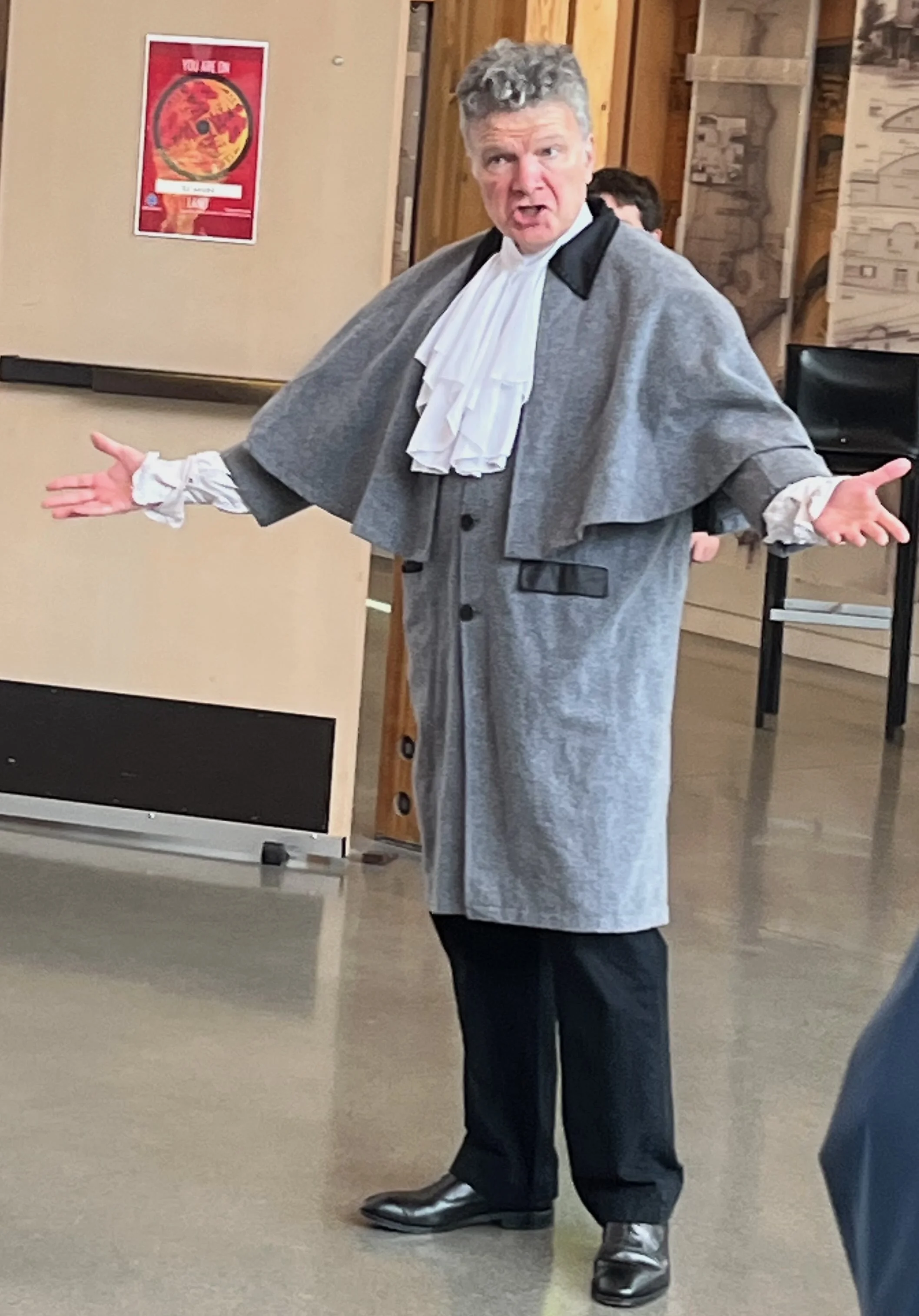
At the center of the production is Charles Leggett, whose Ahab looks and sounds remarkably close to the captain I would have pictured before entering the theatre. The combination of Charles’s commanding presence and Jocelyne Fowler’s costume design immediately establishes the character, but it is the performance beneath that appearance that makes him so compelling. Charles gives Ahab the authority necessary to command a ship and the intensity to make clear how dangerous that authority can become. His conviction has force, and it is easy to understand how a crew might find itself caught in the momentum of his will.
Some of Charles’s best work comes when that certainty opens into something more searching. His monologue in Act 2, in which Ahab examines himself and the forces driving his actions, is excellent. The opportunity to hear the captain question his own motivations gives the obsession greater depth. There is a person inside this imposing figure, and Charles makes the glimpses of that person count.
A scene between Ahab and Starbuck in the captain’s quarters is another highlight. Rachel Glass provides a wonderful and effective counterpart as the first mate, and the exchange gives space to the captain’s explanation of his purpose and confidence. Their performances make the conflict compelling, with Rachel providing a human side to the force of Charles’s conviction. Later, Ahab’s christening of his new harpoon with blood gives his pursuit an unsettling ceremonial quality, making the distance he has traveled from the practical business of whaling especially apparent.
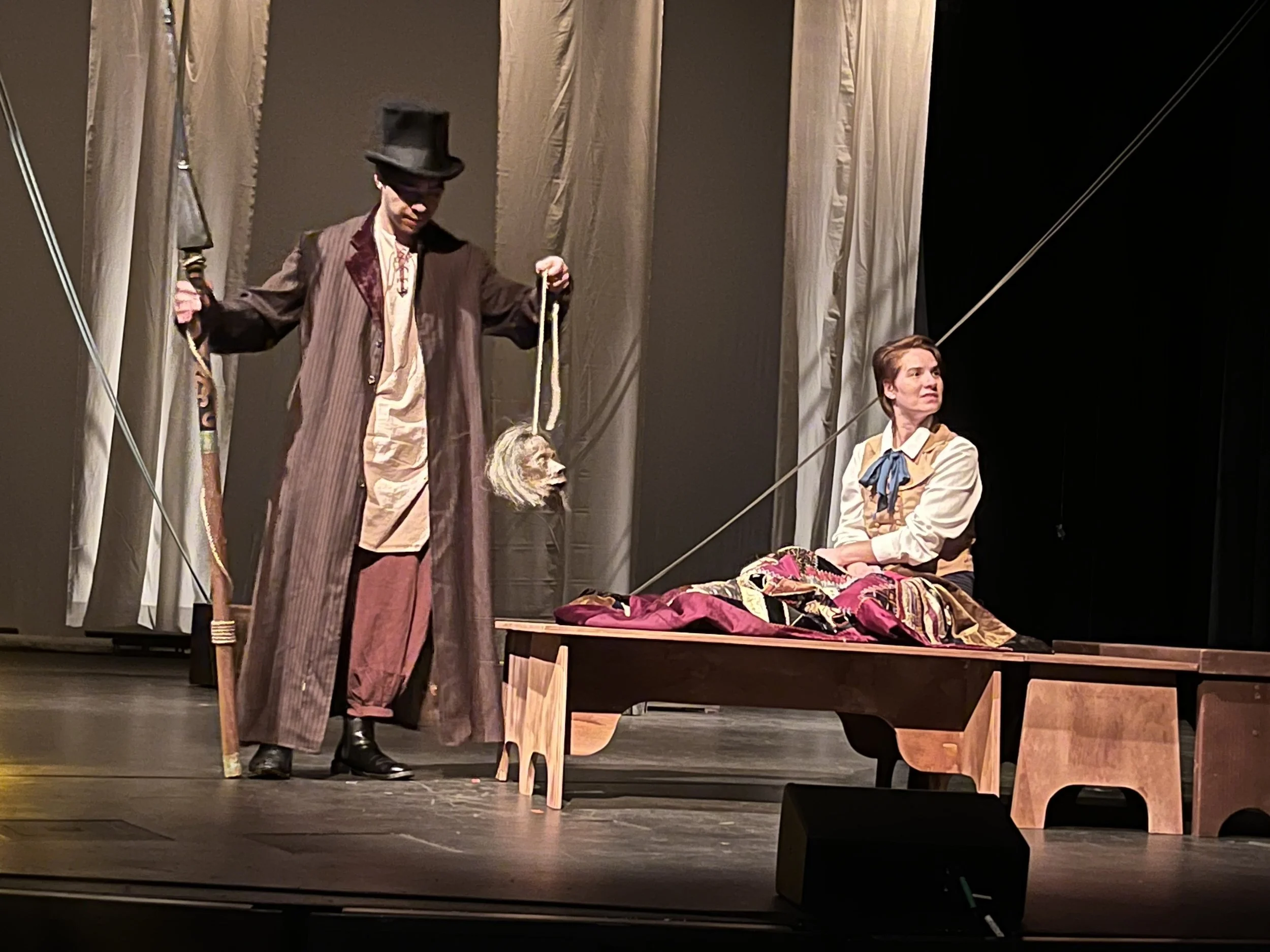
Angélica Duncan-Basile’s Ishmael provides the audience’s route into this world, with Joshua Erme’s Queequeg offering a contrasting presence as a man of fewer words. Their discussions of religion and worship allow the story to consider how people understand one another across differences in belief. Queequeg’s tattooed appearance makes a strong visual impression, while the relationship gives the voyage a human foundation before Ahab’s fixation takes hold. I found myself enthralled by the physicality of Joshua’s performance here, and how he shows communication isn’t just about words.
There is humor here as well. Frank Lawler’s Peleg brings a welcome comic energy to the business of joining the Pequod, particularly in his handling of Queequeg’s name. The broader company includes Bjorn Anders, Matthew Gilbert, Ronnie Hill, Steve Hunter, Caleb Lowery, Elia Newborn, Evan Povyan, Jace Tucker, and Cole Wimpee. Together, the performers establish the population and working life of the ship, with several taking on additional characters along the way. Even intermission becomes an extension of that community as cast members lead the audience in a sea shanty sing-along.
The physical storytelling is particularly good in the processing of a whale. The coordinated movement and attention to the work of extracting oil give the audience a detailed understanding of the labor involved. Bloody aprons and the handling of the scene’s practical business make this an occupation with demanding, messy routines. It’s quite a striking scene, and one that asks the audience to consider the extensive amount of work for what was produced from it, and the environmental impact of it all through a modern lens. Jace also serves as fight choreographer, while Rachel’s work as dialect coach supports the production’s range of voices.
Robin McCartney’s scenic design and Patti Curtis Hair’s properties and set dressing provide the physical framework for this world, with Jocelyne’s costumes establishing the people who inhabit it. In a format that asks the audience to fill in the scenic blanks through its collective imagination, it’s lighting and sound that become essential storytelling tools. Robin Nettles’s lighting and Nathan Wade’s sound design and composition provide the prompts that give those imagined surroundings their atmosphere, drawing on the novel’s shifting tones of wonder, contemplation, and dread.
The orange and yellow of a sunset suggest the expanse beyond the ship, while silhouettes illuminated behind a curtain give the action a striking sense of scale. In the captain’s quarters, the focused lighting concentrates attention on Ahab and Starbuck, making their exchange feel intimate within the larger voyage. Nathan’s crashing waves and continuing underscore give that voyage an audible presence, shaping the mood even when the audience’s attention is on the spoken narrative. Together, light and sound connect Melville’s descriptive language to the world taking shape in the audience’s imagination. Their contribution is especially effective as the story approaches its climax, when design, performance, and David’s direction build a gathering tension that makes the danger feel increasingly close.
Vashon Repertory Theatre’s Moby-Dick or The Whale, adapted and directed by David Quicksall, brings the scale and atmosphere of Melville’s story to the stage through commanding performances and an evocative combination of lighting and sound. The production invites the audience to imagine the world beyond the ship while giving weight to the lives aboard it, making everything endangered by its captain’s pursuit feel consequential. The whale may be the object of the hunt, but the production’s most compelling question concerns Ahab himself: what happens when a leader’s conviction becomes so absolute that everyone aboard must bear its consequences?
David Quicksall’s adaptation of Moby Dick ran this past weekend and closed on October 18. For more information about the theatre, including upcoming productions, visit https://www.vashonrepertorytheatre.org/.
Photo credit: Charlotte Tiencken