
Stage Review - Rebellious Women (Burien Actors Theatre)
Stage Review - Rebellious Women
Presented By: Burien Actors Theatre - Burien, WA
Show Run: April 10 - May 03, 2026
Date Reviewed: Friday, April 10, 2026 (opening night)
Run Time: 1 Hour, 30 Minutes (no intermission)
Reviewed by: Greg Heilman
The year is 2026. Wherever we look, it seems that our rights are under attack, like the freedoms that were fought for on our behalf by our ancestors are being dismantled, like a centuries old edifice being razed to make way for the latest shiny new skyscraper. And while we march, and protest, and otherwise challenge those powers that be, what shouldn’t be lost on any of us is the effort it took to get these rights in the first place. Surely, they laid the groundwork. One of the best examples of these important rights that perhaps we’ve taken too much for granted is the right to vote, and more specifically, the women’s suffrage movement.
It is from that foundation that Burien Actors Theatre’s production of Rebellious Women, currently on stage at Kennedy Catholic High School in Burien through May 3, draws its focus—looking back to early 20th century England and the voices of the women who fought to secure that right. Set across London between 1909 and 1918, the piece blends narration and dramatized moments to trace the determination, sacrifice, and resilience that defined the suffrage movement, offering a reminder of both how far we’ve come and how much those efforts continue to resonate today.
While I was familiar with the American suffrage movement, I’ll admit that I was not nearly as aware of the parallel struggle taking place across the Atlantic. Here was a movement driven by the same goals, marked by the same suffering, shaped by similar compromises, and—thankfully—arriving at the same hard-won result. That sense of discovery becomes one of the more compelling entry points into Rebellious Women, as it shines a light on a chapter of history that may not be as widely understood, but is no less vital.
The play itself is structured less as a traditional narrative and more as a series of interconnected moments, drawing from historical accounts, speeches, and personal reflections to build a broader picture of the movement. Through figures both central and peripheral, it captures the urgency of the fight for suffrage—the public demonstrations, the resistance from those in power, and the personal toll exacted on those who refused to remain silent. Rather than focusing on a single protagonist, the piece operates as a collective portrait, using its small ensemble to embody a wide range of voices that together tell the story of a movement defined by persistence and conviction.
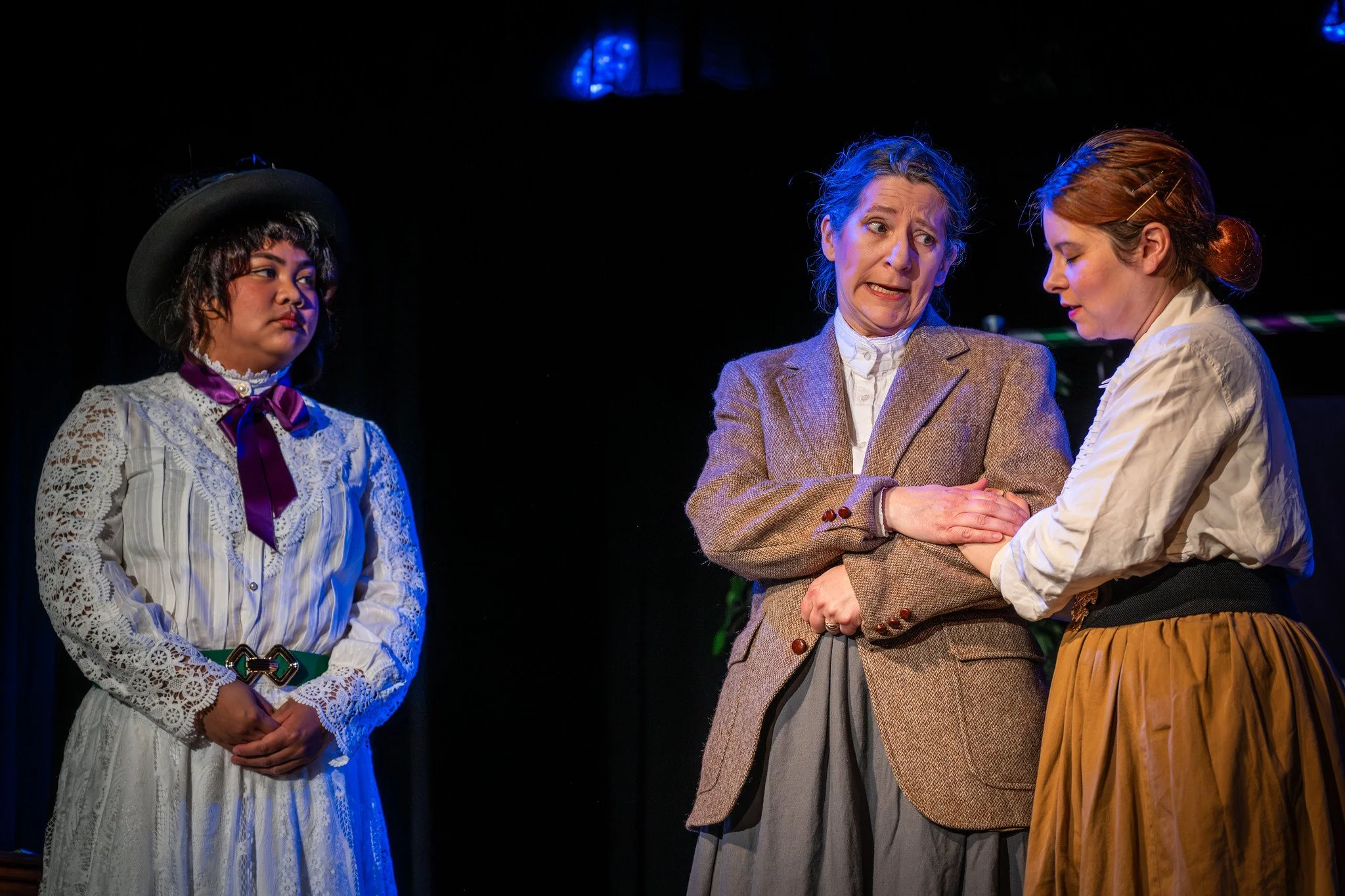
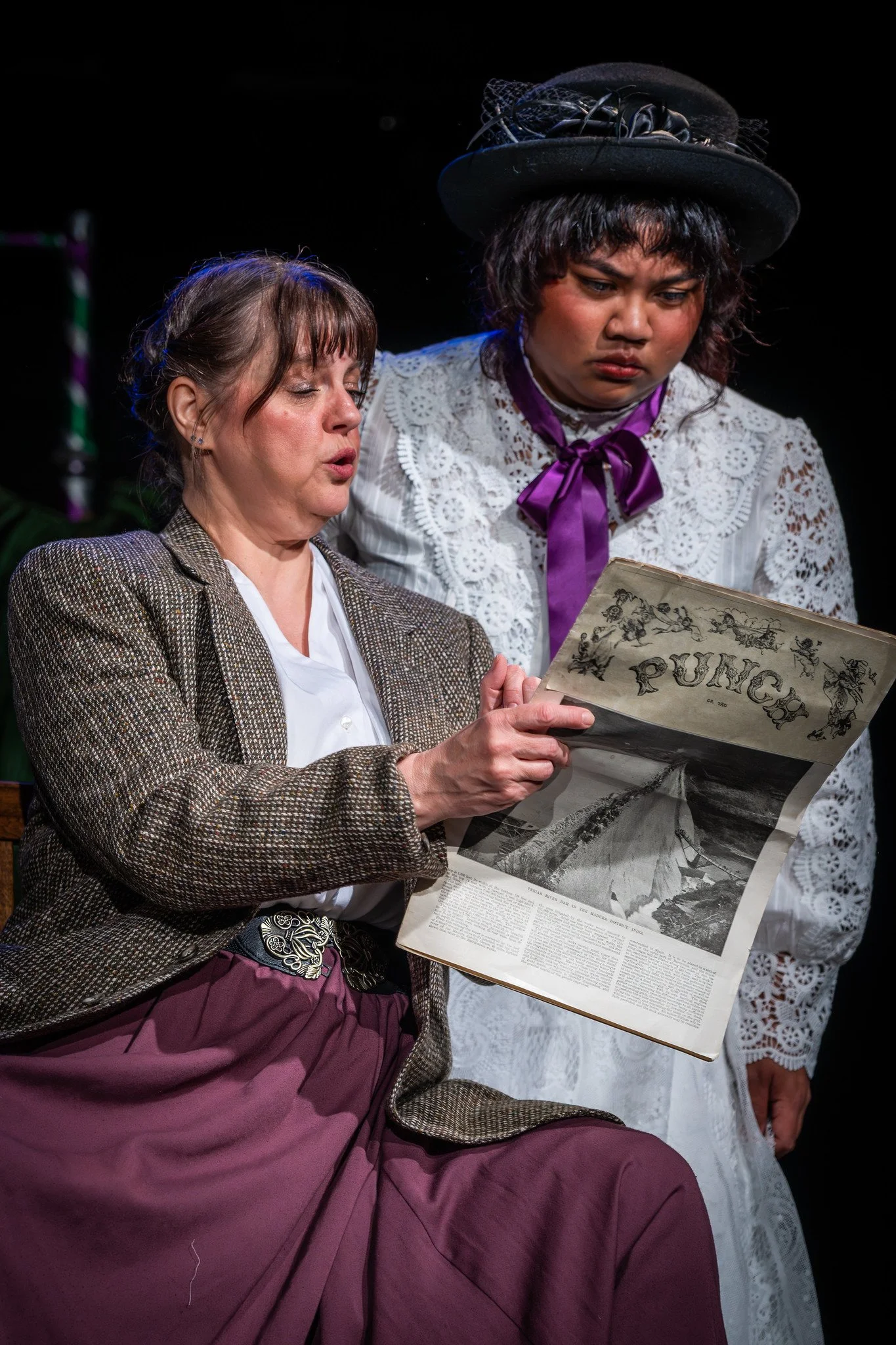
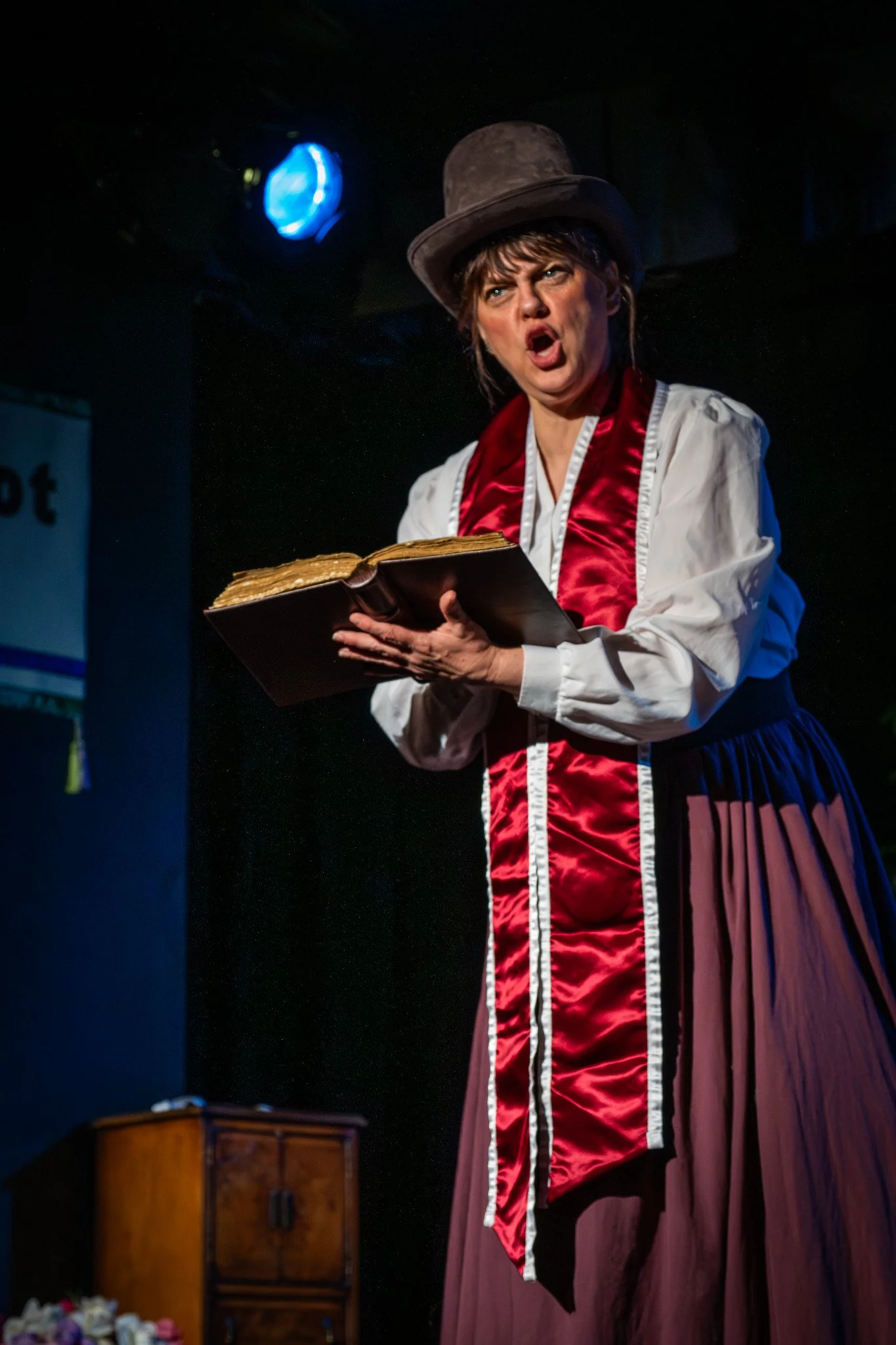
The actors, with the exception of Mari Roy as Edith, take on multiple roles throughout the production, stepping fluidly between narration and the dramatized scenes unfolding on stage. This structure places a great deal of responsibility on the ensemble to clearly define each character and moment, often with minimal shifts in staging to support them. Filling out the small cast is Elizabeth Ogle, who serves as a central presence, most notably as suffragette leader Rose Lamartine Yates, grounding many of the play’s key moments in a sense of purpose and resolve. Alyson Lapan and Amy Anderson round out the ensemble, each taking on a variety of roles as both activists and those in their orbit who shape and challenge the movement. Through these multiple portrayals, the cast works to present a wide-ranging view of the individuals connected to the cause, from its most visible leaders to those impacted in quieter, but no less significant, ways.
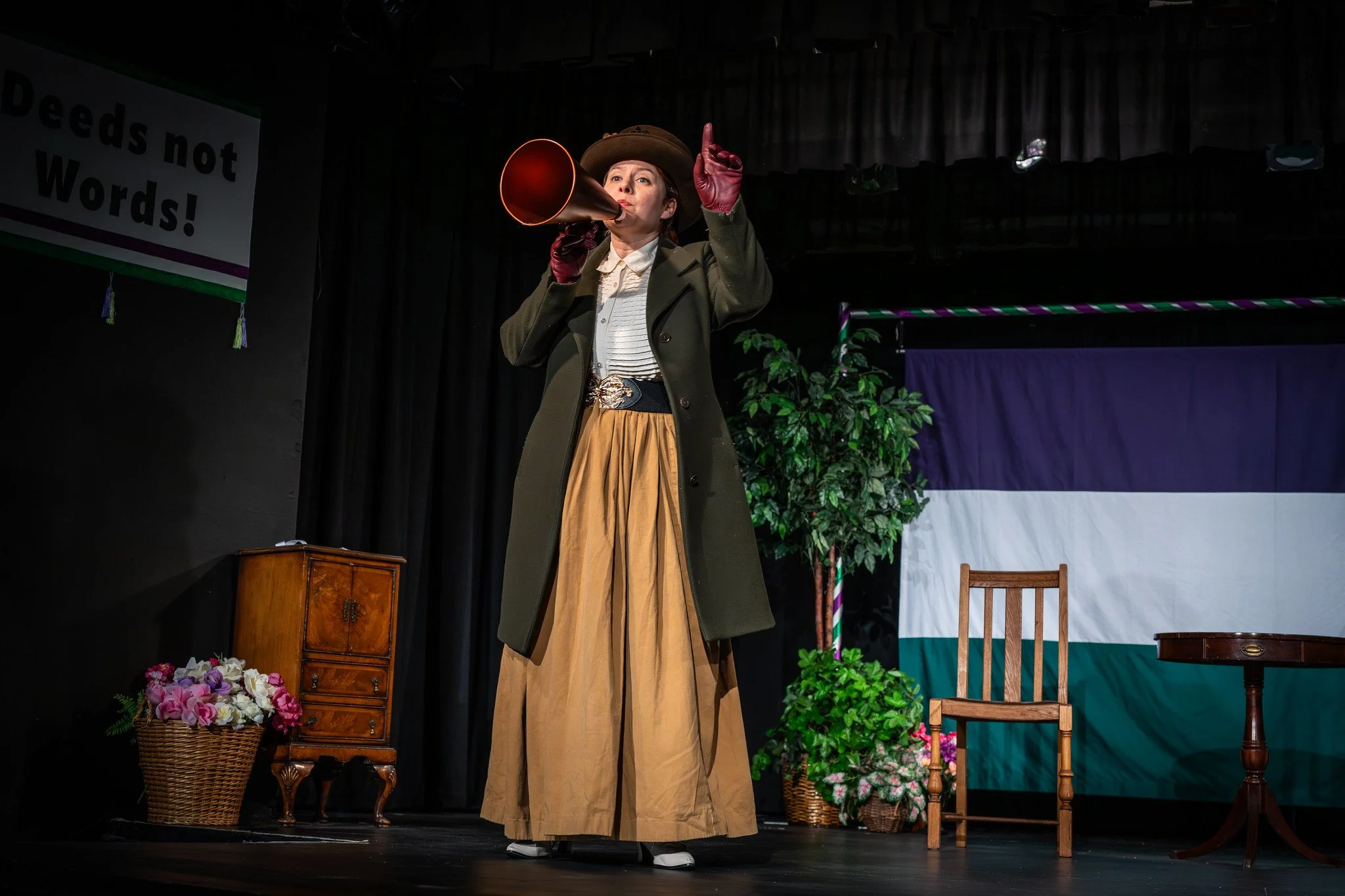
Where the cast finds its strongest footing is in the moments when the emotional weight of the material is allowed to come fully to the surface. This is especially evident in an exchange between Elizabeth’s Rose Lamartine Yates and Amy as a rally-goer—something of a period-appropriate heckler. Amy’s challenges are met with equal conviction, and the scene unfolds with a compelling sense of urgency, capturing both the angst and determination that defined the movement.
Too often, though, that level of emotional immediacy proves elusive. Amy does particularly strong work in consistently bringing depth and energy to the various characters she portrays, but elsewhere, on opening night, the narrative tends to skew dry and matter-of-fact in its delivery. These were passionate, driven women, willing to endure imprisonment, force-feeding, and public scorn in pursuit of a better future, and I found myself wanting more of that fire to carry through the narration.
This is particularly noticeable in the rally speeches. There is a clear intent behind Elizabeth’s delivery—these are meant to be impassioned, galvanizing moments—but they often land with a similar vocal quality to the surrounding dialogue. Introducing more variation, whether through vocal dynamics or creative support in the staging and sound, could help elevate these moments and give them the distinction and impact they deserve.
That said, the versatility of the cast is commendable. Both Amy and Alyson navigate multiple roles with clarity, often shifting between characters with distinct accents and physicalities, and doing so with a level of precision that helps maintain the storytelling across the production’s many transitions, while Elizabeth is a very good Rose, clearly bringing a confidence to the role that comes out in her performance.
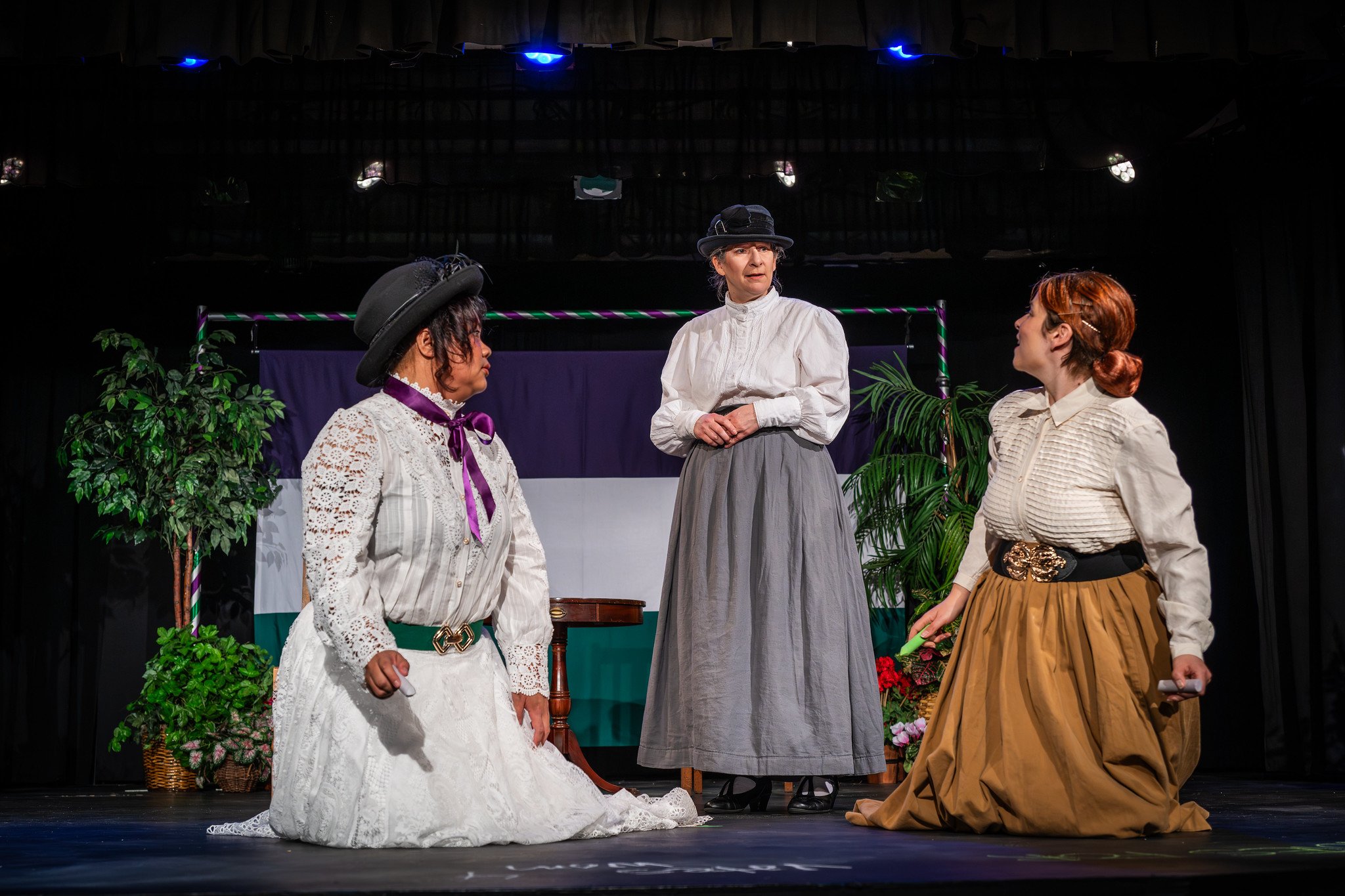
From a design standpoint, the production embraces a minimal approach. Eric Dickman’s scenic design functions primarily as a central playing space that stands in for the many locations required by the script, placing the focus squarely on the performers. Rob Falk’s lighting helps delineate the shifts between narration and scene work, creating a visual rhythm that supports the structure of the piece. Cyndi Baumgardner’s properties add detail where needed, while Jester Kamps’ costumes effectively establish the period, with thoughtful use of headpieces and silhouettes that reflect the time without becoming distracting.
Under the co-direction of Rochelle Flynn and Maggie Larrick, there is a clear intent to present the material with clarity and respect for its historical significance. The framework is solid, and the story being told is an important one. With a greater emphasis on emotional variation and dynamic delivery, the production could more fully capture the urgency and passion that defined the suffrage movement.
Rebellious Women is one of those plays that, despite the age of the story, feels relevant and timely. The issues at its core—access to the ballot, the fight to have one’s voice heard, and the resistance that so often meets those demands—are not relics of the past, but conversations that continue to evolve in our present day. Watching these women organize, protest, and endure in pursuit of something as fundamental as representation serves as both a history lesson and a quiet warning. The rights they fought for were neither easily won nor permanently secured, and the parallels to today’s political and social climate are difficult to ignore. If anything, this production underscores the idea that progress is rarely linear, and that each generation is, in its own way, called upon to protect and reaffirm the foundations laid before it. In that sense, Rebellious Women is not just a look back—it is a call to remain engaged, aware, and, when necessary, just as rebellious.
The Burien Actors Theatre production of Rebellious Women runs on stage through May 3. For more information, including ticket availability and sales, visit https://battheatre.org/.
Photo credit: Michael Brunk