
Stage Review - Smoke on the Mountain
Presented By: Taproot Theatre - Seattle, WA
Show Run: October 07 - November 07, 2026
Date Reviewed: Wednesday, October 21, 2026
Run Time: 1 Hours, 45 Minutes (including a 15-minute intermissions)
Reviewed by: Greg Heilman
Growing up in a household in the Northeastern US, it wasn’t uncommon to be brought up listening to country music, particularly the classics, where the influence of Appalachian folk music runs deep. My affection for those songs eventually turned into a curiosity about where they came from, making me something of an armchair ethnomusicologist as I explored the roots of the music of my youth. That history gave the banjo, fiddle, and close family harmonies of Smoke on the Mountain a particular familiarity. Directed by Scott Nolte and on stage at Taproot Theatre’s Isaac Studio Theatre through November 7, this production feels (for me, at least) like a bit of a homecoming, and did even before the Sanders family comes on stage and plays a single note.
With a book by Connie Ray, conceived by Alan Bailey, and featuring musical arrangements by Mike Craver and Mark Hardwick, Smoke on the Mountain takes the audience to Mount Pleasant Baptist Church in North Carolina on a Saturday evening in June 1938. Reverend Mervin Oglethorpe has invited the Sanders family to lead the congregation in a Saturday night sing, an occasion he hopes will bring some enthusiasm to his church. The audience becomes that congregation, looking on as songs and personal testimonies reveal a family whose faith is sincere, whose history includes its share of mistakes, and whose approach to the evening occasionally tests the minister’s composure.
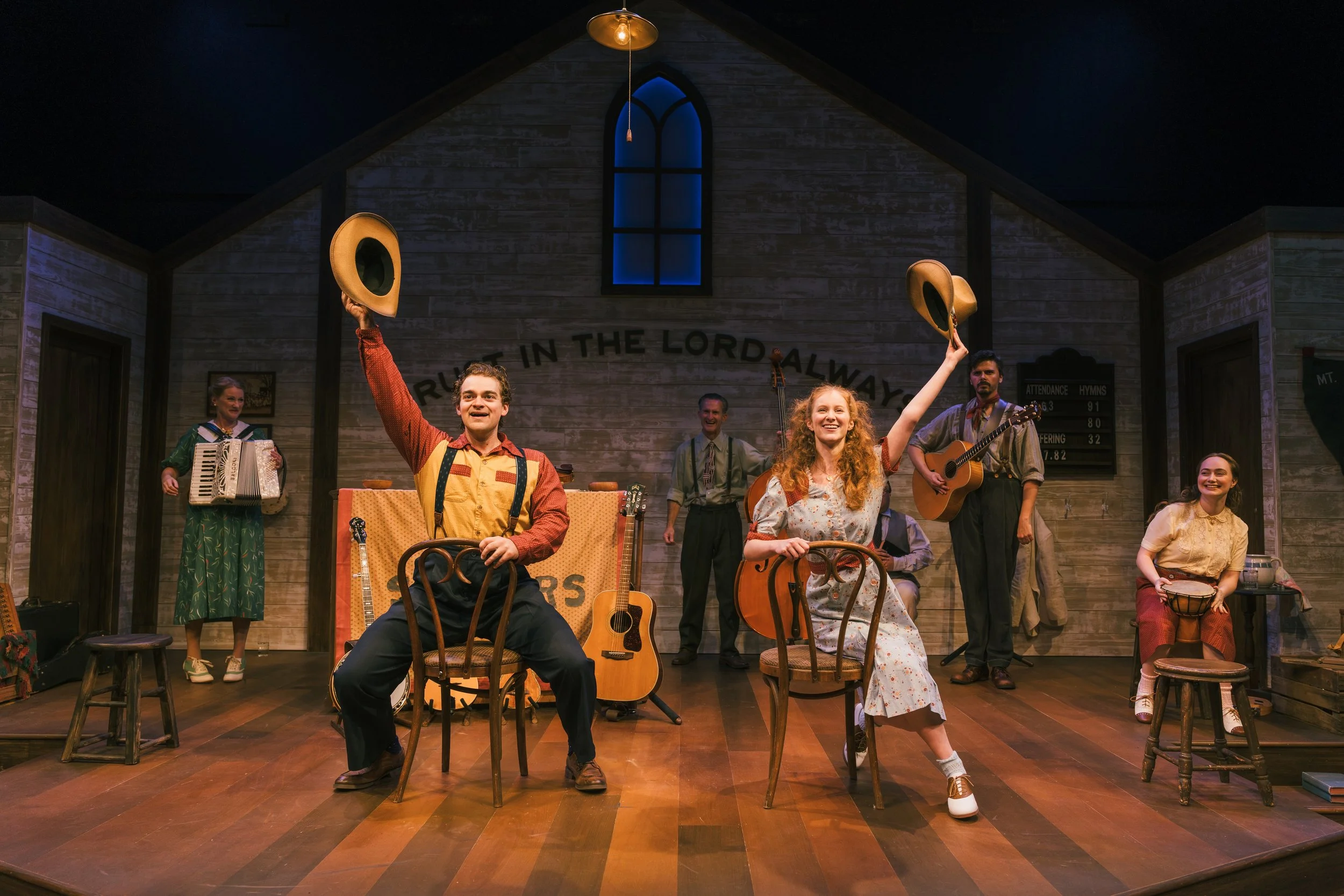
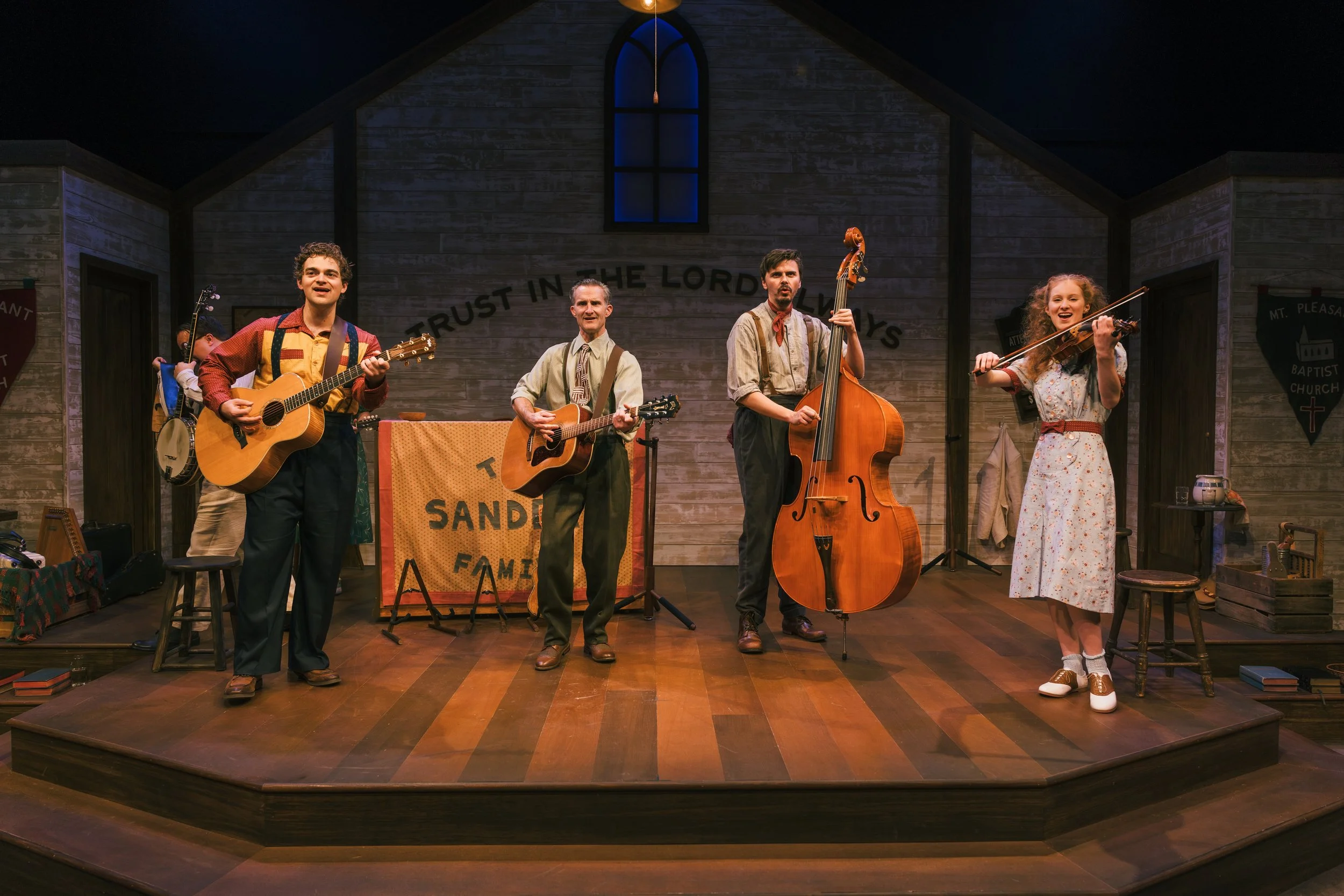
Richard Lorig’s church-house setting establishes the right atmosphere, with the instruments laid out foreshadowing the musical gathering to come. Chirping birds and barking dogs from Mark Lund’s sound design extend the setting well beyond the church walls. It’s immediately welcoming, and in the intimacy of the Isaac Studio, where the distance between the Sanders family and its congregation is small enough to make the invitation feel personal, the coziness of the environment is part of the show’s charm.
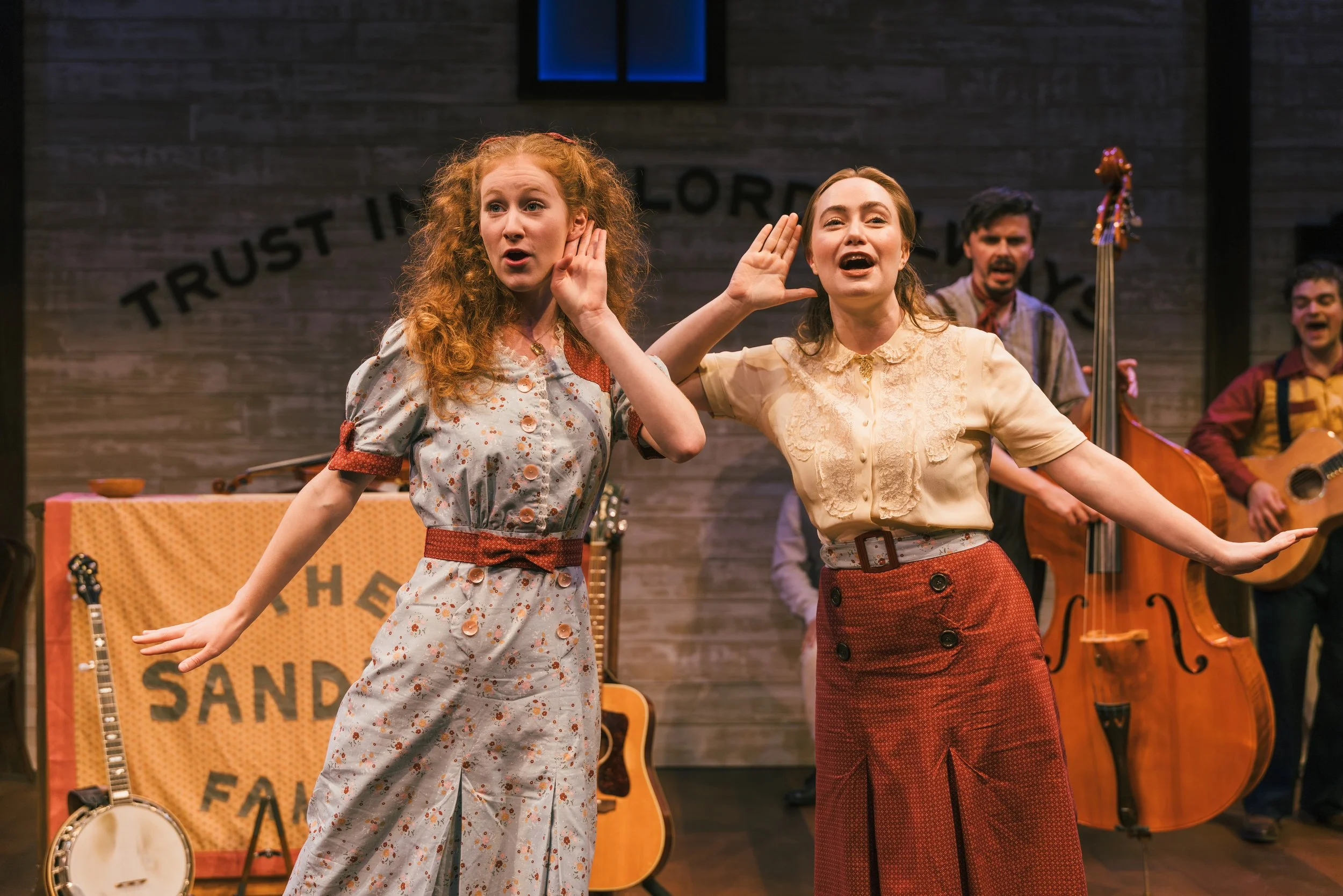
Joel Barkman introduces Mervin with an apparent and well-played nervousness, his neat suit and convincing accent helping establish a minister eager for the evening to go well. Once the family arrives, Joel’s reactions become a continuing source of comedy. Watching Mervin during the musical numbers is often as entertaining as watching the musicians themselves, as pleasure gives way to surprise and, occasionally, an urgent need to regain control. When the girls begin dancing, his declaration that “We don’t dance here!” makes clear that his enthusiasm for this gathering comes with certain conditions.
That tension helps give the production its comic identity. There is something of a religious Hoop-Dee-Doo Revue (if you understand the reference) quality about the proceedings, with music, family antics, and audience involvement sharing the same space. The humor, though, remains rooted in recognizable people and their convictions. An especially funny exchange early in the second act finds scripture offered as evidence both against dancing and in its defense. The contradiction rests in the interpretation, with each side certain that the words support its position. Similarly, a children’s message involving June bugs, Christians, and sinners captures the show’s ability to find comedy in the delivery of a lesson while keeping its underlying sincerity intact.
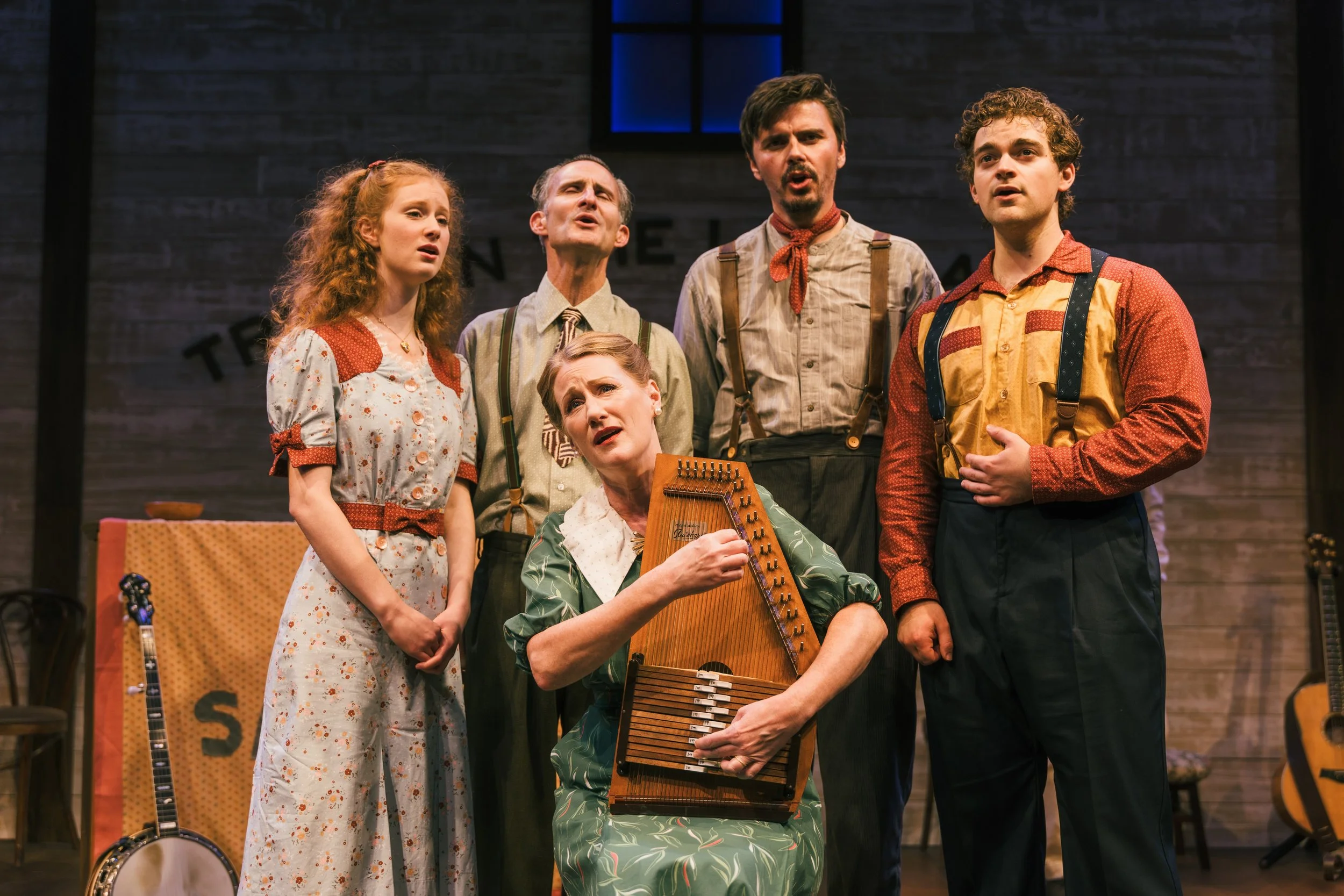
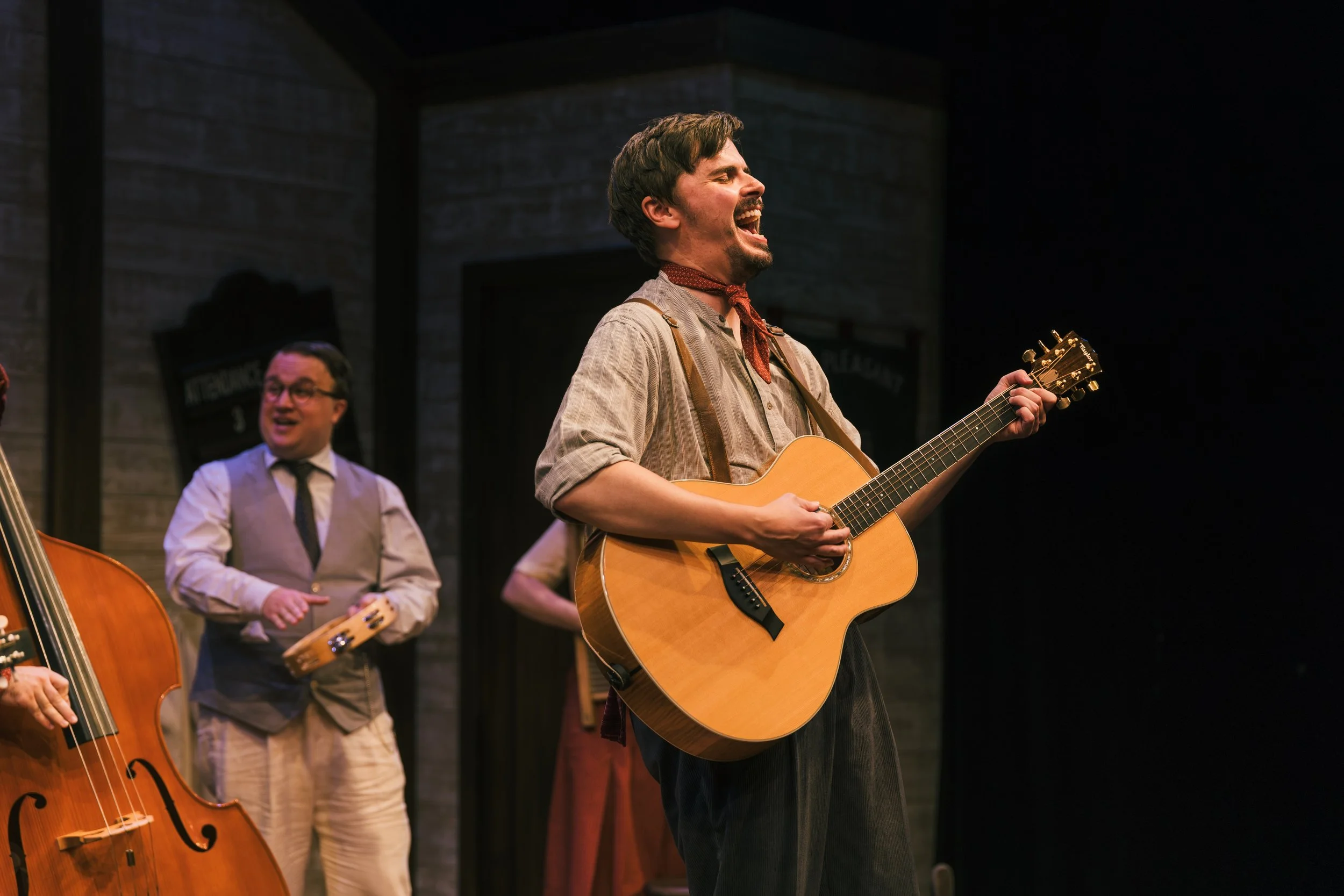
The music provides that sincerity with its strongest foundation. Under Sam Vance’s musical direction, the performers move among banjo, mandolin, fiddle, guitars, piano, washboard, and accordion with an ease that makes the family’s shared musical life believable. The instruments change hands without disrupting the flow, and the pleasure comes as much from watching these musicians work together as from hearing the results. Whatever comic business surrounds a number, the songs themselves receive the seriousness and honor they deserve.
Sam also plays Burl Sanders, joining Candace Vance as Vera at the center of the family. Candace’s excellent voice is a particular pleasure, while Echo Joy Vance and Jeremy Steckler, as twins Denise and Dennis, contribute to the lively family dynamic. The collective sound matters here, the actors need to feel like people accustomed to making music together, with the confidence to listen, respond, and find their place within an arrangement. This ensemble creates that impression, allowing the audience to settle into the idea that the Sanders family might actually be a family.
Audrey Herold brings a wonderfully infectious joy to June, whose contribution to the family’s performances includes her expressive signing. Watching Audrey interpret a song becomes its own musical experience, her face and movements carrying an enthusiasm that makes the signing resemble a joyous dance. Her work on the spoons (and other percussion) adds another pleasure, but it is that unguarded delight in participating that makes June so engaging. Even when attention shifts elsewhere, she remains a rewarding person to watch.
The evening’s deepest emotional work belongs to Mike Oliver as Stanley Sanders. Initially reserved, Stanley seems less enthusiastic about being there than the rest of the family. His rich bass voice gradually reveals another side of him, however, and his songs become the production’s most heartfelt and poignant moments. “Everyone Home But Me” carries a loneliness that gives weight to the character beneath his subdued exterior.
When Stanley speaks about his time doing hard labor, Mike brings an emotional honesty that changes the temperature of the room. The testimony gives the audience a clearer understanding of what this gathering, and this family, can mean to someone trying to find his way back. As the scene moves into “I Wouldn’t Take Nothing for My Journey Now,” that vulnerability gives way to an energy that seems to lift the entire production. It is a small redemption story within the larger evening, and a moving expression of the role family can play in healing.
There are plenty of other musical pleasures along the way. The men’s harmonies in “Jesus Is Mine,” with Mervin joining the family, are especially satisfying. “Angel Band,” which brings the minister into the music on banjo, delivers another welcome burst of energy.
“Life’s Railway to Heaven,” performed here as part of the Sanders family’s Transportation Medley, brings my feeling of a homecoming into especially clear focus. My familiarity with the song comes from how it opens the Nitty Gritty Dirt Band’s Will the Circle Be Unbroken, Volume Two, the tune arranged by Johnny Cash and performed with the legendary Carter Family. To my ear, there is good reason for that choice: its blending of faith, music, and the rural tradition of the railroad makes it a fitting introduction to an album celebrating the roots of country music. Those same qualities make it feel perfectly at home in the Sanders family’s repertoire. Hearing it here connects my affection for this music with the people on stage, whose songs give familiar experiences and everyday imagery a spiritual meaning.
Scott’s direction allows the balance of humor and sincerity to develop naturally. As the Saturday Sing progresses, the individual quirks become part of a convincing family portrait, and the audience’s relationship with the performers grows warmer. The laughter opens the door, but the music and the moments of vulnerability give the gathering its substance.
For all its comic interruptions and spirited disagreements, Taproot Theatre’s Smoke on the Mountain finds its heart in people making music together. Director Scott Nolte and this gifted ensemble create an evening in which faith, fallibility, and the possibility of redemption share the same small church. The production offers plenty to enjoy, whether these songs are old acquaintances or first introductions. For this listener, raised on music with roots in these same hills, the welcome feels especially familiar, a homecoming carried on strings, voices, and the warmth of a family finding its harmony.
Smoke on the Mountain runs on stage at Taproot Theatre’s Isaac Studio through November 7. For more information, including ticket availability and sales, visit https://taproottheatre.org/.
Photo credit: Giao Nguyen