
Stage Review - Table 17
Presented By: Union Arts Center - Seattle, WA
Show Run: October 24 - November 15, 2026
Date Reviewed: Sunday, November 01, 2026
Run Time: 90 Minutes (no intermission)
Reviewed by: Greg Heilman
John Steinbeck once posited in The Winter of Our Discontent that “no man really knows about other human beings. The best he can do is to suppose that they are like himself.” For a playwright, there’s a certain leap of faith in that supposition, the hope that something drawn from one person’s understanding of the world will find recognition in someone else’s. With Table 17, running at Union Arts Center through November 15 under the direction of Shermona Mitchell, Douglas Lyons has achieved that connection. His examination of a fractured relationship hits a real nerve, offering 90 minutes that feel, at times, like a particularly revealing session of couples therapy, though surely more entertaining.
At the center of this story are Jada and Dallas, two former partners whose dinner together brings considerably more to the table than either might care to admit. As the drama on stage moves between their reunion and the history that brings them to it, the audience sees the attraction, the affection, and the accumulated hurt. The couple’s host at the restaurant, River, and the people encountered in flashbacks provide perspectives from outside that shared history, adding humor and further opportunities to recognize the ways people seek connection, protect themselves, and sometimes get in their own way. The circumstances belong to these characters, but the feelings are familiar territory for anyone who has tried to build a life with another person.
The point here is that every relationship has its ebbs and flows, but familiarity can make it easy to stop paying attention to the person on the other side of the table. Table 17 offers a compelling reason to look again. As a line in the play puts it, “It’s not about the outcome, it’s about the effort.” There’s no promise that doing the work will produce the ending someone wants. There is, however, value in being able to look in the mirror and know that the effort has been honest. That question of how much someone can give, and whether it will be enough, runs beneath the comedy of this reunion.
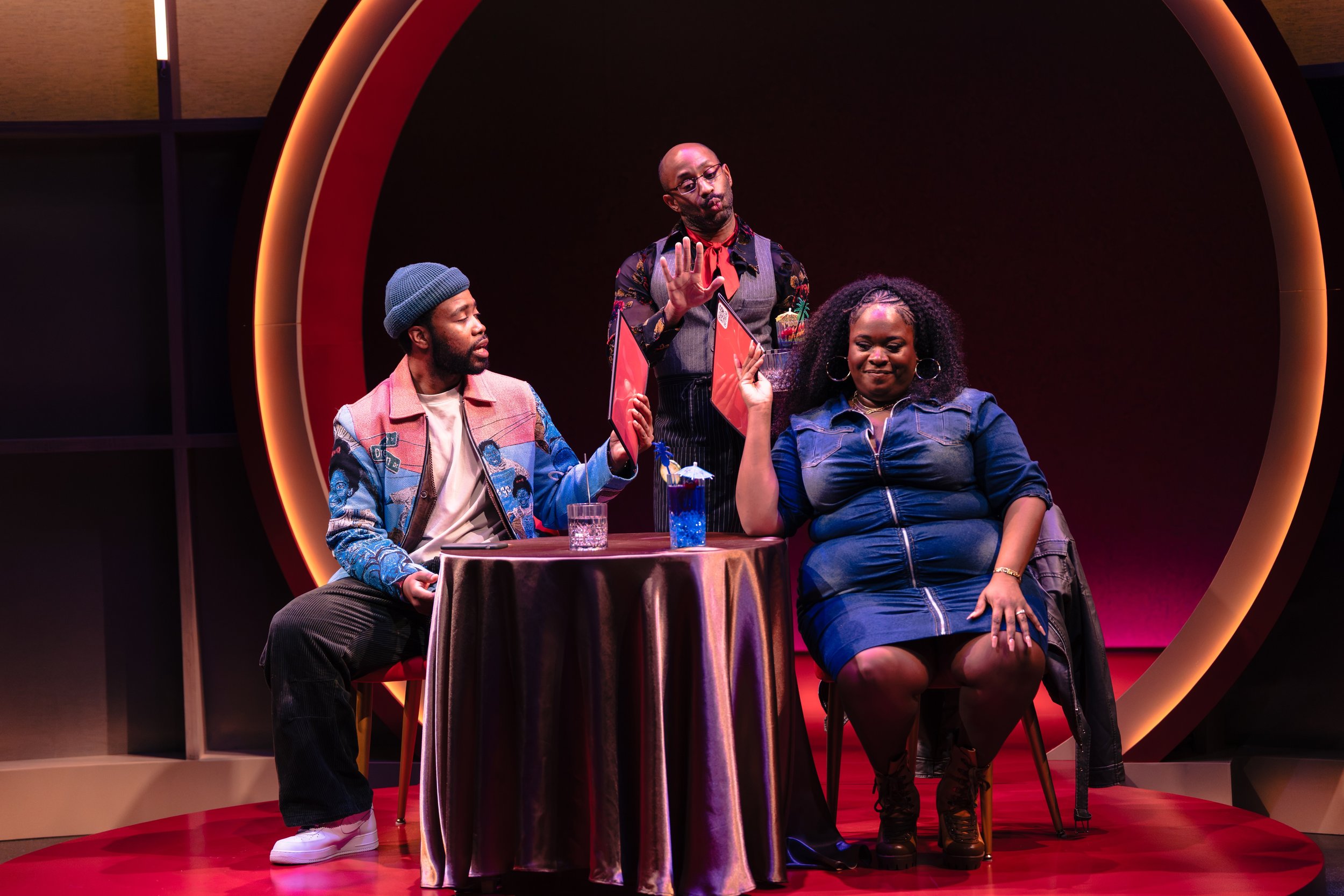
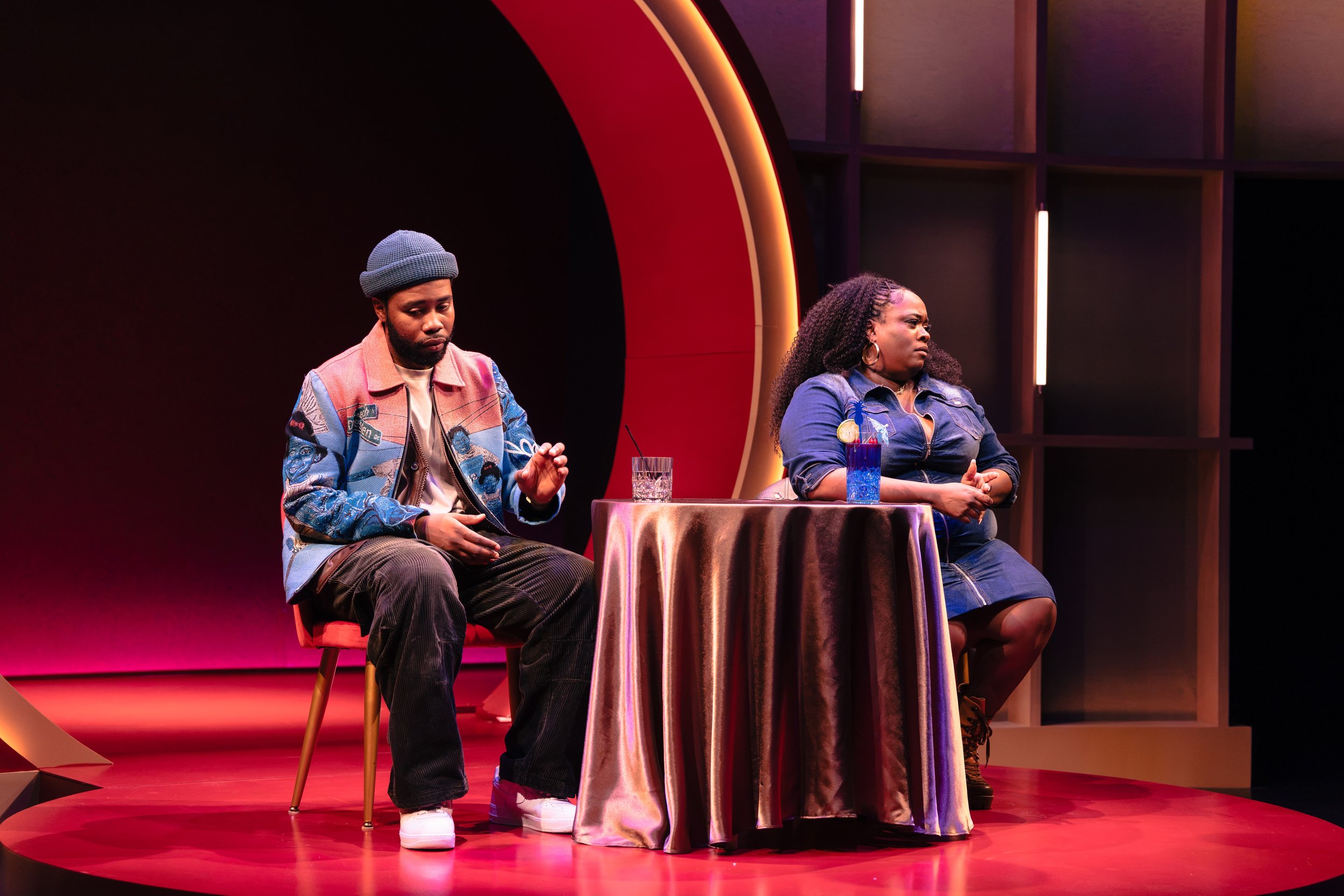
Before either character begins to reveal much, Parmida Ziaei’s scenic design establishes the intimacy of the encounter. Something I love about Parmida’s designs is the way they can make the audience feel as though it is looking into someone’s relationship. It isn’t quite voyeuristic, rather there’s more of an invitation to look closely, to enter a private space and understand the people occupying it. Here, a round table covered in a black tablecloth and accompanied by two chairs sits on a circular platform on the stage. The arrangement appears to have folded out of the back of the set, like a theatrical Murphy bed. It gives the impression that the set itself has opened to allow the audience into the heart of this couple’s relationship. It’s a delightful turn of design.
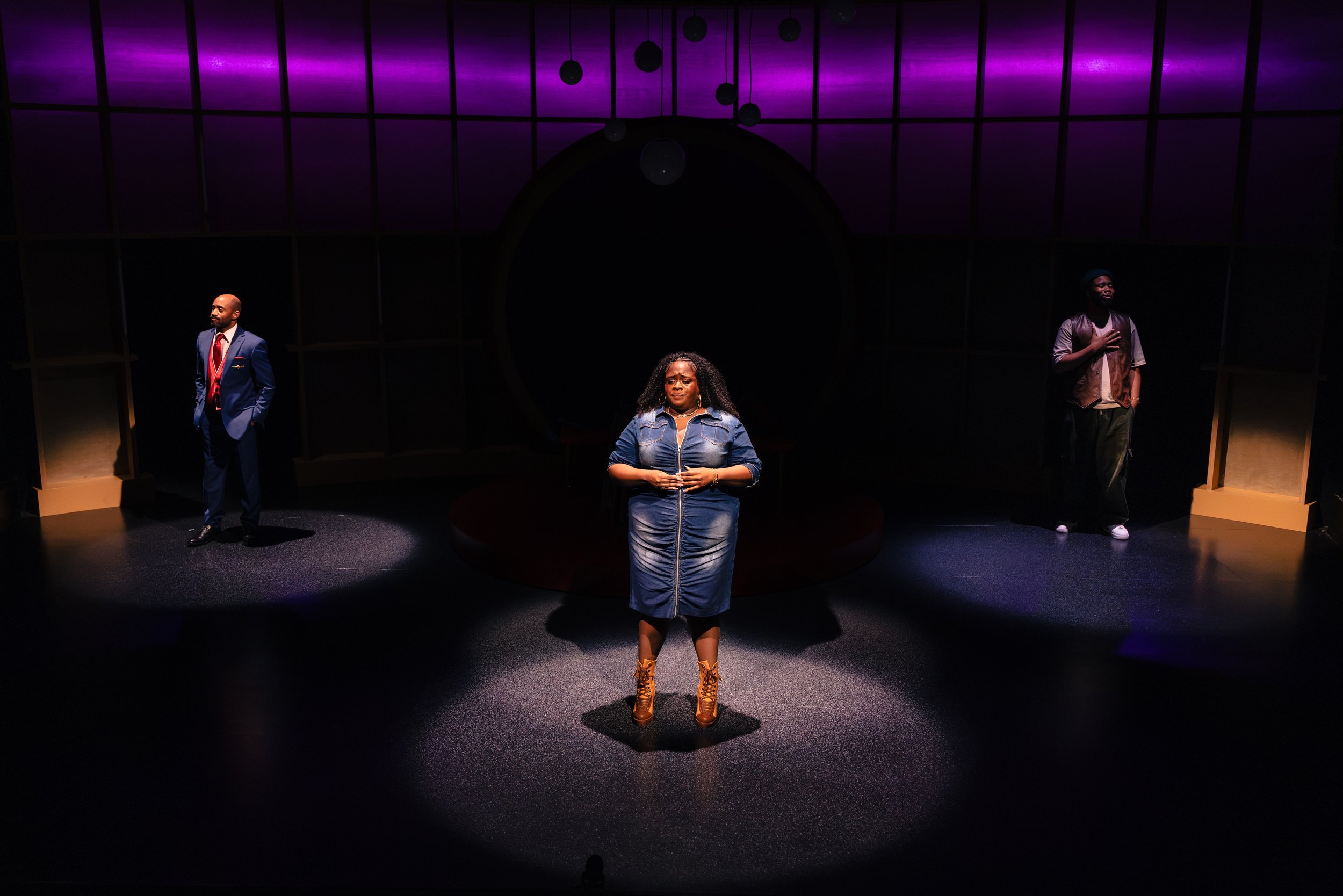
Beyond the focal point that is the table, there’s a precision to the arrangement, with doorways on either side and globe lights overhead, that makes the less orderly business at the table all the more apparent. Shermona makes particularly effective use of the distance between Jada and Dallas. Early in the dinner, they sit angled slightly away from one another, their bodies expressing the caution that their conversation attempts to disguise. As their exchanges become more comfortable, they turn toward each other; when tension returns, they retreat. Those small adjustments and the actors’ body language give the audience another conversation to follow, one that sometimes reveals more than the words.
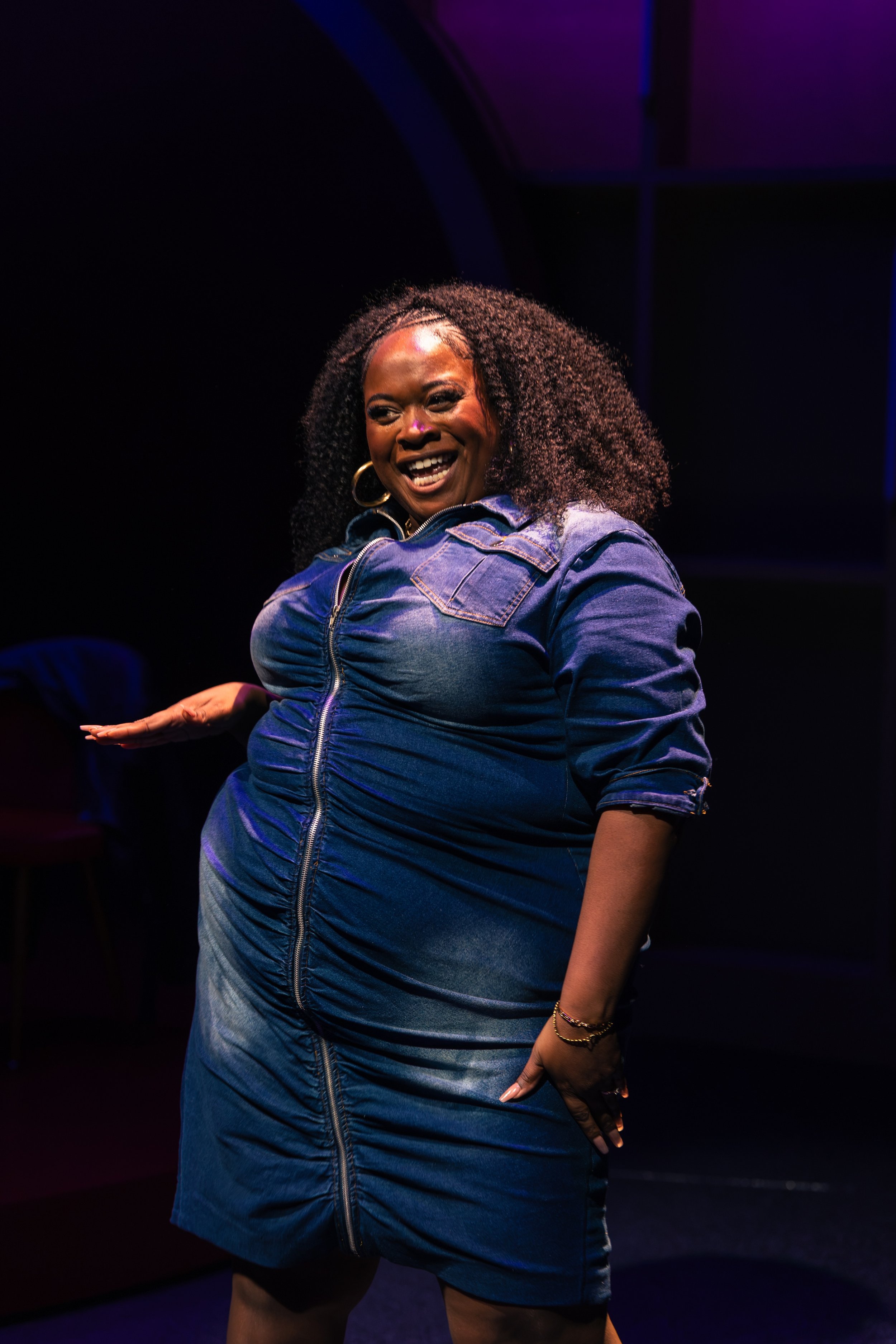
Bria Samoné Henderson establishes an immediate impact as Jada, sharing herself with the audience through direct address and a sharp sense of repartee. These early moments of exposition give personality and context to the history being uncovered, and Bria makes them feel like an extension of Jada’s need to explain herself. Her performance moves convincingly through the emotional demands of the piece, allowing humor, affection, frustration, and hurt to emerge from the same person. As more of the relationship comes into focus, she provides a clear sense of what it means to Jada and how difficult it is to separate what she feels now from everything that has come before.
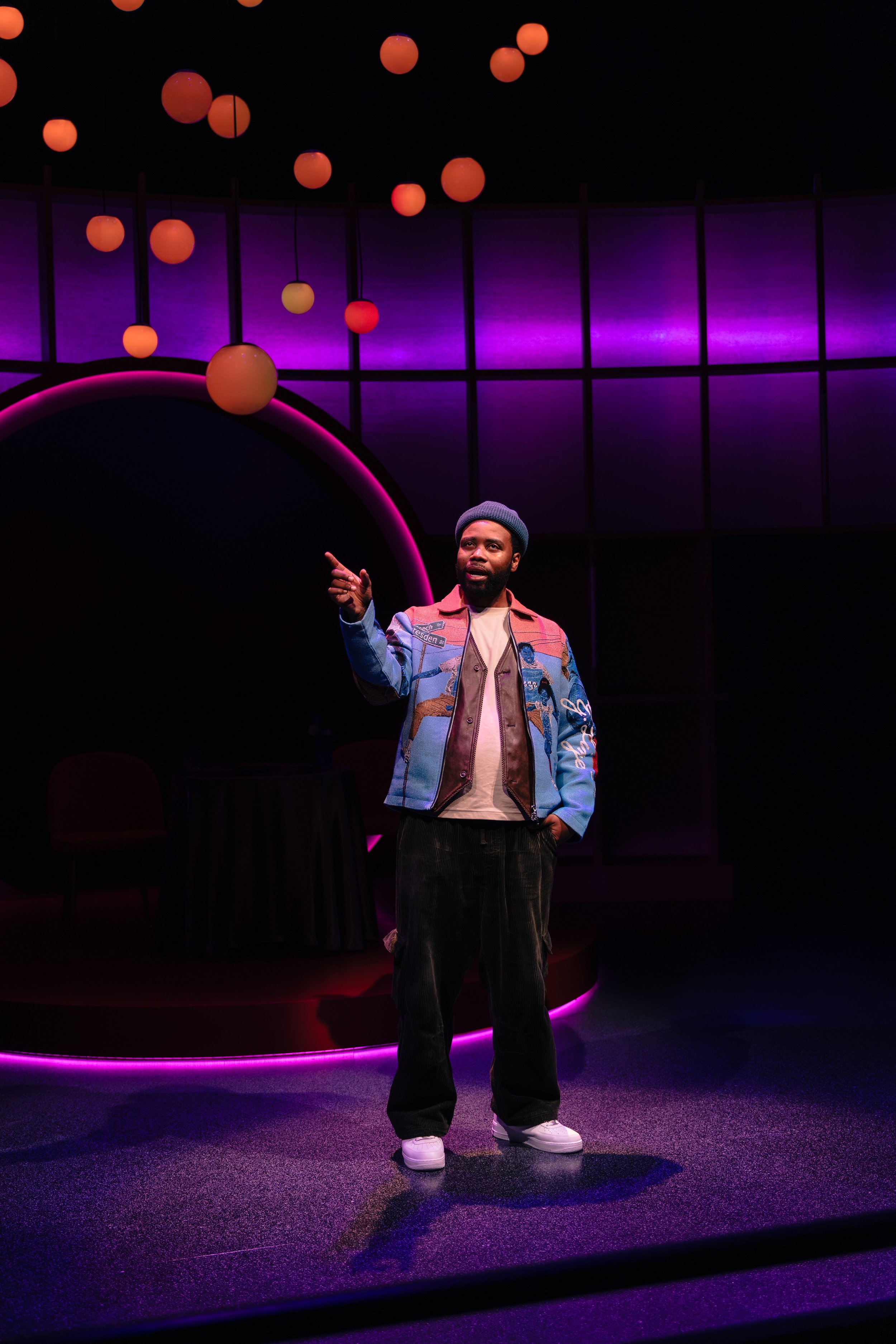
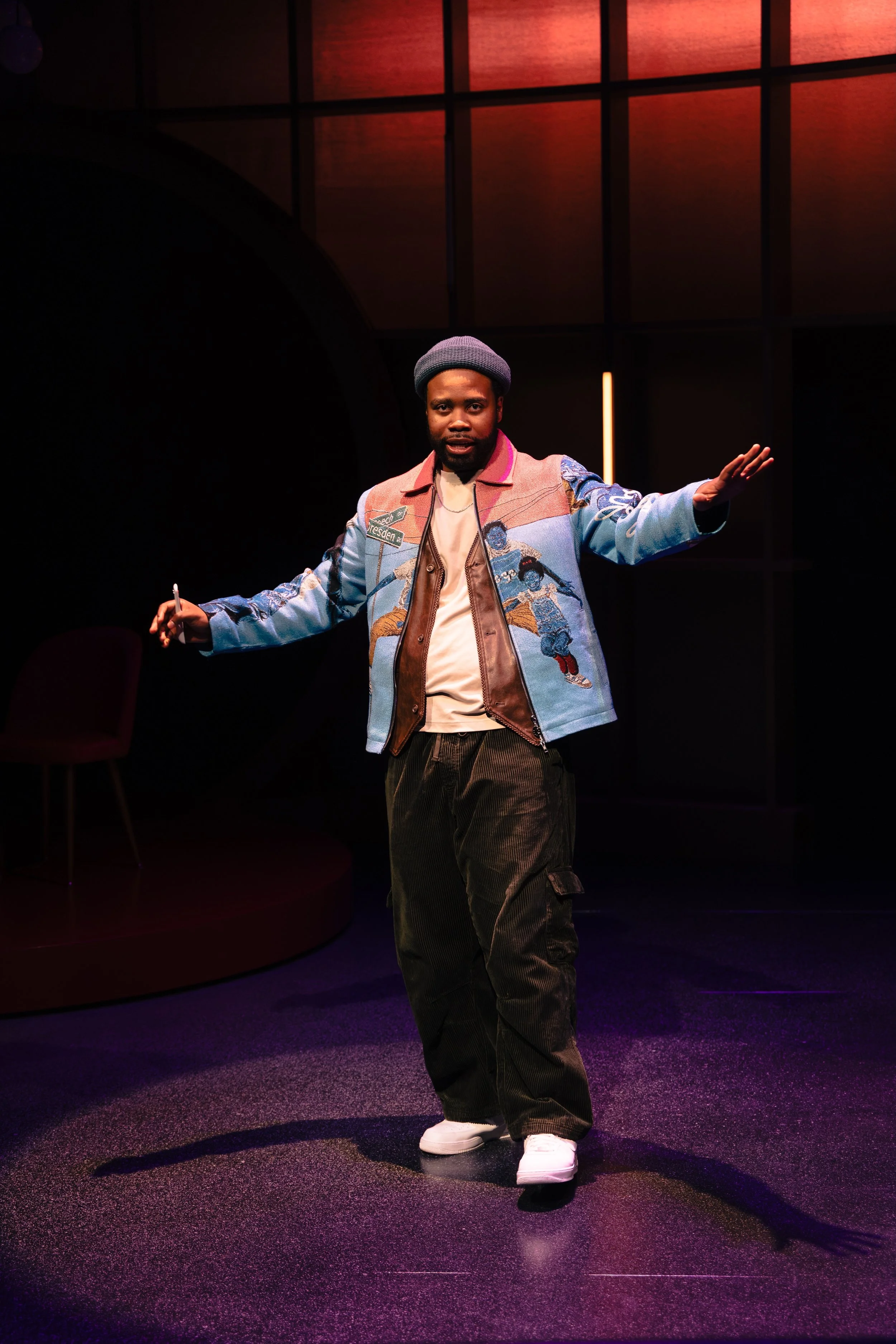
Opposite her, Brandon JonesMooney provides Dallas with his own perspective about how this meeting is perceived. Both characters want some control over the evening’s optics, and much of the early humor comes from watching them attempt to manage an encounter neither can fully predict. Dallas’s fondness for corduroy supplies some especially funny material, supported by Danielle Nieves’s coordinated costume choices. His blue hat, brown pants, and jacket create a carefully considered appearance, with the small details that bring it together. There’s pleasure in how the pieces all tie together, particularly when that outward presentation meets the awkwardness of sitting across from someone who already knows him well.
The relationship becomes more affecting as the flashbacks fill in its history. Watching Jada and Dallas first meet gives their present-day caution greater weight. The audience gets to see the possibility before fully confronting the loss. Bria and Brandon make the changing physical ease between them intriguing and enjoyable to watch, giving those earlier encounters a different feeling from the dinner. By the time the play reaches the relationship’s unraveling, the pain extends beyond the immediate argument or revelation. Its shockwaves cause collateral damage, and the audience has enough investment in the couple to feel the consequences along with the characters.
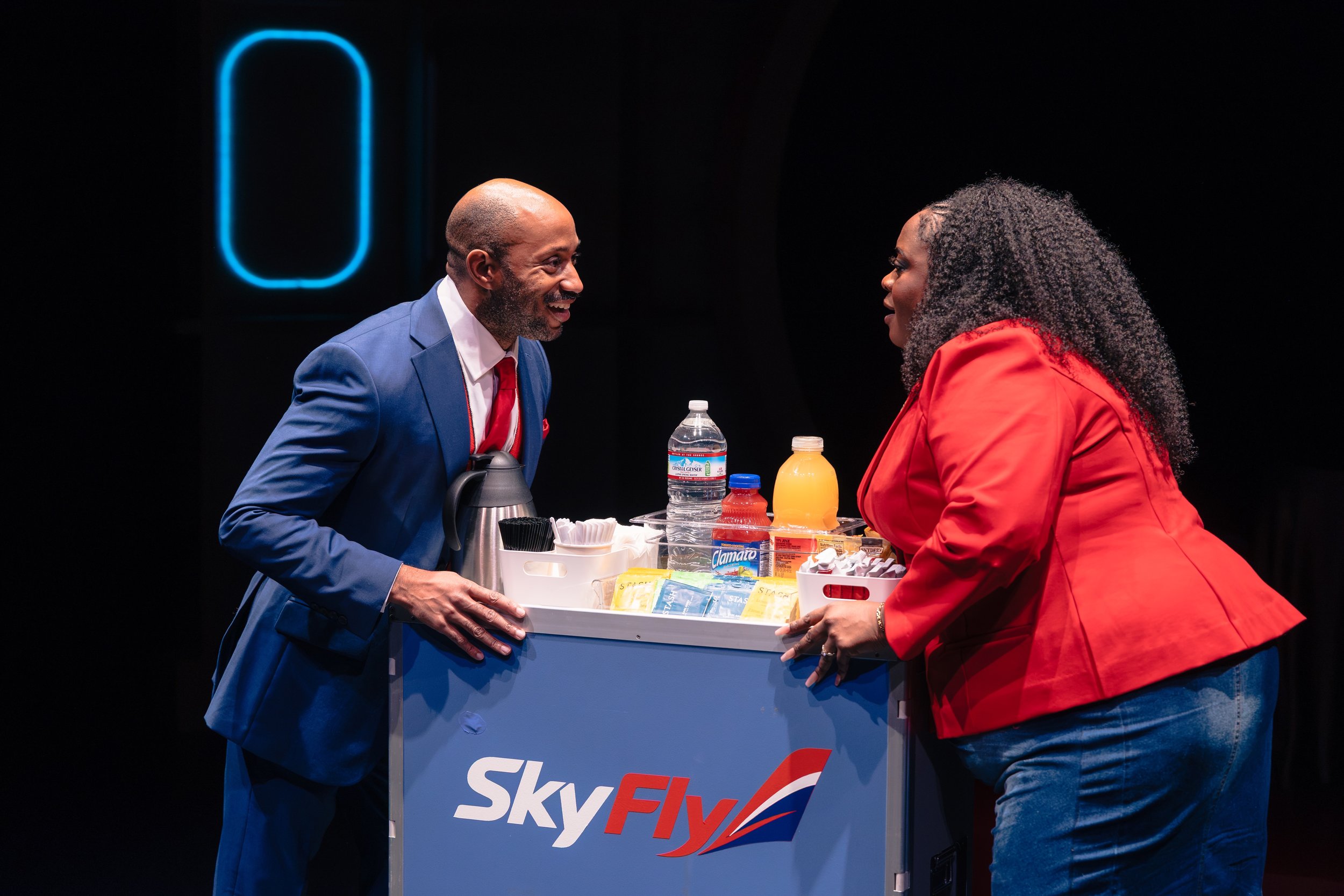
Rounding out this small, but excellent group, Lamar Legend supplies a considerable amount of the show’s comedy while demonstrating an impressive range across his roles. As River, he is a hilariously unsuitable restaurant host, bringing a sarcastic perspective shaped by his own frustrations with finding a partner. His presence complicates an already delicate dinner, and his commentary gives the central relationship a fun, but pointed, counterweight. In the flashback to Jada and Dallas’s first meeting, Lamar becomes a bartender whose womanizing sleaze is distinctly different from River’s manner. Add Eric, the flight attendant, and Lamar creates three recognizable personalities, each contributing to the story without feeling like a repetition of the same comic performance.
The movement between these encounters also gives the design team room to do some wonderfully inventive work. Andrew D. Smith’s lighting changes the character of the space through color and the use of its existing fixtures. Reds, oranges, and a disco ball establish the party atmosphere of the bar, while other shifts in the globe and strip lights help distinguish the play’s settings. An especially creative choice turns lights elsewhere used as strips into the suggestion of airplane windows. The audience receives just enough information to make the transition immediately, keeping attention on the people within the scene.
Jerik Fernandez’s sound design works alongside those changes to establish the world beyond the dinner table. The basketball sequence is a particularly effective example of lighting and sound creating an environment within the production’s compact scenic vocabulary. Together, these elements allow the story to travel while preserving the intimacy Parmida establishes at its center. Whether the characters are in a bar, on an airplane, or back at dinner, the focus remains on the exchanges that shape their connection.
There’s a great deal to laugh at in Union Arts Center’s Table 17, but director Shermona Mitchell and her cast keep the humor connected to the vulnerability beneath it. The production finds something widely recognizable in this particular couple, fulfilling that hope that one person’s understanding of human behavior might illuminate someone else’s. Anyone who has been in a relationship is likely to recognize something here and anyone currently in one may find a reason to pay a little closer attention. What happens at this table is worth considering long after the dinner ends, especially when it comes to the effort being made at one’s own.
The Union Arts Center production of Table 17 runs on stage through November 15. For more information, including ticket availability and sales, visit https://www.unionartscenter.org/.
Photo credit: Giao Nguyen