
Stage Review - The Clean House (Actorcraft P2S)
Stage Review - The Clean House
Presented By: Actorcraft P2S - Gig Harbor, WA
Show Run: March 12 - March 14, 2026
Date Reviewed: Friday, March 13, 2026
Run Time: 2 Hours (including a 15-minute intermission)
Reviewed by: Greg Heilman
Sometimes the most innovative theatre is created out of necessity. Actorcraft P2S (Page to Screen) is not a new entity. Founders Jeremy Kent Jackson and Adrianne Alvarez-Jackson have been teaching local actors and prospective creators since moving to Gig Harbor from Southern California a few years ago, filling a void in the space between Tacoma and Bremerton that has long been waiting to be filled.
As their programs have grown, they’ve been wrestling with the next logical step: finding a way to get the people they’ve been teaching in front of audiences, giving them the opportunity to experience that final piece of the proverbial performing puzzle. Born out of the idea of creating a safe space for their students to create and perform—and test driven in last year’s Mauritius—their Brave Stage theatre company is beginning to take shape with its first full-length production, the first of two planned for this year, Sarah Ruhl’s The Clean House, which ran this past weekend from March 12 through March 14 at Easterseals Camp Stand By Me in Gig Harbor.
The play features Adrianne in what Brave Stage calls an “anchor” role, performing alongside a number of their students—some making their stage debuts, and none with what anyone would call a plethora of stage experience. Aubrey MacGregor, Rebecca Stansbury, Tracey Pidge, and Andy Sharp join Adrianne onstage, along with understudies Abby Schuette and Christine Chikos Bray in Saturday’s matinee, to bring the play to life. The anchor concept is designed to provide pace and to give the students a central point around which to guide their performances, much as Jeremy did in last year’s production. It’s a formula that clearly puts learning ahead of product, and in this context it works extremely well. In fact, it works so well that it’s often difficult to discern that these are actors with little to no stage experience, and while the product isn’t their main focus, you’d never be able to tell that either.
The choice of play also fits neatly with the mission behind Brave Stage. Sarah Ruhl’s The Clean House, first produced in 2004 and later a finalist for the Pulitzer Prize for Drama, is a work that blends magical realism with deeply human themes. Set largely in the home of a successful doctor who prizes order and cleanliness above nearly everything else, the story follows the lives of Lane, her sister Virginia, their Brazilian housekeeper Matilde, and the unexpected people who drift into their orbit. What begins as a seemingly simple domestic arrangement soon unfolds into something far more complex as questions of grief, love, purpose, and the strange ways people cope with loss begin to surface. Ruhl’s script moves fluidly between humor and heartbreak, often embracing the surreal in order to explore the emotional truths beneath the surface.
Bringing that kind of story to the stage requires a thoughtful balance between realism and theatrical imagination, and Jeremy Kent Jackson’s direction embraces both sides of the play’s personality. Rather than attempting to ground every moment in strict realism, the production leans into the play’s whimsical, almost storybook qualities, allowing visual elements and movement to help guide the audience through Ruhl’s shifting emotional landscape.
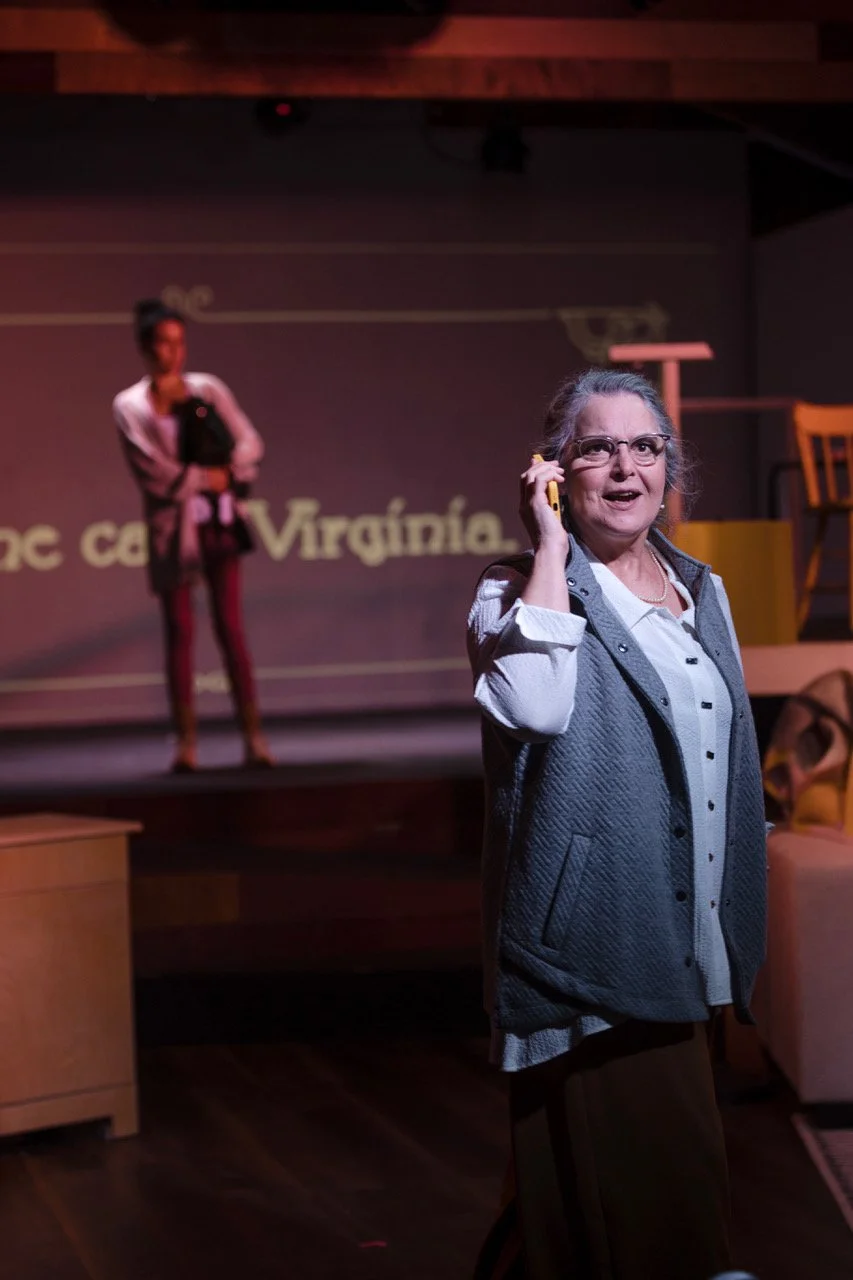
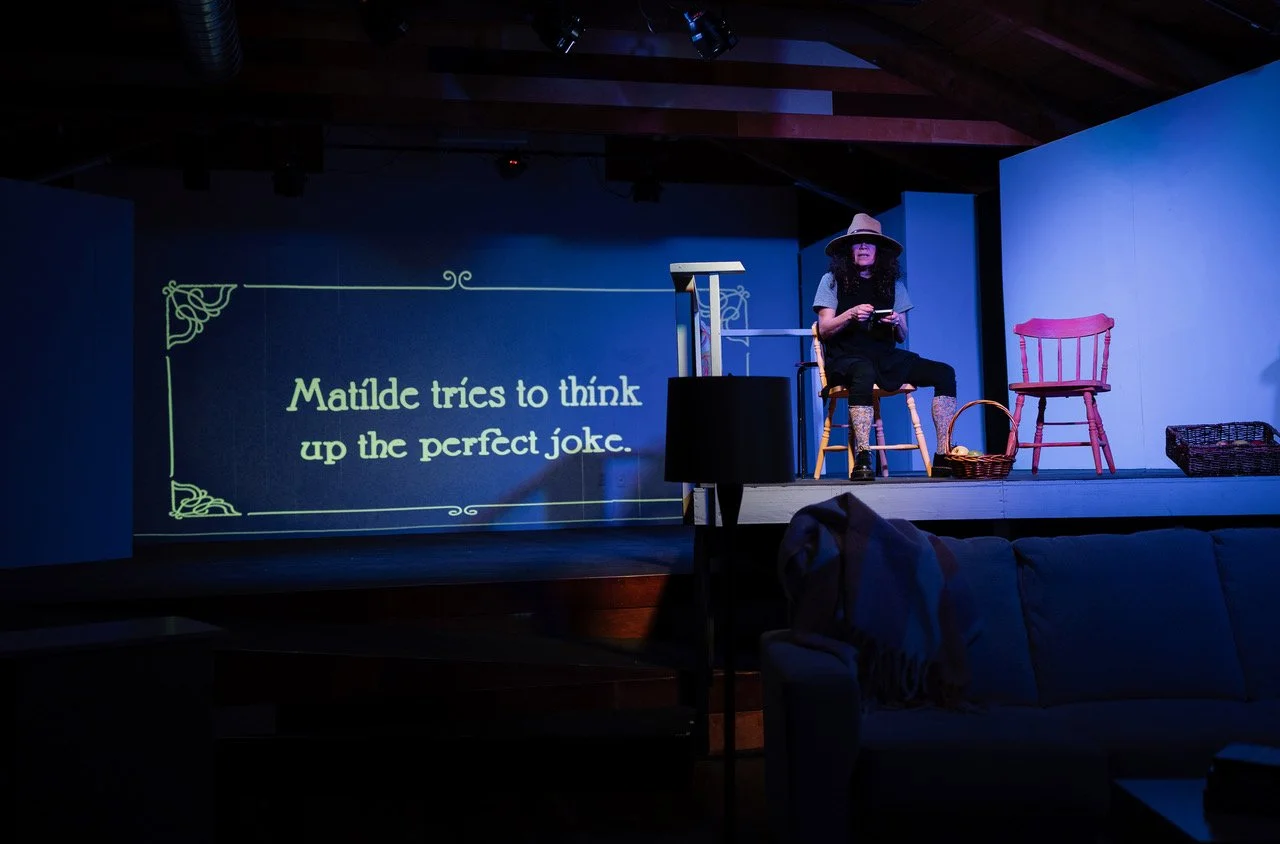
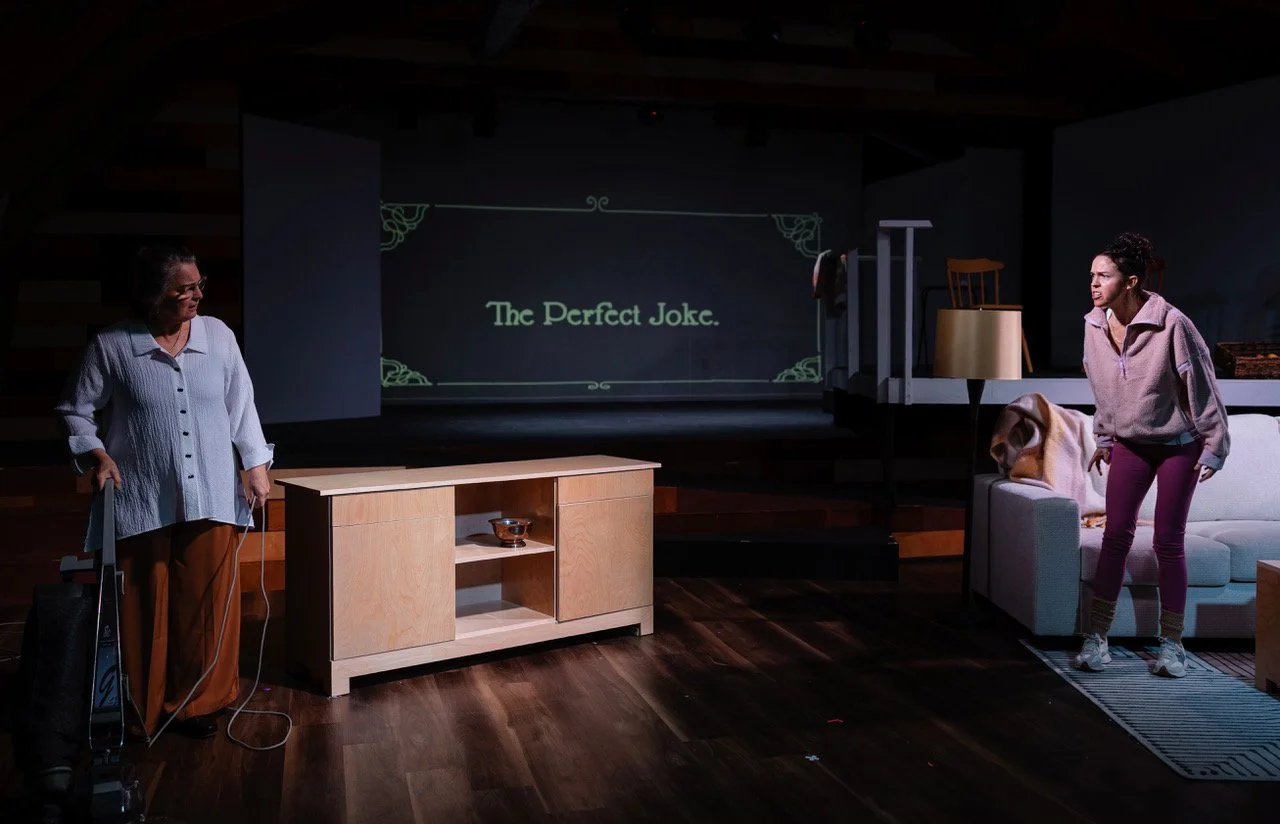
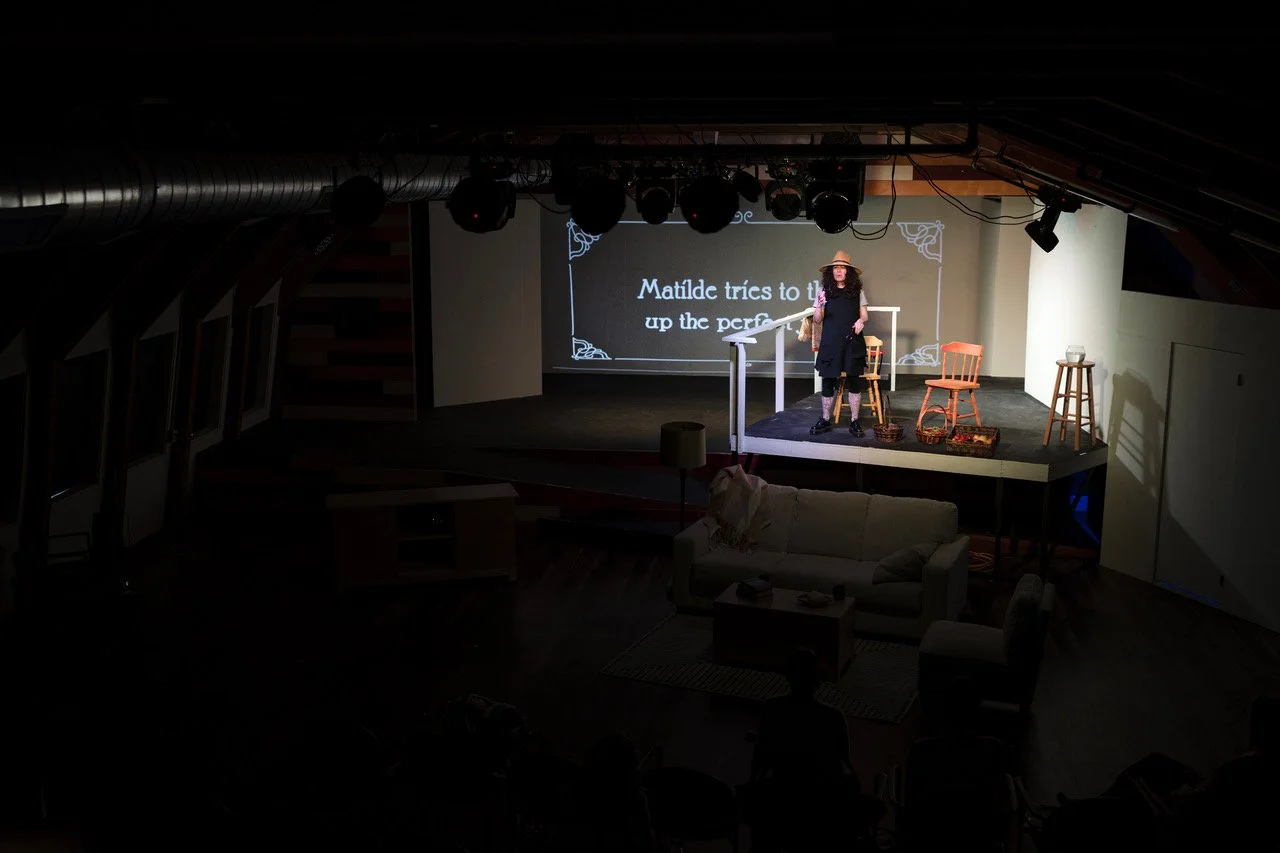
One of the ways this production finds that balance is through a series of simple but effective theatrical devices that help shape the storytelling. Projections appear periodically almost like chapter headings, orienting the audience as the story shifts from one emotional moment to the next. Paired with an understated musical underscore, these elements give parts of the production a rhythm that feels reminiscent of early silent film or vaudeville, reinforcing the play’s playful theatricality while keeping the narrative momentum moving forward. Combined with quick scene transitions handled efficiently by the stage crew (including Pluto and Panda Mays), the production maintains a steady flow that allows the humor and the more reflective moments to coexist comfortably.
The creative team behind the production mirrors the structure used on stage. Just as Adrianne serves as the anchor within the cast, Jeremy fills that role for the creative team in his capacity as director, guiding a group of students who have taken on the many behind-the-scenes responsibilities that bring a production together. From stage management to technical and design elements, these emerging theatre makers are given the opportunity to learn the craft in a real production environment.
There are a couple of notable exceptions within that structure. Composer Manuel Tirado provides the wonderful musical score that ties scenes together and helps guide the playful tone of the piece, while Pavlina Morris—Camp Director at Easterseals Camp Stand By Me and an accomplished lighting designer—brings her professional experience to the lighting design. Together with Jeremy, the pair set a strong example for the students working alongside them, helping to create an environment where learning and production go hand in hand.
Within that framework, the performances settle comfortably into the world that Ruhl creates. Because Brave Stage’s model places an experienced performer alongside actors who are still early in their stage careers, the production benefits from a natural center of gravity.
Adrianne fills that role here as Matilde, the Brazilian housekeeper who would much rather be inventing the perfect joke than cleaning Lane’s meticulously ordered home. Adrianne brings a confident presence to the role, delivering Matilde’s Portuguese accent with ease while balancing the character’s humor with the quiet melancholy that sits beneath much of the play’s story. Matilde often serves as the emotional lens through which the audience experiences the play, and Adrianne’s assured performance provides that steady anchor for the rest of the ensemble.
Around her, the actors who make up the rest of the household step into their roles with an enthusiasm that becomes one of the evening’s real pleasures. Foremost in that regard is Rebecca Stansbury’s Virginia, Lane’s sister. Rebecca leans fully into the character’s near-obsessive enthusiasm for cleaning. Virginia’s eagerness becomes a consistent source of humor throughout the production, and Rebecca handles the physical and comedic aspects of the role with a confidence that feels remarkably seasoned for someone making her stage debut. Even when small stumbles occur—as they inevitably do in live theatre—Rebecca navigates them smoothly and often to comedic effect, maintaining the character’s infectious energy.
The romantic thread of the story arrives through the unexpected connection between Charles and Ana. While Andy Sharp and Tracey Pidge spend the first act silently acting out various “imaginings”, mostly from the mind of Matilde, the pair expand their acting after intermission. Andy Sharp’s Charles enters the story quietly, with early moments that rely more on physical storytelling than dialogue, allowing the audience to watch the character’s imagination at work before the play’s central love story begins to unfold. When that relationship with Ana takes shape, the scenes between them become some of the play’s most charming. Tracey Pidge brings a warmth and playful spirit to Ana, and their interactions together add a welcome dose of humor and tenderness to the evening.
At the center of the household dynamic is Lane, played by Aubrey MacGregor, whose devotion to order and cleanliness sets much of the story in motion. Lane’s tightly controlled worldview provides a strong contrast to the more whimsical perspectives of the other characters, and that contrast helps define the play’s central tension. While Aubrey’s portrayal of Lane at times skews into the “over done” and rigid, a dotted line between her performance and Lane’s personality can definitely be made.
Taken together, the ensemble reflects the purpose behind the Brave Stage project itself. These are performers at different points in their theatrical journeys, working together in a setting designed as much for growth as for performance. The result is a group dynamic that feels supportive, collaborative, and fully committed to bringing Sarah Ruhl’s unusual and often delightful world to life.
What makes this production especially satisfying isn’t simply the performance itself, but the purpose behind it. Brave Stage exists as a bridge between classroom and stage, giving developing performers the opportunity to experience the full creative process in front of an audience while still working within a supportive learning environment. If The Clean House is any indication of what Actorcraft P2S hopes to build with this initiative, the concept is already proving its value. The performances show clear commitment, the production demonstrates thoughtful guidance from its creators, and the result is a piece of theatre that succeeds not only as an educational exercise, but as an engaging evening for the audience as well. For a company still shaping its identity, it’s an encouraging start—and a sign that this new stage in Gig Harbor may soon become an important space for emerging performers to find their footing under the lights.
The Actorcraft P2S production of Sarah Ruhl’s The Clean House, closed at the Easterseals Camp Stand By Me Activity Center in Gig Harbor on March 14. For more information about Actorcraft’s programs, and their upcoming show Detroit, including ticket availability and sales, visit https://actorcraftp2s.com/.
Photo credit: Angie Mitchell Photography