
Stage Review - The Foreigner (Harlequin Productions)
Stage Review - The Foreigner
Presented By: Harlequin Productions - Olympia, WA
Show Run: March 06 - March 29, 2026
Date Reviewed: Thursday, March 12, 2026
Run Time: 2 Hours, 20 Minutes (including a 20-minute intermission)
Reviewed by: Greg Heilman
Comedy often has a way of revealing truths that might otherwise be difficult to confront directly. With The Foreigner, playwright Larry Shue does exactly that, wrapping a story about prejudice, belonging, and the power of kindness inside a farce that invokes some of the best comedic turns on stage. Tucked away in the hills of rural Georgia sits Betty Meeks’ fishing lodge, a quiet place where travelers pass through, stories are shared, and the occasional secret finds its way into the open. It’s the kind of setting that feels immediately familiar the moment the lights come up, and in Harlequin Productions’ staging of The Foreigner, their production runs on stage at the State Theatre in Olympia through March 29, that sense of place is established before a single line is spoken. What unfolds inside that lodge is a story filled with laughter, misunderstandings, and a reminder that sometimes the most unexpected person can become the hero of the story.
Written by Shue in the early 1980s, The Foreigner has become one of the most beloved farces in American regional theatre. Premiering in 1983 at the Milwaukee Repertory Theatre, the play combines classic comedic misunderstanding with a surprisingly heartfelt story about loneliness, belonging, and the courage it takes to stand up to cruelty. The plot centers on Charlie Baker, a painfully shy Englishman who is brought to a rural Georgia fishing lodge by his friend Froggy LeSueur. To spare Charlie from awkward conversation, Froggy tells the locals that Charlie does not speak or understand English. What begins as a harmless lie soon opens the door for Charlie to observe—and eventually disrupt—the schemes, secrets, and prejudices unfolding around him. Through its escalating misunderstandings and increasingly absurd situations, Shue’s script reveals both the humor and humanity within its characters.
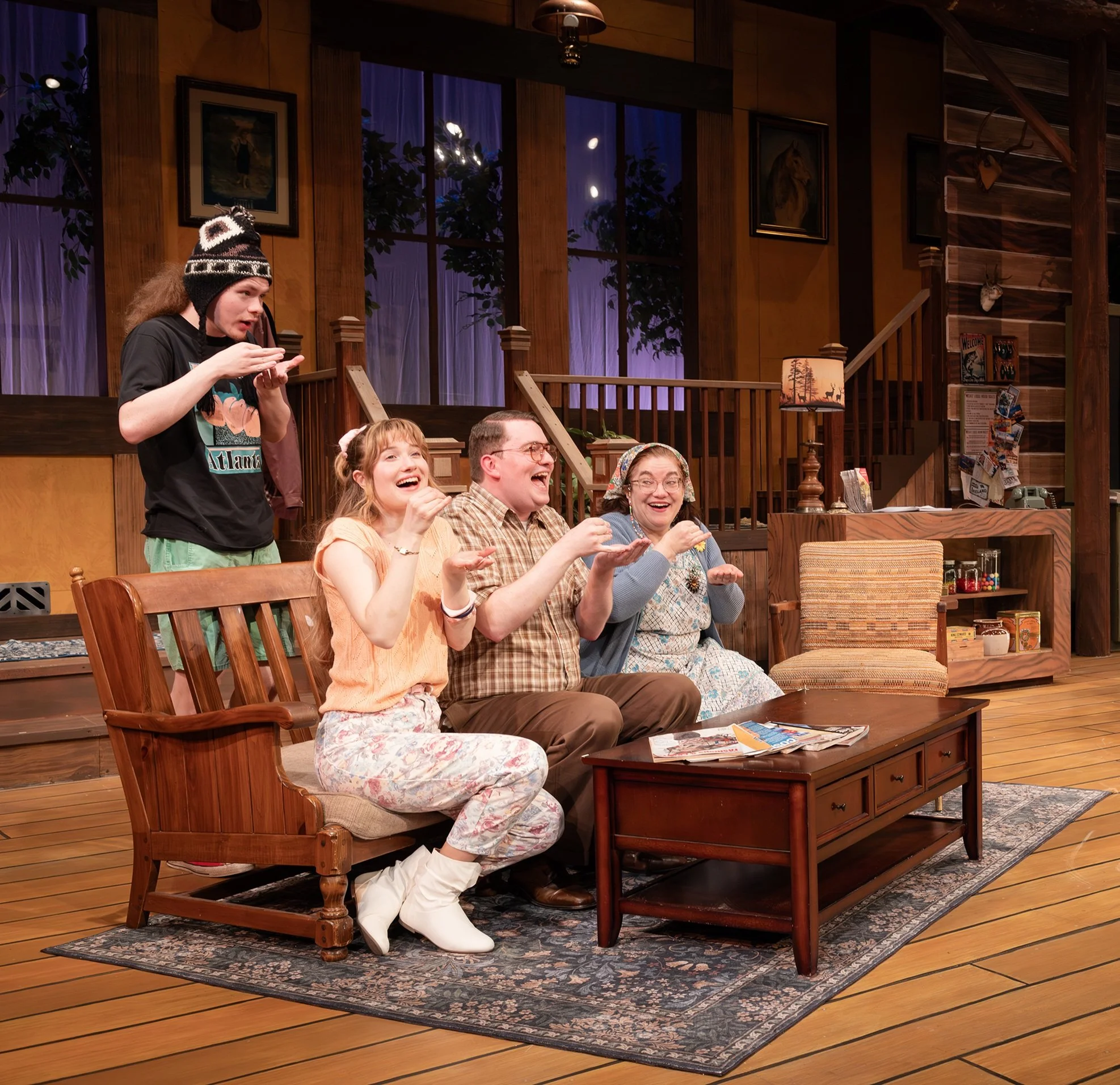
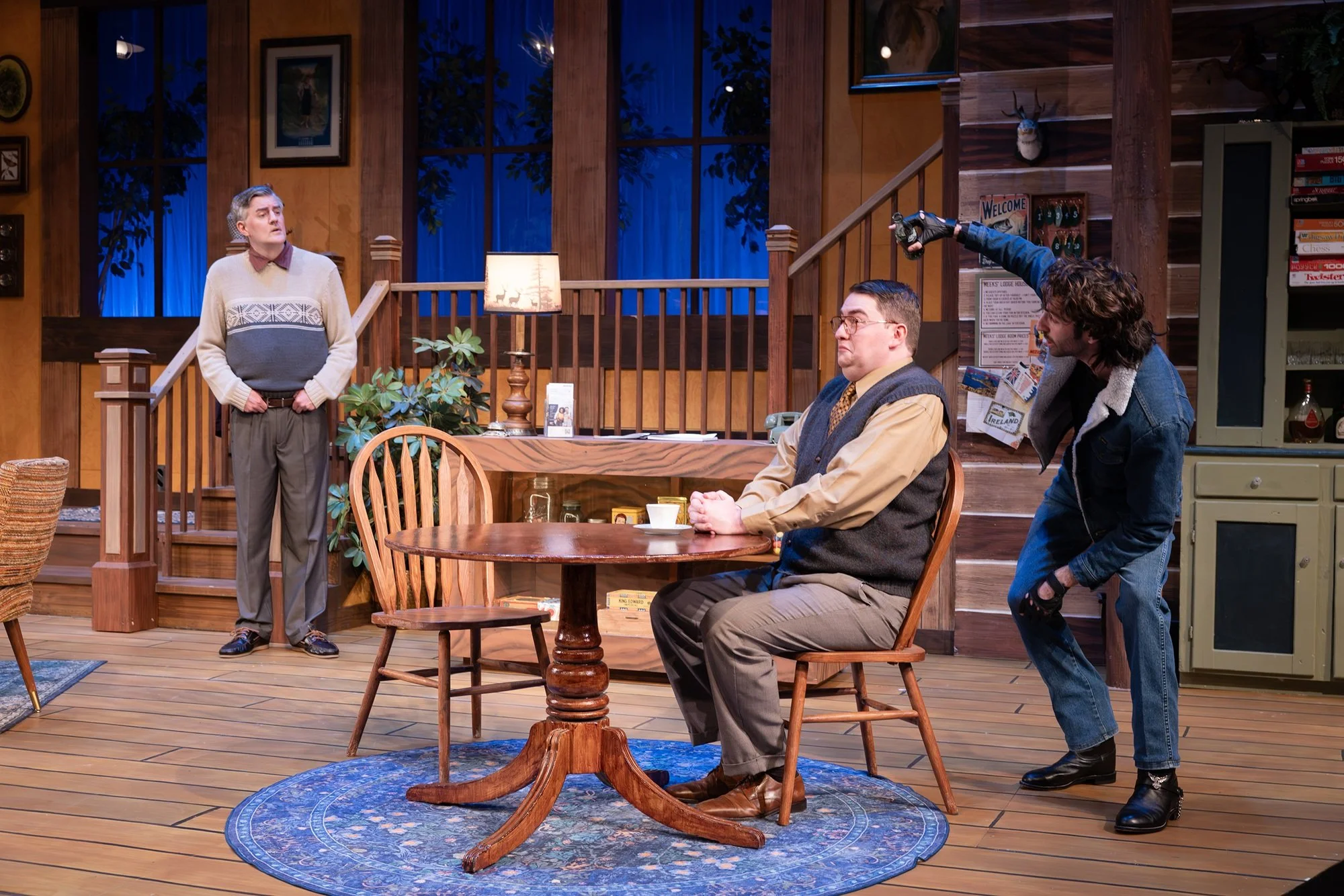
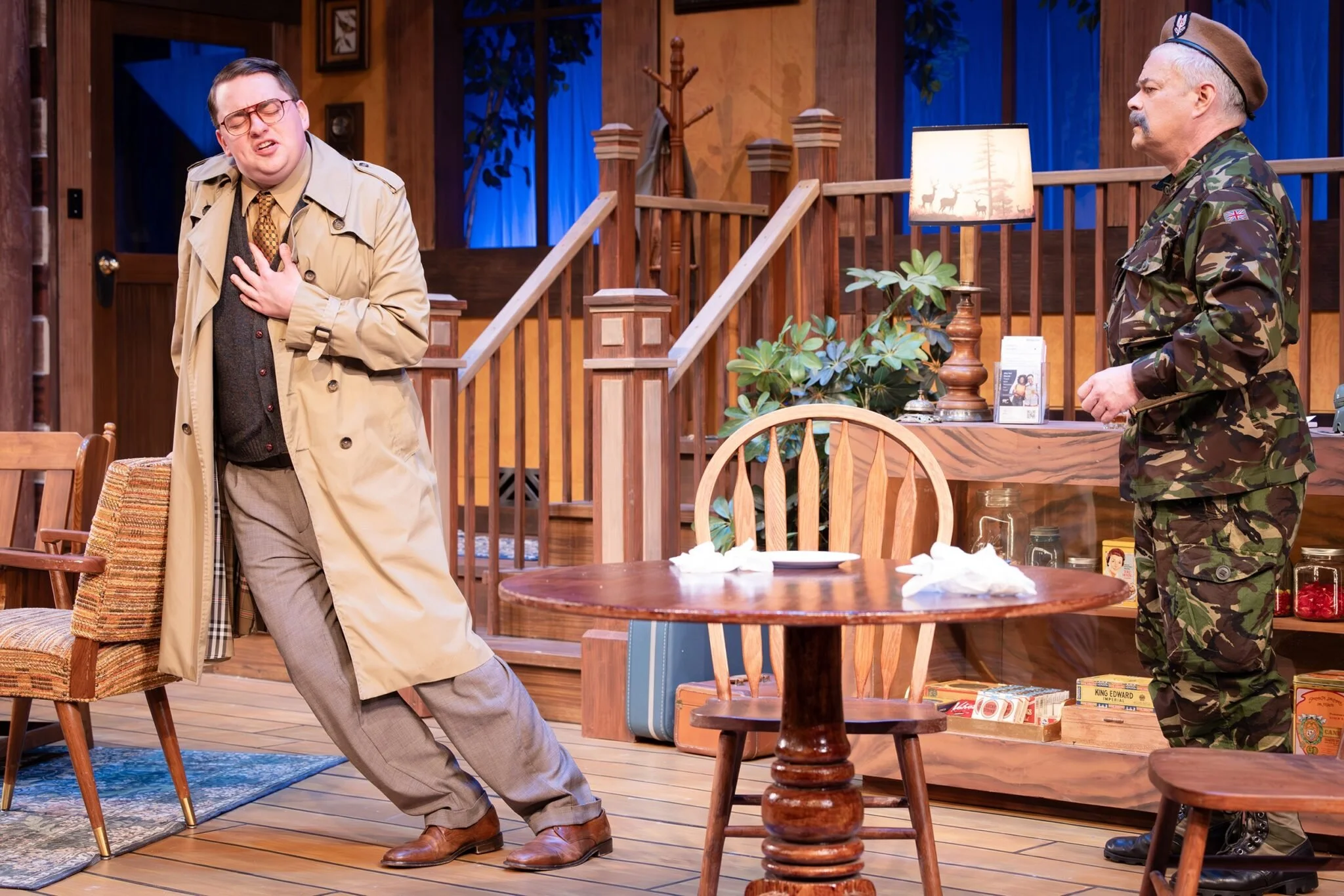
For the Harlequin edition of The Foreigner, credit must first go to director Aaron Lamb for assembling a creative team that works together so cohesively. From the design elements to the performances on stage, the production feels unified in its approach to both the comedy and the deeper themes that run through the story. The scenic design, along with its properties and props, is pure gold. While Gerald B. Browning’s set recycles the bones and some of the detail from his last Harlequin project, Wait Until Dark, the transformation from a stark black-and-white apartment into a fully realized fishing and hunting lodge is an impressive one. The level of detail Dan Wolff brings as properties designer is remarkable. From the Lucky Strikes sitting behind the glass beneath the reception counter to the period-appropriate room keys hanging behind the desk, the mounted taxidermy, and Betty’s spoon collection, the space leaves nothing out. The attention to detail is so strong that at times one could almost smell the wood burning in the fireplace, electric though it may be.
The design work extends beyond the set as well. Gretchen Halle’s costumes help define each character before they even speak. Betty’s practical lodgekeeper attire feels rustic and functional, David’s buttoned-up look mirrors the rigid posture and controlled demeanor of his character, Catherine’s lighter and more airy clothing reflects her hopeful personality, and Owen’s wardrobe reinforces the rough edges of his Georgia-bred bravado. Ellard’s more casual attire further emphasizes his place within the world of the play, reinforcing how easily he has been overlooked by those around him. Sumer Munroe’s lighting design softens the space at key moments, adding warmth and helping establish the peaceful refuge that Betty’s lodge represents, while helping to build the story to its eventual, darker climax.. Meanwhile, the soundscape subtly supports the Southern setting, evoking a musical atmosphere reminiscent of the region.
Aaron guides the ensemble through the rhythms of Shue’s comedy with a strong sense of timing and an appreciation for the play’s escalating chaos. The production leans fully into the farcical nature of the script while still allowing moments of sincerity to land, particularly as Charlie begins to find confidence in his unusual circumstances.
At the center of the story is Charlie Baker, played by Max Lopuszynski, and it is here that the production finds one of its strongest assets. The quality that makes Max’s performances so distinctive in the local theatre scene is his extraordinary expressiveness. In a role where he spends much of the evening not speaking, that ability becomes essential, and there are few actors quite as adept at communicating without words. His face delivers the dialogue while his movement, posture, angles, and mannerisms provide the punctuation. I’ve seen other Charlies and other productions of The Foreigner, all of them good, some extraordinary, but the individuality Max brings to the role reshapes the experience in a meaningful way and reinforces the show’s themes. Accent-wise, Max arguably has the most challenging assignment in the production, and his work there is stellar as well. Though Charlie speaks sparingly, when he does it often feels as though he’s experimenting with a different accent each time, adding another layer of humor to the performance.
Helping set the entire premise of the play in motion is Froggy LeSueur, brought to life by John Dugaw. Froggy’s playful personality and exaggerated storytelling establish the comedic tone from the outset, and John captures the character’s mischievous spirit with ease. He’s funny, likable, and John brings a nice chemistry to bear with Max’s Charlie that doesn’t just introduce the Englishman to the audience, but he sets the tone of the show from the beginning.
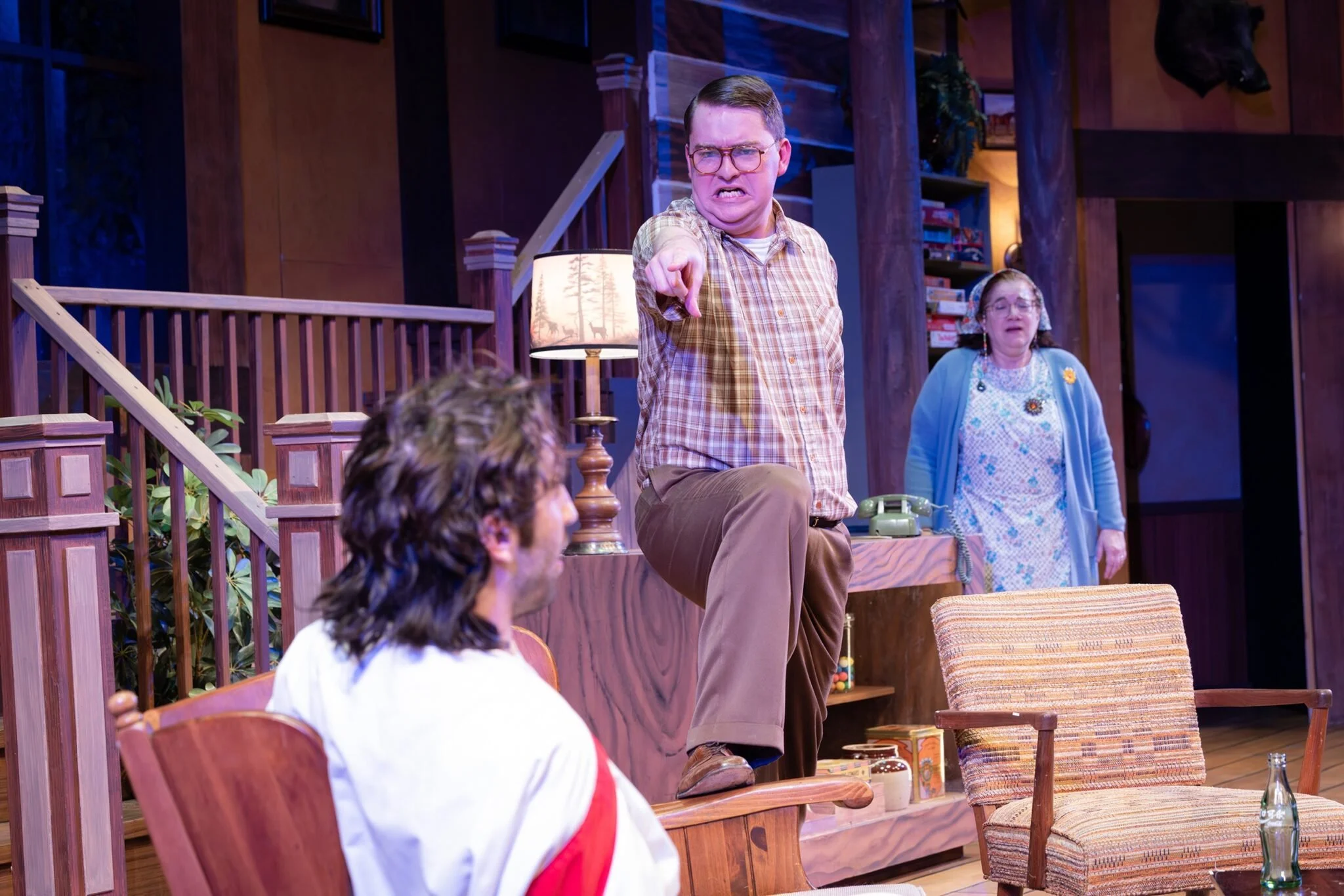
Explosive energy arrives in the form of Owen Musser, portrayed by Christian Bolduc. Owen is loud, aggressive, and entirely convinced of his own authority, and Christian is fully bought into that ignorant bravado, delivering a portrayal that is frighteningly convincing. His dialect work is strong as well, and much credit should be given to dialect coach Marianna de Fazio, whose work with the cast helps them navigate a variety of Southern dialects and drawls throughout the production. Owen is clearly one of the story’s primary antagonists, but the play raises an interesting question about which type of villain is more troubling: the one who wears his hatred openly, or the one who cloaks it behind a façade of righteousness.
That second kind of danger is embodied by Reverend David Marshall Lee. Ben Stahl captures that duplicity effectively, presenting a minister whose moral authority feels performative rather than genuine. From the outset it becomes clear that David may not be quite as pious as he presents himself to be. There’s a certain modern evangelical televangelist quality to the portrayal—something reminiscent of figures like Franklin Graham—which Ben handles with a sharp sense of character.
Running the lodge at the center of the story is Betty Meeks, and Lisa Viertel delivers a thoroughly entertaining performance in the role. Her Southern accent carries the weary strength of someone who has spent years managing the lodge, and her delivery occasionally cracks with the weight of that experience. Betty’s method of communicating with Charlie—who she believes cannot understand a word she’s saying—becomes one of the evening’s most entertaining recurring bits. Meanwhile, a sense of warmth and optimism comes through in Catherine Simms, played by Juliette Jones. Gretchen Halle’s costume design complements the portrayal nicely, giving Catherine a light and airy look that mirrors her hopeful personality.
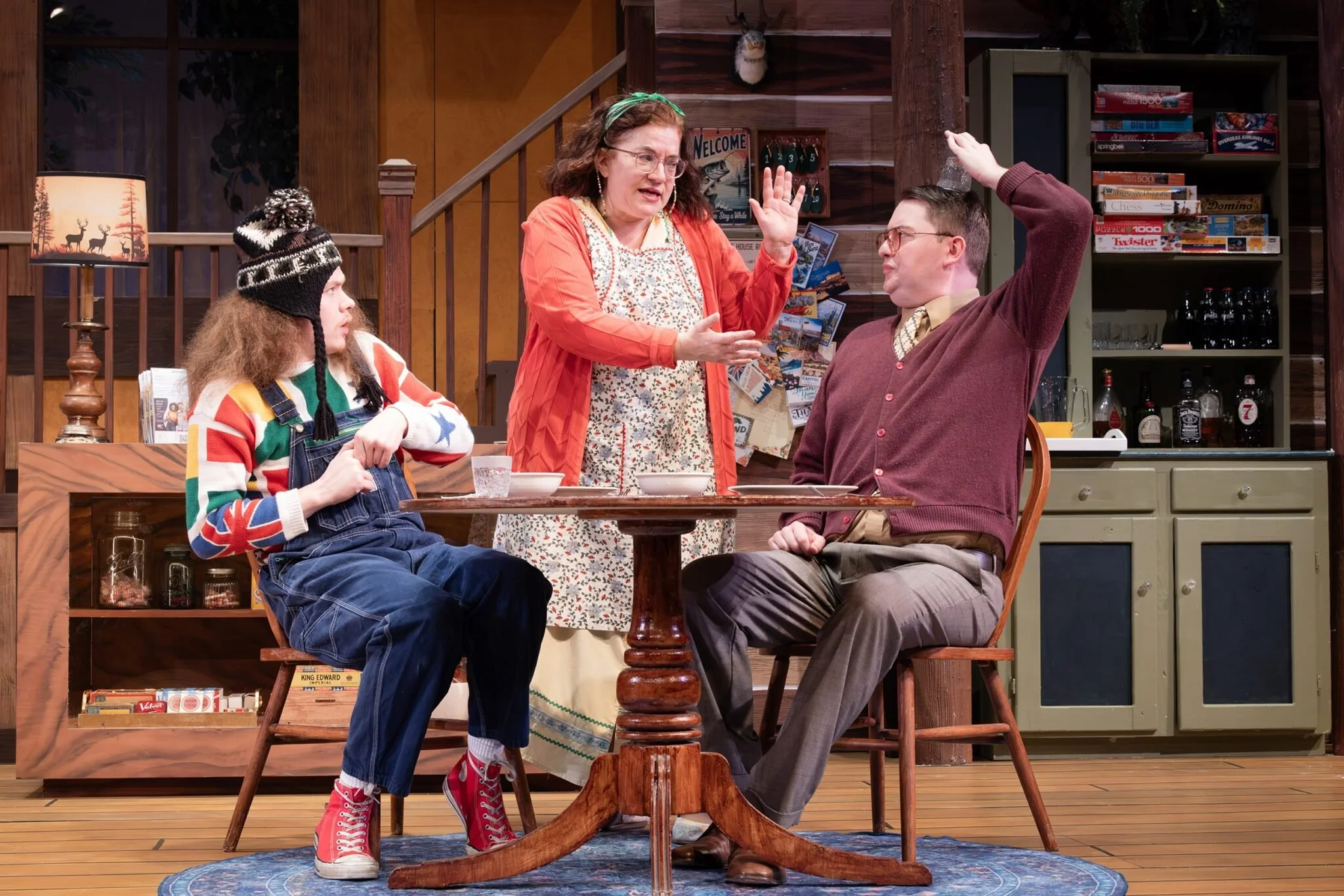
Among the most delightful performances of the evening comes from Josiah Rice as Ellard Simms. The role demands precise comedic timing as well as a clear emotional arc, and Josiah navigates both with ease. As Ellard begins to gain confidence through Charlie’s encouragement, the character’s transformation unfolds naturally and believably. Josiah also anchors one of the funniest moments in the play. In a breakfast scene between Ellard and Charlie, the two attempt to communicate with one another despite the supposed language barrier. The physical humor in the exchange is already delightful, but when Betty unexpectedly enters the scene, the comedy escalates even further.
The play isn’t just about the damage that bigotry can cause, or how ignorance enables behaviors that are actively destructive and too often result in the persecution of those who don’t look or sound like someone’s perception of “normal.” Beneath the surface lies a subplot and a message that may be even more enlightening. When someone spends their entire life being told they’re not good enough, not smart enough, or otherwise should remain in the shadows because of the embarrassment of a perceived lack of intellect, that person can begin to believe those words and allow them to define who they are. Such is the case with Ellard. Kept in the background and never told that there is anything special about him, Ellard has learned to accept the limited expectations placed upon him. But the positivity Charlie brings into his life begins to change that narrative. With encouragement and patience, Charlie gives Ellard the confidence he’s been missing, allowing him to discover abilities he never believed he possessed. It’s a storyline that quietly implores us to offer kindness, encouragement, and belief in others rather than judgment.
The Foreigner reminds us that sometimes the quietest voice in the room can have the greatest impact. Through humor, heart, and a story that balances absurdity with sincerity, Larry Shue crafted a play that continues to resonate decades after it was written. Harlequin Productions’ staging embraces both the comedy and the humanity of the piece, delivering a production that is frequently hilarious but also quietly thoughtful. By the time the final moments arrive, audiences are left with more than just the memory of laughter—they’re reminded how powerful encouragement, kindness, and a little belief in one another can truly be.
The Foreigner, from Harlequin Productions, runs on stage at the State Theatre in Olympia through March 29. For more information, including ticket availability and sales, visit https://harlequinproductions.org/.
Photo credit: Shanna Paxton Photography