
Stage Review - The Countess (Circle of Fire Theatre)
Stage Review - The Countess
Presented By: Circle of Fire Theatre (BPA Studio Series) - Bainbridge Island, WA
Show Run: August 26 - August 30, 2026
Date Reviewed: Wednesday, August 26, 2026 (Opening Night)
Run Time: 2 Hours, 15 Minutes (including a 15-minute intermission)
Reviewed by: Greg Heilman
The marriage of Victorian art critic John Ruskin and Effie Gray has endured as one of the more troubling relationships of its era, a union shaped by emotional distance, control and an eventual fight by the tortured young Mrs. Ruskin to reclaim authority over her own life. Playwright Gregory Murphy turns that history into The Countess, a play which examines not simply a marriage coming apart, but the emotional consequences of living with someone determined to define what is acceptable, what is true and even what is wrong with you. Circle of Fire Theatre brings Murphy’s drama to the Cynthia Sears Studio as part of Bainbridge Performing Arts’ Studio Series, where director Molly Hall places the deeply personal stakes of Effie’s struggle within the intimacy of the space. Running through August 30, the production finds its greatest power in the tension between Victorian respectability and the pain, anger and longing barely contained beneath it.
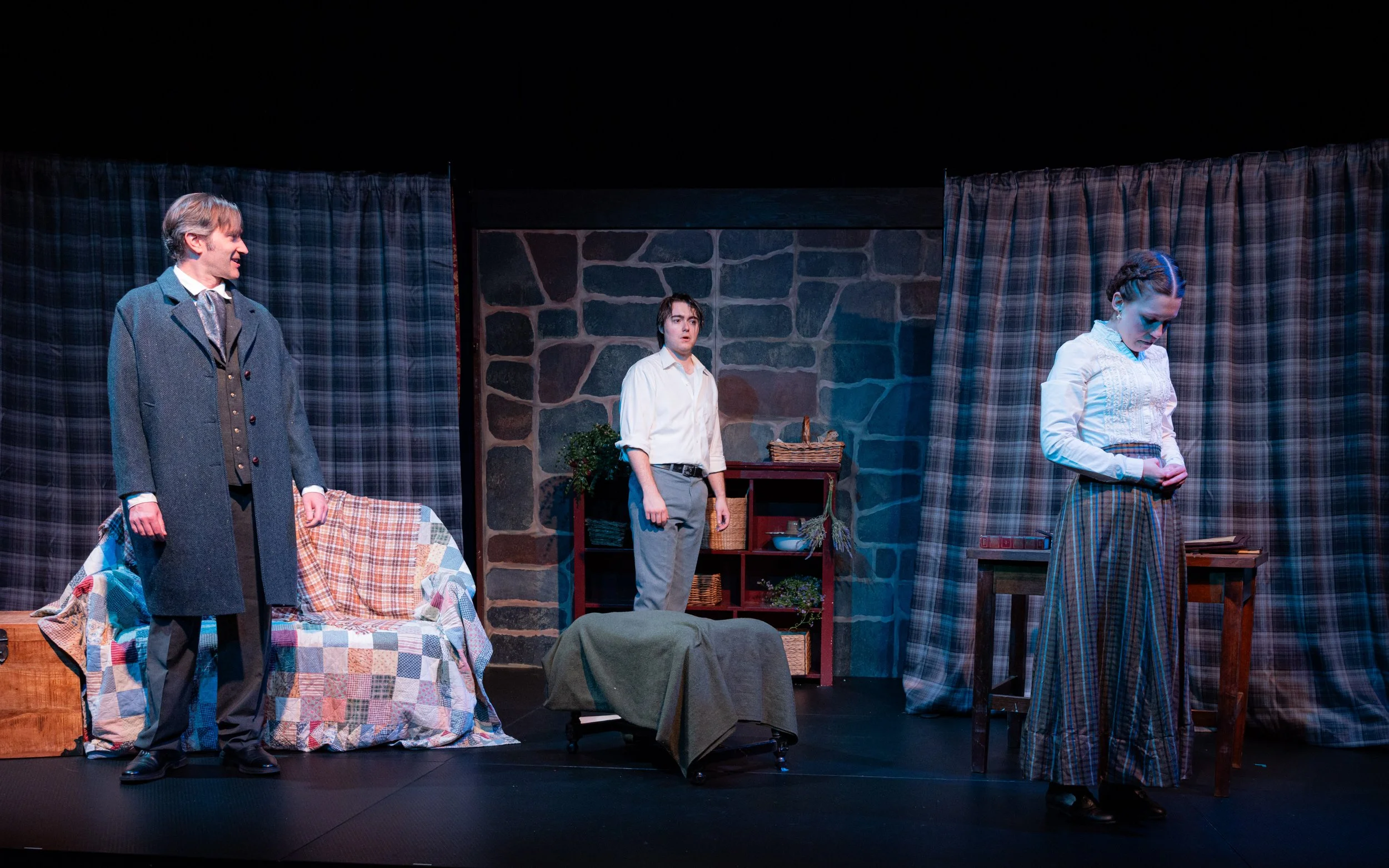
Set in Victorian England and Scotland, The Countess follows Effie and John through a marriage that grows increasingly oppressive as John attempts to shape his wife and those around him according to an idealized order that exists largely in his own mind. Complicating their relationship is artist John Everett Millais, whose growing connection with Effie offers her something increasingly absent from her marriage, a genuine affection and an acknowledgment of her as an individual. What begins as a portrait of an unhappy Victorian marriage gradually becomes something more disturbing, as Effie’s independence and strength of will are treated as evidence of instability and John seeks to establish a narrative in which he is the aggrieved party.
Molly’s direction allows that deterioration to develop gradually, and the intimate Cynthia Sears Studio is particularly well suited to it. The interactions among the cast feel natural and immersive, whether the scenes involve the three central characters or members of the supporting cast. There is an appropriate restraint to the Victorian world without allowing that restraint to rob the characters of emotion. In fact, some of the production’s strongest moments come when everything that has been suppressed finally breaks through.
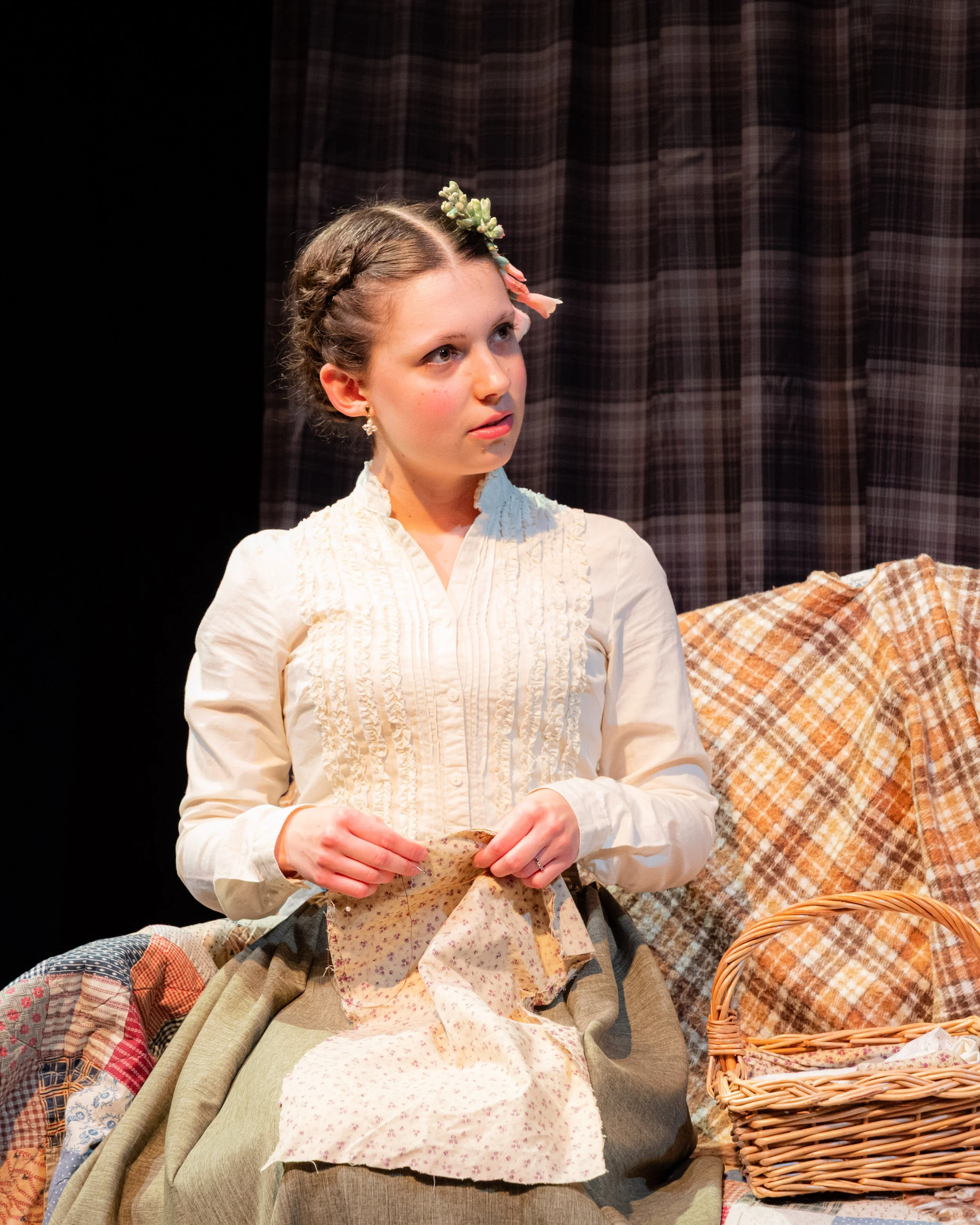
To say that this cast brings extraordinary performances to bear is quite an understatement. Sadie Gingold gives a deeply nuanced performance as Effie Gray, finding the sadness underneath a character who has learned to maintain a controlled and reserved exterior. There are moments when very little needs to be said because Sadie’s expressions tell us what Effie cannot. Her emotional intelligence in the role is exceptional, allowing the audience to see a woman who is short-tempered at times, certainly, but also increasingly aware of the impossible situation in which she finds herself. Particularly effective is the way Effie’s strength of will is regarded by those around her as something pathological, as though refusing to conform to John’s expectations must make her mentally ill or a burden rather than a woman capable of deciding what she wants for herself. It’s a real treat to see a young actor present a performance that is well beyond her years, as Sadie does consistently with her Effie.
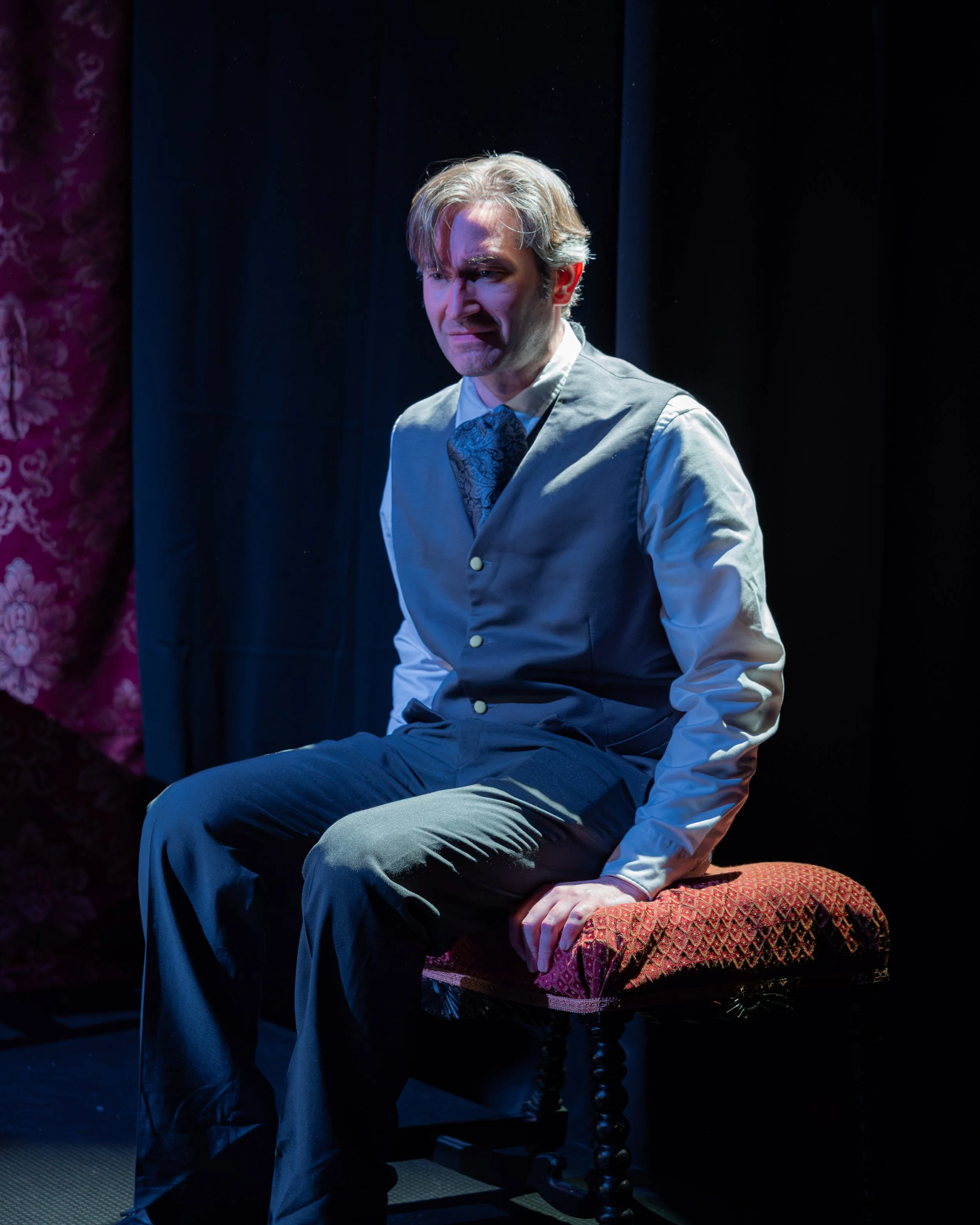
Opposite Sadie and Effie, Tadd Morgan brings an appropriately stuffy, high-born quality to John Ruskin, but the performance becomes considerably more unsettling as John’s need for control reveals itself. He lashes out at anything that does not fit the order he has decided represents the way life should be, becoming paranoid about anyone or anything that might challenge it. Especially troubling are the journals John keeps, documenting seemingly every conversation with Effie, each entry appearing to be an attempt to record evidence of her supposed mental instability, but increasingly feeling like an effort to construct a defense of his own position within their abusive relationship.
That makes Tadd’s later emotional unraveling particularly effective. When John is confronted with the potential nullification of his marriage, Tadd is phenomenal, allowing the character’s carefully maintained order to collapse into anger and deep emotion. It is a beautifully acted moment precisely because the production has spent so much time establishing the rigidity that precedes it.
Rounding out the triad of leads is Seamus C. Smith, who provides an important counterbalance as John Everett Millais, bringing an energetic enthusiasm and zest for life that immediately separates Millais from Ruskin. His scenes with Sadie are among the production’s strongest, with Seamus and Sadie building the romantic and dramatic tension through conversations that never feel artificially pushed toward their destination. Their connection develops naturally, and the contrast between Millais and Ruskin helps make clear why Effie would begin to imagine that another kind of life might be possible.
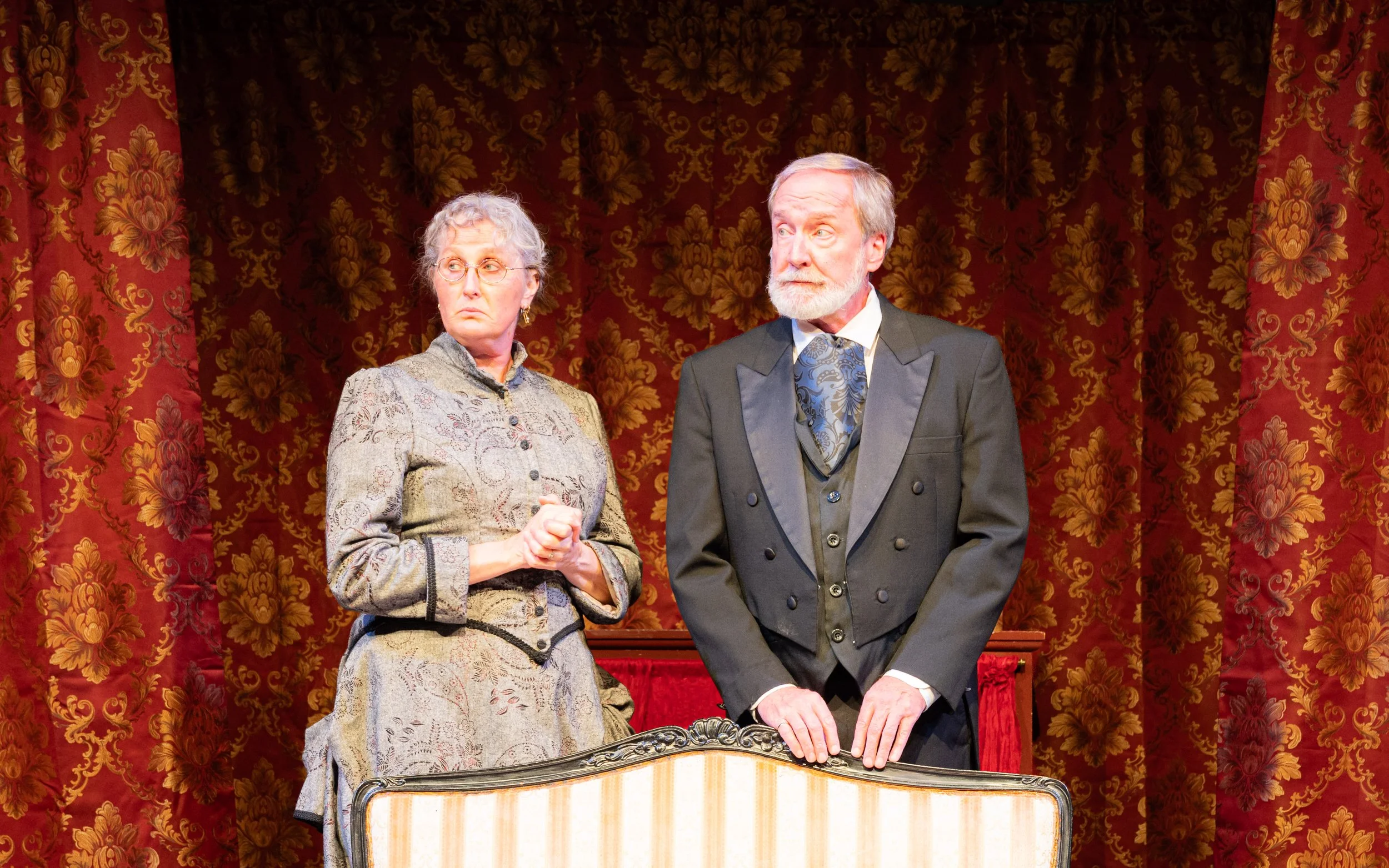
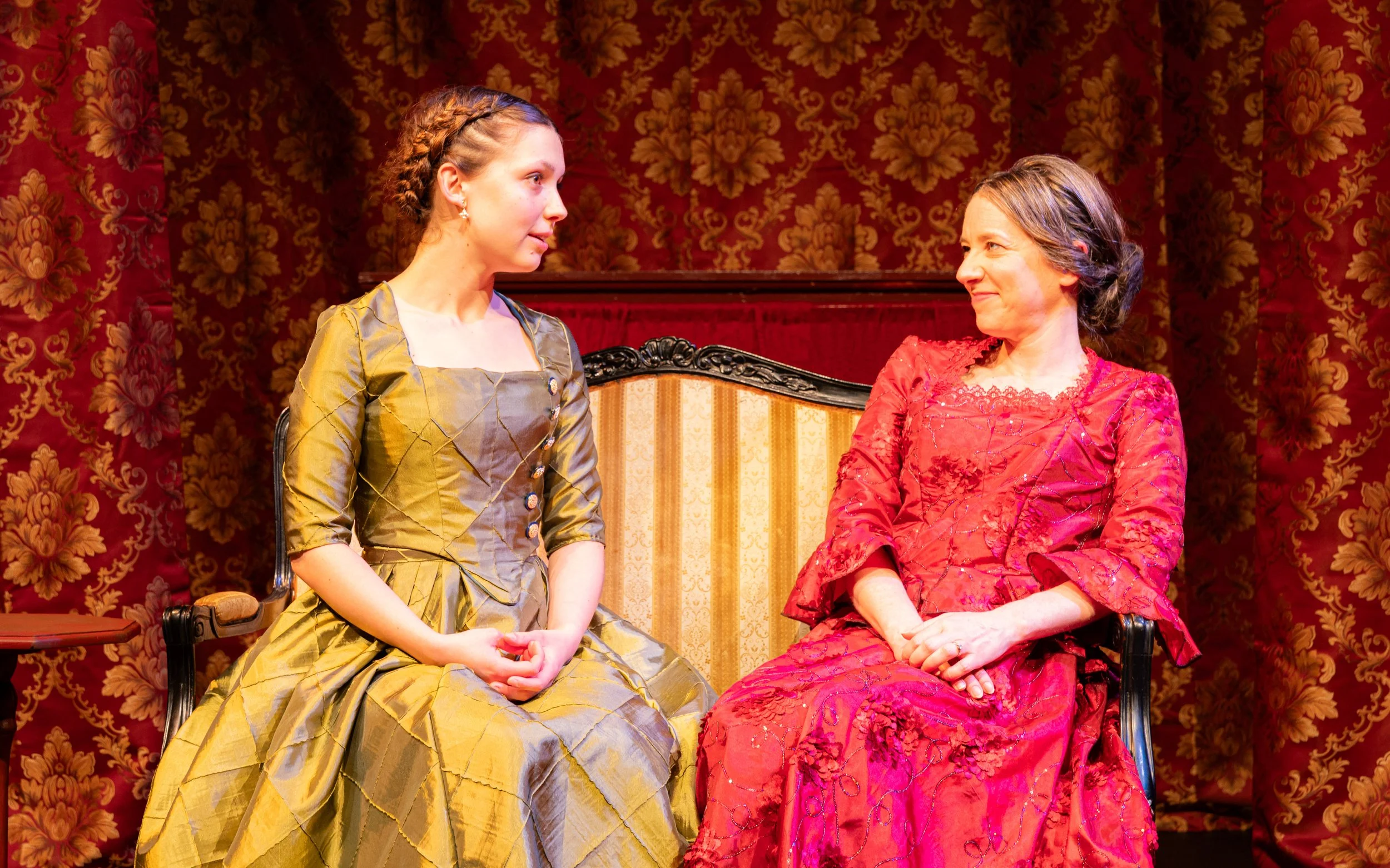
Of the supporting cast, Marianna de Fazio is excellent as Lady Eastlake, Effie’s one true confidante, delivering her sarcasm with particular skill while also providing Effie with something otherwise in short supply, someone prepared to listen to and believe her. Meanwhile, Rebecca O’Neil and Peter Cook make an effective pair as Mrs. and Mr. Ruskin, bringing an appropriately stuffy quality to John’s parents. Peter makes Mr. Ruskin’s contempt for Effie unmistakably clear, while a nicely staged moment in which Mrs. Ruskin and Lady Eastlake sit simultaneously provides a small but effective visual accentuation of both mood and relationship. Ryan Duke rounds out the cast nicely as Crawley, giving the household’s butler an appropriately measured presence.
One of the production’s biggest strengths is its dialect work. Under dialect coach Marianna de Fazio, the accents are consistently strong and serve more than a cosmetic purpose, helping establish both the period and each character’s position within its social structure. Sadie’s Scottish accent is particularly well executed, while the English dialects throughout the rest of the cast remain equally convincing. Just as importantly in a studio this intimate, the actors project with full voices without overwhelming the room.
The creative team achievements continue with Rachel Brinn’s costume design, which contributes significantly to that sense of period and social position. Effie’s Act II costumes are especially becoming. With the character back in London, her clothing becomes more formal, visually reflecting the change in location and circumstances. The design throughout maintains the Victorian aesthetic while allowing the clothing to help distinguish the social world these characters inhabit.
The scenic work, built by David Tier, accomplishes something similar with relatively economical means. The initial Victorian environment (furniture, side table and draperies) immediately places the audience in the period, while the move to Scotland transforms the room by trading the Victorian drapes for plaid and a stone wall, creating a considerably more rustic appearance. Combined with the sound of rain outside, the change effectively transports the audience into the Scottish Highlands without requiring an elaborate physical transformation.
Finally, a note about Charlie Gingold’s original musical composition. Charlie’s work further supports the production, particularly in the music accompanying the transitions between scenes. Rather than allowing those changes to break the atmosphere, Charlie’s music helps carry the audience from one moment and location to the next, maintaining the production’s period character and emotional continuity.
Under Molly Hall’s direction, the Circle of Fire production of The Countess understands that this is not simply a historical account of an unhappy marriage. It is a story about control, about who gets to determine what is normal, whose account of a relationship is believed, and what happens when one person’s independence threatens another person’s carefully constructed version of the world. Molly and her cast allow those ideas to emerge through the relationships rather than imposing them upon the story, and Sadie’s thoughtful, emotionally perceptive performance keeps Effie firmly at its center.
In the intimacy of the Cynthia Sears Studio, there is nowhere for Gregory Murphy’s characters to hide., fitting for a play concerned with the gulf between outward Victorian respectability and what can happen within a marriage once the doors are closed. Circle of Fire Theatre’s The Countess makes that gulf increasingly uncomfortable to watch, and gives Effie Gray the space to finally be heard.
The Countess, from Circle of Fire Theatre and part of BPA’s Studio Series runs on stage in the Cynthia Sears Studio at Bainbridge Performing Arts through August 30. For more information, including ticket availability and sales, visit https://www.bainbridgeperformingarts.org/events/countess.
Photo credit: Adam Othman (Small World Photographer)