
Stage Review - The Fairest Flame (Olympia Little Theatre)
Stage Review - The Fairest Flame
Presented By: Olympia Little Theatre - Olympia, WA
Show Run: January 23 - February 8, 2026
Date Reviewed: Friday, January 30, 2026
Run Time: 2 Hours, 15 Minutes (including a 15 minute intermission)
Reviewed by: Greg Heilman
The story of Joan of Arc has been told so many times across history, literature, and the stage that it can sometimes feel as though we already know the shape of it before the first line is spoken: the young maid, the calling, the armor, the battle, the faith, the inevitability of what comes next. But The Fairest Flame, now on stage at Olympia Little Theatre through February 8, approaches this familiar figure through a quieter and more intimate lens, placing Joan not in the more familiar realm of legend, but rather in the very human spaces around her, where identity is tested as much as courage.
And there is something exciting about encountering a play this new, still early in its theatrical journey. As a West Coast premiere and only the second time the work has ever been staged, Stacy Ericson’s The Fairest Flame carries with it the sense of discovery, of watching a story take shape in real time. With the playwright in attendance on January 30, that performance served as a reminder that this is not simply a retelling of history, but a living piece of theatre still finding its footing. Co-directors Bitsy Bidwell and Diana Purvine approach the material with care, guiding Joan’s story not toward grand spectacle, but toward the quieter spaces between faith, fear, and the choices that define her.
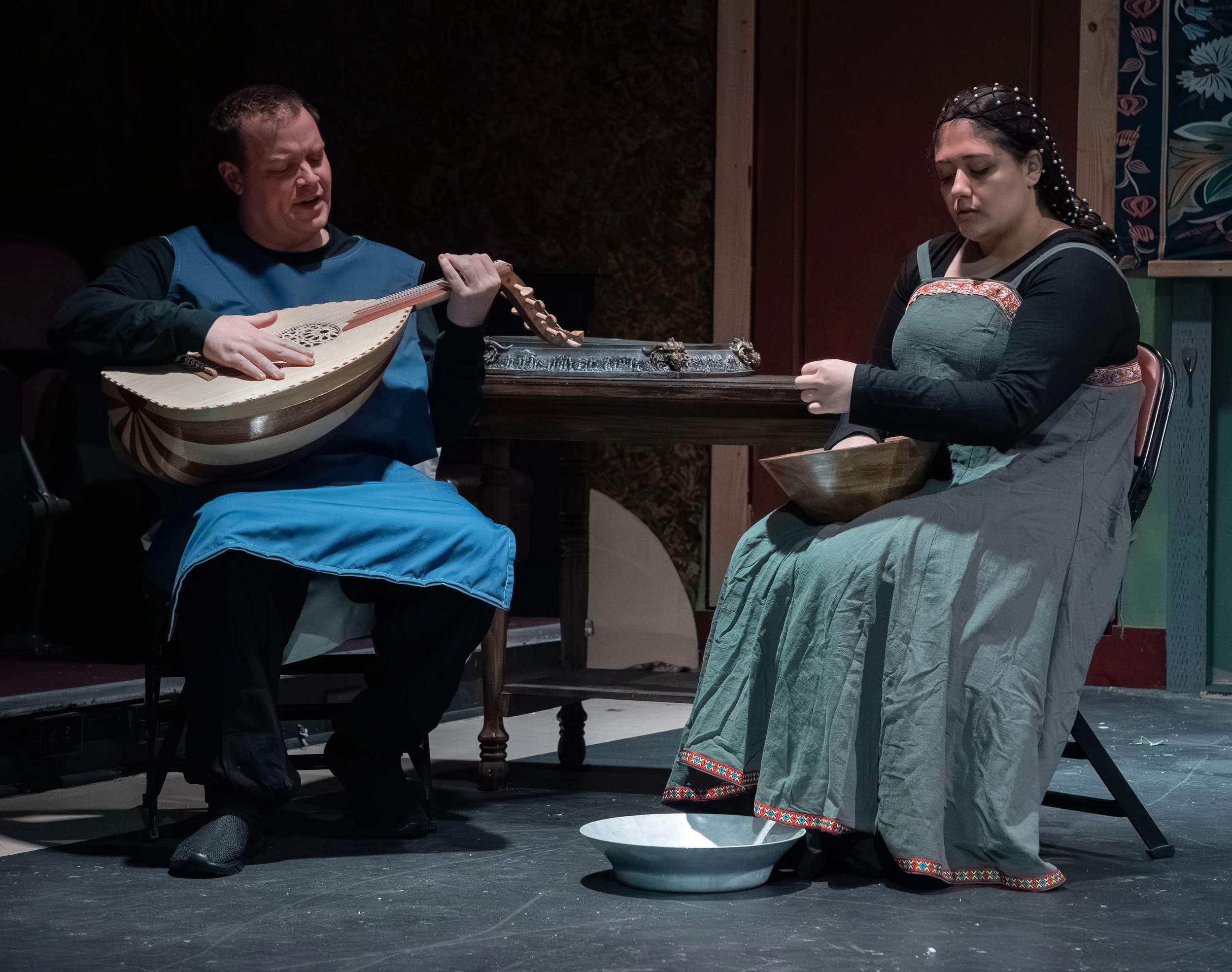
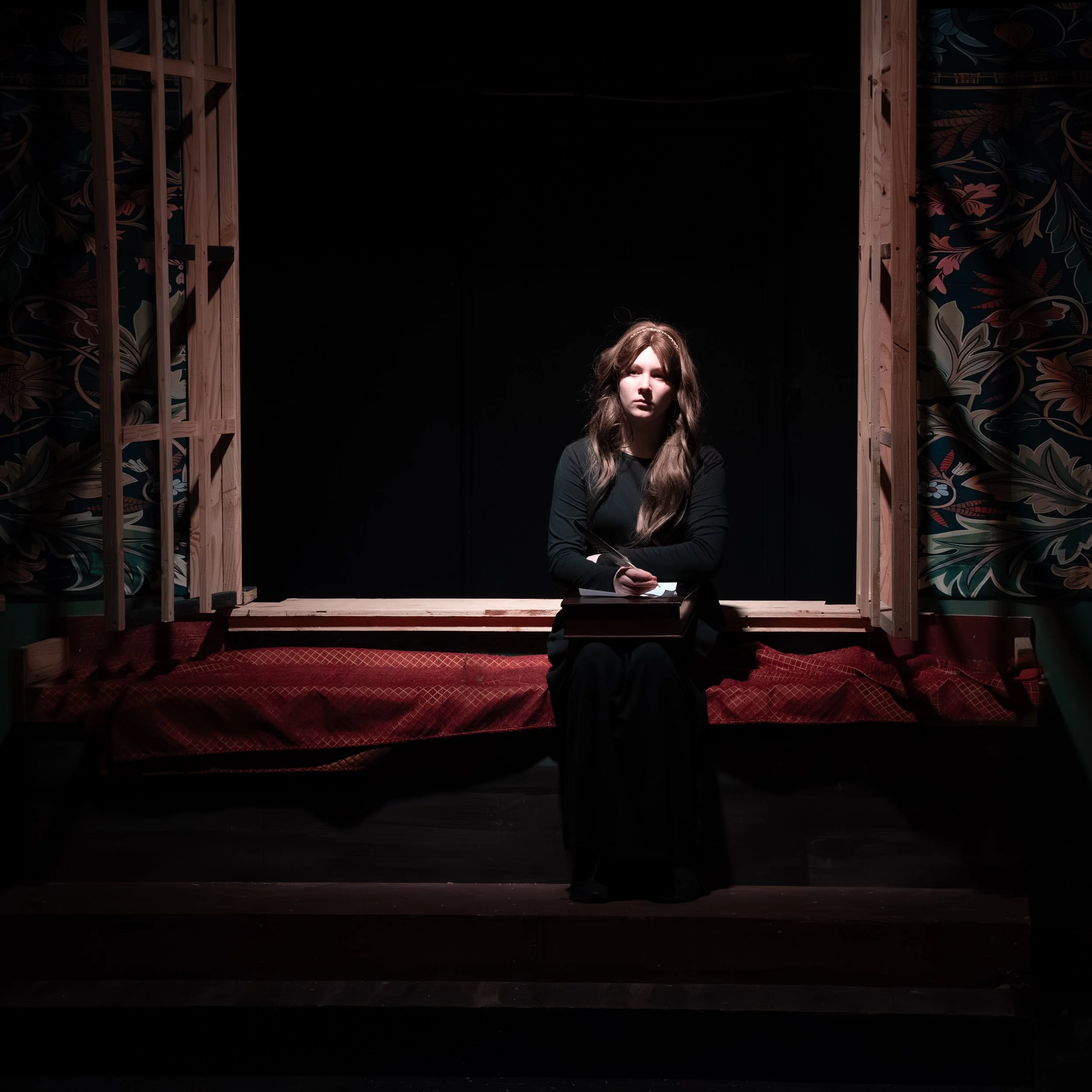
Olympia Little Theatre establishes a medieval atmosphere even before the action begins, the pre-show music offering playful, unexpected touches, such as medieval-style arrangements of modern pop songs over the sound system, including a memorable “Hit Me Baby One More Time,” which sets an unusual tone of old-meets-new. The set continues that aesthetic with warm reds and golds, evoking a world of courtly power and religious weight. A throne-like presence anchors the space, alongside a writing desk and simple staging elements that shift the setting from royal chamber to prison cell.
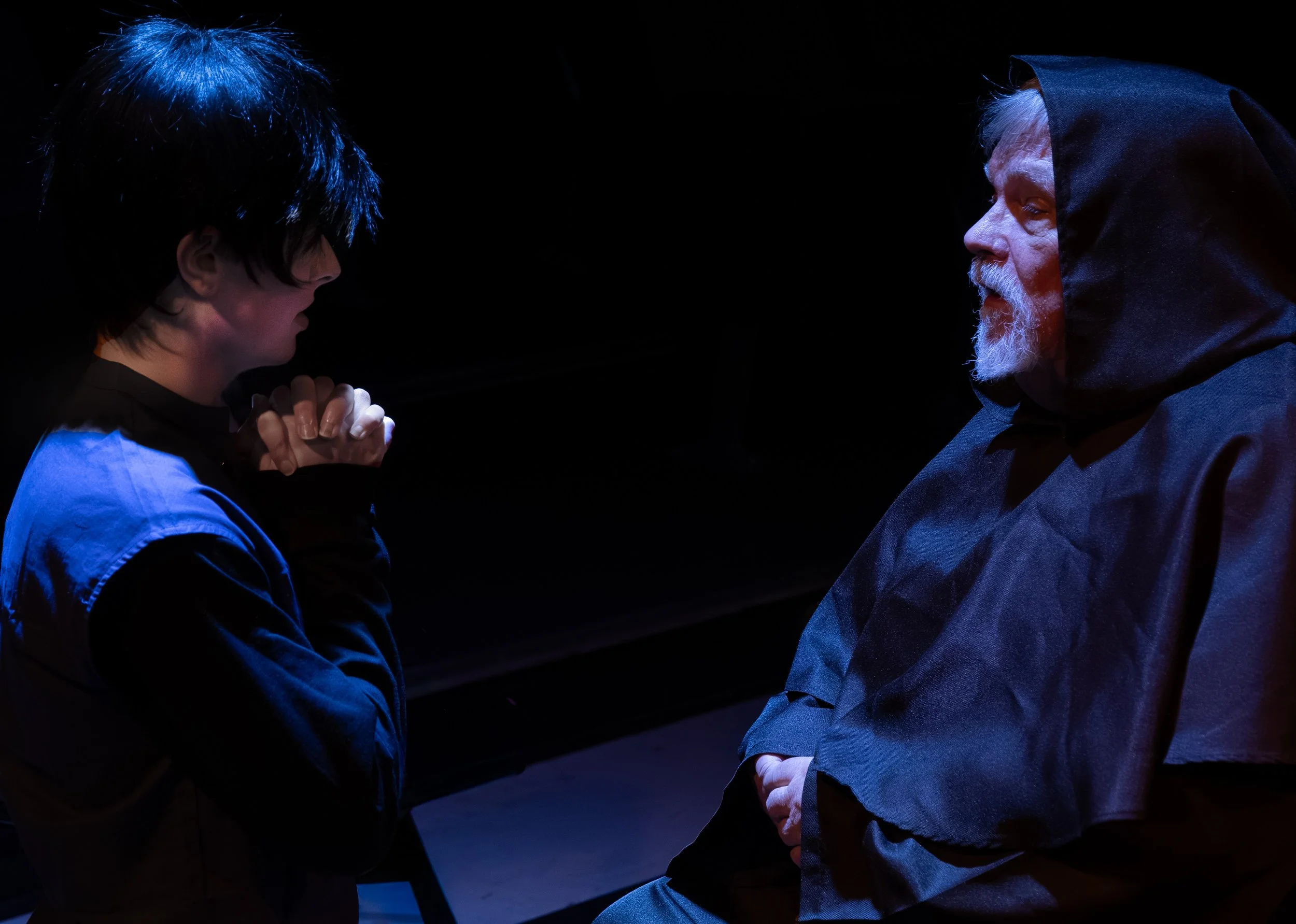
Lighting designer Sumer Munroe uses focused spotlights effectively to guide the audience through the play’s shifting locations, isolating the chambers, cells, and sacred spaces as the story moves between them. Sound designer Naliya Rubin provides an underscore that works particularly well in moments of tension, especially when Joan is alone with her thoughts, contemplating the weight of the choices before her. The music beneath these scenes helps build atmosphere and dread, though the effects sometimes end abruptly, cutting short what could have even more impact if they were allowed to sustain and fade more gradually. Together, these technical elements help shape the world around Joan, even as the production’s pacing takes time to fully find its rhythm. Costumes also do a fine job of reinforcing the medieval theme of the production, helping to ground the world of court, clergy, and confinement in a period-appropriate visual language. And the Countess in particular is given a notable number of costume changes, a detail that reinforces both her prominence within the court and the shifting pressures of life inside the nobility.
The play unfolds almost like a tale of two acts. While the opening portion has moments that feel excessively slow, with a pacing that occasionally lingers too long, the second half more than makes up for it. Contributing to some of this lull are scene transitions early on where the actors appear to be in place well before the lights come up, draining some of the momentum from the unfolding drama. But once the production finds its stride after intermission, it builds with far more confidence and energy. Part of that shift comes from the fact that Amanda Nixon’s Jeanne de Bethune, Countess of Ligny, is present in the majority of the later scenes, and her intensity seems to raise the temperature of everything around her. Her presence alone increases the energy of each moment she inhabits, and as the show moves toward its emotional and narrative climax, it becomes clear that both the actors and the audience understand that the story is approaching its most urgent terrain.
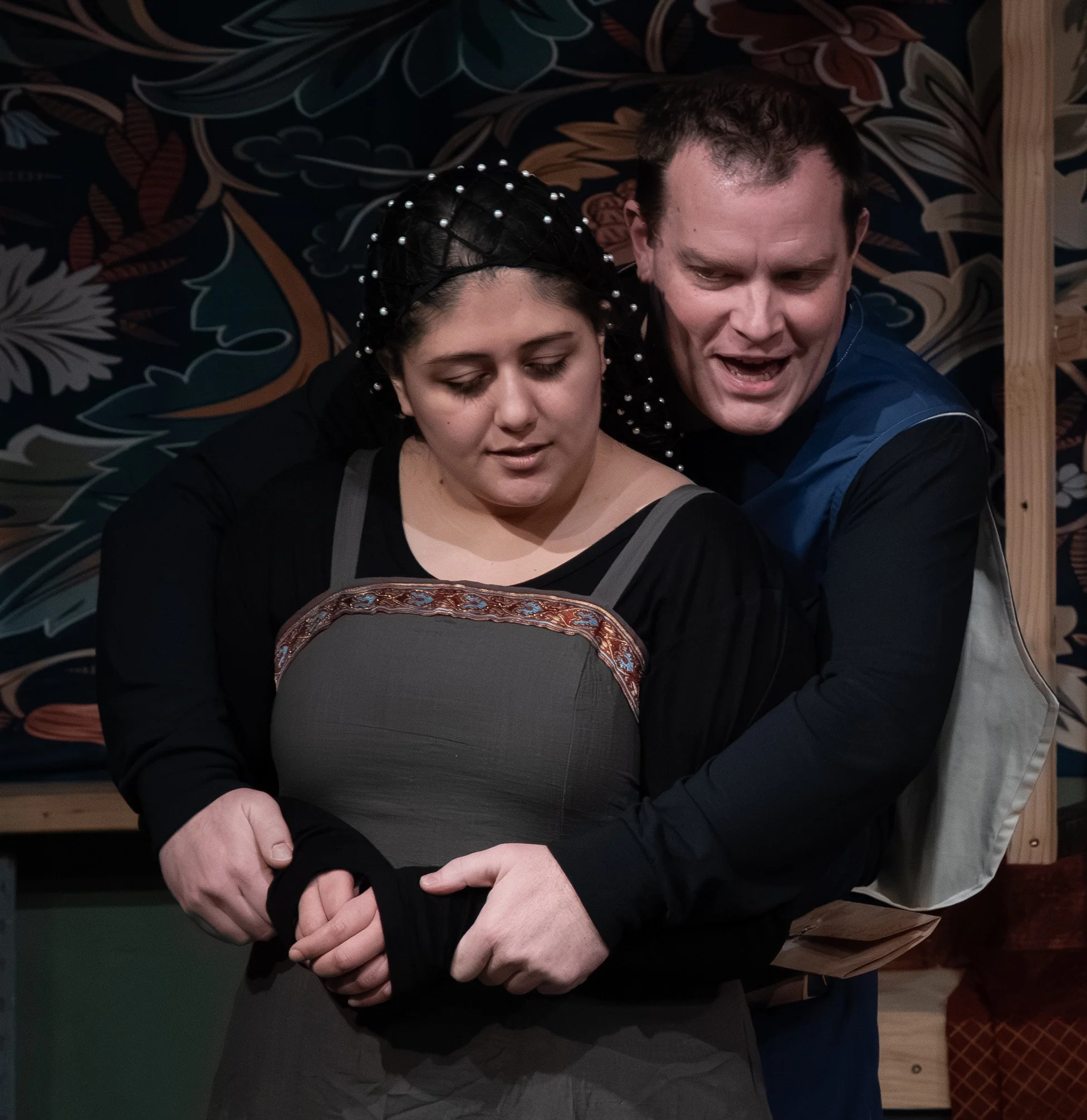
And that urgency is where The Fairest Flame begins to reveal its real promise. This is a new play, still early in its theatrical life, but it has a great deal of potential. It tells a Joan of Arc story that feels more between the lines than what we are accustomed to, less about the grand legend and more about the quieter human spaces surrounding it. That said, there are scenes in the first act that feel superfluous, particularly the romantically leaning exchanges between the Count and Countess. These moments come across as somewhat forced, and they are not helped by a lack of the kind of chemistry needed to make them fully land. Leaving a few of those scenes on the cutting room floor, so to speak, would help trim the length of the first half, and the show itself, and prevent some of the slowing pace that holds the opening act back.
Among the performances, the strongest work comes from the aforementioned Amanda Nixon, who brings a specificity and emotional honesty that the production leans on heavily. Her performance is filled with small, telling choices, the way she follows Joan with her eyes, the way she holds herself in stillness, the earnestness in her voice, that communicate depth, realizing that the amount of emotion portrayed isn’t necessarily equal to the amount of volume in the delivery. In many ways, every scene becomes stronger when she is in it, and she sets a standard of naturalism that the rest of the ensemble does not always match.
Christopher Stanley, as John of Luxembourg, Count of Ligny, is at his best in moments where emotion breaks through the formality while Kevin Bray’s Pierre de Chaucon, by contrast, is a sharply defined presence, aloof, powerful, and quietly intimidating, exuding authority in a way that is, frankly, scary good. At times, Kevin’s choices skew a bit toward the heightened, occasionally brushing up against something slightly broader than the play seems to require, though never fully crossing that line. The performance remains a compelling one, and Chaucon’s looming power is undeniable.
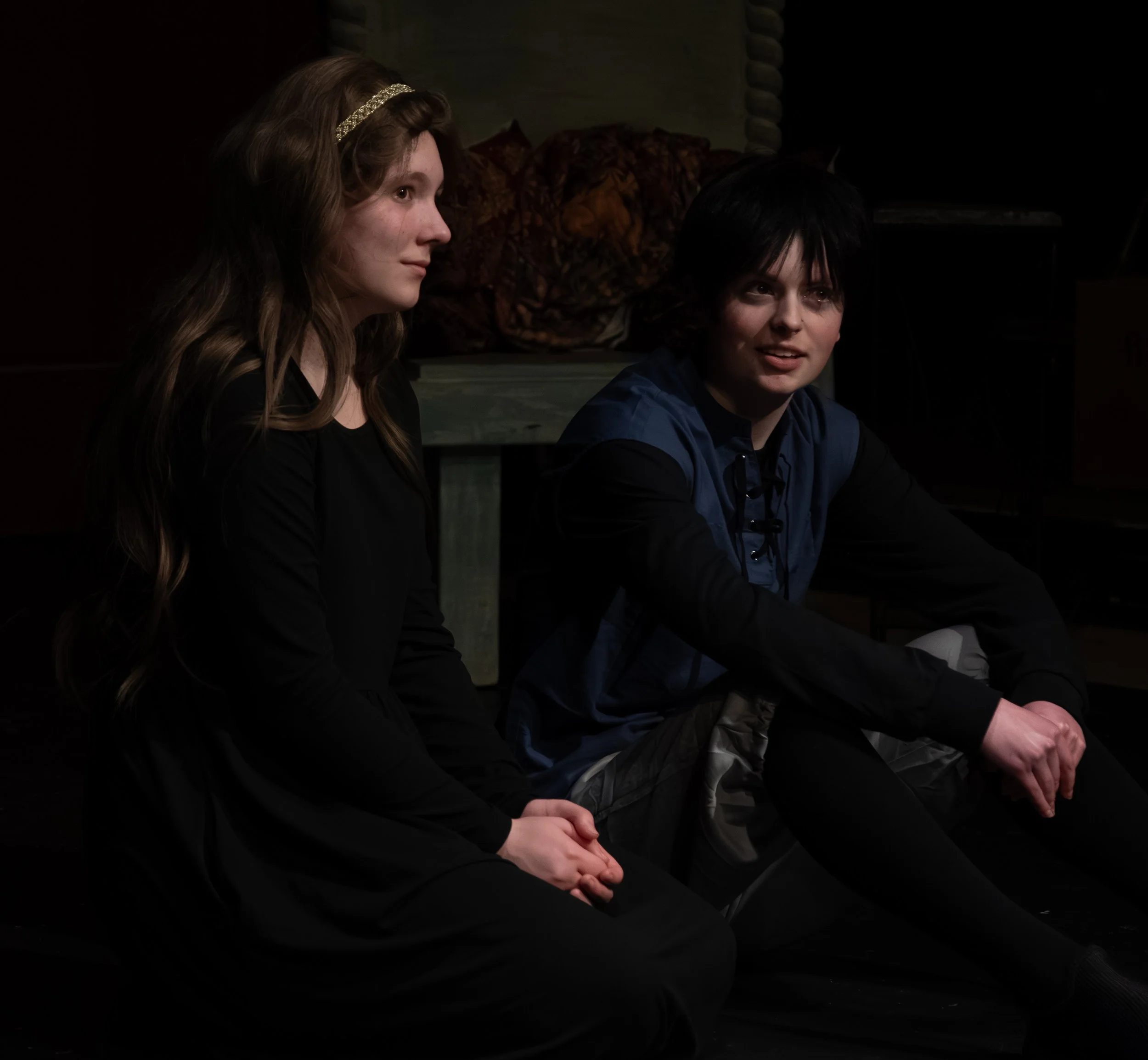
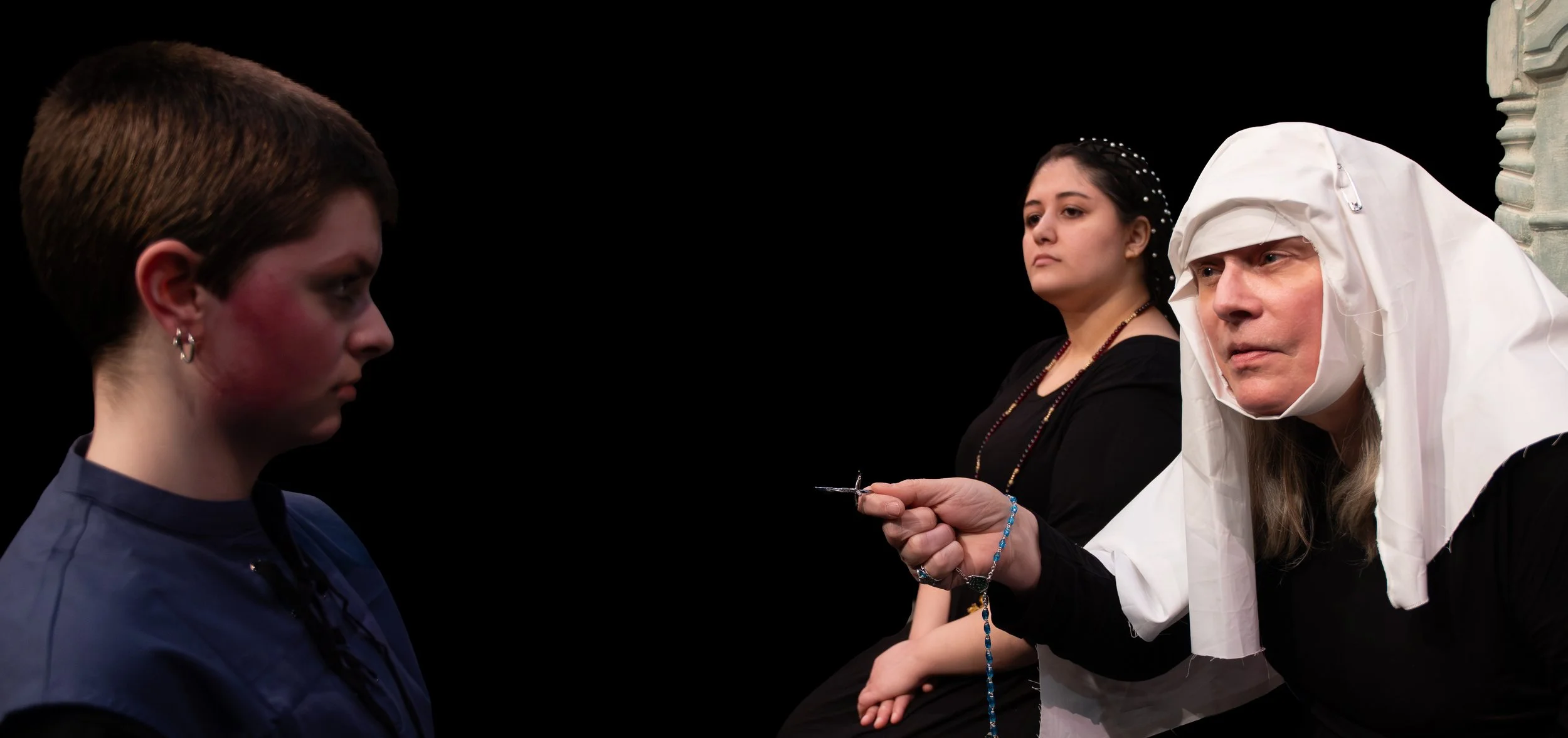
Chloe Swanson, as Joan the Maid, carries the central role with a clear sense of pace, particularly in the later sections of the play. Chloe also seems to mirror the energy of those she is acting with, her delivery occasionally feeling more rote in quieter exchanges with Clementine Matthews’ Jennette de Bar, but becoming noticeably more energized and dramatically alive in scenes opposite Amanda’s Countess. As the Countess and Joan begin to hit their stride together in Act Two, the production finds some of its strongest emotional footing. Clementine, too, grows into the play more fully as it progresses, bringing more texture and presence in her later scenes
The supporting roles include Josh Doyle as Hammond of Macy, Stephen Purvine as Father Ladvenu, and Kendra Malm as Jeanne of Luxembourg, Demoiselle of Luxembourg. These performances are smaller and generally solid, though some character choices occasionally disrupt the flow of otherwise important moments. All that said, the ensemble’s commitment to the material remains clear.
The Fairest Flame is an ambitious and uncommon staging opportunity, a new work still early in its theatrical life, presented with care and anchored by Amanda Nixon’s truly compelling Countess. While the production occasionally struggles with pacing in its opening act, the second half finds a stronger pulse, and the play’s quieter, more interior approach to Joan begins to shine through. It’s a deeply worthwhile story of Joan of Arc, one that lives not in the battlefield legend, but in the human spaces around it, in the moments of doubt, pressure, and resolve that history often skips past. With continued refinement, this is a piece that could grow into something truly powerful, and Olympia Little Theatre offers audiences a rare chance to encounter it at the very beginning of that journey.
The Fairest Flame runs on stage at Olympia Little Theatre through February 8. For more information, including ticket availability and sales, visit https://olympialittletheater.org/.
Photo credit: Scott Ellgen