
Stage Review - Wait Until Dark (Harlequin Productions)
Stage Review - Wait Until Dark
Presented By: Harlequin Productions - Olympia, WA
Show Run: January 23 - February 8, 2026
Date Reviewed: Thursday, January 29, 2026
Run Time: 2 Hours, 20 Minutes (including a 20 minute intermission)
Reviewed by: Greg Heilman
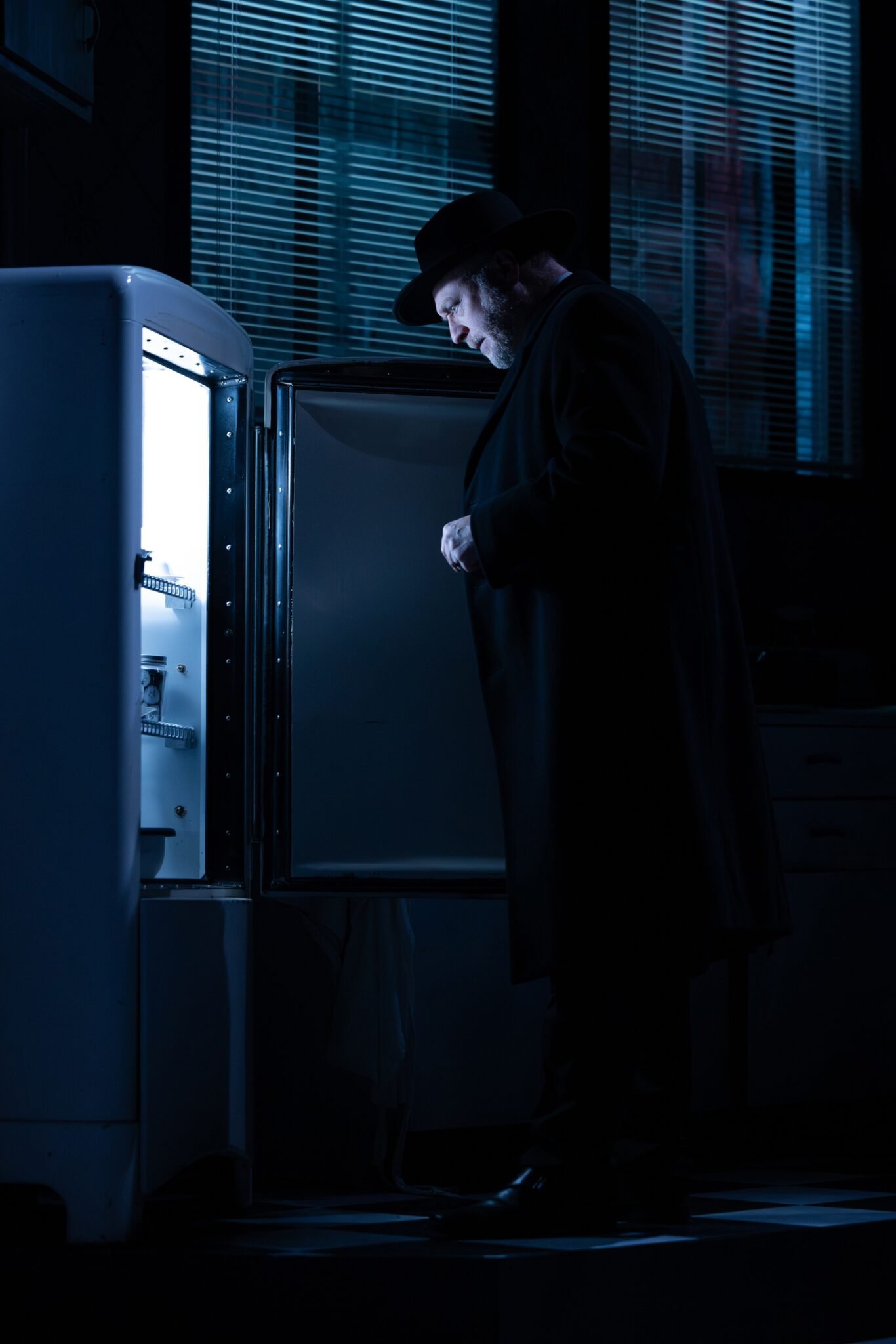
Some shows pull you in with spectacle, with color and movement, and with noise. Harlequin Productions’ Wait Until Dark does just the opposite. It begins in quiet, in shadow, in a world rendered almost entirely in black and white, as though the stage itself has slipped into the frame of a classic film noir. Frederick Knott’s suspense thriller, adapted by Jeffrey Hatcher, is being presented on stage at the State Theatre in Olympia through February 8, and from its first moments, it establishes an atmosphere so meticulously crafted that tension feels less like something that happens — and more like something that hangs in the air, waiting.
First produced in the 1960s and later immortalized in its famous film adaptation, Wait Until Dark has long held its place as one of theatre’s most enduring suspense dramas. Set in a Greenwich Village basement apartment in 1944, the story follows Susan, a blind woman whose quiet domestic world becomes the target of a dangerous deception. A group of men, each with their own motives, descend upon her home in search of something hidden within it, and what begins as an uneasy mystery escalates into something far more terrifying. The brilliance of the play lies in how it places the audience in Susan’s vulnerable position — forcing us to experience suspense not through spectacle, but through what cannot be seen.
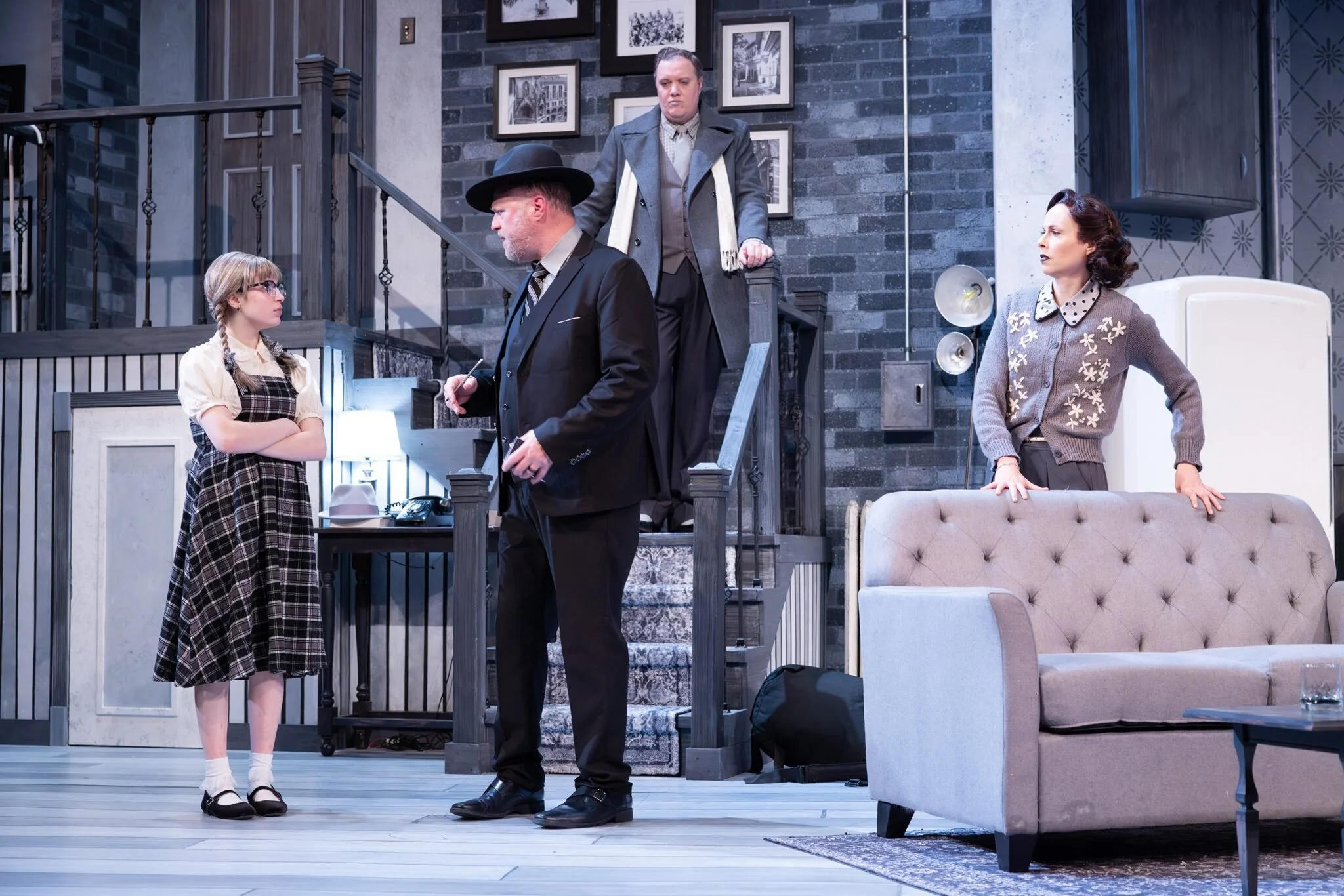
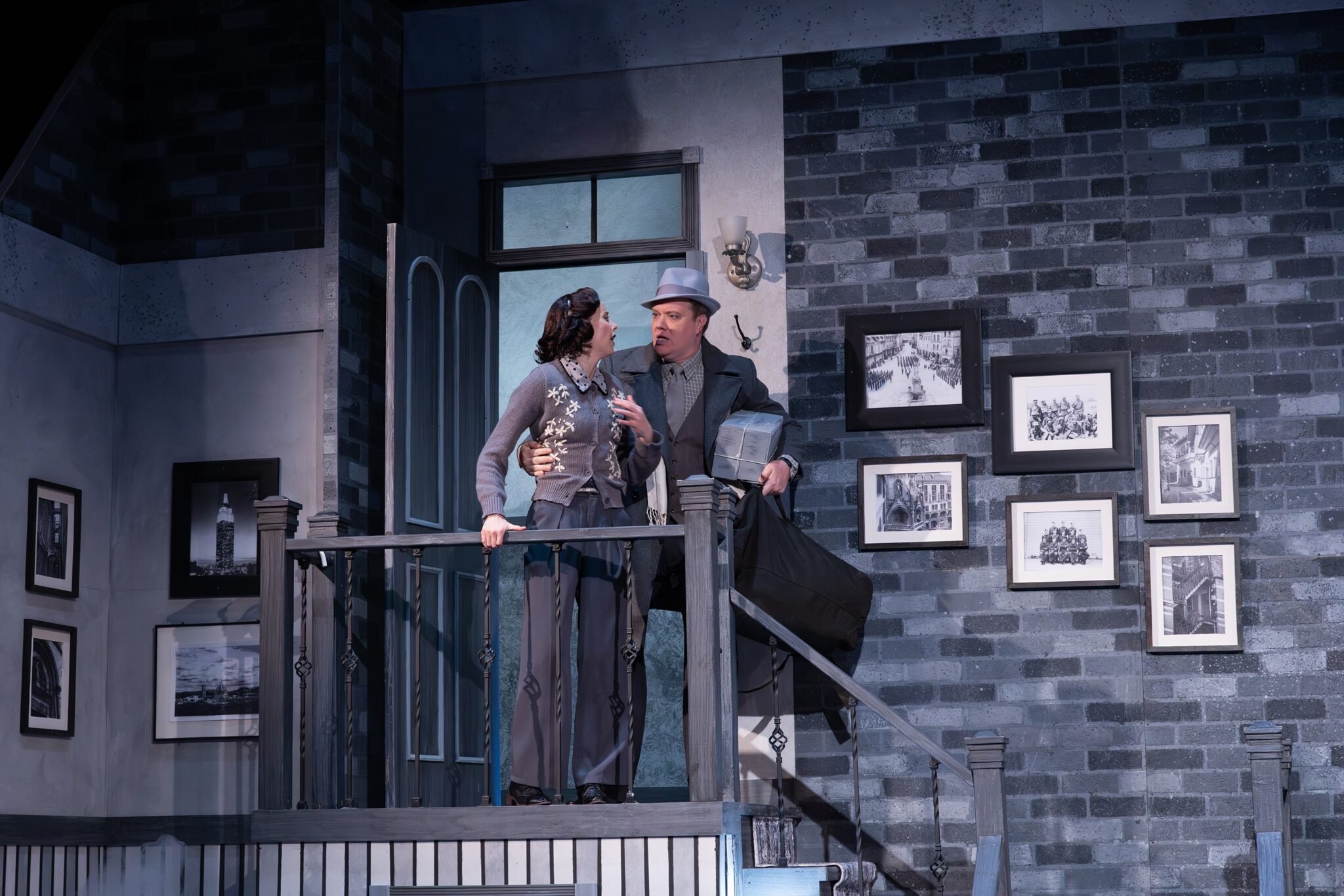
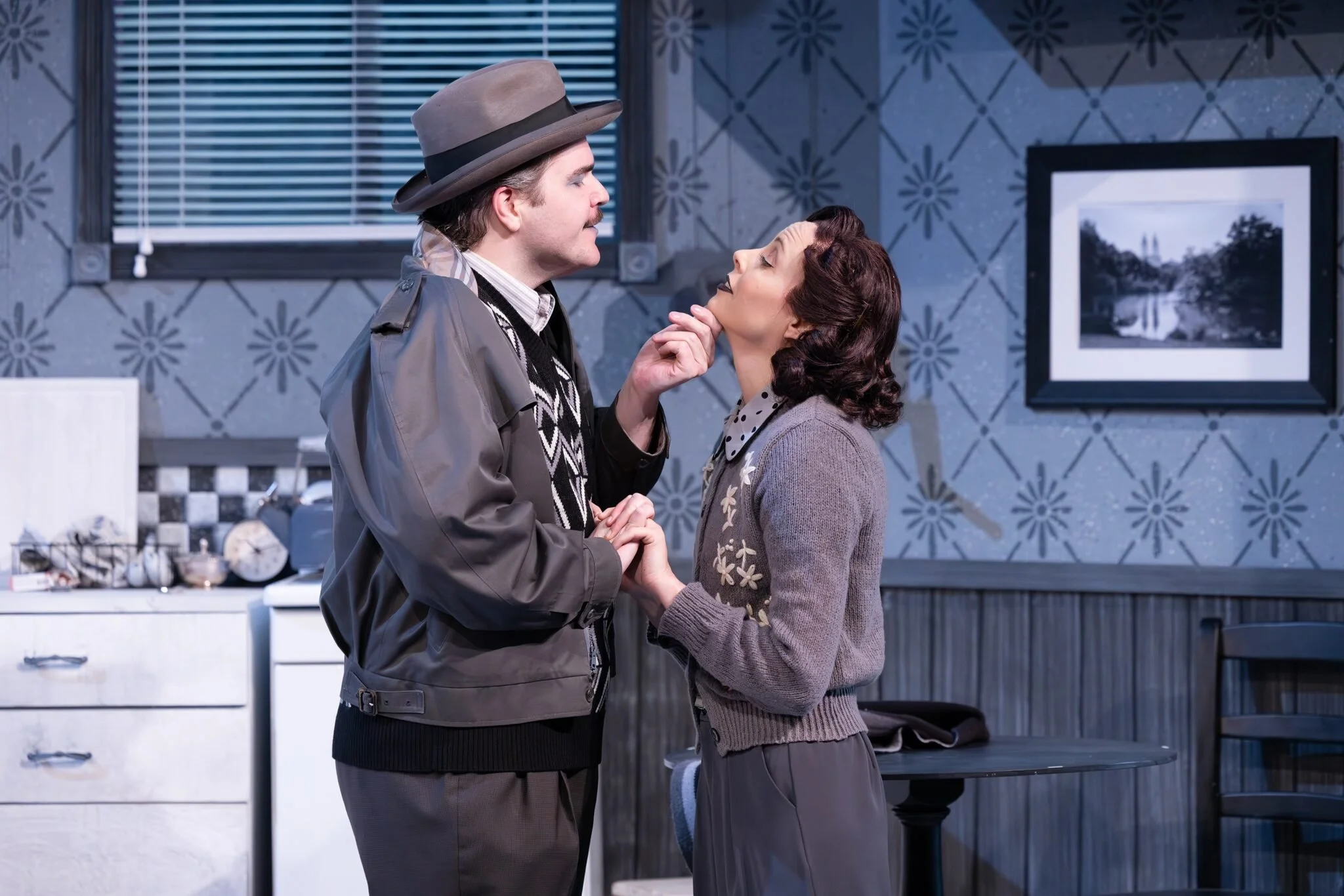
The atmosphere here is, quite frankly, a true achievement. Bringing a film noir aesthetic to the stage is no easy task — noir is as much about shadow, tone, and cinematic texture as it is about story — but director Aaron Lamb and scenic designer Gerald B. Browning have done phenomenal work in crafting a world that feels lifted directly from that genre’s heyday. The basement apartment setting is richly detailed and period-specific, but what makes it extraordinary is its complete commitment to monochrome. Everything exists in black, white, and an array of grays, as though the production itself is unfolding inside an old suspense film.
The furniture, appliances, wall décor, and every accoutrement around the apartment are not only authentic to the 1940s, but visually unified by this noir palette. The wooden slat floor of the living room and the linoleum of the kitchen are aptly toned, as are the sofa, chair, and table, the framed photos on the walls, and the many props that populate Susan’s world. Particularly impressive is the detail surrounding Sam’s work desk, tucked conveniently into a nook between the kitchen and bedroom. As a professional photographer, Sam’s space is filled with developing and processing supplies, with photographs hanging to dry — all perfectly aligned with the grayscale design motif. Kudos are due as well to properties designer Henry Behrens, whose contribution elevates the scenic world into something meticulous and immersive.
The commitment to the style of the piece doesn’t end with the set and its contents. The motif extends beyond the set to Jason Kramer’s costume design, which continues the monochrome concept with period-appropriate looks that feel pulled from classic noir cinema, while Gretchen Halle’s hair, wig, and makeup design is equally precise — especially in the choices made for Susan, whose lipstick is even rendered black to maintain the aesthetic consistency. It is rare to see a production commit so fully, and so successfully, to a unified visual language.
The noir influence is apparent not only in what is seen, but in how the audience hears the story unfold. Dialogue is delivered with a rapid pace and slightly heightened tone, the kind of stylized realism that suits the genre perfectly, Gina Salerno’s sound design underscores the suspense with music between scenes that keeps unease simmering beneath the surface, and Christina Barrigan’s lighting design is superb in maintaining the stark contrasts essential to the show’s look.
There are only two small design callouts, neither of which diminishes the overall accomplishment, but they’re worth noting as the only aspects of the production holding it back from being just about perfect. The first lies in the lighting outside the apartment, which occasionally skews slightly warmer and yellower than the crisp monochrome interior. This is especially noticeable when characters leave the basement apartment and pass by the kitchen window. The second, and perhaps the only missing piece of the full noir illusion, is in consideration of the actors’ skin tones. The grayscale world surrounding them naturally draws attention to the peach warmth of human faces. Some modern LED stage lights can create a subtle graying effect, or makeup could be used to soften the contrast; even if it’s just to take the edge off the natural tones.
At the center of the story is Susan, played superbly by Helen Harvester. Susan’s blindness is not treated here as a gimmick, but rather as an essential part of her lived reality, and Helen makes her entirely believable through careful physical specificity and emotional truth. In a group this strong, to call someone a standout truly means something, and Helen’s portrayal feels real — the engine that drives the show, and the emotional anchor that makes the suspense matter.
Around her, the men circling the apartment bring both menace and unsettling charm. Scott C. Brown’s Carlino carries an accent that lives somewhere between tough cop and gangster, perfectly suited to the genre, and he has a wonderful ability to shift the mood with only the slightest change of expression. Andy Gordon’s Roat is equally effective, his pace of dialogue and chilling demeanor fitting the character — and the noir world — with unnerving precision. Travis Tingvall’s Sam brings a touch of grounding humanity to the group, steadying the action even as it escalates, while Matt Shimkus’ Mike moves with the confidence of someone always a step ahead, serving as Susan’s eyes when the tension begins to tighten.
I especially like Eleanor Rose Kinn’s Gloria, who bursts in with bratty defiance, but what makes her performance compelling is the vulnerability underneath. Gloria’s acting out is clearly shaped by a difficult home life, and Eleanor plays her as someone who, despite everything, can be counted on when it truly matters, a wonderfully layered portrayal. The ensemble as a whole works wonderfully together, cooperative and sharply in sync, creating the sense of a group locked into the same dangerous rhythm — each performance strengthening the others.
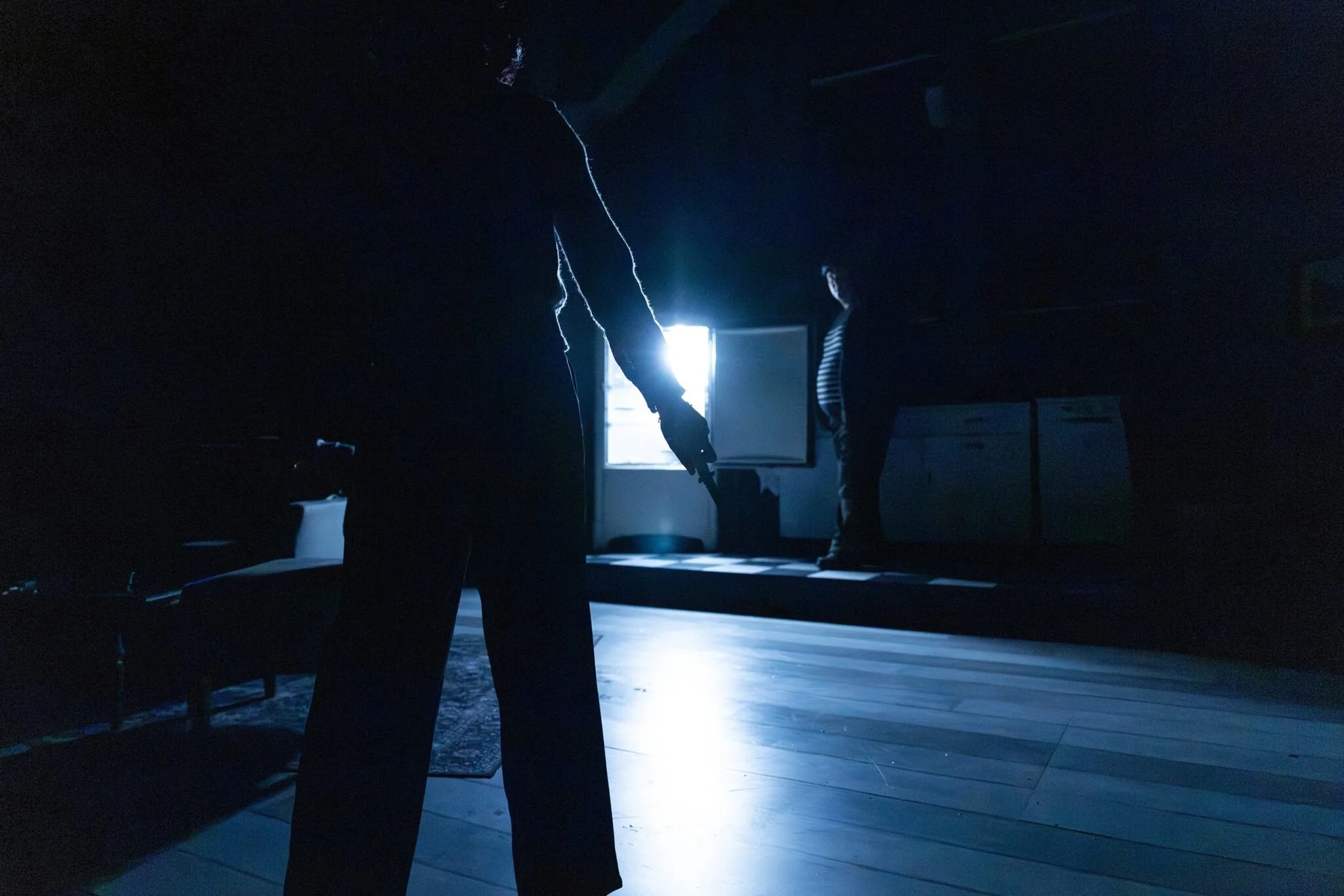
Overall, Aaron’s direction keeps the pacing taut and the suspense perfectly calibrated. The audience is genuinely surprised by the twists and turns when they occur, but the tension becomes most potent when the lights go out entirely, drawing the viewer directly into Susan’s world — a world where danger is not something you see coming, but something you feel closing in. It is in that darkness that the production delivers its greatest payoff. The climactic sequence is so well designed, and executed with exactness, it’s also during this scene where the work of Fight and Intimacy Director Candace James (pun intended) truly comes to light. The final confrontation is staged with precision, intensity, and clarity, honoring both the physical stakes of the moment and the story that has been building toward it. It is exactly the catharsis the audience deserves — suspense rewarded in full.
Harlequin Productions’ Wait Until Dark is an extraordinary example of theatrical craft in service of suspense. From its meticulous noir-inspired design to its perfectly calibrated pacing, this is a production that understands how to build tension not through excess, but through precision. It invites the audience into a world of shadow and silence, and then rewards that patience with a final sequence that is as thrilling as it is earned. This is suspense theatre at its finest, and a true achievement for everyone involved.
Wait Until Dark, from Harlequin Productions, runs at the State Theatre through February 8. For more information, including ticket availability and sales, visit https://harlequinproductions.org/.
Photo credit: Shanna Paxton Photography