
Stage Review - The Highest Tide (Bainbridge Performing Arts)
Stage Review - The Highest Tide
Presented By: Bainbridge Performing Arts - Bainbridge Island, WA
Show Run: March 06 - March 22, 2026
Date Reviewed: Thursday, March 05, 2026 (Preview Night)
Run Time: 2 Hours, 15 Minutes (including a 15-minute intermission)
Reviewed by: Greg Heilman
One of the things that I absolutely love about reading is how the words on the page, combined with my imagination, paint a picture of what is happening in the story; in a way, as I’m reading, I’m creating my own interpretation of the world I’ve been transported to. When a novel or short story is adapted into a film or brought to the stage, that collaborative element can often disappear. Instead, the director (typically) creates a vision which is then realized by scenic designers, production designers, and the rest of the creative team responsible for bringing that world to life.
While I had not previously seen a production from Book-It Repertory Theatre before Thursday night’s preview of The Highest Tide, from Bainbridge Performing Arts in the style of Book-It’s literary tradition and running at BPA’s Buxton Center through March 22, what I was introduced to that evening is a unique way of bringing literature to the stage while still leaving space for the audience’s imagination to make each interpretation unique to the individual. Their approach allows a novel to be presented with much of its original language intact while still inviting each audience member to form their own mental picture of the story unfolding before them.
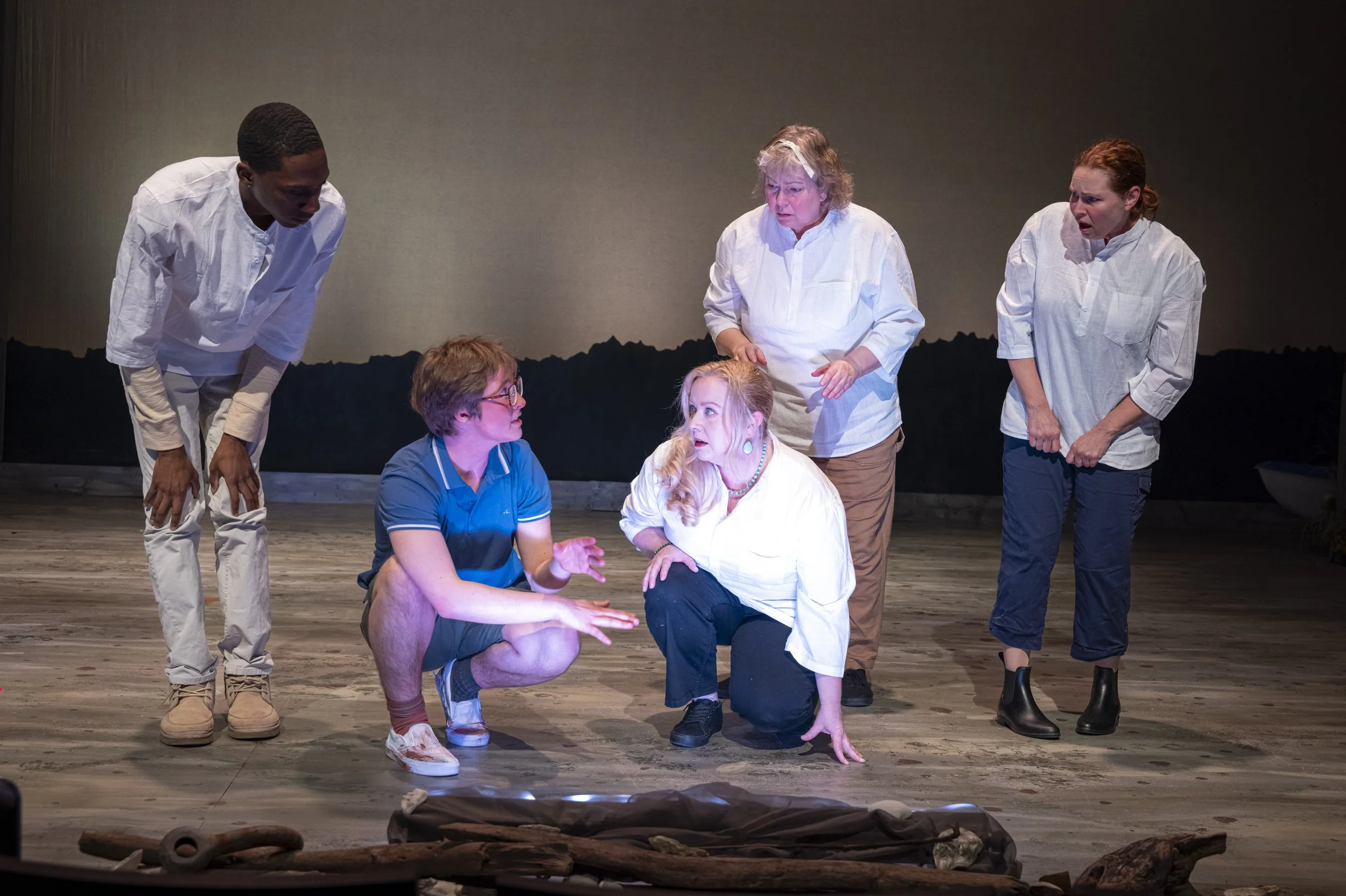
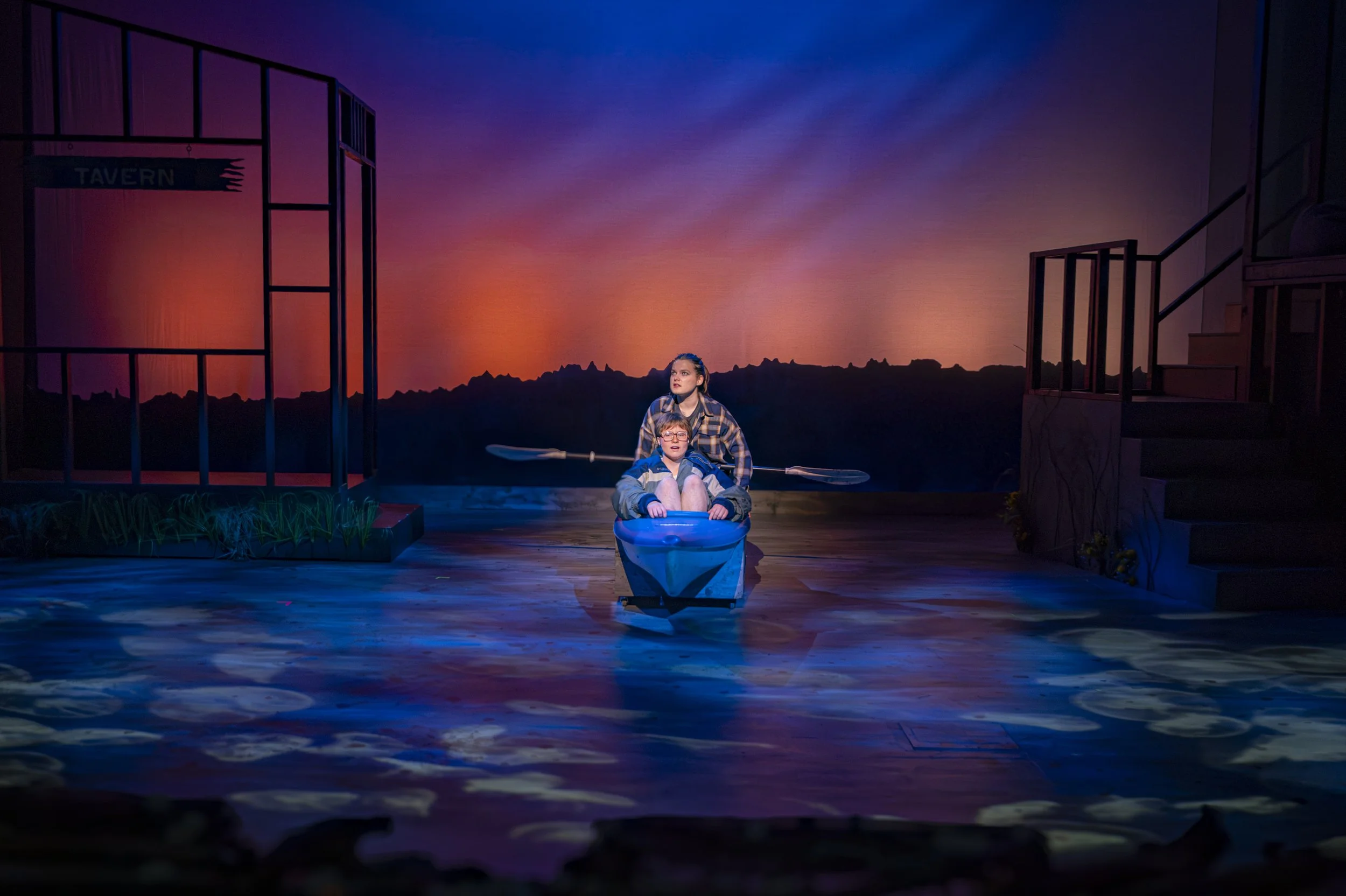
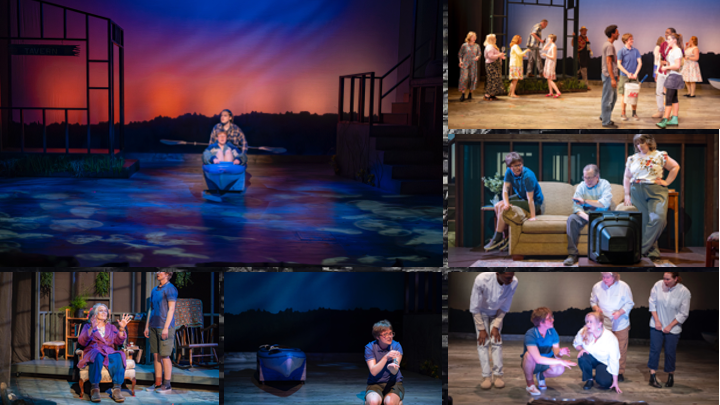
This happens partly through the adaptation itself, but it is also achieved through the scenic design — or perhaps more accurately, through what is intentionally left out. In The Highest Tide, the set pieces are deconstructed. Houses appear with their walls stripped away, leaving only framing to suggest their structure. Large portions of the stage remain open so that actors can show what their characters are doing without relying on literal scenery or props. The audience builds the walls. The audience imagines the rising and falling tides. Lighting, sound, and projections provide just enough support to guide that imagination without replacing it.
It’s an inventive way to tell the story, and while it may be a bit of an acquired taste for audiences accustomed to more traditional theatrical storytelling, it proves remarkably effective, especially when the cast fully embraces the style. Dialogue shifts rapidly between narration and action, often passing between characters in quick succession. When that rhythm clicks, the storytelling becomes both dynamic and engaging.
Thursday’s preview performance did include a few stumbles in delivery and moments where the rhythm briefly faltered — something not uncommon in early performances of a show that demands this level of precision. Even so, the performance remained deeply engaging, and it’s easy to see how future performances will only grow stronger as the cast settles more fully into the cadence of the piece.
The play is adapted by Jane Jones from the novel by Jim Lynch, a story rooted firmly in the landscapes and waters of the Pacific Northwest. It follows fourteen-year-old Miles O’Malley, a curious and thoughtful teenager whose fascination with marine life leads him to an astonishing discovery along the shoreline of Puget Sound. What begins as a scientific curiosity — the appearance of a rare giant squid — soon ripples outward through his small coastal community, drawing the attention of scientists, the media, and even those who interpret the discovery through a spiritual lens. At its core, the story becomes less about the spectacle of the discovery and more about how people attempt to understand the mysteries of the natural world.
The unique storytelling approach, developed by Book-It Repertory Theatre over decades of adapting literature for the stage, is fully on display here. Actors shift fluidly between narration and dialogue, sometimes sharing the narrative voice among each other, sometimes mid-sentence. The result is a style that mirrors the experience of reading — the audience hears the author’s words while simultaneously watching the story unfold.
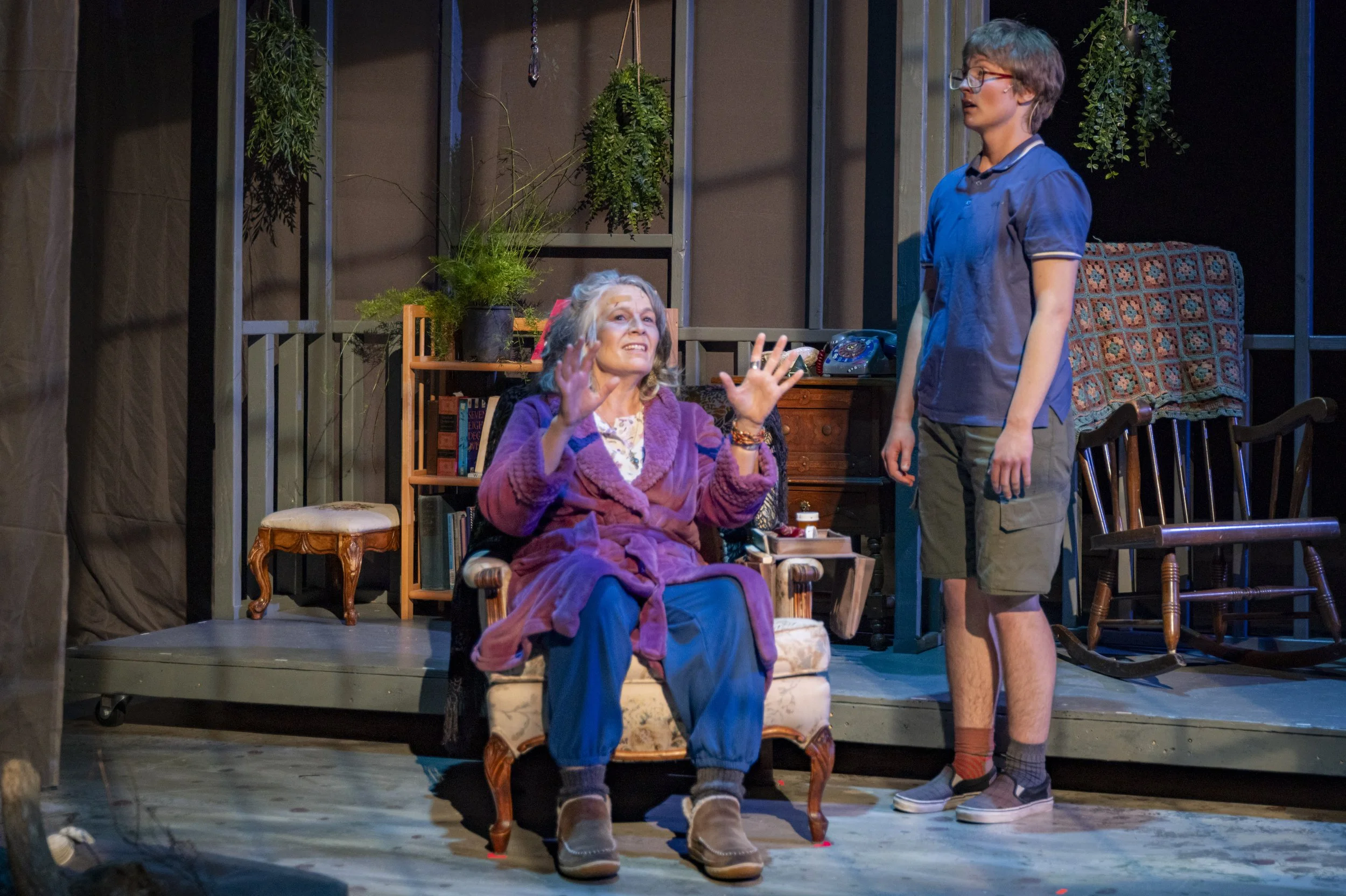
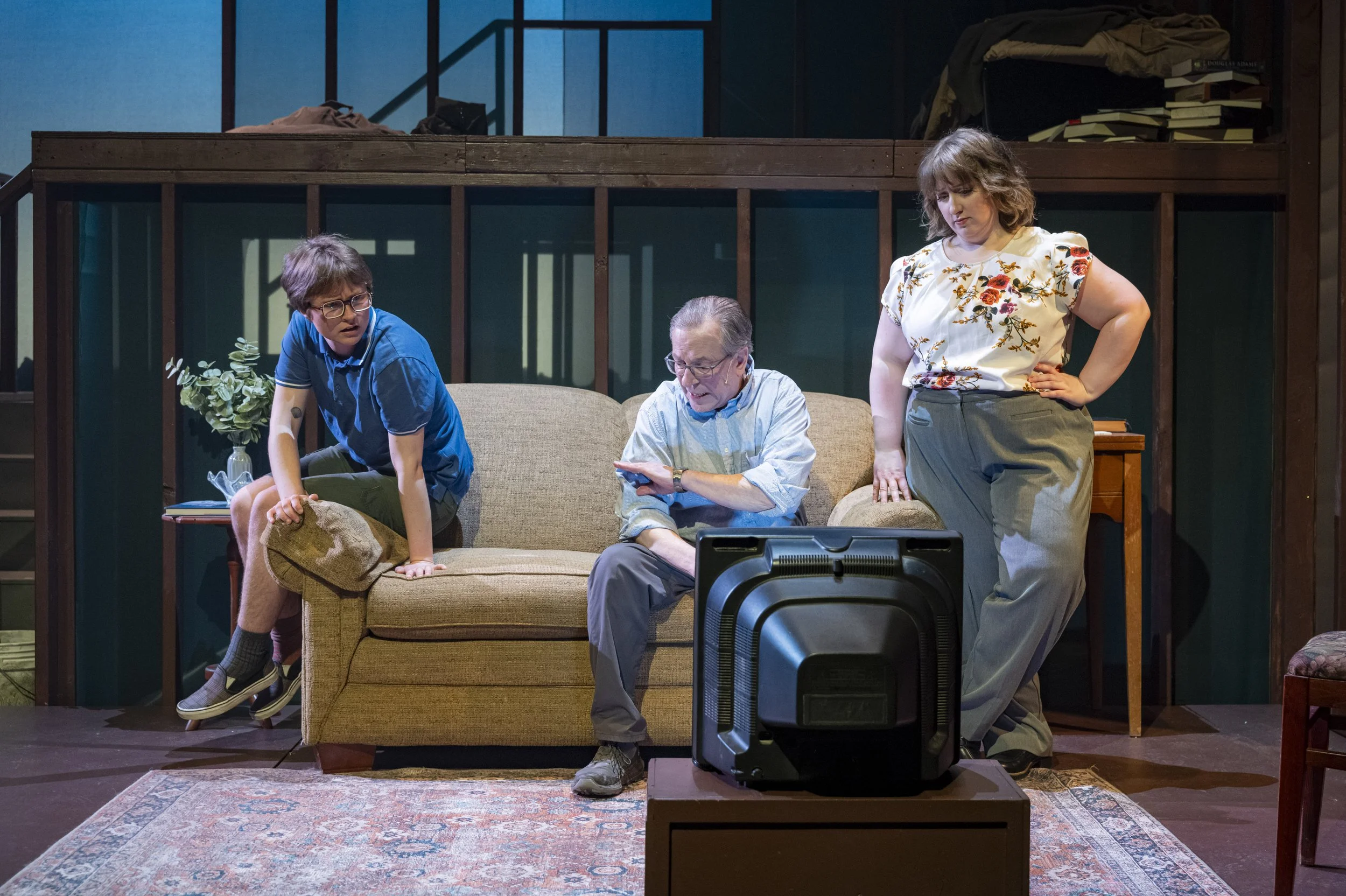
Director Kate Meyers embraces that approach fully here. Matthew Lazure’s scenic design supports the storytelling with structures that suggest rather than replicate physical spaces, the most prominent example being the O’Malley home, which follows this visual language, reinforcing the production’s reliance on suggestion rather than realism.
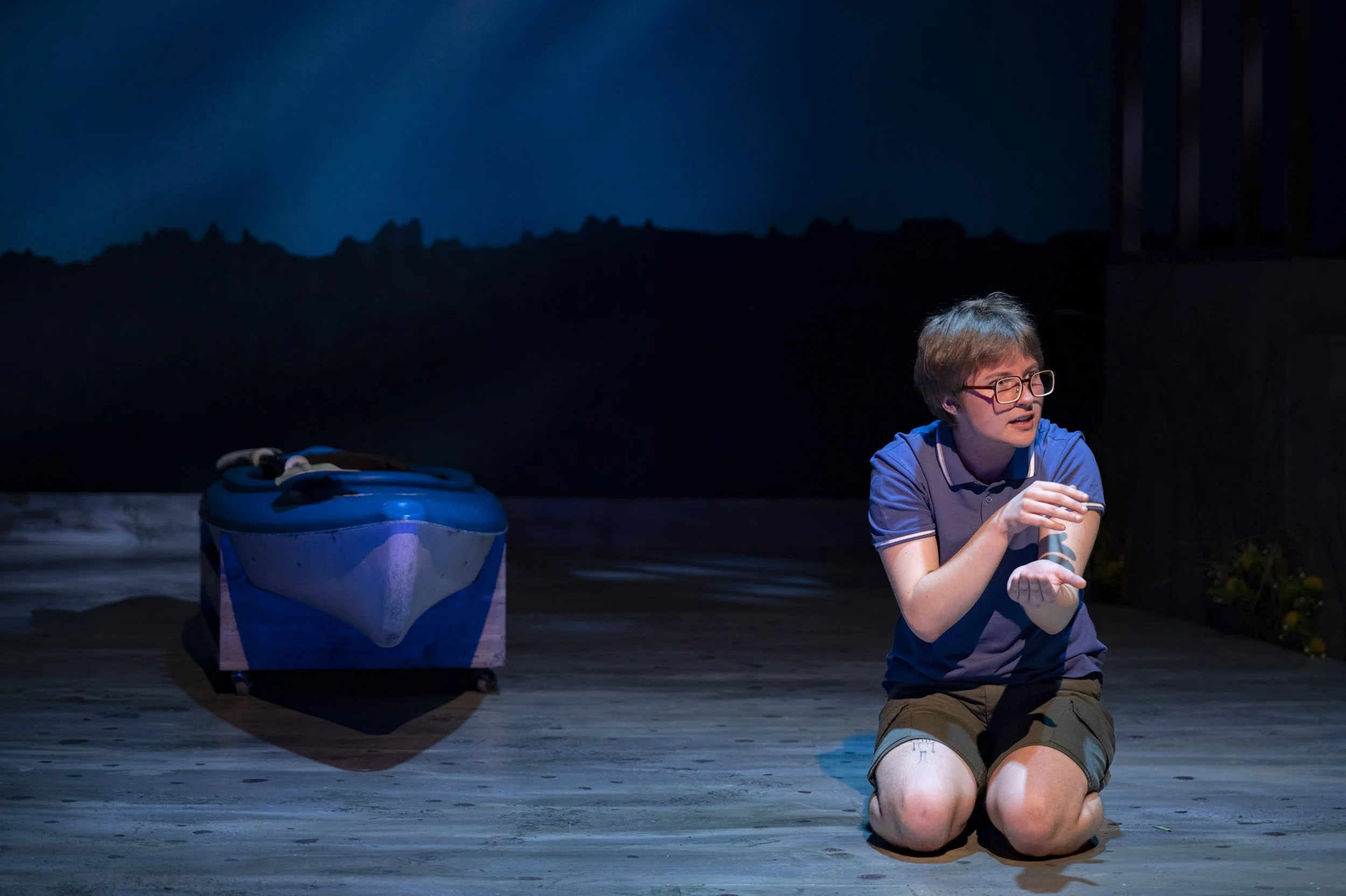
Lighting designer Eli Backer provides some of the production’s most evocative visual moments. Beach scenes are bathed in warm tones that evoke the glow of daylight along the shoreline, while nighttime moments shift into softer, more atmospheric hues. One particularly striking moment depicts the phosphorescent glow of marine life on the water at night, a quiet but beautiful effect that captures the sense of wonder at the heart of the story, a scene brought to life through those creative elements, Trent Craighead’s sound design and its subtle environmental textures, and Matt Longmire’s exquisite projections.
At the center of the story is Hester Elwell as Miles O’Malley. Hester brings an energetic curiosity to the role, capturing both the enthusiasm of a teenager fascinated by the natural world and the introspection that comes as Miles begins to realize the broader implications of his discovery. It’s a performance that carries much of the emotional core of the story.
The community surrounding Miles is brought to life by a strong supporting cast. Ann Ellis appears as Florence, Steve Lambert as Professor Kramer, and John Kenyon Ellis as Judge Norman Stegner. Dolly Courtway plays Angie Stegner, whose presence becomes part of the growing narrative surrounding the mysterious creature, and whose performance drives much of the increasing heaviness of Act 2.
Miles’s parents, Helen and Sean O’Malley, are portrayed by Madelaine Katz and Fred Saas, grounding the story with the perspective of adults attempting to navigate the unexpected attention surrounding their son’s discovery. Jakorey Taylor appears as Kenny Phelps, while Noa Rehder takes on multiple roles including Gus the camera operator and Julie Winslow, representing the media presence that grows around the event. Additional roles are filled by Elise Langner as a Reporter, Maude Eisele as Mrs. Powers, Joshua Brown as Frankie and Bradford, Jennifer Nielsen as Skugstad, Kendra Truett as a TV Anchorwoman, and Kate Melia as Carolyn the biologist. Together, the ensemble carries the shifting narrative voice of the piece, passing storytelling duties from one performer to another as the story unfolds. The ensemble is here to support Hester and Miles, but together the group form the most crucial piece of this method of storytelling through a sort of vocal choreography.
As the story progresses into its darker second act, the play begins to explore deeper themes beneath the surface narrative. The discovery of the squid becomes a lens through which the community examines questions of science, belief, religion, and humanity’s relationship with nature. In doing so, the play thoughtfully bridges the perceived gap between spirituality and science, suggesting that appreciation for the natural world and spiritual wonder do not have to exist in opposition. Instead, it offers the idea that there is something peaceful about acknowledging the limits of our understanding—that it is perfectly acceptable, and perhaps even comforting, to recognize that we don’t have the answers to everything.
Like the tides themselves, The Highest Tide moves between curiosity and contemplation, wonder and uncertainty. It asks audiences to engage their imagination in the same way readers do when opening a novel, filling in the spaces between words and trusting the story to guide them somewhere unexpected. In doing so, this production offers a thoughtful reminder that sometimes the most powerful stories are the ones that leave room for the audience to imagine the rest.
The Bainbridge Performing Arts production of The Highest Tide runs on stage at BPA’s Buxton Center through March 22. For more information, including ticket availability and sales, visit https://www.bainbridgeperformingarts.org/.
Photo credit: Adam Othman