
Stage Review - Who’s Afraid of Virginia Woolf (Olympic Theatre Arts)
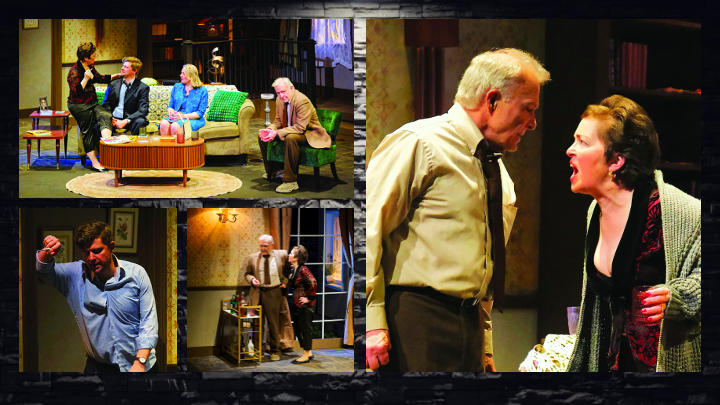
Stage Review - Who’s Afraid of Virginia Woolf
Presented By: Olympic Theatre Arts - Sequim, WA
Show Run: February 27 - March 15, 2026
Date Reviewed: Sunday, March 01, 2026 (Opening Weekend)
Run Time: 3 Hours, 15 Minutes (including 2, 10-minute intermissions)
Reviewed by: Greg Heilman
There’s a reason that few theatres include Edward Albee’s Who’s Afraid of Virginia Woolf? on their calendars. First and foremost, it’s long. As an audience member, it requires an investment of three hours for the play, plus the time it takes to get to the theatre. It becomes a full day—or a late night—depending on when you go. It also places a great deal of pressure on any organization willing to take it on. If you’re asking your audience to commit that kind of time, it needs to be worth it. Thankfully, Olympic Theatre Arts in Sequim has taken that challenge head-on and meets it with a production that rises to the demands of the material. Under the direction of Kyle LeMaire, and running through March 15, this is exactly the kind of venue where a play like this—intimate, language-driven, and emotionally volatile—can thrive or falter entirely on the strength of its performers. Here, that trust in the work and in the artists proves well placed.
First staged in 1962, Albee’s play quickly established itself as one of the defining works of American theatre, known for its unflinching look at marriage, illusion, and the stories we tell ourselves to survive. The play follows George and Martha, a long-married couple who invite a younger faculty member, Nick, and his wife, Honey, back to their home after a late-night gathering. What begins as casual conversation quickly spirals into a series of psychological games, emotional revelations, and increasingly blurred lines between truth and fiction. Over the course of a long night fueled by alcohol and resentment, the four characters navigate power, vulnerability, and the fragile constructs that hold their lives together.
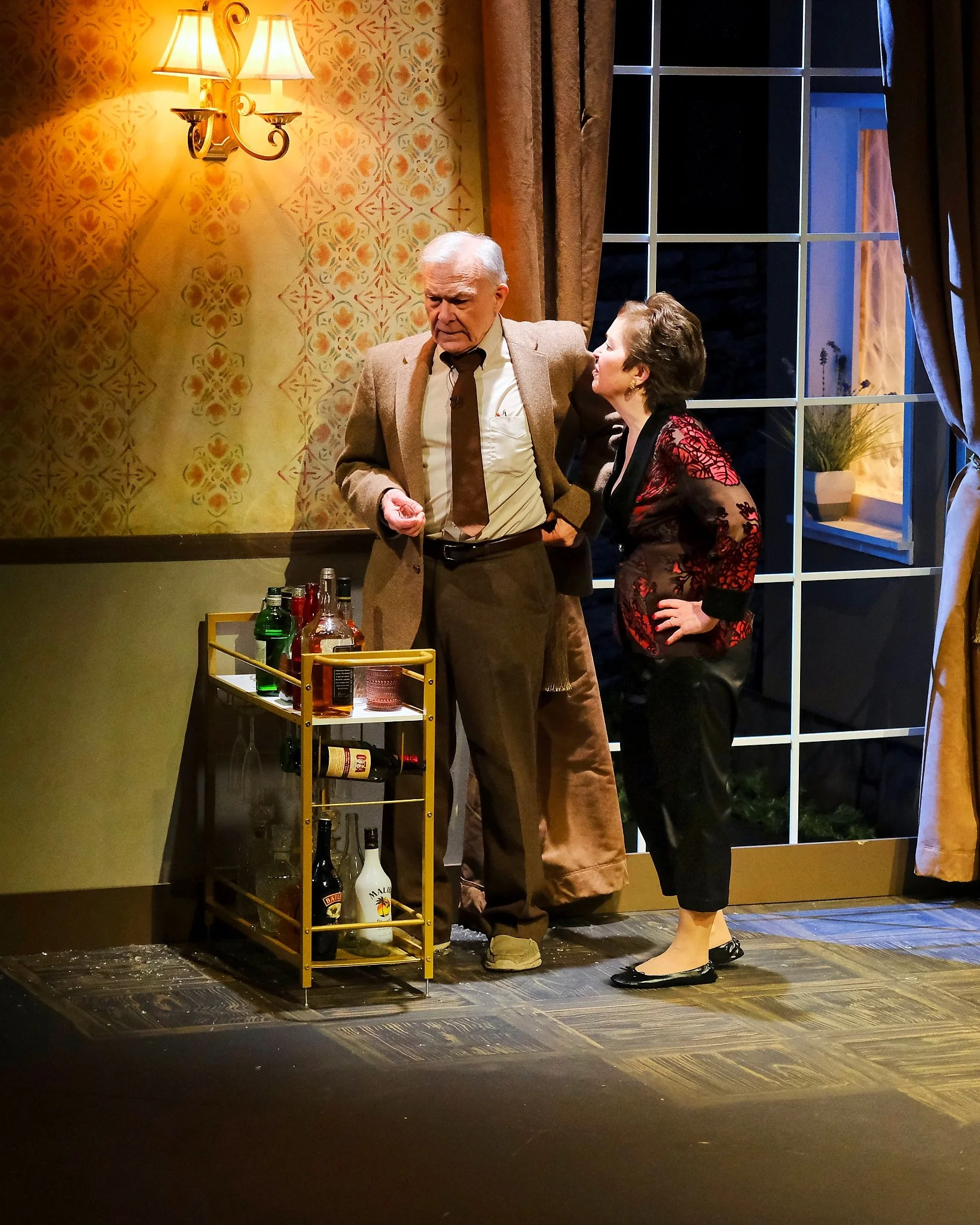
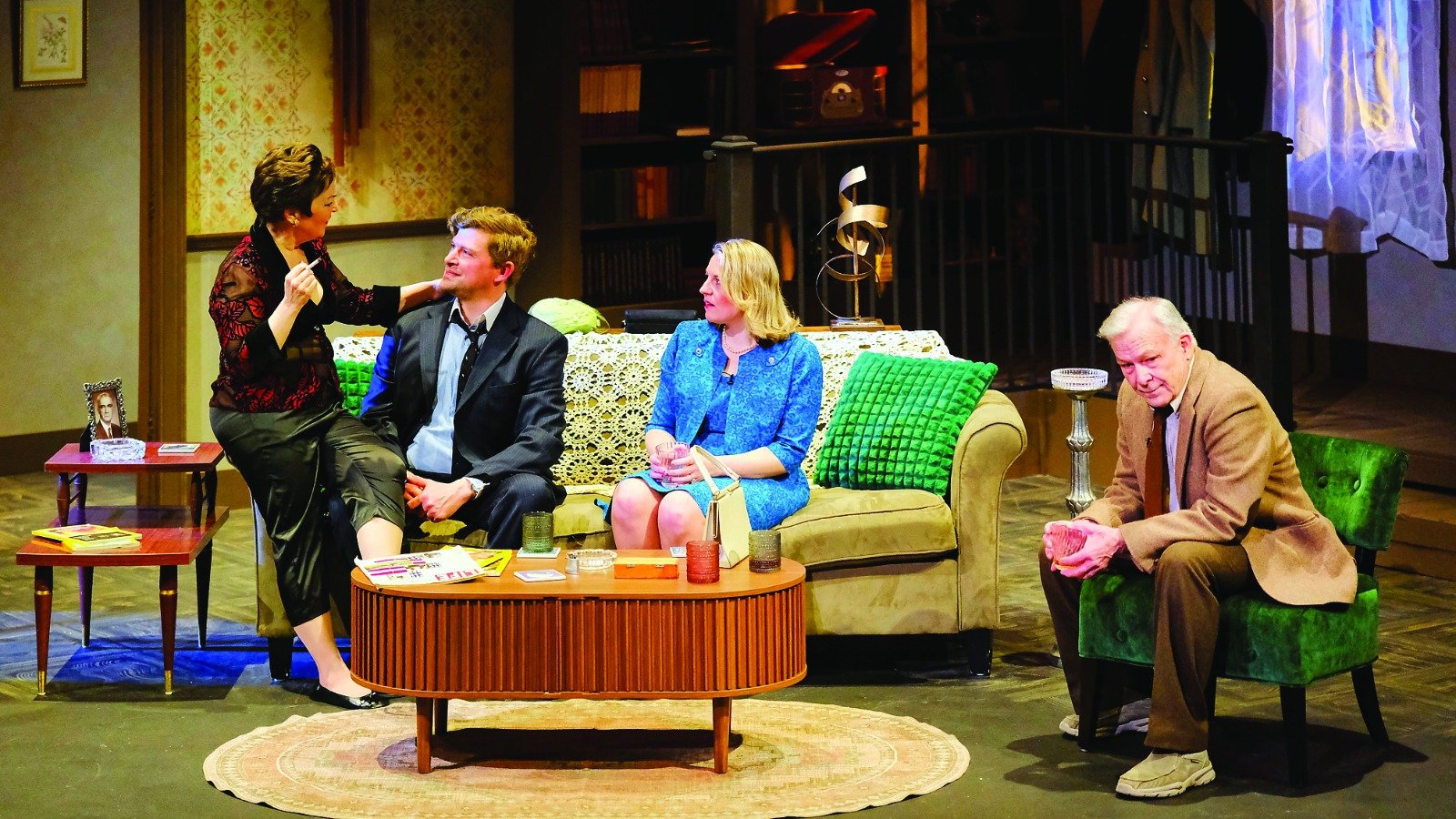
From the moment you enter, the scenic design establishes a world with a surprising amount of depth. Designed by Carol Willis, the set is richly detailed, filled with appropriate furnishings that ground the environment in a lived-in reality. The space feels complete without ever feeling cluttered, allowing the action to move fluidly while still giving a strong sense of place. That work is complemented nicely by the set dressing from Suzan Noyes and the larger crew, whose attention to detail is evident in every corner of the stage. Small touches—like the wall sconces and carefully chosen props—add texture without overwhelming the space, with props designer Diane Smith ensuring each item feels purposeful and authentic to the world of the play.
Lighting and sound, led by Becca Orozco, further enhance the atmosphere without drawing focus away from the performances. The choices here are subtle but effective, supporting shifts in tone and helping guide the audience through the emotional progression of the evening. Costuming by Alice Scavarda and Laurie Essex aligns well with the lived-in aesthetic of the production, reinforcing character without becoming a focal point, which is exactly what a piece like this requires.
At the center of it all are George and Martha, played by Vince Campbell and Joodie Klinke. Their dynamic is immediately defined, with Vince’s George bringing a particularly sharp edge to the role.
As much as it’s a risk for a theatre to take on this show, perhaps the risk is even greater for the actor. There is no hiding behind a large ensemble or behind lighter dialogue. There is a tremendous amount of text to navigate, and in order to deliver it in the way that Albee intended, and for it to land with its full impact, it requires more than memorization. It demands fluency. It demands that the actors live in these words. In this context, this cast of four is extraordinary. To a person, they leave nothing in the dressing room and bare their souls on stage.
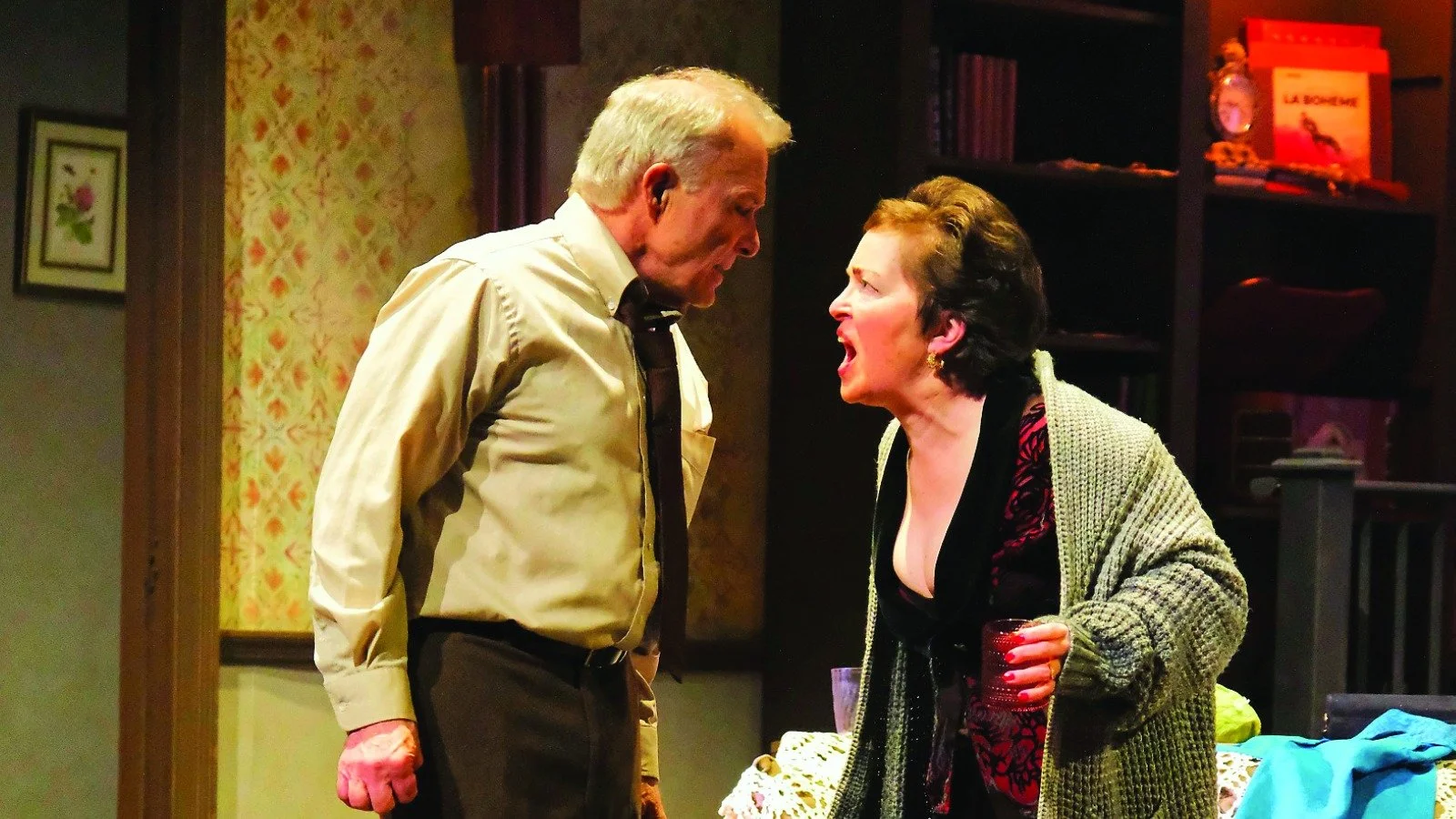
Vince is enveloped in this role and is masterful in his delivery. His dialogue, his movement, and his mannerisms all align with what makes George such a compelling and complex character. It is one of the most impactful portrayals of the role I’ve seen since Richard Burton’s performance in the 1966 film opposite Elizabeth Taylor. Opposite him, Joodie is the perfect foil, the pair’s chemistry simply off the charts. Their barbs land with furious intent and devastating impact, creating moments that feel as raw as they are precise. These performances feel lived in, and by the time the final moments arrive, the exhaustion visible during bows is not only understandable—it’s earned.
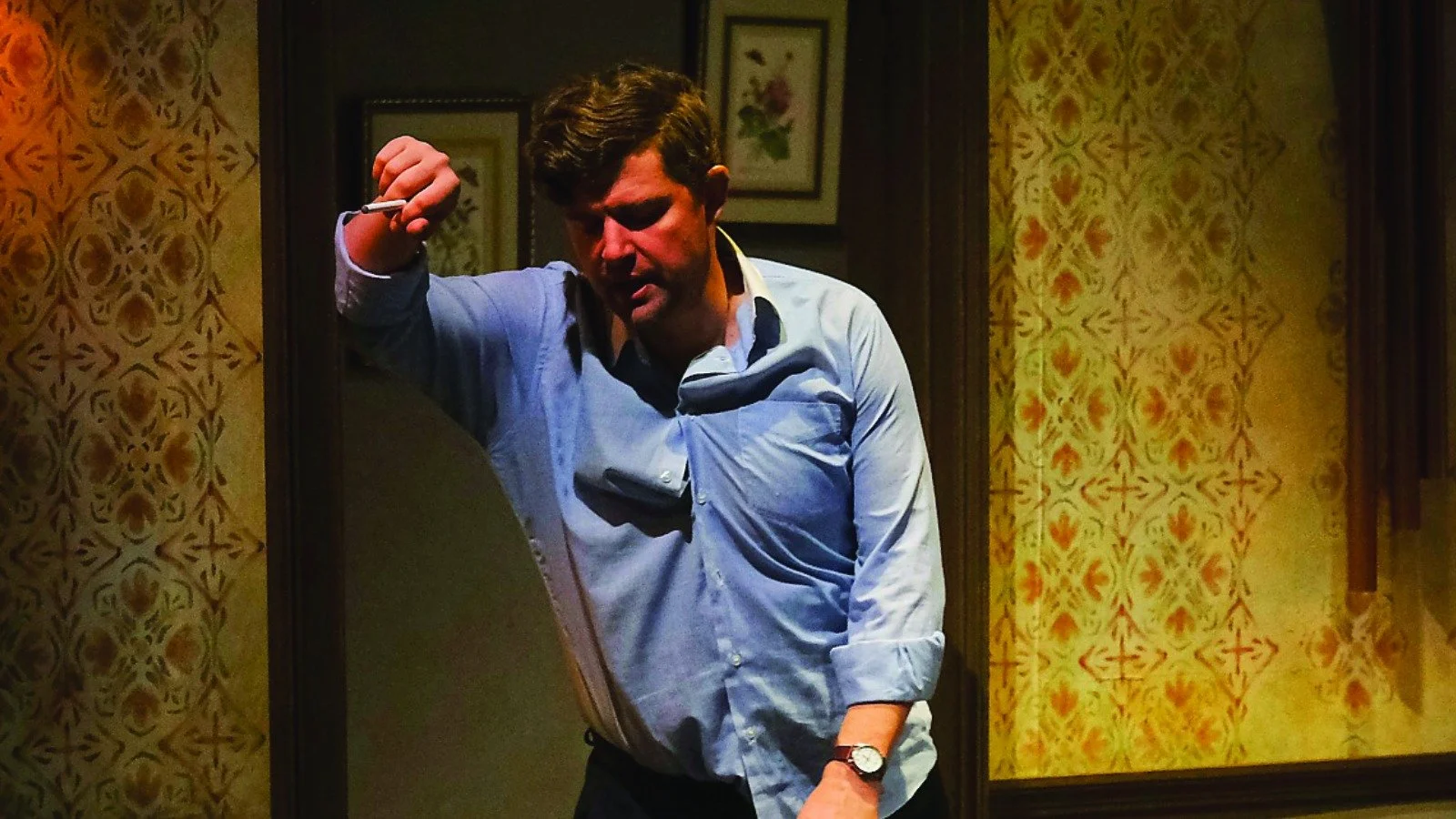
Opposite them, Colby Thomas and Courtney Thomas step into the roles of Nick and Honey, the younger couple drawn into George and Martha’s orbit. There’s an intentional awkwardness to their interactions, particularly early on, that plays effectively against the more established dynamic of the older couple.
Both roles require a significant transformation over the course of the evening, and it’s one that Colby and Courtney navigate with clarity and control. They enter as sober, nervous, and more than a bit awkward, but as the drinks continue to flow—and continue to flow—the awkwardness begins to fall away. In its place comes confidence, lowered inhibitions, and a very different dynamic between the two. As this shift takes hold, the audience travels right alongside them, drawn into the unfolding exploration of hidden secrets and increasingly blurred reality. Colby and Courtney are just as effective in portraying these shifts as Vince and Joodie are in navigating the emotional complexity of George and Martha.
What makes that transformation even more compelling is the contrast it creates. While Nick and Honey visibly change under the influence, George and Martha remain largely unaffected by the sheer quantity of alcohol they consume. It suggests that what we’re witnessing from them isn’t a one-off evening fueled by circumstance, but something far more ingrained—patterns of behavior that exist well beyond this particular night.
As the evening unfolds and inhibitions continue to slip, Colby’s performance takes on greater confidence and control. The progression feels intentional, with each shift in tone and intensity building naturally into the next. In moments of confrontation, he finds a strong balance—allowing frustration and bravado to surface without letting either overwhelm the character. Courtney, meanwhile, continues to shape Honey’s unraveling with precision, revealing layers that move beyond initial awkwardness into something far more revealing. The choices made here give clarity to Honey’s arc, turning what could be a passive presence into one that quietly contributes to the unraveling dynamic at play.
What stands out across the ensemble is an understanding of how crucial timing and comfort with the language are in this piece. Albee’s dialogue can easily become dense or unwieldy, but here it flows with intention, the cast consistently working to maintain clarity and forward momentum.
Kyle’s staging makes effective use of the space, particularly in later moments of the play. A sequence near the end, where action is partially conveyed through a window into a darker adjoining room, is especially effective—allowing the audience to witness the emotional climax from a slight remove, which adds to its impact rather than diminishing it.
This is the kind of production that reminds you why companies continue to take on a play like Who’s Afraid of Virginia Woolf? despite its demands. It asks a great deal—of its performers, its designers, and its audience—and in return, it offers an experience that lingers. Olympic Theatre Arts has embraced that challenge with a clear understanding of what makes this piece work: trust in the text, commitment to the performances, and a design that supports rather than competes. The result is an evening that doesn’t just justify its length, but earns it, delivering a story that is as uncomfortable as it is compelling, and one that stays with you well after the final moment fades to black.
Who’s Afraid of Virginia Woolf runs on stage at Olympic Theatre Arts Center through March 15. For more information, including ticket availability and sales, visit https://www.olympictheatrearts.org/.
Photo credit: Mark Klinke