
Stage Review - The Normal Heart (Lakewood Playhouse)
Stage Review - The Normal Heart
Presented By: Lakewood Playhouse - Lakewood, WA
Show Run: February 20 - March 08, 2026
Date Reviewed: Saturday, February 28, 2026
Run Time: 2 Hour, 20 Minutes (including a 15-minute intermission)
Reviewed by: Greg Heilman
There is something truly special happening in the small town of Lakewood. Tucked into an unassuming corner, nestled among shops and restaurants, sits Lakewood Playhouse—a space that, if you’ve followed my reviews over the past year, has been undergoing a remarkable metamorphosis. That evolution, spearheaded by Producing Artistic Director Joseph C. Walsh, has transformed this intimate venue into a place where some of the most important stories in our region are being told. And they’re being told in a way that feels increasingly rare—without spectacle, without excess, and without distraction. Simple sets. Thoughtful staging. Productions that rely on actors to transport audiences into spaces filled with reflection, discomfort, and, ultimately, understanding. I thought that transformation may have reached its peak with last season’s The Laramie Project, a production that earned The Sound on Stage’s award for Best Ensemble in a Play. But after experiencing The Normal Heart, now on stage through March 8 and also directed by Joseph, it’s clear that conclusion was premature.
The Normal Heart takes us back to the early 1980s, to the beginning of what would become the AIDS epidemic—a time when the virus was still unnamed, only beginning to be understood, and already devastating communities. It was a world without cohesion, where gay men, lesbians, and others within the queer community often existed in separate silos, divided as much by perception and identity as by circumstance. It was a time shaped by the absence of codified equal rights and fueled by fear—fear of the unknown, fear of the other, and fear that quickly turned to blame. If you’re looking for a modern parallel, think back to the early days of COVID—then multiply that uncertainty tenfold and layer on a society eager to assign fault based solely on identity. That only begins to scratch the surface of what’s explored here. And while we’ve come a long way since then, the play quietly asks whether we’ve come far enough. There is still no cure. Equality remains an ongoing fight. And understanding—true understanding—still feels just out of reach in many spaces.
This is an angry play. It’s a heartbreaking play. And it’s an essential one—shining a light on a movement that fought not just for survival, but for recognition, dignity, and the right to exist openly. It’s difficult to imagine the world we live in now without the voices represented here, even as many continue to live in the shadows. Joseph’s vision for this piece mirrors the approach that made The Laramie Project so effective. Keep the design elements simple. Let them support the storytelling when needed, but never overshadow it. Place the focus squarely on the performers and give them the space to fully inhabit the work. That trust in the ensemble is what defines Joseph’s direction. He allows his actors to be vulnerable—to open themselves completely to the material and to the audience. The result is a production that feels immediate, deeply human, and consistently engaging. It’s also what continues to solidify Lakewood Playhouse as one of the true hidden gems in our theatre community.
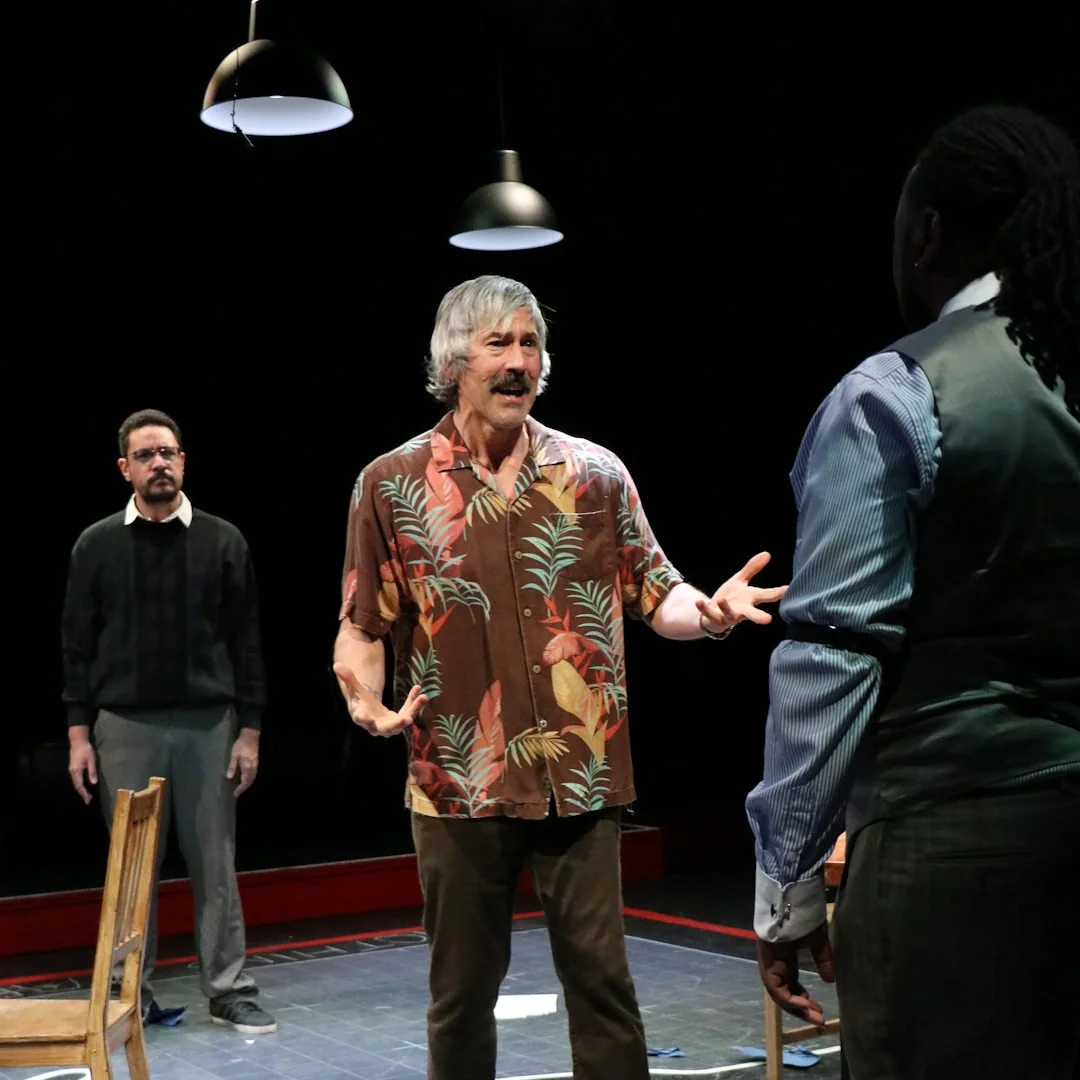
From that foundation, The Normal Heart unfolds with a clarity and purpose that feels both grounded in its historical moment and strikingly relevant today. At the center of it all is Ned Weeks, portrayed by John Pedro, who leans fully into the physical demands of the role. This is a performance that lives in the body as much as in the text—his posture, his movement, even the way he plants himself in a space all speak to a man driven by urgency. There are moments where that urgency tightens into rigidity, where anger shapes the delivery in a way that can feel slightly forced, but that tension ultimately serves the character. Ned isn’t meant to be easy. He’s meant to push—others, and the audience. That push finds its most compelling counterpoint in Luke Amundson’s Ben Weeks. Their Act 2 confrontation stands as one of the production’s strongest moments, capturing two brothers circling the same truth from entirely different vantage points. There’s a weight to the scene—anger, yes, but also a deep frustration rooted in an inability to truly understand one another. It’s a difficult exchange, and both actors meet it head-on.
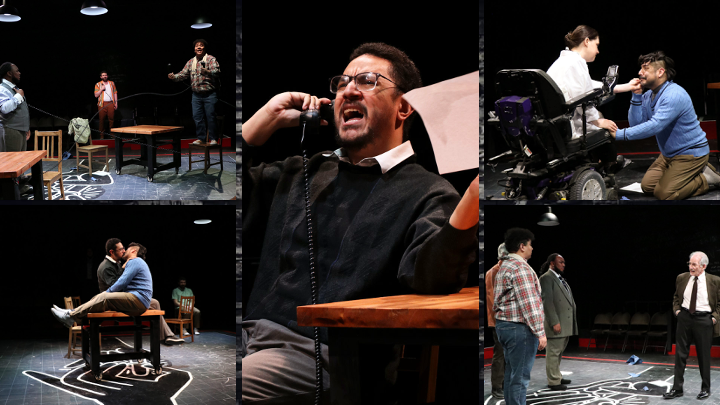
Elsewhere, the relationships that shape Ned’s world are given room to resonate. Sergio Antonio Garcia’s Felix provides a welcome contrast, bringing warmth and openness that soften the sharper edges of Ned’s intensity. Their connection becomes one of the emotional anchors of the piece, making the later moments of illness and loss land with quiet force. Those scenes, underscored by Rob Archibald’s restrained, mournful music, hold the audience in a stillness that speaks volumes. Jason Sharp’s Mickey offers another essential perspective, particularly in a monologue that captures the fear and uncertainty of the early epidemic. It’s a moment that feels strikingly contemporary—echoing the confusion and speculation of more recent global crises. What might seem easy to judge in hindsight is presented here with clarity and humanity. Gina D. Grosso’s Dr. Emma Brookner brings both authority and urgency, cutting through the noise with a voice that demands to be heard, while Joseph Grant’s Hiram Keebler embodies the frustration of institutional resistance. It’s not played as overt antagonism, but rather as something more insidious—bureaucratic detachment in the face of a mounting crisis.
Joseph’s staging makes effective use of the space, with actors often positioned along the periphery, observing even when not directly involved in a scene. It reinforces the sense of community while simultaneously highlighting isolation. It also allows the audience to feel each other in the room, reactions traveling across the space in a way that deepens the shared experience. The design supports that approach with intention. Shawn Boyle’s scenic work remains minimal, allowing the actors to carry the narrative. Elijah Bellis’s lighting design shifts fluidly between subtle, atmospheric tones and stark, clinical brightness, particularly in hospital scenes where the emotional weight is at its peak. Combined with Archibald’s music, these moments settle into a stillness that holds the audience completely. There’s also a great deal of care evident in the intimacy and movement work by Brookelyne Peterson. These moments are handled with sensitivity and purpose, ensuring vulnerability feels authentic and fully supported.
What ultimately emerges from this production is a portrait of a community—fractured at times, divided in its approach, but bound together by urgency and necessity. The play doesn’t shy away from those internal tensions, whether in debates over how to respond, who should speak, or how openly one should live. And that may be what lingers most. The Normal Heart doesn’t just ask us to remember a moment in history—it asks us to consider how we respond when history is happening in real time. In this production at Lakewood Playhouse, that question lands with clarity, honesty, and a quiet but undeniable weight. As we say at The Sound on Stage, every stage deserves a spotlight—but some stories demand it.
The Normal Heart runs on stage at Lakewood Playhouse through March 8. For more information, including ticket availability and sales, visit https://www.lakewoodplayhouse.org/.
Photo credit: Ashley Roy-Simpson