
Stage Review - The Mountaintop
Presented By: Tacoma Little Theatre - Tacoma, WA
Show Run: April 24 - May 10, 2026
Date Reviewed: Friday, April 24, 2026 (opening night)
Run Time: 95 minutes (plus a 15-minute intermission)
Reviewed by: Greg Heilman
If you walk into Tacoma Little Theatre to see their current production of The Mountaintop, running through May 10, and expect to see the Martin Luther King, Jr. you’ve grown accustomed to in history books or biopics, you’re going to be just a bit disappointed. This play, a hypothetical recounting of the civil rights leader’s final night, aims to show Dr. King as flawed, scared, and all too human. Directed by Jalen C. Penn, the production brings the audience into Room 306 of the Lorraine Motel on April 3, 1968, the day before King was assassinated, and supposes what would happen if he were joined by an otherworldly figure, disguised as a motel maid, whose job it is to prepare him to cross over into the next plane of existence. The play offers a view into King’s psyche as someone about to leave so much work undone, while also framing his death as a necessary passing of responsibility—a call to action that ultimately lands on us as an audience.
The concept is a strong one. Dr. King was, after all, just a human being, and if he could have the kind of impact in his too-short life that he did, there’s an implication that others can as well. But as the play explores, that kind of impact comes at a cost. The ultimate message—that progress is not the responsibility of one individual, but of all of us—is where the piece finds its greatest strength. At the same time, the script itself is not without its challenges. Premiering in 2009, it carries with it a perspective shaped by that moment in time. In the years since, the cultural and political landscape has shifted in ways that inevitably affect how the play is received. The sense of hope embedded in the script, and rooted in a time just after America elected its first Black President, still resonates, but there are moments where a more contemporary framing of that call to action might deepen its impact for a 2026 audience. There’s also a tension in how the play approaches its central figure. While it aims to humanize King, it doesn’t always balance that with the sense of dignity one might believe he deserves, and that absence can create a disconnect, particularly given the weight of who he was and what he represents.
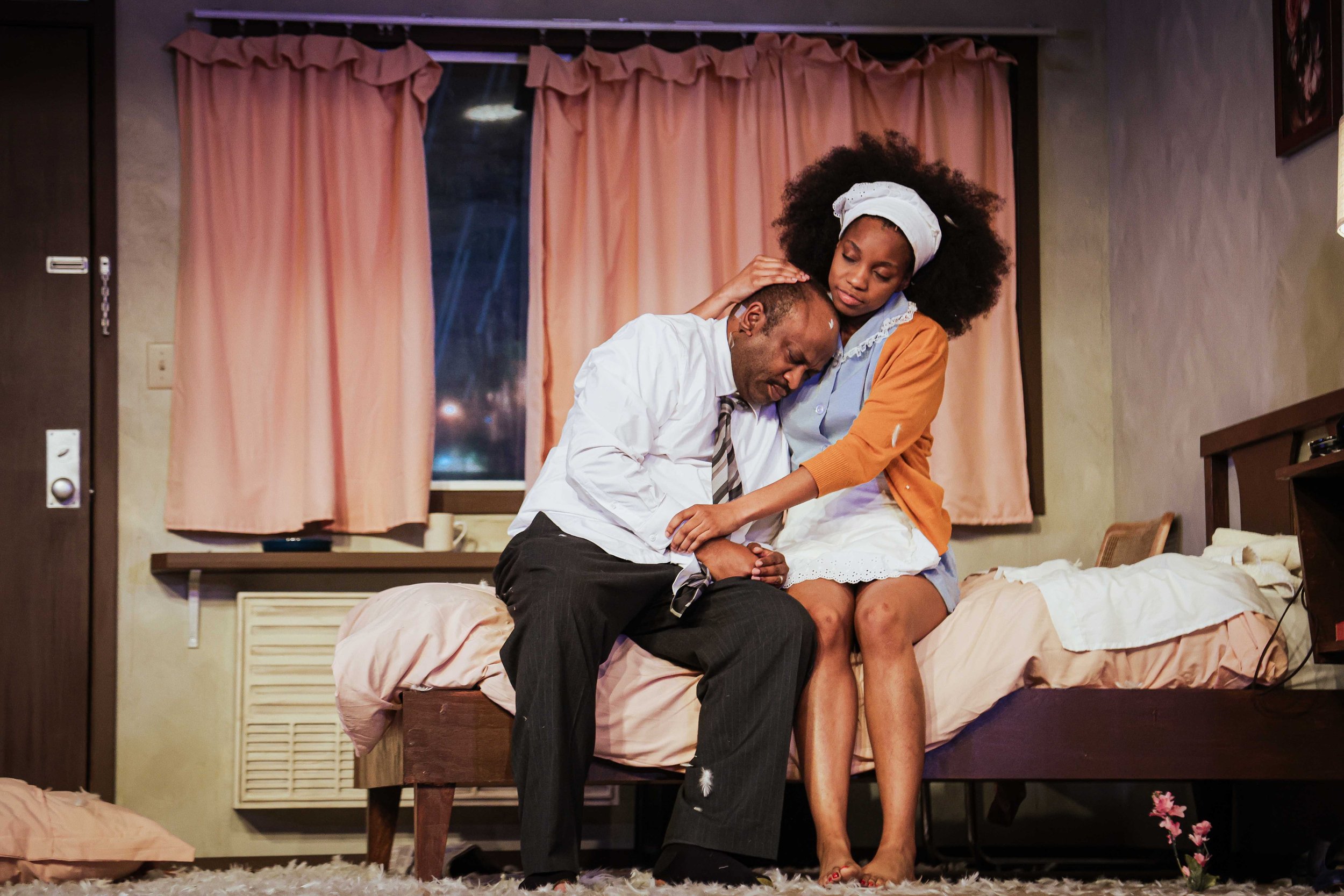
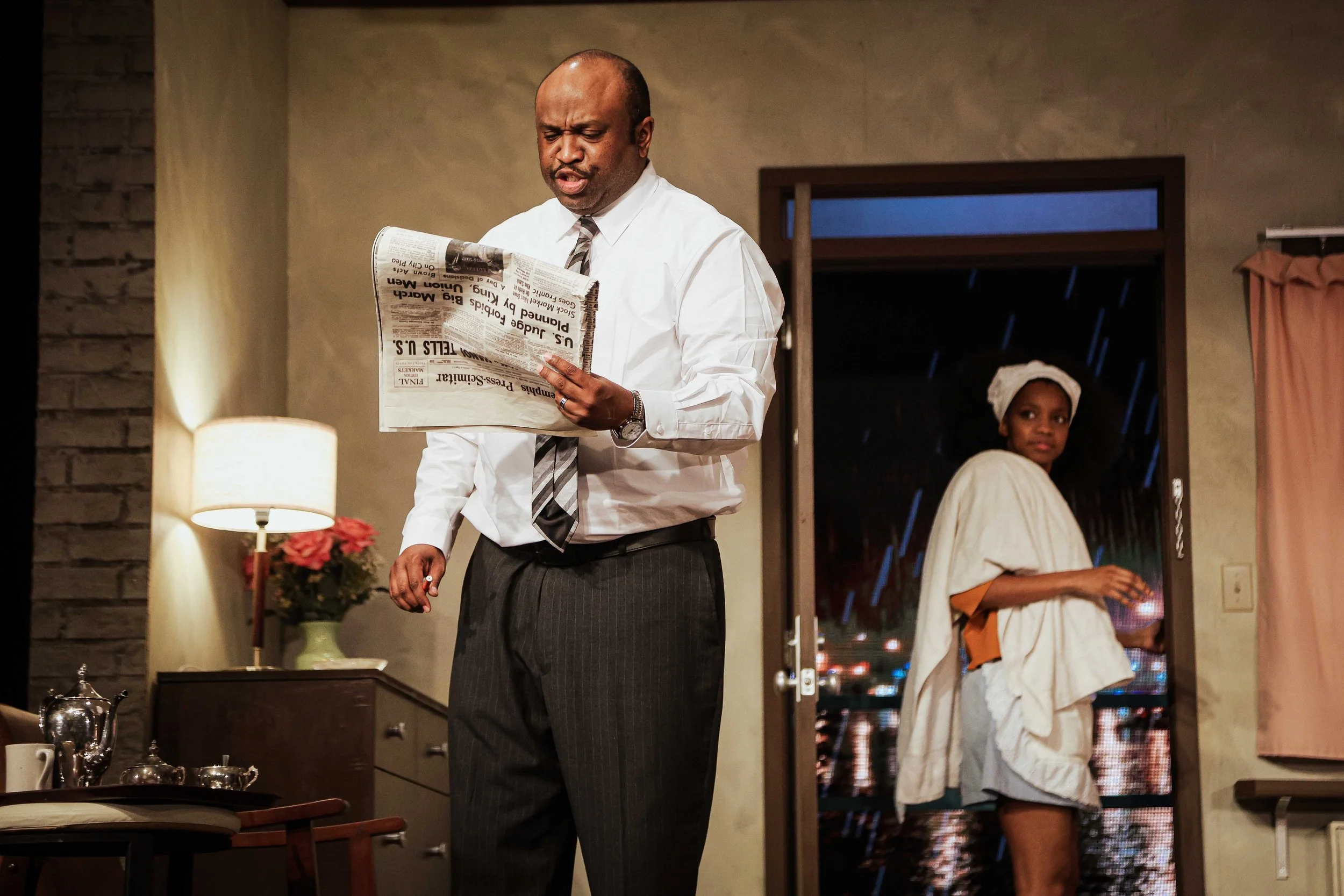
All of that said, where the play falls short in its script, it excels in its production. Scenic designer Blake R. York’s depiction of the motel room, in concert with Chandler T. Thomas’ work with costumes and properties, establishes the world of this two-person drama with clarity and intention. After its first impression, Blake’s environment continues to support the action without drawing attention away from it, while Chandler’s detailed prop work adds an authenticity that resonates from start to finish.
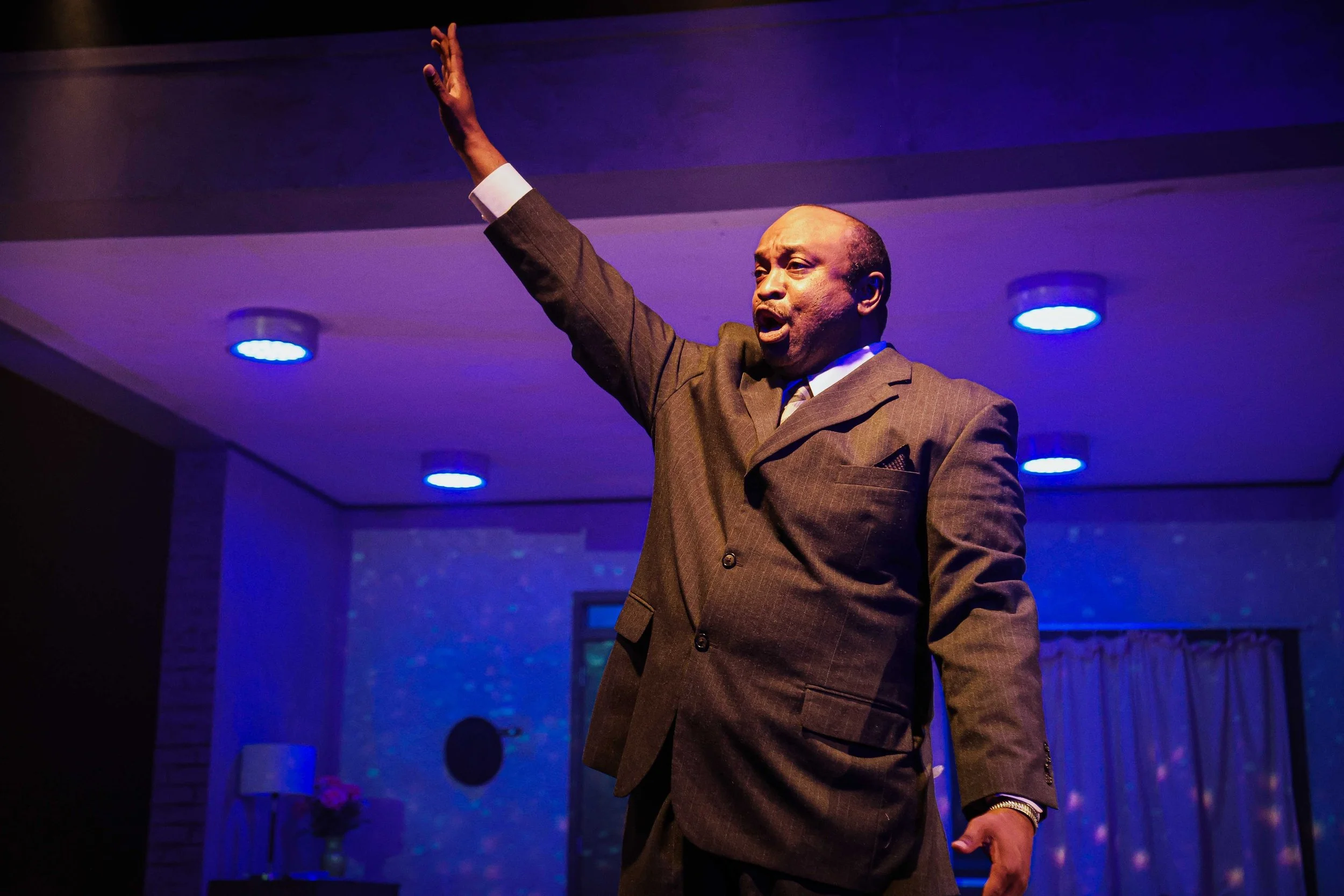
The strongest element of the design, though, comes from Elijah Bellis’ lighting. Elijah creates a yellowed, almost weary wash that immediately places us in a grungy motel room as King enters, then transitions into a brighter white as the action unfolds, then into deeper reds and purples that heighten the presence of something beyond the natural world. These shifts do more than set a mood—they guide the audience through the play’s emotional and supernatural progression. That work is elevated further through Dylan Twiner’s sound design. Dylan builds a thunderstorm that doesn’t simply sit in the background, but actively shapes the tension of the piece. Each crack of thunder and flash of lightning is timed with precision, sending King to the floor in anticipation of what he knows is coming, while also drawing a visceral reaction from the audience. At one point, the effect is sharp enough to make the entire house jump, a shared moment that speaks to just how effective the design is.
The best example of the coming together of these design elements are in its thunderstorms, a familiar device in dramatic theatre, but the way Elijah and Dylan execute it here stands out. It becomes more than atmosphere—it’s storytelling. The storm mirrors King’s internal state, amplifies the stakes, and propels the narrative toward its inevitable conclusion. From a tension and shock standpoint, it’s one of the more effective uses of the trope you’re likely to see, and a clear highlight of the production.
In The Mountaintop, it’s the performances that ultimately make the production work. At the center is DuWayne Andrews, Jr. as Dr. Martin Luther King, Jr. DuWayne leans into the play’s interpretation of King as a man under immense pressure, revealing moments of vulnerability, frustration, and even humor. He does particularly strong work in the quieter, more human moments, allowing the audience to see the weight King is carrying, but it’s when DuWayne taps into the passionate side of the civil rights leader that the performance truly takes off. In those moments, he brings a clear intensity that serves as a reminder of King’s power in both speech and action, grounding the portrayal in something recognizable even within the play’s more speculative framework.
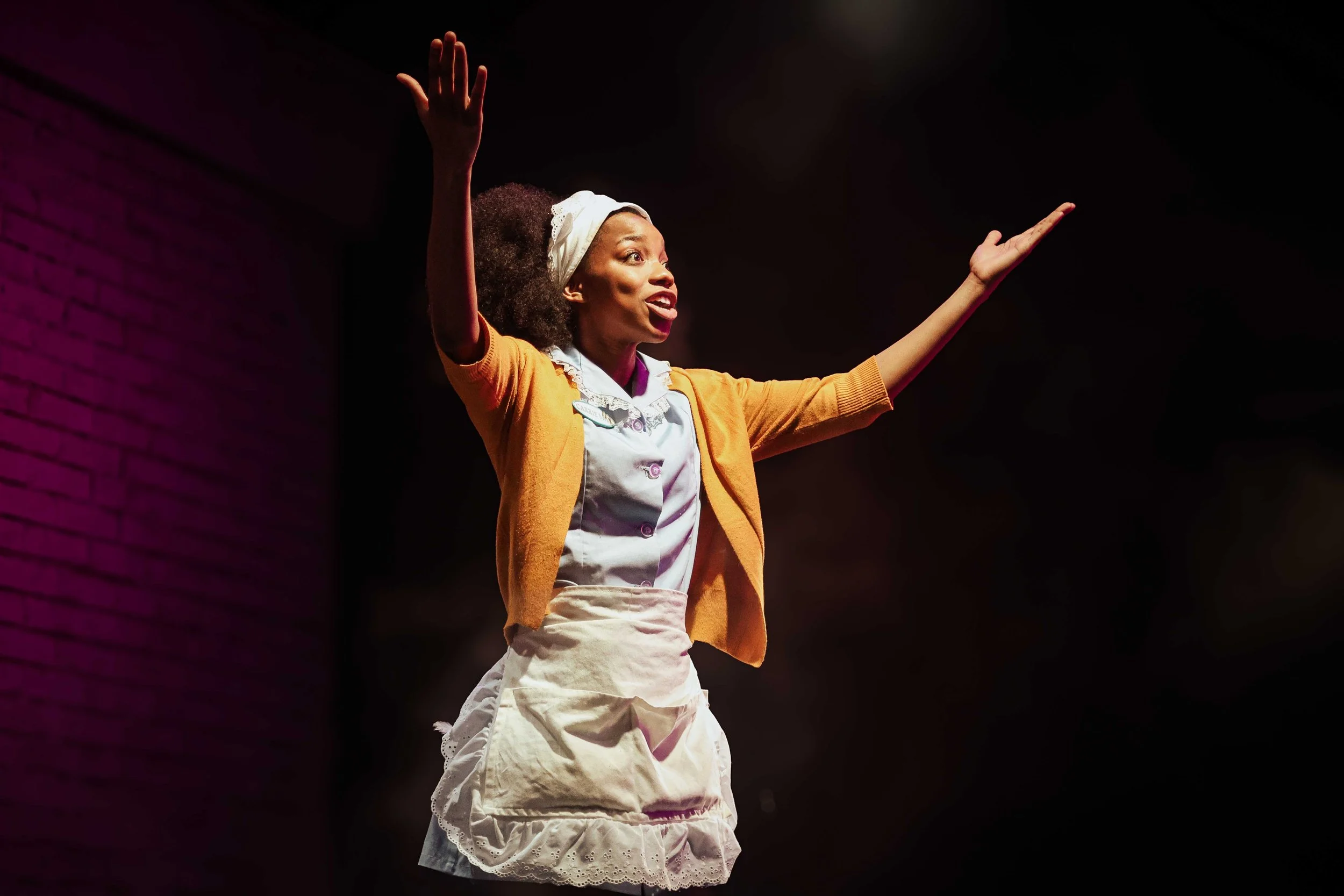
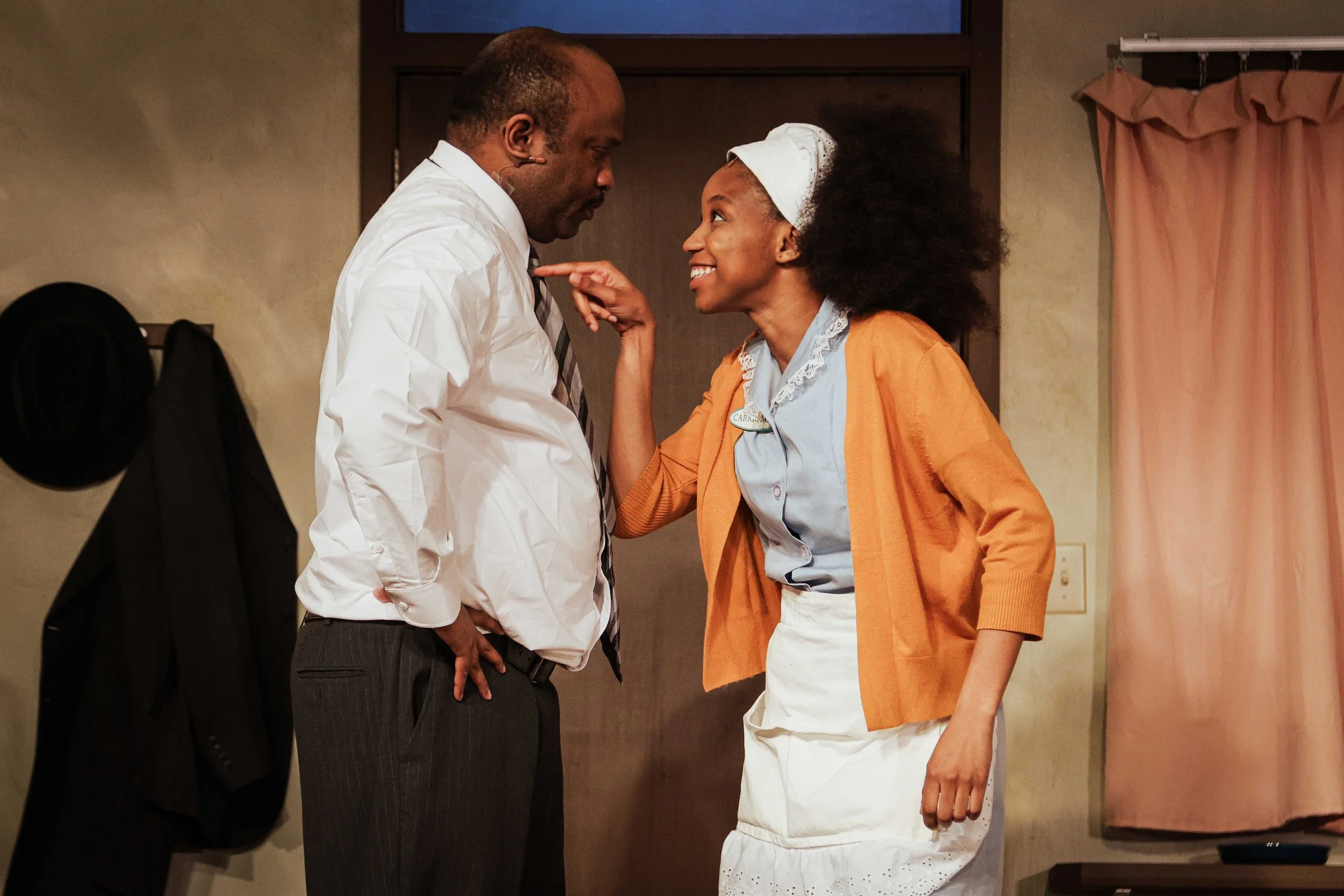
Opposite him, Ibri Brooks as Camae delivers a performance that is both dynamic and essential to the production’s success. Ibri’s intentions are not immediately clear, but it doesn’t take long for the audience to sense that something about Camae is different. How does she happen to have the exact brand of cigarette that King smokes? In a moment of near recognition, DuWayne plays a brief hesitation—a pause where the thought almost clicks into place before being pushed aside. It’s a subtle, effective choice that puts the audience a step ahead, heightening the intrigue. For Ibri, Camae is flirty, challenging, and resolute with a strength that becomes increasingly evident as the play unfolds. Especially in the second act, Ibri brings a commanding presence to the role, revealing a deeper purpose that anchors the play’s more abstract elements and gives weight to the character’s ultimate function.
As the play moves into that second act, the interplay between DuWayne and Ibri becomes more pronounced, and the stakes of the narrative come into sharper focus. The room begins to feel less like a place of rest and more like a threshold, with design elements and performances working together to reflect that transition. The imagery of barriers breaking down—both literal and emotional—culminates in a sequence that relies heavily on projections and lighting to convey the weight of what lies ahead. It’s a moment that underscores the production’s strongest attribute: its ability to use design in service of the story.
This production of The Mountaintop does very well in presenting the play’s central question—what does it mean to carry forward the work of someone like Dr. King?—even as it wrestles with how that question is framed. The performances and design create a compelling theatrical experience, one that invites reflection and conversation. While the script’s perspective may feel at odds with a modern audience in places, the production itself remains engaging, asking us not just to consider the legacy of one man, but what responsibility we each bear in continuing it.
The Tacoma Little Theatre production of The Mountaintop runs on stage through May 10. For more information, including ticket availability and sales, visit https://www.tacomalittletheatre.com/.
Photo credit: Dennis K. Photography