
Stage Review - The Outsider
Presented By: Tacoma Little Theatre - Tacoma, WA
Show Run: August 28 - September 13, 2026
Date Reviewed: Friday, August 28, 2026 (Opening Night)
Run Time: 2 Hours, 15 Minutes (including a 15-minute intermission)
Reviewed by: Greg Heilman
I don’t think it’s a stretch to say that our current political landscape can often feel anything but laughable. In this environment, there is something wonderfully cathartic about finding a way to express our collective frustration about it through humor. Paul Slade Smith’s The Outsider does exactly that, taking the absurdities of campaigning, political messaging and the collective search for authenticity and turning them into two acts of increasingly ridiculous comedy. Yet beneath the farce and the laughter is a surprisingly thoughtful examination of our democracy itself. Directed by Jed Slaughter, The Outsider is on stage at Tacoma Little Theatre through September 13.
The premise begins with a political disaster. Ned Newley has unexpectedly become governor of a small state after his predecessor resigns in scandal. The problem is that Ned may be one of the least naturally political politicians imaginable. He is intelligent and very capable behind closed doors, but put him in front of people, and even more-so a camera, and virtually every recognizable human skill disappears. His equally frantic Chief of Staff, Dave Riley, isn’t much better at presenting the administration to the outside world. Into the chaos comes political consultant and pollster Paige Caldwell, followed shortly thereafter by CNN personality and self-proclaimed idea man Arthur Vance, who sees something potentially valuable in Ned’s shortcomings. In an electorate hungry for something different, Arthur is willing to put everything on the line, banking that the governor’s complete inability to behave like a politician is the wildcard he’s been looking for.
Smith’s comedy in the way it continually changes the audience’s perception of who is competent and who isn’t. At first, both Ned and Dave appear hopelessly unqualified for their positions. Gradually, the opposite becomes apparent. They are actually extremely capable of doing the work of governing; they simply have no idea how to perform politics for public consumption. It’s an important distinction, and much of the play’s satire grows from the increasingly obvious divide between being good at governing and being good at getting elected. The premise reminds me of the line from Hamilton, “Winning is easy, young man, governing’s harder”.
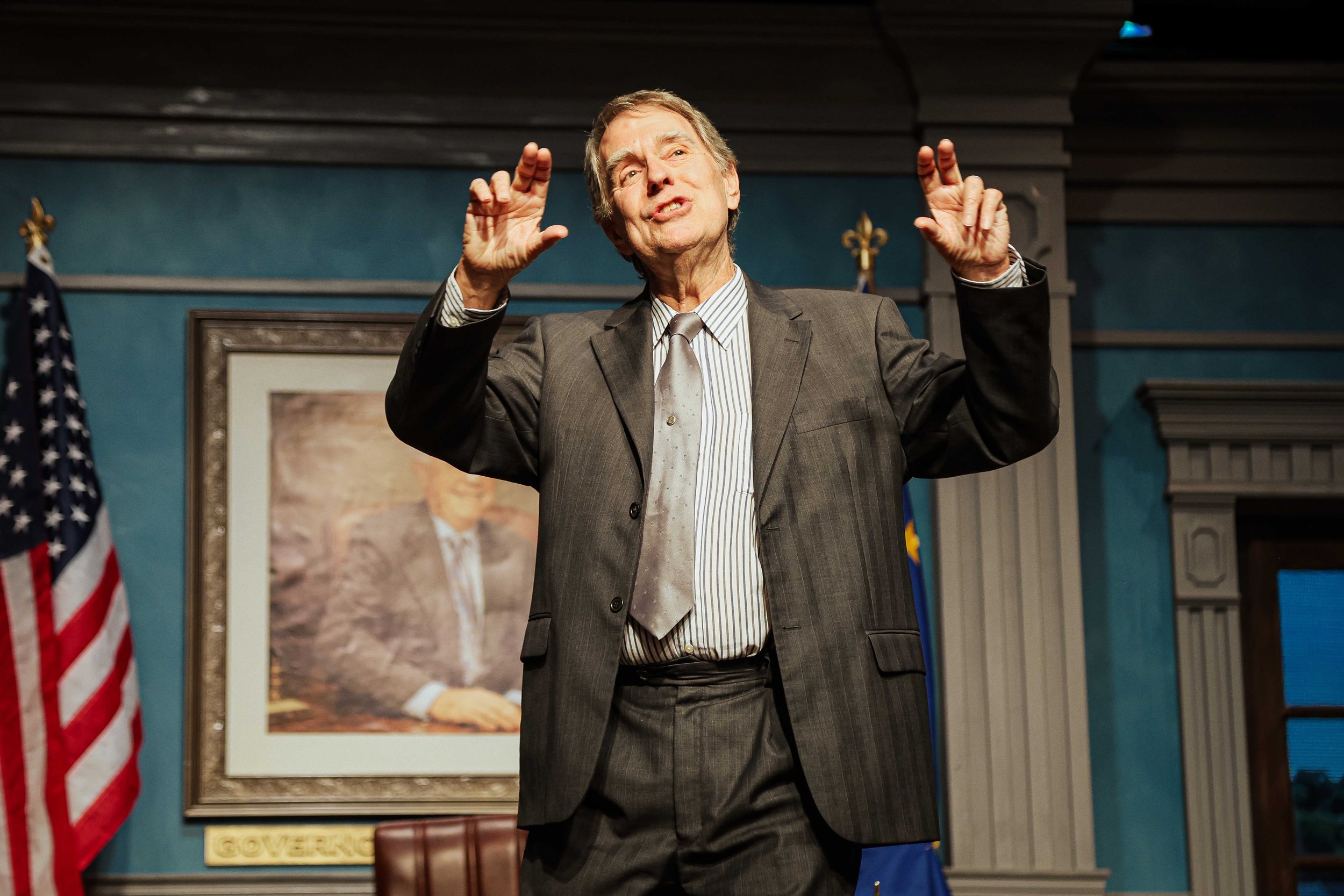
John Short finds that contradiction beautifully as Ned. Around other people, Ned can appear almost buffoonish, uncomfortable in his own skin and hopelessly ill-equipped for the ceremonial and performative aspects of his new office. Yet when the public pressure disappears, another Ned emerges, smart, articulate and thoughtful, someone who understands both government and the responsibility that comes with his position. John allows those seemingly contradictory versions of the character to coexist, making Ned’s transformation less about becoming something new than allowing everyone else to discover what was already there.
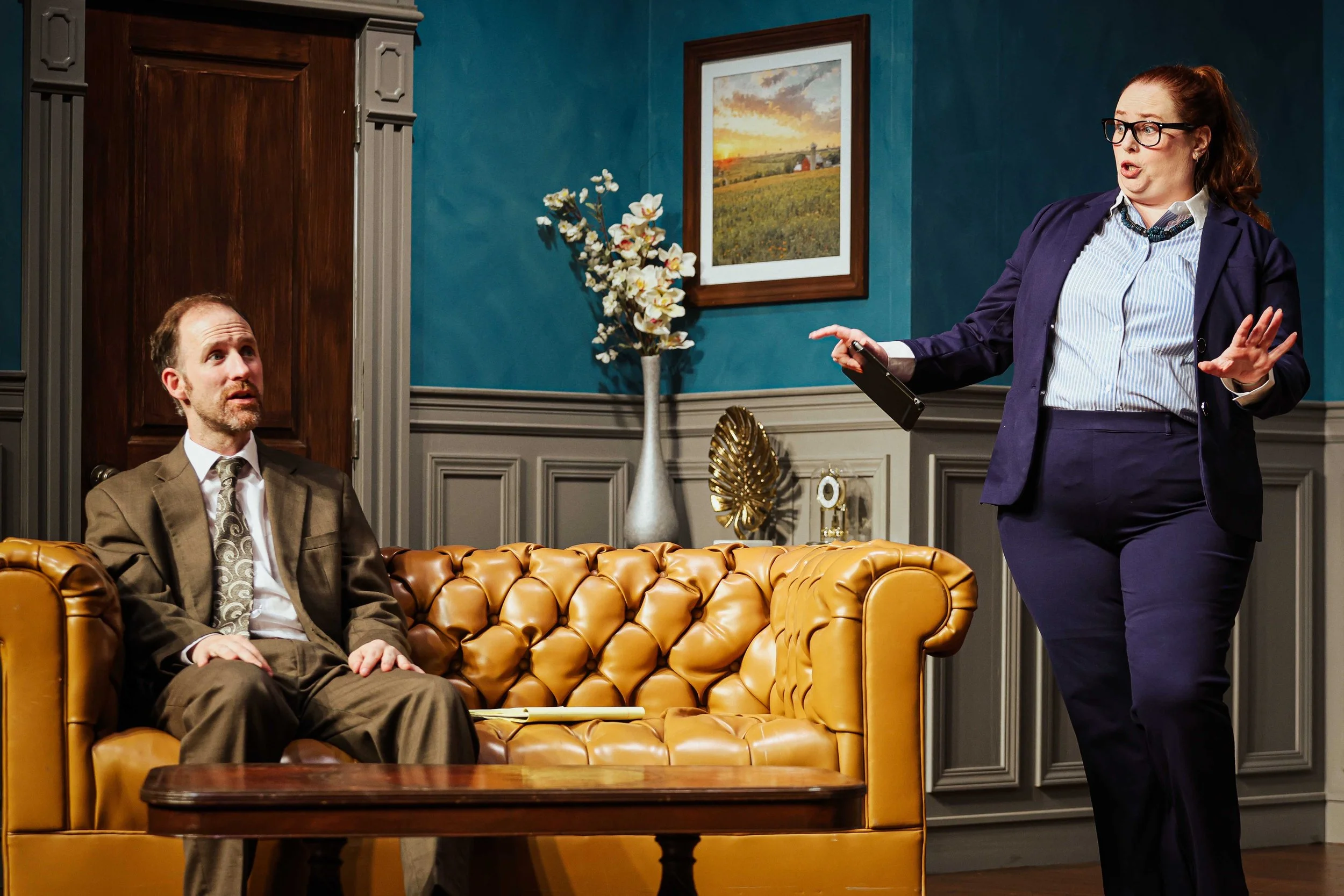
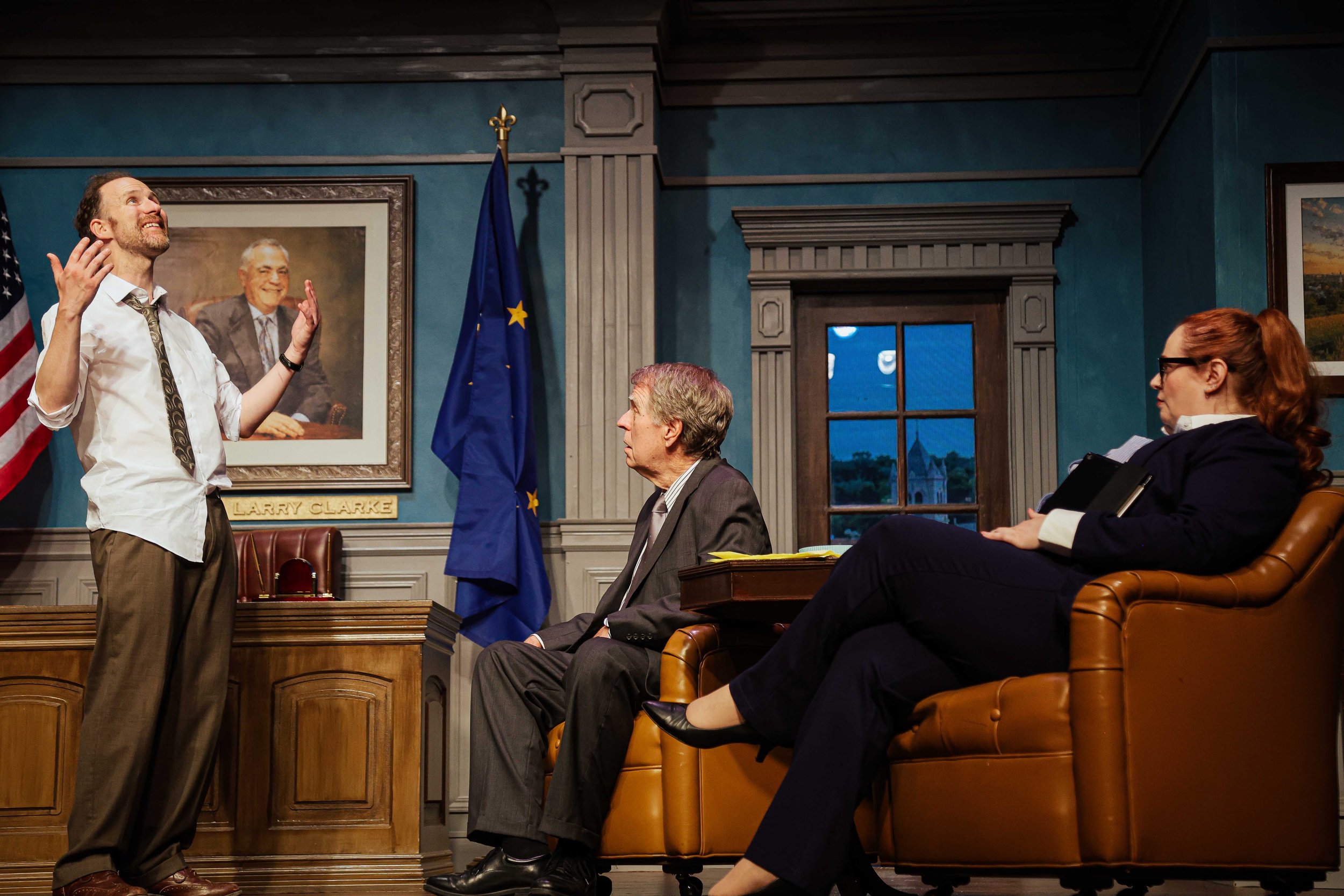
As the newly appointed Governor’s right hand man, Andrew Harker-Rigal has an entirely different comic journey as Dave. Dave has never worked for a candidate who actually won, which means he enters virtually every interaction conditioned to expect catastrophe. Even success looks suspicious. As events become increasingly unpredictable, Andrew lets Dave’s panic build incrementally until it seems to consume him. His physical appearance follows the same trajectory, becoming progressively more disheveled from scene to scene as though the stress of the administration is literally dismantling him. The escalation is wonderfully funny, particularly because Dave’s anxiety exists alongside the realization that, beneath all that panic, he actually knows what he’s doing.
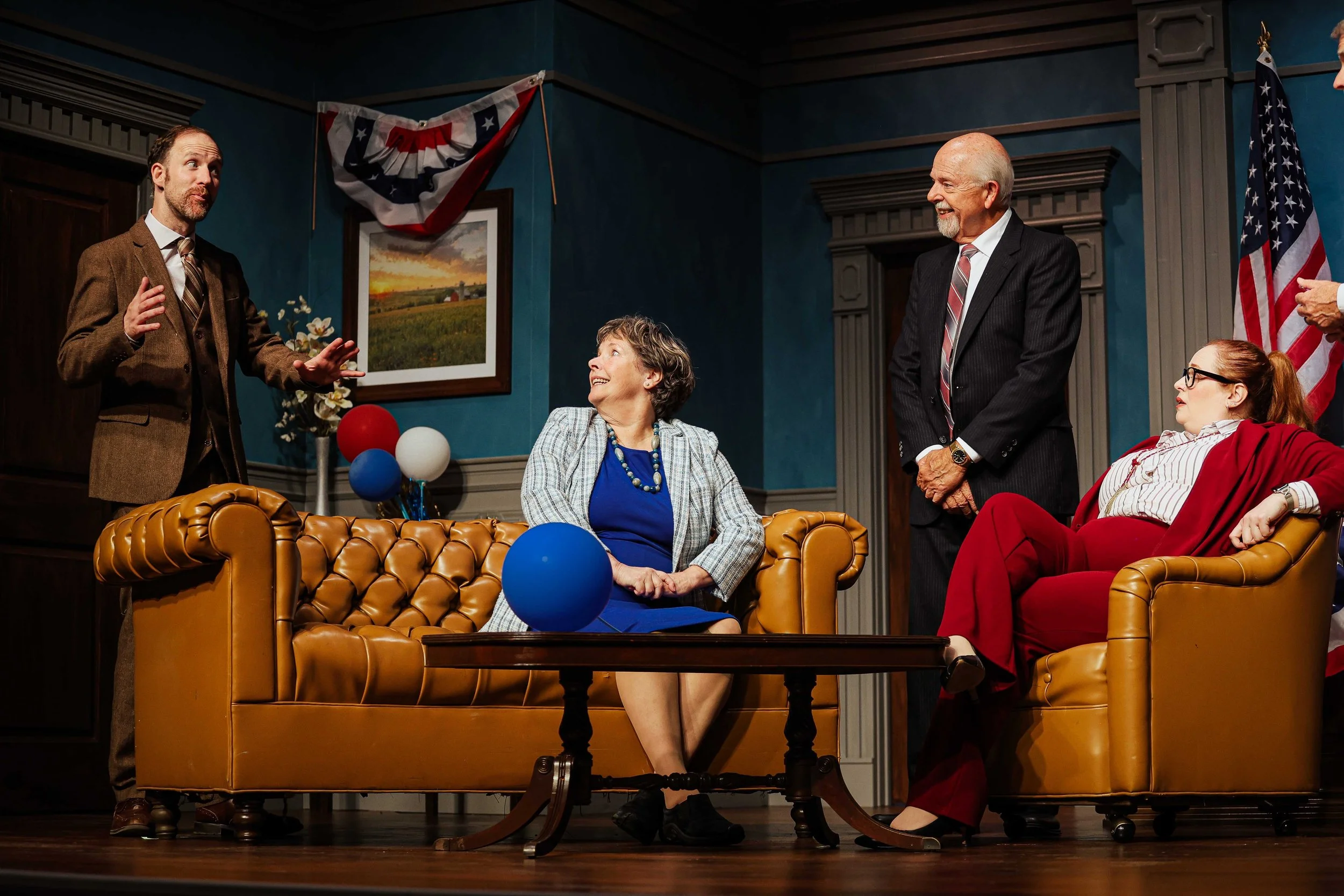
All of this makes his relationship with Nicole Lockett’s Paige particularly effective. Paige is an experienced pollster who knows exactly how to do her job, and Nicole gives her the confidence of someone who realizes she may be the only person in the room operating entirely within her area of expertise. The conflict between Paige’s measured competence and Dave’s instinctive expectation of impending doom produces some of the production’s funniest exchanges. Nicole also serves an important function within the ensemble, providing a grounded counterweight as the absurdity around Paige continues to escalate.
Then there is Louise Peakes.
Nathalie Cunningham makes the newly hired temp an extraordinary and impressive comic creation. Louise isn’t merely inexperienced; she can barely remember the names of people she met moments earlier. Nathalie throws herself enthusiastically into Louise’s every mistake, and her exchanges with Dave are particularly hilarious. Each character contributes to the humor in a different way, but Louise pushes the show’s definition of political incompetence into another dimension. Just when the audience has accepted Ned as the ultimate outsider, Louise arrives and completely recalibrates the scale. If Ned is an outsider, Louise isn’t even on the planet. And nobody recognizes an opportunity quite like Arthur Vance.
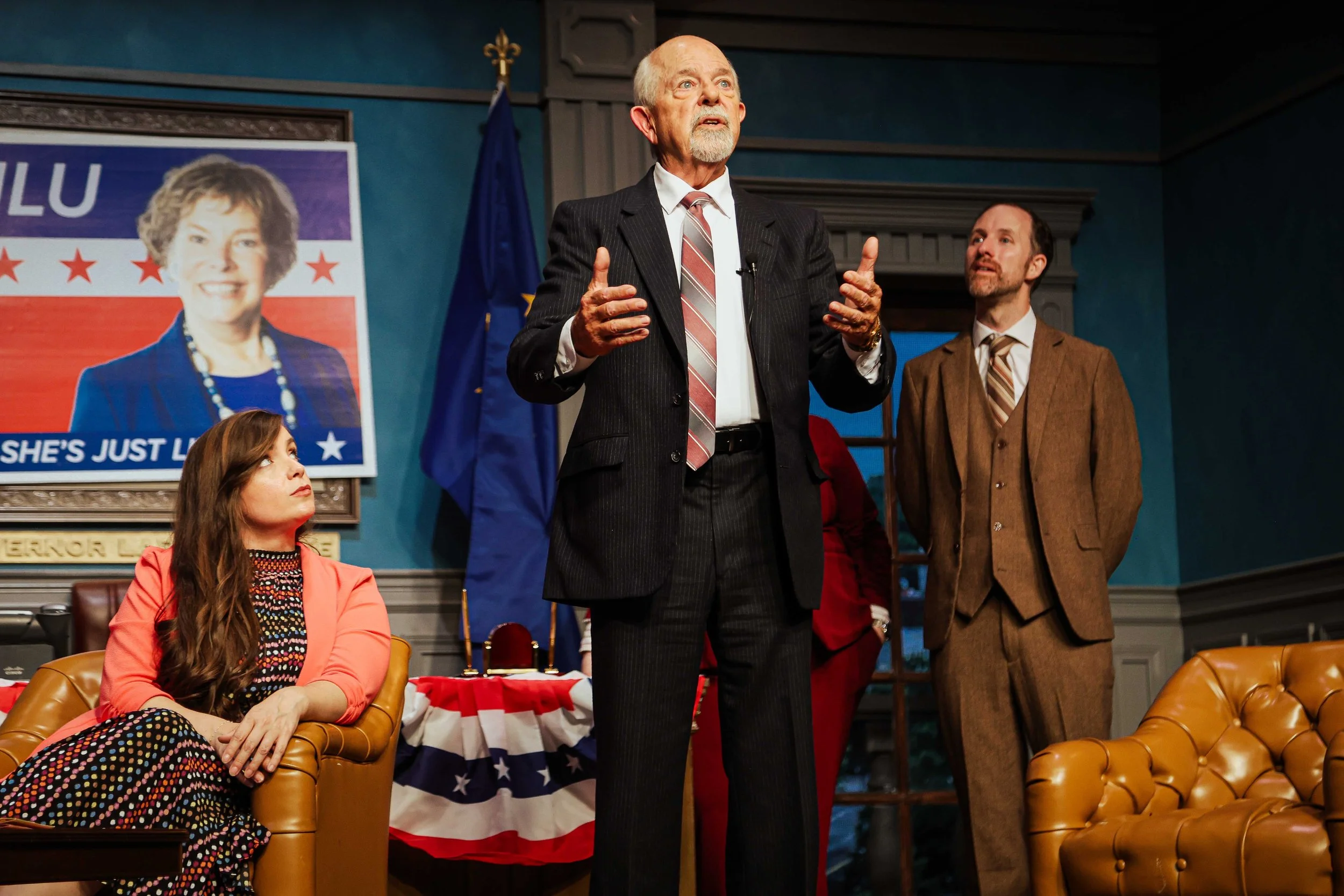
Steve Tarry is the production’s standout as Arthur, the CNN host and self-proclaimed idea man, approaching him like a political version of Harold Hill. Steve has excellent presence and projection, but what makes the performance particularly effective is how natural he makes Arthur’s perpetual salesmanship feel. His gestures, expressions and delivery suggest a man whose mind never stops searching for the next angle. He can spin practically anything, and Steve makes it entirely believable that Arthur believes whatever he’s selling at precisely the moment he’s selling it.
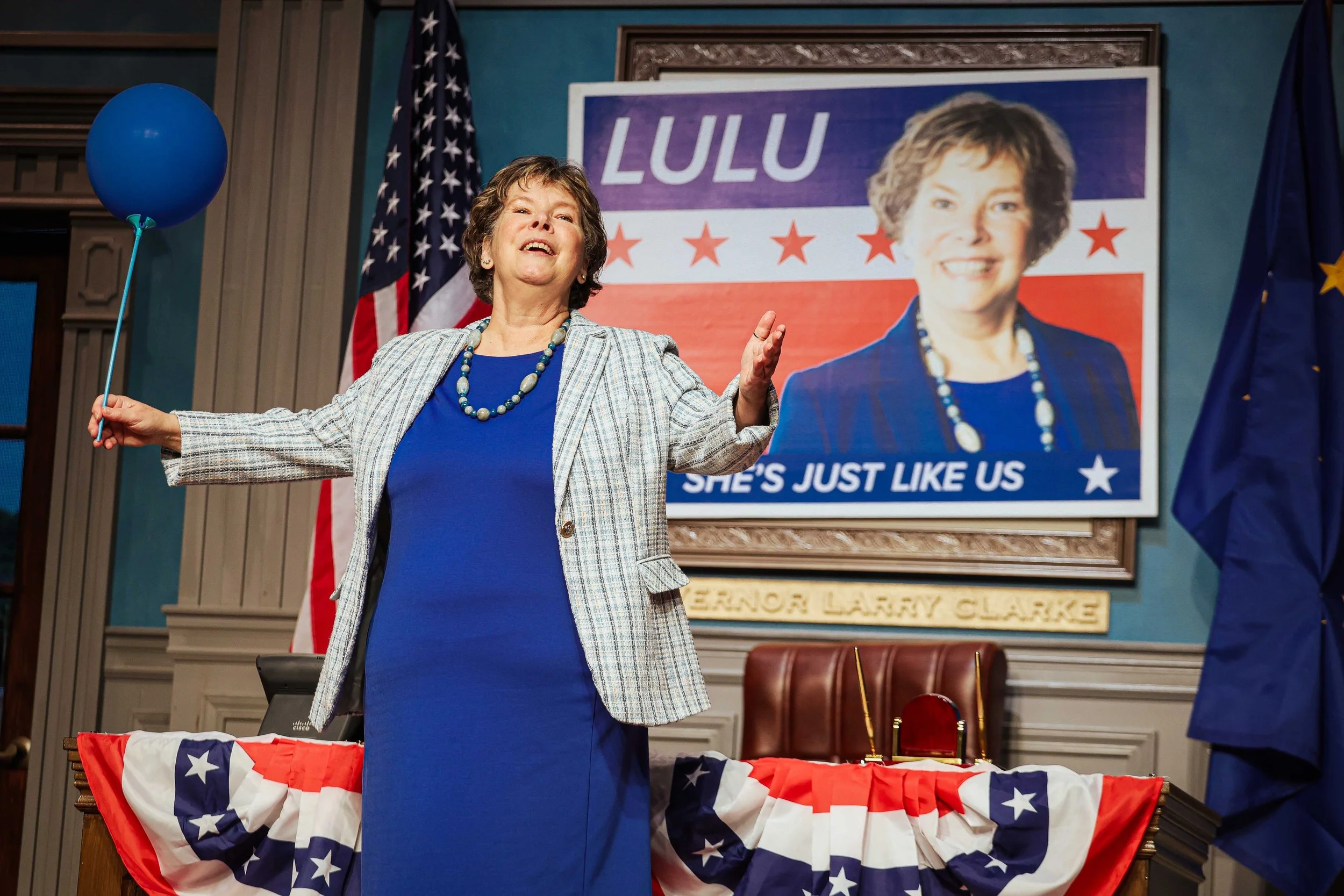
Arthur initially thinks he has struck political gold with Ned. Here is a governor so uncomfortable with the conventions of politics that he can be marketed as the ultimate outsider, precisely what Arthur believes voters want. There’s just one problem, Ned actually knows what he’s doing. That discovery momentarily deflates Arthur’s grand idea, but a man this skilled at spin doesn’t stay discouraged for long. Once he encounters Louise and recognizes just how spectacularly unprepared she would be for public office, the machinery starts turning again. Steve’s performance makes watching Arthur think almost as funny as hearing what he eventually says.
In the supporting group, Ana Bury-Quinn as Rachel Parsons and Brittany D Henderson as A.C. Peterson add their own distinct energies to the escalating political circus, helping Smith create an ensemble in which every character contributes something different to the humor. What Jed and his cast do particularly well is resist treating the comedy as a collection of isolated punchlines. The characters play off one another, and the increasingly absurd circumstances build naturally from what came before. By the time the playwright has pushed his premise toward its extremes, the production has earned the ridiculousness.
Visually, the production doesn’t need to overcomplicate things. Blake R. York’s scenic design places the action inside a formal executive office that could plausibly belong to the governor of almost any small state. The coordinated furniture and colors give it the polished institutional appearance expected of government, while the suggestion of the world beyond the office (using TLT’s display screen) serves as a reminder of the electorate waiting outside. With the play remaining largely in a single setting, the simplicity works, allowing the characters and dialogue to drive the evening.
Michele Graves’ costumes become especially useful in charting Dave’s deterioration, while Jeffery Swiney-Weaver’s properties include some wonderfully effective touches as the political machinery gets rolling. Elijah Bellis’ lighting and Chandler Garry’s sound round out a technical design that supports the comedy without unnecessarily competing with it.
Under Jed’s direction, the production understands that the political satire works best when the characters aren’t trying to tell the audience how funny everything is. The ridiculousness comes from people pursuing their objectives with complete sincerity. That allows Smith’s larger ideas to creep into the room almost unnoticed.
Because for all its jokes about consultants, polling, campaigns and candidates, The Outsider isn’t really arguing that America needs political outsiders. Nor does it argue that seasoned politicians are inherently the answer. Its point is considerably more democratic: each side puts its person forward, makes its case and lets the people decide.
Of course, everyone involved will try to shape that decision. There will be polling, messaging, image-making and spin, and believe me, nobody spins better than Arthur Vance. But ultimately the responsibility belongs to the voters. The audience is reminded that voters have to look beyond the packaging, apply critical thinking and determine which candidate, outsider or insider, most closely aligns with their own viewpoints. Smith’s satire becomes particularly effective when it exposes the uncomfortable distance between being qualified to govern, being skilled at campaigning and simply appearing to voters like someone they would like to elect.
That’s where The Outsider becomes more than another political comedy. The best comedies engage the audience so completely that everyone is too busy laughing to realize they’ve been asked to think about something serious. The curtain falls, the laughter subsides, and only then does the point begin to settle in. The jokes that seemed designed simply to entertain reveal themselves as something more, leaving the audience to contemplate the ideas hiding underneath them.
The Outsider does that exceptionally well. In a time when politics itself can frequently seem absurd but rarely feels funny, Tacoma Little Theatre gives the audience permission to laugh at the whole ridiculous enterprise. Then it sends them home with a considerably more challenging proposition: regardless of who is doing the campaigning or how effectively someone like Arthur Vance is doing the spinning, democracy ultimately depends upon the people on the other side of the message being willing to think for themselves.
The Outsider runs on stage at Tacoma Little Theatre through September 13. For more information, including ticket availability and sales, visit https://tacomalittletheatre.com/.
Photo credit: Dennis K. Photography