
Stage Review - The Wren
Presented By: Ghost Boat Theatre - Vashon Island, WA
Show Run: August 28 - August 30, 2026
Date Reviewed: Saturday, August 29, 2026
Run Time: 70 Minutes (no intermission)
Reviewed by: Greg Heilman
In Irish legend, the tiny wren carries a title wildly disproportionate to its stature: the “King of the Birds.” Folklore tells of the clever little bird hitching a ride upon the back of an eagle during a contest to see who could fly highest, conserving its strength until the eagle could climb no farther and then fluttering just above it to claim the crown. But royalty offered little protection. The wren also became the quarry at the center of an old St. Stephen’s Day tradition, when Wren Boys hunted what they believed was a mischievous bird before traveling from house to house with music, song and a decorated holly bush. It is a strange collision of reverence and persecution, celebration and mortality…and fertile ground for a playwright.
While many people spent the COVID years picking up new hobbies, baking bread, gardening or, in some cases, mixology (wink, wink), Kat Eggleston took up writing a play. The result is The Wren, presented by Ghost Boat Theatre and which closed on August 30 at Open Space for Arts & Community on Vashon Island. Directed by Samantha Sherman, Kat’s play takes that centuries-old Irish legend and custom and applies a decidedly modern sensibility to it, asking a wonderfully theatrical question: What if the King of the Birds could take human form once a year? And what if, on Christmas in 1997, he wandered into a neighborhood bar in Chicago with his hunters not far behind?
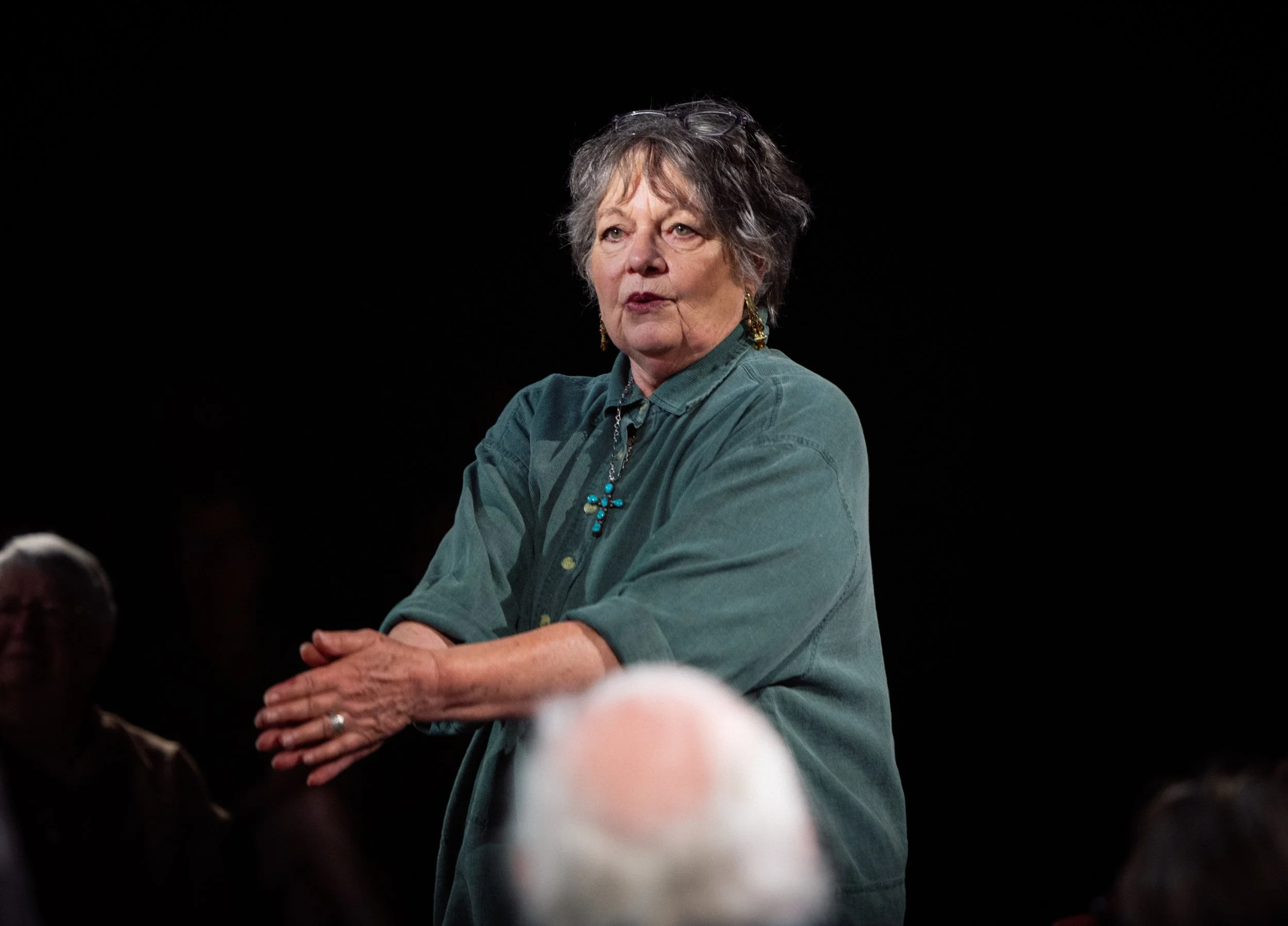
But Kat doesn’t simply drop the audience into that story. She begins with herself, sitting down to write about her experience with one particular man, a gruff stranger possessing an almost incongruously angelic voice, the kind that could “make flowers grow out of concrete”. In between the bookends of Kat’s contemplation over how to put the encounter down on paper, the memory itself comes alive, and the audience watches an enactment of the events she is attempting to capture. It makes The Wren as much about the act of remembering and storytelling as it is about the strange encounter at its center.
The idea itself has been percolating for some time. An earlier version of the play, then titled Dreoilín (an Irish word for wren) received a reading through Vashon Repertory Theatre’s Incubator Series in 2021. What has emerged since is a story steeped in Irish folklore and music while finding a contemporary way into questions about mortality, memory and the mysterious people who sometimes enter a life and leave behind far more questions than answers.
The Winter Wren itself makes an early appearance in the play, if only audibly. Birdsong accompanies Kat’s contemplation, creating the sensation of morning in the woods, the kind of peaceful soundscape that feels suited to sitting quietly with a cup of coffee. Even the bird carries a little history in its identity, one that has shifted with ornithological classification over the years, a fitting wrinkle for a play concerned with how stories and identities evolve depending upon who is telling them.
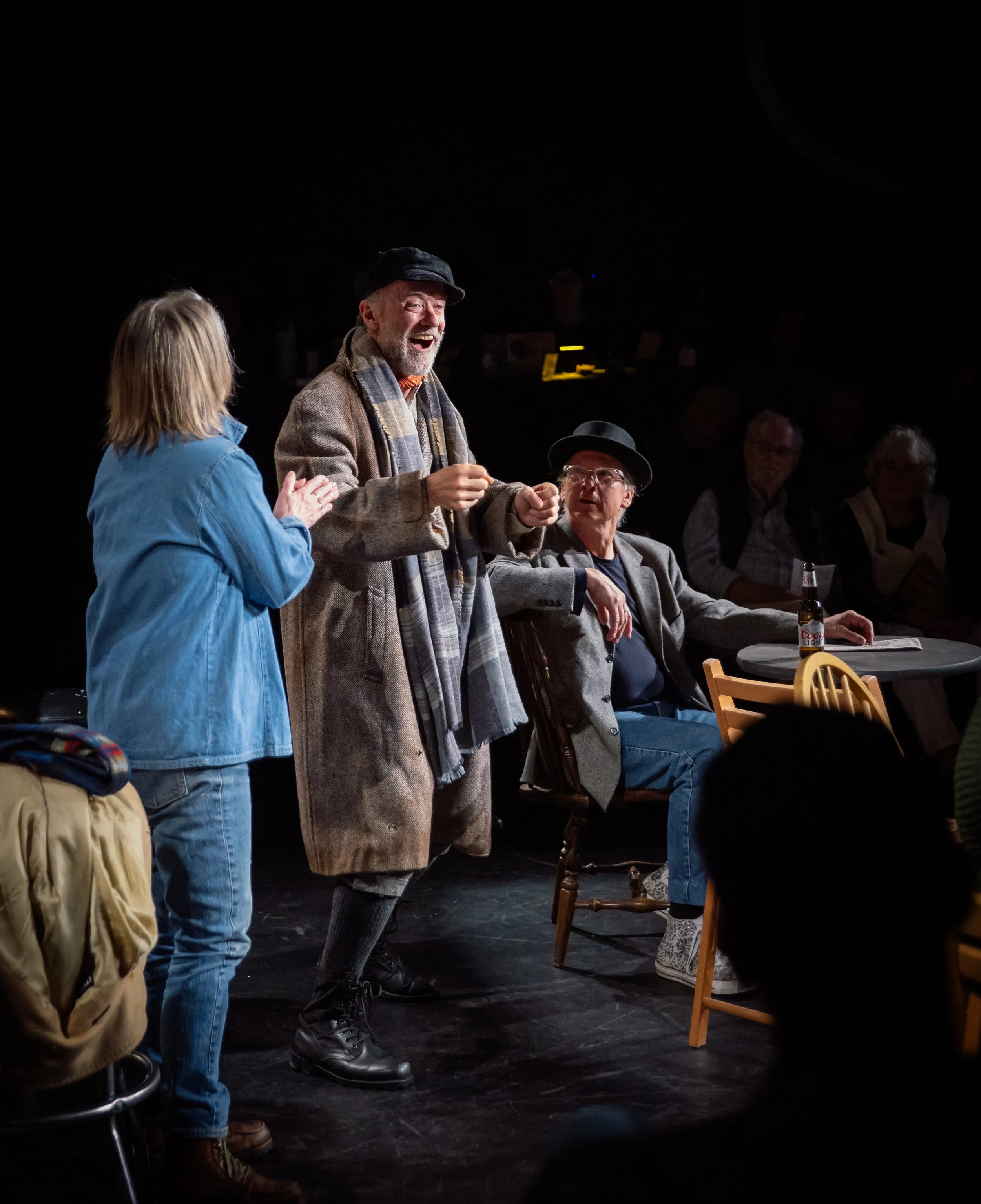
From there, the setting transforms into the Charleston Bar. Tables are placed in the center of the space with the audience chairs behind them, establishing an environment that feels immediately recognizable rather than theatrically elaborate. The production’s use of Irish music does much of the remaining work in transporting the audience. There is something deeply joyful about hearing Irish music, and the music becomes inseparable from the atmosphere Kat creates. It isn’t merely something played before the play begins or between scenes, it feels embedded within the world of the bar.
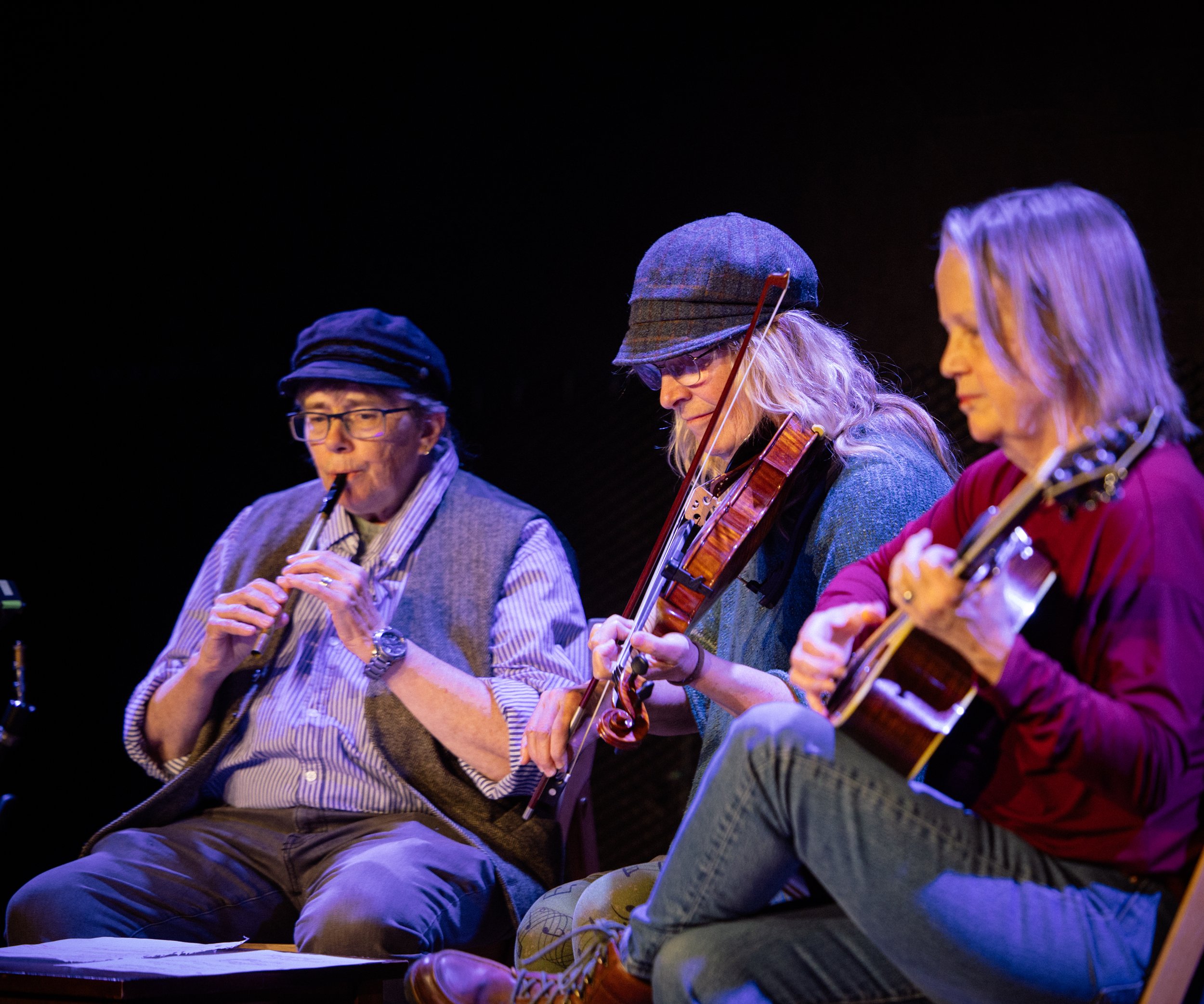
Live music is an important part of that equation, with Holly Tuttle on Irish whistle and Karen Dale on fiddle. Traditional tunes including “The Temperance Reel,” “Banish Misfortune,” “The Merry Blacksmith” and “The Boys of Malin” are woven throughout the production, the fiddle in particular accompanying transitions and helping move the audience from one moment to another and to establish the tone of darker scenes. That musical identity becomes especially effective with “The Wexford Carol.” A seemingly ordinary man sitting at the bar begins to sing, and what emerges is hauntingly beautiful. Dressed in ragged clothing and speaking with a convincing Irish accent, he already seems as though he has wandered in from somewhere, or perhaps somewhen, else. It is one of the first indications that there is indeed more happening inside this neighborhood bar than its patrons realize.
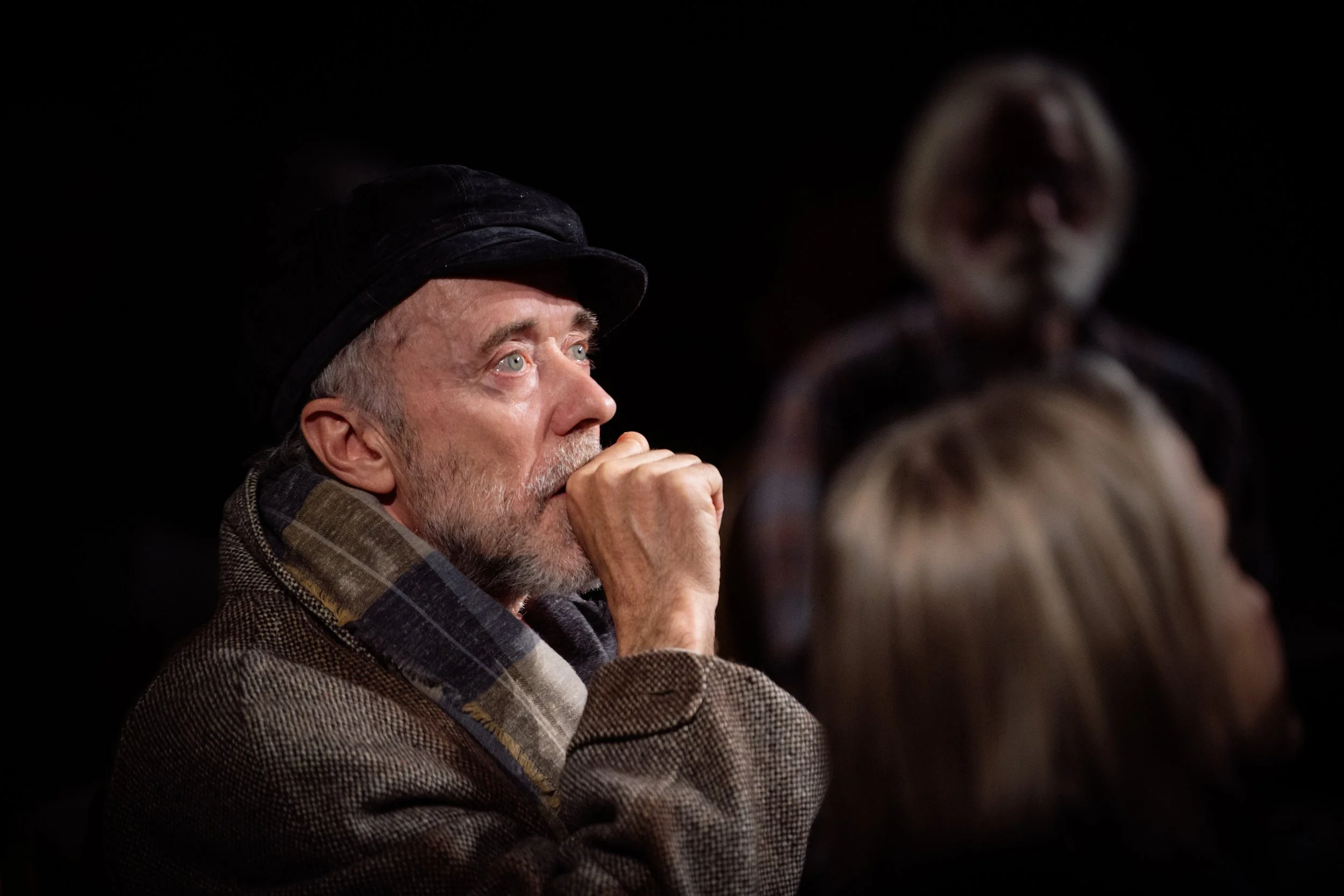
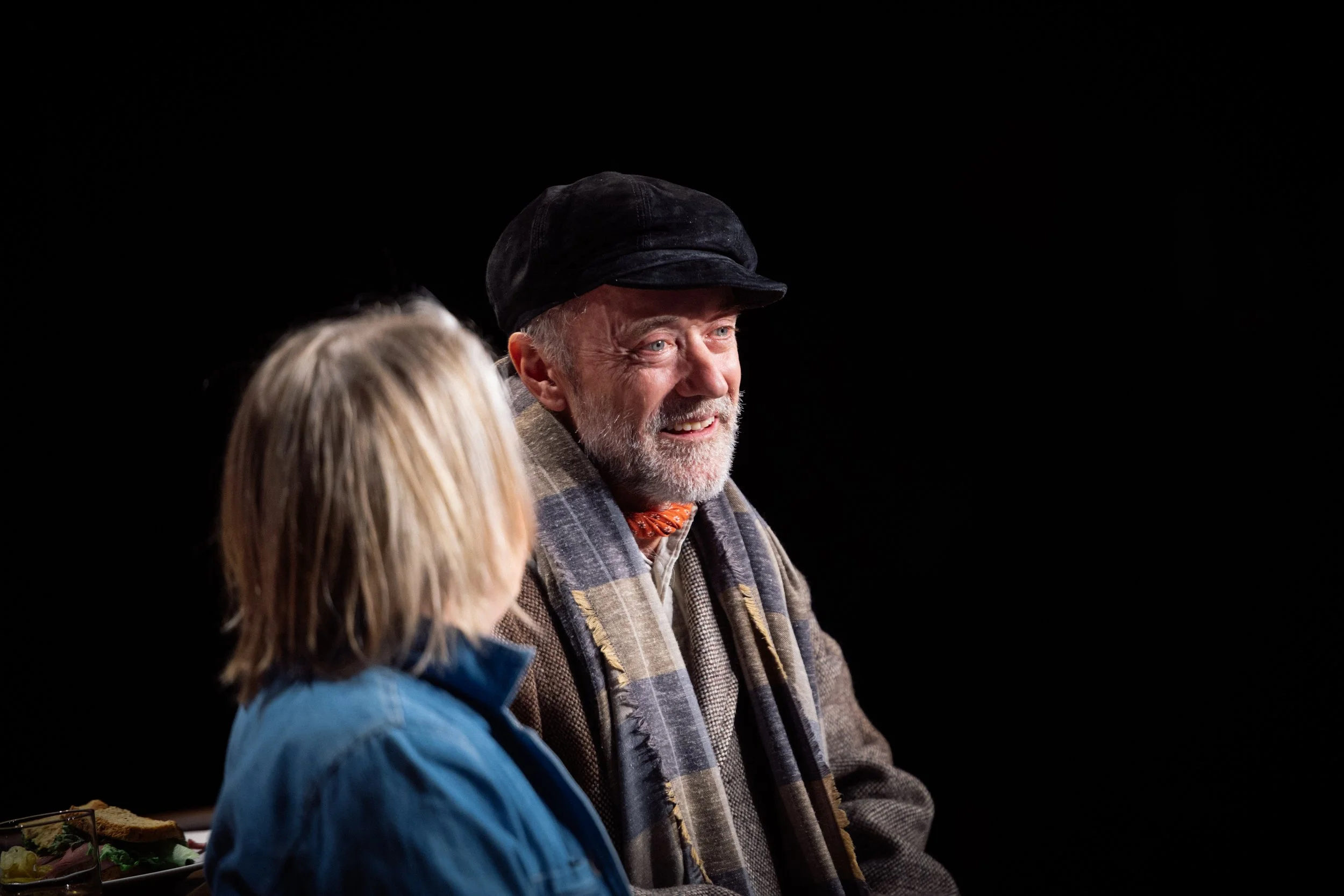
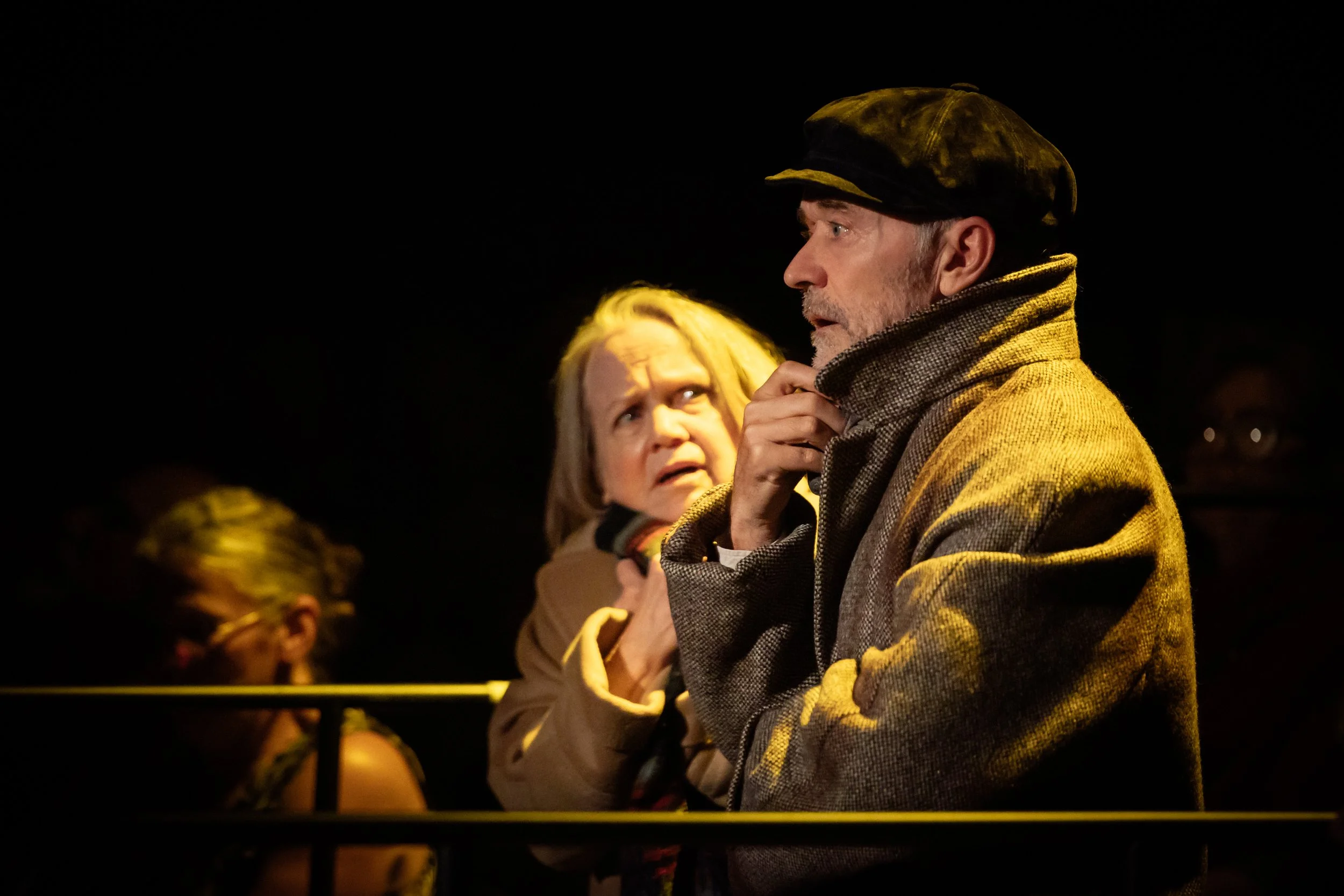
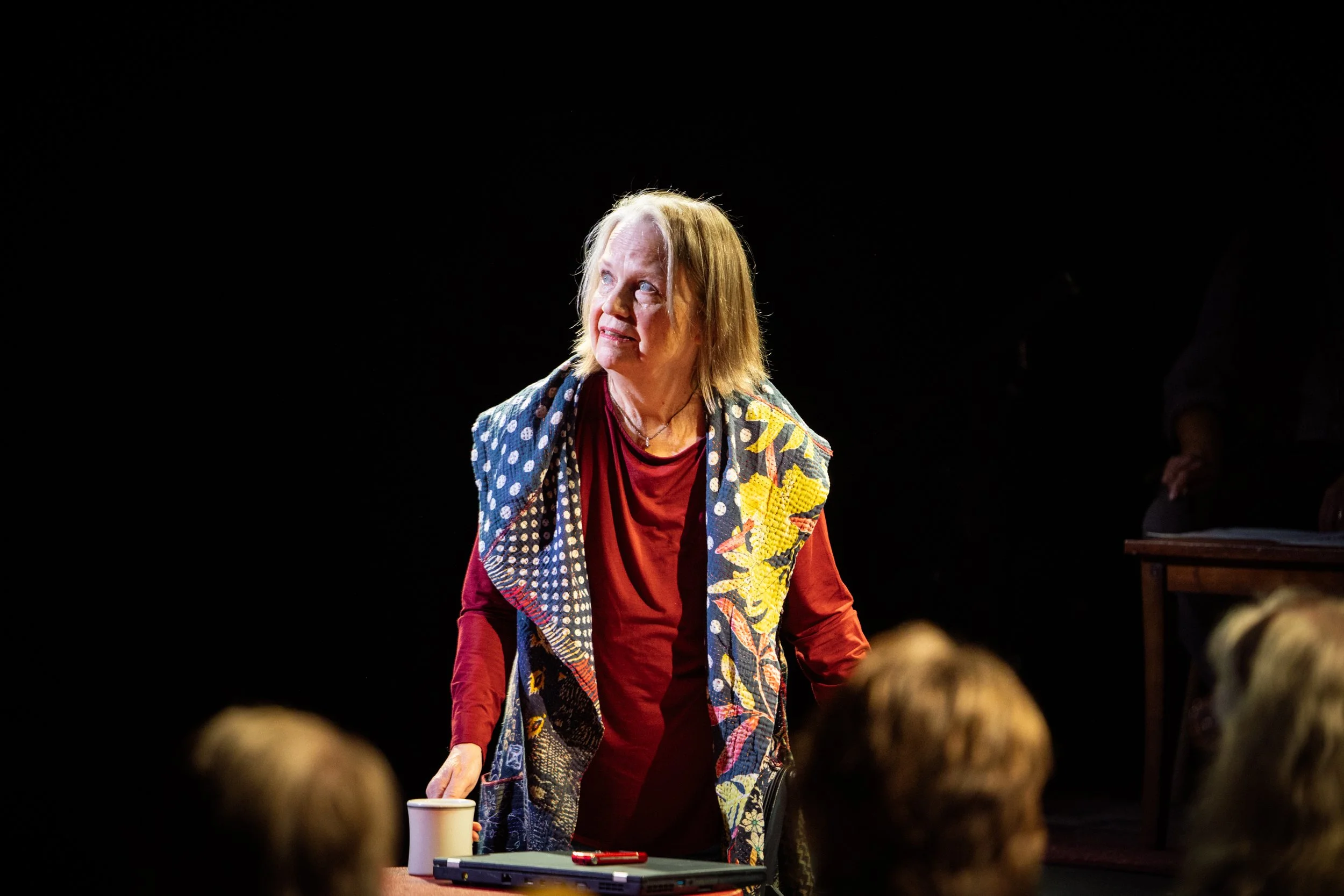
That stranger turns out to be Robin, played by Kevin Joyce, and in this role Kevin is the production’s most compelling element. Robin is a stranger, seemingly appearing from nowhere, whose presence generates questions almost immediately. How does he manage to get fed in a bar that doesn’t serve food? Why is he so interested in one particular house nearby? And who, exactly, is this mysterious visitor? Those questions accumulate as other unusual figures begin entering the Charleston, gradually challenging Wendy, the bartender played by Linda Nygaard, and upsetting what initially appears to be an ordinary Christmas night.
Kevin makes that mystery enormously watchable. One particularly strong sequence finds Robin talking about mortality, and Kevin handles the tonal progression beautifully. What begins with an almost light quality gradually becomes darker and darker without the transition ever feeling artificially imposed. There is something of the eternal traveler in Robin, someone who seems to carry more history than he is willing, or perhaps able, to explain. Kevin’s performance makes it difficult to look anywhere else when his Robin is speaking, and the visual world surrounding him only deepens that sense that this is a man who doesn’t quite belong to the same existence as everyone else.
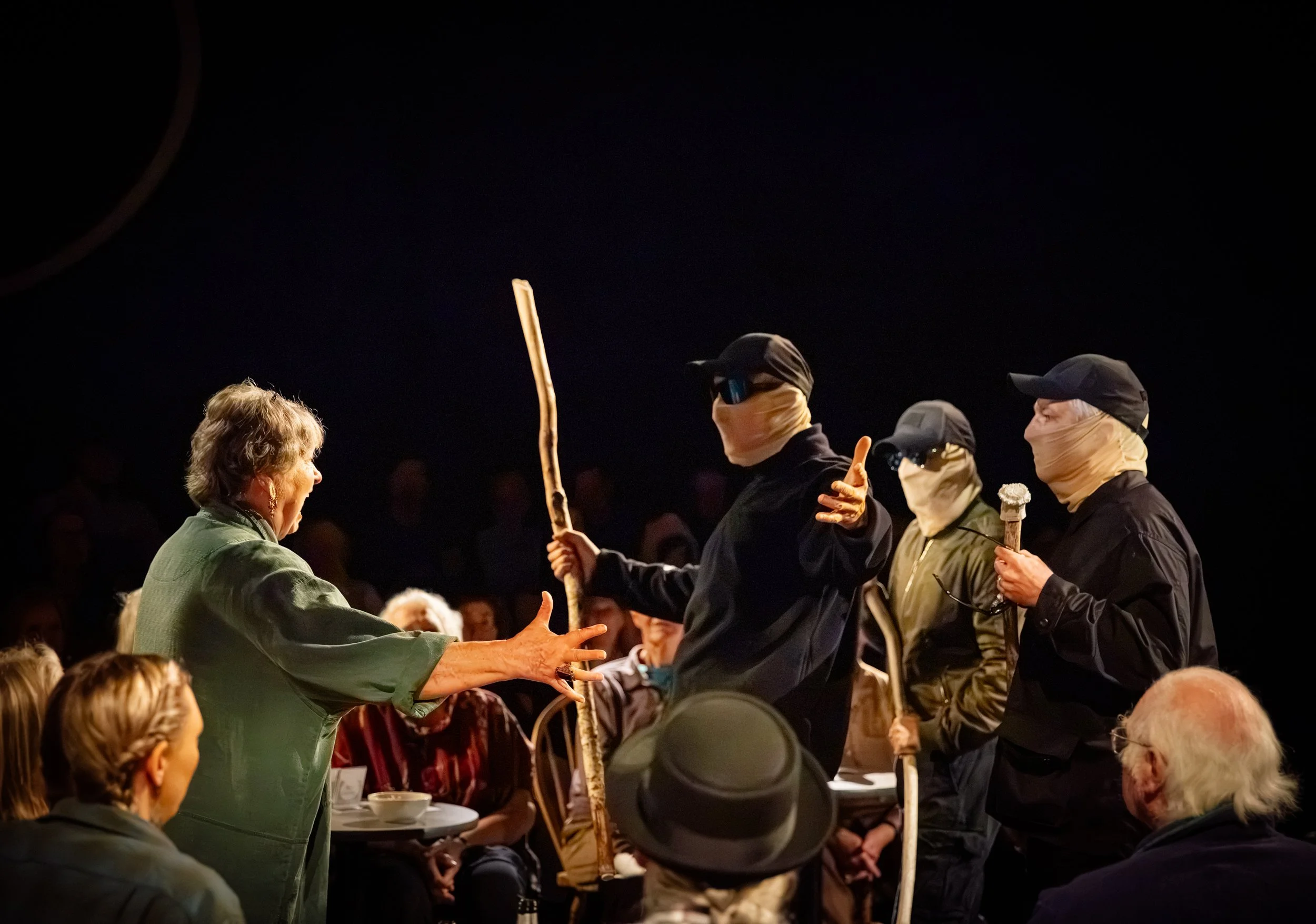
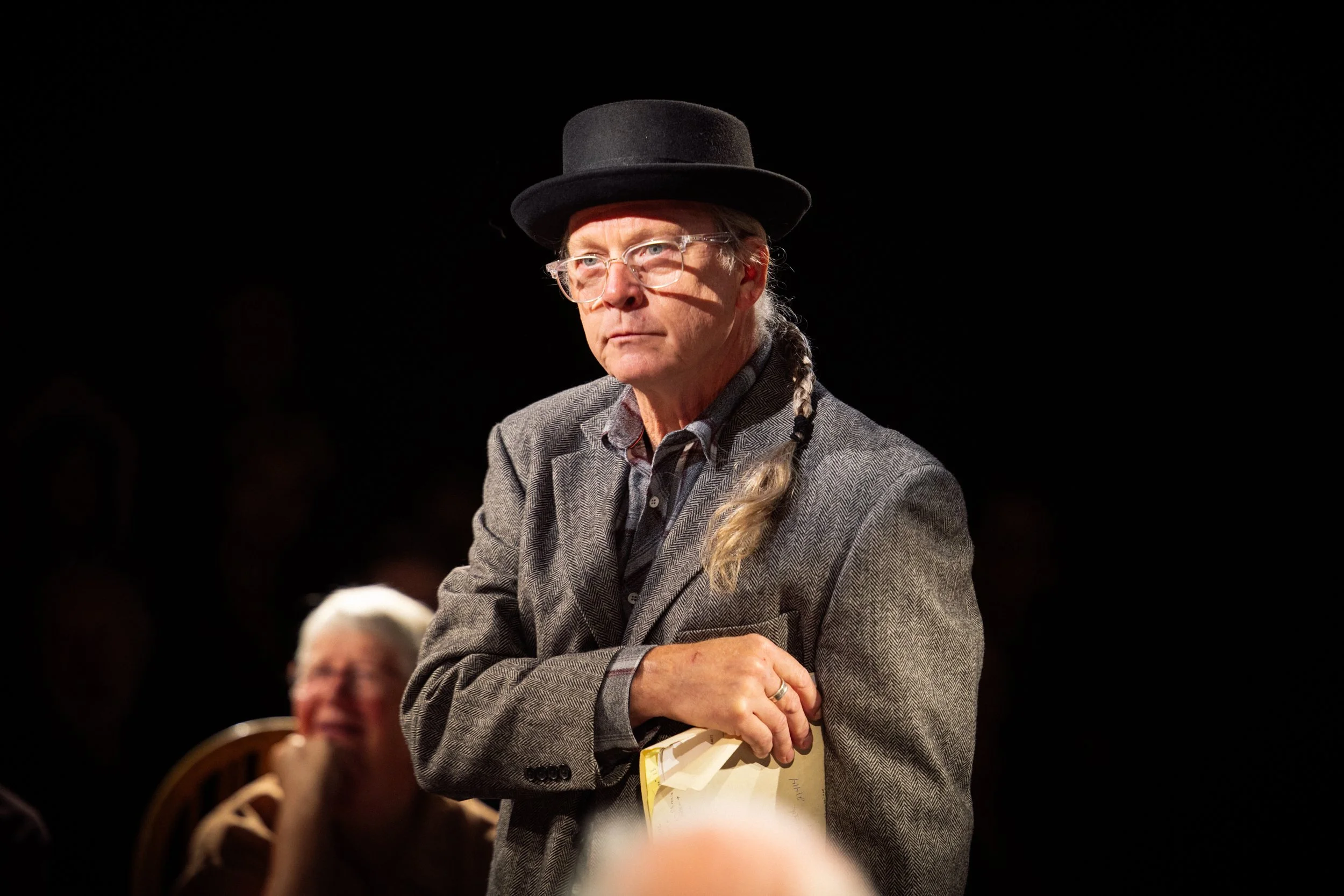
Around him, Kat populates the Charleston with people who initially seem like the sort one might find in any neighborhood bar. Linda’s Wendy tends the bar while Rich, played by Jon Whalen, and a bar patron played by Gabe Reilly-Bates occupy the familiar space around her. Brianna, played by Natalie Copeland, also becomes part of the story as the seemingly ordinary world Kat has established begins rubbing up against something much older. Stephen Seigel, Andy James and Mateo Grey appear as the three Wren Boys, bringing the play’s centuries-old folklore directly into its modern setting.
The Wren steadily chips away at that sense of the ordinary. Mysteries begin piling up, strangers arrive, music assumes greater significance and the old Irish story lurking beneath Kat’s contemporary one gradually begins showing itself. The result is less about immediately explaining every unusual occurrence than allowing the audience to experience the same uncertainty that surrounds Kat’s memory. Something happened here. Something about this man was different. Understanding exactly what it was becomes part of the journey.
That connection between music, folklore and the present is where the concept of The Wren becomes uniquely intriguing. The traditional songs aren’t ornamental. “Róisín Dubh,” “Casadh an tSúgáin,” “The Wren Song” and “The Wexford Carol” coexist with the story, while fiddle and whistle help bridge scenes and emotional shifts. Under Kat’s musical direction, the Irish tradition becomes another storytelling language, capable of communicating joy, melancholy and something far older and stranger than the patrons of the Charleston initially understand. The production’s creative team similarly understands that The Wren needs to exist somewhere between the recognizable and the otherworldly. Gabriel Dawson’s lighting design does more than illuminate the action, helping establish both mood and place as the story moves between Kat’s act of recollection and the events unfolding within that memory. Changes in light allow the atmosphere to shift with the story, sometimes warmly grounding the audience inside the Charleston and at others suggesting that something far less ordinary has entered the room.
Tesse Crocker’s costume design provides another layer of context, helping distinguish those who belong naturally within this Chicago neighborhood bar from those who seem to have arrived from someplace else. That is especially effective with Kevin’s Robin. His clothing is ragged, thick and visibly aged, suggesting something designed as much for survival as appearance. Before Robin ever explains himself, Lisa has already given the audience visual information about this mysterious traveler, reinforcing the sense that Kevin’s character carries a history that extends well beyond the doors of the Charleston.
Judy Wright and Alun Vick’s bar design and build, with set dressing by Patti Curtis and properties by Phoebe Boroughs, complete that sense of place without overwhelming it. The simplicity works particularly well for a play structured around memory. The Charleston needs to be tangible enough to feel like a real and relatable place while leaving room for Kat’s recollection, the Irish folklore and Samantha’s direction to transform it into something more. Gillian Kirkpatrick’s sound design contributes to that transformation as well, beginning with the chirping of the Winter Wren and continuing through environmental cues that help move the audience between the different layers of Kat’s story.
Samantha’s direction brings all of those elements together, allowing memory, folklore, live music and contemporary storytelling to occupy the same theatrical space without requiring hard boundaries between them. The transitions feel less like leaving one world and entering another than watching Kat’s memories materialize around her, an approach particularly well suited to a story in which the audience is never entirely certain where lived experience ends and legend begins.
There is an appealing personal quality to the structure Kat has created. She isn’t presenting the audience with an omniscient version of events. She is trying to make sense of a memory. By returning to Kat at the page, The Wren acknowledges the imperfections inherent in remembering another person and trying to understand an encounter years after it happened. What occurred in that bar and what it ultimately meant aren’t necessarily the same question. That gives the supernatural elements somewhere human to land.
There is also something fitting about a story centered upon the Winter Wren being told this way. The bird is tiny but carries an enormous mythology on its back, both king and quarry, celebrated and hunted, something ordinary enough to be overlooked yet important enough to inspire traditions that have survived for centuries. Kat takes those contradictions and finds within them a very human story about the people who briefly cross our paths, the memories they leave behind and our need, sometimes decades later, to sit down and finally figure out how to tell their story.
The Ghost Boat Theatre production of Kat Eggleston’s new play The Wren has closed, but to keep up to date on future events from this organization, visit http://ghostboattheater.org/.
Photo credit: Rocketkar Studios