
Stage Review - The Wind in the Willows (Saltfire Theatre)
Stage Review - The Wind in the Willows
Presented By: Saltfire Theatre - Port Townsend, WA
Show Run: August 07 - August 23, 2026
Date Reviewed: Saturday, August 08, 2026 (Opening Weekend)
Run Time: 2 Hours (including at 15-minute intermission)
Reviewed by: Greg Heilman
There is something fun and fitting about experiencing The Wind in the Willows outdoors. Kenneth Grahame’s classic story is filled with rivers, woods, picnics, boats, animals, and the irresistible pull of adventure, and Saltfire Theatre embraces that connection to the natural world with a production that relies less on elaborate theatrical machinery than on imagination, physical comedy, and a seemingly endless supply of clever ideas. Directed by Kerry Christianson, The Wind in the Willows runs at Finnriver Farm and Cidery through August 16 before moving to Littlefield Green at Fort Worden for performances August 21 through 23.
Grahame’s 1908 novel follows the adventures of Mole, Rat, Badger, and the irrepressible Mr. Toad, whose latest obsessions have a tendency to become everyone else’s problems. At the center of the story is Toad’s fascination with motorcars, an enthusiasm that quickly sends him careening toward trouble with the law and leaves his friends trying to save both Toad Hall and Toad from himself. Saltfire’s production keeps the familiar bones of the story while leaning enthusiastically into the whimsy of a world populated by animals who are simultaneously very human.
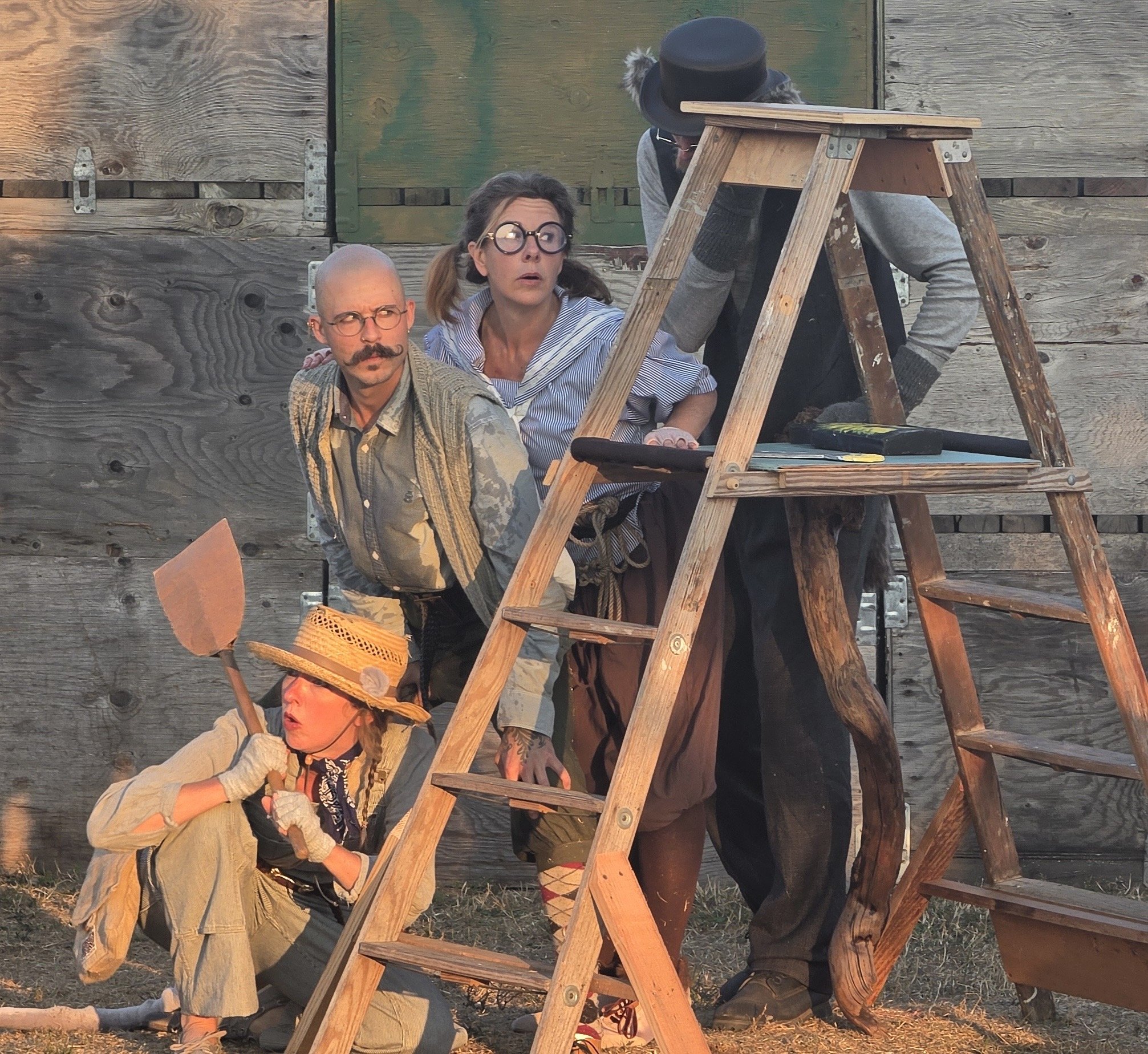
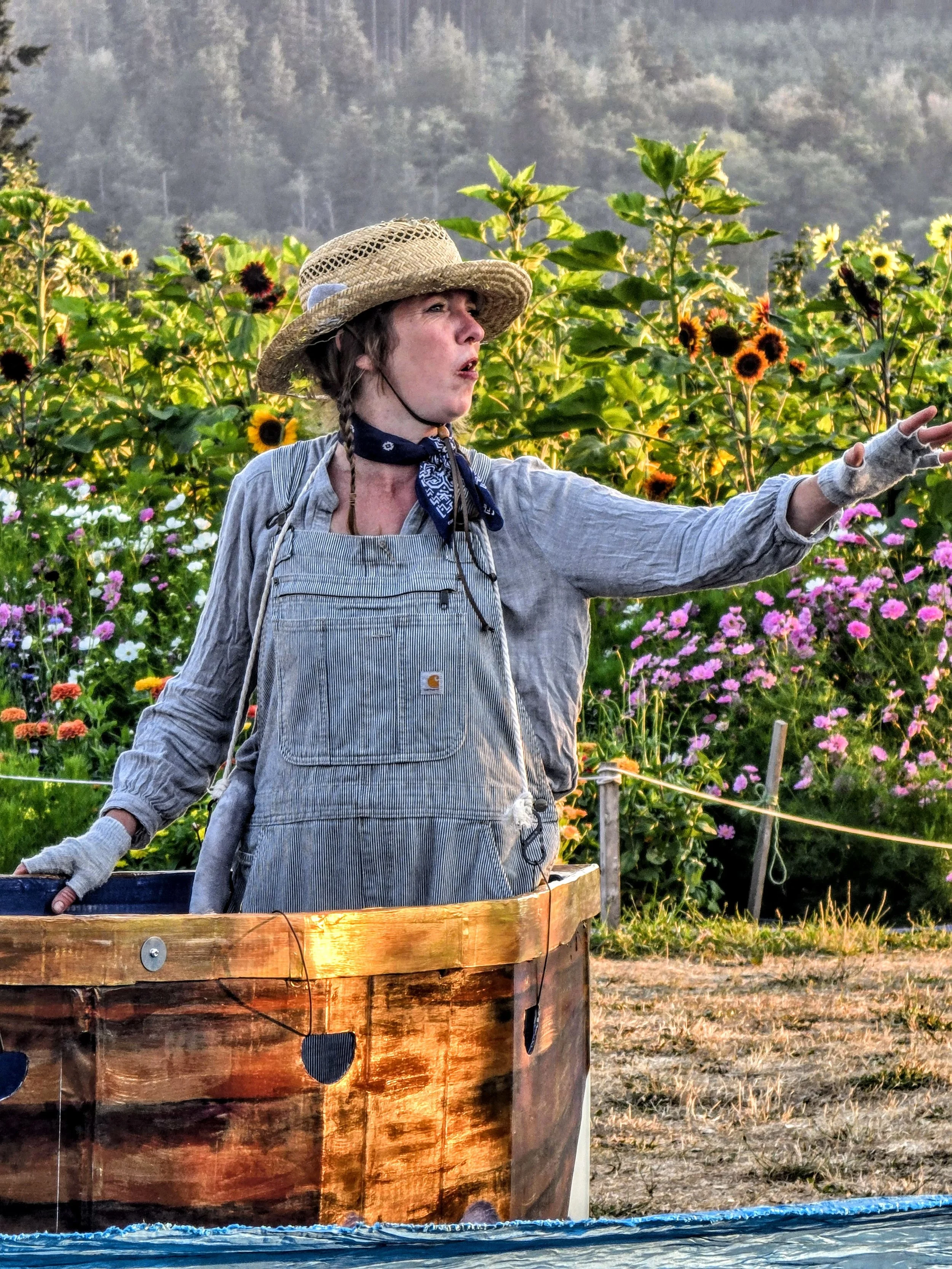
That whimsy begins with the production’s visual storytelling. There is a wonderfully handmade quality to the world Kerry and her company have created, one that asks the audience to participate by filling in the blanks with their own imaginations. A blue sheet becomes the river, while the boat, like all of the production’s transportation-related set pieces, is handmade with a creativity and care that perfectly reflects the flight of fancy that is Grahame’s story. Even a hand truck and box are cleverly transformed into a railroad cart.
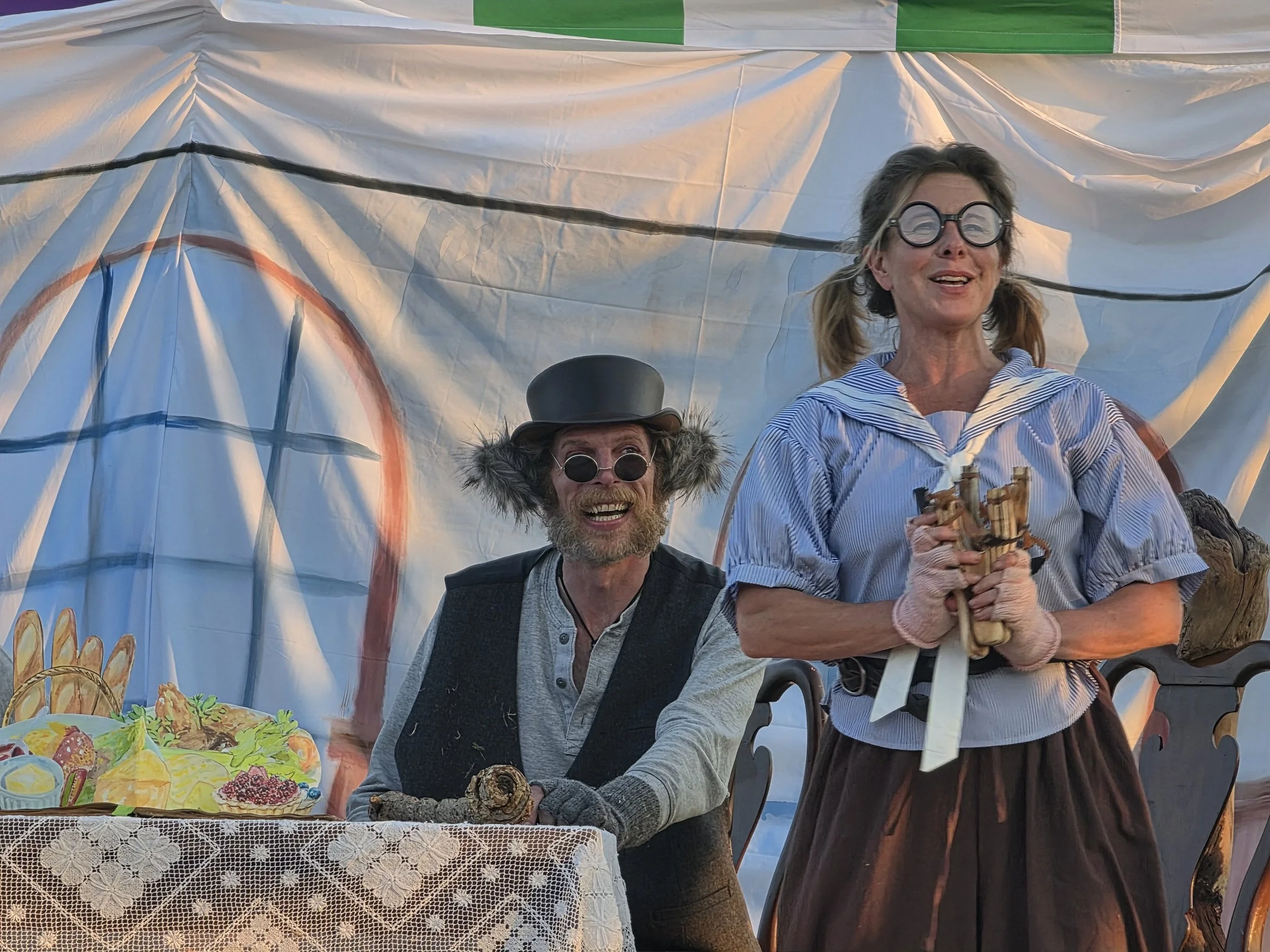
Pop-up books are an especially clever and charming touch, opening to reveal the food for the characters’ picnics. It’s a simple theatrical trick, but one that ties quaintly into the literary history of a story that has lived on the page for well over a century. Rather than trying to hide the mechanics of any of this, the production celebrates them. The fun comes from watching the company show us what something is and trusting us to go along with them.
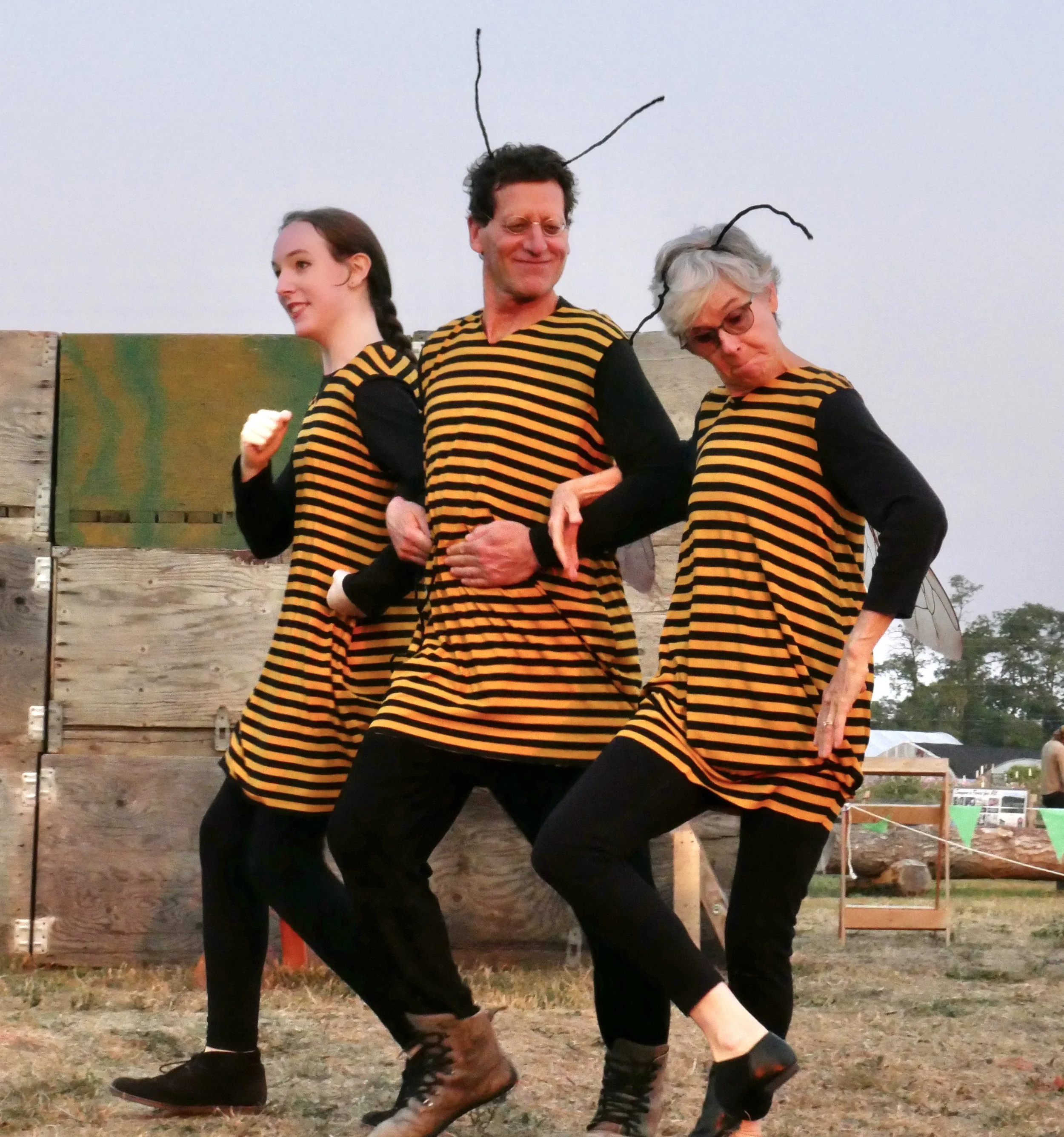
The Bees are an especially fun part of that approach. Rather than stopping the action for conventional scene changes, they buzz into the world of the play, managing transitions and providing scene support while becoming part of the entertainment themselves. They keep the production moving while reinforcing the feeling that everything happening around Mole, Rat, Badger, and Toad belongs to the same playful universe.
Dawn Daline’s painted backdrops add another layer to that world, giving the actors just enough environment to establish the setting and location without overwhelming the simplicity that makes the production work. Libby Wennstrom’s costumes operate in much the same way. These aren’t attempts to disguise actors beneath elaborate animal costumes; instead, carefully chosen details suggest the creatures they represent and leave the performers free to do much of the remaining work themselves.
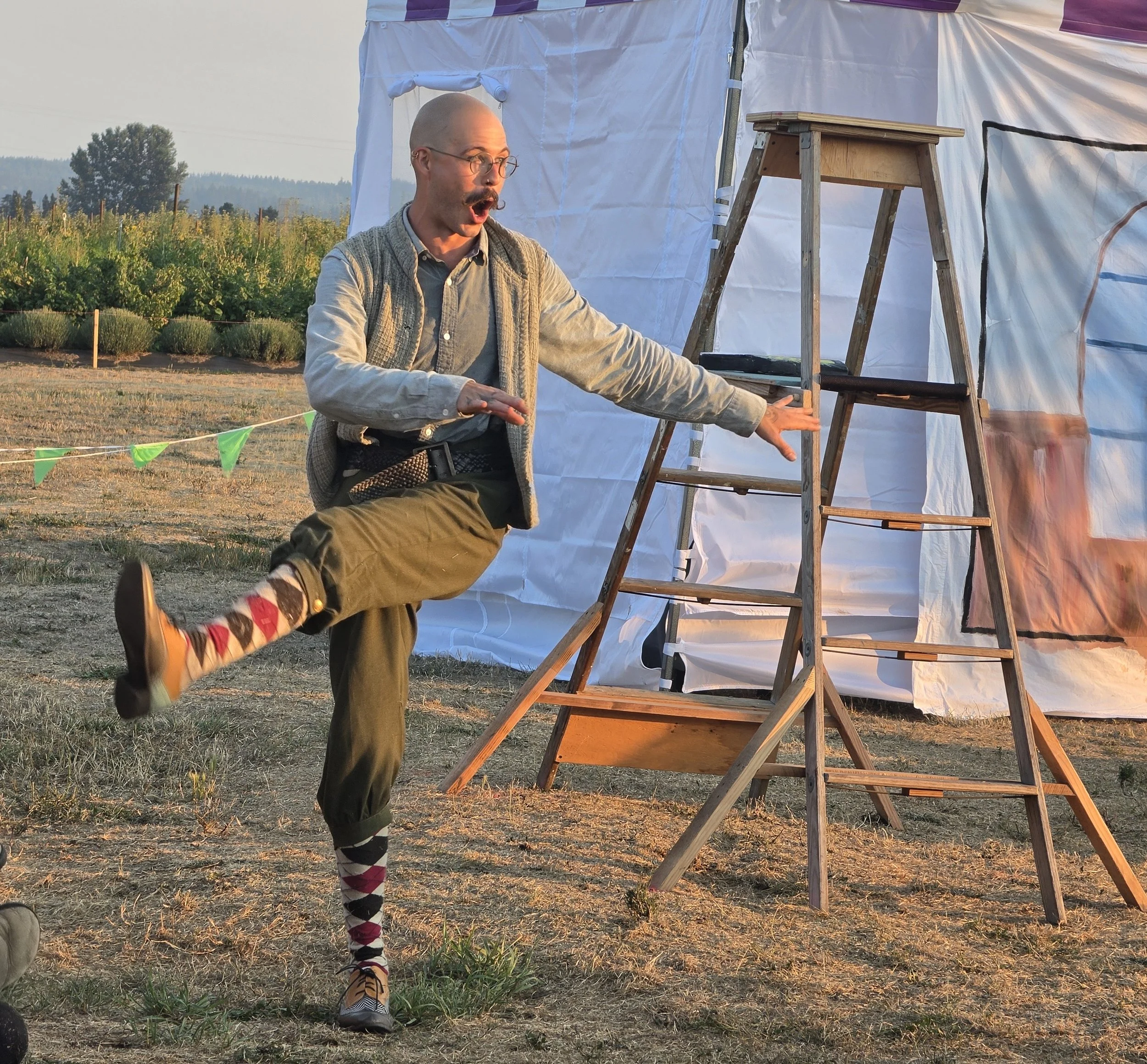
No one takes greater advantage of that freedom than Jason Notemeier as Toad. Jason gives the character an enormously physical performance, finding ways of representing a toad through his movement without allowing the mannerisms to overwhelm the character. His Toad is enthusiastic, impulsive, troublesome, and almost perpetually in motion, exactly the sort of personality who could fall hopelessly in love with a motorcar and immediately become a menace behind the wheel. The handlebar moustache and smart driving outfit, reminiscent of the motorists piloting old roadsters in the earliest days of the automobile, complete the picture.
The driving sequences are particularly fun because, like so much of the production, they depend upon performance rather than machinery. Jason commits completely to the illusion, and the staging turns Toad’s adventures behind the wheel into an extended opportunity for physical comedy. There is a delightful contrast between Toad’s absolute confidence in himself and the mounting evidence that nobody should ever have given this particular amphibian access to an automobile.
Kirsten Louise Webb brings a wonderful steadiness to Rat, giving Jason’s chaotic Toad a necessary counterbalance. As Mole, Aimee “Mia” Kelley captures the curiosity of someone discovering a much larger world beyond the familiar comforts of home, while Scott Bahlmann gives Badger an appropriately gruff presence. One of the amusing little details surrounding Badger comes courtesy of the outdoor setting itself: when a dog in the audience barked at him on Saturday, it felt less like an interruption than another animal offering an unsolicited opinion about the proceedings.
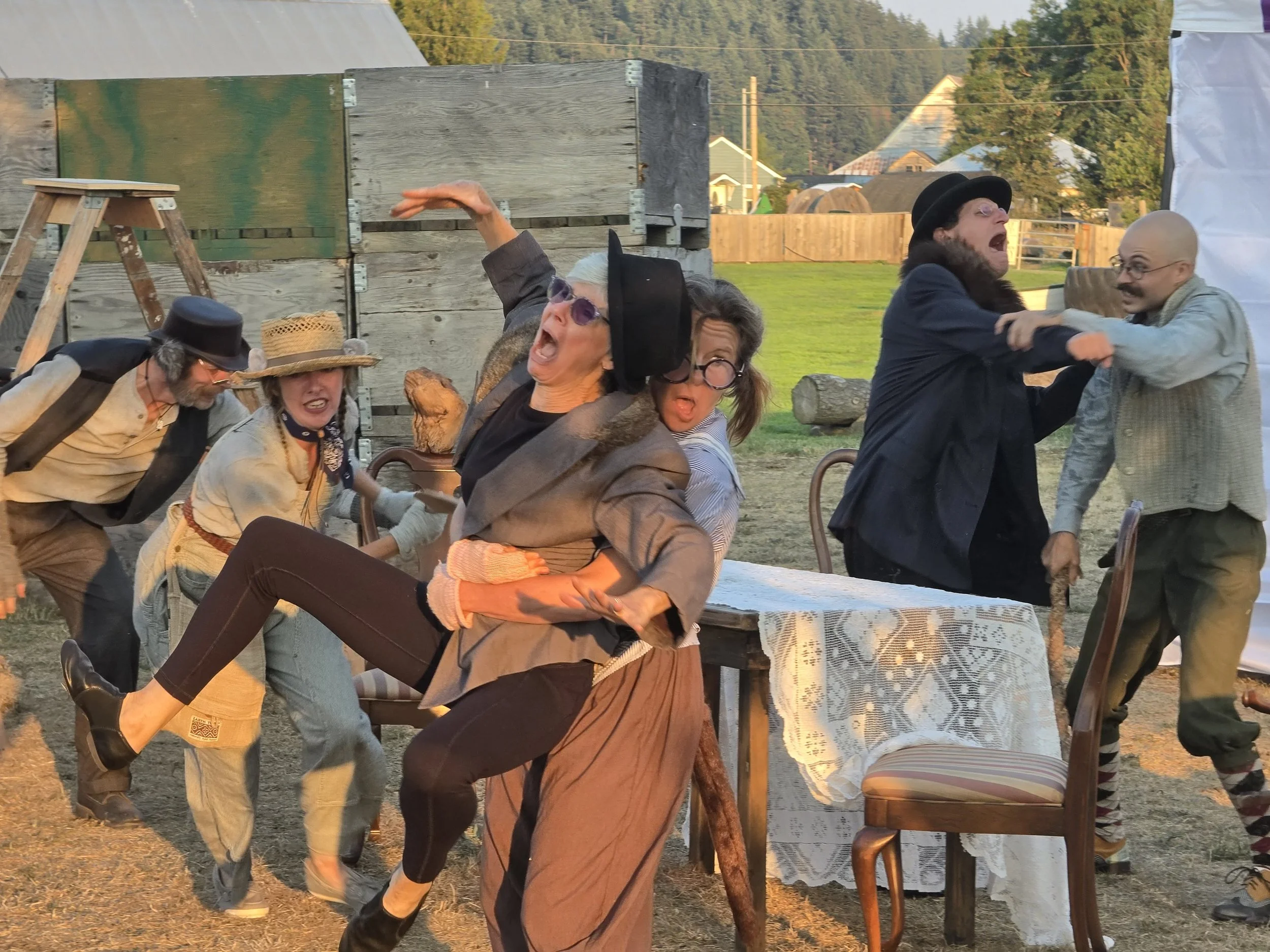
The production also makes good use of an ensemble whose members repeatedly transform themselves into the various creatures and people populating Grahame’s world. Zach Nesmith moves through roles including Otter, Motorist, Engineer, Sea Rat, and Chief Weasel, while Rose Biel, Isla Kennedy, Ann McMahon, and Stuart Phillips populate the story as Bees, Weasels, Swallows, and other inhabitants of this wonderfully busy world. The courtroom sequence is one of the production’s strongest ensemble scenes, allowing the company’s comic instincts and the absurdity surrounding Toad’s predicament to come together particularly well.
That versatility extends to the vocal work. The production asks its actors to distinguish a parade of characters with relatively little time between them, and some of its funniest transformations come through accents and changes in voice. Those choices help make even brief appearances memorable and reinforce the sense that a comparatively small company is somehow populating an entire countryside.
Celia Walden’s props are integral to the production’s success because they share the same philosophy as the performances: suggest rather than reproduce. There is a genuine pleasure in discovering what an object is going to become next. Genevieve Rose Caskey’s additional props and puppet construction contributes to that sense of invention, while Ward Serrill’s sound design, with music by Nathaniel Snyder and Kirsten Louise Webb and sound effects by Donn Christianson, helps complete a world that is deliberately created in full view of its audience.
Saltfire Theatre’s The Wind in the Willows understands something essential about both children’s stories and live theatre: imagination is often far more interesting than realism. Give an audience a blue sheet and tell them it’s a river, and they’ll see a river. Give them some beautifully handmade transportation, a few pop-up books, some buzzing Bees, and a wonderfully overconfident Toad, and before long they’re traveling through the Wild Wood alongside Mole and Rat. And regardless of whether the setting is Finnriver Farm and Cidery or Littlefield Green at Fort Worden, the production’s greatest scenic resource remains exactly the same: the audience’s imagination.
The Wind in the Willows, from Saltfire Theatre runs through August 16th at Finn River Farm and Cidery in Chimacum, and then through August 23 at Fort Worden Littlefield Green in Port Townsend. For more information, including ticket availability and sales, visit https://saltfiretheatre.org/index.html.
Photo credit: Maude Eisele, Genevieve Barlow, and Austin Krieg