
Stage Review - All of Us, Quietly (bitLAB / Bainbridge Performing Arts)
Stage Review - All of Us, Quietly
Presented By: Bainbridge Island Theatre Lab (bitLAB) / Bainbridge Performing Arts
Show Run: July 10 - July 12, 2026
Date Reviewed: Thursday, July 09, 2026 (Preview)
Run Time: 90 Minutes (no intermission)
Reviewed by: Greg Heilman
With the breadth of coverage we strive for at The Sound on Stage, both geographically and artistically, we inevitably have to be selective about what we cover. Between professional and non-professional theatre, plays, musicals, premieres, festivals, and special events, there simply aren’t enough of us to go around for our team to be able to experience everything happening throughout the Puget Sound region. As a result, worthwhile productions occasionally fall through the cracks, and one of the most frequent casualties is the staged reading.
That omission is unfortunate because staged readings often provide some of the most fascinating theatre available to see. They offer audiences the opportunity to see works by local artists at various stages of development, sometimes little more than a first draft, other times nearly production-ready, but still awaiting the full realization of scenery, costumes, choreography, and all the other elements that eventually bring a musical to life. One advantage of the summer theatre season, when many companies are between productions, is that these opportunities become easier to fit into the calendar.
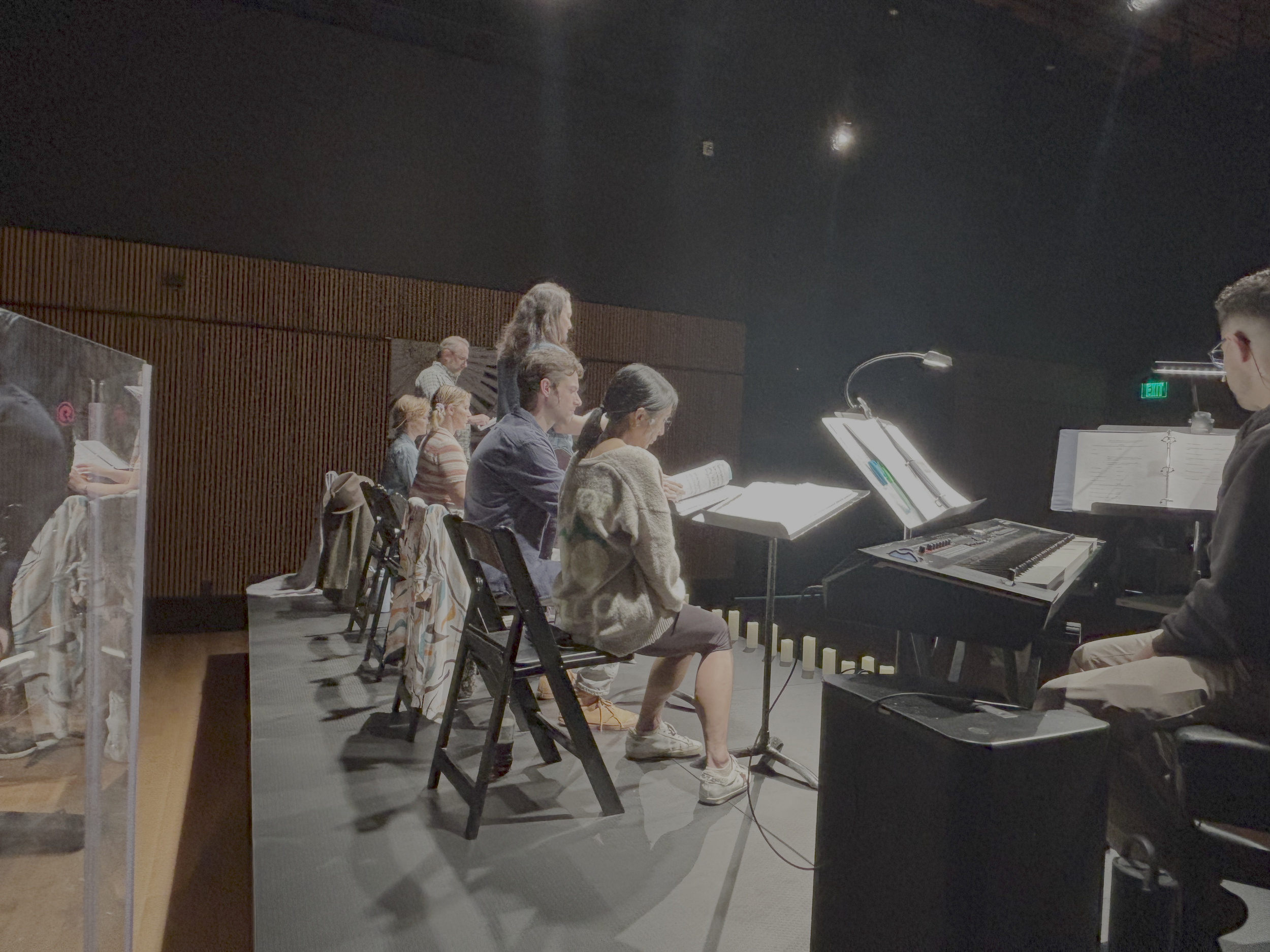
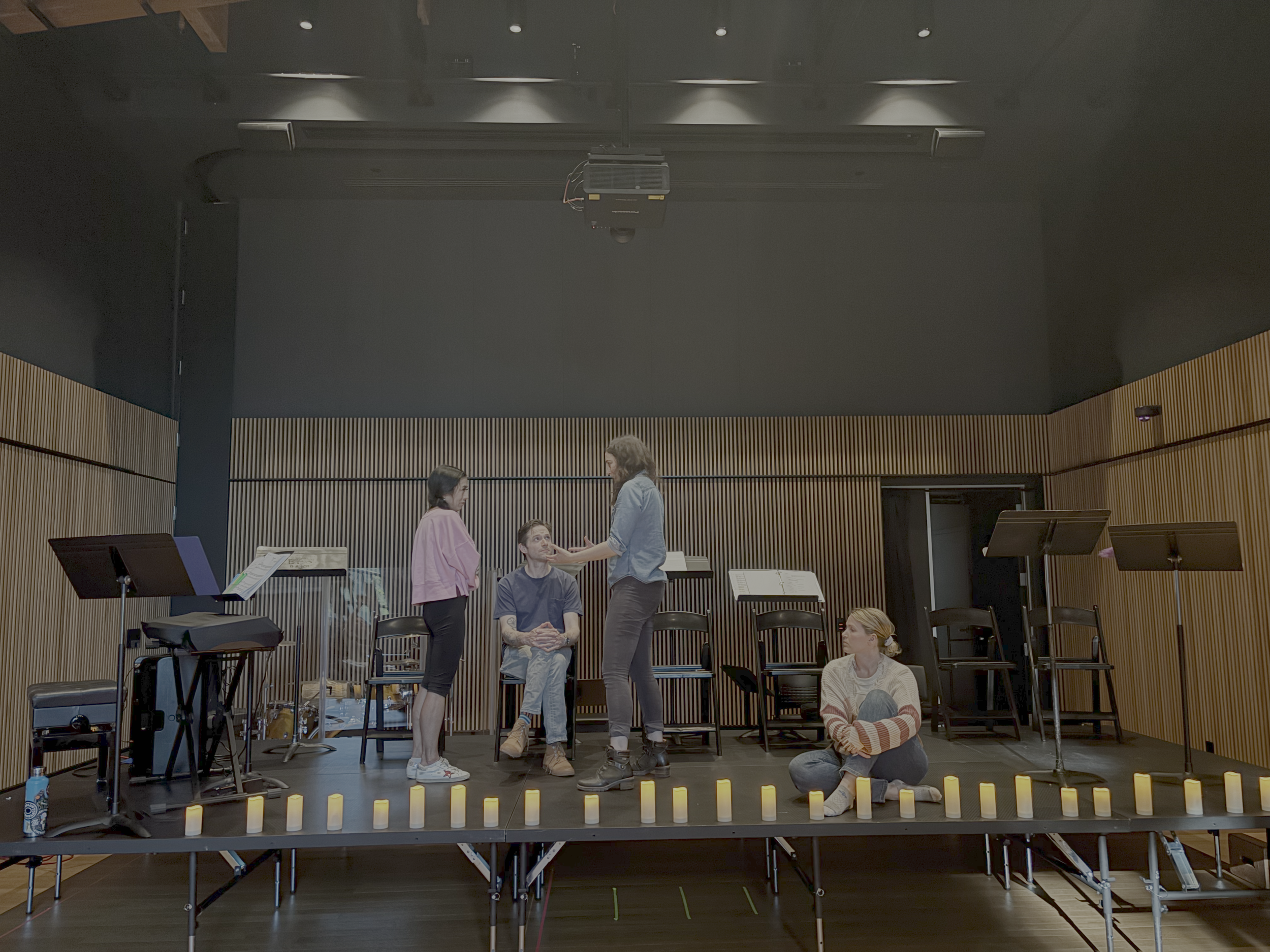
That is certainly the case with Rachel Noll James’ All of Us, Quietly. A musical that has been years in the making, its origins trace back in part to Rachel’s experience performing in Just Us Girls’ production of Lizzie, where she, Jessica Low, Shannon Dowling, and Justine O’Neill received The Sound on Stage’s inaugural award for Best Ensemble in a Musical. Rachel explained that the experience convinced her there was room to create a musical driven by a small but energetic ensemble. Drawing from a catalog of songs she had written over the years, she began shaping them into a larger narrative, ultimately resulting in the staged reading that took the stage this past weekend at Bainbridge Performing Arts as the latest collaboration between Bainbridge Island Theatre Lab (bitLAB) and BPA’s Studio Series. Every new musical (and new play for that matter) begins with a simple question: Is there a story here worth telling? Based on this staged reading, Rachel’s answer is a resounding yes.
To describe All of Us, Quietly as “early” in its development almost undersells what Rachel and Music Director/Arranger Christopher DiStefano have already accomplished. While any new musical will continue to evolve as it moves through workshops and future productions, the foundation here is remarkably polished. The score is both ambitious and inviting, weaving sophisticated harmonies and recurring musical themes into songs that remain immediately accessible. Rather than relying on standalone numbers, the music builds upon itself through reprises and callbacks that reinforce the emotional journeys of its characters and give the work a cohesiveness that many fully produced musicals struggle to achieve.
All of Us, Quietly isn’t about addiction, illness, or grief, though each is surely a part of the overarching storylines. It’s about the people who find hope despite them. Rachel centers her story not on the hardships themselves, but on the relationships shaped by them—parents and children, siblings, partners, and the quiet moments of healing that often go unnoticed. The characters feel authentic, their conversations and emotions carrying the weight of life experience rather than theatrical melodrama. That authenticity allows the audience to invest in each of their journeys, even in this stripped-down presentation, so much so that I wonder how much of these characters and their arcs have been pulled from her own life or witnessed experiences.
Much of the enjoyment of a staged reading such as this comes from allowing the read aloud descriptions to complete the production inside your own imagination. Rachel provides just enough visual detail to let the audience begin constructing the world themselves without overexplaining it. One of the strongest examples is in the musical number “Chasing Memories,” where Liv is described as looking into a mirror while other actors portray different versions of herself. Even without seeing a single lighting cue or scenic element, it becomes easy to picture how the moment could unfold on stage. That exercise of imagining the finished production becomes part of the entertainment, and throughout the reading there are numerous moments that invite the audience to mentally direct the musical for themselves.
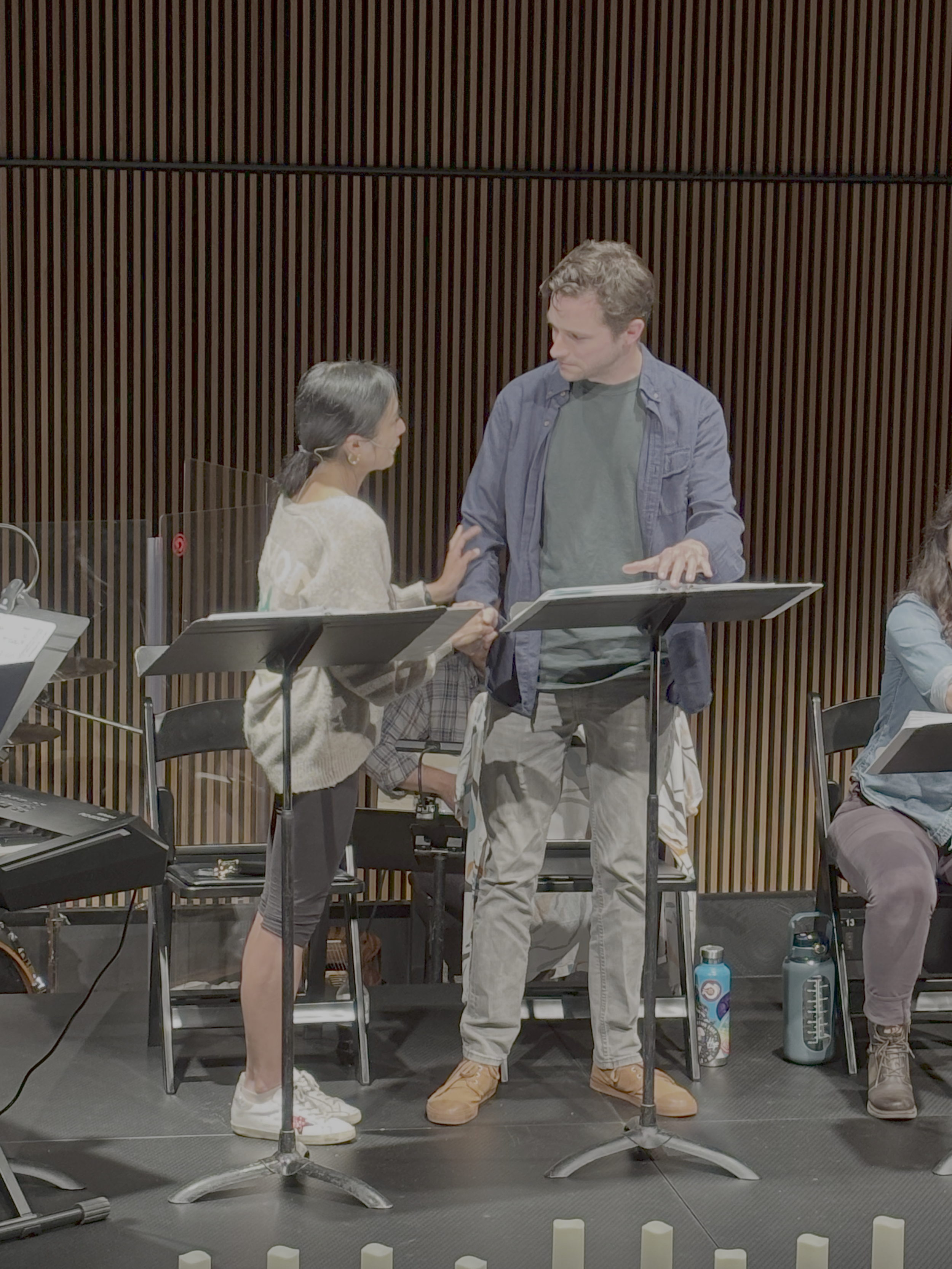
From the casting and performing perspective, not only is this Rachel’s creation, she also leads this group as Dani, the seemingly perfect daughter whose carefully maintained image gradually gives way to something more vulnerable. Her performance anchors much of the story while her songwriting reveals the emotional complexity beneath Dani’s confidence. “Goodbye” serves as one of the musical’s strongest emotional turning points, functioning as both revelation and renewal while showcasing Rachel’s ability to pair honest lyricism with memorable melodies. Alongside her, Emily Kay delivers the show’s standout vocal performances as Liv. Her rendition of “Chasing Memories” beautifully captures both the uncertainty and optimism of someone rebuilding her life after addiction. The warmth, clarity, and power of her voice make the song immediately compelling, while the staging concept described during the reading only heightens anticipation for how the number might eventually appear in a fully realized production.
Stephanie Reese brings quiet sincerity to Sophie, particularly during “Beauty,” a delicate and heartfelt number that reveals the sadness beneath her character’s outward composure. She never forces the emotion, allowing the song’s vulnerability to emerge naturally through both her vocal performance and understated delivery. As part of the parallel storyline to that of sisters Dani and Liv, and alongside Stephanie’s Sophie, Matt Alder gives his character Finn a genuine sense of emotional urgency, both during his scenes with his father, played by wearer of many hats Pete Benson, and with Sophie, whom he is still discovering where he stands. His performance effectively communicates desperation and longing, creating a character whose internal struggles resonate throughout the story.
The aforementioned Pete Benson and Kate Pippinger provide valuable support throughout the reading, stepping into multiple ensemble responsibilities while helping establish the world surrounding the principal characters. Pete is particularly effective as Finn’s father, bringing warmth and sincerity to a relationship that forms one of the story’s emotional pillars.
Christopher DiStefano’s musical direction deserves considerable praise alongside that given to Rachel for the construction of this story. The complexity of the harmonies never feels intimidating; instead, they remain inviting while providing the cast opportunities to create rich vocal textures throughout the score. Songs such as “Bare” demonstrate both emotional immediacy and impressive musical craftsmanship, while the recurring themes and reprises help the score feel unified rather than episodic. The result is a musical language that is sophisticated without sacrificing accessibility. As someone who appreciates vocal writing that challenges performers while remaining enjoyable to listen to, this score consistently impressed me. My only callout musically is around Finn’s character. I found myself wishing that Finn’s vocals were in a slightly lower register, which would both provide a greater contrast to Sophie’s during their duets but also providing a lower foundational harmony to the ensembles, and thus a bit more of a full and powerful sound.
As with any work still in development, a staged reading also offers an opportunity to consider what might evolve. As I mentioned above, there is surprisingly little to critique musically, but one dramatic moment gave me pause. During Finn’s duet with his dying father, Pete’s character sings with considerably more energy than I would expect from someone moments away from death, particularly given what follows immediately afterward. Allowing a bit more time to pass between the duet and his passing—or gradually diminishing his strength throughout the number—might make that sequence feel even more believable. Similarly, while each couple’s individual storyline is compelling, their journeys occasionally feel adjacent rather than fully intertwined. Bringing those relationships together more directly would strengthen the overall emotional payoff and reinforce the themes that already connect them beneath the surface.
Programs like bitLAB are essential to the continued growth of musical theatre because they give writers and composers the opportunity to hear their work through the ears of an audience while inviting that audience into the creative process. It is a rare chance to witness a musical before the scenery is built, before the lighting is hung, and before the staging has fully taken shape, allowing imagination to become part of the theatrical experience.
If All of Us, Quietly is any indication, Bainbridge Island Theatre Lab has created a meaningful platform for nurturing new work while giving audiences something they don’t often get to experience. Rachel Noll James has already laid an impressive foundation built upon memorable music, authentic characters, and heartfelt storytelling. Just as the characters in All of Us, Quietly search for hope through life’s most difficult moments, this musical itself feels full of promise. Wherever it goes next, this staged reading suggests its journey is one well worth following.
All of Us, Quietly, written by Rachel Noll James, ran on stage as a co-production between bitLAB and Bainbridge Performing Arts as part of BPA’s Studio Series this past weekend, closing July 12. For more information about BPA and its programming, visit https://www.bainbridgeperformingarts.org/ and for more about bitLAB, head to https://www.rachelnolljames.com/.
Photo credit: Eliza Lane/ Sabrina Fiander